


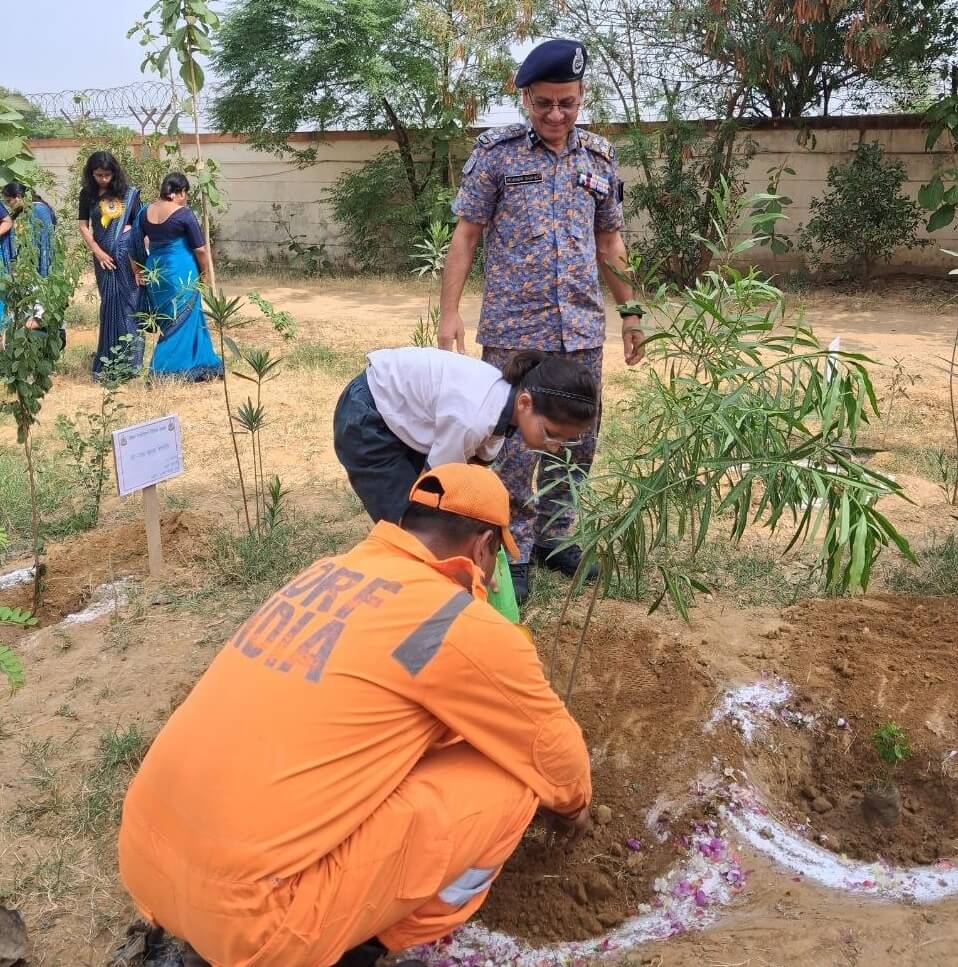
Piyush Anand, IPS, Director General, National Disaster Response Force (NDRF), along with other senior officers, took part in a massive tree plantation drive at the 8th Battalion complex in Ghaziabad on the occasion of World Environment Day 2026. The event was organised as part of NDRF’s continued commitment to environmental protection, ecological balance, disaster risk reduction and public awareness.
The plantation drive witnessed the active participation of senior officers, rescuers and school children, making it a meaningful and community-oriented green initiative.
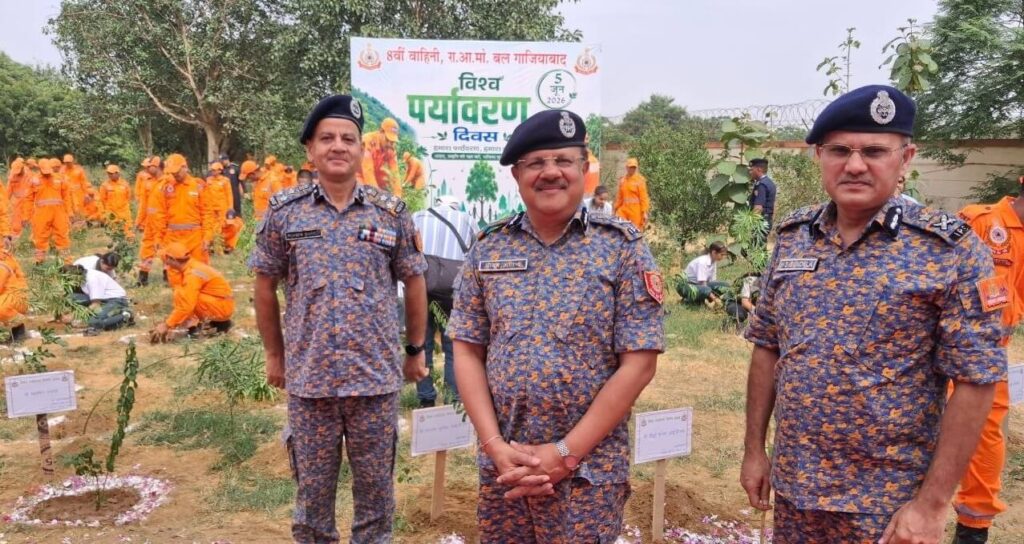
Among those present were N. S. Bundela, IPS, Inspector General, NDRF; Mohsin Shahedi, DIG, West Central Zone; Sudesh Kumar, Commandant, 8th Battalion; along with other officers and personnel of the battalion. Together, they planted saplings of different species within the battalion complex, symbolising collective responsibility towards nature and future generations.
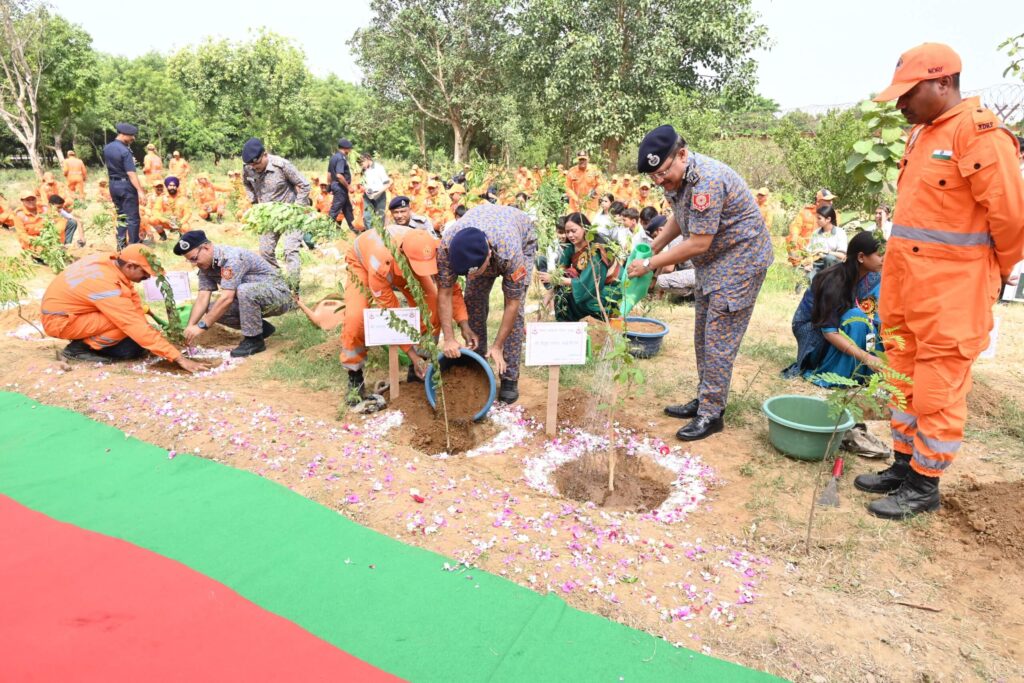
World Environment Day is observed every year to remind people, institutions and governments about the urgent need to protect the planet from environmental degradation. In this spirit, the NDRF plantation drive sought to spread the message that environmental protection is not merely a symbolic activity but a continuing responsibility. By involving school children in the initiative, the force also tried to create awareness among the younger generation about the importance of trees, clean air, biodiversity and sustainable living.
Addressing the gathering, DG NDRF Piyush Anand underlined the importance of environmental protection in the present global context. He said that climate change, rising temperatures, pollution, deforestation and ecological imbalance have become major challenges for societies across the world. According to him, tree plantation is one of the simplest and most effective ways to reduce the impact of climate change and create a safe, clean and healthy environment for future generations.
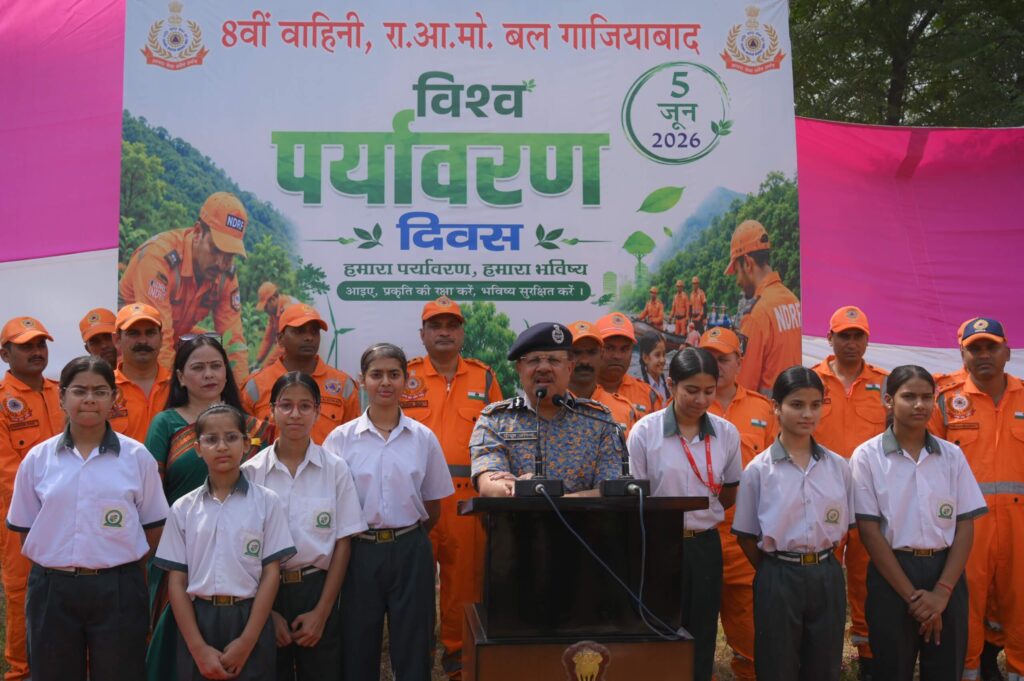
He emphasised that planting trees alone is not enough. Equal attention must be paid to protecting and nurturing the saplings until they grow into strong trees. He called upon officers, personnel, children and members of the public to plant more trees and make continuous efforts to ensure their survival.
“Our objective should be to save every tree. But in extreme cases, if the situation arises and we can’t save one tree, we should plant five new trees,” Piyush Anand, DG, NDRF, said, highlighting the urgent need to protect the environment and preserve green cover.
His message reflected a practical and responsible approach towards environmental conservation. In many urban and semi-urban areas, trees are often cut in the name of development, road widening, construction or infrastructure expansion. The DG’s appeal stressed that every tree has ecological value and should be protected as far as possible. Where cutting becomes unavoidable, compensatory plantation must be taken seriously and implemented with honesty.
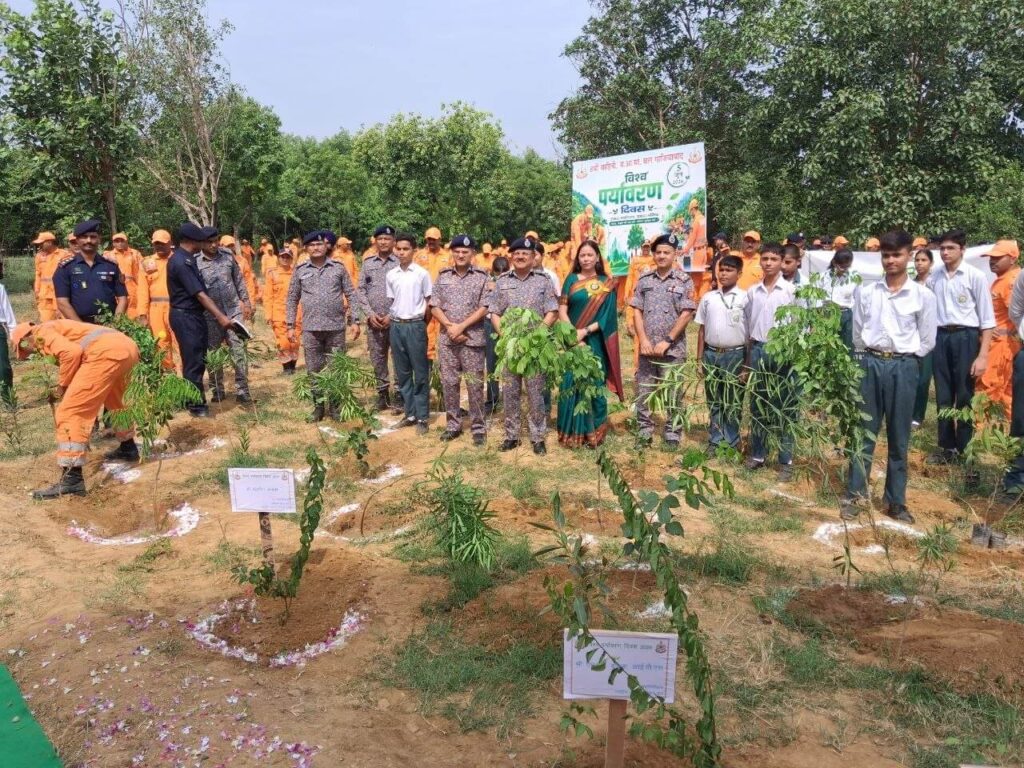
The officers and rescuers present on the occasion also took a pledge to protect the environment, conserve natural resources and contribute towards building a clean and green India. The pledge reflected NDRF’s belief that environmental responsibility begins with individual action but becomes more powerful when institutions and communities work together.
The National Disaster Response Force has been playing a key role in disaster management across the country. Whether it is floods, cyclones, earthquakes, landslides, building collapses, industrial accidents or other emergencies, NDRF personnel are often among the first to reach affected areas and carry out rescue and relief operations. Over the years, the force has earned public trust because of its professionalism, courage, discipline and humanitarian approach.
However, NDRF’s role is not limited only to emergency response. The force has also been actively involved in public awareness, community training, mock drills, school safety programmes and disaster preparedness campaigns. Through such initiatives, NDRF tries to reduce disaster risks before emergencies occur. The tree plantation drive is another example of this broader vision.

Disaster management is not only about responding after a disaster has happened. It is also about reducing vulnerabilities and building resilience before a crisis strikes. Trees play a vital role in this process. They help reduce heat, improve air quality, prevent soil erosion, recharge groundwater, support biodiversity and reduce the impact of extreme weather events. In flood-prone areas, vegetation can help control runoff. In cities, trees provide shade and reduce the urban heat island effect. In rural areas, green cover supports livelihoods and maintains ecological stability.
By planting trees, NDRF is indirectly contributing to disaster risk reduction. Heatwaves, water scarcity, poor air quality, flash floods and landslides are increasingly being linked to environmental degradation and climate change. A healthy environment can reduce the intensity of such risks and improve the capacity of communities to face them. This makes environmental protection an important part of long-term disaster preparedness.
The participation of school children added special significance to the programme. Children are not only the future citizens of the country but also important carriers of social messages. When they take part in tree plantation and environmental activities, they learn the value of nature at an early age. Such experiences can help shape responsible attitudes and habits. The presence of children also turned the event into an educational exercise, encouraging them to understand that every tree planted today can become a source of life, shade and protection tomorrow.
The plantation drive also conveyed the importance of institutional leadership in environmental conservation. When a disciplined force like NDRF takes up such activities, it sends a strong message to society that every organisation, public or private, has a role to play in protecting the environment. Clean surroundings, green campuses and responsible resource use can become examples for others to follow.
The initiative at the 8th Battalion complex in Ghaziabad was therefore more than a ceremonial event. It represented the force’s continuing commitment to sustainable development, environmental balance and national responsibility. It also highlighted the connection between ecology and safety. A greener environment is not only beautiful but also safer, healthier and more resilient.
As climate-related disasters become more frequent and intense, the need for environmental awareness has become even more urgent. Tree plantation, water conservation, waste reduction, energy efficiency and responsible development are no longer optional activities. They are essential steps towards protecting lives, livelihoods and future generations.
The programme concluded successfully with the message: One Tree – One Life, Green Environment – Safe Future. This simple but powerful message captured the spirit of the entire event. It reminded everyone present that every tree planted is a promise — a promise to protect life, preserve nature and build a safer future for the coming generations.