

A Controversial Order After Transfer
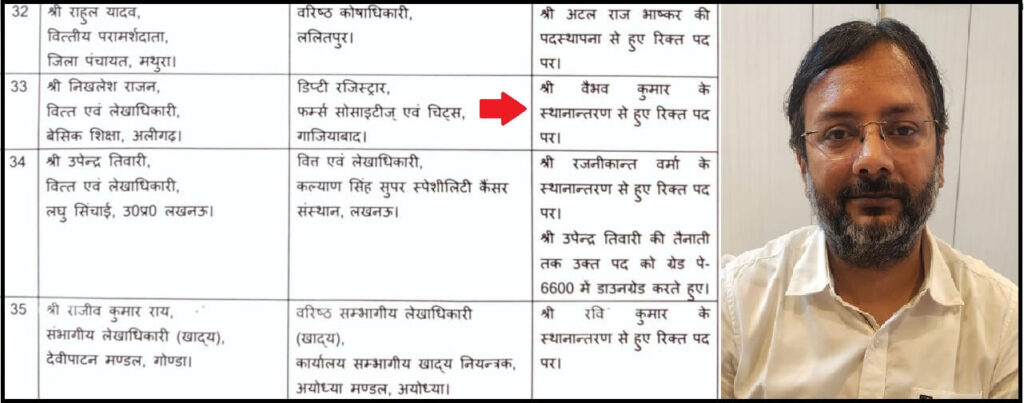
On June 1, 2026, Vaibhav Kumar, Deputy Registrar, Firms, Societies and Chits, Ghaziabad and Gautam Budh Nagar, who belongs to the Uttar Pradesh Provincial Civil Service (UP PCS) cadre, reportedly passed an order days after he had been transferred out from the post, declaring the Classic Residency AOA elections and the newly formed managing committee as null and void.
This brings us to the question: what was the immediate provocation, logic, motivation or urgency behind Vaibhav Kumar’s decision? Why did Vaibhav Kumar pass such an order well after he had been officially relieved and had handed over charge to Nikhlesh Rajan, previously serving as Finance and Accounts Officer, Basic Education, Aligarh? Why has the order — if legally permissible — not been officially communicated to the Classic Residency AOA?
The Moot Question: Where Does the Registrar’s Power End?
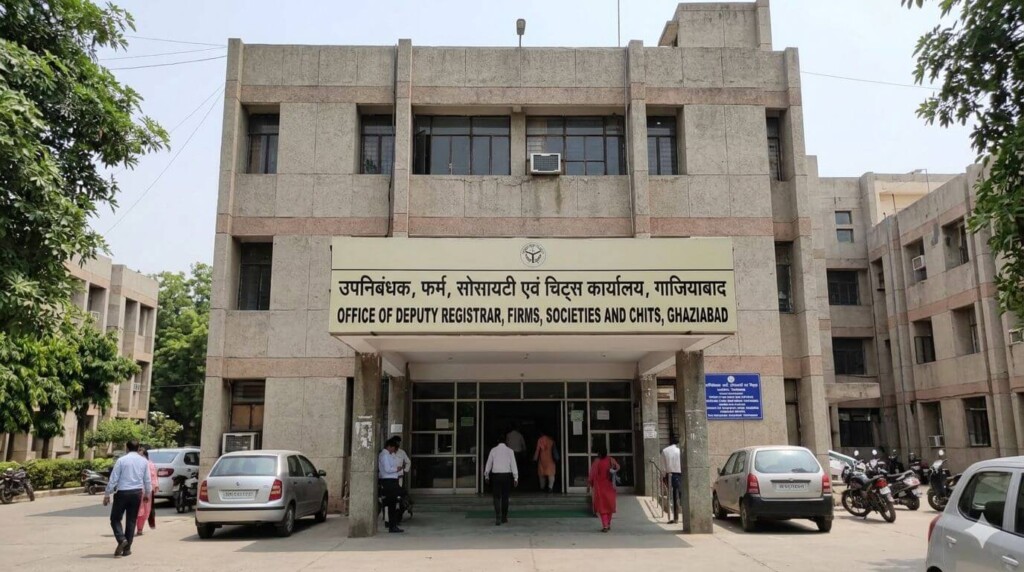
Society elections in Ghaziabad are overseen by the District Magistrate/Deputy Registrar under the Uttar Pradesh Cooperative Societies Act and the U.P. Apartment Act. The Deputy Registrar, as the regulatory authority, manages:
- Registration and regulation of societies
- Administration of partnership firms
- Oversight of chit funds
- Supervision of Resident Welfare Associations (RWAs)
But the moot question here is whether the Deputy Registrar is the competent authority and has the administrative or legal power — on whatsoever grounds — to suspend a duly elected AOA and declare the election null and void.
The primary issue is this: can an administrative officer unilaterally invalidate the democratic choice of hundreds of residents?
Vaibhav Kumar’s order has opened a Pandora’s box full of fundamental questions of governance, legality and democratic accountability, as well as the limits of statutory authority, rule of law, and the protection of democratic institutions.
Administrative Authority Is Not Judicial Power

It is worth mentioning that public officials can exercise only those powers expressly granted to them by law. When they go beyond and overstep their limits, their actions, whatever their merit or rationale, become liable for judicial scrutiny and annulment.
The Societies Registration Act, 1860, governing societies and associations in Uttar Pradesh, does not transform a Deputy Registrar into a judge.
The Deputy Registrar performs multiple regulatory and administrative functions — such as maintaining records, processing statutory filings, ensuring compliance with procedural requirements, and carrying out administrative oversight. These functions, however, do not empower the Deputy Registrar’s office to exercise the powers of a civil court.
Registrars and Deputy Registrars are fundamentally administrative or quasi-judicial authorities and do not function as civil courts. Therefore, the office is not lawfully authorised to adjudicate election disputes or overturn democratic outcomes through executive fiat. They cannot adjudicate or arbitrarily interfere in private election disputes or internal AOA by-law disagreements.
Election Disputes Require Adjudication, Not Administration
As per law, election disputes require adjudication, not administration. It requires a judge to impartially examine evidence, interpret by-laws, sift through contradictory claims, and protect the rights of both residents — the voters — and elected representatives.
That is precisely why Section 25(1) of the Societies Registration Act, 1860 (as amended in the State of Uttar Pradesh) empowers the Prescribed Authority, generally the Sub-Divisional Magistrate (SDM), to determine disputes regarding elections and continuance in office. The legal position is quite clear: the Deputy Registrar can under no circumstances usurp the judicial power of the Prescribed Authority.
The process is simple and straightforward. The Deputy Registrar cannot personally decide whether an election is valid or invalid. In the event of an election being challenged, the role of the Registrar is limited to identifying whether a genuine dispute exists and, if so, referring the matter to the legally designated forum.
There are no ifs and buts that allow the Deputy Registrar to bypass statutory provisions and principles of natural justice.
Courts have repeatedly ruled that suspension cannot be invoked arbitrarily. The Deputy Registrar cannot initiate a suspension merely on a whim or based on politically motivated complaints without an independent application of mind.
If a Deputy Registrar attempts to suspend an AOA’s managing committee or dissolve the governing body without issuing a proper show-cause notice and granting the elected members an opportunity of being heard, the courts can quash the suspension order on the grounds of violating natural justice.
A Threat to Democratic Self-Governance

Apartment Owners Associations are democratic institutions created by residents to manage common interests, collective resources and community welfare.
Residents jointly exercise their democratic right when they vote for a managing committee, which derives its authority from the collective will of the members.
Removing or displacing such a body, therefore, must occur only under exceptional circumstances and strictly within the boundaries established by law. When an election is contested, the Deputy Registrar’s power is strictly limited to verifying whether a bona fide dispute exists and referring it onward. The Registrar cannot bypass the law to personally execute a “null and void” declaration.
Various courts across India have opined that the power to suspend, supersede, or otherwise displace elected representatives, or interfere with democratically elected bodies, should not be exercised casually due to administrative whims.
Judicial precedents have repeatedly characterised such actions as serious invasions of democratic governance. The principle is simple: elected bodies cannot be removed merely because a complaint has been filed against them. The complaints must be examined. Evidence must be evaluated. Allegations must be tested. Most importantly, those accused must be heard.
Natural Justice Is Not Optional

Even if one assumes that irregularities existed in the Classic Residency election process, the law imposes another non-negotiable requirement: adherence to natural justice, which lays down that no individual or institution should be penalised without being given a fair opportunity to present its case.
The doctrine of audi alteram partem — hear the other side — is one of the oldest and most respected principles in jurisprudence. It must be followed even when elected representatives face removal or disqualification.
The timeless dictum — “justice should not only be done but must also be seen to be done” — is a foundational pillar of the Indian legal system. It ensures judicial impartiality and upholds public confidence in the rule of law.
In Maneka Gandhi v. Union of India (1978), the Supreme Court utilised the maxim “justice must also be seen to be done” to bridge the gap between administrative secrecy and procedural fairness. By infusing the “seen to be done” doctrine into Article 21, the Maneka Gandhi case established that the government can never use “national interest” or “public interest” as a blanket excuse to completely hide its decision-making process from judicial and public scrutiny.
Under the Societies Registration Act, 1860, applicable to RWAs, and the UP Apartment Act, 2010, applicable to AOAs, an authority cannot arbitrarily suspend an elected board without following strict natural justice procedures.
Under the Societies Registration Act, the Deputy Registrar has no jurisdiction to cancel elections or adjudicate member eligibility. These matters must be referred to the Prescribed Authority, typically the Sub-Divisional Magistrate or Deputy Collector.
Judicial Precedents Draw a Clear Boundary
The Supreme Court and various High Courts, including the Allahabad and Bombay High Courts, maintain that elected AOAs act on the democratic will of the residents. In cases dealing with managing committees, courts — such as in S.R. Goyal v. Mehtab Singh — or under the Maharashtra Cooperative Societies Act, as in Jijau Co-Op Hsg Society Ltd. v. State of Maharashtra, have highlighted that taking away administration from elected members is a “serious power”. It can be executed only when all statutory preconditions are strictly met.

The Allahabad High Court has repeatedly clarified the limits of a Deputy Registrar’s authority in election disputes involving registered societies.
In Gajendra Singh v. Deputy Registrar, Firms, Societies and Chits (Writ-C No. 24615 of 2023), the Allahabad High Court firmly established that Deputy Registrars overstep their bounds when they attempt to cancel society elections or registrations, and that such an order is “coram non judice” — passed by an authority lacking jurisdiction.
The High Court explicitly held that when a bona fide dispute regarding an election is raised, the Deputy Registrar has no power to adjudicate or declare the election invalid. His statutory duty under Section 25(1) is strictly limited to referring the dispute to the Prescribed Authority, namely the SDM.
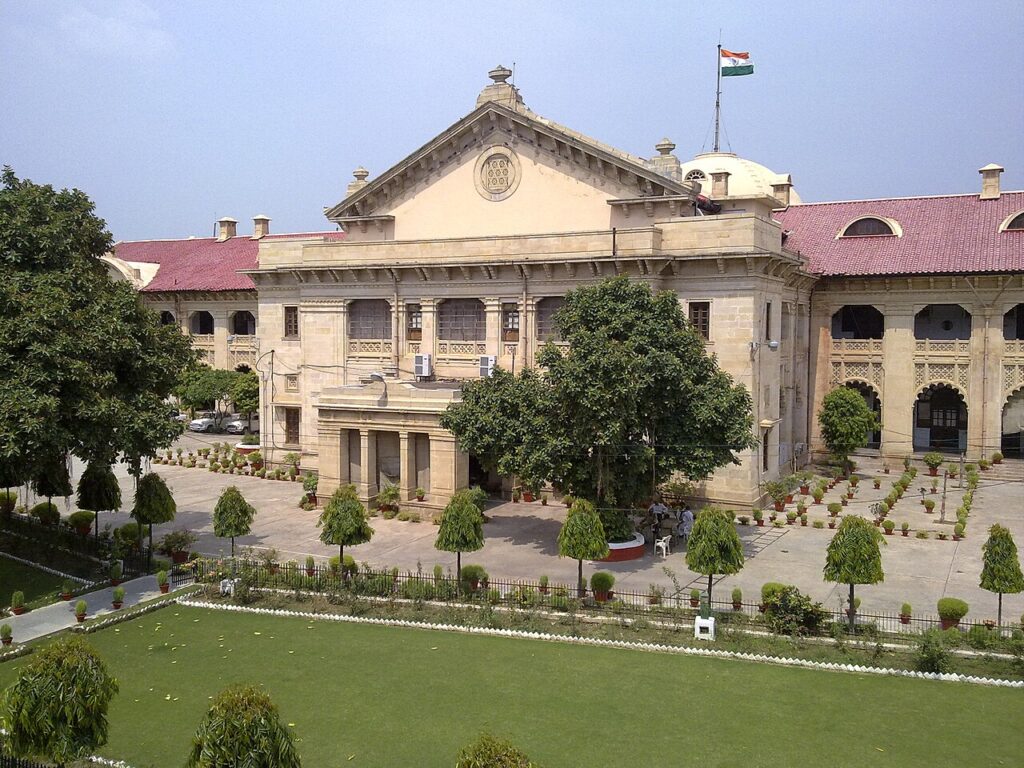
“…in case of any dispute or doubt regarding the elections claimed by the petitioner, the Deputy Registrar could have referred the matter to the Prescribed Authority under Section 25(1) of the Act, 1860 and had no jurisdiction to himself reject the elections…” the Court explicitly observed.
Similarly, a Division Bench of the Allahabad High Court ruled that the Deputy Registrar is not expected to act as a civil court. If there exists a bona fide dispute regarding the validity of elections, his statutory obligation begins and ends with referring the dispute to the Prescribed Authority. By personally adjudicating and cancelling the election, the Respondent had passed an order that is bad in law and liable to be set aside.
Likewise, in Committee of Management v. Deputy Registrar, the court ruled that a Deputy Registrar cannot bypass the Prescribed Authority by personally evaluating the merits of an election complaint. Any independent order quashing an election is an executive overreach and liable to be set aside.
The Court’s reasoning was that administrative officers are not substitutes for judicial forums and hence cannot assume adjudicatory powers merely because a dispute has come before them.
Once a genuine dispute regarding the validity of an election is placed before them, they become functus officio — lacking further administrative jurisdiction regarding final declaration — and must refer the matter to the Prescribed Authority.
These rulings are not procedural technicalities. They are constitutional safeguards against concentration of power and are meant to preserve the distinction between executive administration and judicial determination — a distinction essential to the rule of law.
Why the Order Appears Legally Vulnerable

In light of the above, Vaibhav Kumar’s order declaring the Classic Residency election “null and void” suffers from the following defects.
First, the Deputy Registrar personally declared the election null and void without referring the dispute to the Prescribed Authority. Hence, the order can be challenged as lacking lawful authority.
Second, the affected office-bearers were not provided a proper opportunity to respond before adverse action was taken. Thus, it appears to violate the principles of natural justice.
Third, democratic legitimacy is at stake. Courts are reluctant to disturb elected bodies without compelling evidence and strict statutory compliance. Administrative intervention that bypasses these safeguards often attracts judicial scepticism.
Together, these factors create substantial grounds for legal challenge.
The Real Victims: Residents

Lost in the maze of legal arguments and bureaucratic manoeuvres are the real stakeholders: the residents of Classic Residency.
They rely on the Apartment Owners Association (AOA) for essentials — security, water supply, lift maintenance, sanitation, power backup, vendor management, financial administration and emergency response.
When disputes paralyse administration, it is not rival factions who suffer — it is ordinary homeowners. The fallout is immediate and tangible.
That is why courts often step in: to ensure continuity of essential services while election disputes are resolved. Judicial intervention aims to preserve stability, not to favour one faction over another, but to shield residents from becoming collateral damage in governance battles.
A Test for the Rule of Law

Democracy does not depend solely on elections. It also depends on respecting the legal processes that govern those elections. Each institution performs its designated role.
Problems arise only when those boundaries are ignored. In a constitutional democracy, no official is above the law, and no authority can exercise powers that the law has not granted.
That principle remains the strongest safeguard of democratic self-governance — and it may now be tested in Classic Residency.


Sir
When the Competent Authority GDA abdicate it’s powers under the UP Apartment Act 2010 and refer a matter for interpretation of section 3 J (I) and (ii) to the Dy. Registrar, then the Dy. Registrar assumes unwritten powers. But in that case too Mr. Vaibhav Kumar confirmed me in personal discussion that he takes action only after providing a minimum three opportunities to the opposite parties to explain their views on a complaint received by his office. He doesn’t act sueo moto. I am unable to digest how can he declare elections as null and void unless the glaring irregularities are brought to his notice apparrent on the face of record and due notice is served to the offenders in consonence with the principle of natural justice.
Verma ji to the best of my knowledge a Deputy Registrar acts as a key administrative and quasi-judicial official in courts, or tribunals. They do not have “unwritten” powers, their implied powers stem from administrative necessity and the delegation of duties from the Registrar or presiding judges. Their roles and implied scopes of authority vary depending on the governing legislation, such as the Indian Societies Registration Act or the Code of Civil Procedure (CPC).