

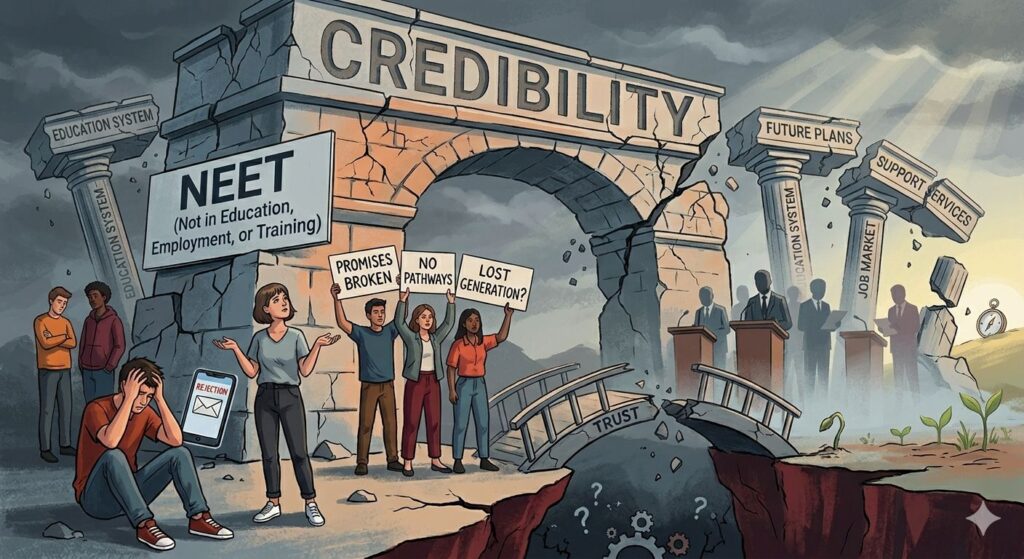
India’s National Eligibility cum Entrance Test, popularly known as NEET, was conceived as a single-window meritocratic gateway to medical education. It was intended to eliminate the chaos of multiple entrance examinations, reduce capitation-driven admissions, standardise evaluation, and create a transparent national merit list for admission into medical colleges. Yet, repeated allegations of paper leaks, impersonation rackets, organised cheating syndicates, inflated scores, and irregularities in evaluation have transformed NEET from a symbol of meritocracy into a symbol of systemic vulnerability.
The crisis is no longer merely academic. It is institutional, psychological, and national in character. When millions of students compete for a few thousand seats, any compromise in integrity strikes at the moral foundation of the state itself. The recurring controversies surrounding NEET expose deep infirmities in India’s examination architecture, especially when compared with the highly controlled and integrity-driven examination systems of the Indian Armed Forces, including promotion examinations, Part D examinations, and the Defence Services Staff College (DSSC) selection process.
Also Read: India needs a fool-proof system to prevent entrance exam paper leaks
The issue therefore is not simply about a leaked paper. It is about whether the Indian state can preserve trust in competitive merit.
As former President A. P. J. Abdul Kalam once remarked, “Excellence happens not by accident. It is a process.” Examinations too require institutional excellence, not episodic firefighting.
Existing Structure of NEET Examination
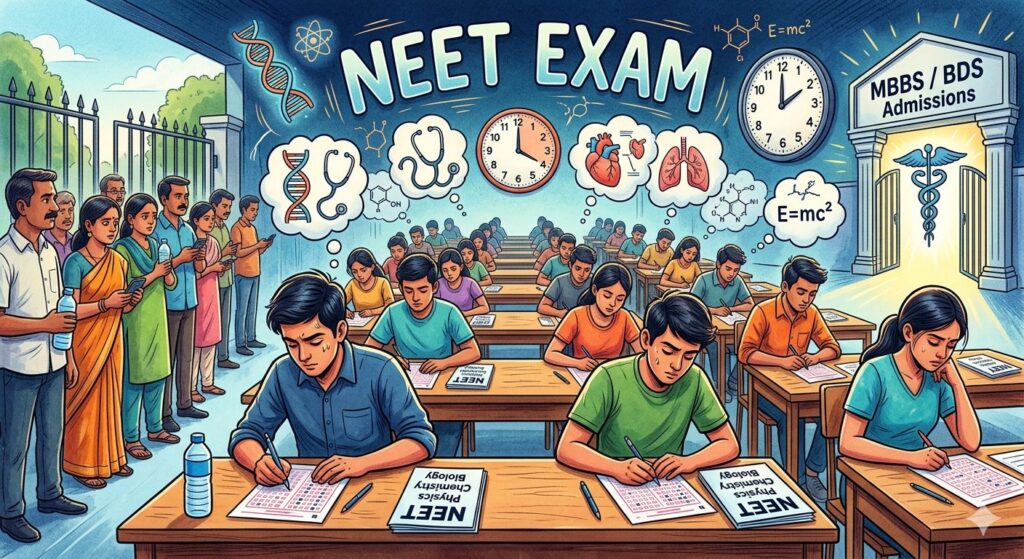
NEET is conducted by the National Testing Agency, commonly known as the NTA. The examination is held across thousands of centres throughout India and abroad. It is one of the largest entrance examinations in the world, with over two million candidates appearing annually.
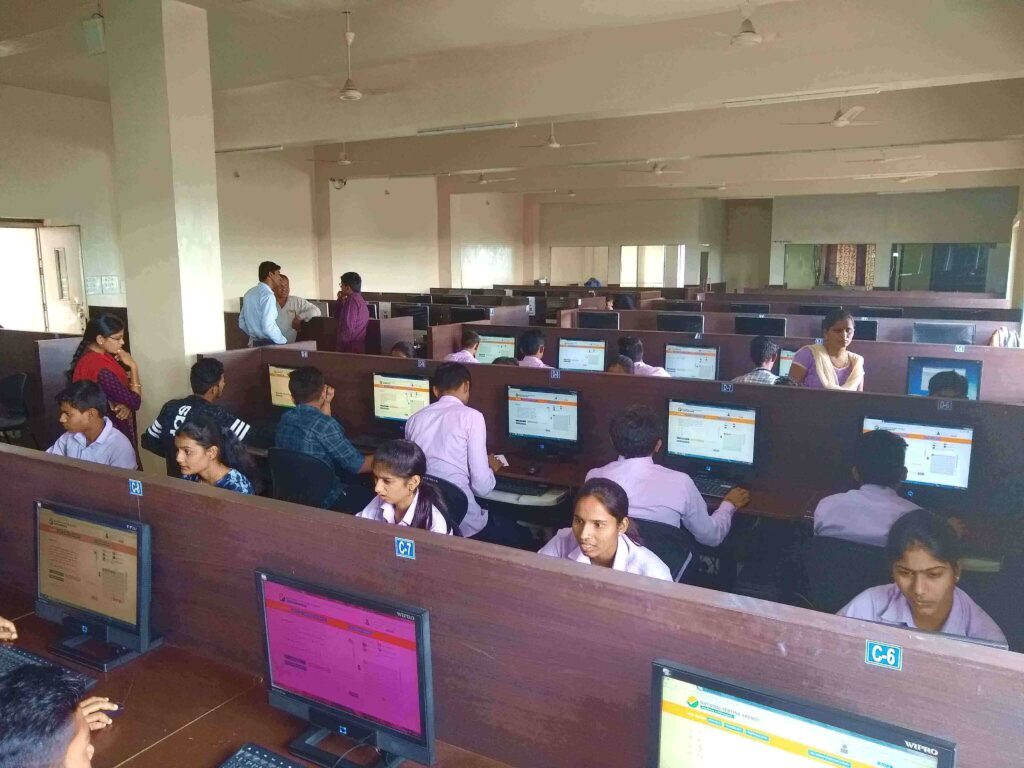
The structure appears robust on paper. Question papers are centrally prepared by subject experts under confidentiality protocols. The papers are printed through secure channels, transported under sealed conditions, and distributed to designated centres. Candidates undergo identity verification and biometric checks at centres before taking the examination. OMR sheets are collected, scanned, and digitally evaluated.
However, the sheer scale of the operation itself creates vulnerabilities. Unlike smaller and more specialised examinations, NEET involves massive logistical chains extending across states, districts, private institutions, transportation networks, and temporary staffing structures. Every additional layer creates opportunities for compromise.
The examination ecosystem today includes printing presses, encrypted digital transfers, courier networks, district coordinators, invigilators, local administrators, outsourced staff, biometric operators, and data processors. Any weak link can compromise the entire chain.
Moreover, the intense pressure associated with medical admissions has created a parallel black economy around the examination. Coaching centres, organised cheating syndicates, corrupt intermediaries, and politically connected operators exploit loopholes for enormous financial gains. In many cases, paper leaks are not isolated acts of misconduct but manifestations of organised criminal enterprises.
Why Paper Leaks Continue to Occur
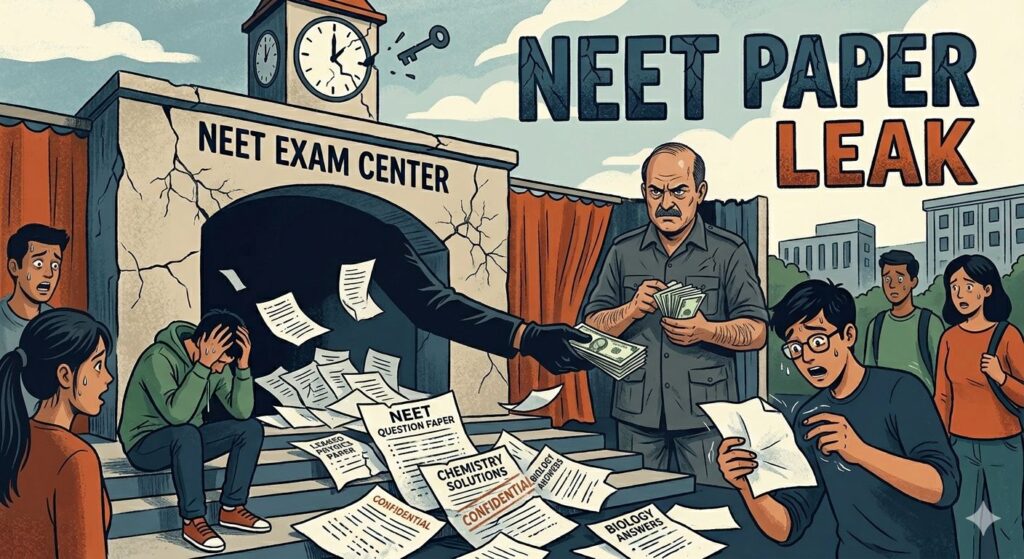
Frequent leaks are not accidental anomalies. They are symptoms of systemic design weaknesses.
The first major vulnerability lies in decentralised physical logistics. The moment a paper leaves the secure digital environment and enters physical transportation, the possibility of compromise increases exponentially. Sealed packets can be photographed, duplicated, or tampered with during transit or storage. In several cases across India, leaks have reportedly originated not at the national level but at district-level custody points.
Second, there is excessive dependence on outsourced manpower. Temporary invigilators, local administrators, contractual staff, and private examination centre operators often lack long-term institutional accountability. Unlike military establishments or elite civil service examination systems, where personnel are carefully vetted and continuously monitored, many examination workers are engaged only for short durations with limited background verification.
Third, India’s examination mafia has evolved into a sophisticated criminal ecosystem. These networks use encrypted messaging platforms, political patronage, local influence, digital technology, and financial inducements. In some cases, leaks are monetised within minutes through organised distribution channels. The economic incentives are enormous because a single medical seat can carry career implications worth crores of rupees over a lifetime.
Fourth, the over-centralisation of opportunity increases desperation. When one examination determines the future of millions, the stakes become existential. A candidate’s years of preparation, family finances, social prestige, and career trajectory depend upon a single three-hour test. Such concentration of opportunity inevitably attracts malpractice.
Fifth, punitive frameworks remain weak and inconsistent. Investigations often occur after public outrage rather than through preventive intelligence mechanisms. Arrests happen, but convictions are rare and delayed. This creates insufficient deterrence.
The problem is therefore not merely technological. It is sociological, administrative, and ethical.
Psychological Dimension of Examination Corruption
An examination system reflects the moral culture of society. The normalisation of unfair advantage, manipulation, and “setting” corrodes institutional integrity over time.
The tragedy is that many students themselves become victims of this ecosystem. Honest candidates lose faith when rank inflation or paper leaks occur. Families begin believing that success depends less on merit and more on influence. This erosion of trust is more dangerous than the leak itself.
In military institutions, integrity is treated not as a procedural requirement but as a foundational value. A compromised officer can endanger operational security, troop morale, and national defence. The same logic applies to medical admissions. A compromised doctor can eventually affect human lives. Integrity in examinations is therefore directly linked to national capability.
What the NEET System can learn from the Indian Army examination structure
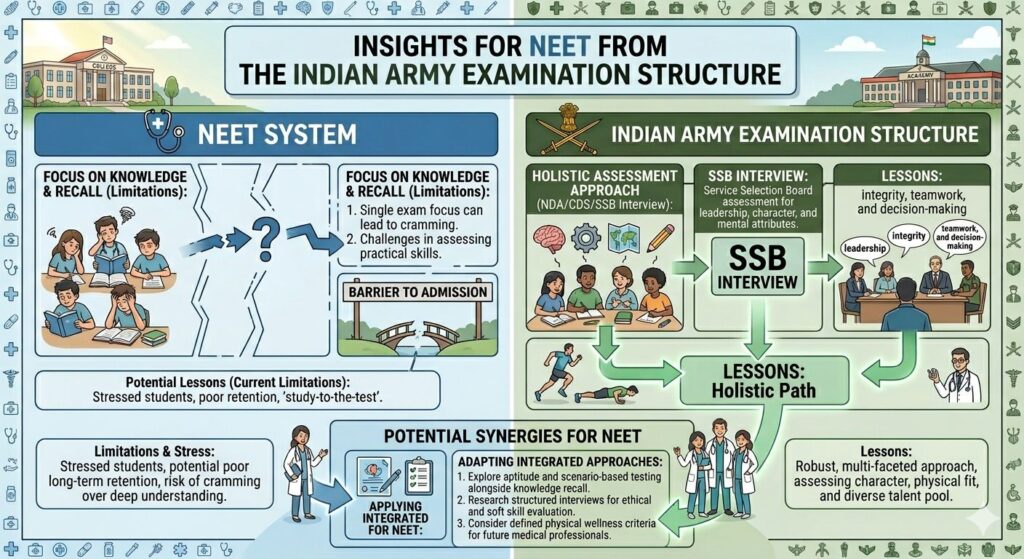
Having had first-hand experience of paper setting and paper correction systems in the Armed Forces, one observes that the military examination architecture is designed around layered integrity safeguards, institutional accountability, and compartmentalisation of responsibility. The system is based on the understanding that credibility of an examination is inseparable from credibility of the institution itself.
In military professional examinations, including promotion examinations and specialised competitive assessments, the paper-setting process itself incorporates multiple levels of checks and balances. Normally, at least three separate sets of question papers are prepared independently for each subject by three senior officers of proven professional standing and known integrity. This immediately reduces the possibility of manipulation by any single individual or group.
These independently prepared papers are then forwarded under secure procedures to the Military Training Directorate at Army Headquarters. At this stage, a carefully supervised “mix and match” process is undertaken where questions from different sets are selected to frame the final examination paper. The final paper therefore does not remain fully known to any one individual involved in the original drafting stage. This compartmentalisation is a major security safeguard and significantly reduces the possibility of leaks.
The printing process is conducted in a strictly controlled environment with limited access and supervised custody. Once printed, the papers are sealed under stringent protocols and despatched to examination centres through officer special couriers rather than through ordinary civilian logistics chains. Accountability is direct, traceable, and enforceable at every stage of transportation and custody.
The evaluation system too reflects remarkable attention to uniformity and fairness. Paper checking is conducted at designated centres under supervision. Instead of one examiner checking an entire answer sheet, individual officers are entrusted to evaluate only one specific question across all answer sheets. One examiner may therefore assess Question 1 for every candidate, another examiner Question 2, and so on. This ensures standardisation of marking patterns and minimises subjective variation in assessment standards.
Equally important is the anonymity of candidates during evaluation. Answer sheets do not bear names or identities of candidates. Instead, coded systems are used so that examiners remain unaware of whose papers they are checking. This eliminates favouritism, bias, or external influence and preserves objectivity in assessment.
The Armed Forces examination model demonstrates that integrity is not dependent merely upon technology but upon systems of layered accountability, institutional honour, professional trust, and controlled procedural design. The civilian examination ecosystem, including NEET, can derive valuable lessons from such methodologies, especially in areas of paper security, decentralised responsibility, anonymous evaluation, and examiner accountability.
The contrast is important because while military examinations may involve smaller numbers compared to NEET, the underlying principles remain universally applicable: compartmentalisation, traceability, anonymity, standardisation, and above all, integrity. These are precisely the qualities that India’s civilian competitive examination architecture must strengthen if public trust is to be restored.
Lessons from the Indian Army examination system
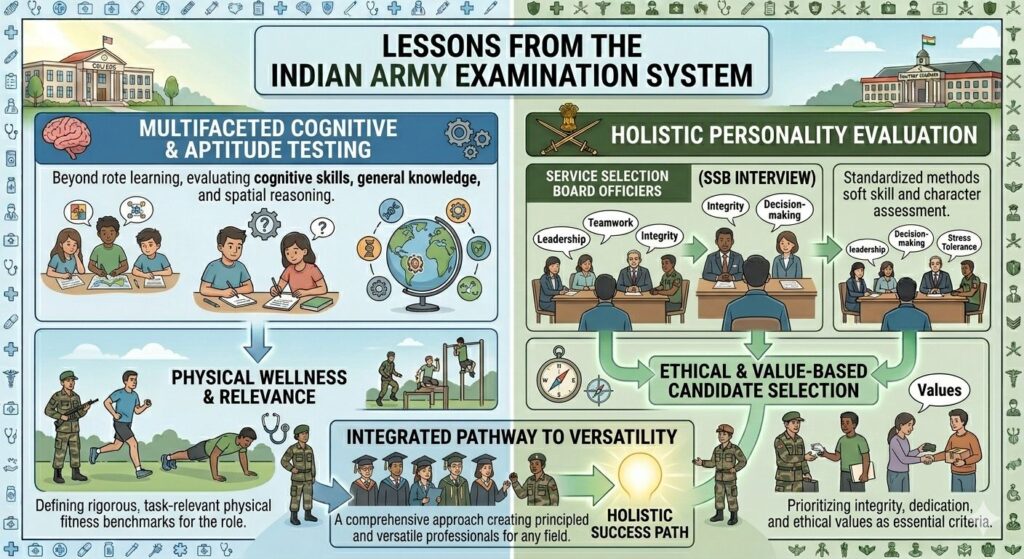
The Indian Army’s promotion and professional military education examinations offer important lessons in institutional credibility.
Examinations such as Part B, Part D, tactical assessments, promotion boards, and the entrance process for the Defence Services Staff College are conducted under extremely controlled conditions. The military examination ecosystem is not immune to human error, but it is designed around layered accountability and institutional honour.
Several characteristics distinguish the military model.
First, there is rigorous candidate profiling. Officers are continuously evaluated throughout their careers. Confidential reports, command performance, disciplinary records, field tenures, operational conduct, and peer reputation all contribute to the assessment ecosystem. No single examination alone determines professional destiny.
Second, there is strong chain-of-command accountability. Any compromise in examination conduct affects the careers and reputations of supervising officers. Responsibility is traceable and enforceable.
Third, examination material handling follows strict custody protocols. Limited personnel access; compartmentalisation, surveillance, and secure transportation reduce opportunities for leakage.
Fourth, military institutions cultivate a culture where dishonesty carries social stigma beyond formal punishment. Honour and integrity are embedded into training from the academy level itself.
Fifth, professional screening is continuous rather than episodic. An officer does not become eligible for higher command merely through written performance. Leadership qualities, psychological resilience, ethical conduct, and operational competence are assessed over years.
This is precisely where NEET differs fundamentally. It is overwhelmingly dependent on a single-event evaluation system.
The DSSC Model and importance of multi-layered screening
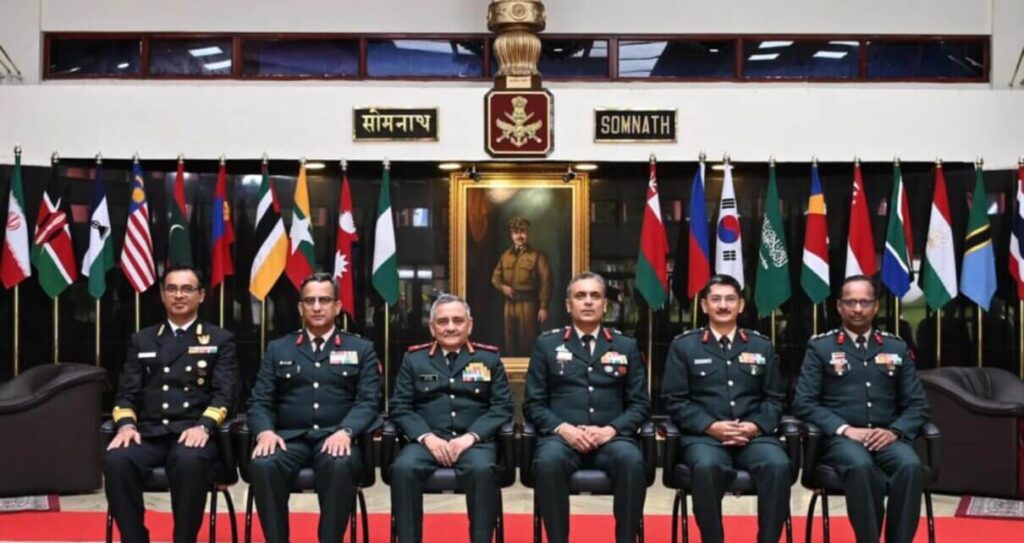
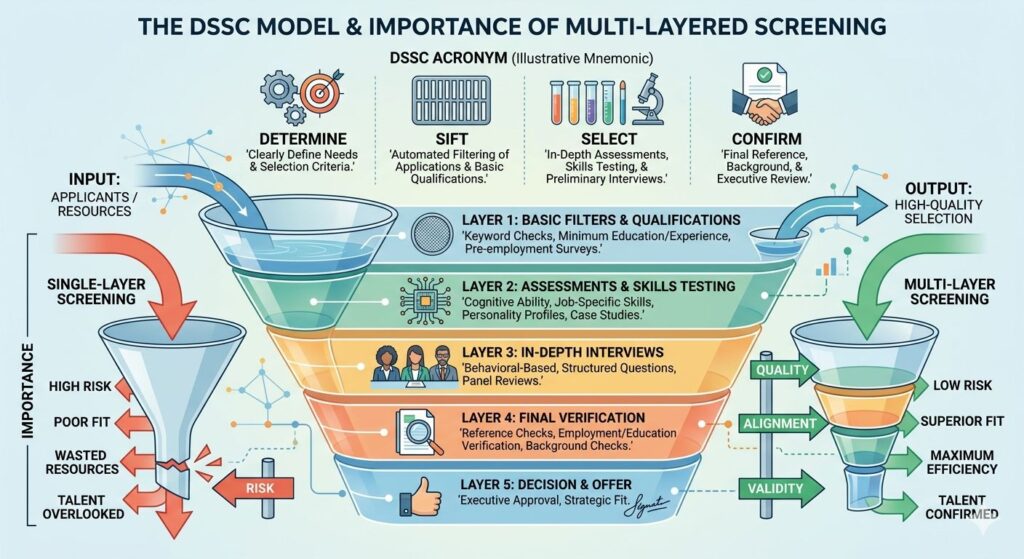
The Defence Services Staff College (DSSC) entrance examination is one of the most competitive professional military examinations in India. Yet the written test is only part of a broader evaluative process.
Selection eventually reflects intellectual competence, operational exposure, service profile, and long-term professional assessment. The system recognises that leadership and professional excellence cannot be measured through a single answer sheet.
India’s civilian examination architecture needs to absorb this principle.
Medical aptitude cannot be judged solely through objective multiple-choice testing. While academic excellence is essential, qualities such as emotional resilience, ethical judgement, communication skills, and psychological maturity are equally critical in medicine.
Many countries incorporate interviews, situational judgement tests, school performance, psychological evaluation, or longitudinal assessment into medical admissions. India’s hyper-centralised dependence on a single MCQ examination creates structural distortion.
The coaching industry thrives because the system rewards pattern recognition over broader aptitude.
Commercialisation of coaching and its impact

The explosive growth of the coaching industry has altered the nature of competitive examinations in India. Cities such as Kota have become industrial ecosystems built around examination preparation.
While coaching itself is not inherently problematic, excessive dependence on coaching creates three dangerous consequences.
First, it transforms education into algorithmic memorisation. Students become trained to solve predictable patterns rather than develop conceptual understanding.
Second, it increases socio-economic inequality. Wealthier families gain access to better preparation ecosystems, technological resources, and specialised mentoring.
Third, it creates pressure ecosystems vulnerable to unethical shortcuts. When success becomes commercialised, organised malpractice becomes economically attractive.
The NEET crisis therefore reflects deeper distortions in India’s educational ecosystem.
The need for technological reforms
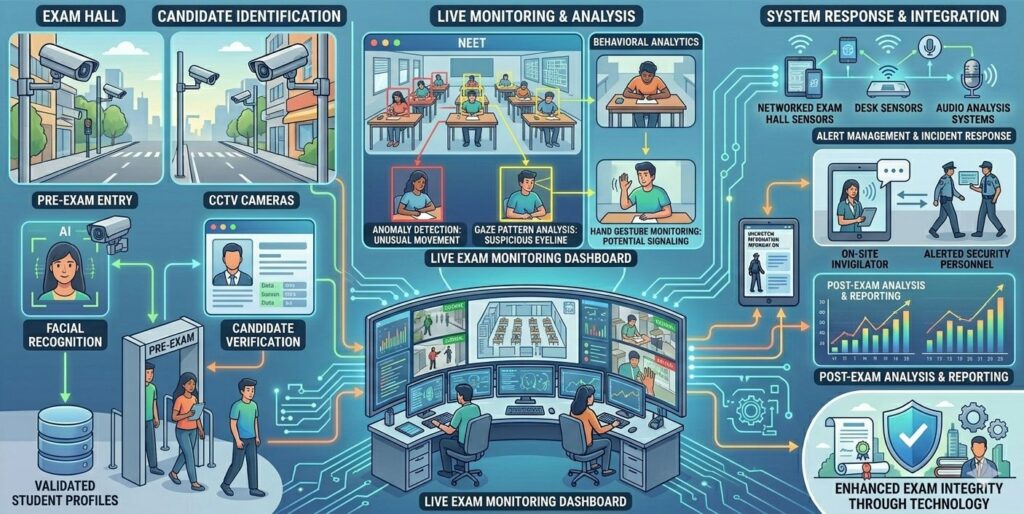
Technology can reduce vulnerabilities, though it cannot eliminate corruption without institutional ethics.
The first reform must involve encrypted digital question paper transmission with last-minute decryption protocols. Question papers should ideally be printed locally under monitored secure environments shortly before examination commencement. This reduces transportation vulnerabilities.
Second, AI-enabled surveillance systems should monitor examination centres in real time. Facial recognition, behavioural analytics, and live monitoring can detect suspicious activity patterns.
Third, biometric verification must become multi-layered. Fingerprints alone are insufficient because organised impersonation networks have evolved sophisticated bypass techniques. Iris scans and dynamic identity checks may improve verification.
Fourth, examination centres must be graded and permanently accredited rather than temporarily enlisted. Centres with irregularities should face long-term blacklisting.
Fifth, independent audit teams must conduct random integrity inspections without prior notice.
Sixth, digital forensics cells should continuously monitor darknet channels, encrypted messaging groups, and suspicious online traffic before and during examinations.
However, technological solutions alone will fail without administrative accountability.
Administrative and structural reforms
The NTA requires institutional restructuring. We may also consider closing NTA and entrusting UPSC for the conduct of all such exams.
At present, examination management is excessively event driven. What India needs is a permanent National Examination Security Architecture integrating cyber intelligence, criminal investigation, behavioural analytics, and examination logistics. Therefore UPSC fits the bill perfectly.
There should also be legal accountability extending beyond candidates to institutional actors. School managements, centre operators, district officials, printing contractors, and digital vendors must face severe criminal liability for negligence or collusion.
Fast-track judicial mechanisms are essential. Delayed prosecution weakens deterrence.
A national database of examination offenders should be created to prevent repeat participation in examination administration.
Additionally, the government must diversify assessment mechanisms. Overdependence on one examination amplifies pressure and corruption incentives. Weightage could gradually incorporate school performance normalisation, aptitude assessments, and longitudinal academic evaluation.
Importance of integrity and honesty
No examination reform can succeed without moral reform.
Integrity is not merely a personal virtue. It is a strategic national asset. A dishonest examination system produces dishonest professionals. In medicine, this can become catastrophic. If a student gains entry through fraud, the consequences eventually affect patient safety, public trust, and healthcare quality.
The Armed Forces understand this principle deeply. Military training institutions emphasise honour because operational effectiveness depends upon trust. A commander must trust subordinate reports. Soldiers must trust leadership decisions. Institutions collapse when integrity collapses.
Medical education requires similar ethical foundations. As Sardar Vallabhbhai Patel observed, “Take to the path of dharma — the path of truth and justice.” Competitive examinations are ultimately exercises in national trust. Without trust, meritocracy becomes fiction.
Parents, coaching institutes, administrators, and political actors all share responsibility in shaping ethical culture. When society glorifies only outcomes and ignores methods, corruption becomes normalised.
The importance of screening processes

A robust screening system must distinguish not merely intelligent candidates but trustworthy individuals.
Military systems rely heavily on layered screening because national security demand’s reliability under stress. Psychological profiling, peer assessment, service records, and leadership evaluation help identify long-term suitability.
Medical admissions should similarly evolve beyond narrow MCQ metrics. Future doctors require empathy, discipline, judgement, emotional endurance, and ethical responsibility. A purely exam-centric system risks selecting high scorers without evaluating professional suitability.
Structured interviews, supervised aptitude assessments, and ethical reasoning tests could gradually supplement written evaluation. Such systems would not eliminate corruption entirely, but they would reduce excessive dependence on a single vulnerable examination.
The broader goal must be resilience through diversification.
Role of political and institutional will
Every major examination scandal in India generates outrage, inquiries, and promises of reform. Yet structural transformation remains slow because reforms often focus on immediate damage control rather than institutional redesign.
Real reform requires political will. The state must treat examination integrity as a national security issue rather than a routine administrative matter. Countries rise on the credibility of their institutions. If young citizens lose faith in meritocracy, social stability itself weakens.
The credibility of India’s talent pipeline matters globally because India aspires to become a major technological, scientific, and economic power. That ambition cannot coexist with recurring examination scandals.
Conclusion: Restoring trust in merit
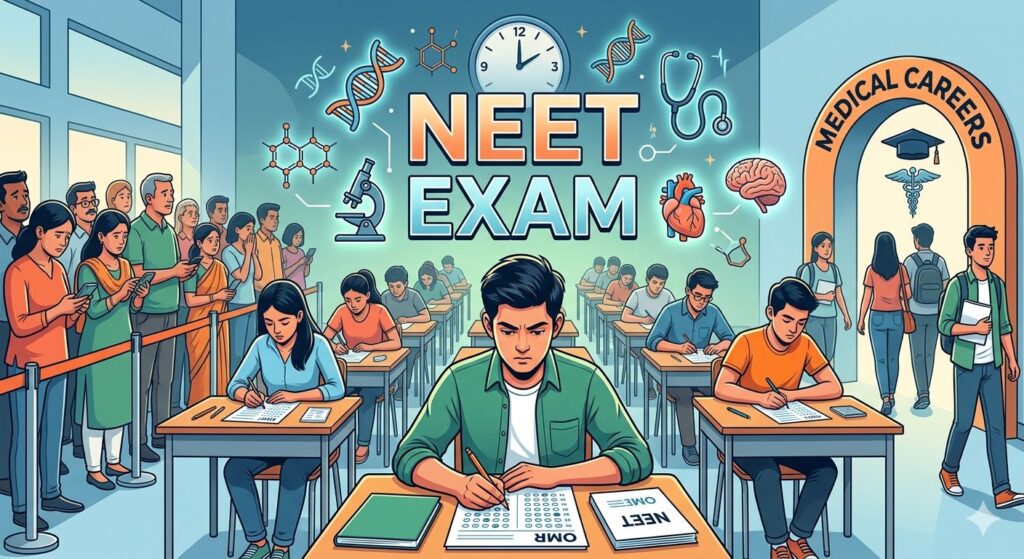
The NEET controversy is not simply about a paper leak. It is about the fragility of trust in a society where examinations determine social mobility, professional status, and national capability.
India’s examination system today stands at a crossroads. One path leads toward increasing centralisation, commercialisation, coaching dependency, and criminal infiltration. The other leads toward institutional reform built upon technology, accountability, ethical culture, and diversified assessment mechanisms.
The Indian Army’s examination and promotion systems demonstrate that integrity can be preserved when institutions cultivate accountability, layered screening, chain-of-command responsibility, and honour-based professional culture.
Civilian examination systems must adopt similar principles. Ultimately, no technological firewall can substitute for institutional character. The true battle is not merely against leaked papers but against the erosion of ethical foundations.
A nation that compromises merit compromises its future. And a nation that protects integrity protects civilisation itself.