

In one of my earlier articles ‘Why is Trump itching for a war with Iran?’ (Jan. 15), I had very clearly and categorically stated that from a purely military point of view, killing Khamenei is not at all difficult. I had also mentioned that accurate ground intelligence to accomplish this is possible given that traitors do exist everywhere. As I write this article on Mar.2, I marvel how prescient I was—I am in complete awe of myself.
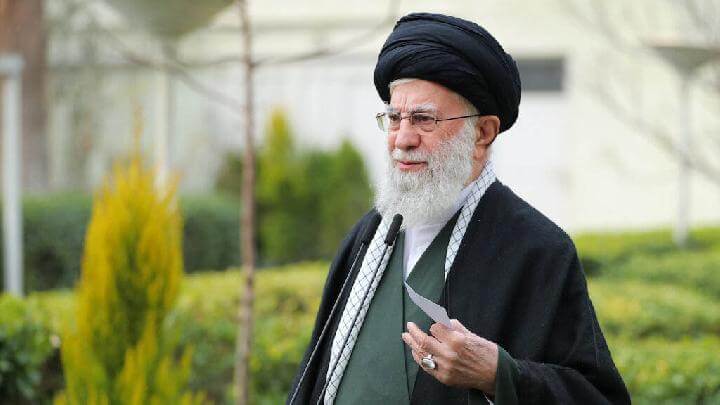
Khamenei was killed on the first day of the attack on Feb. 28 itself. Iranian state media confirmed Ayatollah Ali Khamenei’s death besides a large number of top military commanders. Iran’s state TV has confirmed the killings of Abdolrahim Mousavi (Chief of Staff of the Armed Forces); Mohammad Pakpour (Head of the IRGC); Aziz Nasirzadeh (Defence Minister); and Ali Shamkhani (Secretray of the Defence Council). The Israelis claim that as many as 40 senior commanders were killed in the first decapitating strike itself, within as little as 60 seconds.
A state TV presenter broke down when announcing the death of Khamenei: “After a lifetime of struggle, unceasing and untiring, Ayatollah Sayyed Ali Hosseini Khamenei drank the draught of martyrdom.” Reports claim that his daughter, son-in-law, grandson, and daughter-in-law were also killed. A 40-day mourning period has been declared in Iran.
Iran’s President Masoud Pezeshkian announced on TV that until such time that a new Supreme Leader is elected by due procedure, a temporary leadership council consisting of him, Mr. Ejei (Chief Justice), and Ayatollah Arafi has begun its work and will continue the path.
How the Attack Unfolded?
What was the ‘Epic Fury’ that struck Iran?
The joint US-Israeli military operation against Iran, which began on 28 February 2026 and continued into at least 2 March, is a large-scale, coordinated air and naval campaign targeting Iranian air defences, ballistic missile infrastructure, command-and-control nodes, Revolutionary Guard facilities, and naval assets. It is on-going by the time of writing this arrticle, with US forces designating it Operation Epic Fury and Israeli forces using names such as Operation Roaring Lion (or variants like Raging Lion in some reporting). The details given below purposefully ignores sensational and inaccurate reporting on social media and draws exclusively from on-the-record or attributed statements by US Central Command (CENTCOM), the Israeli Defense Forces (IDF), and reputed media houses like AP, Reuters, The New York Times, The Washington Post, Aviation Week, Air & Space Forces Magazine, and US Naval Institute News.
Timeline of the Opening Phase (Purely Military Actions)
28 February 2026 (Day 1, starting ~09:45 Tehran time / 01:15 ET): Coordinated surprise daytime strikes commenced simultaneously from Israeli and US platforms. Initial waves focused on degrading Iranian air defences and missile launch infrastructure in western and central Iran to open corridors for follow-on strikes.
Late 28 Feb–1 March: Sustained bombing runs and missile strikes expanded to central Tehran (command centres, IRGC headquarters) and Iranian naval facilities. US naval forces conducted strikes against Iranian warships.
1–2 March (Day 2+): Israeli follow-on strikes hit “the heart of Tehran” and expanded to related targets (e.g., Hezbollah-linked sites in Lebanon). US strikes continued on ballistic-missile and naval targets. Total targets struck exceeded 2,000 (US + Israeli combined).
Israeli Contribution (Operation Roaring Lion)
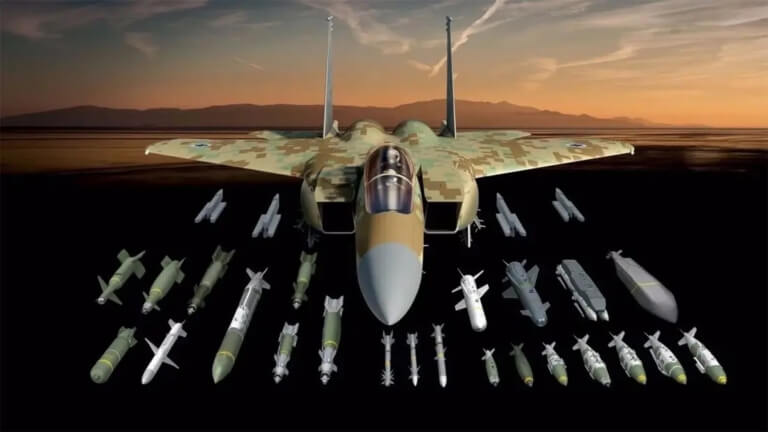
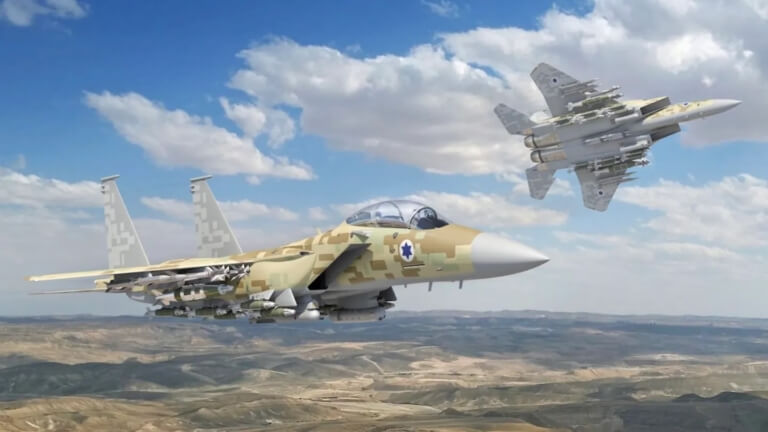
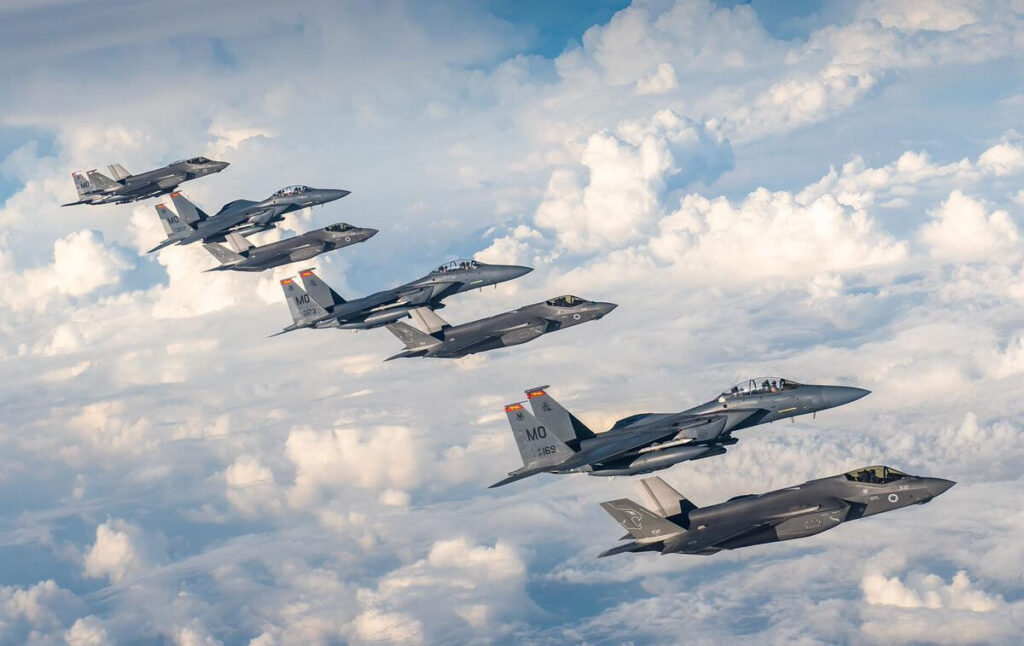
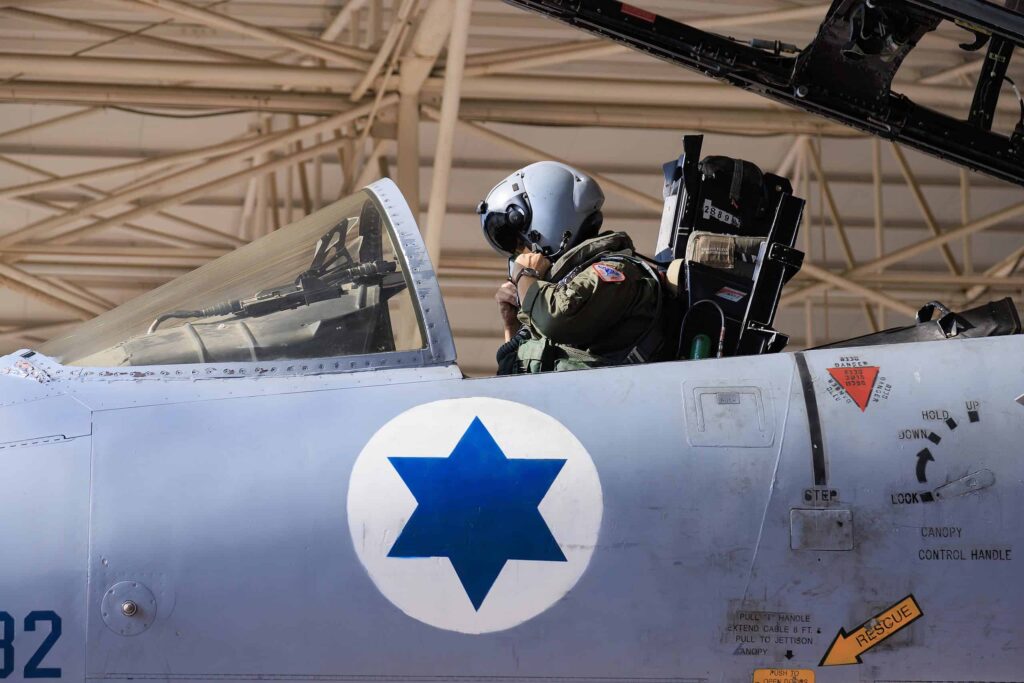
Aircraft: The Israeli Air Force (IAF) committed its largest-ever single combat fleet—approximately 200 fighter jets (mix of F-35I Adir stealth fighters, F-15I Ra’am, and F-16I Sufa, per standard IAF composition reported in military analyses). Note this is about 60% of their total fighter strength. It requires courage to commit so much on a single mission.
Munitions: More than 1,200 precision-guided munitions were fired/dropped in the opening day alone. These included air-to-surface missiles and bombs (specific types such as Spice- or Rampage-family standoff weapons are consistent with prior IAF operations but not publicly itemized in current reporting).
Targets and Effects: ~500 military targets in western and central Iran, primarily air-defence radars/sites and ballistic-missile launchers. The IDF stated this destroyed or rendered inoperable ~200 Iranian ballistic-missile launchers (about half of Iran’s operational inventory when including cumulative effects from prior 2025 operations). This cleared paths for deeper strikes into Tehran, hitting intelligence, security, and military command centres plus an explosives-manufacturing facility for missile warheads, rockets, drones, and cruise missiles.
Tactics: Sequential suppression of enemy air defences (SEAD) first in peripheral zones, followed by strikes on Tehran proper once aerial superiority was established over the capital.
US Contribution (Operation Epic Fury)
Strategic Bombers:
B-2 Spirit stealth bombers: At least four B-2s (open-source air-traffic and basing data confirm a flight of four departed Whiteman AFB, Missouri, conducted a nonstop round-trip mission of ~7,000+ nautical miles with aerial refuelling). Their exact role in not known yet.
Munitions: Dozens of 2,000-pound precision-guided bombs (GBU-31 JDAM or similar; sources explicitly describe “2,000-pound guided bombs”. These struck hardened, underground Iranian ballistic-missile facilities.
Bunker-buster clarification: Contrary to social media reports, the heavy MOP “bunker busters” (GBU-57) carried exclusively by B-2s were NOT used in this operation (they were employed in the June 2025 strikes on nuclear sites). The 2,000 lb class can have penetrating variants (e.g., GBU-28-style of the Gulf War era), but reporting consistently calls them standard 2,000 lb guided bombs for hardened missile caves, not the massive deep-penetration MOPs.
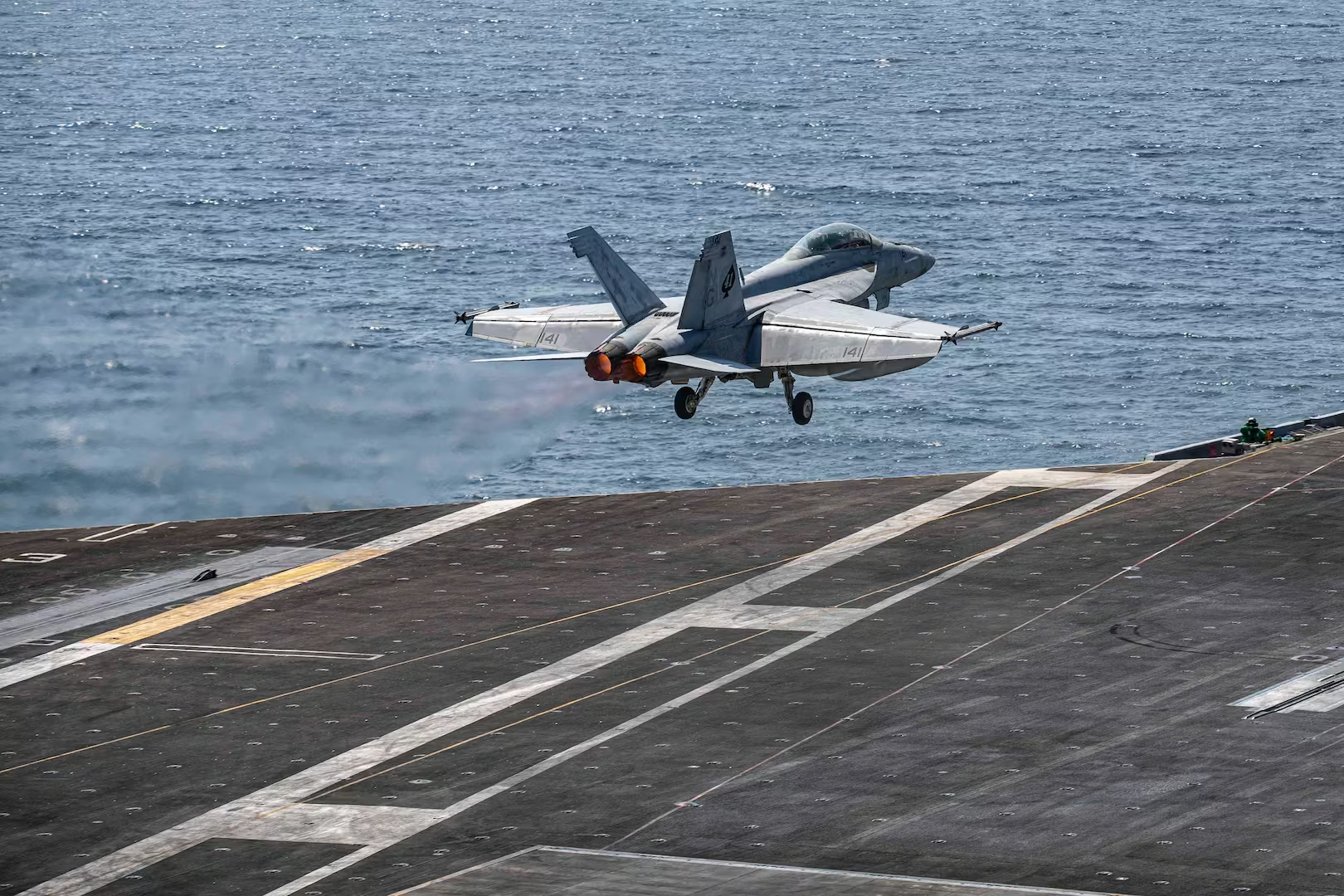
Tactical Fighters & Carrier Air Wing:
US Navy/Marine Corps aircraft operating from at least the USS Abraham Lincoln (CVN-72) carrier strike group in the North Arabian Sea.
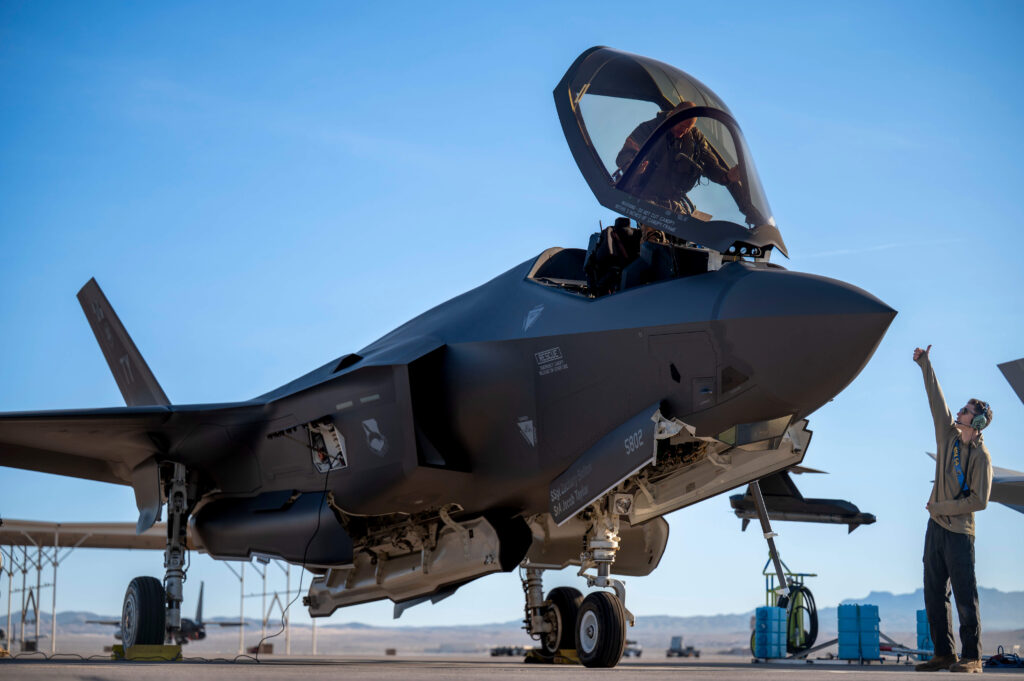
Types confirmed in CENTCOM-released imagery: F/A-18E/F Super Hornets and F-35C Lightning II (Marine Corps carrier variant).
Additional US stealth fighters (F-35A/B and F-22) were pre-positioned in the region (over 100 US fighters total in theatre per pre-strike build-up reporting), but exact numbers committed to strikes remain classified.
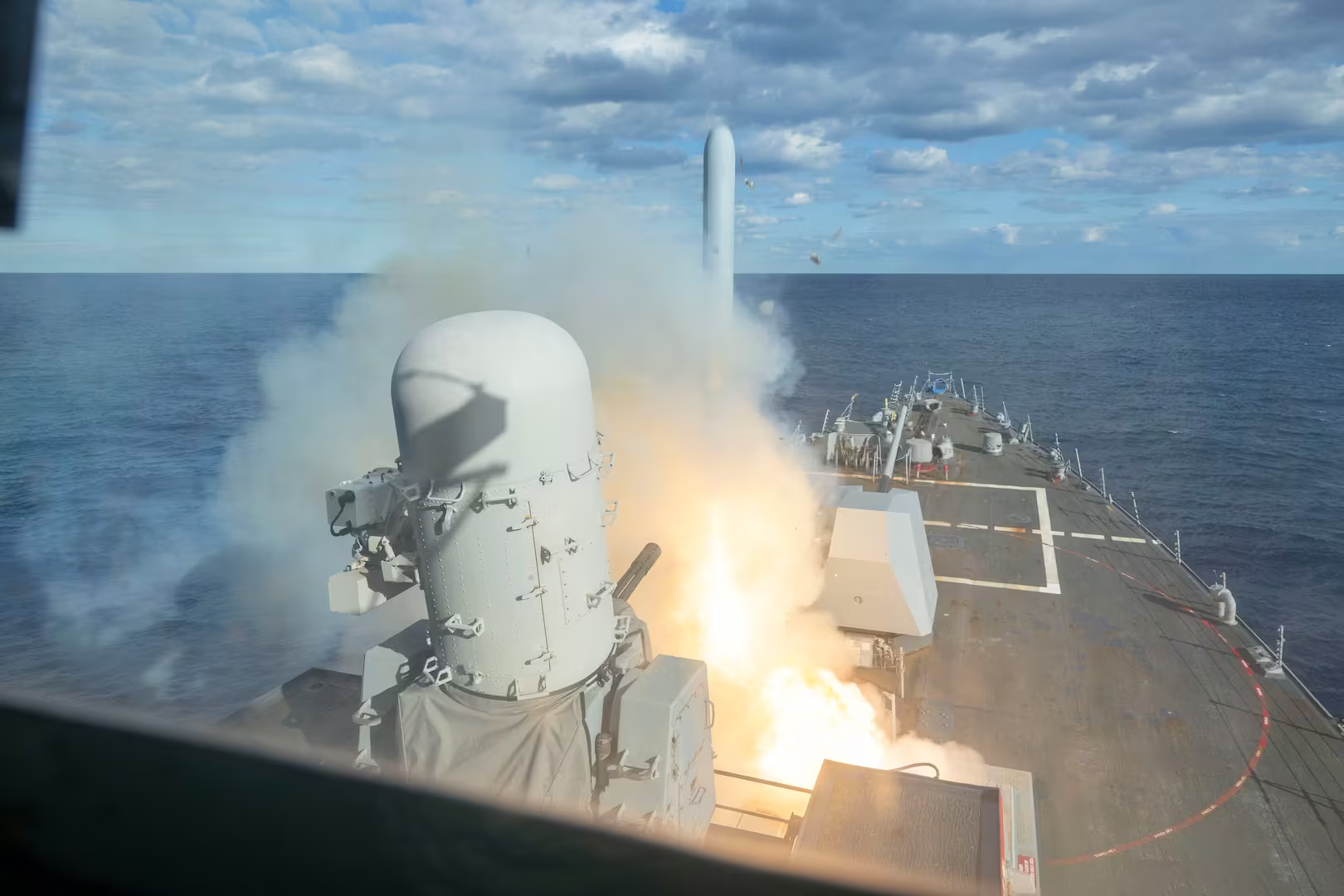
Cruise Missiles: Waves of Tomahawk Land-Attack Missiles (TLAM) launched from naval platforms (surface ships and/or submarines) in the region. No exact count released; described as “waves” for initial SEAD and deep strikes on missile sites, air defences, and command nodes. Tomahawks are sea-launched (standard US Navy practice; Raytheon-built, ~1,000-mile range, non-nuclear).
Air-launched missiles (from F-35/F-18) supplemented these.
Since its combat debut in 1991 Gulf War, the BGM-109 Tomahawk has spearheaded the opening of almost every major U.S. air campaign. It’s the “first door-knocker” designed to dismantle integrated air defence systems, before manned aircraft even cross the border. It still remains the ultimate tool for high-stakes, low-risk power projection.
While the original versions of the cruise missile used TERCOM (Terrain Contour Matching), the modern Block V variants 1,000+ mile range, Mach 0.74 sea-skimming to beat enemy radars, and have the ability to loiter or retarget mid-flight via satellite link. Whether launched from an Arleigh Burke-class destroyer a Virginia-class submarine or a ground launcher, it’s still the gold standard for surgical precision.
Drones: First combat use of low-cost one-way attack (“suicide” or kamikaze) drones (LUCAS / Low-Cost Unmanned Combat Attack System, ~$35k each, modelled on Iranian Shahed-136 designs). This is the ironical part. Incidentally, the famous Russian Geran drone is also loosely based on this. Imagine you’re a drone over the Persian Gulf on your final mission, and you spot your longlost brother zipping past you in the opposite direction—except for the flag on your wing, everything else is nearly identical. What greeting they would exchange? Strange times indeed!
MQ-9 Reaper armed drones also employed for persistent strikes and targeting.
Naval Strikes:
US forces (carrier aircraft + likely surface combatants) targeted the Iranian Navy directly, resulting in the sinking of nine Iranian navy ships and destruction of a naval headquarters/building (CENTCOM and Trump administration statements corroborated by open-source imagery and Iranian admissions of naval losses).
Scale of attack: US forces alone struck more than 1,000 Iranian targets in the first 24–36 hours (CENTCOM). Combined with Israeli efforts, the total exceeded 2,000.
Overall Operation Characteristics
Total Platforms: Israeli ~200 fighters + US B-2 flight (4) + carrier air wing (dozens of F-18/F-35) + supporting tankers, AWACS, and unmanned assets + naval surface/submarine forces. Exact US fighter count beyond the carrier wing is not public.
Munitions Volume: Thousands of precision weapons (1,200+ Israeli + hundreds-to-thousands US Tomahawks, JDAMs, drones, etc.).
Command & Control: Tight US-Israeli coordination; US provided intelligence and long-range strike enablers; Israel executed the bulk of the manned fighter operations inside Iranian airspace once corridors were opened.
Effects Claimed (Military Only): Near-total degradation of Iranian air defences in key sectors, destruction of large portions of the ballistic-missile force and production infrastructure, elimination of IRGC command nodes, and severe damage to the Iranian surface navy. Iranian retaliation (hundreds of missiles/drones) was launched but largely intercepted outside the scope of this query.
Since the operation remains active by the time of writing this, so final munitions counts, battle-damage assessments, and additional platform details are still classified or under assessment by CENTCOM/IDF.
Questions that remain unanswered
The way the war unfolded was beyond the imagination of even the Americans and Israelis. So far, nobody knows the following:
- Why did Khamenei remain on ground in his usual building?
- Who betrayed him?
That Khamenei was killed so cheaply is surprising. Decades ago, Saddam Hussein was reputed to have built 40 feet or so deep fortified bunkers to survive aerial attacks. The GBU-28 (2.3 tons) Bunker Buster was developed in 17 days flat to take them out. From there they progressed to the GBU-57 (14 ton) Bunker Busters that were used last June to attack Iran’s nuclear facilities. Even as the war clouds had been gathering since the past 2 months, it defies reason and common sense as to why Khamenei did not go into hiding into some specially designed underground bunker.
It has been suggested that at 86 years of age, Khamenei might even have quite fancied the idea of being ‘martyred’. We cannot be sure but it is not impossible either. His dying in saddle ensures that his name, fame and legacy would endure forever.
As for betrayal leading to the accurate intelligence about the precise whereabouts, it has become a butt of jokes: “If you put three Iranian intelligence officers in a room, at least one of them is a Mossad agent.” Former Iranian President Mahmoud Ahmadinejad in an interview with CNN Turk had said that Iran’s secret services had created a special unit to combat Mossad operating in Iran. However, turns out the head of this unit was himself a Mossad agent, along with 20 other agents, who were responsible for multiple intelligence operations in Iran including stealing nuclear docs and assassinating several Iranian nuclear scientists before allegedly fleeing to Israel.
From the professional perspective of intelligence gathering, this operation could perhaps be the top scorer in the entire history of intelligence. Ronen Bergman, author of ‘Rise and Kill First: The Secret History of Israel’s Targeted Assassinations’ says that the CIA had been tracking Ayatollah Khamenei for months, gaining more confidence about his locations and his patterns. Then the agency learned that a meeting of top Iranian officials would take place on Saturday morning at a leadership compound in the heart of Tehran. Most critically, the CIA learned that Khamenei would be at the site. The United States and Israel decided to adjust the timing of their attack, in part to take advantage of the new intelligence.
Mario Nawfal insinuates that the betrayer was present in the meeting and left shortly before the attack. Reports and rumours regarding Esmail Qaani, the commander of Iran’s Quds Force, “betraying” circulated on social media and in some news outlets suggesting Qaani might be a double agent for Israel’s Mossad or the CIA. Earlier also, following the assassination of Hezbollah chief Hassan Nasrallah in September 2024, reports from Middle East Eye and other sources claimed Qaani was placed under house arrest and interrogated over security lapses.
Why the Iranian Response was so meek?
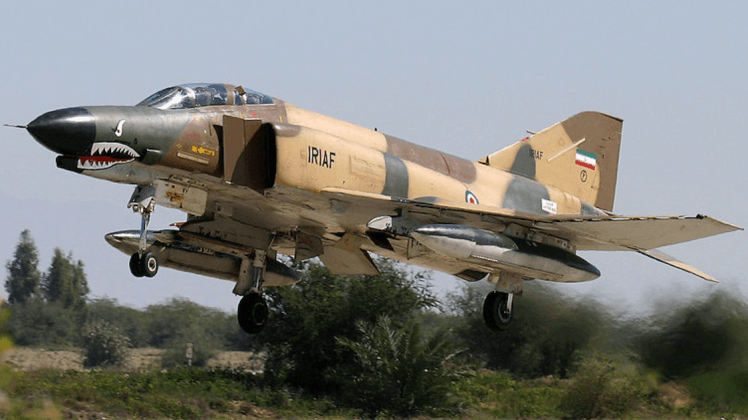
It is a mystery to defence analysts of the world, why the Iranian response was so meek. What happened to the Middle East’s largest and most diverse missile arsenal of Iran, featuring short, medium, and long-range ballistic missiles, emphasizing mobility (solid-fuel), precision, and deterrence with thousands of missiles like the Zolfaghar, Sejjil, and Emad, aiming to cover regional targets (like Israel) and beyond, with a strategic self-imposed range limit of 2,000 km. Many systems, like the solid-fuel Fateh series, are road-mobile (TELs) for quick deployment and concealment. As of 2026, Iran maintains the largest and most diverse missile arsenal in the Middle East, estimated at over 3,000 ballistic missiles. Following the high-intensity Iran-Israel War of 2025, the arsenal has had reportedly undergone rapid modernization with a focus on precision, survivability, and bypassing advanced air defences.
But what happened? The analysis is based on the same sources mentioned earlier. Iran began its response within hours of the initial US-Israeli strikes on 28 February 2026, launching coordinated waves of ballistic missiles, drones, and a small number of cruise missiles.
Total projectiles (first 48–72 hours): Approximately 400–420 ballistic missiles + 600–800+ one-way attack drones + at least 2 cruise missiles.
To Israel: ~162–170 ballistic missiles delivered in 20 separate small barrages (typically 2–4 missiles each) + >50 drones.
To UAE: 165 ballistic missiles + 541 drones + 2 cruise missiles.
To other targets: 46 ballistic missiles to Qatar; smaller salvos to Bahrain, Kuwait, Jordan, Saudi Arabia, and Erbil (Iraq); maritime strikes in the Strait of Hormuz and Gulf of Oman.
Platforms: Mobile and fixed ballistic-missile launchers remaining inside Iran (primarily IRGC Aerospace Force units in western and central provinces). No manned aircraft or naval platforms were used for retaliation. Drones were the standard Shahed-type low-cost loitering munitions.
Targets and Effects
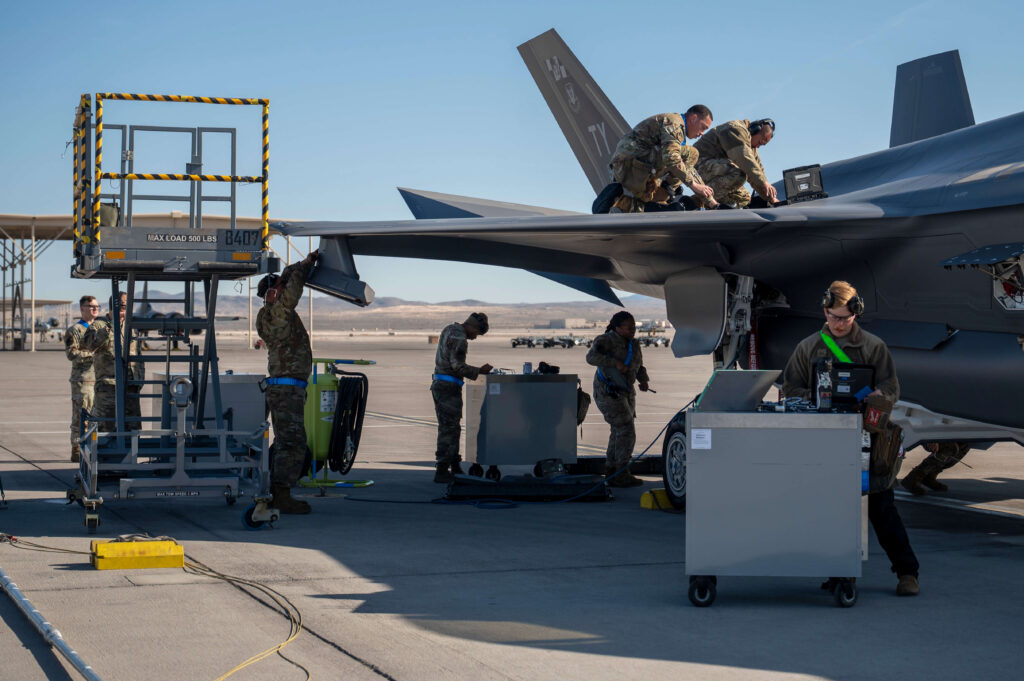
Israel: Multiple hits on civilian areas – Tel Aviv residential district (1 killed, ~21 wounded), Beit Shemesh (residential building and public shelter struck), near Temple Mount in Jerusalem, and alerts in Eilat/northern Israel. At least 9–12 Israeli deaths and 200–450 injuries reported across waves (mostly from direct impacts or falling debris). Three drones confirmed intercepted over Israeli territory; the rest of the barrage was engaged by Arrow, David’s Sling, and Iron Dome systems.
UAE: 152 of 165 ballistic missiles intercepted or fell into the sea; 506 of 541 drones intercepted; both cruise missiles destroyed. Hits/debris caused:
Damage to Dubai and Zayed International Airports (disrupted operations, 1 killed + 7 injured at Zayed).
Fires at Jebel Ali port, Burj Al Arab hotel, and Fairmont Palm (debris-related).
Minor civilian property damage; 3 total deaths (foreign workers) and 58 injuries.
Other Gulf/US-host nations:
Kuwait: Drone strike on Kuwait International Airport passenger terminal (minor damage, several workers injured).
Bahrain: Drone/missile strikes near US Naval Support Activity Bahrain (fire reported, no US casualties at the base).
Qatar, Jordan, Saudi Arabia: Missiles/drones aimed at al Udeid Air Base, Ali al Salem, Muwaffaq al Salti, Prince Sultan Airbase, and Riyadh airport – almost all intercepted; minor debris damage.
Iraq (Erbil): Attempts on US Consulate and Harir Airbase – intercepted.
US naval forces: Attempted strike on USS Abraham Lincoln (carrier strike group in the North Arabian Sea) – failed; no US Navy ships hit. Fleet remained fully operational.
Maritime domain: IRGC radio warnings closed the Strait of Hormuz to commercial traffic; at least three oil tankers struck (fires, injuries, but none sunk); traffic continued with escorts.
US casualties overall: 3 US service members killed and 5 seriously wounded (from strikes on regional bases). CENTCOM: “hundreds of Iranian missile and drone attacks successfully defended against… minimal damage… not impacted operations.”
By late 1 March and into 2 March the intensity of Iranian missile barrages had visibly declined (e.g., from 58 missiles in one wave to 12–29), with attacks shifting toward cheaper drone swarms.
Key military factors that neutered Iran’s capability:
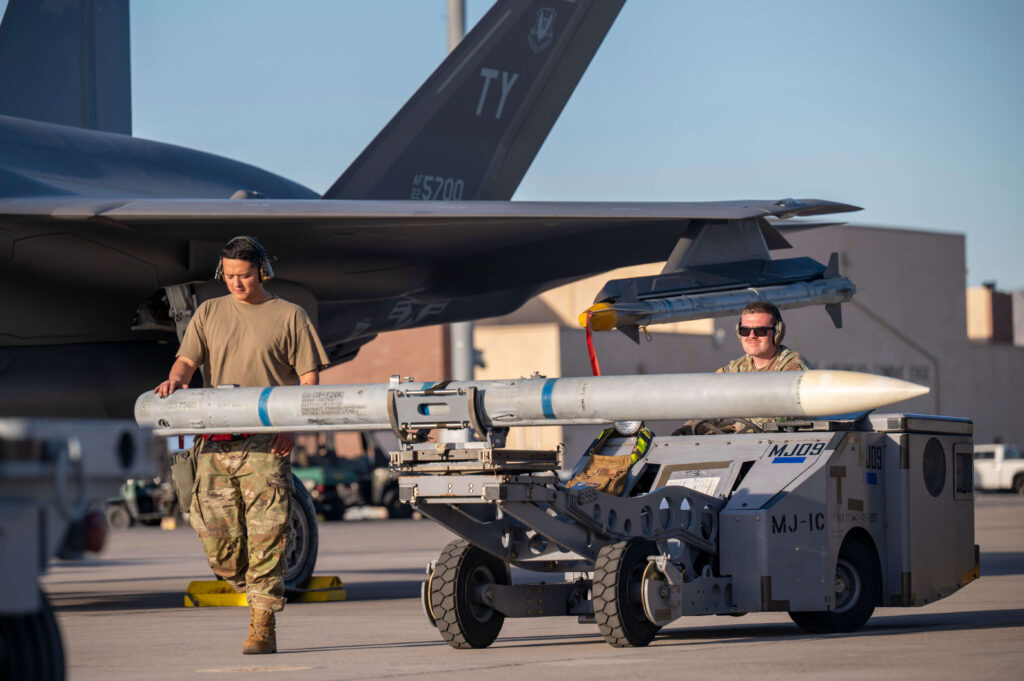
Launcher destruction (the critical bottleneck): Israel stated that the joint operation destroyed around half of Iran’s operational ballistic-missile launchers (~200 launchers). The IDF and US struck dozens of launchers in real time (including at Amand base north of Tabriz, Zanjan Province, and while crews were loading missiles). Fixed sites and known mobile operating areas were hit in the first waves, preventing mass simultaneous salvos.
Stockpile and production degradation: Repeated strikes on storage depots (Khomein, Haji Abad, Jam, Mehrabad Airport) and production facilities removed hundreds of missiles from inventory and slowed replenishment. This mirrors the 2025 war, when Israel alone destroyed ~40 % of Iran’s ballistic missiles.
Command-and-control decapitation: Loss of Supreme Leader Khamenei plus dozens of senior IRGC commanders and intelligence chiefs (confirmed by US/Israeli statements) severely disrupted coordinated large-scale firing. Barrages were smaller, less synchronized, and often reactive rather than pre-planned saturation attacks.
Allied air-defence dominance: Israel’s multi-layered system + US Patriot/THAAD + Gulf state defences achieved 90 %+ interception rates against ballistic missiles and even higher against slow drones. Iran spread its remaining fires across too many targets (Israel + 7+ countries + maritime), diluting the salvo effect.
Pre-emptive timing: The opening US-Israeli strikes on 28 February deliberately began in daylight with SEAD and counter-missile focus, catching many Iranian units before they could disperse or fire.
In short, Iran did not “cave in” politically—it mounted a broad, multi-front response involving proxies (Hezbollah rocket fire) and attempted to pressure US allies—but its military retaliatory punch was pre-emptively crippled.
The regime shifted to a survival-and-attrition posture: smaller, dispersed attacks designed more for political signalling and to force continued defensive resource expenditure than for decisive military effect. As of 2 March the operation remains active, but Iranian missile/drone launch rates have already dropped sharply, confirming the success of the initial counter-force campaign.
The Prognosis
The prognosis remains the same as I had predicted in my earlier article: Khamenei’s death was exactly the scenario American planners fantasize about in PowerPoint presentations and never discuss honestly in public. Trump called it justice for Iranians and urged regime change, while expatriates in cities like Los Angeles and Washington celebrated with U.S. and Israeli flags. Reza Pahlavi declared the Islamic Republic’s end and called for free elections. While morning rallies in Iran are on record, reports of celebrations could very well be American propaganda. Trump expects a regime change.
The situation is fluid at the moment but, I find it rather unlikely. Iran might not be in a position to retaliate in a manner it was expected but the Islamic Republic might not implode. For all you know, it might very well harden.
Iran is a theocracy. This means that the principle of primacy operates instead of dominance. Other religious leaders will gather and elect a new Ayatollah. The system will remain more or less the same.
American strategy of inciting public unrest through the rioting in January had failed. It does not appear likely by any means that there will be large-sale public unrest and it will overthrow the Mullah government.
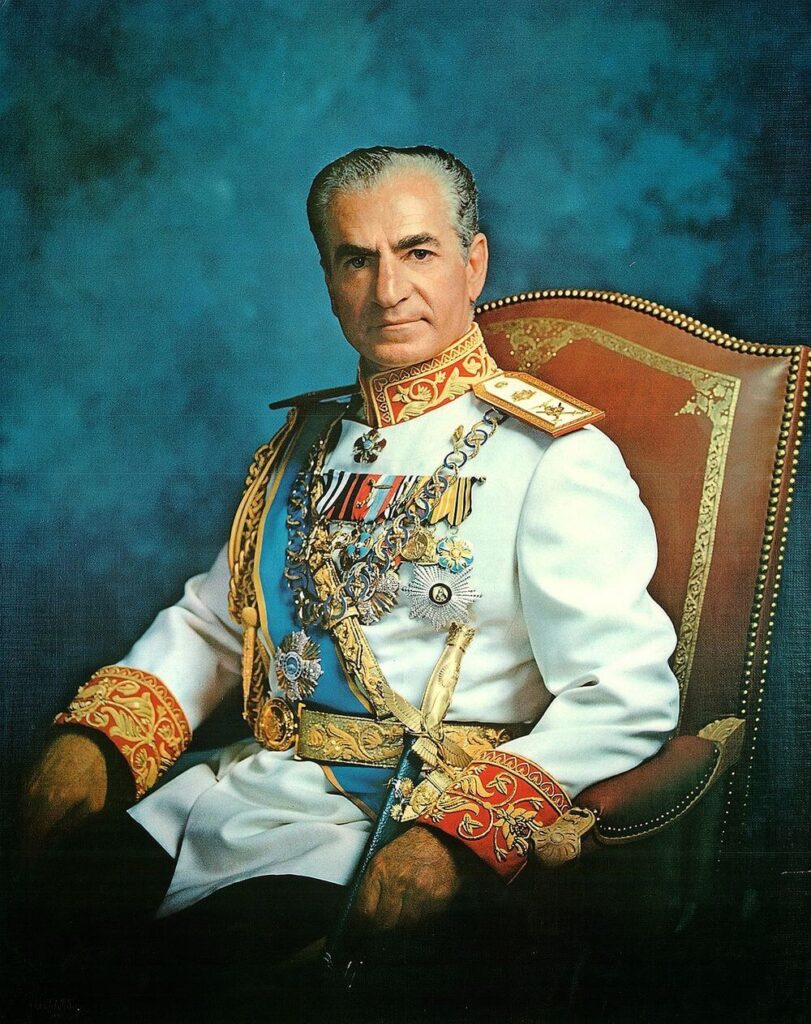
Reza Pahlavi, the 65-year old son of the former Shah of Iran, an American stooge, has been living in exile in USA since long. Since years, he has been salivating that he is prepared to come back to Iran and reclaim his lost kingdom. In the wake of the attack, he issued a series of video and social media messages. This creep, the unprincipled opportunist had abandoned his motherland to seek sanctuary in a country that had been screwing Iran since the time of Mossadegh. He lost no time to declare the Islamic Republic “effectively ended” and called it a “watershed moment” in the struggle for Iran. He promised to announce a specific “timeline” for the “final action” when they should return to the streets to reclaim the country. He also encouraged “nightly chants” against the regime in the interim.
He keeps peddling this fairy tale to the West: “Most Iranians want the Shah back!” No way. In reality, you’ve got the IRGC, Basij—one million armed fanatics—regime loyalists, families of protesters craving revenge, Khamenei diehards ready to settle scores. Add to it the Kurds, Baloch, Azeris, Arabs, all eyeing independence or autonomy; and the street’s already boiling. Reza Pahlavi is conveniently throwing the burden on a public that’s not one, not unified—deeply divided, armed with blood feuds that can’t be reconciled. Some want revenge, some want power; some want guns, some want out—in short, the perfect recipe for total chaos.
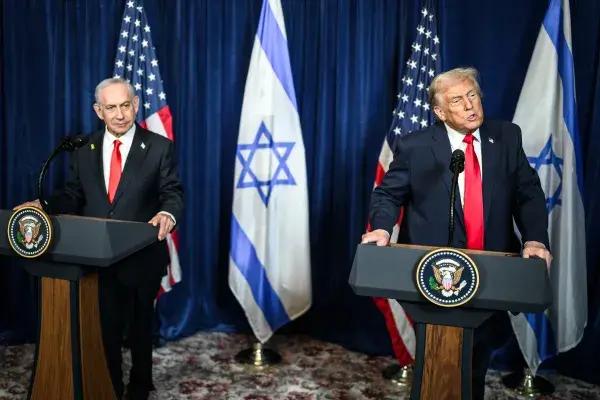
I wonder if that is what Trump and Netanyahu would want. Killing Khamenei was not a big deal given their preponderant military superiority. The real question is what you do after that. As I wrote in my last article, “The real question is not whether Iran can be destabilized. It can—of course. The question is whether the United States can control what follows. History suggests otherwise. They could not ensure peace and stability even in an abjectly defeated Iraq—the insurgency that resulted took a heavy toll. The bombed every inch of Afghanistan and yet had to exit in utter ignominy after 20 years.”
We are watching. Let us see what cards Trump and Bibi have up their sleeves that would rewrite history.


Dr. N. C. Asthana’s article offers a deeply insightful and comprehensive analysis of the US-Israel action against Iran. He examines not only the military dimensions of the strike but also its strategic, political, and diplomatic ramifications with remarkable clarity. The piece stands out for its balanced perspective, factual grounding, and logical structuring of complex geopolitical issues. His foresight and understanding of regional power dynamics enrich the narrative significantly. Overall, it is a well-articulated and authoritative commentary that reflects mature strategic thinking and thorough research.