

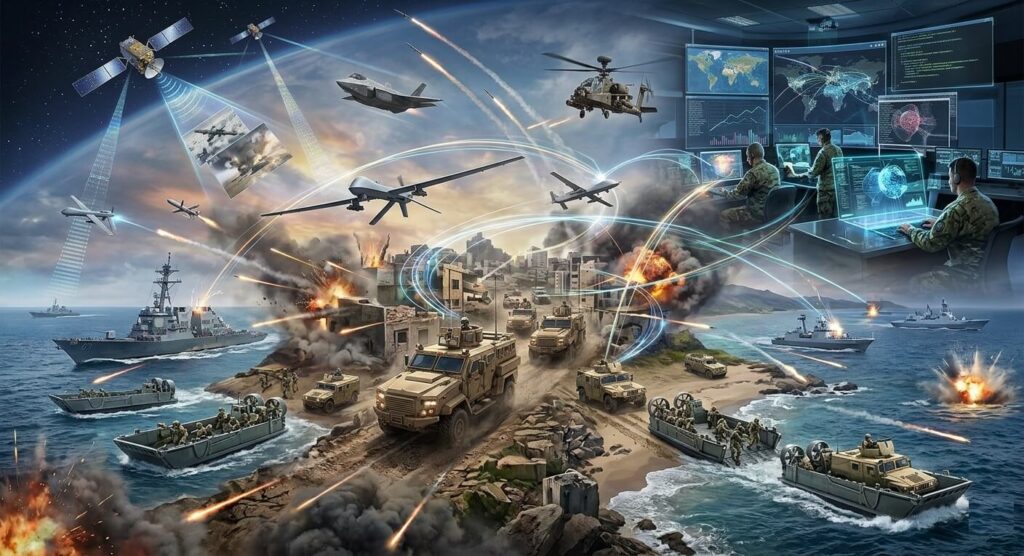
The character of warfare has changed rapidly, military operations are no longer confined to discrete domains of land, sea, and air, nor are they conducted in a linear sequence progressing from ground manoeuvre to air superiority. Instead, contemporary conflicts increasingly unfold across multiple domains simultaneously, with actions in cyber, space, and the electromagnetic spectrum shaping outcomes before and sometimes without large-scale kinetic engagement.
This transformation reflects more than technological innovation. It symbolises a structural shift in how military power is generated, coordinated, and applied. Precision strike systems, autonomous platforms, real-time intelligence fusion, and cyber operations have compressed decision cycles and expanded the battlespace far beyond physical frontlines. The NATO Alliance’s formal adoption of Multi-Domain Operations (MDO) in 2023 underscores the growing consensus that future conflicts will be decided by the ability to synchronize effects across domains rather than by dominance in any single one.
For India, these changes carry particular strategic significance. The country faces two technologically capable adversaries whose increasing operational collusion backed by shared military ecosystems complicate traditional kinetic based deterrence models, that we have applied till now. The May 2025 India Pakistan conflict has provided a limited glimpse of this emerging reality. While India demonstrated credible precision-strike and air-defence capabilities in a non-contact environment, the conflict also exposed vulnerabilities in early-warning integration, counter-drone defences, and cyber resilience, especially under conditions of rapid escalation.
In Part1, we explores how evolving dimensions of warfare ,multi-domain integration, artificial intelligence, autonomous systems, drone swarms, and cyber-enabled infrastructure targeting are reshaping the strategic environment confronting India. Rather than treating these developments as inevitable or uniformly decisive, the analysis emphasizes the conditions under which they generate operational advantage. The central argument being India’s future military effectiveness will depend less on the acquisition of advanced platforms and more on its ability to integrate technologies, organizations, and doctrines into a coherent multi-domain defence posture.
The Multi-Domain Operations Framework
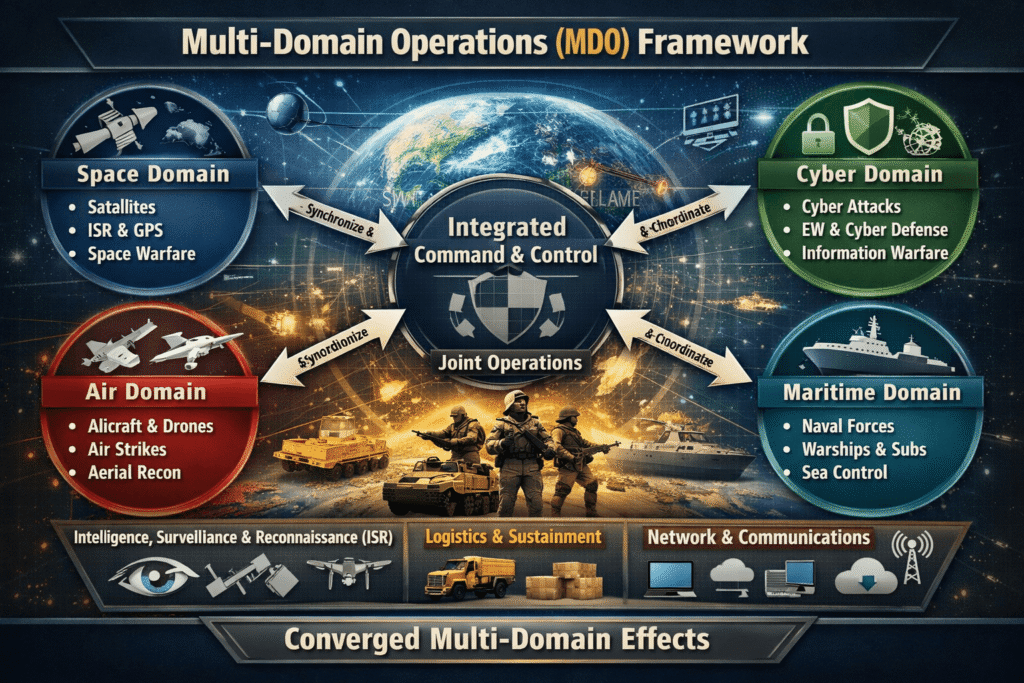
Multi-Domain Operations represent the integration of military activities across all operational domains land, sea, air, cyber, and space synchronized to achieve converging effects. This framework emerged as a response to adversaries employing sophisticated Anti-Access/Area Denial (A2/AD) systems, posing fundamental challenges to traditional joint military operations. The transformation reflects profound technological and operational realities, highlighting that future military conflicts will occur simultaneously across multiple domains, with effects in one directly influencing operations in others.
Importance of Multi Domain Operations (MDO) lie in their potential to significantly expand the capabilities of command and control (C2) in several ways:
Enhanced situational awareness: By integrating information from multiple domains, MDO provides a more comprehensive and accurate picture of the battlefield, allowing informed decisions and quick response to threats.
Decentralized decision-making: Yet another effect is greater decentralized decision-making, allowing commanders at lower level to take decisions based on real-time information with minimal guidance from higher commanders. Thus, leading to faster and flexible response to rapidly changing battlefield conditions.
Improved command and control communications: MDO demands robust communication systems that can operate across multiple domains, allowing for better coordination and collaboration between military units.
India’s Multi-Domain Integration Strategy
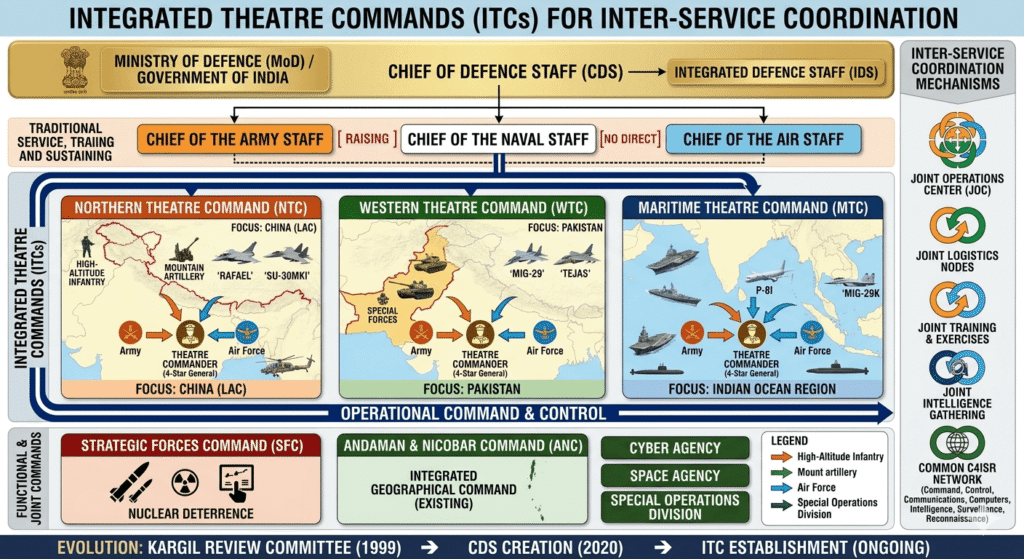
Taking cognizance of these developments, number of structural reforms have been initiated to develop and implement MDO capability within the armed forces. Towards this Ministry of Defence has declared 2025 as the “Year of Reforms,” with explicit focus on establishing Integrated Theatre Commands (ITCs) transcending traditional service boundaries. These ITCs are being structured to undertake consolidated operational planning and execution among the three services and other domains at the specific geographical theater levels to enable integration in any operational contingencies.
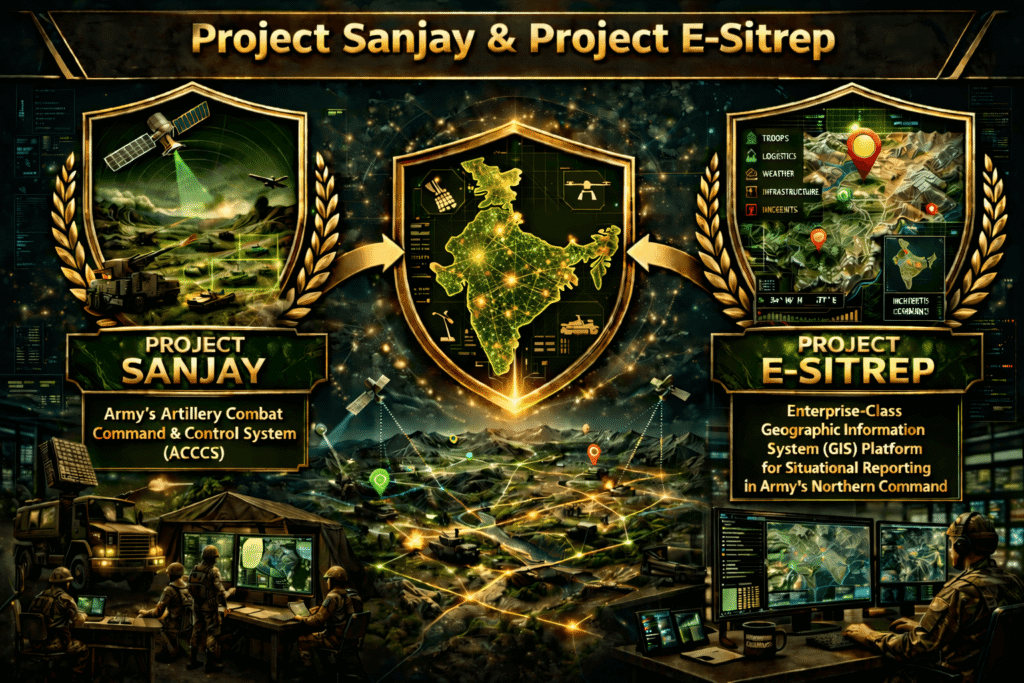
Two, foundational technological initiatives supporting multi-domain integration are Project Sanjay and Project E-Sitrep represent. Whilst, Project Sanjay linked with the Army’s Artillery Combat Command and Control System (ACCCS) establishes a Battlefield Surveillance System, with multiple centers, integrating diverse sensors for comprehensive situational awareness. Project E-Sitrep on the other hand is an enterprise-class Geographic Information System (GIS) platform for situational reporting. It is initially being launched in Army’s Northern Command. These systems are being fielded to create the necessary information architecture for coordinated multi-domain operations.
Furthermore, India’s defence modernization roadmap explicitly prioritizes multiple other transitions, such as from conventional ammunitions to smart, precision-guided munitions” and integration of “directed energy weapons, such as high-energy lasers and microwave systems, for counter-drone operations, missile defense, and anti-satellite capabilities”. Additional, steps are being taken to priorities cyber and electronic warfare capabilities to achieve spectrum dominance and robust cyber defence. Towards this industry partnerships are being incorporated to develop next-generation cyber tools, autonomous electronic warfare solutions, and resilient satellite systems. Overall aim is to coordinate multi-domain concepts across all operational domains.
AI and Lethal Autonomous Weapon System (LAWS)
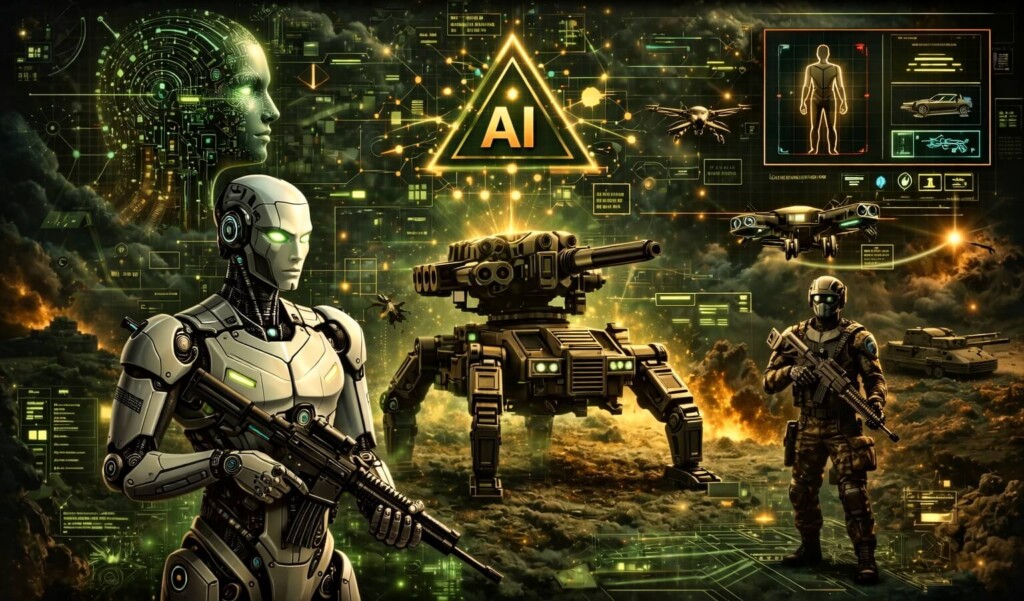
AI in Military Operations
Artificial intelligence has emerged as a transformative force in military operations, altering intelligence, surveillance, and reconnaissance (ISR) capabilities and command-control systems. This extensive use of AI reflects military establishments worldwide recognizing its critical importance for an operational advantage. AI based decision-support tools leverage predictive algorithms for tactical and strategic planning, enabling commanders to evaluate multiple operational scenarios and their consequences within microseconds.
Autonomous systems embody the most consequential AI application, allowing Autonomous Unmanned Aerial Systems (UAS) and ground vehicles to conduct high-risk missions such as navigating complex environment’s, adapt to changing conditions and execute missions with minimal human intervention. The U.S. Army’s Project Convergence is an example of how AI tools are being incorporated to accelerate decision cycles and enhances situational awareness in complex operational theaters.
Lethal Autonomous Weapons Systems
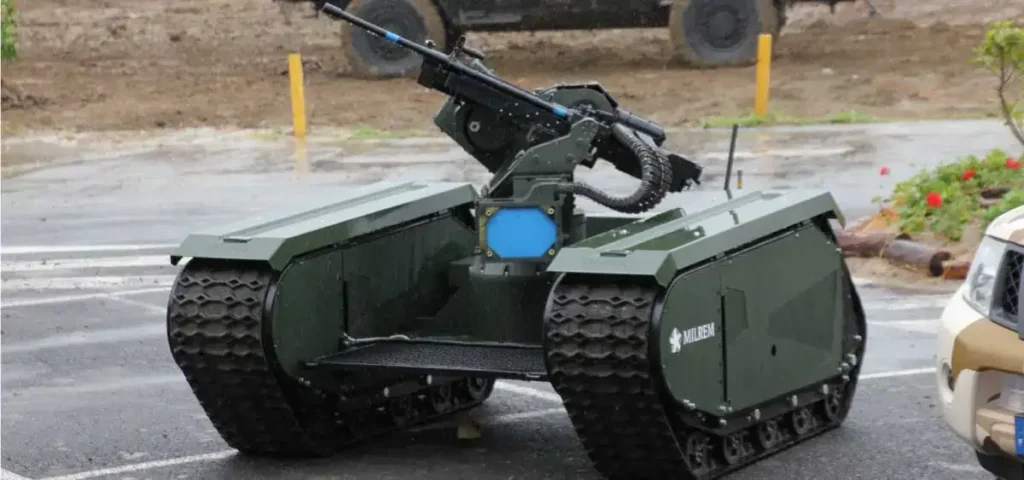
Lethal Autonomous Weapons Systems (LAWS) is another frontier of military AI development. These systems integrate autonomous navigation, target recognition, and engagement without any human involvement in “targeting decisions”. Current systems demonstrate elements of autonomy, such as: drones equipped with electro-optical sensors can perform autonomous navigation; machine learning models can identify targets with high accuracy; whilst data-sharing networks enable coordinated swarm operations.
Russia’s drone development program illustrates this progression. By combining autonomous navigation, AI-enabled target detection, and distributed control systems, Russia is rapidly advancing toward the use of large-scale, coordinated drone swarms that require minimal human input, by actively testing such systems in Ukraine. This development blending GPS independent navigation, machine vision and long-range strike capability signals a leap in warfare of major significance.
These developments have serious impact on India’s security environment. Were China and Pakistan to achieve comparable autonomous weapons capabilities, India will be at a great disadvantage. The lag between adversary’s capabilities and Indian responses directly translates into a military vulnerability. This urgency is reflected in the modernization roadmap, which prioritizes “integration of AI-powered helmets, smart apparel, and real-time health monitoring to enhance battlefield effectiveness” and development of “next-generation cyber defence tools, autonomous EW solutions, and resilient satellite systems”.
Drone Swarms and Autonomous Systems
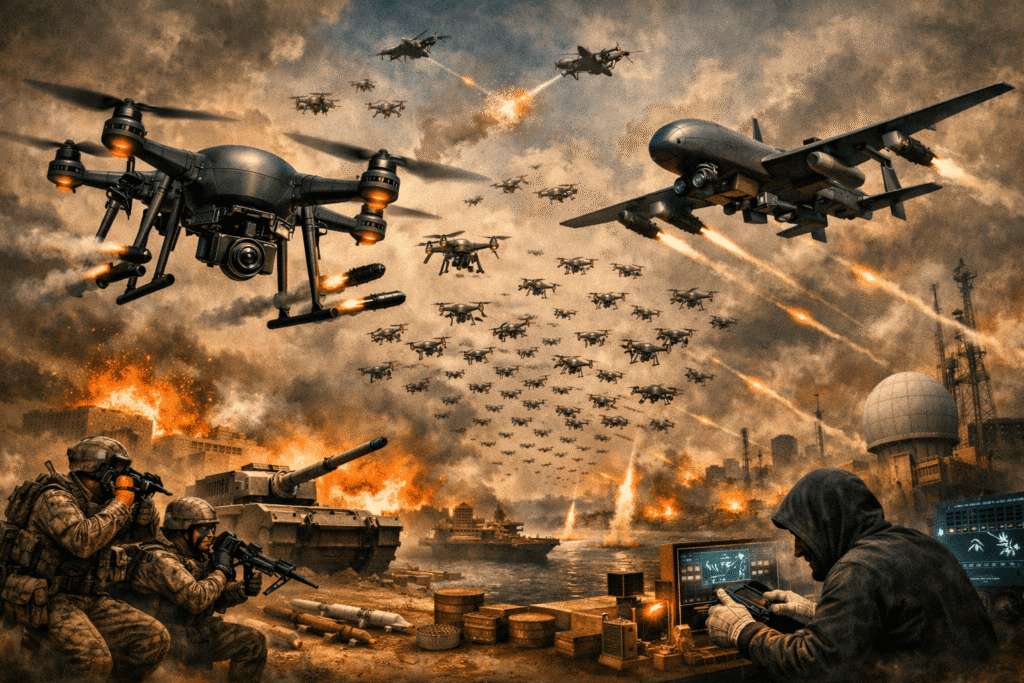
Drone swarms represent a fundamental departure from traditional conception of airpower. Instead of relying on a limited number of high-value unmanned platforms, militaries are increasingly experimenting with large numbers of relatively simple, expendable drones designed to operate collectively. In such systems, the individual platform is less important than the behaviour of the swarm as a whole. The military value of swarms lies not in performance metrics such as speed or payload, but in their capacity for mass, redundancy, and adaptive coordination.
The viability of modern drone swarms is enabled less by advances in airframe design and more by progress in artificial intelligence, distributed computing, and resilient networking. These technologies allow swarms to function in environments where traditional unmanned systems would fail, including conditions of GPS denial, electronic jamming, and degraded communications. Control models vary across levels of autonomy. In some cases, human operators retain supervisory control over pre-programmed missions. In more advanced configurations, decision-making is distributed across the swarm, allowing individual drones to share data and collectively respond to emerging threats in near real time.
The disruptive impact of drone swarms is most evident in their cost-exchange logic. Conventional air defence systems were designed to counter a small number of high-value threats using equally expensive interceptors. Swarms have inverted this model. Individually inexpensive and often disposable drones, when deployed in large numbers, can saturate defences, absorb attrition, and force defenders into economically unsustainable responses. A single swarm can strike multiple targets, probe defences, absorb losses, and re-task itself as new intelligence emerges. The dilemma of the defender is stark: using million-dollar interceptors to shoot down thousand-dollar drones is hardly a sustainable exchange ratio.
In Ukraine, Russia’s launch of more than 700 drones in a single attack in July 2025 demonstrated how mass can be used to saturate defences and stretch response systems to their limits. Elsewhere, the Swedish Armed Forces have moved toward decentralization, unveiling software that allows individual soldiers to control swarms of up to 100 uncrewed aircraft at once. In the United States, the Pentagon’s Replicator initiative reflects similar thinking, aiming to field thousands of low-cost, autonomous drones. The pattern is consistent: militaries are choosing quantity, autonomy, and coordination over a small number of highly advanced platforms.
China’s Drone Swarm Development
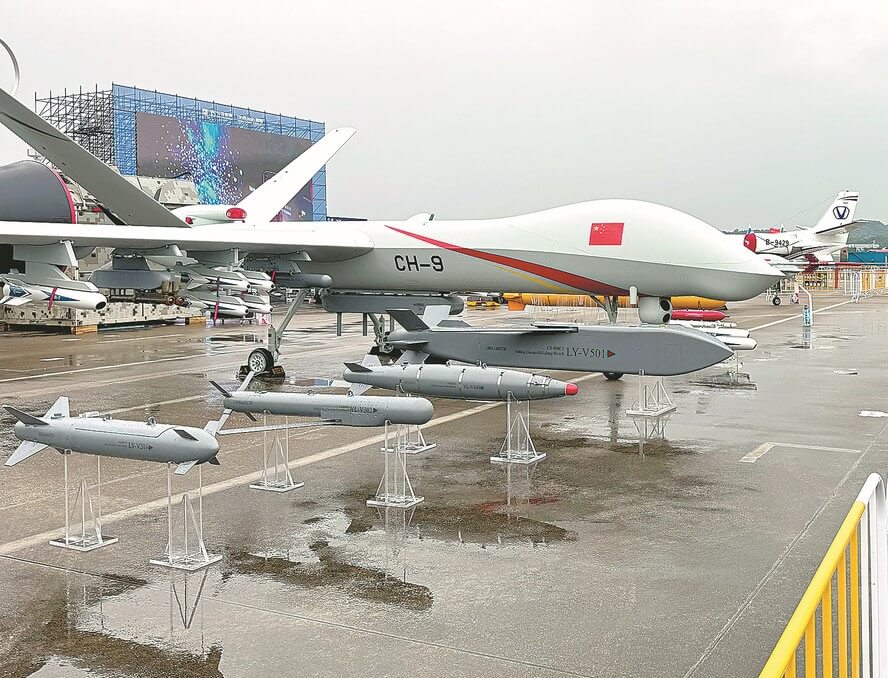
China, does not view drone swarms as experimental technologies, but as practical tools of future conflict. PLA planners see particular value in swarm capabilities for scenarios involving Taiwan, where the ability to overwhelm defences, complicate situational awareness, and impose costs early in a conflict could prove decisive. During the summer of 2025, the PLA tested advanced unmanned cross-domain systems, including swarm-based concepts, as part of broader efforts to integrate autonomy into operational planning. Such systems will also be used in conflict with India.
Chinese military research institutions closely track U.S. progress in this field, not only to replicate effective approaches but also develop ways to defeat them. PLA writings increasingly discuss counter-swarm operations, with particular emphasis on directed-energy weapons and high-power microwave systems. These technologies are especially attractive because they promise both “soft-kill” effects—disrupting sensors and communications—and “hard-kill” options against dense formations of small drones.
At a doctrinal level, the PLA has come to regard small, expendable drones and swarms as a source of asymmetric advantage rather than a substitute for larger platforms. Chinese analysts argue that swarms complement crewed aircraft and high-end uncrewed systems by absorbing risk, saturating defences, and creating windows of opportunity for more valuable assets. This thinking aligns neatly with China’s industrial strengths. Its dominance in electronics manufacturing, batteries, sensors, and increasingly semiconductors lower the barriers to producing large numbers of relatively sophisticated drones at scale.
Taken together, doctrine, technology, and industrial capacity point toward a clear trajectory. China is positioning itself to move rapidly from experimentation to widespread operational employment of drone swarms. Within next few years, such capabilities could become a routine feature of PLA operations, with significant implications for regional deterrence, crisis stability, and future conflicts.
Implications for India’s Air Defence
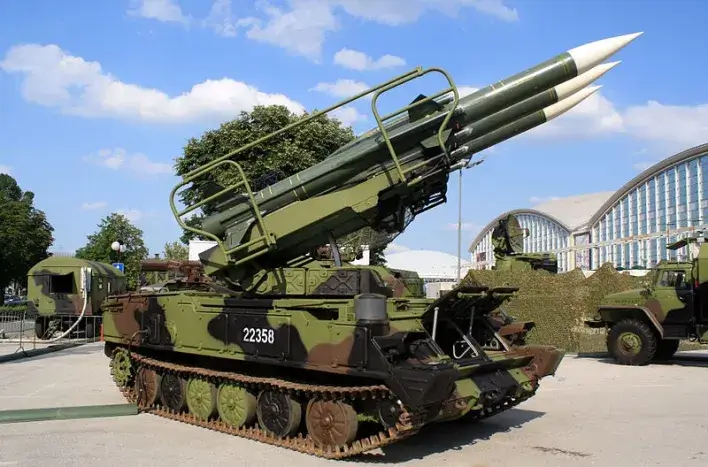
The rapid proliferation of unmanned aerial systems—particularly the emergence of coordinated drone swarms—has fundamentally altered the air defence challenge facing India. Traditional air defence architectures, built around point-defence weapons such as anti-aircraft guns and surface-to-air missiles, were designed to counter a limited number of high-value aerial threats. These systems struggle when confronted with swarms comprising dozens or even hundreds of low-cost, autonomous drones operating simultaneously. This reality renders attrition-based engagement models economically and operationally unsustainable. Engaging inexpensive drones with costly missiles creates an unfavourable cost-exchange ratio and risks saturating air defence networks.
Recognising this paradigm shift, India has begun restructuring its air defence architecture to counter swarm-based threats. The emphasis is now on a multi-layered, integrated counter-drone ecosystem that combines kinetic (“hard-kill”) and electronic (“soft-kill”) measures backed by artificial intelligence (AI), automation, and networked command-and-control systems. The objective is not merely interception, but persistent airspace denial against massed, low-signature aerial threats.
India’s Multi-Layered Counter-Drone Approach
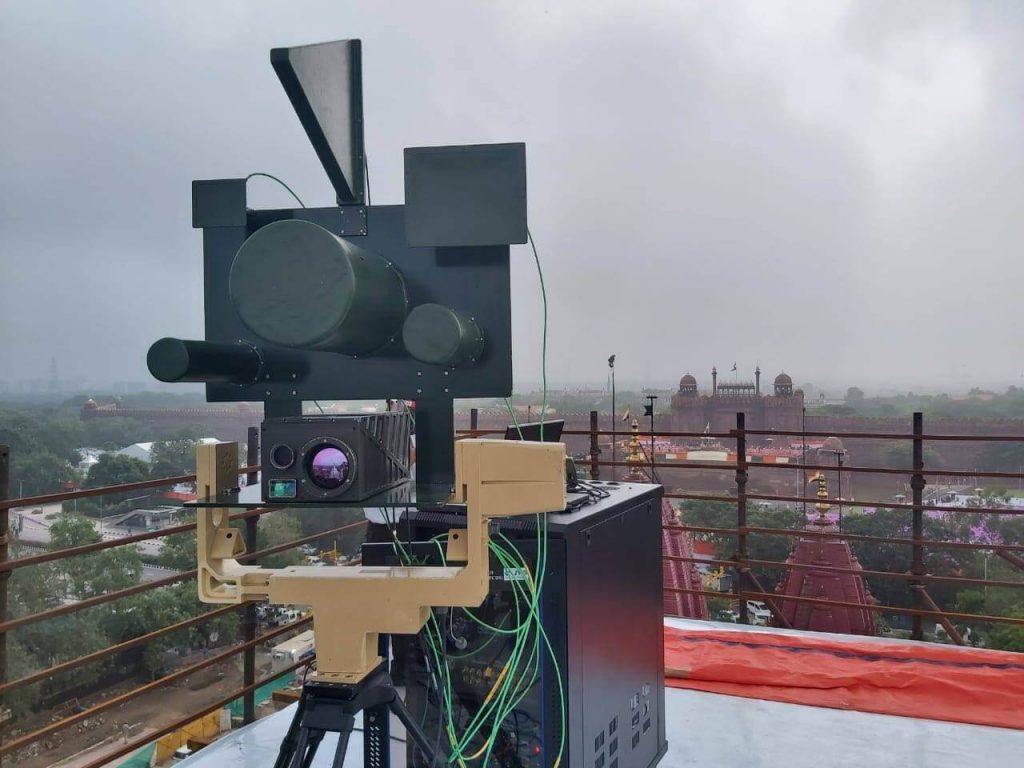
India’s evolving counter-drone strategy reflects a move away from single-platform, single-target solutions towards an integrated and scalable defence architecture tailored for modern drone warfare. This approach is designed to cope with saturation attacks by low-cost UAVs while remaining operationally flexible and cost-effective.
Detection and Tracking:
The first layer of defence relies on advanced sensor fusion. A combination of Active Electronically Scanned Array (AESA) radars, electro-optical and infrared (EO/IR) sensors, acoustic detectors, and radio frequency (RF) receivers enables early detection of low radar cross-section (LRCS) drones at ranges of up to 10 km. By integrating multiple sensor inputs, the system reduces false positives and enhances tracking accuracy in cluttered environments.
Soft-Kill Mechanisms:
Once detected, electronic countermeasures are employed as the preferred initial response. These include RF jamming to disrupt command-and-control links, GPS jamming to deny navigation, and spoofing techniques that manipulate onboard guidance systems. Soft-kill options are particularly valuable against swarm attacks, as they allow neutralisation of multiple drones without expending physical interceptors.
Hard-Kill Mechanisms:
When electronic measures prove insufficient, physical destruction is planned using a range of effectors:
- Micro-missiles and rockets: Indigenous systems such as Bhargavastra employ salvos of unguided micro-rockets to create area effects against dense swarms, alongside precision-guided micro-missiles for high-value or hardened targets [23].
- Directed Energy Weapons (DEWs): Laser-based systems developed by DRDO are being inducted to neutralise drones at ranges of 2–5 km. DEWs offer a decisive advantage in terms of cost per engagement and are particularly suited for sustained counter-swarm operations.
- Interceptor drones and nets: Autonomous interceptor drones form another layer, capable of physically disabling or capturing hostile UAVs at close range, especially in complex or urban environments.
Key Developments in India’s Counter-Drone Strategy

India’s counter-drone posture is increasingly shaped by the twin imperatives of self-reliance and scale. The long-term vision is the creation of a nationwide, networked air defence shield—an “Iron Dome-like” system—under Mission Sudarshan Chakra, with a target horizon of 2035.
Bhargavastra
Developed indigenously by Solar Defence and Aerospace Limited (SDAL), Bhargavastra is a modular, low-cost system specifically optimised for countering drone swarms. Its design philosophy prioritises saturation defence and favourable cost-exchange ratios, making it well-suited for prolonged engagements against mass UAV attacks.
Indrajaal
Grene Robotics an indigenous innovator has developed Indrajaal, India’s first autonomous “drone defence dome.” Capable of protecting an area of approximately 1,000–2,000 square kilometres, Indrajaal is designed to counter UAVs, loitering munitions, incoming weapons, and other low-RCS threats. Its development reflects growing recognition that manual, point-based air defence systems are inadequate in an era of AI-driven and autonomous warfare.
Indrajaal integrates 9–10 advanced technologies powered by AI, robotics, and cybersecurity. It employs unguided micro-rockets for swarm saturation within a 2.5 km radius and guided micro-missiles for precision engagement of high-value targets. The system is modular and designed for seamless integration with jamming and spoofing capabilities.
While estimates suggest that several hundred point-defence systems would be required to comprehensively cover India’s western border an economically prohibitive proposition however an Indrajaal’s sector-based deployment model offers a more cost effective and viable alternative. According to the developers, as few as six to seven interconnected Indrajaal systems could provide coverage across much of the western frontier.
DRDO and Army-Led Initiatives
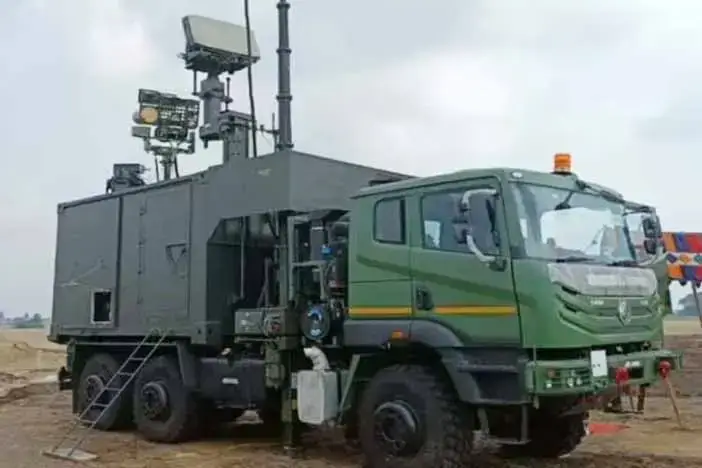
D-4 (D4S) System
DRDO’s Drone Detect, Deter, and Destroy (D4S) system has already been inducted into the armed forces. Featuring 360-degree radar coverage, it can detect micro-drones up to 4 kms and employs a combination of RF jamming and laser-based hard-kill mechanisms for destruction. D4S represents a mature, deployable solution for both static and mobile installations.
National Directed Energy Weapons Programme
Country is also progressing a national DEW programme aimed at developing high-energy lasers and high-powered electromagnetic systems. These technologies are intended not only for counter-drone roles but also for disabling adversary electronics and sensors across the wider battlespace.
SAKSHAM
The Indian Army’s SAKSHAM (Situational Awareness for Kinetic Soft and Hard Kill Assets Management) system is emerging as the backbone of the Army’s counter-UAS grid. Developed in collaboration with Bharat Electronics Limited (BEL), SAKSHAM is an AI-driven, modular command-and-control system that integrates detection, tracking, identification, and neutralisation functions. Operating over the secure Army Data Network, it provides a unified, real-time airspace picture up to 3,000 metres (10,000 feet).
By enabling faster decision-making, coordinated engagements, and seamless integration of soft- and hard-kill assets, SAKSHAM enhances control over the air littoral in the tactical battlefield space. In doing so, it significantly improves the protection of troops, critical infrastructure, and forward deployments from aerial incursions.
Cyber Warfare and Critical Infrastructure Targeting

Nation-states and their proxies now view cyberspace as a domain for asymmetric warfare, where strategic effects can be achieved below the threshold of conventional conflicts. Power grids, water treatment facilities, transportation systems, healthcare networks, and telecommunications infrastructure have become prime targets of cyber-attacks. Such attacks seek to undermine public confidence, strain state capacity, and impose political costs disproportionate to the scale of the operation.
This shift became particularly evident in 2024, when the global threat landscape escalated sharply. Russia-linked Sandworm demonstrated sustained capabilities for targeting energy infrastructure, while Iran-affiliated groups like CyberAv3ngers conducted disruptive operations against water and industrial control systems. In parallel to state activity, sophisticated cyber-criminal groups have adopted artificial intelligence to scale phishing campaigns, automate malware development, and conduct highly convincing impersonation attacks. These developments have significantly compressed detection timelines and overwhelmed traditional defensive postures.
A critical enabler of this escalation is the growing convergence between Information Technology (IT), Operational Technology (OT), and the Internet of Things (IoT). Systems once designed to be isolated are now interconnected for efficiency, remote management, and data-driven optimization. While digitalization and automation enhance productivity, they also expand the attack surface dramatically. The integration of business AI tools into operational workflows has further complicated the threat environment by introducing opaque decision-making processes and novel vulnerabilities.
Reflecting these realities, the U.S. Intelligence Community’s 2025 Annual Threat Assessment issued a stark warning: China and Russia are actively “pre-positioning access to U.S. infrastructure for asymmetric cyber operations.” This assessment underscores a critical shift from episodic cyber incidents to long-term strategic positioning, where adversaries quietly embed themselves within critical systems, preserving the option to disrupt or disable infrastructure during periods of crisis or conflict.
India’s Critical Infrastructure Vulnerability

India’s critical infrastructure is increasingly exposed to similar cyber risks, magnified by the scale and speed of the country’s digital transformation. Over the past several years, cyber incidents targeting Indian institutions have become more frequent, more complex, and more consequential.
The 2019 cyber intrusion at the Kudankulam Nuclear Power Plant marked a watershed moment, demonstrating that even high-security strategic facilities are not immune to cyber compromise. Similarly, in 2020 Mumbai experienced a widespread power outage that disrupted rail transport, hospitals, and financial services an event widely assessed to have cyber dimensions. In 2022, country witnessed coordinated cyber incidents that had targeted airlines, telecommunications providers, hospitals, and flood monitoring systems, revealing systemic vulnerabilities across multiple sectors.
At the same time, India’s ambitious Digital India initiative has rapidly expanded the digital footprint of critical infrastructure. Cloud adoption, smart grids, digitized healthcare, and integrated transport systems today are essential for economic growth and governance efficiency. However, cybersecurity capabilities—particularly in OT environments—have not always scaled at the same pace. This imbalance has created gaps that adversaries can exploit.
Recognizing these risks, India’s legal framework under the Information Technology Act, 2008 has designated systems whose incapacitation could severely impact national security, economy, or public safety asCritical Information Infrastructure (CII). Owners and operators of such infrastructure areexpected to implement risk management and security controls under government oversight. Yet, implementation remains uneven across sectors.
Governance challenges further compound the problem. Responsibility for cybersecurity is distributed across multiple ministries/institutions, including the Ministry of Electronics and Information Technology (MeitY), the National Security Council Secretariat, the Ministry of Defence, CERT-In, and sector-specific regulators. At one level this decentralized structure allows individual sectors to act without waiting for centralized directives, it nonetheless introduces ambiguity during large-scale cyber incidents. Questions of lead authority, information sharing, and coordinated response particularly in sectors such as energy, telecommunications, and transportation remain insufficiently resolved.
Strategic Imperatives for Protecting Critical Infrastructure

Safeguarding India’s critical infrastructure requires a comprehensive, layered approach that integrates technology, governance, and operational readiness. Cyber defence can no longer be treated as a technical compliance exercise; it must be embedded within national security planning and crisis management frameworks.
Insights from sustained cyber conflict simulations reinforce this imperative. A classified tabletop exercise conducted by the MITRE Corporation in December 2024 bringing together over 200 participants from 70 organizations—identified several recurring challenges during prolonged cyber disruptions. These included the need to move beyond isolated incident response toward strategies for enduring operations under continuous attack, the importance of cultivating a civil defence mindset among infrastructure operators, effective resource management during extended crises, resilient emergency communications, and sustained workforce readiness under stress.
On the technical front, baseline measures such as removing industrial control systems from the public internet, enforcing strict network segmentation, and hardening OT environments are essential. Advanced monitoring, including AI-assisted anomaly detection and threat intelligence integration, can improve early warning and response capabilities. International experience offers useful models: the U.S. Cybersecurity and Infrastructure Security Agency (CISA), for instance, has worked with vendors to reduce exposure of control systems and has provided free external vulnerability scanning services to thousands of critical infrastructure entities, significantly improving visibility of systemic risk.
For India, however, technical fixes must be matched by governance reform. Clear delineation of roles, well-rehearsed incident response protocols, and assured resource allocation are critical. The long-pending National Cyber Security Policy must be finalized and operationalized with urgency. In addition, institutional coordination mechanisms need clarity—especially regarding how the National Critical Information Infrastructure Protection Centre (NCIIPC) interfaces with CERT-In, sectoral CSIRTs such as T-CSIRT, the Department of Telecommunications, and the Ministry of Home Affairs during high-impact cyber incidents.
Ultimately, protecting critical infrastructure is not merely about preventing disruption; it is about ensuring national resilience in an era where cyber operations are integral to strategic competition. As adversaries increasingly prepare the cyber battlefield in peacetime, India’s ability to deter, withstand, and recover from cyber-enabled infrastructure attacks will be a decisive factor in its broader national security posture.
Conclusion
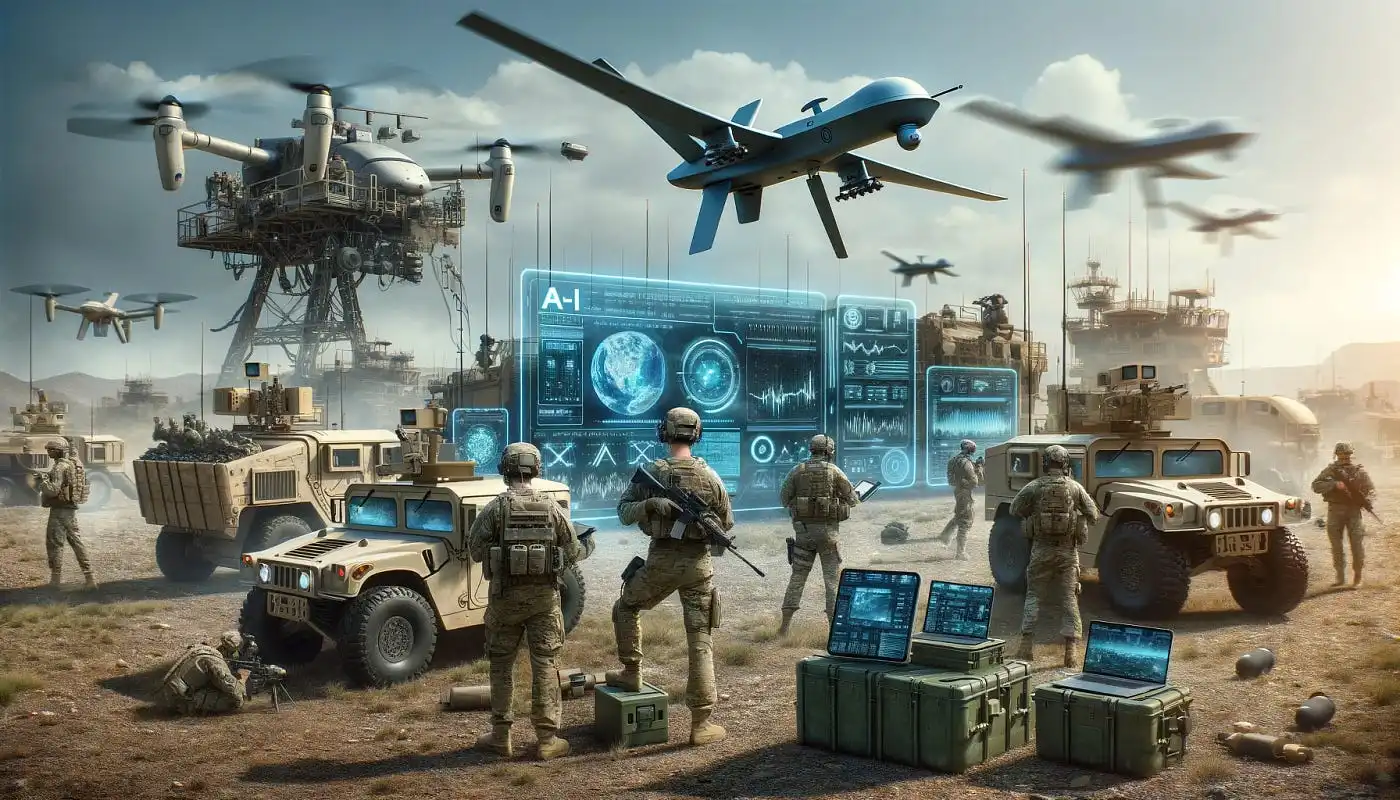
Modern warfare is no longer defined by sequentially conducted campaigns across land, sea, and air. The integration of AI, autonomous systems, drone swarms, cyber operations, and precision strike capabilities has created an operational environment wherein effects are generated simultaneously across multiple domains. Doctrines built around linear escalation and platform-centric dominance are increasingly misaligned from this reality.
Challenge for India is particularly critical. China and Pakistan are not merely modernising their armed forces; they are also developing interoperable, multi-domain capabilities supported by shared technology ecosystems and real-time intelligence cooperation. The May 2025 India–Pakistan conflict offered a limited but revealing glimpse of this future battlespace

