

History teaches us that when coercion from a distance fails, great powers begin to consider proximity, the physical imposition of force through ground presence. Are we ready?
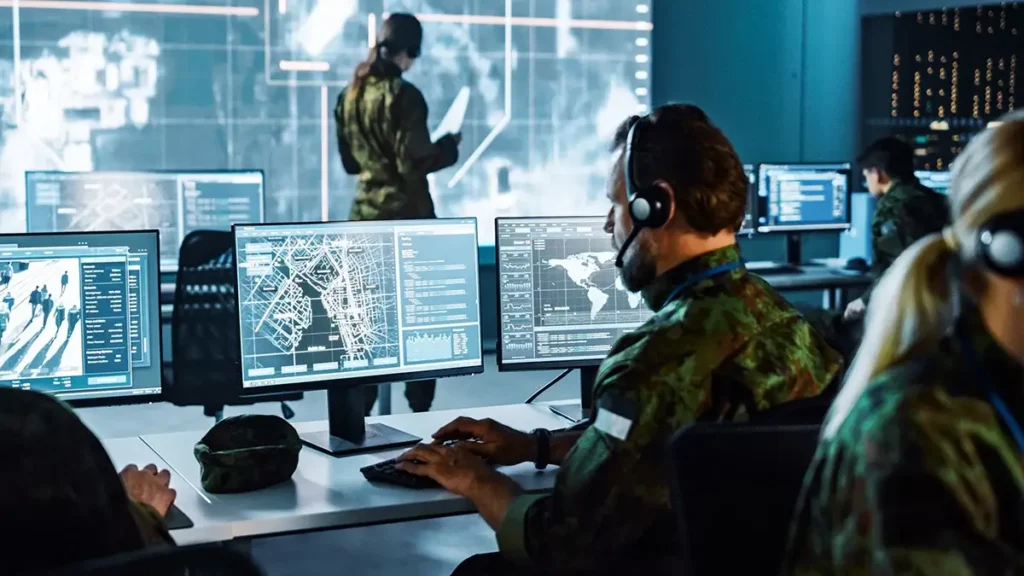
There are moments in the life of a war when the vocabulary itself becomes a warning. “Boots on the ground” is one such phrase. It is not merely descriptive; it is declaratory. It signals the exhaustion of distance warfare, the limits of missiles, drones, and airpower, and the return of the soldier as the ultimate instrument of political will. In the unfolding confrontation between the United States, Israel, and Iran, the reappearance of this phrase marks a transition from managed escalation to uncontrolled expansion.
For weeks, the conflict has been prosecuted through air campaigns, cyber disruption, covert action, and proxy engagement. Targets have been struck, networks disrupted, and capabilities degraded. Yet the central paradox remains unresolved: destruction has not translated into a decision. Iran’s strategic depth, ideological resilience, and networked proxy architecture have absorbed punishment without capitulation. The war, therefore, stands at a hinge point.
History teaches us that when coercion from a distance fails, great powers begin to consider proximity, the physical imposition of force through ground presence. Is the US planning for this physical imposition of force?
The Illusion of Remote War
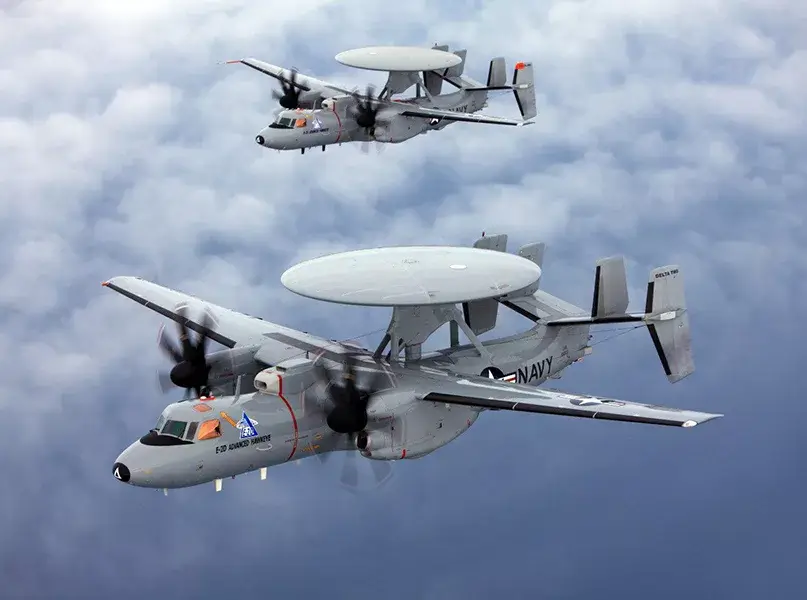
Modern Western military doctrine, shaped by the campaigns in the Balkans, Iraq, and Afghanistan, developed an enduring faith in stand-off warfare. Precision-guided munitions, ISR (intelligence, surveillance, reconnaissance) dominance, and networked targeting created the belief that wars could be won from afar. The early phases of the Iraq War seemed to validate this proposition: rapid decapitation of command structures, collapse of organised resistance, and the appearance of decisive victory within weeks.
Yet the aftermath revealed the illusion. Airpower can destroy systems, but it cannot govern societies. It can dislocate an adversary’s military, but it cannot impose legitimacy or control over human terrain. That requires the presence of soldiers, soldiers who must be persistent, they will be visible, and they will be vulnerable.
In Iran, this illusion is even more fragile. The country is not merely a state; it is a civilisational entity with layered geography, distributed authority, and ideological mobilisation. Its military power is not concentrated in easily targetable nodes but dispersed across networks, formal and informal, state and proxy, domestic and regional. The degradation of infrastructure, therefore, does not equate to strategic defeat. Thus emerges the central dilemma confronting Washington:
Can the objectives of this war, whether nuclear rollback, regime coercion, or regional containment, be achieved without crossing the threshold into a ground war?
The Architecture of “Boots on the Ground”
To understand what lies ahead, one must first dispel a common misconception. “Boots on the ground” does not mean mass infantry formations advancing across deserts, as in the earlier eras. Today’s American ground deployment, if ever, will be a multi-layered, system-of-systems insertion, where the visible soldier is only the tip of an immense operational iceberg.
At its core lies a combination of the Special Operations Forces, the expeditionary Marine units, and rapidly deployable airborne formations. These are not designed for occupation in the initial phase but for precision disruption, the seizure of critical nodes, the elimination of high-value targets, and the exploitation of intelligence opportunities that cannot be realised from the air. A vast logistical apparatus, including strategic airlift platforms such as the C-17 Globemaster III, pre-positioned equipment, and forward staging bases across the Gulf support them.
But more importantly, they are embedded within a multi-domain operational framework. Satellites provide persistent surveillance; cyber units disrupt communications and command networks; electronic warfare blinds sensors; drones extend reach into denied spaces. The modern American soldier does not arrive alone; he arrives accompanied by the full spectrum of national power translated into the battlefield where he will fight.
Yet even this sophistication does not alter a fundamental truth:
Once deployed, ground forces become politically and strategically binding commitments.
Phase I: The Shadow Entry
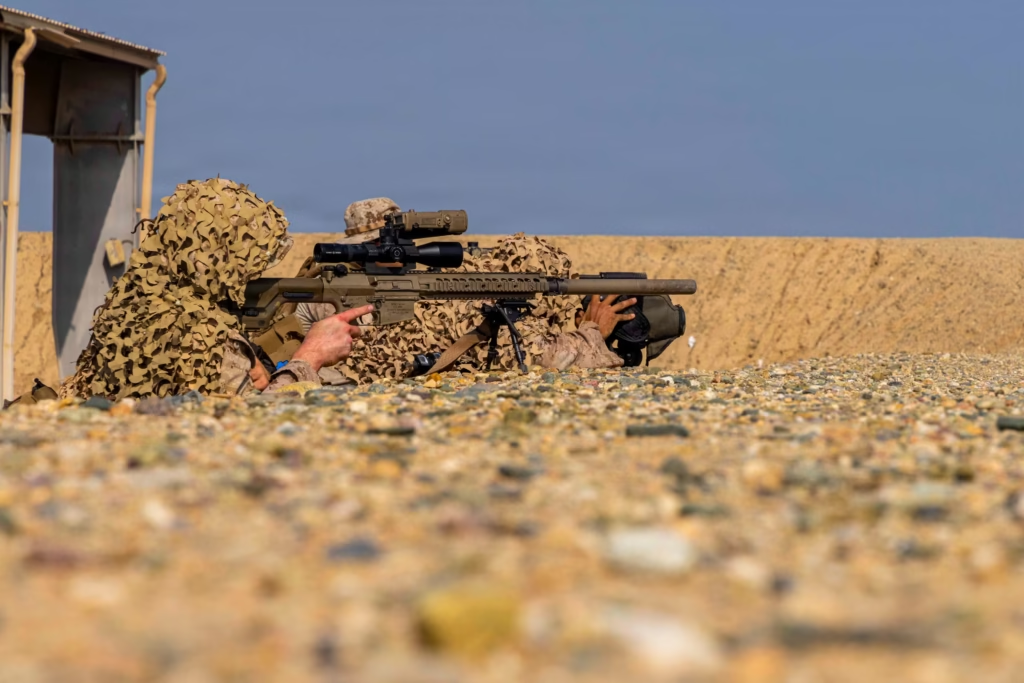
The first manifestation of the US ‘boots on the ground’ in Iran is unlikely to be announced. It will occur in shadows and may have already happened, in fragments, in deniable increments. Special Operations units will be inserted into critical zones, nuclear facilities, missile complexes, and command centres, guided by real-time intelligence and enabled by cyber disruption.
This phase is not about holding territory; it is about opening doors that their huge airpower has been unable to unlock. Certain facilities, deeply buried or structurally resilient, require physical access for verification or destruction. Certain individuals, whose knowledge is as valuable as their elimination, must be captured rather than killed. Certain networks, intangible to sensors, must be mapped through human contact.
These operations will be brief, precise, and high-risk. They will rely on surprise, speed, and technological superiority. And yet, their success carries within it the seeds of escalation.
For every insertion detected, for every operator captured or casualty sustained, the political pressure to reinforce, expand, and secure will intensify.
Phase II: The Geography of Control

War, at its essence, is the contest for geography, not merely physical terrain, but strategic space. In the Iranian theatre, this geography extends far beyond national borders. It encompasses the Persian Gulf, the Strait of Hormuz, the Levant, Mesopotamia, and the Red Sea. It includes maritime choke points, energy corridors, and proxy battlegrounds.
The second phase of ground deployment, therefore, will not aim at Tehran but at the periphery of Iran. Amphibious and expeditionary forces will move to secure critical maritime zones, particularly the Strait of Hormuz, the narrow artery through which a significant portion of the world’s oil supply flows. Control of this space is not merely military; it is economic, psychological, and geopolitical.
Simultaneously, forward positions in neighbouring states, already hosting American forces, will be reinforced and transformed into active operational hubs. From these nodes, ground forces can project influence, conduct raids, and respond rapidly to emerging threats.
In this phase, the battlefield expands outward. It is no longer confined to Iran; it has become a regional lattice of contested spaces, each linked to the others through supply lines, communication networks, and political consequences.
Phase III: The Irreversible Escalation
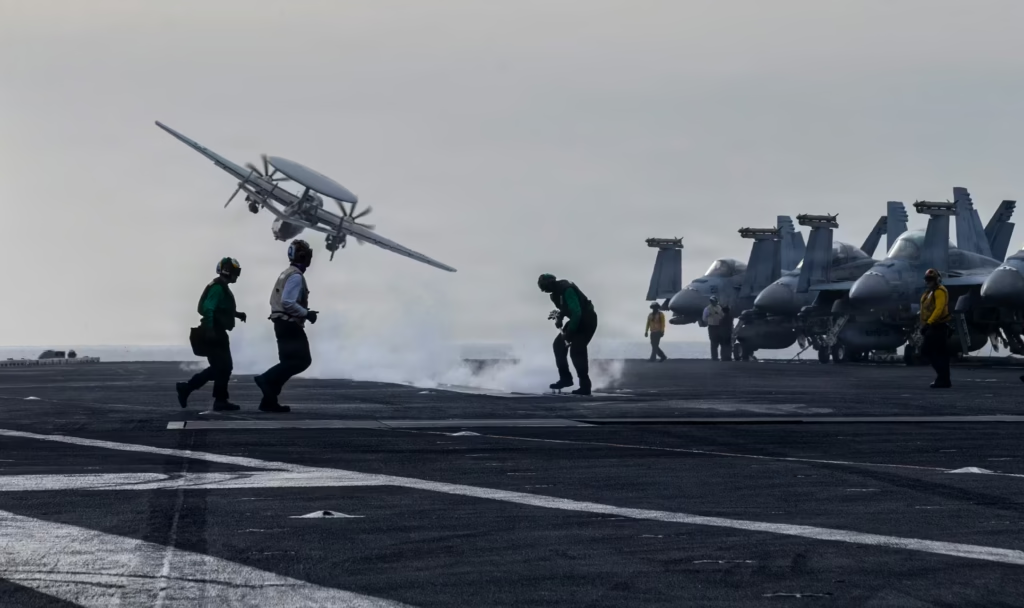
There exists a point in every conflict beyond which reversal becomes improbable. In the context of a US ground deployment in Iran, this point would be marked by the transition from limited insertion to sustained presence. Once formations larger than specialised units begin to operate, brigades, divisions, and armoured elements, the war acquires a different character.
This is the scenario most fraught with danger. It implies not merely intervention but commitment to the outcome. Objectives shift from disruption to transformation: dismantling capabilities, reshaping behaviour, possibly even altering the political structure of the state.
Yet this is precisely the terrain on which Iran is strongest, not in conventional confrontation, but in protracted resistance. Its military doctrine anticipates invasion and is structured to absorb and outlast it. Command structures are decentralised, allowing operations to continue even under severe degradation. Civilian populations, shaped by history and ideology, can be mobilised for sustained resistance.
Thus, what begins as a campaign risks evolving into an attritional struggle without clear temporal limits.
Iran’s Counter-Strategy: Expanding the War
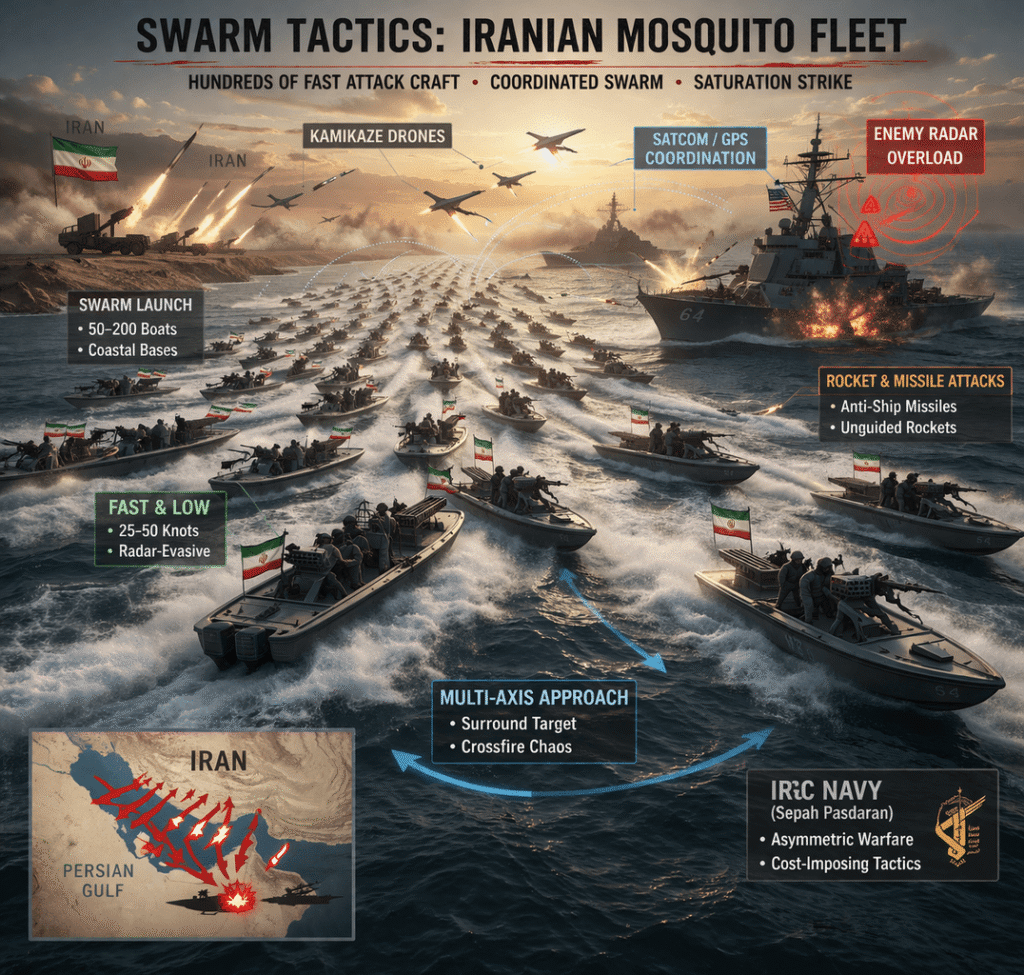
Iran will not respond symmetrically to American ground deployment. It will not seek decisive battle in the classical sense. Instead, it will do what it has prepared for decades: expand the battlespace until the concept of a single front becomes meaningless. Internally, it will activate layered defence mechanisms, regular forces, Revolutionary Guard units, and paramilitary formations, engaging in urban warfare, ambush tactics, and irregular operations. The terrain itself, mountainous and complex, will be weaponised against advancing forces.
Externally, the response will be even more consequential. Iran’s network of allied and proxy forces across the region will transform the conflict into a multi-front war. In Lebanon, armed groups will intensify pressure on Israel’s northern frontier. In Iraq and Syria, militias will target American bases and supply lines. In Yemen, forces aligned with Iran will disrupt maritime traffic in the Red Sea, threatening global trade routes. The war, therefore, ceases to be bilateral. It becomes a systemic conflict, spanning continents and domains.
The Maritime Dimension: Choke Points and Shockwaves
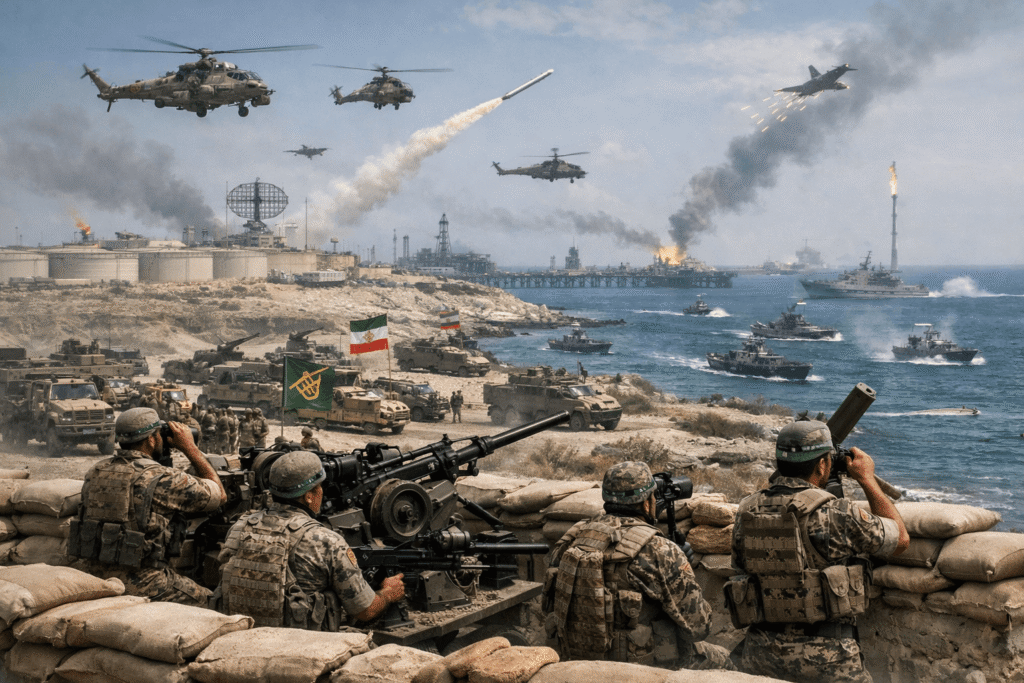
The expansion of the battlespace inevitably draws attention to the world’s maritime arteries. The Persian Gulf and the Strait of Hormuz represent the most immediate flashpoints, but they are part of a broader network that includes the Arabian Sea, the Red Sea, and the Eastern Mediterranean.
Any sustained disruption in these waters will have cascading effects. Energy markets will react violently; insurance premiums for shipping will surge; global supply chains, already fragile, will experience further strain. The conflict thus transcends its regional origins to become a global economic event.
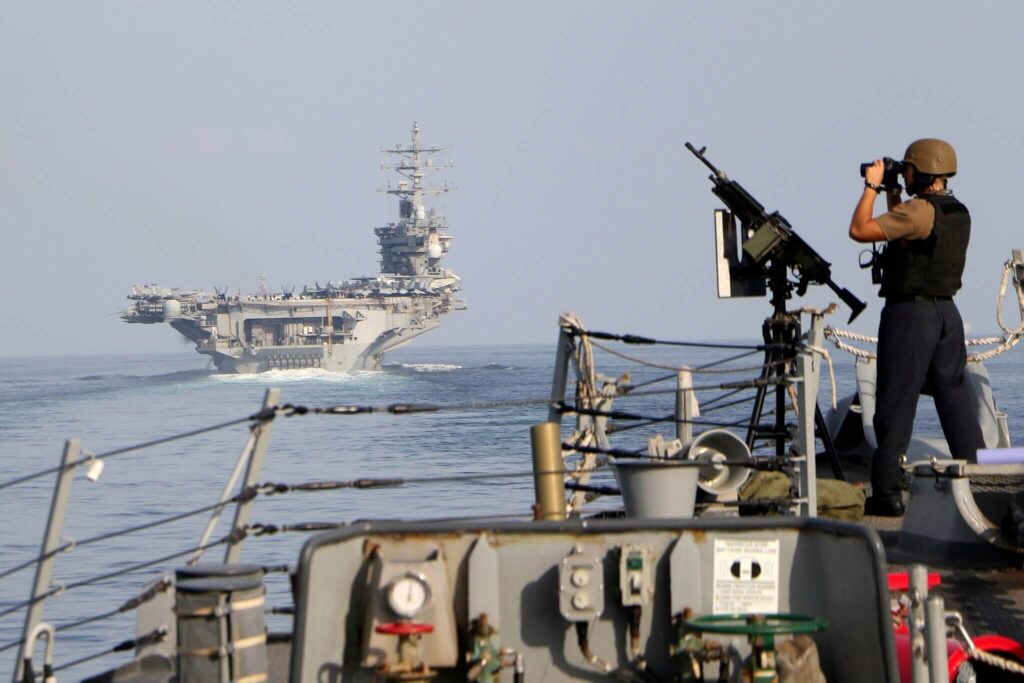
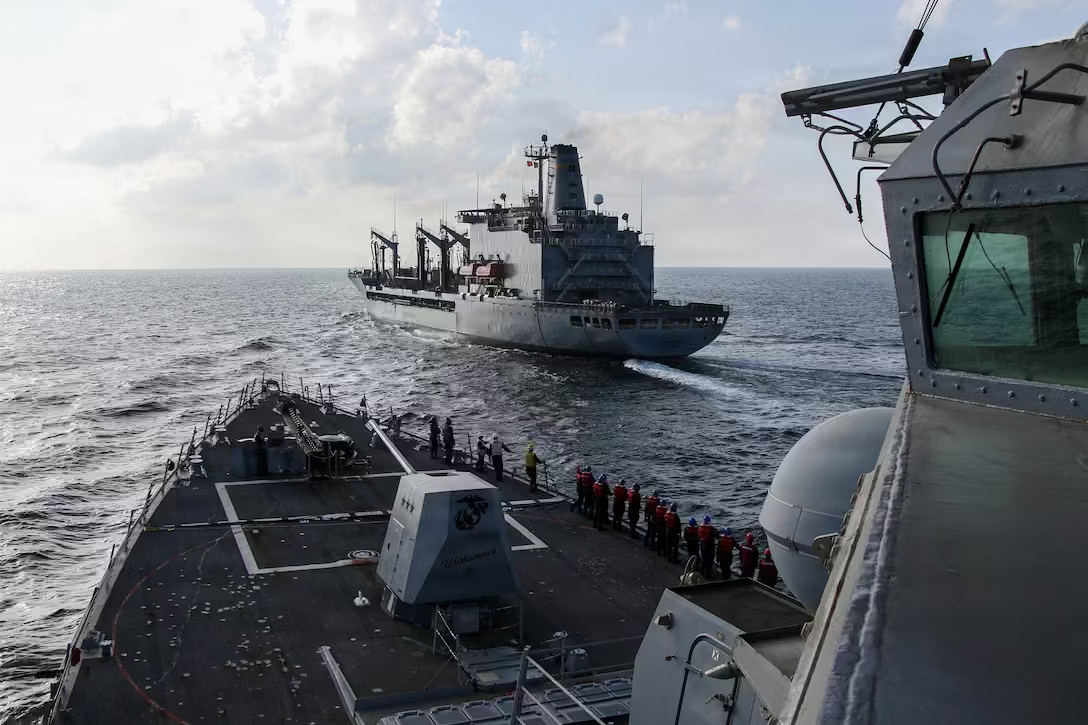
Naval forces will play a critical role in this phase, not only in securing sea lanes but in supporting ground operations. Amphibious capabilities will enable rapid deployment along coastlines, while carrier strike groups will provide air cover and deterrence. Yet the vulnerability of these assets to asymmetric threats, missiles, drones, mines adds another layer of complexity.
The Northern Arc: Russia and Strategic Opportunism
No analysis of this conflict can ignore the shadow cast by the ongoing Russia–Ukraine War. While geographically distinct, it shares with the Iran theatre a common feature: the involvement of major powers in contested spaces.
For Russia, the expansion of American military engagement in West Asia presents both risk and opportunity. On one hand, instability near its southern periphery is undesirable. On the other hand, the diversion of American resources and attention could ease pressure in Eastern Europe.
Russia’s response is likely to be indirect, diplomatic manoeuvring, intelligence sharing, and strategic signalling, rather than overt intervention. Yet even these actions contribute to the globalisation of the conflict, linking theatres that might otherwise remain separate.
The Eastern Horizon: China and Strategic Patience

While less immediately visible, China occupies a significant position in the evolving equation. Its interests in the region, energy security, trade routes, and geopolitical influence are substantial. A prolonged conflict threatens these interests, yet also creates opportunities to expand diplomatic and economic leverage.
China is unlikely to engage militarily, but it may seek to position itself as a stabilising force, advocating for de-escalation while quietly consolidating relationships. In doing so, it reinforces a broader trend: the emergence of a multipolar contest, where regional conflicts are intertwined with global competition.
The Information Domain: War of Narratives
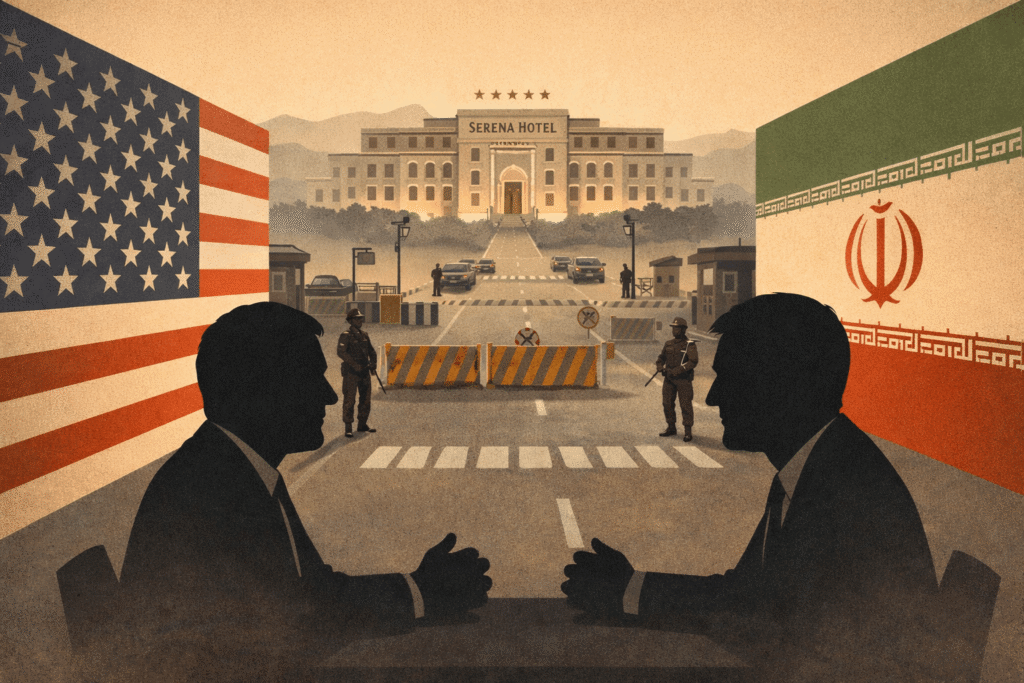
In modern conflict, perception is not a by-product; it is a battlefield. The deployment of American ground forces in Iran will trigger an intense contest in the information domain. Narratives of liberation, aggression, resistance, and legitimacy will compete across media platforms, shaping domestic and international opinion.
Iran, adept at information warfare, will portray the presence of foreign troops as an occupation, galvanising support both internally and across sympathetic populations. The United States, in turn, will emphasise the objectives of security and stability. The outcome of this contest will influence not only morale but also the political sustainability of the war itself.
The Domestic Factor: The Limits of Endurance
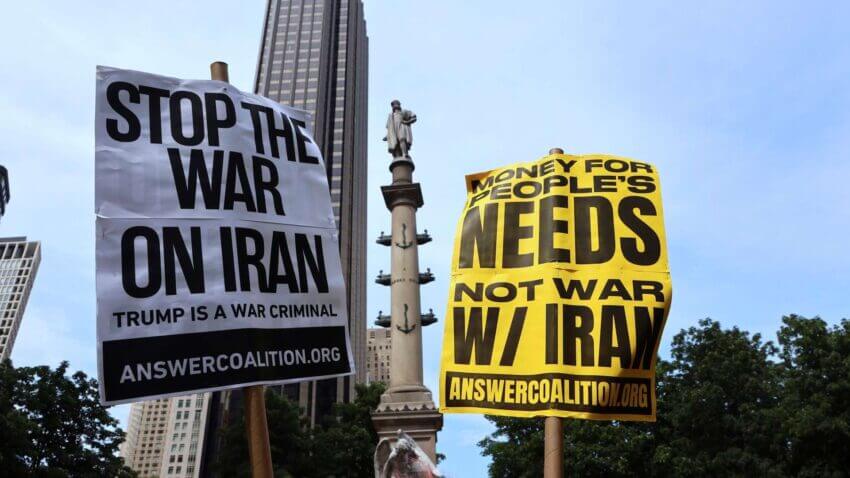
Wars are not fought solely on distant fields; they are sustained, or curtailed, by the will of their domestic populations. In an already unpopular war, this lack of will might prove decisive. In the United States, public opinion has historically been a decisive factor in the duration of overseas conflicts. Initial support can erode as casualties mount, costs rise, and objectives become ambiguous.
A ground war in Iran, given its scale and complexity, would test this endurance. The memory of prolonged engagements in Vietnam, Iraq and Afghanistan remains vivid. Political leadership, therefore, must balance strategic objectives with the constraints of democratic accountability.
The Indian Perspective: Watching from the Rimland

From India’s vantage point, the expansion of this conflict carries profound implications. The Indian Ocean, already a theatre of strategic competition, becomes more volatile as energy flows and maritime routes are threatened. Economic repercussions, particularly in energy prices, would directly affect national stability.
Moreover, the conflict offers critical lessons in multi-domain operations, the integration of conventional and irregular warfare, and the challenges of operating in contested information environments. For a nation preparing for future conflicts, the Iran theatre becomes not merely an event to observe but a case study to absorb.
The Strategic Paradox
At the heart of this unfolding scenario lies a paradox. The United States possesses unmatched military capability, yet faces an adversary whose strength lies not in parity but in asymmetry. Iran cannot defeat the United States in conventional terms, but it does not need to. Its objective is to deny decisive victory, to prolong the conflict, to increase costs, and to shape perceptions.
Thus, the introduction of boots on the ground does not resolve the war’s central dilemma; it intensifies it. It transforms a contest of capabilities into a contest of endurance.
Conclusion: The Return of the Soldier

In the final analysis, the debate over boots on the ground is not about tactics or technology. It is about the enduring nature of war itself. Despite advances in precision, automation, and remote engagement, the decisive act remains the same: the presence of a human being on contested ground, asserting control, facing risk, and embodying the will of the state.
In Iran, that act would not conclude the conflict. It would expand it, geographically, politically, and psychologically. The battlefield would stretch from the mountains of Persia to the waters of the Red Sea, from the cities of the Levant to the corridors of global finance. It would draw in actors near and far, state and non-state, visible and unseen.
“Boots on the ground,” therefore, is not a solution. It is a transition to a different kind of war, one in which victory is harder to define, and far harder to achieve.
And once taken, this step cannot be retraced without grave consequences.