

US Secretary of State Marco Rubio delivered a major address at the 61st Munich Security Conference on 14 February 2026. His speech focused on redefining the transatlantic alliance and building a “new Western century”. The Munich Security Conference is the world’s leading independent forum for debating international security policy. It serves as a “marketplace of ideas” where heads of state, ministers, military leaders, and experts gather to discuss the most pressing global security challenges and build trust through informal dialogue. It has been held every February in Munich, Germany since 1963.
Rubio’s speech quickly sparked debate and criticism across the world, especially in the Global South and among analysts in Asia, Africa, and Latin America. In India, for example, the criticism was typified by the Indian Express editorial titled ‘US Secretary of State Marco Rubio needs a reality check and a history lesson’.
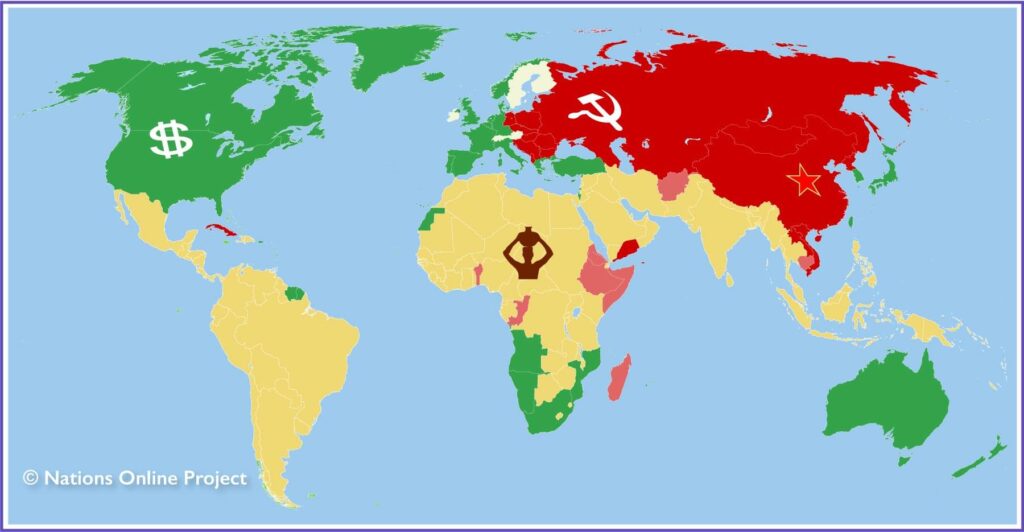
You must first understand what this Global South is. It is the new and fancier term for what was once called the Third World. “Third World” was coined in 1952 to designate nations not aligned with the US (First World) or Soviet (Second World) blocs. The term “Global South” gained prominence after 1991, following the dissolution of the Soviet Union, replacing the no-longer-applicable “Second World” framework. While both generally refer to developing nations in Africa, Latin America, and Asia, “Global South” is believed to emphasize shared post-colonial histories, economic disparities with the “Global North,” and geopolitical solidarity rather than mere underdevelopment or non-alignment.
The Express editorial is a master class in sanctimonious posturing and historical cherry-picking. It presents itself as morally elevated, historically aware, and philosophically nuanced. In reality, it is an exercise in reflexive anti-Western moralism, dressed up as civilizational critique. Let’s demolish this piece point by point, ruthlessly and without apology. Reason? Because if there’s one thing more irritating than Western lectures on humility, it’s Indian media’s lectures on morality—and that too coming from a society where the wettest dream of millions upon millions of youth, uncles and aunties of all description is to get a Green Card by any means.
Imagine, the sheer hypocrisy and irony of Indian media lecturing the West. Fact is hundreds of thousands of educated Indian youth suffer all sorts of bureaucratic humiliation every year to get American visas. American youth do not line up to take Indian visas. Do they? Indians are eager to leave their country, Indians abandon Indian citizenship; not a single man from the West does it. If the American embassy in Delhi were to announce that a week later unconditional American visas would be given on a first-come-first-serve basis without any questions asked, Indians would abandon their dying parents in ICU to line up before the embassy. In fact, there would be a traffic jam in Delhi. Despite their pretensions of an ancient culture and the patriotic songs of the films of Manoj Kumar era (like the famous Bharat ka rahne wala hoon Bharat ke geet sunata hoon), fact is that the Indians keep on salivating at the mere dream of becoming NRIs. Becoming NRIs is a status symbol in India. In no other country of the world, abandoning your country for greener pastures and a better physical quality of life in the West is regarded a sign of success—in India it is.
First, the Speech itself
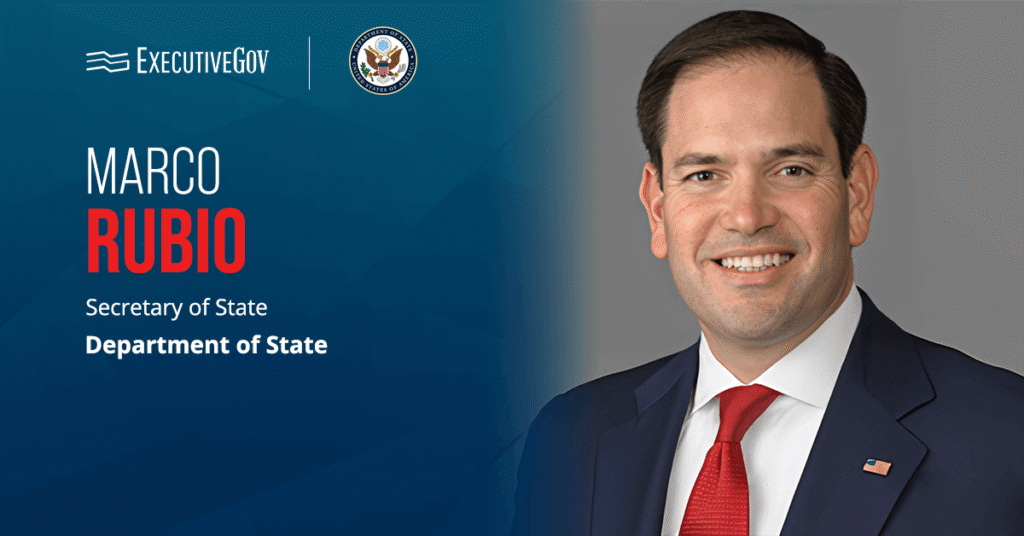
Rubio’s address at Munich emphasized rebuilding a confident transatlantic alliance rooted in shared Western heritage (Judeo-Christian roots included), reindustrializing economies, securing supply chains (especially critical minerals), advancing frontier technologies like AI and commercial space, and—yes—competing in a unified manner for “market share in the economies of the Global South” to build a “new Western century.” He framed this not as conquest but as a response to decades of naive free trade that hollowed out Western industries, allowed adversaries to dominate supply chains, and left the West vulnerable. It was a call for Western nations to compete economically and technologically, unshackling innovation rather than retreating. No gunboats. No opium. Just markets, minerals, and mutual prosperity among allies.
Critics in Asia, Africa, and Latin America pounced on “market share in the Global South” as echoing imperial expansionism. The editorial joins this chorus, implying it’s a sequel to colonial mercantilism.
The 1945 Argument: a Convenient Moral Pivot
The editorial opens with a grand historical flourish: 1945 marked the end of European imperialism and a moral reckoning for the West—Hiroshima, Nagasaki, and the Holocaust. This framing performs two rhetorical tricks:
- It reduces Western power to its sins.
- It implies that any contemporary assertion of Western agency risks a return to those sins.
But this is historical sleight of hand. Yes, 1945 marked catastrophe and reckoning. It also marked something else: the creation of a rules-based order that—however imperfect—dismantled formal colonial empires and replaced conquest with trade, institutions, and treaties.
The editorial quietly admits that the post-1945 order strengthened American power and wealth. What it omits is how that happened.
- Not through annexations.
- Not through colonial governors.
- Not through gunboats enforcing trade.
But through:
- Capital markets
- Technological innovation
- Security guarantees
- Trade networks
- Institutional architecture
If that is “imperial nostalgia,” then every country seeking economic growth is guilty of it.
Competition is not Colonialism
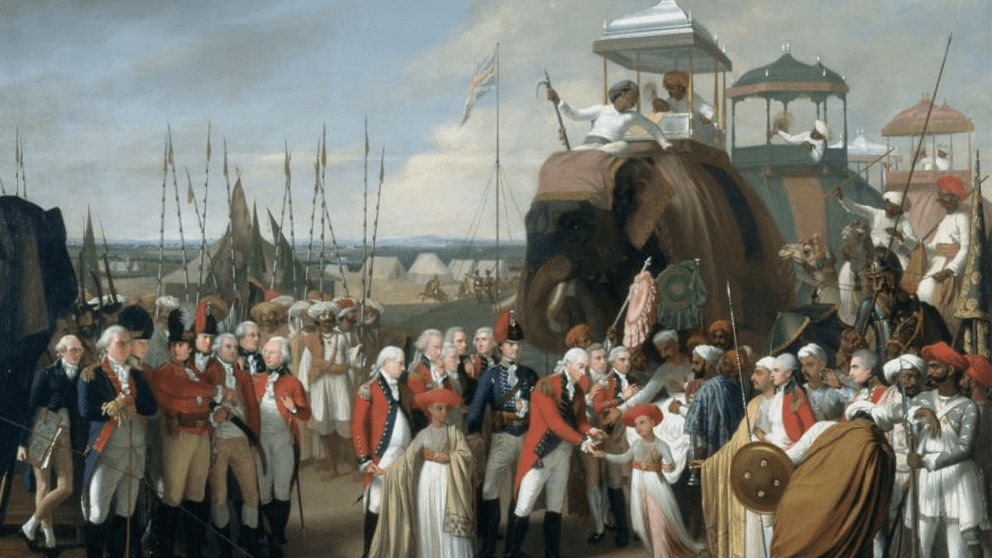
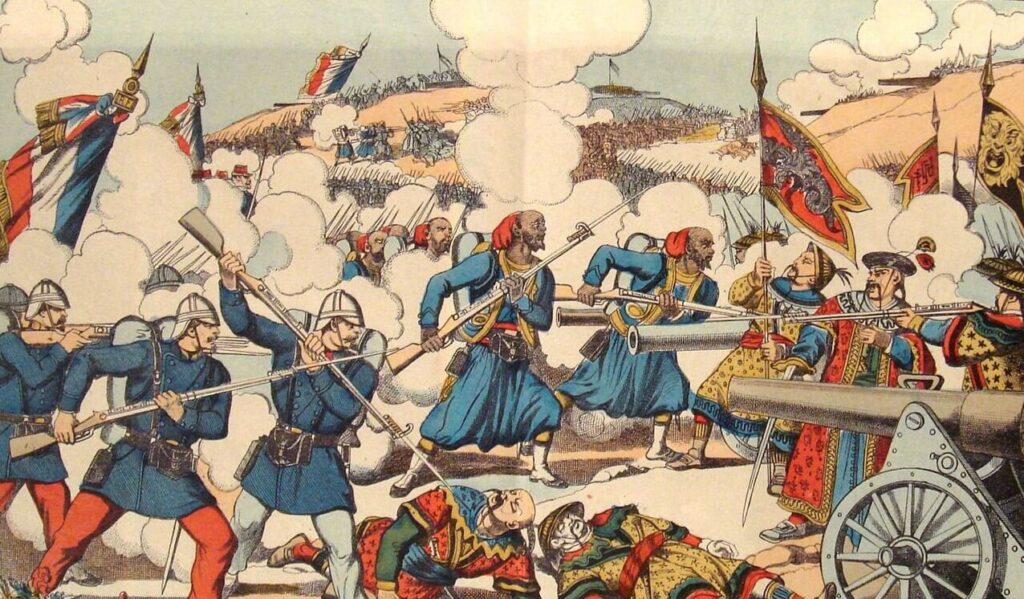
The editorial’s core sleight-of-hand is equating voluntary economic competition with 19th-century imperialism. Colonial powers didn’t “compete for market share”—they seized territories by force, imposed monopolies, extracted resources at gunpoint, and used military might to open markets. Rubio proposes Western firms and governments coordinate to offer better products, investments, and partnerships in developing economies. Global South nations can choose—or not.
They can sign deals with anyone, or tell everyone to f*** off. No one is docking gunboats in their ports demanding exclusive trading rights. Got it?
Unlike the East India Company, which wielded private armies and royal charters to conquer, today’s Western engagement is through WTO rules, bilateral agreements, FDI, and tech transfers—all opt-in. If you find American iPhones, Boeing aircraft, or Google services too tempting, that’s market dynamics, not coercion. The editorial pretends otherwise to score cheap anti-Western points, but the hypocrisy is glaring. Look at the irony of it; you happily court Western investment while lecturing about “economic expansionism.”
The Civilizational Straw Man
The editorial accuses Rubio of framing the “Western, Christian civilisation” as uniquely worthy of protection. Let’s assume he did. Is it illegitimate for a civilisation to defend its interests? The Indian media constantly screams of:
- Civilizational heritage
- Spiritual traditions
- Strategic autonomy
- Rise as a civilizational state
When Western leaders invoke civilizational continuity, it becomes sinister. When non-Western leaders do it, it becomes authentic. Waah! That is not analysis. That is asymmetrical moral scrutiny.
The “Market Share” Panic—A Category Error

The editorial’s underlying grievance is Rubio’s language about competing for “market share” in the Global South. Let us strip this of emotional colouring. Market share is an economic term. It implies voluntary exchange. Colonialism was coercive extraction. These are not remotely the same thing. If Western companies want market share in the Global South, they must and they would compete—not conquer. That is not imperialism. That is capitalism. What’s wrong in it? You are at liberty to kick them out—Trump would not send his nuclear aircraft carrier groups and US Marines to land in India—India is not Iran, by the way.
The “Civilizational” framing isn’t Supremacist—it’s Honest
Rubio highlights Western adaptability, openness, and alliance-building as keys to post-1945 success—not flawless perfection. He acknowledges horrors like the Holocaust and nuclear bombings but argues the post-war order strengthened Western power through shared values, not domination. The editorial twists this into a defence of “White Christendom” against migrants and ex-colonies, projecting a ‘racialized’ paranoia that isn’t in the text.
Rubio calls for pride in heritage—Judeo-Christian roots that birthed rule of law, individual rights, scientific method, and liberal democracy. These foundations enabled unprecedented prosperity and freedom. Dismissing this as supremacist ignores why millions from the Global South flock Westward: not for colonial nostalgia, but for the systems that work better than alternatives. The editorial’s “flawed and imperfect” qualifier is a cop-out—it demands Western self-flagellation while excusing others.
No return to Apartheid or Colonial Rule is exactly the point

The editorial warns there’s “no going back” to apartheid or British rule in India, as if Rubio pines for it. Damn it, his “new Western century” is forward-looking: innovation, supply-chain security, and economic competition in a multipolar world. It’s anti-decline, not pro-empire. The piece’s apocalyptic tone—”a past that never was”—is projection. No serious Western leader has ever said that they want to resurrect colonialism; they want to avoid becoming a has-been civilization reliant on rivals for essentials.
The Zero-Sum Anxiety
The real discomfort in the editorial is not about colonialism. It is about hierarchy. Rubio’s framing implies:
- The West intends to remain dominant.
- The West intends to compete aggressively.
- The West does not apologise for defending its position.
This has generated a massive inferiority complex. For decades, global discourse encouraged Western self-critique and restraint. When a Western official abandons that posture and speaks unapologetically of advantage, it unsettles observers accustomed to moral hesitation. But competition is not domination. If India’s rise is legitimate, then Western persistence is equally legitimate.
Global South’s “Dependence” is mostly One-Way
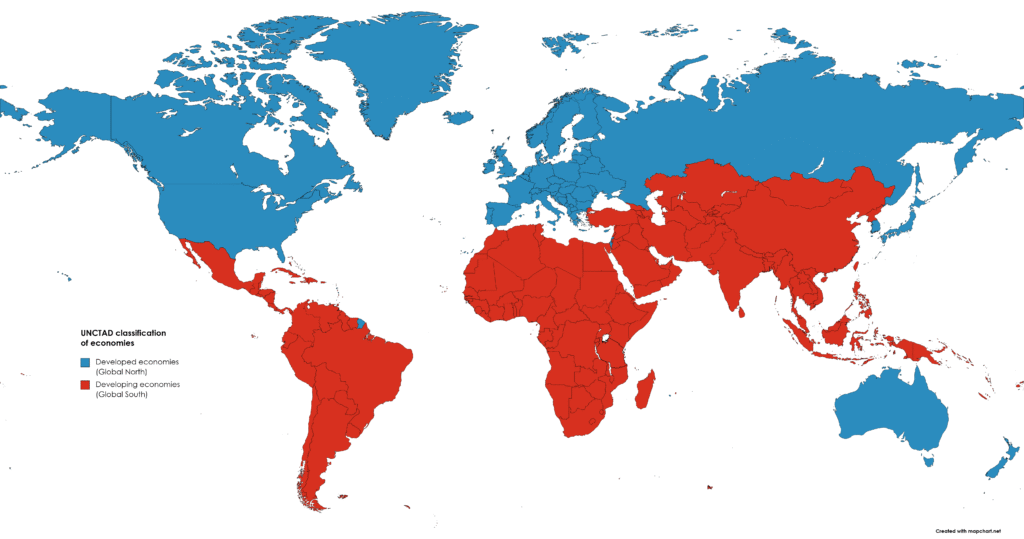
The piece sneers at Rubio’s “airbrushed” Western picture but ignores how the Global South depends so heavily and so critically on Western innovation, capital, and markets. The editorial admits 1945 marked the end of European imperialism but conveniently forgets that post-colonial nations built modern economies on Western models, aid, education, and trade—not indigenous revival alone.
The simple but deeply unsettling, if not humiliating truth is that the West doesn’t beg for talent from the Global South; the Global South begs for Western access. Yet the editorial accuses Rubio of arrogance.
The United States today is:
- The primary destination for global students.
- The largest capital market in the world.
- The global hub for cutting-edge technology.
- The reserve currency issuer.
None of these are maintained through coercion. They are maintained because millions voluntarily choose engagement.
If Western civilisation is merely an anachronistic fantasy, if its model is morally compromised, if its power is suspect—why do hundreds of thousands of Indian students apply every year for American visas? Why are US Green Cards prized across India’s middle class? Why is an H-1B visa celebrated socially? Why do families invest life savings for admission to Western universities or for obtaining a Residency Permit in Canada? These are not acts done at gunpoint. These are revealed preferences. No Western embassy forces Indians to line up. People choose opportunity. And the flow is asymmetrical. American youth are not queuing for Indian work permits. British graduates are not competing for Indian corporate transfers. German engineers are not scrambling for Indian residency. Are they? If Western civilisation is a decaying relic, it is a strangely attractive one.
Embrace the West or shove it—you cannot keep on flirting
If you are really so apprehensive of the mal-intentions of the West, please do tell them to f*** off. I don’t mind at all. Go into a shell; keep minimal contact with the West—become absolutely self-reliant like North Korea, I would welcome it. Bring in constitutional amendments that henceforth no Indian shall be allowed to migrate even temporarily and that those who have already migrated shall not be allowed to set foot on this sacred land as a punishment for their ‘treachery’, I would be happy with that.
But for God’s sake stop your goddamn doublespeak and double standards. You cannot ride a moral high horse to criticize the West and yet, at the same time, keep on drooling at their crumbs. The hypocrisy is sickening.
The editorial embodies the holier-than-thou hypocrisy: provocative title, moral outrage, historical analogies that don’t hold, and zero self-reflection. It accuses Rubio of domestic pandering while doing exactly that for an Indian audience that, suffering from a massive inferiority complex, laps up anti-Western narratives.
Rubio’s speech isn’t perfect—geopolitics rarely is—but it’s a pragmatic call for Western renewal in a competitive world. The Global South can partner, compete, or isolate—their wish. You cannot choose partnership (and migration) while reserving the right to moral scold. That’s not principle; that’s convenience. Its insecurity masked as critique. In the end, the editorial isn’t a history lesson—it’s a tantrum. Rubio doesn’t need a reality check. The Indian Express needs a mirror.
There is something ridiculously theatrical about the Global South condemning Western assertiveness while simultaneously seeking Western capital, Western markets, Western visas, and Western technology. It is like a merchant loudly denouncing a marketplace while maintaining a permanent stall inside it.