

Hum dekhenge, lazim hai ke hum bhi dekhenge
– Faiz Ahmed Faiz
Who din ke jis ka wada hai, jo lauh-e-azal mein likha hai
We shall witness, it is certain that we too shall witness, That promised day which is written in the eternal ledger of fate.
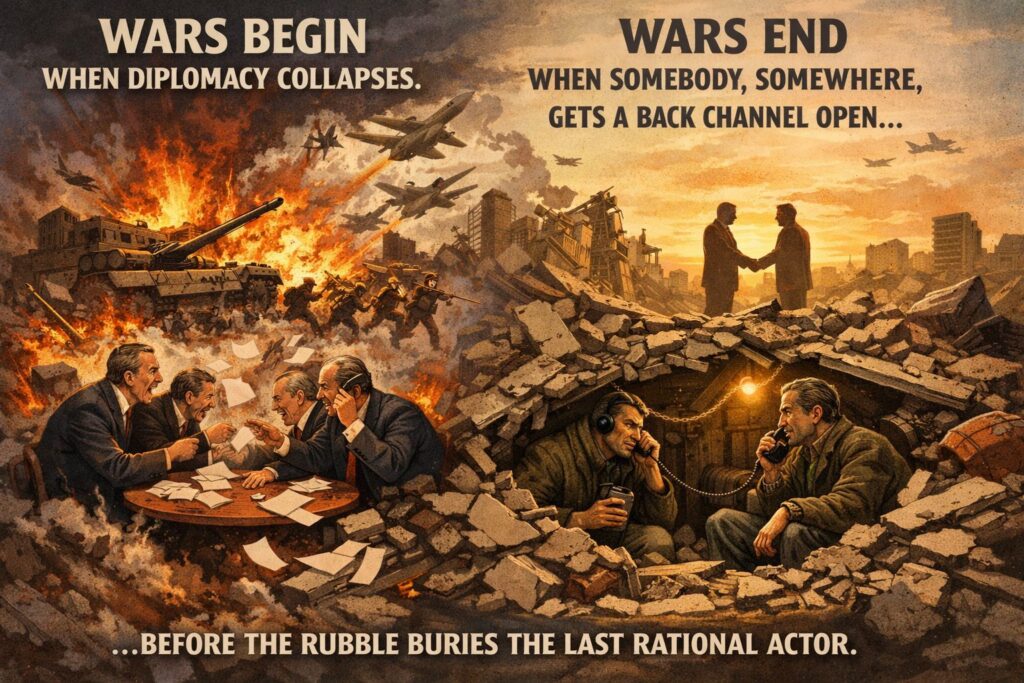
I have spent the better part of thirty-five years sitting in the commander’s cupola of tanks across deserts and plains. In the burning sands of Rajasthan during exercises with live ammunition cracking across the dunes, I learned one fundamental lesson that no Staff College syllabus ever printed cleanly in a textbook: wars begin when diplomacy collapses, and wars end when somebody, somewhere, gets a back channel open before the rubble buries the last rational actor.
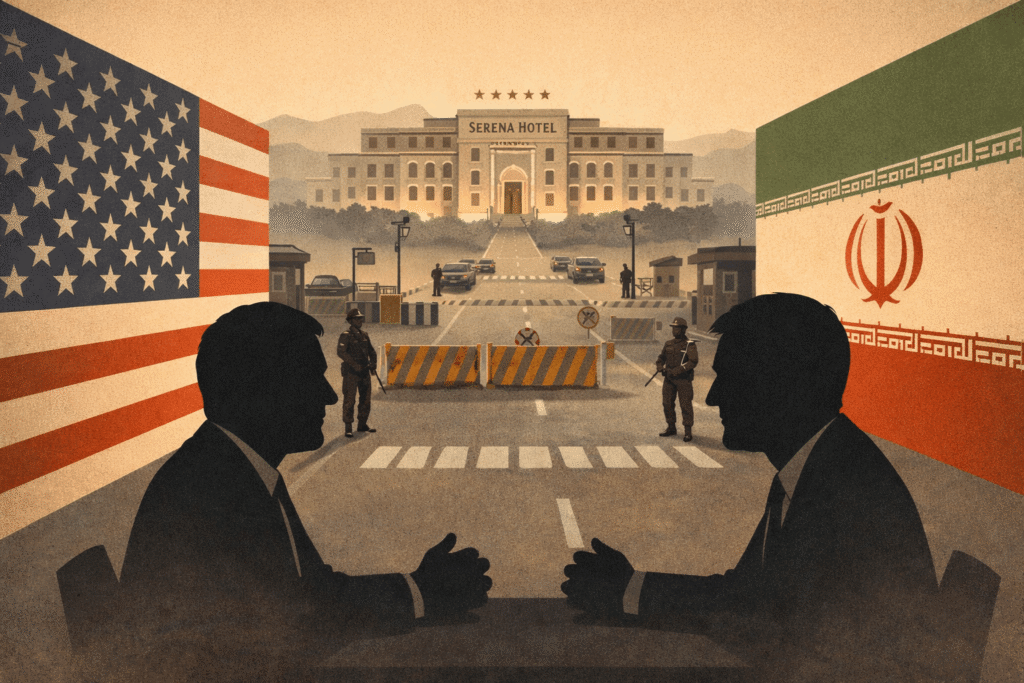
Today, April 11, 2026, as I write this from the quiet of my study in Lucknow, the world is witnessing exactly that back channel at work, in the most unlikely of cities. Islamabad, Pakistan, a city sealed under an effective security curfew, its roads deserted, its famous Margalla Hills brooding silently over the Serena Hotel, is hosting what may well be the most consequential set of proximity talks since the Geneva Accords of 1988. On one side of a corridor: a United States delegation led by Vice President JD Vance, flanked by special envoy Steve Witkoff and the ever-present Jared Kushner. On the other side: an Iranian delegation led by Foreign Minister Abbas Araghchi and Parliament Speaker Mohammad Bagher Qalibaf, a former commander of the Islamic Revolutionary Guard Corps. Between them: Pakistani officials physically shuttling papers and messages, carrying orders between headquarters that refuse to share the same map room.
As an Indian cavalier who spent decades reading Pakistani military intent through the 125 mm barrel of the tank T-72M, I confess to a certain irony that it is Islamabad, of all capitals, that finds itself at the centre of a potential civilizational pivot.
The long road to Serena hotel
Let me give you the cold facts before I give you the analysis, because in my experience, opinion without data is merely noise dressed in conviction.
The current crisis traces its origins to 28 February 2026, when the United States and Israel launched coordinated military strikes on Iran that killed Supreme Leader Ayatollah Ali Khamenei and struck Iran’s military and nuclear infrastructure including the enrichment facilities at Natanz, Isfahan, and Fordow. Over the six weeks that followed, more than 2,000 Iranians were killed. Iran retaliated by closing the Strait of Hormuz, through which roughly a fifth of the world’s traded oil and gas passes. Brent crude, the international benchmark, was trading around 97 dollars per barrel by the week of April 11, 2026, representing a rise of more than 30 percent since the war began. Roughly 100 ships a day traversed the strait before hostilities. In the weeks of the ceasefire, that number had fallen to just 12.
The economic shockwaves have been global and savage. Supply chains already battered by years of fragmentation have taken fresh blows. Gulf states, whose economic lifeblood flows through that narrow chokepoint, have been caught between their fear of Iran and their dependence on open sea lanes. Saudi Arabia, which signed a mutual defence pact with Pakistan in September 2025, a fact highly relevant to what follows, finds itself deeply invested in the outcome of these talks without a formal seat at the table.
Pakistan’s entry into this drama was neither accidental nor purely altruistic. On 25 March 2026, Pakistani officials passed a 15-point American proposal to Iran. The proposal demanded, among other things, the dismantling of Iran’s nuclear facilities, limits on its ballistic missile programme, the reopening of the Strait of Hormuz, and the cessation of Iran’s support for armed groups across the region. Iran rejected the proposal through official channels, calling American positions “excessive and unreasonable,” but kept the back channel open. Iran issued its own 10-point counter-proposal demanding an end to US and Israeli attacks, security guarantees against future aggression, war reparations, and international recognition of Iranian sovereignty over the strait. That last demand, predictably, has been rejected by virtually every nation with maritime interests.
By 7 April 2026, Pakistan managed the near-miraculous: a fragile two-week ceasefire between the United States and Iran. Pakistan’s Prime Minister Shehbaz Sharif announced it on X. The US confirmed. Iran confirmed. The world exhaled.
That ceasefire, however, is already fraying. Israel continues to bomb Lebanon, which Iran insists is covered under the ceasefire agreement. Washington and Tel Aviv disagree. Iranian Foreign Minister Araghchi entered the Islamabad talks declaring, with characteristic candour, that Tehran was bringing “deep distrust” into the room, born of previous rounds of negotiations that collapsed into military strikes. He added that Iran was prepared to retaliate if attacked again even during these talks.
Pakistan’s audacious gambit
Now here is where I must speak with the honesty that only someone who has spent decades watching Pakistan’s strategic calculus from across a contested border can afford.
Pakistan’s emergence as the key mediator in a US-Iran war is, to put it plainly, an extraordinary geopolitical manoeuvre. A country that was not present at the table during the 2015 Iran nuclear deal, the Abraham Accords, or any major Gulf diplomatic settlement of the past two decades, has inserted itself into the centrepiece of the most consequential crisis of 2026.
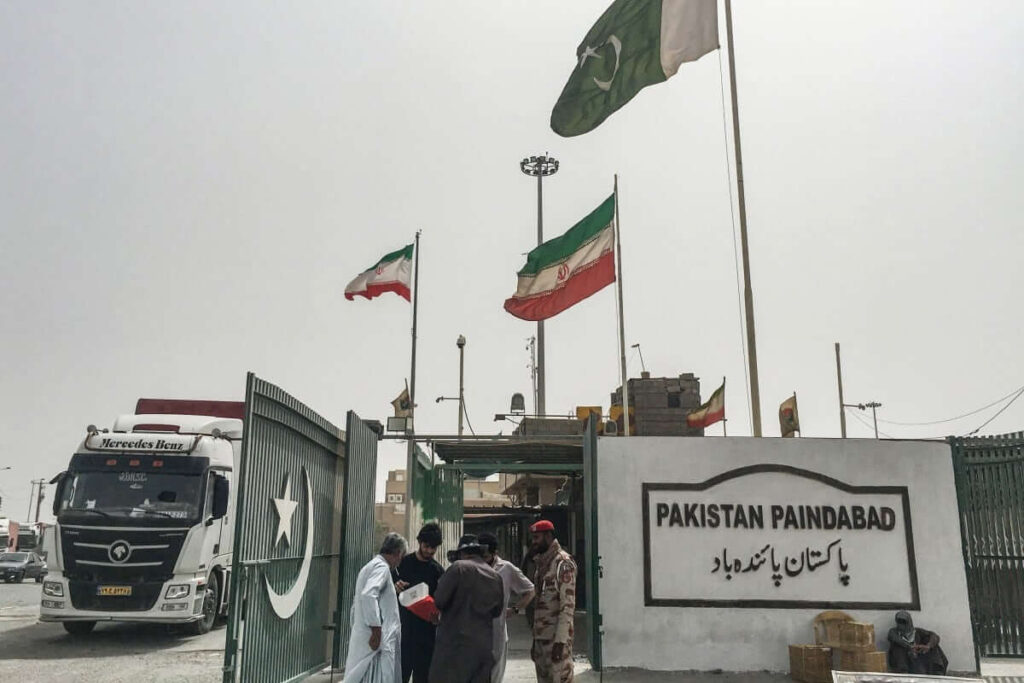
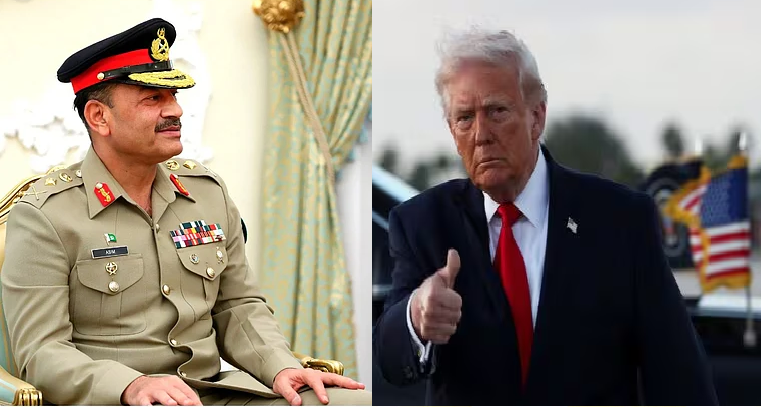
Why Pakistan? Several factors converge. First, Pakistan shares a 560-mile border with Iran and over 20 million Shia Muslims live within its borders, the second largest such population in the world after Iran. An all-out war next door is not merely a strategic concern for Islamabad. It is an existential domestic one. Second, unlike the Arab states of the Gulf, Pakistan does not host American military bases, which gives it a measure of credibility in Iranian eyes that no Gulf monarchy can offer. Third, the personal equation between Field Marshal Asim Munir and Trump’s White House. Trump publicly called Munir “my favourite Field Marshal,” a relationship built partly during the India-Pakistan crisis of May 2025 where American pressure helped broker a ceasefire between the two countries. I note that last detail without particular comfort, but with professional acknowledgment.
Pakistan also leaned heavily on its China relationship, with Foreign Minister Ishaq Dar travelling to Beijing on March 31 to coordinate diplomatic pressure on Iran. China and Pakistan together represent, in Iranian calculation, a bloc of nations with whom Tehran retains working relationships. That combination of leverage proved sufficient to bring Iran to the table.
But I would caution against excessive romanticism about Islamabad’s motivations. Pakistan’s economy is fragile. Its inflation is punishing its ordinary citizens. High energy prices caused by the Hormuz closure are feeding that inflation directly. The Saudi defence pact of September 2025 theoretically places Pakistan in alignment against Iran, which creates a structural contradiction that Pakistani officials have so far papered over with diplomatic dexterity. The honest analysis is that Pakistan needs this war to end at least as badly as anyone else in the region, and its mediation is as much driven by economic self-preservation as by any genuine commitment to the international rules-based order.
That does not diminish the achievement. It contextualises it. And context, as any good intelligence officer will tell you, is everything.
The military balance
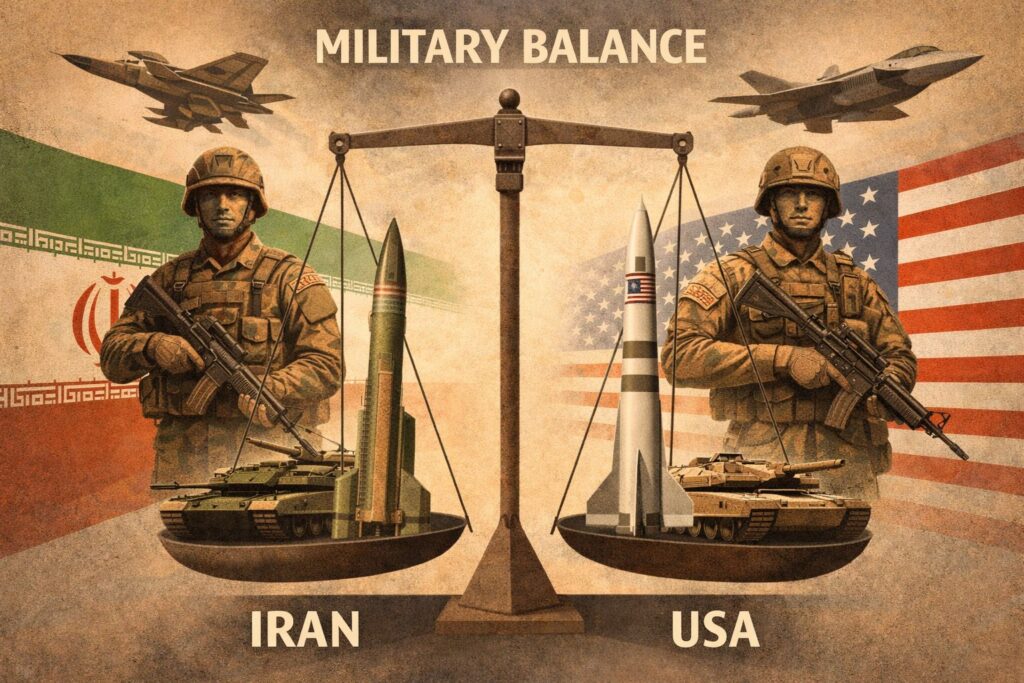
Before I turn to the three most probable courses of action ahead, let me sketch the military realities as I read them.
Iran has been severely damaged. Its nuclear infrastructure at Natanz, Isfahan, and Fordow have been struck. Its supreme leader is dead. Its conventional military capacity has taken significant hits over six weeks of American and Israeli strikes. And yet, Iran’s strategic leverage remains formidable precisely because of geography. The Strait of Hormuz is a narrow waterway, only 21 nautical miles at its narrowest point, and Iran’s capacity to mine it, target shipping with shore-based missiles, and deploy its naval forces to harass traffic means that the world’s oil market remains hostage to Tehran’s choices regardless of how many enrichment centrifuges have been destroyed.
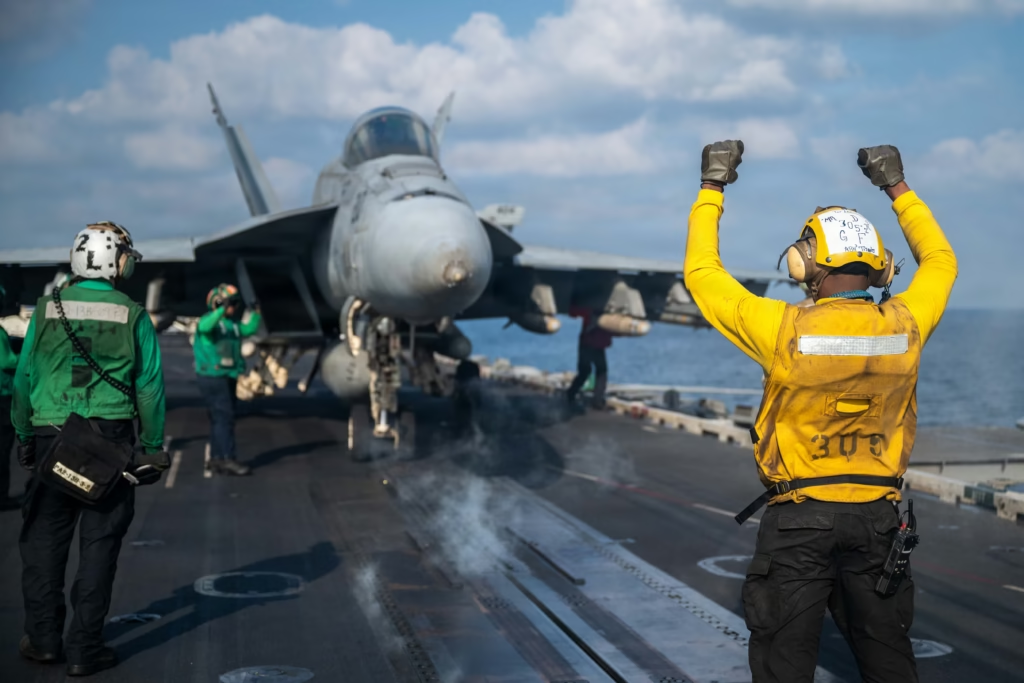
The United States has a military build-up in the region, including reported deployment preparations for elements of the 82nd Airborne Division. American carrier groups are in the Gulf. Air power is available in abundance. But bombing Iran back further than it has already been bombed carries its own catastrophic risks, including broader regional escalation, the involvement of Hezbollah in Lebanon, potential strikes on Gulf oil infrastructure, and the kind of oil price shock that would tip global economies into recession and torch whatever political capital Trump has left before the November 2026 midterms.
Israel wants Iran’s nuclear programme and ballistic missile capacity permanently eliminated. It is getting the first through US strikes, but the second remains elusive. Opposition leader Yair Lapid called the Islamabad talks a “diplomatic disaster” for Israel, arguing his country had no real influence over the process. That is a significant statement. It tells you that even America’s closest ally in the region feels it is losing control of the diplomatic trajectory.
Against this backdrop, the Islamabad talks are not about who wins. They are about who survives, and in what condition.
The triad : probable course of action and their likelihood
Option # 1: Comprehensive Agreement (Probability: 20%)
The most optimistic scenario sees the Islamabad talks producing a framework agreement that covers, at minimum, a permanent ceasefire, a verifiable cap on Iranian uranium enrichment at levels well below weapons-grade, a phased reopening of the Strait of Hormuz tied to phased sanctions relief, and internationally monitored inspections of what remains of Iran’s nuclear infrastructure. Under this CoA, the IRGC, whose buy-in is essential for any deal to stick, would need to be brought along by Qalibaf, himself a former IRGC commander and conveniently part of the Iranian delegation. The United States would secure enough of its 15-point demands to declare a strategic victory domestically. Iran would secure enough sanctions relief and sovereignty recognition to present the deal to a domestic audience shattered by war as a dignified outcome rather than a capitulation.
The probability is low because the gap between the two sides is not merely tactical. It is existential for Tehran’s political class. The Trump administration, meanwhile, has twice previously broken off talks to launch strikes. Iranian negotiators know this history. Araghchi himself acknowledged it publicly on arrival in Islamabad. The mutual distrust is structural, not incidental. Additionally, Israel’s continued operations in Lebanon are already threatening to terminate the ceasefire before a framework can be inked. The 20 percent probability reflects the possibility that the shared economic pain, particularly for Gulf states, US voters ahead of midterms, and Pakistan’s own fragile finances, creates enough convergent pressure to force a breakthrough despite the odds.
Option # 2: Extended Ceasefire & Follow-on Talks (Probability: 50 %)
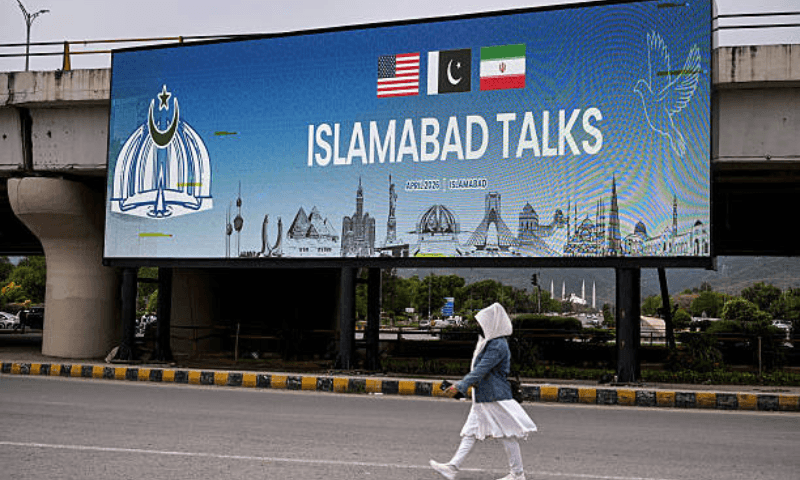
The most probable outcome, and one that Pakistan itself has publicly framed as a realistic and “modest” goal, is an agreement to extend the ceasefire beyond the initial two weeks and establish a structured process for follow-on negotiations. Pakistan’s former ambassador to the UN, Zamir Akram, framed this precisely when he told Al Jazeera: “Pakistan has succeeded in getting them together. We got them to sit at a table. Now it is for the parties to decide whether they are willing to make the sacrifices necessary to reach an eventual solution.”
Under this CoA, Islamabad’s talks produce an agreed set of working groups, technical committees, and a timeline for the next round of higher-level negotiations. The Strait of Hormuz remains partially closed but a limited arrangement for essential shipping, perhaps excluding certain nationalities or cargo types, provides minimal relief to global oil markets. Brent crude retreats partially from its highs. The ceasefire holds in Iran proper, even if Lebanon remains contentious. The probability is 50 percent because this is what the ground reality currently supports. Both sides have come to Islamabad with maximal opening positions, as Pakistan’s own mediators have warned. Neither can afford to be seen domestically as having surrendered. An extended ceasefire with a structured process allows both to regroup, reassess, and return to the table in conditions of their own choosing.
Option #2: Collapse of Talks & Resumption of Hostilities (Probability: 30%)
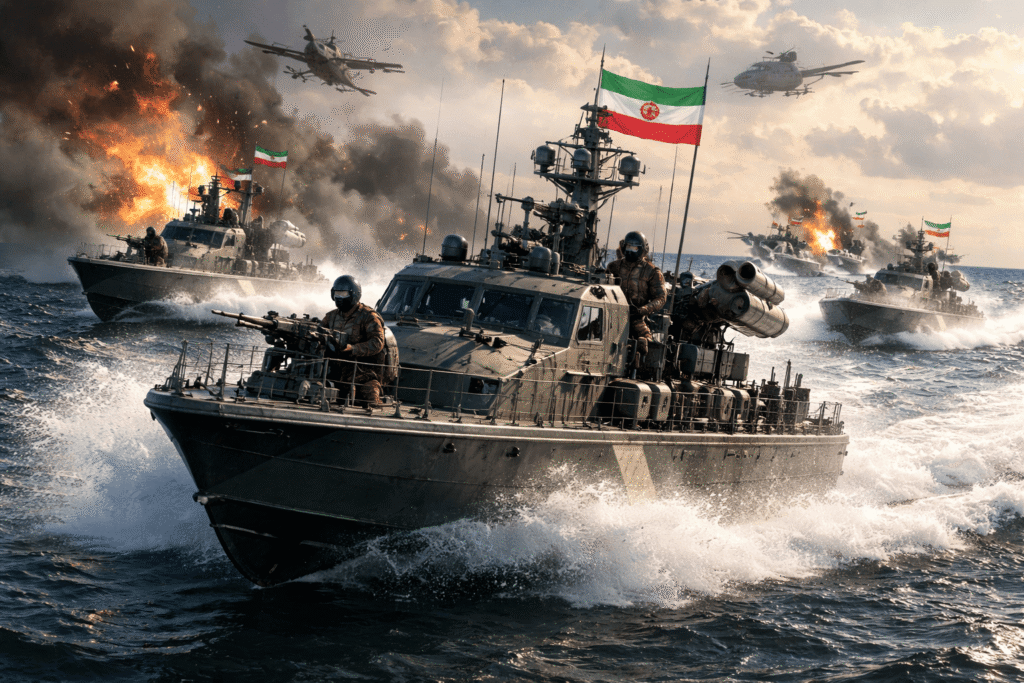
The most dangerous CoA sees the Islamabad talks fail, either because of a new Israeli strike on Iran during the negotiations, an Iranian attack on Gulf infrastructure that crosses American red lines, or simply because the fundamental incompatibility of the two sides’ opening positions proves unbridgeable even with Pakistani intermediaries. Under this scenario, the two-week ceasefire collapses, Iran fully closes the Strait of Hormuz to all traffic, oil prices spike toward 120 to 130 dollars per barrel, and the United States faces the choice of either a massive new military escalation or a humiliating retreat from its stated war aims.
The 30 percent probability reflects the very real fragility of the current moment. The ceasefire is, by all accounts, already under strain. Trump’s own social media posts arriving right up to the talks, including one claiming that Iranian officials “have no cards to negotiate with” and that the only reason they are alive today is to negotiate, are not the language of a man preparing to compromise. Iran, for its part, is entering these talks with a foreign minister who has publicly stated his “deep distrust” of American intentions. The IRGC’s posture remains aggressive, particularly over the Strait. And Israel’s calculation, as the Christian Science Monitor reported, is driven by a fear of a deal that does not address Iran’s nuclear programme and missiles. Netanyahu retains the capacity to conduct strikes that could blow up the Islamabad process entirely.
The view from the cupola
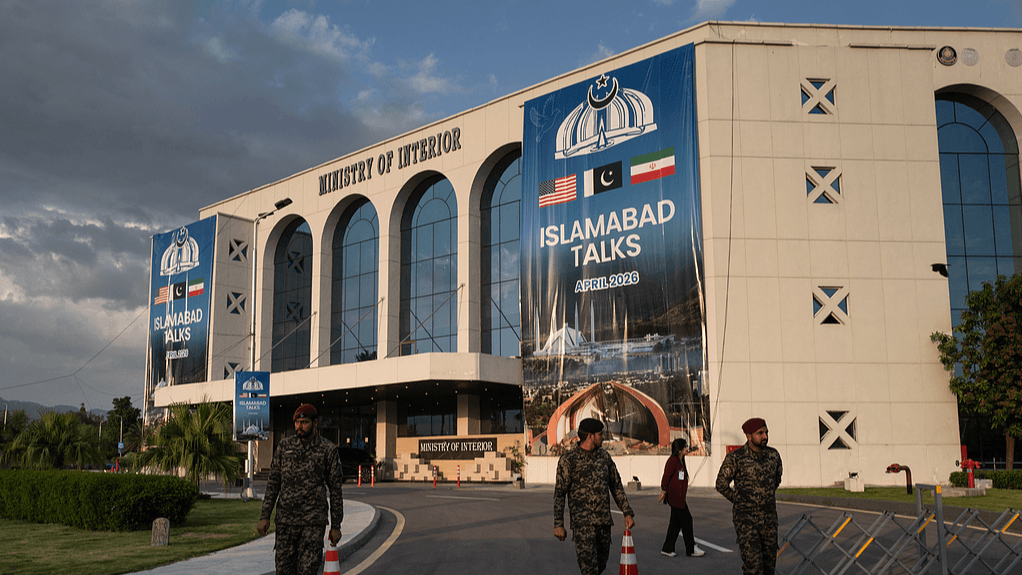
I said at the outset that wars end when somebody gets a back channel open before the rubble buries the last rational actor. The Islamabad talks are that back channel, facilitated by a Pakistani military and diplomatic establishment that has surprised virtually every sceptic in the international community.
As an Indian, I watch this with the complicated feelings of someone whose country shares a contested border with Pakistan, whose soldiers have faced Pakistani tanks across the IB / Line of Control, and whose strategic interests in a stable Persian Gulf and open sea lanes are every bit as real as Islamabad’s. India imports roughly 85 percent of its crude oil needs. A prolonged Hormuz closure at 97 dollars per barrel is an economic catastrophe for New Delhi in slow motion.
I have spent many years studying Pakistan’s strategic culture. What I see today is not the Pakistan of the Kargil misadventure, or the Pakistan of the Pulwama attack. I see a Pakistani military establishment that, having survived an unprecedented domestic political crisis over the past three years, and having navigated the India conflict of May 2025, has now consciously leveraged its relationships on multiple axes, Washington, Tehran, Riyadh, Beijing, to claim a diplomatic dividend it desperately needs. Whether that dividend translates into lasting peace or merely a tactical pause is a question that will be answered not in the corridors of the Serena Hotel, but in the months that follow.
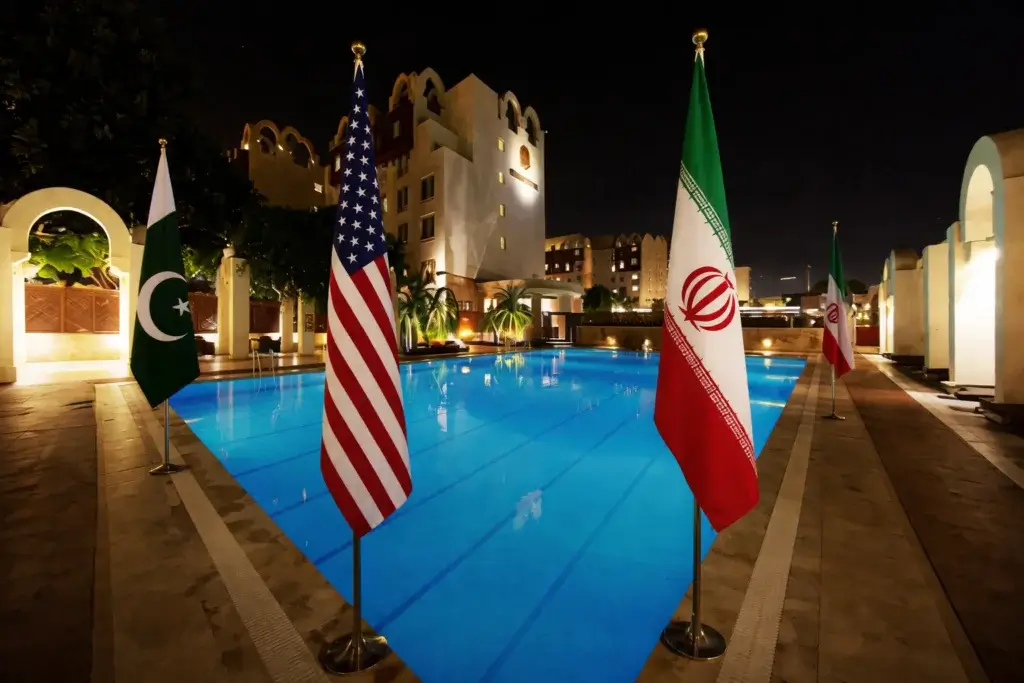
The oil markets, the Gulf economies, the 2,000 Iranian dead, the global supply chains, the American voters eyeing November midterms, the Israeli government’s war aims, Pakistan’s 20 million Shia citizens, and the ghost of Ayatollah Khamenei killed six weeks ago by an airstrike – all of these forces are converging on a hotel in Islamabad today, in rooms that face each other but whose occupants refuse to enter the same space.
I am a proud veteran – a cavalryman at heart. I have seen what firepower does to flesh and steel. I have also seen what a single conversation in the right room, at the right moment, can accomplish when soldiers and statesmen finally agree that the cost of more fighting exceeds the cost of compromise.
My prayer, offered with the unsentimental realism of someone who spent three decades in uniform, is that the men in those two rooms at the Serena Hotel are wise enough to understand what their predecessors were not: that a world on the edge of a wider war needs architects of peace far more urgently than it needs champions of maximalist demands.
The weapon platforms, for now, are quiet. The talking shops are open. The rest is history that has not yet been written.
Sitaron se aage jahan aur bhi hain
– Allama Iqbal
Abhi ishq ke imtihaan aur bhi hain
“Beyond the stars, there are worlds yet to be found, The tests of courage and of love are still aground”


Your article offers a compelling and timely reflection on the enduring tension between force and diplomacy. The metaphor of “heat-seeking missiles” versus “cool-headed diplomacy” captures not only the contrast in methods but also the difference in mindset that defines escalation versus resolution.
Your emphasis on the quiet, often invisible role of backchannel negotiations is amazing. In a world where public discourse is dominated by displays of strength, your piece reminds us that the most decisive shifts frequently occur away from the spotlight, through patience, restraint, and strategic foresight.
The idea of the “Serena Hotel gambit” as a calculated diplomatic move is especially thought-provoking. It underscores how, even in moments of heightened tension, there remains space for talks over impulse where dialogue, however discreet, can recalibrate the trajectory of conflict.
At the same time, the article invites further reflection on a difficult question: how can diplomacy maintain credibility and momentum in an environment where trust deficits are deep and political compulsions often reward hardline postures? Exploring this tension could add another layer to an already insightful analysis.
Your piece is a valuable reminder that while military actions may shape immediate realities, it is diplomacy that ultimately defines outcomes. In an era of rapid escalation, that perspective is both necessary and reassuring.