

The Supreme Court’s 2025 CAPF verdict—and why it unsettled North Block

On 23 May 2025, the Supreme Court delivered a landmark judgment holding that the Central Armed Police Forces (CAPFs) must be treated as part of the Organised Group A Services (OGAS) “for all cadre-related matters.” The Court also directed the Union government to carry out long-pending cadre reviews and to gradually reduce the number of senior CAPF posts filled by IPS officers on deputation.
In effect, the May 2025 verdict did three big things. First, it formally acknowledged the long-standing grievances of CAPF cadre officers—especially the denial of full OGAS recognition, the resulting impact on benefits like Non-Functional Financial Upgradation (NFFU), and the career stagnation caused by blocked promotion avenues. Second, it flagged that the cadre review due in 2021 had not been conducted and ordered the Ministry of Home Affairs (MHA) to complete it within six months. This was not a routine administrative instruction: cadre reviews decide how many posts exist at each level, which directly shapes promotion timelines and determines whether officers remain stuck in the same rank for years. Third—and most controversially—the Court called for a phased reduction of IPS deputation to senior CAPF posts, particularly at the DIG and IG levels, so that cadre officers could finally rise to the top of their own organisations.

For officers across the BSF, CRPF, CISF, ITBP, SSB and NSG, the judgment—though delayed—felt like overdue institutional validation. It affirmed that they are not second-class professionals in borrowed uniforms, but members of organised services entitled to structured career progression, fair cadre management, and the dignity of leading their own forces.
Yet, instead of fully aligning policy with the Court’s directions, MHA continued appointing IPS officers to key CAPF positions and filed a review petition arguing that the IPS-led command structure was too important to dilute. On 31 October 2025, the Supreme Court dismissed the review petition and reiterated that IPS deputations in top CAPF leadership posts must be progressively reduced over the next two years.
This brings us to the core question: why is MHA so reluctant to loosen its grip over the CAPFs?
Why IPS-led CAPF leadership feels “safe” to MHA

From MHA’s point of view, placing IPS officers—who already lead state police, the CBI, and other internal security bodies—into CAPFs appears convenient and low-risk. It offers the ministry a ready pool of senior officers, familiar administrative rules, and firm control over top appointments.
Also Read: How other countries treat their CAPF like ‘in-between’ forces?
But for CAPF cadre officers, the same arrangement sends a blunt message: you can serve on the frontlines, take the hardest risks, and even lay down your life—yet you may still never lead your own force at the very top. The Supreme Court’s OGAS direction sought to correct this imbalance by recognising CAPF officers as an organised service, and by insisting on time-bound reforms to promotion pathways. That shift challenges a long-standing power structure, which is why it meets resistance from parts of the MHA ecosystem and the wider IPS establishment.
Cadre control and IPS dominance
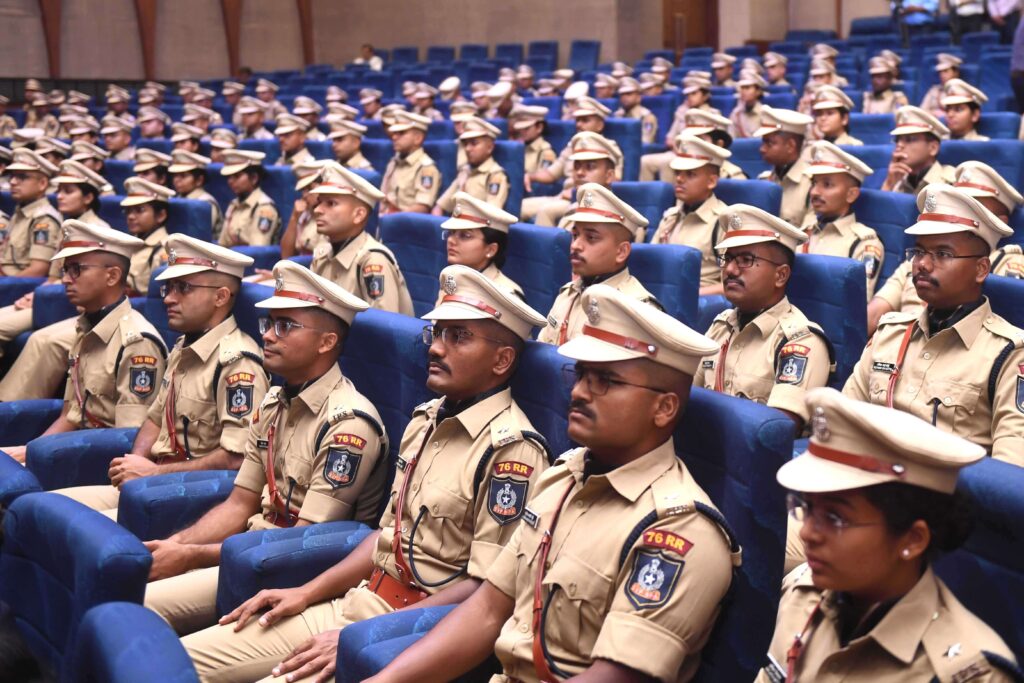
Under the present system, MHA functions as the cadre-controlling authority for CAPFs. It frames recruitment rules, decides promotion structures, sets deputation norms, and determines how senior posts are distributed. For decades, a substantial share of DIG, IG and higher posts has been filled through IPS deputations from state cadres or central pools.
This has two clear consequences. First, it gives the IPS an institutionalised hold over CAPF leadership. Several of the most influential command and staff appointments are occupied by officers who are not from the CAPF cadre, serving for relatively short tenures—often three to five years—before moving back to state police or other central roles. Second, it keeps the internal career trajectory of CAPF cadre officers permanently constrained. When large portions of senior posts are occupied by deputationists, even officers with 25–30 years of service can hit a glass ceiling. The litigation that culminated in the 2025 verdict arose precisely from these complaints of structural stagnation and unequal treatment.
Civil-services mindset: specialists under generalists

There is also a deeper bureaucratic worldview at play. Over time, the system has evolved a preference for Organised Group A services to function under the broad supervision of “generalist” ministries and centrally managed leadership pipelines. CAPFs are often treated as a hybrid category—different from other OGAS—so the government argues that their “unique needs” justify extensive IPS deputation.
Behind the legal and administrative framing is an old hierarchy: specialists are expected to operate under generalists. For the administrative establishment, a large, uniformed force that meaningfully shapes its own cadre rules, promotions, and leadership pipeline can feel like a challenge to traditional chains of command.
This is why MHA may accept “OGAS status” for CAPF officers on paper yet resist its logical consequences in the real world: fewer IPS deputations, stronger internal promotion ladders, and cadre structures shaped with genuine CAPF input. Control over careers is also control over institutions—and the ministry is reluctant to hand that control to the officers who do the ground-level fighting.
Money and morale: the shadow of pay and pensions

If cadre control is about power and positions, pensions are where the money—and the political sensitivity—begins.
For years, serving and retired CAPF personnel have raised demands such as separate service and pension rules, exemption from the National Pension System (NPS), an ex-servicemen-like status, and even One Rank One Pension (OROP) along the lines of the armed forces. These demands have repeatedly featured in parliamentary discussions and official replies.
The government’s stance has remained cautious, at times appearing evasive. In 2012, it created an “Ex-CAPF” category but clarified that it is distinct from the ex-servicemen status of the defence forces and left it to states to extend similar benefits if they wished. Subsequent litigation has underlined the weakness of this arrangement—for example, courts have observed that states are not automatically bound to treat CAPF retirees as ex-servicemen unless they choose to adopt such a policy.
Reports in 2018 also indicated that MHA had rejected OROP demands for CAPFs, citing financial implications and the government’s view that CAPF service is distinct from military service. Even later “morale-boosting” measures—such as honorary one-rank promotions on retirement for CAPF and Assam Rifles personnel—have been framed as symbolic, without linked increases in pay or pension.
The institutional worry is straightforward: if MHA loosens its grip over cadre structures and top leadership, CAPF officers and welfare associations are likely to press harder on unresolved pay-and-pension questions. From North Block’s fiscal lens and MHA’s political lens, that is a set of demands they would rather keep tightly contained.
Political leverage: CAPFs as tools, not institutions

Beyond bureaucracy and money lies the most uncomfortable layer: political control.
CAPFs are the backbone of internal security. They are deployed in anti-Naxal operations, counterinsurgency, riot control, election duty, and border roles. During every general election, the deployment of “central forces” becomes a flashpoint between the Union government and opposition-ruled states.
For any central government, influence over leadership—and the ability to rely on these forces quickly for sensitive tasks—is a major strategic advantage. A leadership pipeline dominated by IPS officers, whose careers are closely tied to the political executive across the Centre and states, offers the system a familiar comfort. A more autonomous CAPF leadership, rising entirely from within and shaped by its own professional ethos, could be harder to nudge and manage.
This will never be openly written into official notes. But the pattern is difficult to ignore when the Supreme Court attempted to expand CAPF autonomy, MHA chose to contest it rather than treat it as an opportunity to strengthen these forces as self-led institutions.
What a looser grip could look like
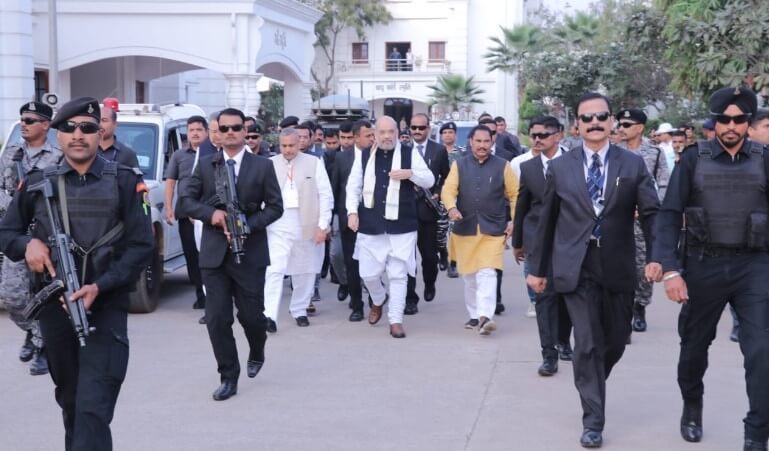
Loosening MHA’s grip does not mean losing control over internal security. It can be done—firmly and responsibly—within the Supreme Court’s framework.
MHA can conduct a genuine cadre review with meaningful consultation from CAPF leadership, expanding senior posts for cadre officers and reducing structural promotion bottlenecks. It can also rewrite rules so IPS deputation is limited to a small set of clearly defined positions where cross-pollination genuinely adds value—such as doctrine, inter-state coordination, and intelligence—instead of using deputation as the default route for entire layers of senior leadership. In parallel, MHA can address the most pressing gaps in allowances and post-retirement benefits through targeted reforms, guided by existing parliamentary data, without mechanically copying the armed forces template.
In such a model, MHA becomes a steward rather than a controller—setting policy, ensuring accountability, and coordinating between forces and states, without micromanaging careers or treating CAPFs primarily as instruments to be held close.
The Supreme Court’s 2025 judgment—and the dismissal of the review petition—gave the ministry a chance to choose confidence over control. So far, it has leaned towards control. The long-term cost is predictable: stagnation, low morale, and an internal security architecture shaped more by bureaucratic reflex than by professional autonomy.
Conclusion

If CAPFs are expected to carry India’s toughest internal security burdens, they must also be allowed to build credible leadership from within backed by fair promotions and clear service rights. The Supreme Court has already shown the direction. What remains is for MHA to implement it in spirit, not merely on paper—because a force that fights with pride must also be permitted to lead with dignity.


What an insightful article. Very apt analysis. If only mha gives priority to the professional and leadership issues of capfs over the politico economic issues and the stranglehold of the ips…..A demoralised and frustrated middle level leadership in capfs is dangerous for the internal security.
It seems author don’t have insights of working of CAPF and very ingnorant about the cadre officers. First of all, cadre controlling authority of CAPF officers is MHA like IPS. Second, CAPF officers have better exposure rather than IPS in counter insurgency Operations, tactical operation and tactical placement of troops. CAPF officers are combat proven and battle hardened in critical theatres of India. Even many times proved better in handling even L&O situation which is the subject of the state for example of Manipur, where IPS became totally ineffective and due to their inefficiencies militants looted more than 12000 weapons from Manipur police. Now, due to the direct, intervention of CAPFs more 50 % weapons recovered. Another thing, MHA always trust and believe in CAPFs and have very positive views even Hon’ble UHM have already praised the role of CAPFs many times.
I suggest you read the article again. It will satisfy your concern about the cadre controlling authority of CAPF officers and other such issues