

Operation Sindoor marked the most intense India–Pakistan military confrontation since Kargil, but unlike earlier crises, this conflict unfolded in an era dominated by drones, precision missiles, satellite surveillance, cyber operations and information warfare. The military exchanges of May 2025 lasted only a few days, yet their strategic consequences continue to shape South Asian security architecture in 2026. What remains fiercely contested, however, is the true scale of losses suffered by both sides. India and Pakistan declared success. Both released selective imagery and narratives. Both accused the other of disinformation. The truth, as in most modern conflicts, lies somewhere between official claims, satellite evidence, open-source intelligence and independent expert assessments. It therefore was very important to analyse the entire issue in a non-partisan manner and present a more truthful and balanced account.
The Trigger and the Escalation

Operation Sindoor was launched after the Pahalgam terror attack in which 26 civilians were killed. India attributed the attack to Pakistan-backed terror networks linked to Lashkar-e-Taiba and allied formations.
India’s response was not designed as a symbolic strike similar to Balakot in 2019. Instead, it was a calibrated but multi-domain punitive campaign involving air strikes, cruise missiles, drones, artillery and electronic warfare against terrorist infrastructure and selected Pakistani military assets. The conflict escalated rapidly into a limited but intense conventional confrontation. Independent observers described it as the most dangerous India-Pakistan military crisis in decades.
India’s Claims and Pakistan’s Counterclaims
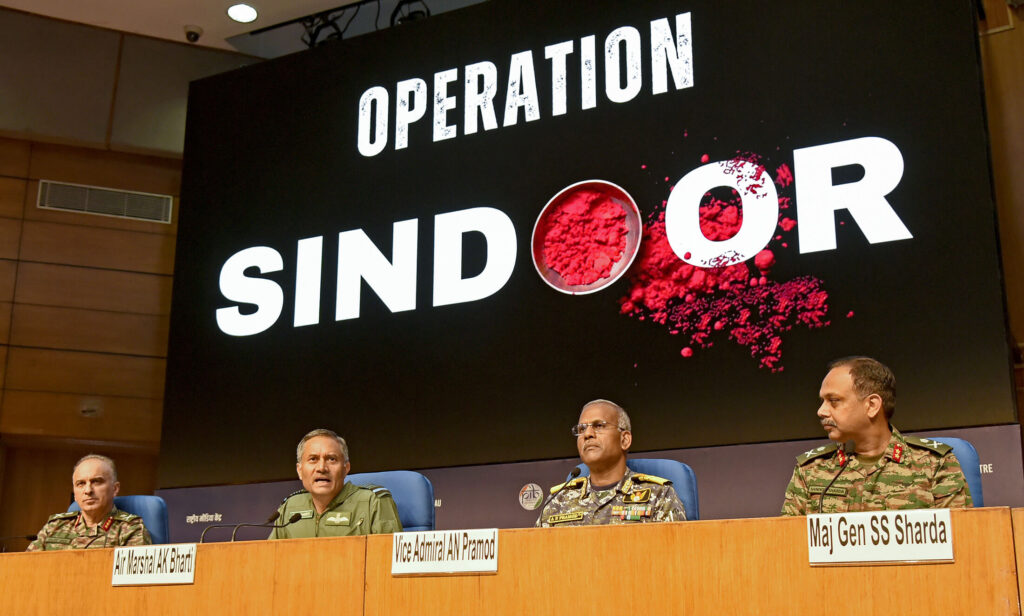
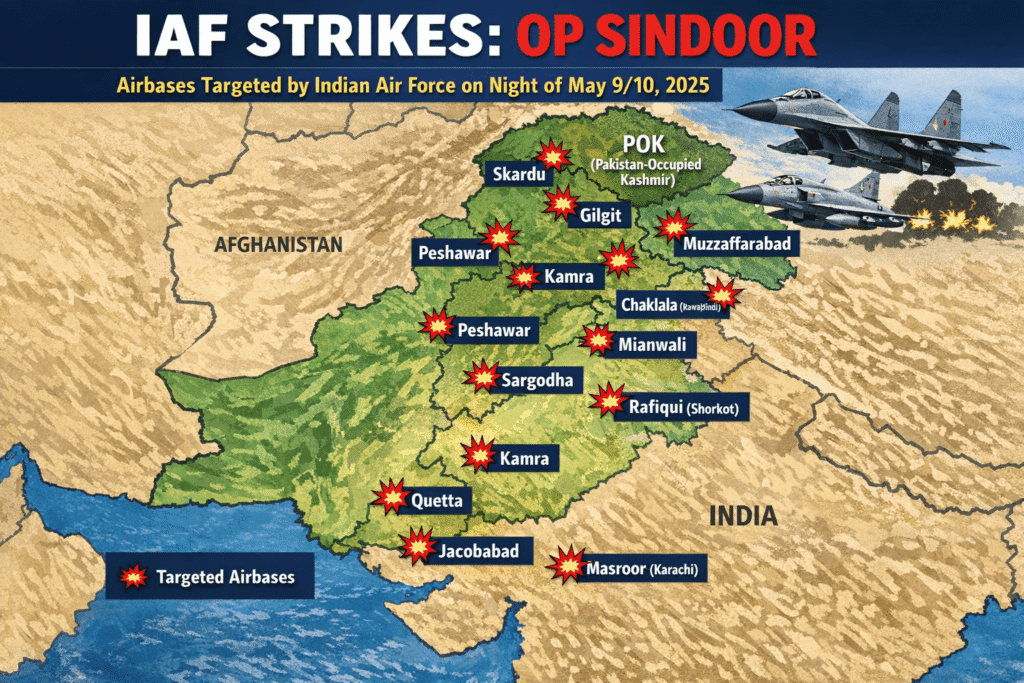
Indian military briefings in 2026 asserted that the armed forces struck nine terror camps, targeted 11 Pakistani airfields and destroyed 13 Pakistani aircraft, including high-value airborne assets.
India further maintained that Pakistan failed to inflict significant military damage on Indian infrastructure. Air Marshal A.K. Bharti stated that “they have not been able to inflict any major damage.”
Pakistan, meanwhile, rejected many of India’s claims and projected the operation as a strategic failure for New Delhi. Pakistani accounts claimed that the Pakistan Air Force successfully intercepted Indian strike packages and imposed costs on the Indian Air Force. Pakistani sources also alleged Indian aircraft losses, especially during the opening phase of the conflict.
The information war became almost as important as the military exchanges themselves. Social media platforms were flooded with manipulated imagery, recycled videos and exaggerated battlefield claims. Independent analysts repeatedly warned that both governments were shaping narratives for domestic political audiences.
What Independent Experts Believe
The most credible assessments emerged not from official propaganda but from satellite imagery analysis, defence think tanks and military scholars.
The Royal United Services Institute (RUSI) described Operation Sindoor as an example of “calibrated force” and argued that India demonstrated a new escalation model based on punitive precision strikes without seeking territorial conquest.
The Stimson Center noted that both countries declared victory amid “considerable misinformation and disinformation.”
Christopher Clary of the University at Albany reportedly assessed that satellite evidence supported claims that India inflicted “significant, though not devastating” damage on Pakistani airbases.
Another influential assessment came from analysts John Spencer and Vincent Viola writing in the Small Wars Journal. They argued that Operation Sindoor demonstrated India’s growing capability to execute integrated precision warfare using indigenous systems such as BrahMos missiles, Akashteer air defence and loitering munitions.
At the same time, some analysts challenged triumphant Indian narratives. Pakistan specialist Umair Jamal argued that Pakistan emerged “emboldened” politically and diplomatically after the crisis and that its military establishment regained domestic legitimacy.
The most balanced conclusion emerging from independent assessments is that India likely achieved tactical and operational superiority, especially in long-range precision strike capability, but Pakistan succeeded in preventing a catastrophic military collapse and retained sufficient deterrence credibility.
The Question of Aircraft Losses
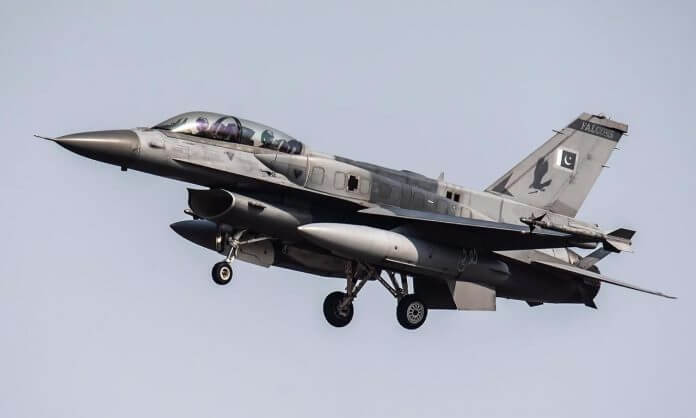
The most disputed aspect of the conflict remains aircraft attrition.
Pakistan claimed multiple Indian fighter losses during the initial exchanges. Indian authorities neither fully confirmed nor comprehensively denied these allegations. Open-source intelligence communities identified evidence suggesting that at least some Indian aircraft may have been damaged or lost during early operations, though the exact numbers remain unclear.
Pakistan’s own losses are also disputed. Indian claims of 13 destroyed Pakistani aircraft have not been independently verified in entirety. However, satellite imagery and subsequent airbase activity analyses suggest that several Pakistani facilities sustained serious damage.
What appears increasingly credible is that Pakistan suffered greater infrastructure degradation while India may have suffered limited but politically sensitive tactical losses in the air domain.
This distinction matters. In modern warfare, the destruction of runways, hardened shelters, radar nodes and command-and-control systems can be strategically more consequential than aircraft losses alone.
The Drone War and Missile Duel
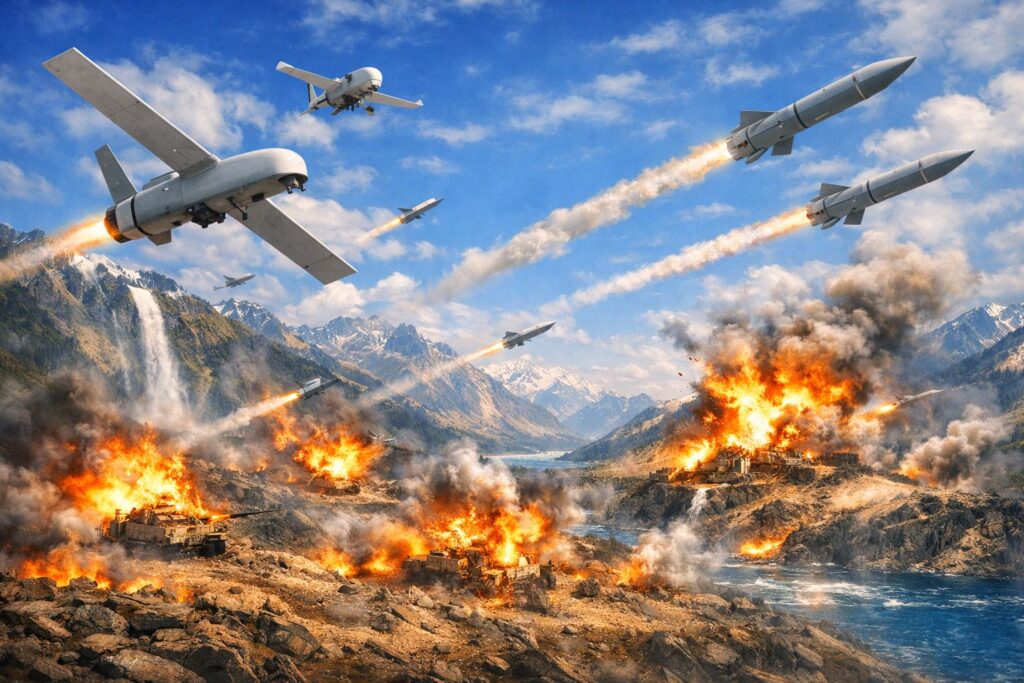
Operation Sindoor also revealed how warfare in South Asia is changing fundamentally. The conflict witnessed the large-scale use of kamikaze drones, loitering munitions and long-range precision missiles.
Pakistan reportedly deployed Turkish-origin drone systems alongside Chinese-enabled surveillance networks. India responded with Harop drones, BrahMos missiles and integrated air-defence grids. Independent studies concluded that India’s indigenous and semi-indigenous systems performed better than expected under combat conditions.
The role of Chinese support to Pakistan became a major strategic takeaway. Chinese ISR support, Beidou satellite navigation assistance and electronic warfare integration reportedly enhanced Pakistan’s situational awareness. India relied increasingly on NavIC and its expanding military satellite architecture.
One of the understated lessons was that future India-Pakistan wars may increasingly become India-China proxy technology contests.
Information Warfare: India’s Weakest Front
Despite battlefield successes, many analysts believe India underperformed in the narrative war. Pakistan moved rapidly to shape global perceptions through diplomatic outreach, social media campaigns and coordinated information operations. Indian official communication was initially fragmented and slow. Several contradictory briefings allowed speculation to dominate public discourse. General Upendra Dwivedi later acknowledged the importance of information warfare during the conflict. In future conflicts, control of the narrative may become as important as control of airspace.
Did India Achieve Deterrence?
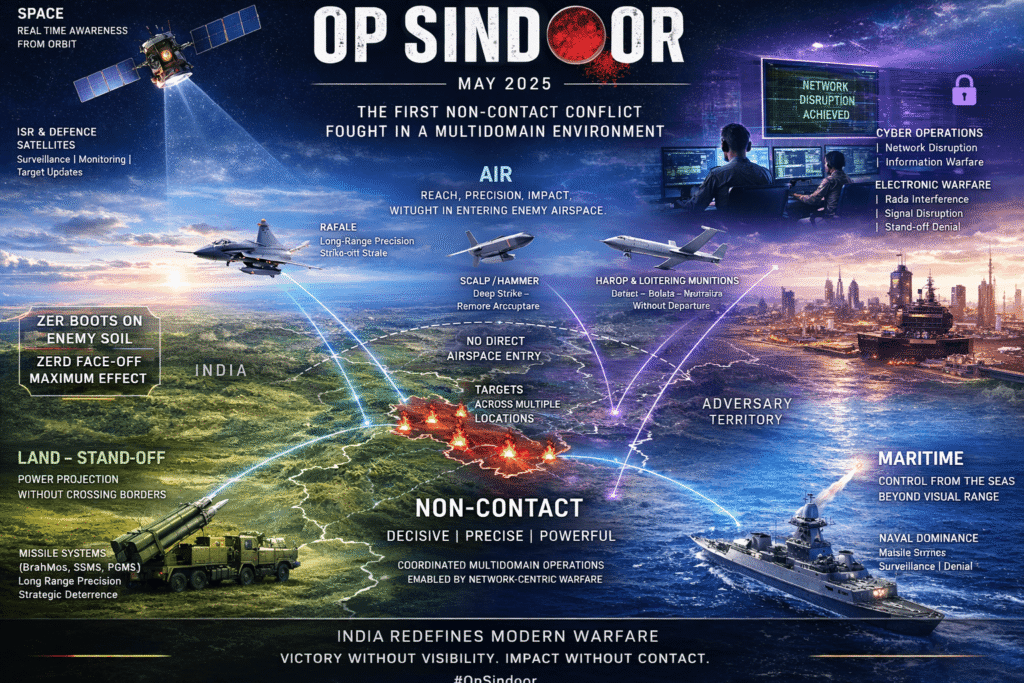
This remains the central strategic question. India demonstrated that cross-border terrorism could invite direct military punishment beyond symbolic retaliation. Operation Sindoor imposed visible military and economic costs on Pakistan. Bilateral trade collapsed further, airspace restrictions persisted and strategic distrust deepened dramatically.
However, deterrence against Pakistan has historically been temporary rather than permanent. After the Parliament attack came Operation Parakram. After Mumbai came covert escalation and Balakot. After Pahalgam came Sindoor. The deeper issue is structural: Pakistan continues to view proxy warfare as a low-cost asymmetric strategy against a conventionally superior India.
The Likelihood of the Next War
The probability of another India-Pakistan military confrontation remains high over the next five years, though its nature is evolving. A full-scale conventional invasion similar to 1971 remains unlikely because of nuclear deterrence and economic constraints. But limited high-intensity conflicts are increasingly plausible.
The next war, if it occurs, is likely to have six defining characteristics. First, it will be shorter but far more technologically intense. Second, drones and autonomous systems will dominate the tactical battlefield. Third, cyber warfare and attacks on critical infrastructure will accompany kinetic operations. Fourth, space and satellite denial capabilities will become central. Fifth, China’s indirect role will become more visible through intelligence, logistics and technological backing to Pakistan. Finally, the conflict will be fought simultaneously in physical, digital and cognitive domains. The old template of tank battles across Punjab plains is steadily giving way to missile duels, swarm drones, electronic suppression and precision deep strikes.
The Strategic Reality After Sindoor
Operation Sindoor did not produce a decisive victor in the classical sense. Pakistan survived militarily and politically. India, however, demonstrated escalation dominance in precision strike capability, air defence integration and indigenous military technology. The conflict also revealed uncomfortable truths for both sides. Pakistan’s conventional vulnerabilities were exposed. India discovered that even superior military capability does not guarantee narrative dominance or immunity from tactical setbacks.
Most importantly, Operation Sindoor showed that South Asia has entered a new era of warfare where the line between peace and war is increasingly blurred. The next conflict may begin not with tanks crossing borders but with cyber intrusions, satellite disruption, drone swarms and disinformation campaigns long before the first missile is fired. In that sense, Operation Sindoor was not merely a four-day conflict. It was a preview of the future battlefield in Asia.
Rearming After Operation Sindoor: India and Pakistan Enter a New Military Competition
Operation Sindoor has fundamentally altered military planning on both sides of the India-Pakistan border. The conflict demonstrated that future wars in South Asia will be decided less by mass mobilisation and more by precision strike capability, survivable air defence, drones, electronic warfare and rapid battlefield networking. Consequently, both New Delhi and Islamabad have accelerated acquisitions and doctrinal reforms at a pace not seen since the aftermath of Kargil.
India’s military modernisation after Sindoor has focused on expanding air superiority, long-range strike capability and indigenous production capacity. The Indian Air Force has moved aggressively to expand its Rafale fleet, with the Defence Acquisition Council clearing the procurement of 114 additional Rafale fighters alongside new SCALP cruise missiles and air-launched weapons packages. Simultaneously, India has accelerated procurement of additional S-400 interceptors, Akash-NG systems and work on Project Kusha, the indigenous long-range air defence programme intended to create a layered shield comparable in some respects to advanced Western and Russian systems. India is also dramatically increasing BrahMos missile inventories after their reported effectiveness during Operation Sindoor, with new production facilities in Lucknow expected to manufacture 100–150 missiles annually, including next-generation variants. The drone ecosystem has seen perhaps the fastest growth. India is investing heavily in swarm drones, loitering munitions, armed MALE UAVs and AI-enabled targeting systems, while encouraging private industry and start-ups under the Atmanirbhar Bharat framework.
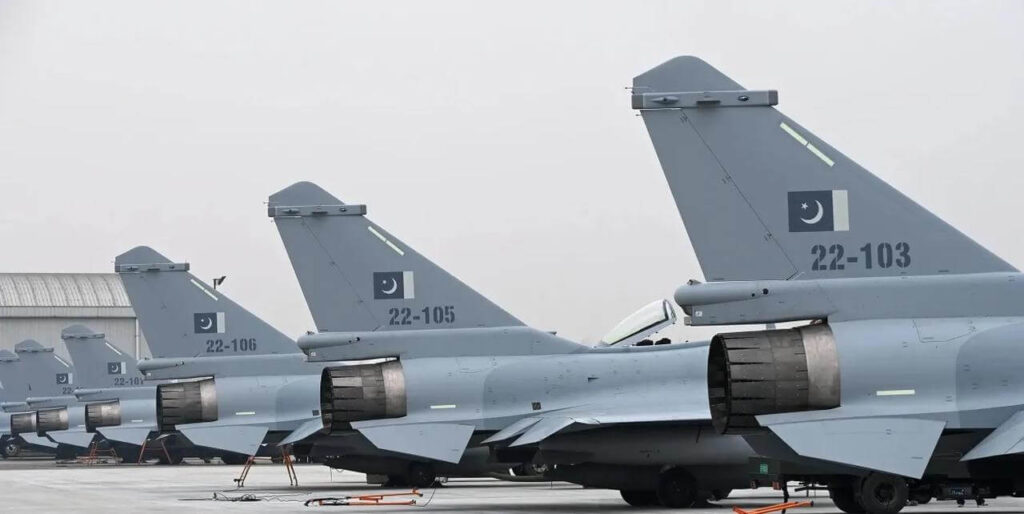
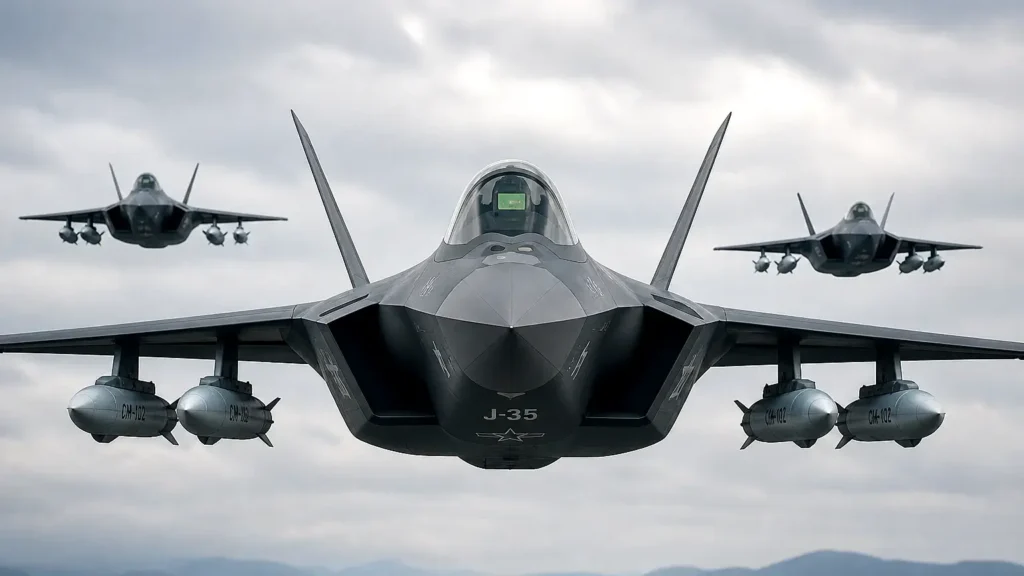
Pakistan, meanwhile, has drawn very different lessons from the conflict. Islamabad believes the war validated the importance of integrated Chinese support networks, electronic warfare and dispersed air operations. Pakistan is therefore deepening defence integration with China through the induction of J-35 stealth fighters, upgraded J-10C platforms, longer-range air defence systems and enhanced Beidou-enabled targeting support. Its missile modernisation programme has focused on improving the Fatah-series guided rockets and expanding tactical precision strike capability. Pakistan is also likely to invest more heavily in survivable drone fleets after witnessing the vulnerability of fixed infrastructure during Sindoor. Turkish-origin drones, Chinese ISR support and distributed battlefield sensors are expected to become central components of Pakistan’s future warfighting architecture. Islamabad is also prioritising hardened shelters, mobile command centres and redundancy in radar and communication networks to reduce vulnerability to Indian deep-strike capabilities.
Yet both countries face major structural challenges despite the surge in acquisitions. India’s foremost challenge remains squadron depletion, lengthy procurement cycles and dependence on foreign engines, sensors and aero-engines despite progress in indigenous manufacturing. The Indian Air Force still operates below sanctioned squadron strength, even as the threat environment becomes increasingly complex. Sustaining large missile inventories in a prolonged conflict also poses financial and industrial challenges. Another major issue is information warfare: Operation Sindoor showed that battlefield success can be diluted by narrative management failures and fragmented strategic communication.
Pakistan faces even greater constraints. Its economy limits sustained high-end military modernisation, making dependence on Chinese financing and technology increasingly unavoidable. The Pakistan Air Force remains professional and combat capable, but maintaining advanced aircraft fleets, AWACS systems and precision weapons inventories under economic stress will be difficult over time. Pakistan also confronts the challenge of defending a relatively narrow geographic depth against increasingly accurate Indian stand-off strike systems.
For both countries, the central reality after Sindoor is that the next conflict will likely be faster, more automated and more technologically unforgiving. Airbases, satellites, communication nodes and logistics hubs will become primary targets in the opening hours of war. The military competition is no longer simply about numbers of tanks or infantry divisions; it is increasingly about who can see first, strike first and sustain precision warfare longer.