


On August 11, 2025, a three-judge Bench of the Supreme Court of India issued a landmark order declaring a public health emergency in Delhi-NCR due to escalating dog bite cases. The Bench expressed shock that an average of 20,000 cases of dog bites are recorded in the country, out of which 2000 incidents happen in Delhi every day. Delhi sterilized over 470,000 dogs in 2023, but still struggles with an estimated 1 million strays.
The Bench directed the authorities to start picking up stray dogs at the earliest, and if necessary, by creating a force. The judges warned against lethargy or compromise in undertaking this exercise. “If any individual or any organisation comes in the way of forceful picking up of the stray dogs and rounding them up…. we shall proceed to take the strictest of actions against any such resistance which may be offered,” they said.
The Court set a deadline of eight weeks and directed the municipal authorities in Delhi- NCR to pick up stray dogs and relocate them to the shelters. As per the Apex court orders the civic bodies were supposed to:
- Capture all stray dogs
- Sterilize and vaccinate them
- Build shelters for 5,000 dogs
- Relocate the dogs to the shelters
- Install CCTV cameras and monitor the shelters
- Create a helpline for bite incidents
- Ensure humane treatment and prevent overcrowding
The Supreme Court ruling sparked nationwide protests by animal rights groups, but received support from public health advocates.
Commenting on the seriousness of the issue, RSS Chief Mohan Bhagwat said “The problem can be solved only by regulating the population of street dogs. But it cannot be resolved by putting stray dogs in shelters.”
Even Karnataka Cabinet Minister and Working President of the Karnataka Pradesh Congress Committee Eshwar Khandre reportedly added fuel to the fire by saying, “The menace of the street dogs is huge, and it is increasing day by day. We have to protect the lives of children and all pedestrians.”
The issue of dangerous dog breeds reached a peak after a series of violent attacks led to multiple fatalities and mauling of an 11-year-old girl in the United Kingdom, in 2023 by the American XL Bully – a breed known for its muscular build and aggressive tendencies. This made the then-Prime Minister Rishi Sunak issue a strong public statement: “The American XL bully dog is a danger to our communities, particularly our children. I share the nation’s horror at the recent videos we’ve all seen. It is clear this is not about a handful of badly trained dogs, it’s a pattern of behaviour and it cannot go on.” Sunak banned the breed under the Dangerous Dogs Act. The move was widely supported by the public, though some animal welfare groups raised concerns about breed-specific bans and the need to focus on responsible ownership.
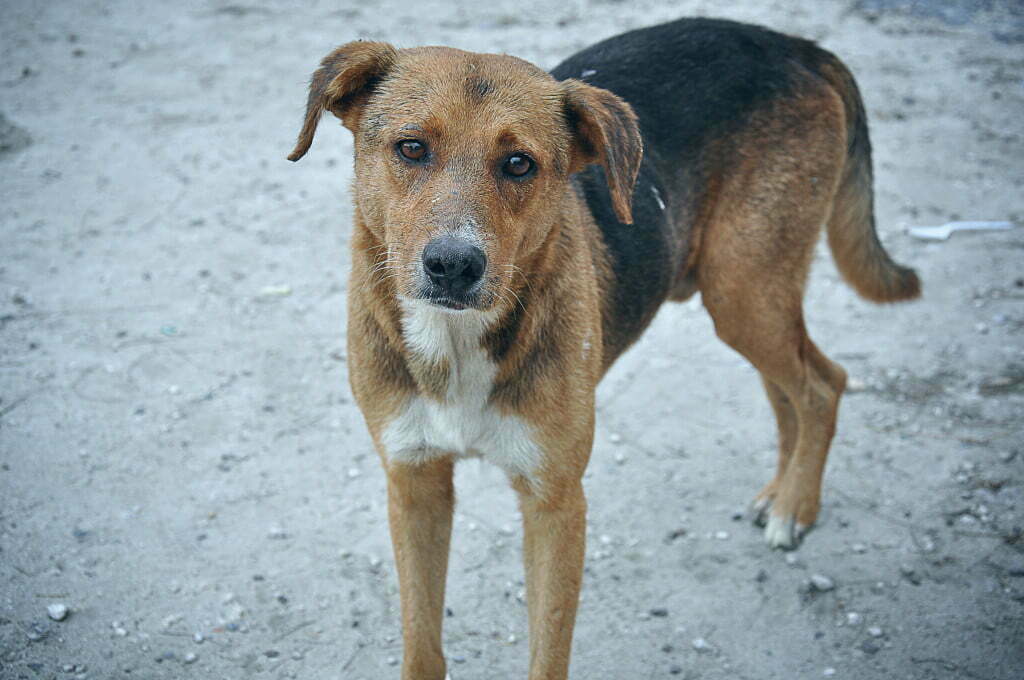
Stray dogs are a familiar sight across the globe. According to estimate there are around 900 million dogs in the world. Out of these around 470 million are pets while the remaining 430 million freely move on the streets worldwide without a master or home, posing a threat to children, women, and elderly – who are among the most vulnerable victims of stray dog menace worldwide.
The problem is compounded by the fact that stray dogs reproduce at a very fast rate. For instance, a single un-neutered female dog gives birth to around 14 puppies a year, leading to exponential population growth. This is a global phenomenon with significant public health, safety, and economic ramifications. Stray dogs, once considered a minor nuisance, have evolved into a global public health and safety crisis.
India has one of the largest stray dog populations in the world – around 62 million stray dogs, followed by Brazil and China. Stray dogs are a rare sight in most Western European and North American countries, which have strict animal control laws, high rates of pet ownership, and successful sterilization programs as compared to Eastern and Southern Europe, South America, Africa, and Asia.

India accounts for over 3.7 million dog bite cases and 54 rabies deaths annually. In other words, this means more than 10,000 dog bites per day.
Dogs are responsible for over 99% of rabies cases globally. India accounts for over 36% of global rabies fatalities, with an estimated 18,000-20,000 deaths each year. Over 40% of rabies deaths occur in children under 15 years old. According to the World Health Organization (WHO) estimates rabies kills up to 59,000 people annually. More than 95% of these deaths occur in Asia and Africa.
Stray dogs are also a source of other zoonotic diseases, like leptospirosis, hookworms, roundworms, and numerous bacterial infections.
Children
Children are disproportionately affected by stray dog attacks due to their small size, limited awareness, and natural curiosity.

- On June 30, 2025 a six-year-old Chavi Sharma lovingly called Bittu, was bitten by a stray dog without any provocation while walking to her aunt’s house in Pooth Kalan in Delhi. She was bleeding badly when she was rushed to Dr B.R. Ambedkar Hospital for anti-rabies treatment, but her health deteriorated in mid-July. On July 21, her first day back at school, she began vomiting, lost strength in her limbs and stopped speaking. Four days later, just before her final vaccine dose was due, she died.
- On 23 July four-year-old Abhishek Rai, was mauled by a pack of dogs while returning from his school in Alipur, Delhi. The dogs pounced at his face, repeatedly injuring him until a few bystanders rushed to his rescue.
- In June 2025, a seven-year-old girl called named Nasmeen was mauled to death by a pack of stray dogs in Bijnor, Uttar Pradesh. Nasmeen was playing outside her home when a group of three to four stray dogs suddenly attacked her. Despite her screams, the dogs tore into her face, abdomen, and limbs. Family members rushed out and managed to drive the dogs away using sticks, but by then, she had sustained critical injuries. She was taken to the Community Health Centre, where she succumbed during treatment.
These incidents are not isolated. They reflect a systemic failure in managing stray populations and ensuring safe public spaces for children.
Elderly

Older adults face heightened risks due to slower reflexes, reduced mobility, and weakened immunity.
- On August 17, 2025 an elderly man was attacked by a stray dog in CIDCO Township, a densely populated area in Chhatrapati Sambhajinagar, Maharashtra. The chilling incident was captured on CCTV. The video showed the elderly man walking alone in a narrow alley when the dog approached from the opposite direction and leapt at his face. The man fell on the ground as the dog continued to bite him viciously. Locals rushed to intervene and managed to drive the dog away, but the man sustained serious injuries to his face and hands and was hospitalized. He is the 14th victim in a series of dog bite incidents in the same locality.
- On July 25, 2025, Munni Devi a 60-year-old woman was mauled to death was mauled to death by a pack of stray dogs while collecting fodder in the field in Jhaadpura Bhagjot village in Bijnor, Uttar Pradesh. Villagers discovered Munni Devi’s severely mutilated body and immediately alerted her family. This is the third fatal stray dog attack in the past four months, including a seven-year-old girl and another minor earlier this year.
Such attacks often result in severe injuries, long hospital stays, and psychological trauma.
Women
Women, especially those in rural or semi-urban areas, are frequently targeted while performing daily chores.
- In Bijnor, multiple women have reportedly been chased or bitten while walking through fields or marketplaces. According to local residents about 15–20 people are injured daily by stray dogs in the area even in densely populated neighbourhoods. The forested patches too are no longer safe, with dogs increasingly targeting women, children, and the elderly.
- In Amroha, a woman was attacked not just by dogs but also by a stray bull, highlighting the broader issue of unmanaged stray animals.
- In a terrifying series of events in 2023, nine women were killed by stray dogs in the Begusarai district of Bihar. The dogs had reportedly turned aggressive, preying on women who were often alone, working in fields or walking on secluded paths. The string of fatalities terrorized the community and demonstrated how stray dogs can become a persistent and deadly threat to specific demographics within a region.
Rabies: The Silent Killer
Rabies, a nearly 100% fatal disease once symptoms appear, remains one of the deadliest consequences of stray dog bites. According to the World Health Organization, the virus travels silently through the nervous system, taking weeks or even months before manifesting symptoms such as hydrophobia, delirium, and paralysis. Despite the availability of vaccines, many victims—especially in rural areas—fail to receive timely treatment due to:
- Lack of awareness
- Vaccine shortages
- Misdiagnosis
- Poor access to healthcare
What Needs to Be Done
- Mass sterilization drives to reduce population growth
- Universal rabies vaccination
- Public Awareness Campaigns on safe interactions and post-bite protocols
- Stricter Laws against irresponsible pet ownership
- Build and maintain shelters with adequate staff and resources
Global best practices

The stray dog menace is neither inevitable nor insurmountable. Here’s how different countries have made remarkable progress—and in some cases, eradicated the problem altogether.
United states- The “no-kill movement”
The United States has tackled stray dog management through a combination of legislation, spay-neuter campaigns, and large-scale adoption drives. The “No-Kill Movement,” significantly reduced euthanasia rates, with over 83% of U.S. shelters achieving no-kill status. Mandatory licensing and microchipping laws in many states ensure accountability. Cities like Austin, Texas, and Los Angeles have demonstrated that high sterilization rates, accessible veterinary care, and robust adoption networks making the U.S. a global leader in humane stray dog management.
United Kingdom – strict laws to manage stray dog population
The United Kingdom has a combination of strict laws to successfully manage stray dog populations. The Environmental Protection Act 1990, mandates capture and care for stray dogs, while unclaimed animals are rehomed through registered charities. Microchipping was made mandatory in 2016, drastically reducing abandonment rates and aiding quick reunification of lost pets. As a result, the UK reports some of the lowest stray dog numbers in Europe, demonstrating how strong governance and public responsibility can nearly eliminate the issue.
Bhutan: 100% sterilisation and vaccination nationwide
One of the most striking success stories comes from Bhutan, which faced a serious rabies threat in the early 2000s. Rather than opting for mass culling, Bhutan chose a humane and scientific path and initiated an ambitious Rabies Control Program that sterilised and vaccinated over 150,000 stray dogs in the country. As a result, Bhutan achieved 100% coverage in sterilisation and anti-rabies vaccination, drastically reducing stray dog populations and rabies cases.
Netherlands: elimination through legal frameworks and adoption culture
The Netherlands stands as a benchmark in the global fight against stray dogs and is hailed as the first country to effectively eliminate stray dogs from its streets. The country faced a growing stray population linked to abandonment and uncontrolled breeding. To solve the problem, the Dutch authorities implemented strict laws and made making sterilisation and microchipping mandatory for pet owners. Municipal shelters were upgraded to ensure that every rescued dog had a chance at rehabilitation and rehoming. As a result, the Netherlands today has near-zero stray dogs, with a high adoption rate and one of the strongest animal welfare records in Europe.
Thailand: A humane model for stray dog control
There was a time when Thailand had more than 70,000 stray dogs— an unchecked population driven by unchecked breeding and minimal veterinary care. This is when the government of Thailand partnered with the Soi Dog Foundation to address the mounting stray dog crisis through humane, scalable methods and implement one of the most effective Catch-Neuter-Vaccinate-Return (CNVR) programs in the world. This has led to a dramatic reduction in the number of stray dogs and rabies cases, making Phuket one of the safest regions in Southeast Asia for both people and animals.
Singapore: Humane TNRM and rehabilitation
Singapore launched one of the most humane and scientifically progressive Trap-Neuter-Release-Manage (TNRM) program, in 2018 to sterilise the growing number of free-roaming dog population. By late 2024, more than 80% of the free-roaming dog population has been sterilized under the programme. Nearly 1,900 dogs were rehomed, 700 were fostered or sheltered, and those who couldn’t be placed in homes were released back into suitable environments to continue living naturally. This has led to a 70% decline in public complaints about stray dogs due to improved coexistence between humans and free-roaming animals in urban neighbourhoods.
Nepal: community-integrated sterilisation and vaccination
Nepal launched a successful community-integrated sterilization and vaccination program which has led to sterilization of over 23,000 dogs, vaccination of 48,000 others, and significant reduction in the street dog population. Health surveys show treated areas have healthier dogs and fewer cases of skin disease. Local Animal Management Committees and over 300 trained assistants sustain the effort, promoting rabies control, responsible pet ownership, and humane treatment—making Kathmandu a model for compassionate, public health-driven stray dog management. More importantly, rabies cases have dropped, and community attitudes improved in zones where KAT was active.
Morocco: Humane Control with TNVR
Morocco has made notable progress in stray dog management through a government-endorsed Trap-Neuter-Vaccinate-Return (TNVR) approach. The country launched large-scale sterilisation and anti-rabies vaccination campaigns in partnership with local municipalities and animal welfare groups. Cities like Rabat and Marrakech now run structured TNVR programs, focusing on long-term population control while improving community safety. Dogs are sterilised, vaccinated, tagged, and returned unless they pose a health or safety risk. Initiatives like these have positioned Morocco as an example of compassionate and effective stray dog control in North Africa.
These models demonstrate that humane, science-based strategies can work—if backed by political will and public support.
Conclusion
The menace of stray dogs is not just an animal welfare issue—it’s a public safety emergency at the intersection of health, law, urban planning, and culture. Left unchecked, stray dog populations can multiply rapidly, creating conditions that endanger both people and the animals themselves, who suffer from disease, starvation, and abuse.
While compassion must guide our actions, it cannot override the need for decisive, science-backed policies. The path forward lies in collaboration—between governments, communities, and animal welfare organizations. Only then can we create cities that are safe, humane, and truly inclusive.