

God does not bless any conflict
– Pope Leo XIV
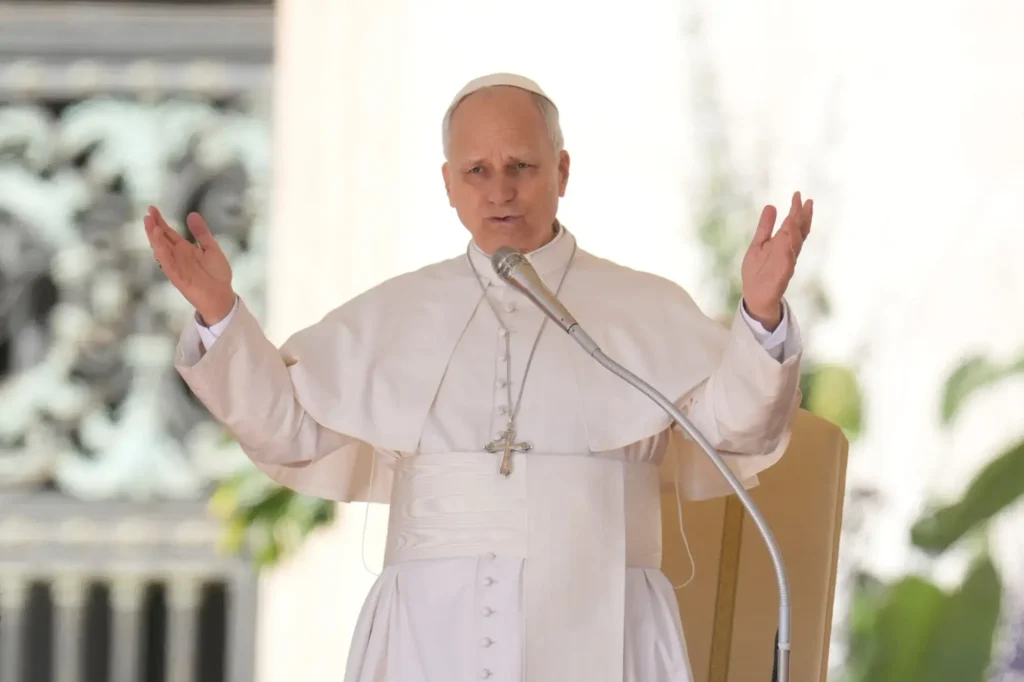
The All-India Catholic Union (AICU), the largest national confederation of Catholic laity in Asia, expresses its firm solidarity with His Holiness Pope Leo XIV’s impassioned appeal for an immediate end to the devastating war involving the United States, Israel, Iran and Lebanon.
“We unequivocally endorse the Holy Father’s call for ceasefire, dialogue, and the restoration of peace in the Middle East. The Pope’s voice, rooted in the Gospel of peace and compassion, resonates as a moral imperative for all humanity in these turbulent times,” Er. Elias Vas, the National President of the 107-year-old AICU said.
This war ’s repercussions ripple across the globe, affecting energy markets, global trade through disruptions in the Strait of Hormuz, food security, and economic stability everywhere, including in India. Warmongers must heed the global chorus of voices demanding peace – from religious leaders, civil society, and ordinary citizens.
But while the world’s attention is gripped by this international crisis, the AICU cannot overlook the insidious attempts within our own country to reshape the landscape of religious freedom and erode the federal structure of our secular democracy.
These moves, veiled under the guise of regulation or development, risk undermining the hard-won rights of minorities, particularly Christians who form an integral part of India’s diverse tapestry.
The weaponisation of the Foreign Contribution (Regulation) Act (FCRA) continues unabated. The recent FCRA Amendment Bill 2026 has exposed the government’s intent to grab Church-run schools, hospitals, orphanages, and development organizations that serve millions irrespective of caste or creed.
The AICU has consistently argued that such amendments conflict with Articles 25 and 26 of the Constitution, which guarantee freedom of conscience and the right to manage religious affairs.
“We reiterate our demand for the complete withdrawal of these amendments and written assurances against any future usurpation of Church assets. Second, the discourse around establishing a ‘National Christian Welfare Board’ or ‘Christian Development Board’ coupled with proposals for ‘micro-minority’ status for Christians is particularly concerning”, an AICU communique stated.
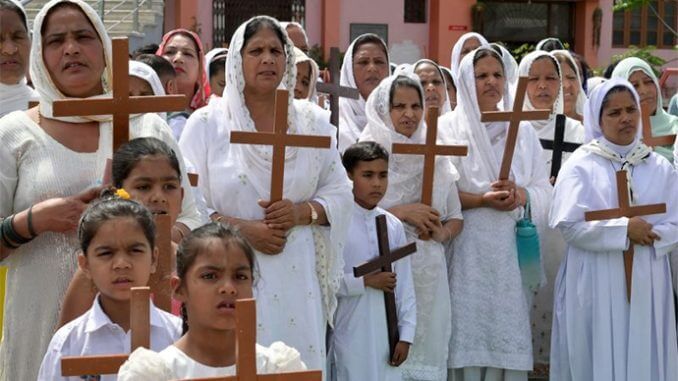
According to AICU, while ostensibly aimed at addressing community issues, such initiatives threaten to be the death knell for the unified mass movements that Christians have championed for decades.
Dalit Christians, who have long struggled for Scheduled Caste (SC) status and the attendant constitutional protections and benefits enjoyed by their Hindu, Sikh, and Buddhist counterparts, risk further marginalisation.
Fragmenting Christians into ‘micro-minorities’ would weaken collective advocacy for justice and equality. Similarly, it endangers efforts to preserve Adivasi identities and rights, support fishermen, boatmen, and coastal and hill populations in regions like Kerala, Tamil Nadu, and the Northeast where Christianity has deep roots intertwined with local cultures.
The AICU views this as counterproductive to fostering genuine empowerment and calls upon the government to engage with the Christian community, respecting its internal denominational, ethnic and cultural diversity while upholding unity in pursuit of common good.
Third, the continued weaponisation of anti-conversion laws remains a grave affront to religious liberty. Recent developments in Chhattisgarh, where the Dharm Swatantra Vidheyak 2026 was passed with provisions for life imprisonment in cases of mass conversions and stringent penalties for conversions involving minors, women, or Scheduled groups, mark this trend.
Statements from the Chief Minister of Madhya Pradesh advocating the death penalty for certain conversions further escalate the rhetoric of criminalisation.
These laws are invoked selectively and blur the line between voluntary faith expression and alleged coercion, effectively stifling legitimate missionary activity, pastoral care, and personal spiritual journeys guaranteed under Article 25.
In practice, as AICU leaders have seen in many states, they empower vigilante groups and local authorities to harass pastors, prayer meetings, and believers under the pretext of ‘allurement’ or ‘force’ – terms vaguely defined to include even charitable works or education.
The AICU and others have moved the courts to seek redress. But we also demand of the government a review of these laws to ensure they align with constitutional freedoms and are not misused to target peaceful religious practice.
Similarly, the AICU has in recent field studies seen the misuse, in Chhattisgarh particularly, of the Panchayats (Extension to Scheduled Areas) Act, 1996 (PESA) in tribal regions, encouraged by political parties.
Gram Sabhas, meant to empower Adivasi self-governance and protect customary laws, are being subverted to ban Christian pastors, Bible teachers, and evangelists from their own villages.

Burials have become flashpoints, with mobs exhuming bodies or preventing Christian rites citing ‘tribal tradition’ – a selective interpretation that ignores the syncretic realities of many Adivasi Christian communities.
This misuse transforms a protective law into an instrument of exclusion and religious persecution, violating fundamental rights to residence, worship, and dignity. It also undermines federalism by allowing local majorities to override national constitutional guarantees.
The implications extend to social cohesion: pitting tribal against tribal on religious lines weakens the broader Adivasi movement for rights and resources.
Fifth, the ongoing saffronisation of education, particularly in textual materials and curricula, poses a long-term threat to India’s pluralistic identity.
Revisions in NCERT and state textbooks that prioritise one cultural narrative while marginalising or distorting the contributions and histories of minorities, including Christians, foster a skewed worldview among young minds.
This not only erodes the secular character of education as envisaged by the Constitution but also sows seeds of intolerance and division.
In a diverse democracy, education must celebrate multiplicity, promote critical thinking, and instil values of fraternity. India cannot risk producing generations less equipped for harmonious coexistence, social harmony and national integration.
The AICU calls upon the Government of India to reaffirm its commitment to the Constitution’s ideals of secularism, equality, and liberty. We urge dialogue with minority representatives, protection of federal principles, and restraint in using laws as weapons against vulnerable communities.