
Selective storytelling erases the Pandit exodus, Pakistan‑backed militancy, and post‑2019 progress, leaving viewers with half a narrative instead of the whole truth

AnewZ TV’s documentary ‘Frontline: Kashmir – The Silent Struggle’, released in February 2025, presents the Kashmir conflict as a frozen humanitarian crisis defined by heavy Indian militarisation, unresolved UN mandates and demographic engineering. Tracing the dispute’s origins to the 1947 Partition, the trailer references UN plebiscite resolutions and the August 2019 revocation of Article 370 as milestones in an ongoing occupation narrative. Filmed along the Line of Control (LoC) by a crew that includes correspondent Anastasia Lavrina, the production leans heavily on perspectives from Pakistani-administered Azad Kashmir, emphasising refugee displacement, the Indus Waters Treaty dispute and the ever-present spectre of nuclear confrontation between two nuclear-armed neighbours [AnewZ TV Trailer, February 2025].
Through evocative visuals like snow-capped mountains, barbed wire and silent villages, the trailer attempts to humanise what it calls ‘Kashmiri resilience.’ The production frames the region’s people as voiceless victims of a geopolitical stalemate, deploying cinematic contrast between natural beauty and military presence to generate emotional resonance. This analysis argues, however, that the documentary engages in deliberate selective storytelling; a form of narrative engineering that omits Pakistan- backed militancy from 1989 onwards, erases the ethnic cleansing of Kashmiri Pandits, ignores documented post-2019 developmental progress and ultimately aligns itself with pro-Azadi political agendas rather than the complex, multi-sided reality of the Valley.
Exposing AnewZ’s Origins and Editorial Bias

AnewZ, formally launched in November 2024 from Baku, Azerbaijan, brands itself as a ‘global media voice’ covering the Caucasus, Central Asia, the Middle East and South Asia, with bureaus across twelve countries [AnewZ About Page, 2024]. Despite this internationalist branding, its Kashmir documentary, promoted through platforms like Caliber.Az, an Azerbaijani outlet known for pro-Baku geopolitical commentary, frames the conflict consistently as India’s ‘occupation’ of a Muslim-majority region. The trailer invokes UN Security Council plebiscite resolutions from 1948 and Pakistan’s annual Kashmir Solidarity Day observed on February 5, both longstanding pillars of Islamabad’s international lobbying campaign, without interrogating the legal or political complexities surrounding these positions.
The outlet’s framing echoes well-worn tropes from Pakistani state media such as PTV World and Geo News, which have historically portrayed Kashmiris as uniformly aligned with the ‘self-determination’ movement against what they characterise as 900,000 Indian troops occupying a region of 10 to 11 million people [Pakistan Institute of Legislative Development and Transparency, 2021]. Indian government sources dispute this figure, noting it conflates central paramilitary forces, regular army deployments and locally recruited J&K police into a single number designed to maximise the impression of militarisation.

AnewZ’s Baku base is not an incidental detail. Azerbaijan maintains exceptionally close ties with Pakistan through shared Turkic solidarity networks and a mutual posture of opposition to India on issues ranging from Nagorno-Karabakh analogies to Indus Waters Treaty diplomacy.
Outlets operating within Azerbaijan’s media ecosystem frequently amplify Islamabad’s geopolitical priorities [Carnegie Endowment for International Peace, 2022]. The trailer’s statement, ‘We are not interested in Kashmir, we are interested in the people’; collapses under scrutiny when one notes that the ‘people’ selected are exclusively Muzaffarabad residents praising Azad Kashmir’s autonomy under Pakistani administration, while decrying India’s post-370 demographic policies. This is not neutral journalism. It is a curated narrative that mirrors ISI- backed ‘Azadi’ agendas, while conspicuously ignoring Pakistan’s documented role in orchestrating the 1989 militancy surge using Afghan mujahideen veterans returning from the anti-Soviet jihad [Bruce Riedel, Deadly Embrace, Brookings Institution Press, 2011].
The Great Omission: The 1990 Kashmiri Pandit Exodus
The most consequential editorial omission in AnewZ’s trailer is the complete erasure of the 1989–1990 turning point, the moment when Pakistan-backed armed groups including the Jammu & Kashmir Liberation Front (JKLF) and Hizbul Mujahideen ignited a campaign of mass violence that irrevocably altered the Valley’s demographic composition. Central to this forgotten history is the forced exodus of between 100,000 and 350,000 Kashmiri Pandits, the indigenous Hindu minority who had inhabited the Valley for millennia, following a coordinated campaign of targeted killings, abductions and public incitement [Jagmohan, My Frozen Turbulence in Kashmir, Allied Publishers, 1991].
The violence was systemic and deliberate. Mosques across Srinagar broadcast threats in Kashmiri urging the Pandit community to ‘Raliv, Chaliv ya Galiv’, convert to Islam, leave the Valley or face death. By mid- 1990, over 219 confirmed assassinations of Pandits had been documented in targeted killings that prioritised intellectuals, professionals and community leaders [J&K Government White Paper on Kashmir, 2008]. Among the earliest victims was prominent lawyer and political activist Tika Lal Taploo, shot on September 13, 1989; a killing widely regarded as a signal of what was to come [multiple contemporaneous sources; Prem Nath Bazaz Foundation Archives]. Within weeks, an estimated 140,000 to 160,000 Pandits fled their homes in a state of terror, abandoning property, livelihoods and centuries of cultural heritage.
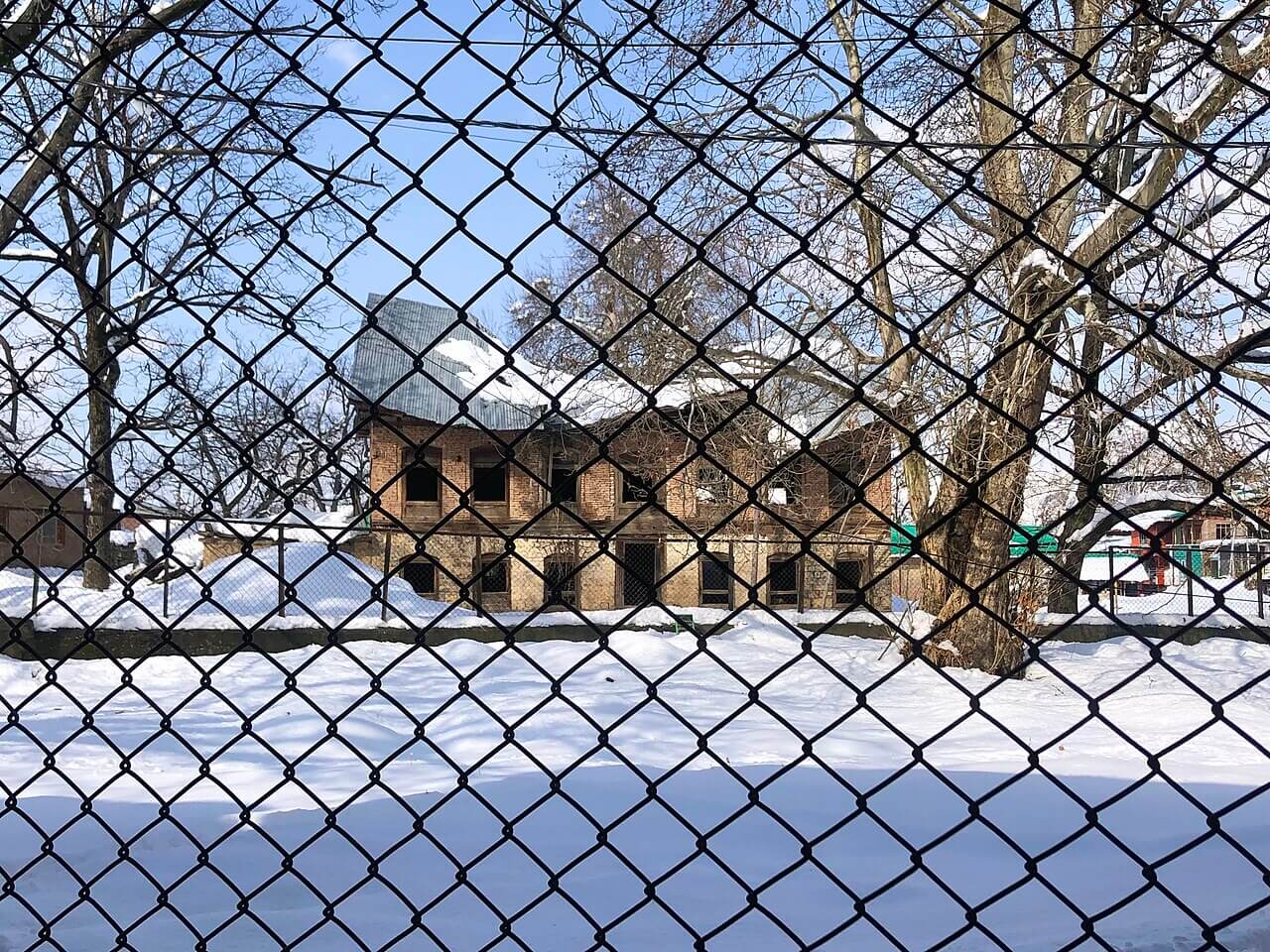
Official J&K government figures document 219 confirmed Pandit deaths by 2004. The Kashmir Pandit Sangharsh Samiti (KPSS) places the cumulative toll higher, at 399 by 2011 [KPSS Human Rights Report, 2012]. Approximately 62,000 Pandit families were permanently displaced; around 40,000 to Jammu, roughly 20,000 to Delhi and the remainder scattered across India [Praxis Institute / Tufts University field surveys]. The Pandit population of the Valley declined precipitously from approximately 124,000 individuals per the Census of India 1981, rising to an estimated 140,000-160,000 by 1990 before the exodus, to near-zero by 1992 [Census of India, 1981 and 1991]. Tens of thousands were housed in makeshift refugee camps in Jammu and on the outskirts of Delhi, where a significant number of these displaced families remain in transitional or semi-permanent accommodations to this day [Prime Minister’s Relief Office for Kashmiri Migrants, 2023].
The documentary trailer laments post-2019 demographic changes under which non-Kashmiri Indians may now purchase land in J&K, a development it frames as demographic engineering. Yet it remains entirely silent on how Pakistan-sponsored militancy ethnically cleansed the Valley of its Hindu fabric thirty years earlier, creating a demographic monoculture that now forms the trailer’s implicit definition of authentic ‘Kashmiri’ identity. To invoke demographic change without acknowledging the Pandit genocide is not an oversight. It is a foundational dishonesty that fraudulently constructs Muslim suffering as the exclusive register of Kashmiri experience.
Contextualising Militarisation and the Disappearances Narrative

The trailer devotes significant attention to the scale of Indian military presence in J&K, citing a figure of approximately 900,000 troops deployed against a civilian population of 10 to 11 million, alongside references to post-2019 detentions exceeding 4,000 individuals, arbitrary arrests, communications blackouts and the enforced disappearances documented by the Association of Parents of Disappeared Persons (APDP), which records more than 8,000 cases since 1989 [APDP Annual Report, 2022]. Human Rights Watch and Amnesty International have both documented specific instances of abuses including pellet gun injuries causing permanent blindness, custodial torture and extrajudicial killings, calling for independent investigations [HRW World Report, 2021; Amnesty International, 2019].
These concerns are legitimate and demand serious engagement. India’s own National Human Rights Commission (NHRC) has registered over 15,000 complaints from Jammu & Kashmir since 1997, disposing of approximately 13,000 cases and awarding relief in roughly 2,500 instances [NHRC Annual Report, 2022–23]. Indian courts have convicted military personnel in documented cases; life sentences were handed down following the 1996 Anantnag rape and murder and an army court-martial was conducted after the 2014 Machil fake encounter case. These accountability mechanisms, imperfect as they remain, are absent from the trailer’s framing.

More critically, the trailer decontextualises the militarisation entirely from its causal roots. Many of the ‘disappearances’ documented since 1989 correlate with a documented phenomenon: hundreds of young men from the Valley crossed into Pakistan-administered Kashmir for militant training under ISI supervision and never returned, whether killed in combat, detained in Pakistan or absorbed into transnational jihadi networks [The Caravan, ‘The Missing Men of Kashmir,’ 2018]. South Asia Terrorism Portal (SATP) data records over 42,000 militants active in J&K since 1988, with Pakistan’s ISI maintaining active training infrastructure in PoK that continued to fuel cross-border infiltration, over 3,000 terrorists were killed in security force encounters in J&K in the five years following 2019 alone [SATP Fatality Data, 2024].
The historical triggers for militarisation, the December 1999 IC-814 hijacking that ended in Kandahar, the December 2001 attack on the Indian Parliament linked to Jaish-e-Mohammed and Lashkar-e-Taiba and the November 2008 Mumbai attacks that killed 166 civilians across multiple locations, are not incidental background. They constitute the operational logic of India’s security posture in J&K [K. Santhanam et al., Jihadis in Jammu & Kashmir, Sage Publications, 2003]. By 2024, active army deployments in J&K had been reduced to approximately 150,000 personnel; a figure consistent with declining violence indices. Abuses documented in this environment demand accountability; but to characterise the security apparatus as unprovoked occupation while erasing the terrorism that necessitated it is a profound distortion of causality.
Post-2019 Shift: A Narrative the Trailer Cannot Accommodate
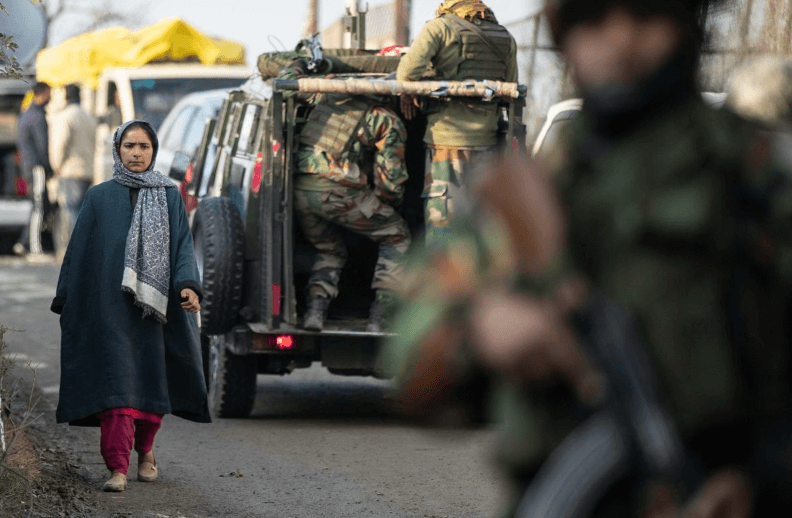
AnewZ’s framing of Kashmir as an unchanged theatre of occupation collapses against a body of verifiable metrics tracking the region’s post- Article 370 trajectory. Stone-pelting incidents, once a daily feature of street-level resistance, declined sharply, from over 1,300 recorded incidents in 2018 to fewer than 200 by 2022, a reduction of over 85% [Ministry of Home Affairs Annual Report, 2022-23]. Terrorism-related fatalities fell from 452 in 2018 to 134 in 2023, representing a reduction of approximately 70% over five years [SATP Fatality Data, 2024]. Civilian killings attributable to militant violence halved over the same period, with overall terror incidents down roughly 50% in 2024 compared to the 2018 baseline.
Tourism, long regarded as a proxy indicator of normalcy and civilian confidence, has recorded historic peaks. J&K welcomed 2.11 crore visitors in 2023, the highest figure in the region’s recorded history; followed by 1.2 crore in 2024 and 95 lakh domestic tourists in the first half of 2025 alone, bringing the cumulative total to approximately 7.85 crore visitors between 2023 and mid-2025 [J&K Tourism Department Statistics, 2025]. These numbers would be impossible in the conditions of sustained siege and terror the documentary trailer portrays.
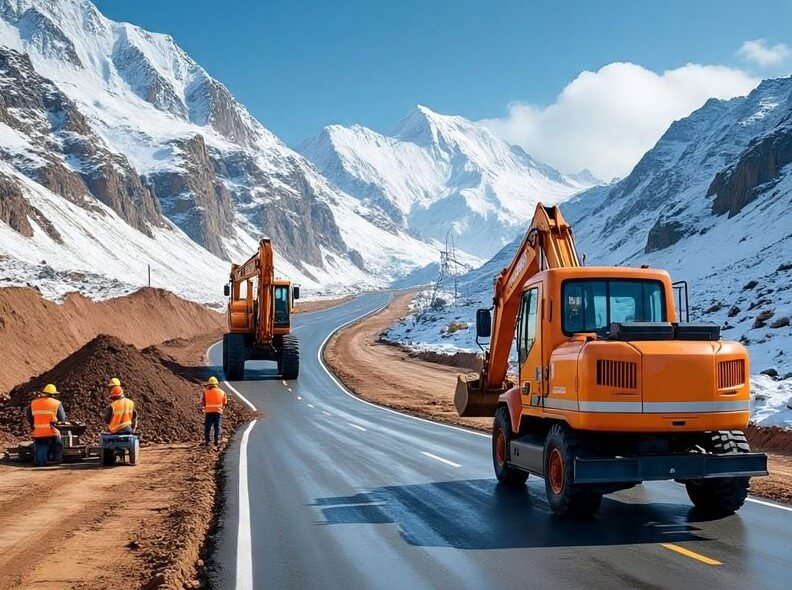
Infrastructure investment has been transformative in scale. The J&K administration commissioned 47 new roads covering 810 kilometres at a project cost of Rs 41,735 crore, alongside 27 new bridges valued at Rs 4,320 crore [Union Territory Budget Documents, 2024–25]. Two regional airports have been upgraded. Vande Bharat Express train services now connect Jammu with the national rail network. Total investment proposals worth Rs 80,000 crore were grounded by 2025, generating approximately 45,000 jobs [J&K Industrial Development Corporation, 2025]. The Gross State Domestic Product of J&K grew at a compounded annual rate of 7.2% between 2019 and 2024, with the unemployment rate declining to 6.1%; below the national average [National Statistical Office, 2024].
The most unambiguous democratic verdict came in the 2024 J&K Assembly elections, in which overall voter turnout reached approximately 63%, the highest recorded since the militancy era began in 1989, with some phases exceeding 69% [Election Commission of India, 2024]. Mainstream parties contesting on platforms of development and integration, rather than separatist Azadi, swept the results. The electorate’s choice at the ballot box represents a form of popular legitimacy that no documentary trailer promoting the Azadi narrative can override.
Conclusion: The Obligation of the Complete Narrative

AnewZ’s ‘Frontline: Kashmir’ trailer is not a work of neutral documentation. It is a selective construction that buries the legal validity of the 1947 Instrument of Accession signed by Maharaja Hari Singh, Pakistan’s covert Operation Topac launched in 1988 to destabilise J&K through proxy militants [B. Raman, The Kaoboys of R&AW, Lancer Publishers, 2008], the Islamist ethnic cleansing of Kashmiri Pandits and the measurable post-2019 progress across security, economic and democratic metrics. By presenting half of a story as the whole truth, it serves the political agendas of those invested in maintaining Kashmir as an open conflict wound, not the interests of the Kashmiri people it claims to champion.
Responsible journalism demands the complete narrative: seventy thousand deaths attributed to three decades of militancy since 1989 [SATP Cumulative Data, 2024]; a democratic process in which Kashmiris voted in unprecedented numbers in 2024; an economy growing faster than the national average; and a community of displaced Pandits whose suffering cannot be written out of history simply because it complicates the preferred moral framework. The buried truth is that Kashmir’s story is not a binary between Indian occupation and Kashmiri liberation. It is a tragedy with multiple perpetrators, multiple victims and a present that is markedly different from the static siege the trailer portrays. Real solidarity with Kashmiri people begins with telling all of that story, not just the parts that fit the frame.