

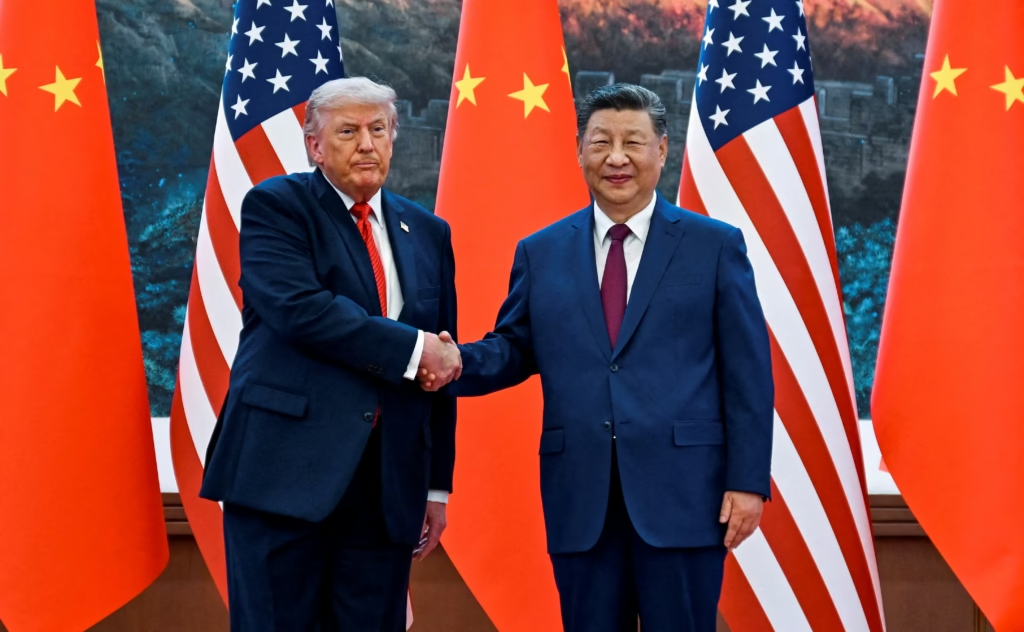
America’s deal-making impulse with Beijing is reshaping Quad – a once-hyperactive security grouping into something quieter, more hedged, and perhaps more honest.
China’s Rise and Its Hidden Dependence
The conflict in Iran exposed a structural contradiction at the heart of China’s rise. China may be the world’s second-largest economy, but it still depends heavily on the US-led security order to protect its overseas economic interests, energy routes, investments and trade corridors. Beijing may challenge American power politically and militarily, but its global economic expansion still operates within a system largely secured by the United States and its partners.
Washington knows this. That is why Trump’s engagement with China carried the character of a bullying reminder: China may be rising, but its rise is not yet fully autonomous. It still has vulnerabilities, and America knows where they lie.
One could also read symbolism in the reception. The fact that Han Zheng, and not Xi Jinping himself, received Trump, suggested the visit lacked the full ceremonial weight usually attached to a carefully choreographed great-power encounter. To a keen political observer, even Nawaz Sharif’s reception in Saudi Arabia appeared more premier-like than Trump’s reception in China. For a US president visiting amid post-West-East turmoil, and almost a decade after Barack Obama’s carefully staged China visit, the contrast was difficult to miss.
A Quad Meeting Without the Old Drama
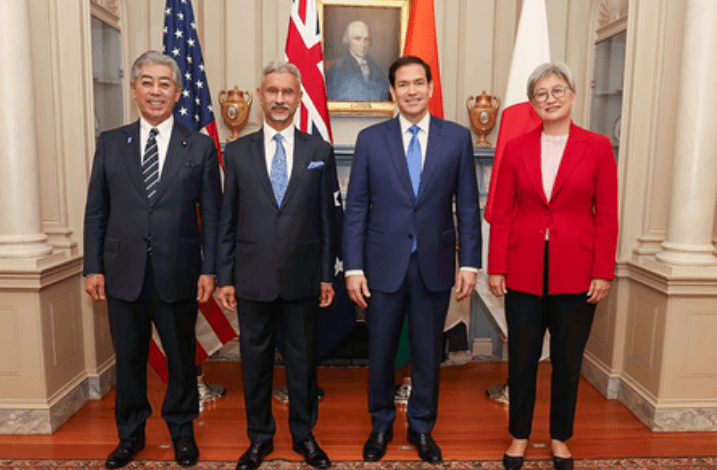
It was against this larger background that the foreign ministers of the United States, India, Japan and Australia gathered in New Delhi in May 2026 for a Quad meeting. They met without the fanfare of a leaders’ summit, without the blunt anti-China framing that marked the first Trump era, and without much certainty about what Washington actually wants from the Indo-Pacific.
That, in itself, is the story.
The Quad, the security grouping of the United States, India, Japan and Australia, has not really held a leaders’ summit since September 2024. Between 2021 and 2024, especially in the post-Covid-19 period, it met at the leaders’ level roughly six times. The difference is not merely about numbers. It points to something more structural: a recalibration driven largely by the return of Donald Trump and his instinct to handle Beijing directly, personally and transactionally.
Trump’s G-2 Instinct

Trump’s so-called “Art of the Deal” diplomacy does not easily accommodate multilateral architecture. His preference is not for patient coalition-building or collective deterrence, but for face-to-face bargaining with Xi Jinping. This has produced what many analysts describe as a “G-2 moment” — a posture in which Washington and Beijing, rather than rival blocs or regional coalitions, attempt to manage Asia through direct bilateral bargaining.
For the Quad’s other members, this is not merely inconvenient. It is destabilising.
America wants India as a balancing power against China, but Trump also wants transactional stability with Beijing. That contradiction now sits at the heart of every calculation New Delhi makes.
India’s Anxiety: Entrapment and Abandonment
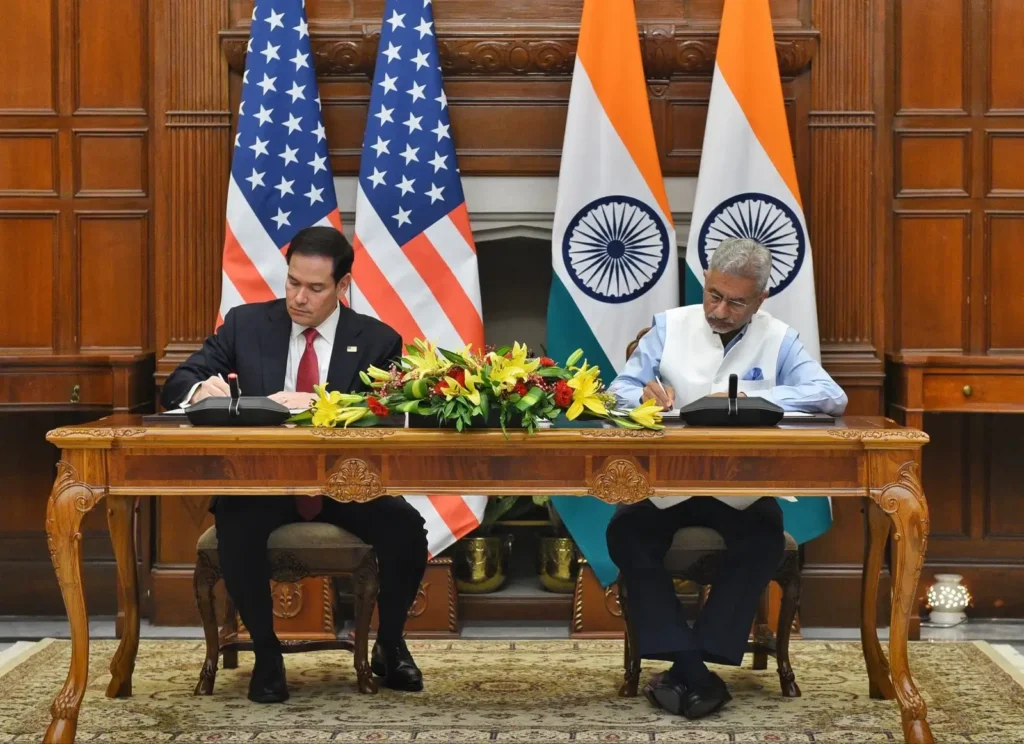
India, Japan and Australia each carry their own version of what strategic theorists call entrapment-abandonment anxiety. They do not only fear being dragged into a confrontation with China that they may not fully control. They also fear the opposite: being quietly left behind if Washington decides that a direct bargain with Beijing is more attractive than alliance discipline.
Trump amplifies this second fear with every high-profile engagement with China.
New Delhi’s response has been instructive. India is no longer treating the Quad as the centrepiece of its Indo-Pacific strategy. Instead, it is widening its options. It is strengthening ties with Russia, maintaining its relationship with the United States, reopening limited channels with China, deepening engagement with France, and investing heavily in indigenous defence manufacturing.
This is multi-alignment with redundancy. It is also a blunt admission that no single coalition, particularly one dependent on American consistency, can be trusted to remain solid under all circumstances.
The Quad Is Not Collapsing
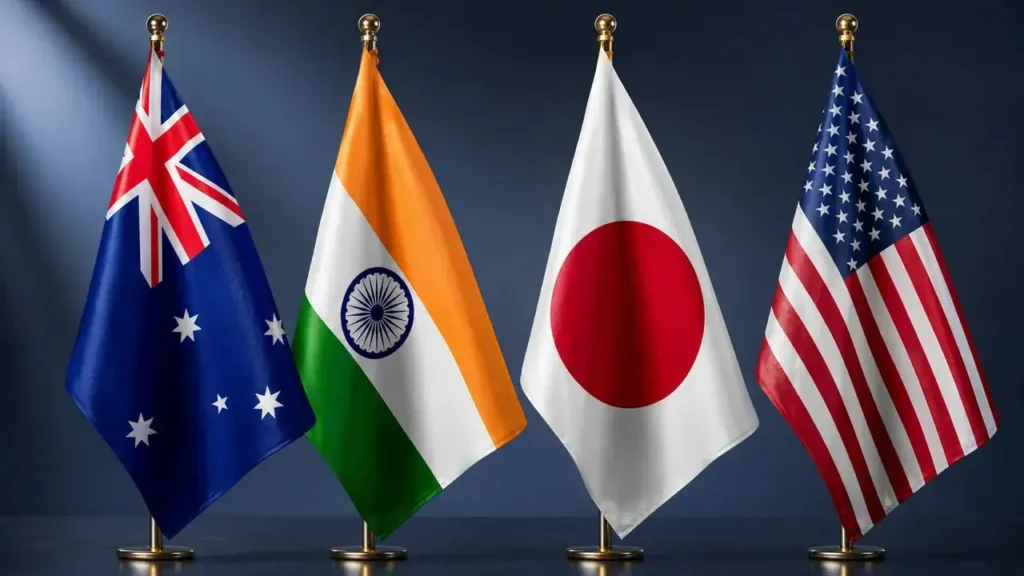
There is a temptation to read this as decline. That would be too simple. It is more accurate to describe it as maturation.
Many security platforms follow a similar arc. They begin with hype, symbolic summitry and ideological branding. Over time, the public drama fades and quieter institutional habits take over. The Quad may be going through precisely that phase.
The Malabar naval exercises continue. Maritime domain awareness initiatives remain active. Cooperation on semiconductors, rare earths, undersea cables, emerging technologies and AI standards continues below the headline threshold. What has faded is not necessarily the mechanism itself, but the performative geopolitics around it.
What may be emerging, slowly and less dramatically, is a form of embedded minilateralism — a quieter, functional, issue-based coordination that does not always need summit theatrics to remain relevant.
China’s Preference: Managed Fragmentation

Beijing, for its part, may no longer feel the need to destroy the Quad outright. A dormant, fragmented and less politically charged Quad may actually suit China better than a hyperactive one.
A diluted Quad creates ambiguity. It weakens deterrence coherence. It encourages bilateral bargaining, where China can use its economic weight, market access and diplomatic leverage more effectively. For Beijing, managed fragmentation may be preferable to open confrontation.
China does not necessarily need the Quad to disappear. It only needs the Quad to become uncertain, cautious and internally hedged.
The Deeper Question
The concern among America’s partners is no longer whether Washington will confront China. The real concern is how long Washington will sustain confrontation before bargaining again.
Japan and Australia are already drawing their own conclusions. Tokyo is dramatically expanding defence spending. Canberra is accelerating AUKUS. Both have absorbed a lesson that would have seemed radical a decade ago: American alliance credibility must now be assessed alongside electoral cycles, presidential temperament and domestic economic nationalism.
That is a historic drift, even if it is not yet a complete strategic shift.
From Anti-China Coalition to Hedging Instrument
The Quad, then, is not dying. It is evolving from an overtly anti-China political symbol into something more modest, more technical and perhaps more durable.

It is becoming a hedging instrument that members can preserve in case US-China rivalry re-escalates. It is also becoming a techno-economic coordination network that can function even during diplomatic thaws between Washington and Beijing. In other words, the Quad may be weaker as a political slogan but stronger as a background strategic mechanism.
This quieter Quad may not generate dramatic headlines, but it may prove harder to kill.
America’s Real Indo-Pacific Problem
The more troubling question is not really about the Quad at all. It is about whether the United States can sustain any long-term strategic architecture when its foreign policy pivots so sharply with every election cycle.
That uncertainty — not Chinese pressure alone, and not Indian ambivalence alone — is what is quietly hollowing out America’s position in the Indo-Pacific.
The Quad’s quiet drift is only the most visible symptom. The deeper problem is that America’s partners are no longer simply asking what Washington wants. They are asking how long Washington will want it.