


On January 2, Economic Times published an editorial titled ‘Make 2026 year of the citizen’. Among other things, the editorial laments that citizens tend to either ignore their part in the upkeep of their cities, or expect the authorities to do the needful, and that this has to change if ‘viksit’ has to have any meaning beyond sloganeering. OK, tell us what exactly we the citizens are supposed to do towards the “better maintenance of roads in the area; hygienic conditions in local eateries; or implementation of pollution (noise, air, etc.)” as you put it?
The editorial pontificates and moralizes as despicably as it gets. Once again, it reeks of the ‘UPSC Syndrome’ that I have talked about on other occasions—the quintessential problem of incurable wishful thinking—which I have also christened as the “Sab Acchha Hona Chahiye Syndrome”. They do not have the moral and intellectual courage to face the ugly realities of life. They can, like the rich kids of boarding school hostels only wish that everything becomes so good that they keep on enjoying their sequestered lives. They have a mortal fear of facing reality. These privileged Indians sincerely want that they should just express a wish or desire—how it will or can be solved, is none of their problem.

Their behaviour reminds me of the heroines found in the Mills & Boons novels of Barbara Cartland. Let us take her ‘A Touch of Love’ as a representative example. Set in the early 19th century, the heroine is in love with an English aristocrat, but the path of love itself is strewn with numerous hurdles. The matter is further complicated by labour unrest on his estate where disgruntled labourers even attack him, and that leaves him paralyzed. Other family members are also attacked. The point to be noted is that Barbara is not interested in the labour dispute or the fundamental issue of the exploitation of the farm hands by the landed gentry like the hero in the novel. Rather, she dwells at length basically on the how the entangled love affair is sorted out. Then, at the very end, the aristocrat mentions it in passing: “I have told my farm managers to raise the wages of the labourers and to improve the condition of the cottages.” After that formality is over, it is nothing but the serious business of making love: “But the words were lost against the Duke’s lips for he was kissing her fiercely, possessively, passionately, so that she could think of nothing but him. She felt an ecstasy and a rapture that was indescribable sweep through her body.” Barbara Cartland deserved to be censured for such inanities.

Our privileged class including the media (of which Economic Times is a respectable member) has an exactly similar attitude. Why should they waste their time and energy on ugly things like the terrible state of affairs they lament about? If there are ugly socio-economic-political-development-governance related problems in the country, the ‘citizens’ must sort that out. Has not the privileged class already done enough for the country and the society by participating in TV discussions, lighting up hundreds of candles, holding all-night vigils, making human chains, organizing ‘run for peace’ campaigns, marathons, and cultural nights? Isn’t it? The paper’s attitude reflects nay screams nay stinks of the typical well-fed upper-class privileged Indians’ worldview. They want First World amenities for themselves at the expense of the poor janata, the Third World people around them, the ‘mango men’. Now, it is for you, the ‘aam aadami’, euphemistically called ‘citizens’, to do what ‘they’ need.
Let us take apart the editorial methodically. Hygienic conditions in local eateries—my foot! Is that this paper’s priority area? Goddamn it, duffers, before you criticize the local dhabawalah for his dirty utensils, bother about the drinking water to the people so that incidents like Indore are not repeated. But for that too, your responsibility would end up writing a UPSC answer-type editorial wishing safe water in the country. You do not have the balls to hold anyone accountable.
If you find that the local dhabawallah is not hygienic enough, you have a hundred other options. You can boycott him and may be even drive him out of business if he does not improve. But, the people who were forced to drink contaminated water had no other option. As you know, only a few days back in Indore, there was a deadly outbreak in its Bhagirathpura area, with reportedly 9-10 deaths (including an infant) and hundreds (reportedly 272) hospitalized, linked to sewage contaminating the drinking water supply, presumably from a public toilet built over a water pipeline.
For your information, such a contamination of faecal matter could take place only if the sewage was allowed to seep into the ground (meaning either there was no proper septic tank or that it had faults) and, at the same time, there was a rupture in the water pipe line. Mere positioning of the public toilet above the water pipe is not the real problem. Water pipelines do not and must not rupture like that. You can read any reputed reference on public health engineering. Water pipelines, even when made in an era preceding PVC/HDPE pipes, typically last about 100 years—no less. If something made only a couple of decades ago fails, it can only mean that substandard material was used. That means corruption—the most familiar thing in India.
What are the citizens supposed to do for this, Economic Times? I mean, who cares about the citizens this paper wants to saddle with moral responsibilities?

Then they talk of better maintenance of roads in the area. That is bullshit of a higher order. What are the citizens supposed to do towards that? Does the paper think that some irresponsible citizens go and dig up the roads? Roads have been dug up by big private companies for laying gas pipelines etc. and never repaired properly thereafter. I had myself tweeted on this along with a photo for evidence.
Since a hundred years, kids have been taught in primary schools that a major task of the kings and badshahs used to be construction of roads—it is so even now. What are the citizens supposed to do for that besides paying taxes and toll—do ‘shram daan’ on weekends? Taxation in a modern state is payment for services—security, infrastructure, justice, sanitation, regulation, and welfare. For any shortfall in delivery, the question must be that of accountability, not a sermon on civic virtue.
Finally, the paper laments about pollution—just because it is the in-thing these days. Pollution is scientifically a very complex issue and cannot be analysed in an article like this. But, most people would agree that a major source of pollution is vehicular emission. Now who is responsible for that? First you encourage bikes/car/truck/bus/auto manufacturing companies to sell cars by the millions (total over 400 million, that is, 40 crore)—even organize bank loan melas to encourage people to buy them. Then you lament about pollution. Cars are provided horns and Indians are habitual honkers leading to noise pollution. Reason? No one wants to take the blame that you had not honked and that’s why I banged into you.
The second part of the editorial is even weirder. It says that governance is not merely a service delivered from above. It’s a shared duty of demand and delivery, checks on performance, the ultimate PPP. It also means engaging in regular citizen audits and AGM-style dialogues with civic bodies. Seriously, have you gone crazy?
There ought to be a limit to bullshit being passed as wishful thinking. This is worse than what the cheapest, third-rate coaching institute for the civil services would produce. By God, where in the constitution of India, we have provisions for ‘citizen audits’ and AGM-style dialogues with civic bodies? And what do they mean by “Democracy cannot flourish on delegation and outsourcing accountability pegged on hope and promise. Citizens must embrace their role in shaping governance. Blaming ‘government’ for everything should be called out for the cop-out that it is.”
My dear good sir, citizens have not outsourced accountability to their representatives. It is provided so in the constitution. And, for your information, any act to the contrary by way of challenging the wisdom of the representatives might very well be viewed as sedition. Wisdom questioned is wisdom doubted. Fundamental rights exist— but are hedged with “reasonable restrictions.” State power exists—with sweeping discretion and minimal consequence. Please do tell me, what is the constitutional role of the citizens in shaping governance? Have you not studied the constitution even from the coaching institutes’ notes prepared for the exams meant for the lowest-level posts in the government? For a poor citizen, even meeting a representative after election is difficult; forget about the bullshit of ‘shaping governance’.
India’s problem is not that citizens do not participate enough. India’s problem is that participation has never been structurally safe. What emerged in 1947 was democracy in form but not in spirit; a post-colonial managerial state— staffed by brown sahibs, armed with colonial laws, and insulated from popular pressure by procedure, coercive powers, and legal complexity.
The editorial’s call for “citizen engagement” deliberately ignores this history. It pretends that the citizen and the state meet as equals in a neutral civic space. They do not. One holds coercive power; the other bears its consequences.
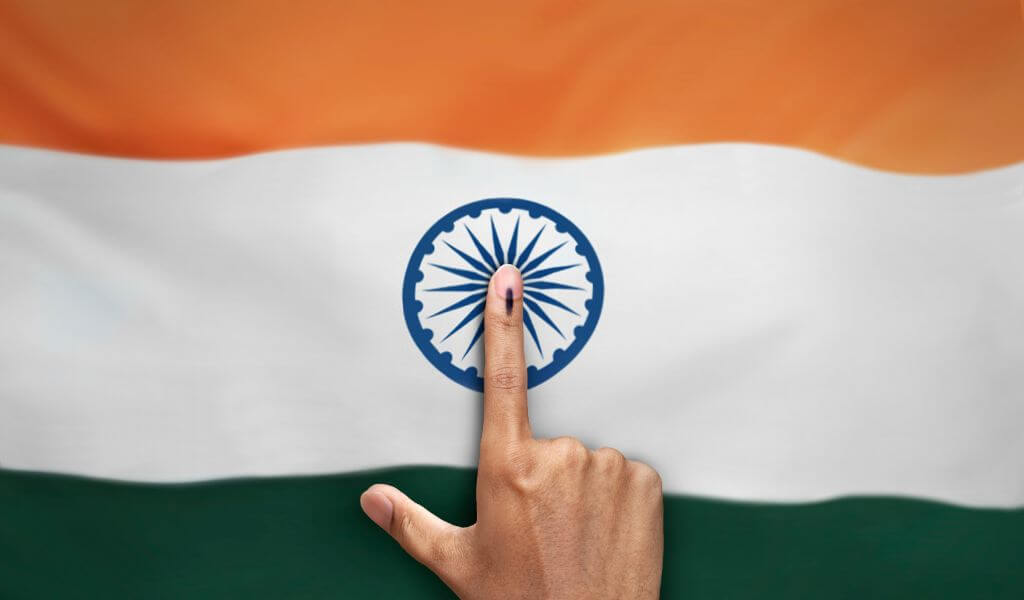
Democracy in India was not evolved. It was foisted upon them by the British almost overnight upon a society that had never dismantled feudal hierarchies. Our constitution therefore is government centric by its very design, not citizen-centric. The citizens’ responsibility starts with and ends with casting their votes to elect their representatives. After that, it is the end of their role. The government made up of the elected representatives is entrusted with the powers to take decisions by consultations amongst the representatives. Citizens have no voice. As per the law enshrined in the case of Anuradha Bhasin (2016), people do have a right to protest, but peaceful protest. You are running a newspaper. Do read your issues of the past nearly eight decades. When was the last time that a perfectly peaceful protest achieved anything? India is not a Swiss Canton. Is there no limit to your hypocritical stupidity?
Observe the language of the editorial carefully. The citizen is addressed directly, repeatedly, insistently—as if democracy were failing because people are insufficiently enthusiastic or responsible. In fact, the tone is accusatory, sounding like, “If the citizens behave better, perhaps things will improve.” This is a highly myopic and reflects a poor understanding of the way things work.
What this editorial ultimately reveals is not concern for democracy, but its intellectual discomfort in dealing with things as they are. It wants citizens to engage—but not to question. It wants participation—but not pressure. In short, it wants obedience with a smile. The editorial speaks from a position of abject servility—as if they are saying that, sir, these citizens have become fat, lazy and irresponsible and it is this paper’s sacred duty to remind them of their duty.
If, after nearly eight decades of independence, a newspaper feels obliged to remind adults that democracy is more than voting, that citizens should participate, that governance is a “two-way street,” this is not evidence of civic enlightenment. It is civics-as-moral-lecture, democracy-as-slogan, and politics-as-PR brochure. It states the obvious, avoids the essential, and above all performs an ideological sleight of hand: it shifts responsibility from power to the powerless, from the state to the citizen, from the ruler to the ruled—all while congratulating itself for being so innovative.
Giving a call for making 2026 Year of the Citizen is nothing but very cheap sloganeering more suited for circles and people not known for any pretence to things intellectual. It is not just pathetic but a screaming example of their intellectual bankruptcy.