

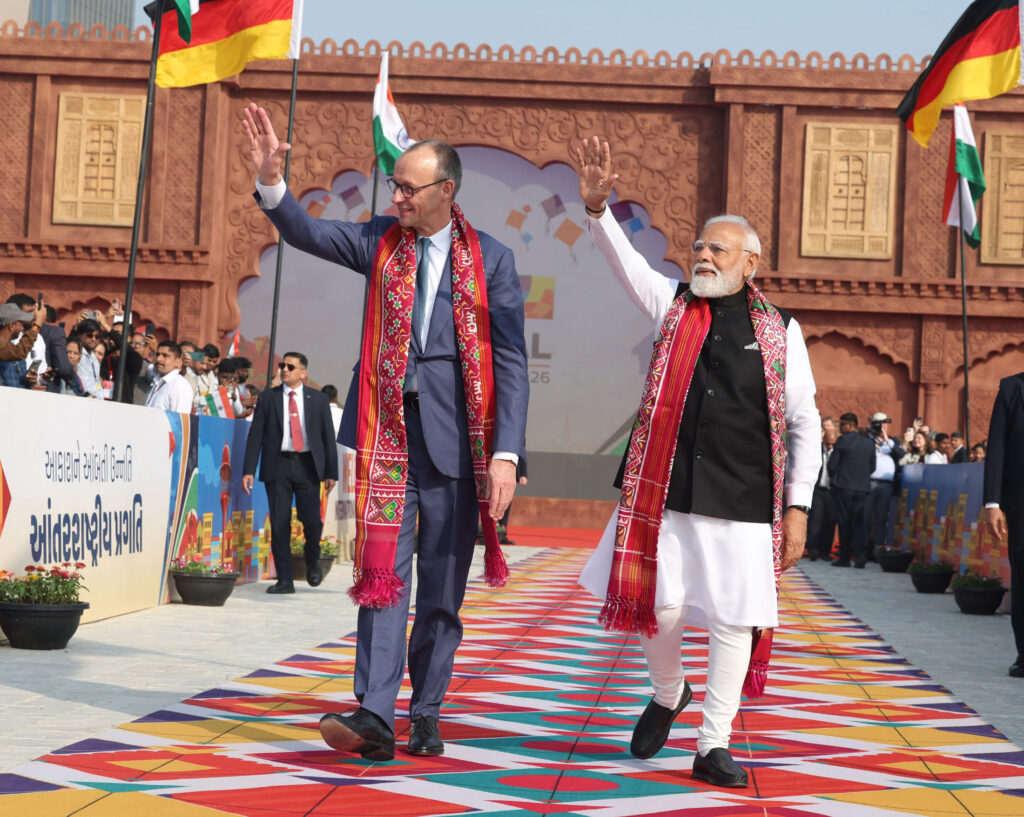
German Chancellor Friedrich Merz’s visit to India in Jan 2026 marks a significant inflection point in India–Germany relations. While bilateral engagement has traditionally been anchored in trade, investment, and development cooperation, the visit underscored a qualitative strategic upgrade, bringing defence, critical technologies, and geopolitical coordination firmly into the foreground.
At a time when the international system is being reshaped by great-power rivalry, supply-chain fragmentation, and regional security crises—from Ukraine to the Indo-Pacific—India and Germany are recalibrating their strategic priorities. For Berlin, India represents a stable democratic partner, a large and growing market, and a strategic anchor in the Indo- Pacific. For New Delhi, Germany offers advanced industrial capabilities, technological depth, and a defence partner unencumbered by alliance politics.
This article analyses the geopolitical, economic, technological, and defence implications of the visit, with particular emphasis on how defence cooperation—viewed comparatively—fits into India’s evolving strategic calculus and Germany’s post-Ukraine security reorientation.
Geopolitical context: strategic convergence without alliance
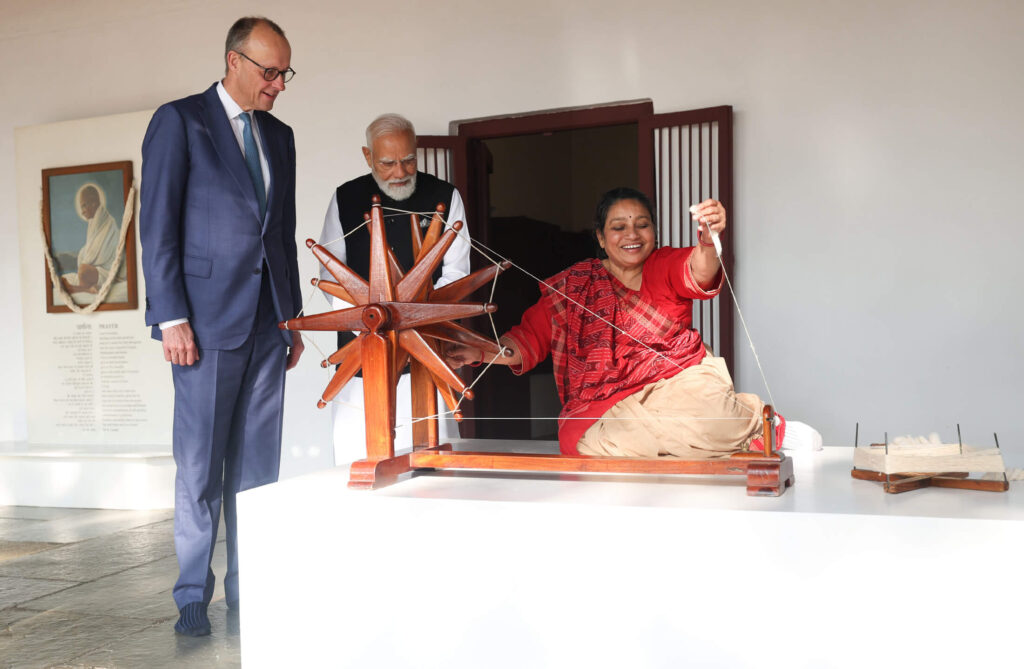
Germany’s decision to accord India such diplomatic priority reflects a broader European reassessment of global strategy. The erosion of assumptions underpinning globalisation, the weaponisation of interdependence, and uncertainty over US strategic consistency have compelled Europe’s leading power to seek reliable, long-term partners outside the transatlantic theatre.
India’s strategic appeal lies in three factors:
- Demographic and economic scale, positioning it as a future engine of global growth.
- Strategic autonomy, enabling cooperation without alliance entrapment.
- Indo-Pacific centrality, particularly in maritime security and supply-chain resilience.
For India, engagement with Germany strengthens its European vector at a time when relations with France are mature, ties with the UK remain transactional, and EU-level processes are slow. Germany thus emerges as a bridge between India and continental Europe, particularly on trade, defence industry, and advanced manufacturing.
Trade and economic cooperation: strategic economics
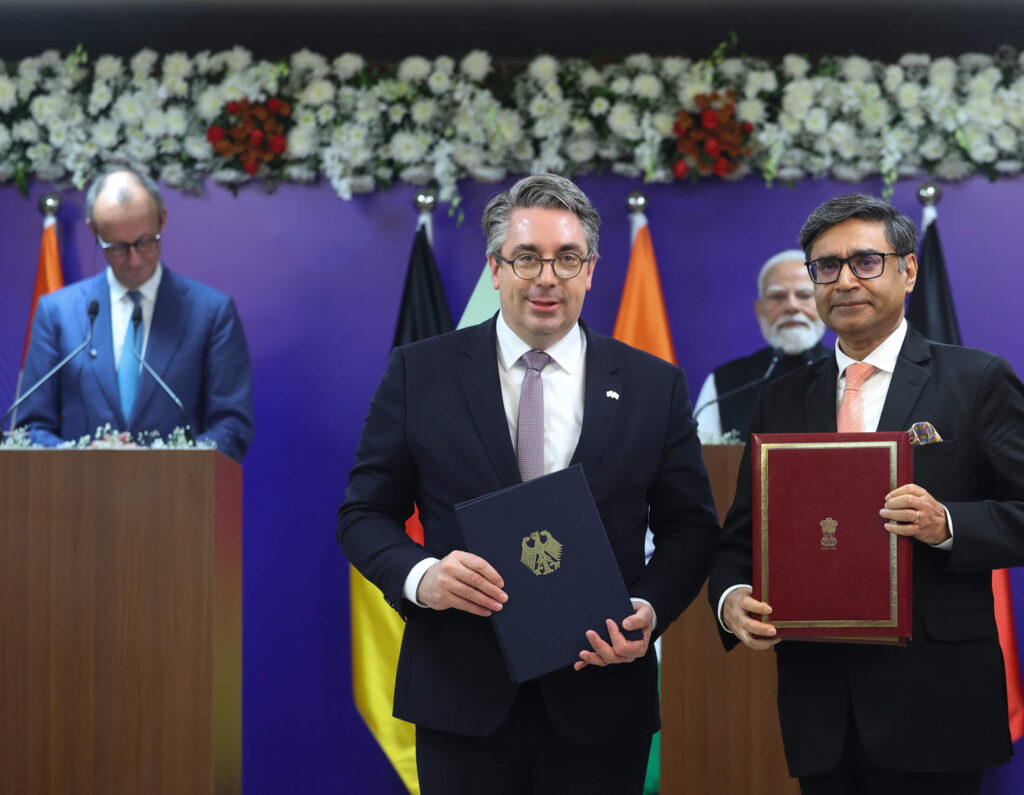
Bilateral trade exceeding USD 50 billion places Germany among India’s most important economic partners in Europe. Chancellor Merz’s visit injected political momentum into the long-stalled India–EU Free Trade Agreement (FTA), now approaching a decisive phase.
Key Economic Implications. Supply-chain diversification away from China, particularly in machinery, chemicals, electronics, and pharmaceuticals. German manufacturing integration with India’s Make in India initiative and greater Indian access to European markets for services, pharmaceuticals, and engineering goods. Strategically, the FTA
is not merely a commercial instrument; it is a geo-economic hedge against protectionism, fragmentation, and coercive trade practices.
Technology and Innovation: The Strategic Core. Technology cooperation formed a central pillar of the visit, reflecting shared recognition that future power will be determined by control over critical and emerging technologies.
Priority domains

- Semiconductors: Joint efforts to build resilient, diversified supply chains.
- Artificial Intelligence: Cooperation on ethical AI, industrial applications, and research ecosystems.
- Green technologies: Hydrogen, renewable energy systems, and energy storage.
- Critical minerals: Reducing dependency on single-source suppliers.
Germany’s strength in precision engineering and India’s digital scale creates a complementary innovation partnership, with implications for both economic competitiveness and national security.
Defence cooperation: from marginal engagement to strategic partnership
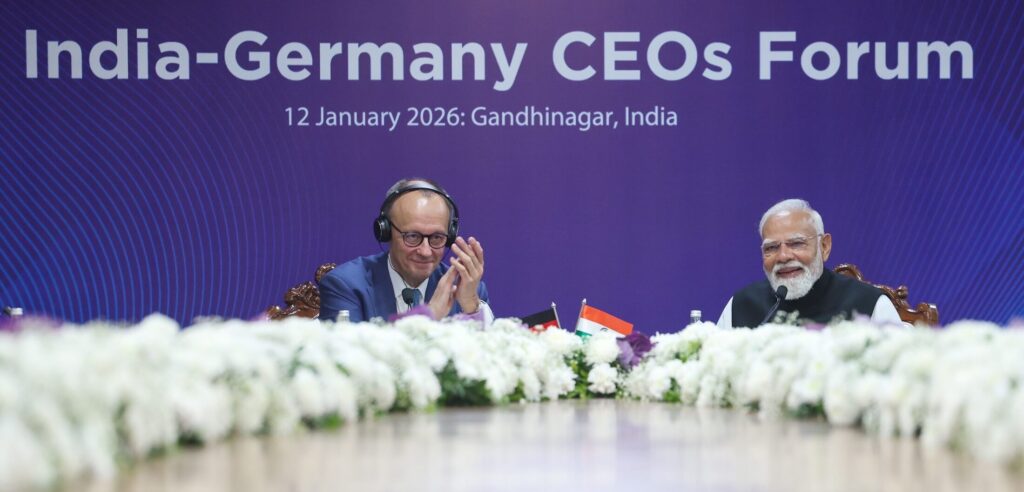
Strategic Rationale Defence cooperation emerged as one of the most consequential—if understated—outcomes of the visit. Historically peripheral, defence ties are now moving toward structured industrial and technological collaboration.
For India, this aligns with four imperatives: Supplier diversification beyond Russia, Technology transfer under Atmanirbhar Bharat, Maritime capability enhancement in the Indian Ocean Region (IOR) and preservation of strategic autonomy.
For Germany, defence engagement with India reflects: Post-Ukraine recognition of globalised security threats (Zeitenwende), the need to expand defence industrial partnerships beyond NATO and interest in the Indo-Pacific as a security, not merely economic, theatre
Naval cooperation: the strategic centre of gravity
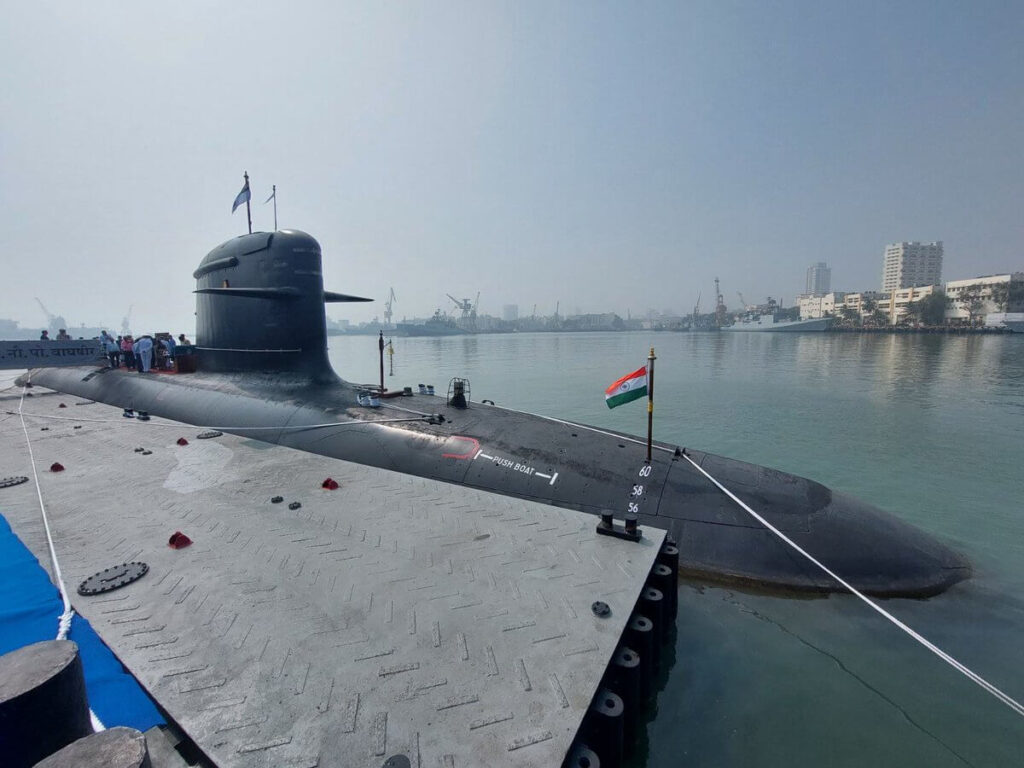
Naval cooperation—particularly in conventional submarines—is the most advanced dimension of Indo-German defence engagement.
- Thyssenkrupp Marine Systems (TKMS) has emerged as a key contender in India’s submarine modernisation.
- Emphasis is on Air Independent Propulsion (AIP), stealth, endurance, and lifecycle support.
- Co-production with Indian shipyards, notably Mazagon Dock Shipbuilders Ltd, is central.
Strategically, this enhances India’s undersea deterrence vis-à-vis an expanding PLA Navy footprint in the IOR, while offering Germany a long-term naval industrial partner.
Comparative defence partnerships: where Germany fits
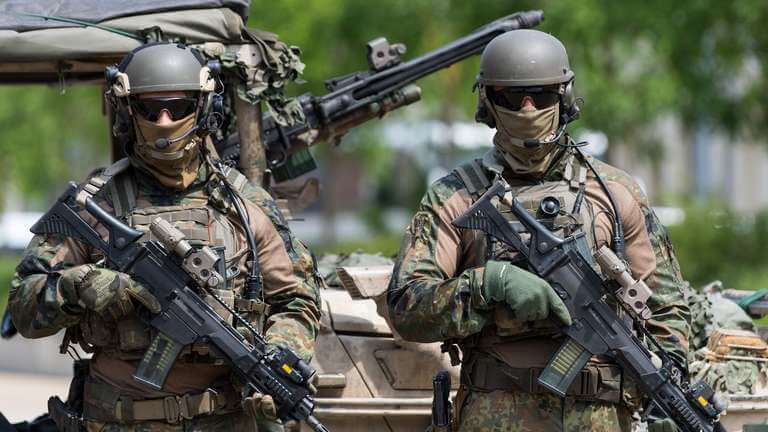
Germany vs France. France remains India’s most comprehensive defence partner, spanning combat aircraft, submarines, and potential next- generation platforms. Germany does not compete with France’s political assertiveness but complements it through industrial depth, particularly in naval engineering and systems integration.
Germany vs United States. The United States offers India high-end platforms and strategic interoperability but imposes political and operational conditionalities. Germany, by contrast, emphasises industrial partnership over strategic alignment, making it more compatible with India’s autonomy-centric doctrine.
Germany vs Russia. Russia’s role as a legacy supplier is constrained by sanctions, industrial decline, and supply uncertainty. Germany represents a post-Russian transition partner—not in scale, but in technological relevance and reliability.
Defence industrial cooperation and Atmanirbhar Bharat
The visit highlighted cooperation beyond platforms: Naval propulsion systems, Sensors, sonar, and electronic warfare, advanced materials and metallurgy and Maintenance, Repair, and Overhaul (MRO) ecosystems in India. For India, this strengthens indigenous capability and export potential. For Germany, it enables cost-effective production and access to third-country markets.
Emerging Domains of Warfare. Indo-German discussions also reflected convergence in future warfare domains: Cyber defence and secure communications, Unmanned maritime and logistics systems and Space situational awareness. These domains, while less visible, are critical for next-generation military effectiveness.
Strategic and geopolitical implications
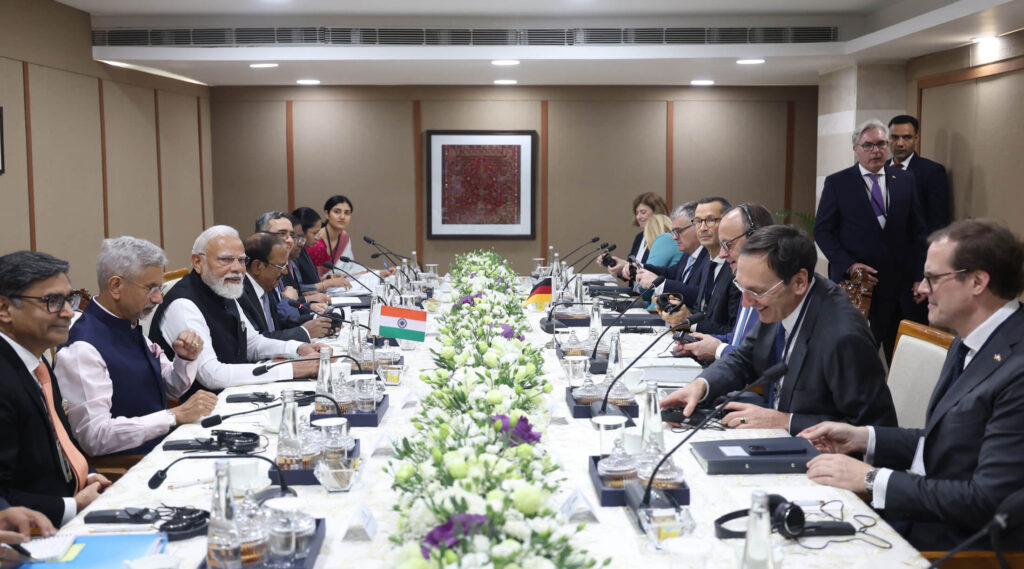
For India. Reinforces defence diversification without alliance dependence, enhances maritime security and industrial resilience and strengthens India’s position as a net security provider in the IOR.
For Germany and Europe. Positions Germany as a credible Indo-Pacific security stakeholder, expands Europe’s strategic footprint beyond NATO geography and anchors European engagement in Asia through industry rather than force projection.
For the Indo-Pacific. Indo-German defence cooperation contributes to balance without escalation, adding a European stabilising presence to regional security architecture.
Constraints and risks
Despite positive momentum: Germany’s export control regime remains stringent, India’s procurement processes are slow and complex, competition from France, South Korea, and Japan persists and Germany’s strategic culture remains cautious on military power. Sustained political commitment will be essential.
Conclusion
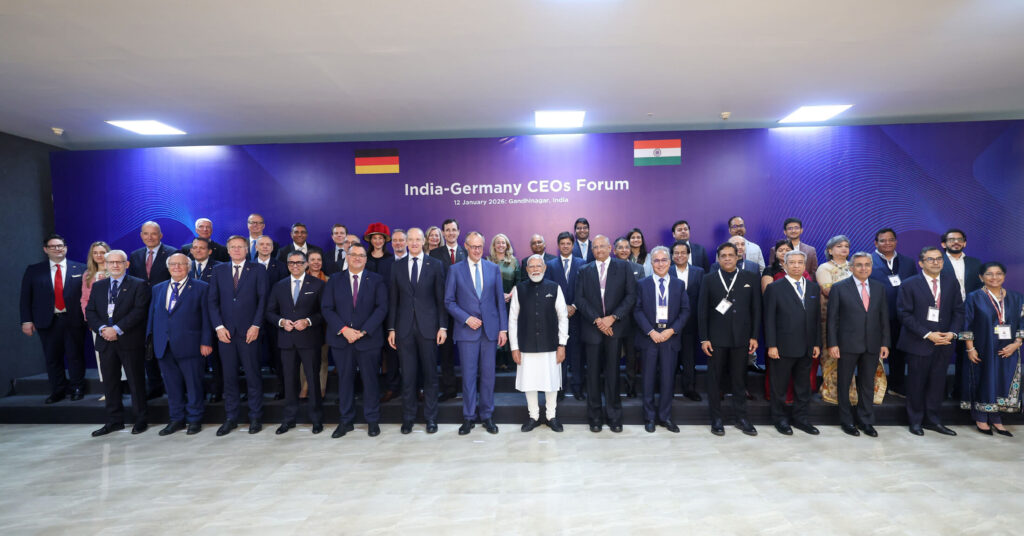
The German Chancellor’s visit to India signals a structural elevation of bilateral relations. What distinguishes this phase is not rhetoric, but integration across trade, technology, and defence, reflecting a mature strategic convergence. Defence cooperation—once marginal—is now emerging as a quiet but durable pillar of the partnership. Germany will not replace France or the United States in India’s defence ecosystem, but it offers something distinct: precision, reliability, and industrial partnership without strategic dependency. In an increasingly multipolar and contested world, the India–Germany relationship exemplifies a model of strategic cooperation without alliance, and security without coercion—a template likely to gain relevance in the years ahead.