

Micronations as the name suggests are small, self-declared nations with their own flags, citizenship, anthems, laws, currencies and passports but unrecognised by other nations and international bodies. There are around 100–150 active micronations around the world. The actual number keeps fluctuating as many micronations form and dissolve frequently – overnight. Most of them do not exist on the official map of the world and are only found online or symbolically.
Unlike Monaco, Liechtenstein, or San Marino, most micronations are unfit to be called a country and not have any real territory, governance structure, or diplomatic legitimacy.
Legal Status of Micronations:
Micronations have no legal status under international law. They are not recognized as sovereign states by the United Nations, any national government, or international treaty system—including the Montevideo Convention on the Rights and Duties of States (1933), which sets the criteria for statehood.
According to international law, for a state to be recognized, it must meet four criteria:
- A defined territory
- A permanent population
- A government
- The capacity to enter into relations with other states
Most micronations fail to meet these requirements and often claim land they don’t actually govern e.g., Antarctica, disputed islands, and private backyards.
As a result, no micronation is a member of the UN or has embassies recognized by real states. They cannot engage in legitimate relations with recognized states. Their declarations of independence are unilateral and not acknowledged by parent nations or the UN.
Also Read: A private nation of your own: unveiling the make-believe world of Micronations
What a Micronation needs to be recognized as a sovereign nation?
To be internationally recognized as a sovereign nation, a micronation would need to:
- Gain actual control over a defined, independent territory. This often requires secession or colonization, both of which face huge legal and military resistance from existing states.
- Establish a stable, functioning government
- It must provide security, governance, legal systems, and services to its population.
- Maintain a permanent population not just symbolic or online “citizens”
- Seek and obtain recognition from other sovereign states
Recognition by at least a few countries (especially a UN member) is a political hurdle that’s rarely crossed. Formal recognition often comes through diplomacy, trade agreements, or political alignment. UN membership requires approval from the UN Security Council and a two-thirds vote in the General Assembly.
Why is it practically impossible?
- Parent countries resist secession: No country wants to encourage breakaway regions.
- UN doesn’t accept symbolic nations: Cultural or humorous micronations don’t qualify.
- No path for peaceful recognition without geopolitics: Recognition is deeply political, not just legal.
Examples for Comparison
Recognized microstates like Monaco, Liechtenstein, or San Marino meet all Montevideo criteria and have international recognition.
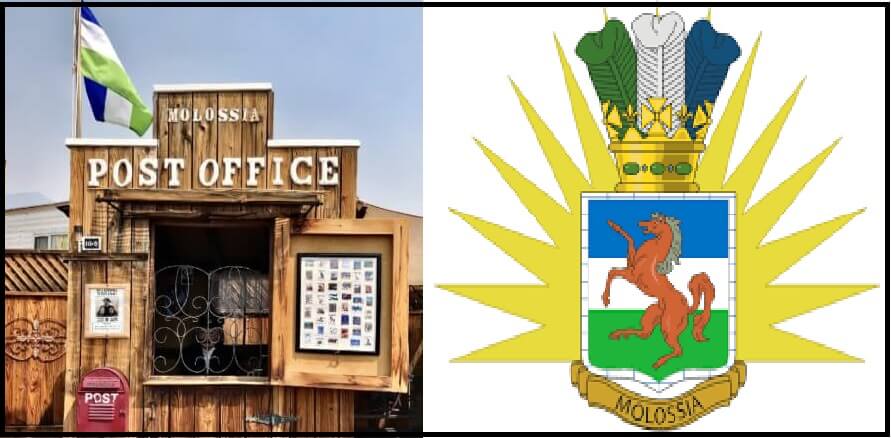
Micronations like Molossia or Westarctica may have the trappings of a state (flag, anthem, passport), but lack control, legitimacy, and recognition.
Land area of micronations:
The land area of micronations varies widely—from a few square meters of private property to symbolic claims over vast uninhabited regions. However, it’s important to note that most micronations do not have legal control over the land they claim, and are entirely virtual.
Here’s a breakdown of the approximate land areas (claimed or occupied) of some prominent micronations:
Micronations with physical territory:
| Micronation | Claimed/Occupied Area | Notes |
| Republic of Molossia | ~0.005 sq. km (5,000 sq. meters) | Private residential land in Nevada, USA |
| Principality of Sealand | ~0.00055 sq. km (550 sq. meters) | WWII sea fort off UK coast |
| Kingdom of North Dumpling | ~0.008 sq. km (0.8 hectares) | Private island in Connecticut, USA |
| Republic of Užupis | ~0.6 sq. km | Artistic district in Vilnius, Lithuania (recognized as part of Lithuania) |
| Principality of Seborga | ~14 sq. km | Actual Italian village; claim is symbolic |
Micronations with symbolic or virtual claims:
| Micronation | Claimed Area | Notes |
| Grand Duchy of Westarctica | ~1,320,000 sq. km | Claims unclaimed Antarctic land (Marie Byrd Land); no control or presence |
| Empire of Atlantium | ~0.75 sq. km (symbolic capital) | Has a symbolic “capital” in rural Australia |
| Free Republic of Liberland | ~7 sq. km | Claims disputed land between Croatia and Serbia; no recognized control |
| Ladonia | ~1 sq. km | Nature reserve in Sweden where artistic sculptures exist |
| Gay and Lesbian Kingdom of the Coral Sea Islands | ~780,000 sq. km (symbolic EEZ) | Symbolic claim; now dissolved |
Micronations – A few facts
- Smallest functional micronation: Sealand (~550 sq. meters)
- Largest claimed micronation: Westarctica (~1.32 million sq. km, bigger than South Africa)
- Most densely populated (symbolically): Užupis (actual urban neighborhood)
- Entirely virtual: Talossa, Aerican Empire, Slowjamastan (some with no physical land at all)
In conclusion, micronations are self-proclaimed entities that claim independence and sovereignty but lack formal recognition from the United Nations or any established state. Established nations view them as lacking legal legitimacy and geopolitical relevance. As a result, micronations remain curiosities of international law and creative expressions of political, cultural, or personal identity rather than sovereign states.


[…] Also Read: What are Micronations and why they are not recognized by the UN and other nations? […]