

How Termite, Barracuda, Kingfisher, and Gecko are quietly revolutionizing everything we build and why the next decade will be unlike anything in human history
Nature’s hidden blueprint
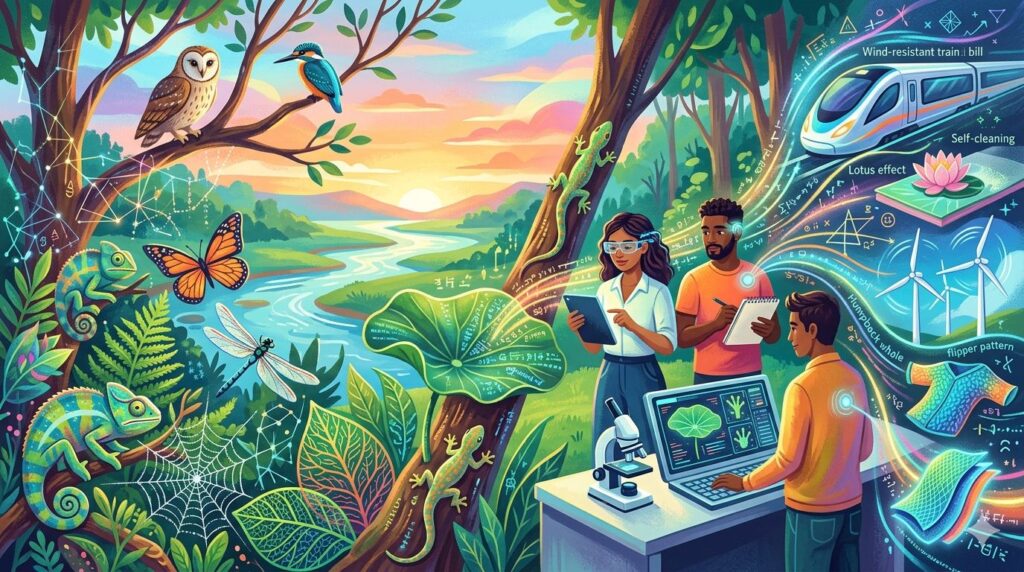
On a scorching afternoon in Harare, Zimbabwe, the temperature outside hovers at 40°C (104°F). Inside a nearby office building designed by architect Mick Pearce, however, the air is a cool and pleasant 24°C without a single air conditioning unit running. The building’s secret? Its design was lifted directly from the engineering notes of an insect that has been refining its work for 30 million years: the African termite. Welcome to the age of biomimicry.
Biomimicry, from the Greek bios (life) and mimesis (imitation) is the practice of drawing on nature’s 3.8-billion-year research-and-development programme to solve the stubborn engineering problems of modern civilization. It is the practice of solving complex human challenges by emulating nature’s time-tested patterns and strategies. By treating the natural world as a master mentor, it encourages designing sustainable, regenerative technologies based on the 3.8 billion years of evolution found in plants, animals, and ecosystems. It is not a new idea. Leonardo da Vinci sketched flying machines inspired by birds in the 15th century. But something extraordinary is happening right now. A convergence of nanotechnology, advanced materials science, artificial intelligence, and computational modelling has given us the tools to actually read nature’s blueprints at the molecular level and to implement them at industrial scale.
The global biomimicry market was valued at approximately USD 3.9 billion in 2022 and is projected to grow at a compound annual growth rate (CAGR) of 24.5% through 2032, potentially reaching USD 37.5 billion. Those numbers, striking as they are, only hint at the deeper transformation underway. We are not merely borrowing shapes from animals. We are beginning to understand the logic, the deep grammar, of biological design, and that understanding is about to change architecture, transportation, defence, medicine, and materials science beyond recognition.
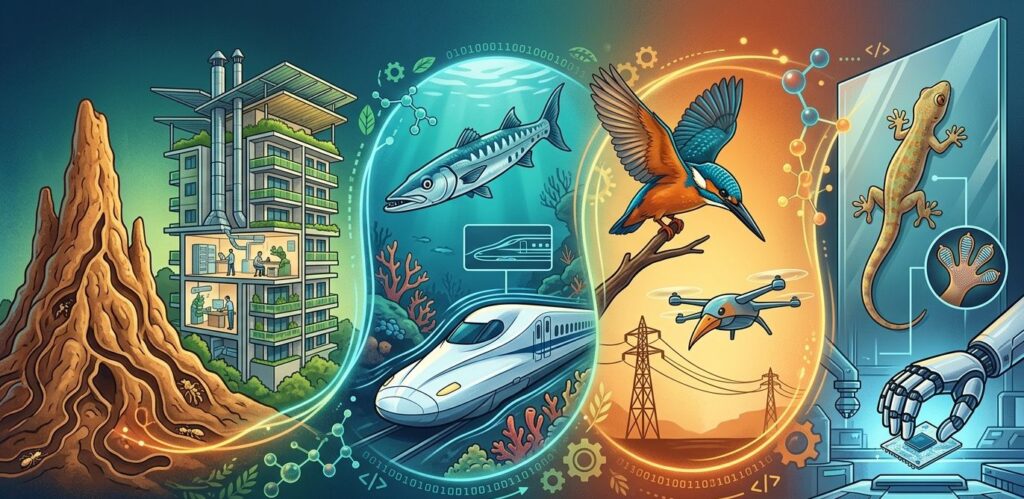
In this article, we will travel through four extraordinary stories: the humble termite and its self-cooling mounds; the barracuda fish whose body shape is rewriting naval and aeronautical engineering; the kingfisher whose beak saved Japan’s bullet-train programme; and the gecko whose feet are inspiring adhesives that make Super Glue look primitive. We will also examine how nature’s own masterpiece of concealment, structural colour,is powering the next generation of military camouflage systems. And we will ask: what happens when humanity finally learns to read nature’s code fluently?

Termite: nature’s master architect
A single termite mound regulates temperature within 1°C accuracy across a 39°C external temperature swing. The Eastgate Centre saves an estimated 10 times the energy of conventional buildings its size.
A 30-Million-Year Air-Conditioning Patent

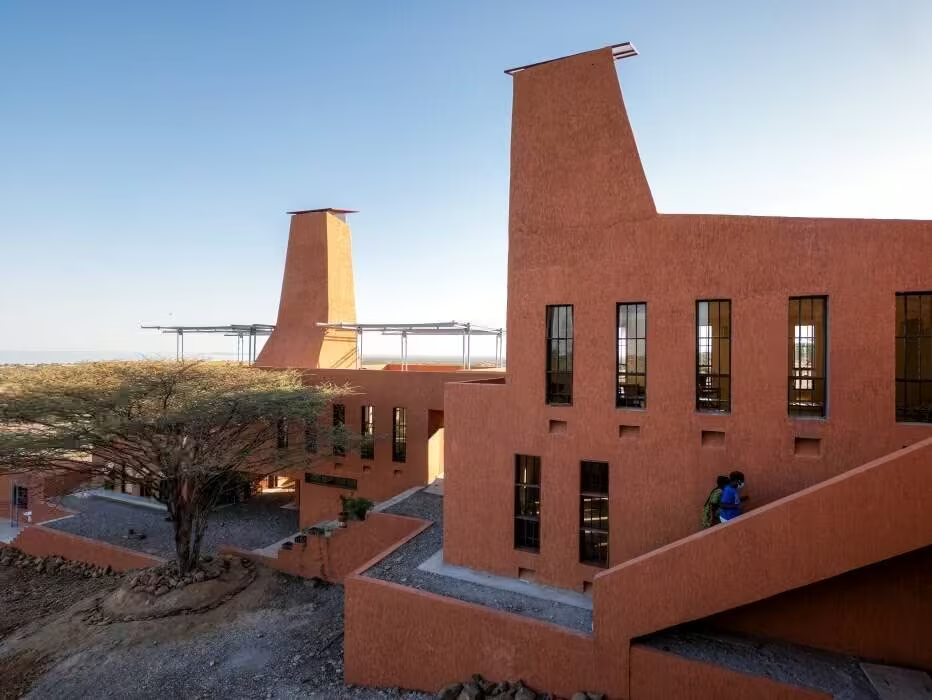
The Eastgate Centre in Harare, completed in 1996, is the most frequently cited example of passive cooling architecture in the world and deservedly so. It maintains interior temperatures within a 2°C range year-round without conventional HVAC, cutting energy consumption by roughly 90% compared to a conventional air-conditioned building of similar size and reducing energy costs by an estimated $3.5 million in its first five years alone.
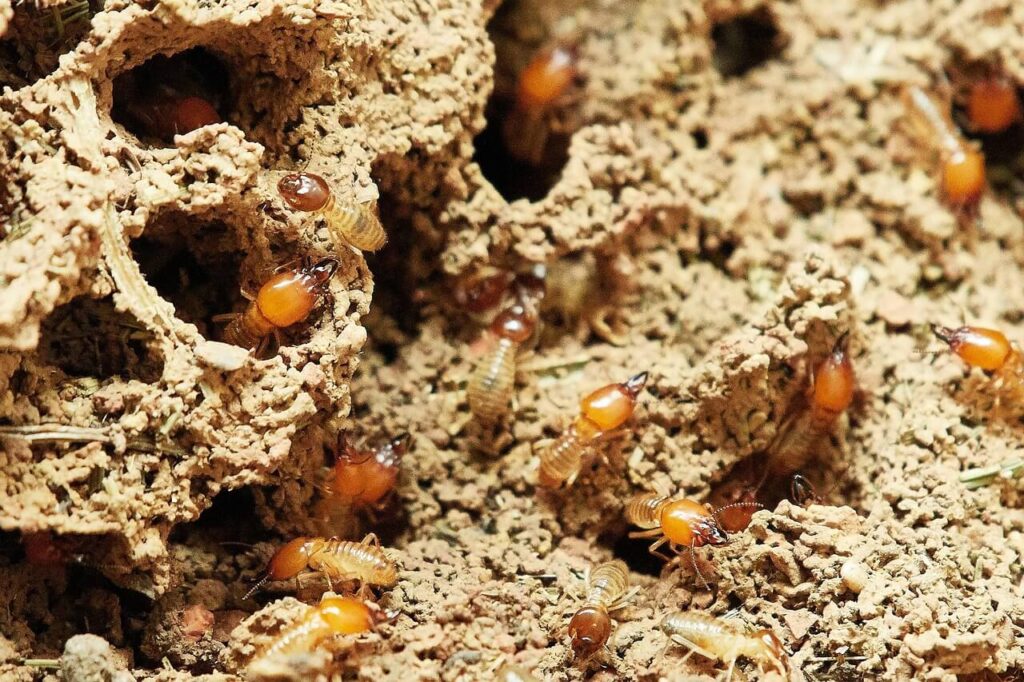
The inspiration, termite mounds, are engineering marvels that deserve far more credit than they receive. The mounds of Macrotermes michaelseni in sub-Saharan Africa can stand 9 metres (30 feet) tall and house colonies of up to 2 million individuals.The interior temperature is kept at a remarkably stable 31°C—the precise temperature required to cultivate the Termitomyces fungus that the colony grows for food—even as external temperatures swing between 3°C at night and 42°C during the day.
How do they do it? For decades, the popular explanation was that the mound acted like a lung, with the colony’s metabolic heat driving convection currents through an elaborate network of tunnels. More recent research, notably a 2015 study published in PNAS by Scott Turner and Rupert Soar, has refined this model. The mound’s porous outer shell acts as a diffusion barrier that allows slow gas exchange with the atmosphere, while heat generated deep in the nest drives airflow through internal channels. The colony adjusts this system in real time: worker termites open and close tunnels, effectively programming airflow the way a human engineer might adjust dampers in a duct system.
Mick Pearce translated these principles into the Eastgate Centre’s architecture by designing two large, chimney-like atria that draw cool night air through the building, storing thermal mass in its concrete floors and ceilings during the cool night and releasing it slowly during the hot day. The building effectively breathes, just as a termite mound does.
From Zimbabwe to Singapore: The Global Spread of Termite Architecture
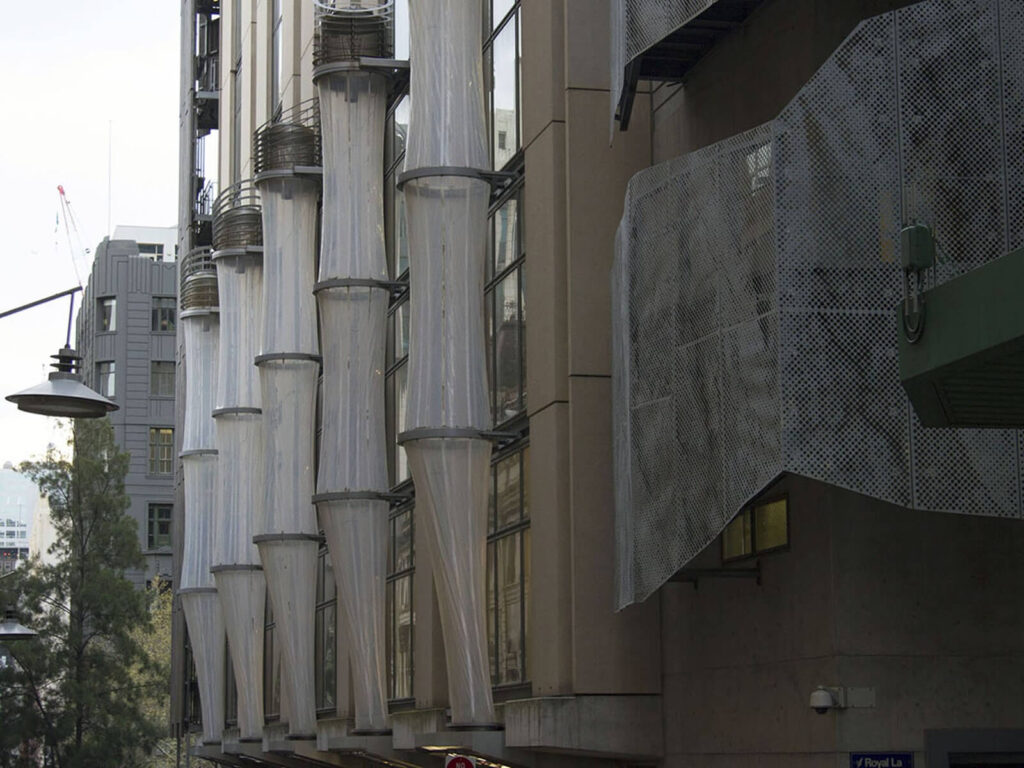
The Eastgate Centre was not a one-off experiment. CH2 (Council House 2), a municipal building in Melbourne, Australia, opened in 2006 and uses similar termite-inspired passive cooling, reducing energy use by 87% and carbon dioxide emissions by 87 tonnes per year compared to a conventional building. Its chilled ceiling panels, night purge ventilation, and thermal labyrinth beneath the building all echo the logic of the termite colony.
In Singapore, a city of perpetual 34°C humidity, researchers at the National University of Singapore have been modelling termite ventilation physics to design net-zero public housing blocks for a population of 5.5 million. Given that buildings account for approximately 40% of global energy consumption, and cooling alone represents about 15% of that share, the stakes could not be higher.
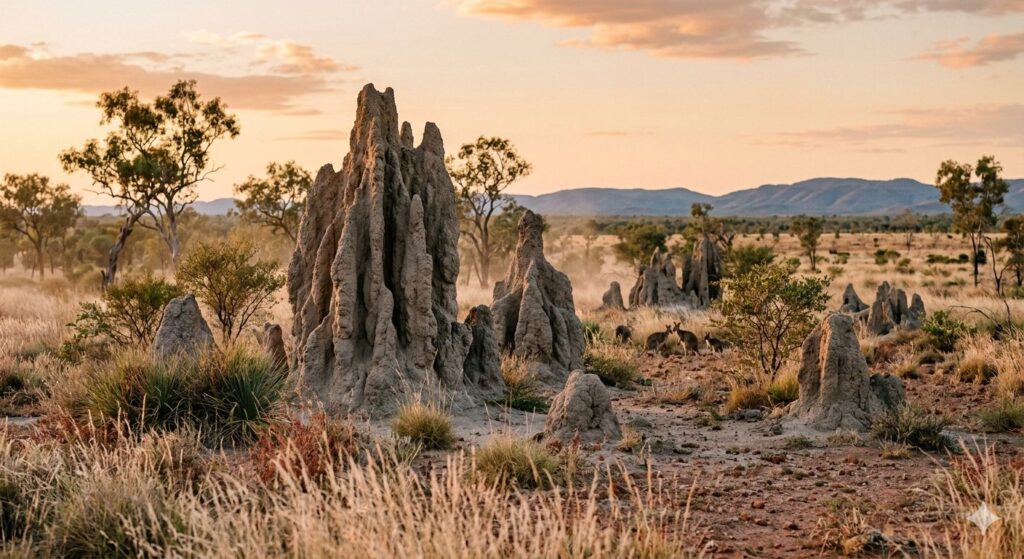
Perhaps most ambitiously, the US Army Corps of Engineers has been studying termite mound architecture since 2016 to design self-cooling forward operating bases in desert environments—reducing the logistical burden of fuel transport, which is one of the leading causes of casualties in modern warfare. Every gallon of fuel saved at the base is a convoy not driven down an IED-laden road.
And the future? Researchers at Harvard’s Wyss Institute are now developing programmable matter that mimics the termite colony itself—not just the mound—creating swarms of simple robots that collectively build complex, adaptive structures without any central control. Their TERMES project demonstrated in 2014 that just 20 small robots, following simple rules inspired by termite behaviour, could assemble a predetermined three-dimensional structure entirely autonomously.
Barracuda: rewriting the rules of drag
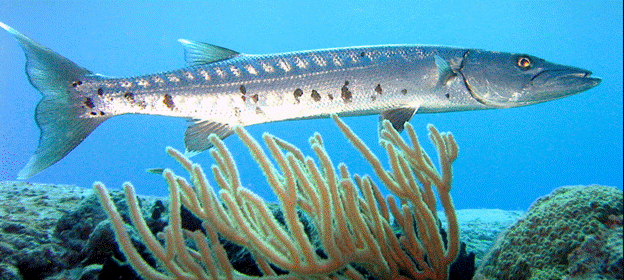
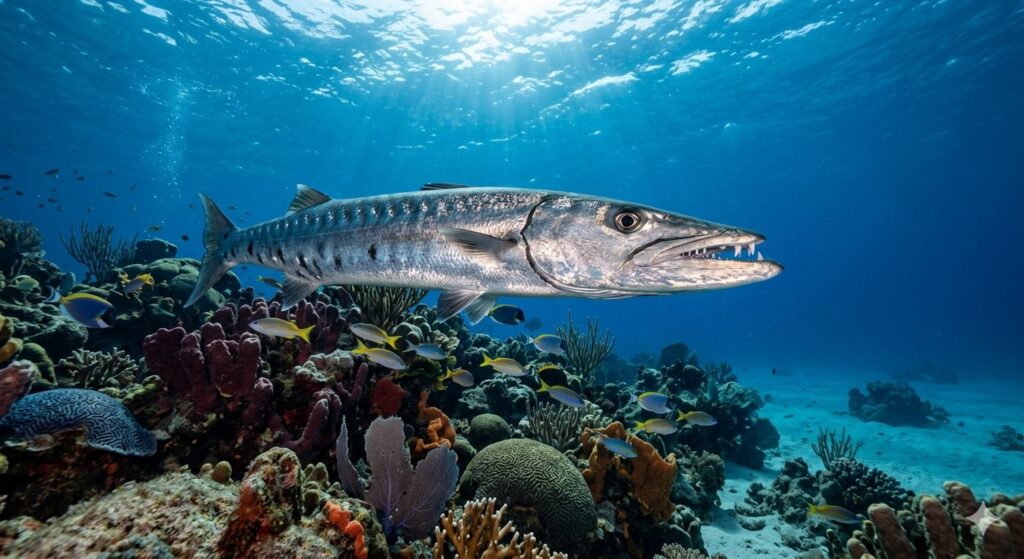
The barracuda’s fineness ratio of ~4.5:1 matches the optimal ratio calculated independently by aerospace engineers for high-speed submersibles and torpedo bodies.
The Fish That Outswims Physics
The great barracuda (Sphyraena barracuda) is a torpedo with scales. Capable of accelerating to speeds of 43 km/h (27 mph) in a fraction of a second faster than almost any creature of its size—it patrols tropical reefs with a predatory patience that belies its explosive capability. Its body plan has been refined over 50 million years of evolutionary pressure into what hydrodynamicists now recognise as a near-perfect solution to the problem of high-speed, low-turbulence travel through a dense medium.
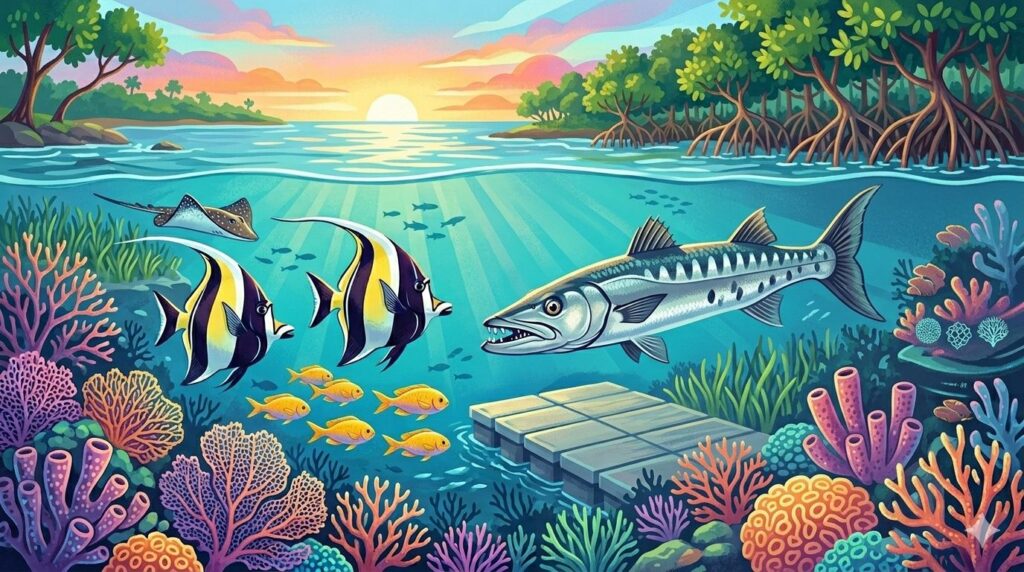
The key is the barracuda’s fusiform (spindle-shaped) body, with maximum girth at approximately 40% of its length from the snout. This proportioning minimises pressure drag, the resistance created when a blunt object pushes water aside by creating the smoothest possible pressure gradient along the body surface. The ratio of body length to maximum diameter, known as the fineness ratio, hovers around 4.5:1 in the barracuda, which fluid dynamicists have independently calculated as the theoretical optimum for minimising drag in a streamlined body.
Submarines, Drones, and Wind Turbines
The US Navy noticed this biological lesson long ago. Modern submarine hulls—including the Virginia-class nuclear attack submarine incorporate body-of-revolution forms whose proportions closely approximate the barracuda’s fineness ratio. But the more recent and perhaps more consequential application is in unmanned underwater vehicles (UUVs) and autonomous underwater drones, which are transforming both oceanography and naval warfare.
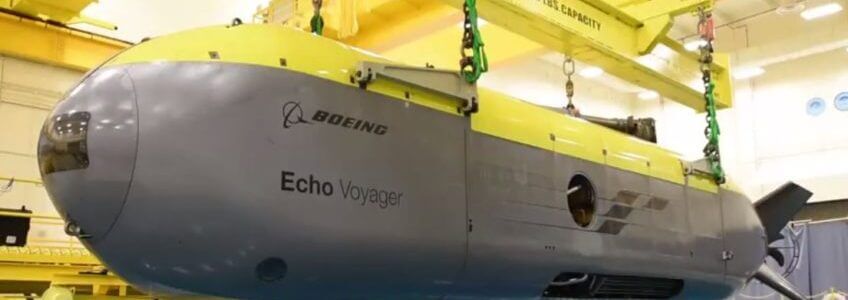
Boeing’s Echo Voyager, a 15.5-metre autonomous submarine unveiled in 2016, uses a hull form and propulsion system explicitly modelled on large pelagic fish including the barracuda. It can operate for months without resupply and achieve speeds of up to 8 knots remarkable for a vehicle with no crew largely because its bio-inspired hull generates dramatically less drag than conventional designs.
The barracuda’s tail fin a deeply forked lunate design is equally instructive. Unlike the paddle-like tails of slower fish, the barracuda’s high-aspect-ratio caudal fin generates thrust with minimal induced drag, operating on the same hydrodynamic principle as the wings of high-performance sailplanes. Engineers at the Woods Hole Oceanographic Institution have incorporated this fin geometry into underwater glider designs, improving their energy efficiency by up to 35%.
On land or rather, in the air, the barracuda’s lessons are also being applied to wind turbine blades. Traditional horizontal-axis wind turbines suffer from high drag and turbulence at the blade roots, reducing efficiency. A research team at Whale Power Corporation (taking lessons from both humpback whale flippers and barracuda body form) developed turbine blade profiles with irregular leading edges that mimic fish body contours, increasing turbine efficiency by 20% and allowing operation in lower wind speeds.
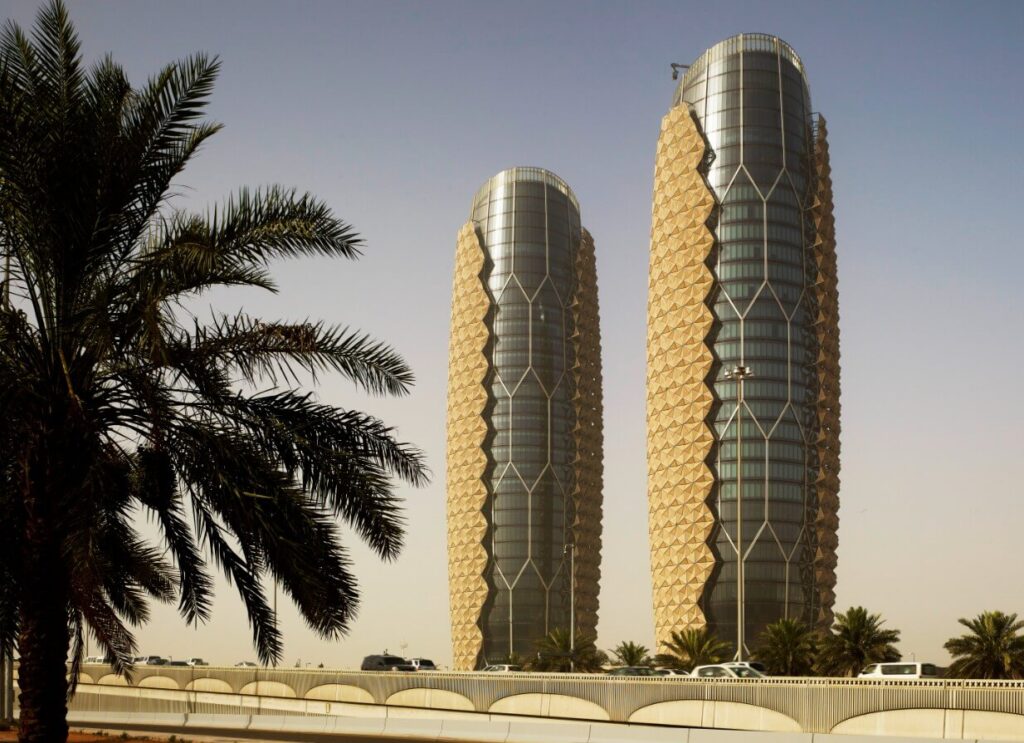
Perhaps the most surprising application is in architecture. The Al-Bahr Towers in Abu Dhabi, completed in 2012, feature an adaptive facade whose geometries were partly informed by barracuda-school hydrodynamics specifically, the way a school of barracuda’s forms and dissolves in response to predators. The result is a dynamic shading system that reduces solar gain by 50% while maintaining transparency, slashing cooling loads in one of the world’s hottest cities.
Kingfisher: beak that saved the bullet train
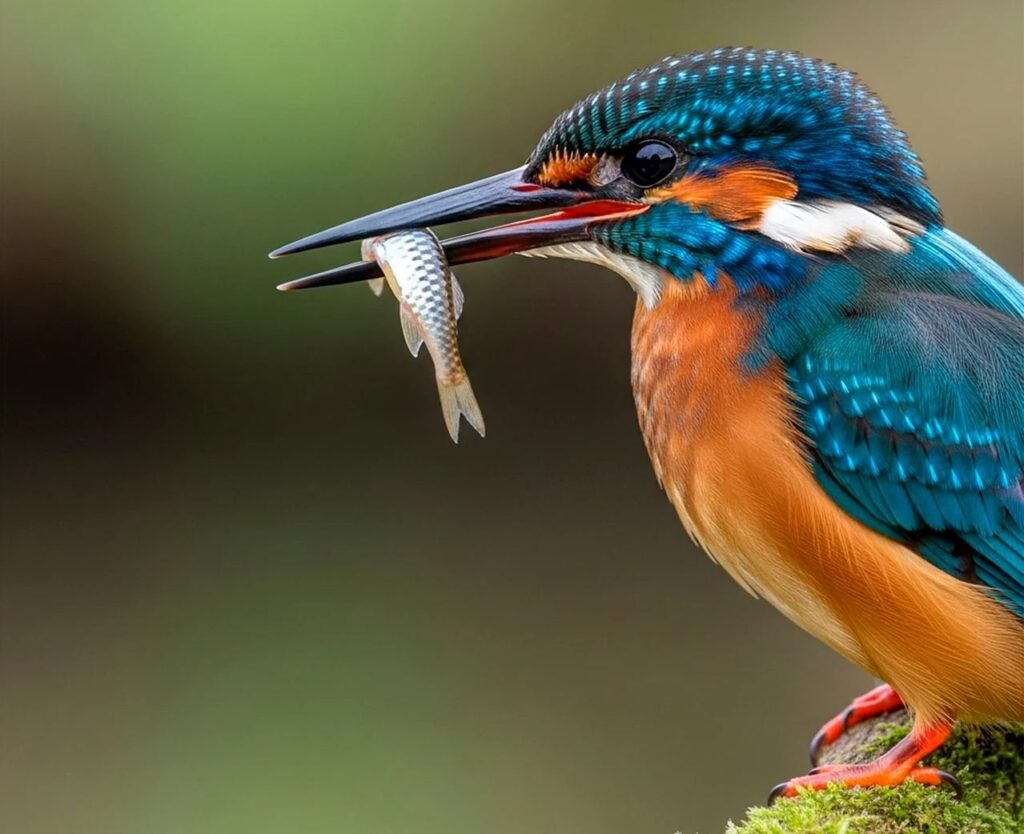
The kingfisher’s beak profile creates a smooth, gradual pressure gradient when entering water at 40 km/h—the same engineering problem the Shinkansen faced entering tunnels at 300 km/h.
A 130-Decibel Problem
In the early 1990s, Japan’s Shinkansen programme faced a crisis that threatened the future of high-speed rail. The Series 500 trains, capable of 300 km/h (186 mph), were being plagued by a phenomenon known as the ‘tunnel boom’—a thunderous sonic pressure wave, reaching up to 130 decibels at the tunnel exit (roughly the noise level of a jet engine at 30 metres), generated every time a train plunged into one of the 53 tunnels on the San’yo Shinkansen line. Residents living up to 400 metres from tunnel exits were complaining. Strict Japanese noise regulations threatened the entire high-speed rail expansion.
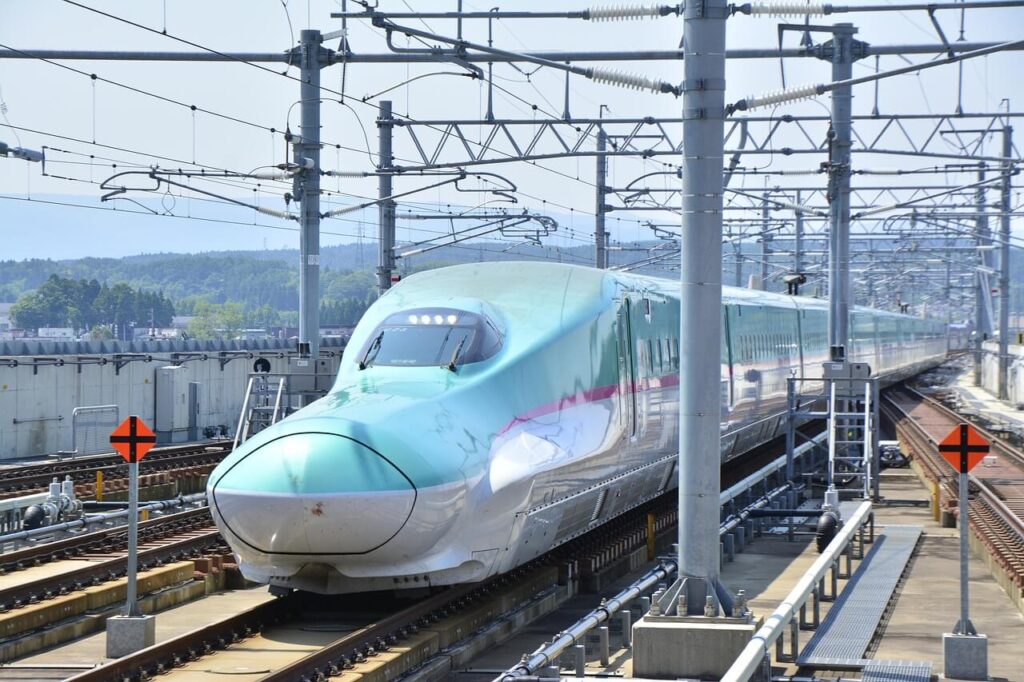
The problem was fundamental physics. When a train travelling at 300 km/h enters a tunnel, it acts like a piston compressing the air ahead of it.

This compressed air shoots out of the tunnel exit as a pressure wave at the speed of sound a phenomenon called a micro-pressure wave (MPW). The sharper the front of the train, the more abrupt the compression, and the louder the boom.
The solution came not from an aerodynamicist but from a birdwatcher. Eiji Nakatsu, chief engineer for the Series 500 and a devoted amateur ornithologist, was struck by the similarity between the train-entering-tunnel problem and another dramatic pressure transition in nature: the kingfisher diving from air into water.
From Water to Air: The Common Kingfisher’s Secret
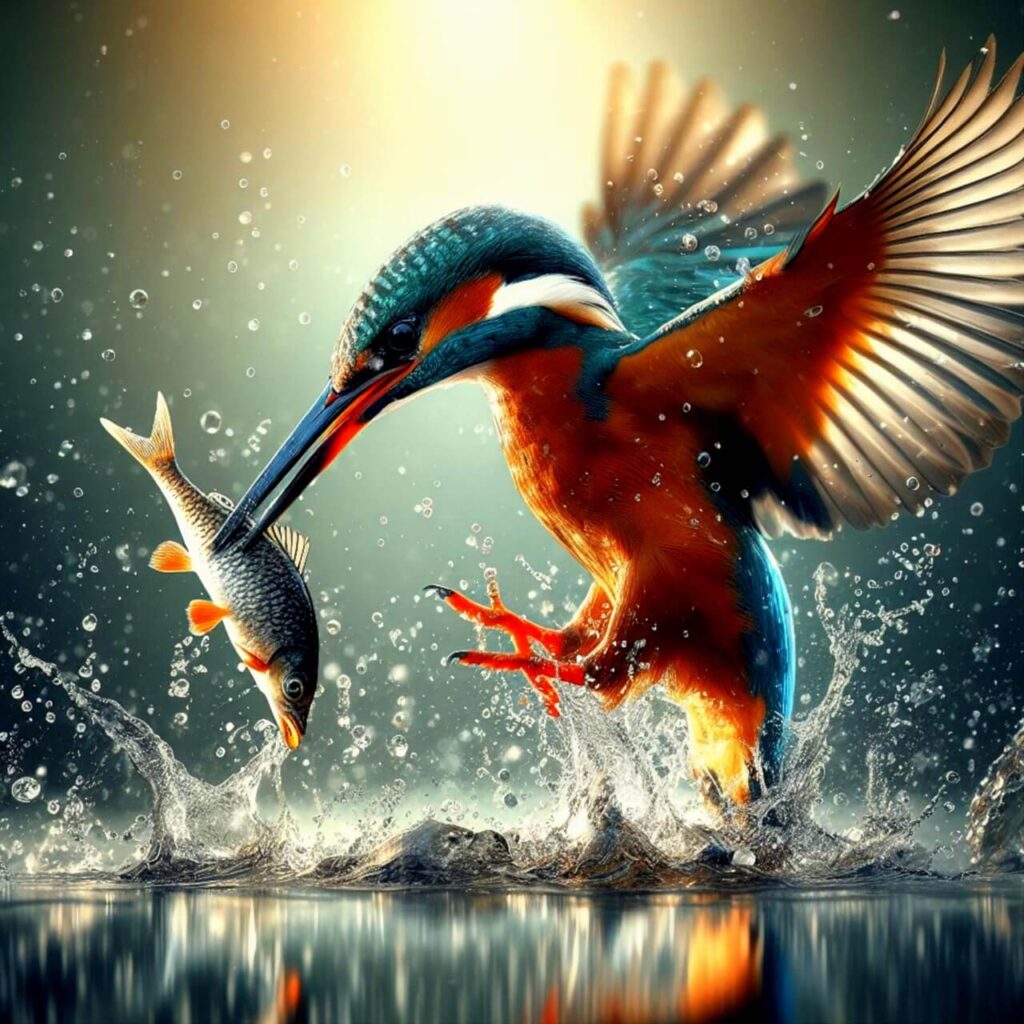
The common kingfisher (Alcedo atthis) feeds almost exclusively on fish, diving from heights of up to 6 metres into water at speeds approaching 40 km/h (25 mph). This creates a remarkable physical challenge: air and water have dramatically different densities (water is approximately 800 times denser), and an abrupt transition between the two would create exactly the kind of pressure spike that was destroying Japan’s tunnel exits.
The kingfisher solves this problem with its beak—a long, gradually tapering structure that enters the water first and gently ‘shapes’ the air-water boundary ahead of the bird’s body. The beak has a specific geometric property: it is not uniformly conical but follows a shape that mathematicians recognise as a Rankine half-body or, more precisely, approximates a von Karman ogive. This profile creates the minimum possible pressure disturbance as it crosses the air-water interface.
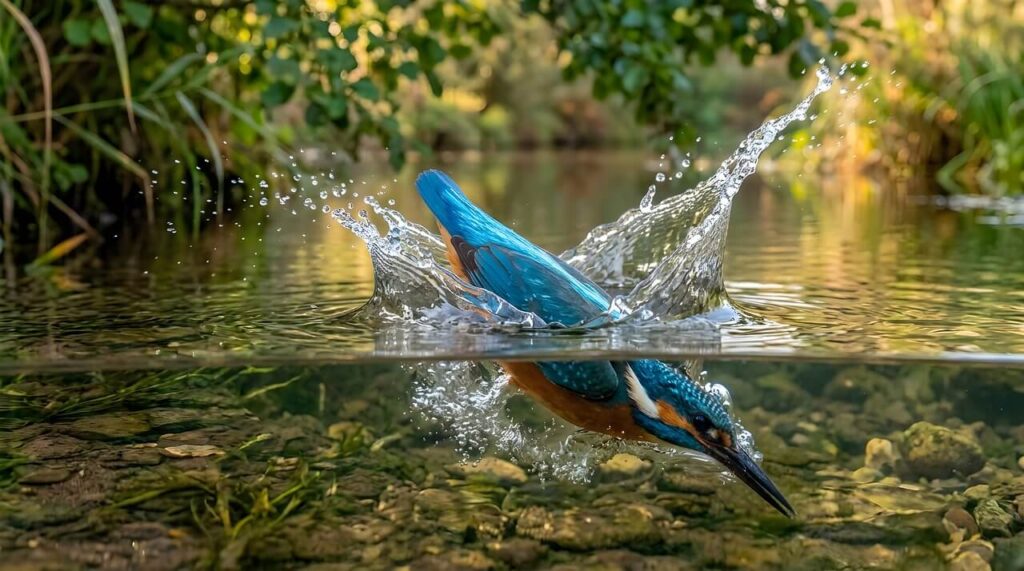
Nakatsu’s insight was that the tunnel-entry problem was aerodynamically equivalent to the kingfisher’s water-entry problem. He redesigned the front nose of the Series 500 Shinkansen to replicate the kingfisher’s beak geometry, stretching the nose from 6 metres to 15 metres and giving it the bird’s characteristic gradual taper with a slight upward curvature.
The results were transformative. The tunnel boom was reduced by 30 decibels—a roughly 30-fold reduction in perceived loudness, since the decibel scale is logarithmic. The train’s energy consumption dropped by 15% despite travelling 10% faster. And the Shinkansen cleared the strict noise regulations that had threatened its expansion.
Beyond the Bullet Train: The Kingfisher Principle in the Modern World

The kingfisher’s influence has radiated outward from that initial railway application into an astonishing range of engineering domains. The Shinkansen breakthrough was essentially a proof of concept for a broader principle: that the air-water interface problem solved by diving birds is mathematically isomorphic to a huge class of pressure-transition problems in engineering.
In wind turbine engineering, Enwave, a Canadian company, has applied kingfisher-beak geometry to fan blade leading edges, reducing energy consumption in air handling units by up to 28%. In architecture, the design of HSBC’s headquarters in Hong Kong incorporates facade elements that manage wind pressure transitions using profiles derived from the kingfisher’s beak, reducing wind-induced building sway by 40%.
Military applications have been equally significant. The US Air Force Research Laboratory has applied diving bird aerodynamics including kingfisher beak profiles to the design of hypersonic re-entry vehicles, which face the extreme version of the air-density-transition problem at atmospheric entry. When a warhead re-enters the atmosphere at Mach 20+, the pressure differentials involved make the tunnel boom look trivial. Nature, it turns out, solved this problem first.
Perhaps most poignantly, the kingfisher’s beak has inspired the design of surgical needles that penetrate tissue with dramatically less trauma. A 2020 study in Bioinspiration & Biomimetics demonstrated that a kingfisher-profile needle reduced insertion force by 32% compared to conventional designs, potentially reducing patient pain and tissue damage in minimally invasive surgery.
Gecko: sticky, switchable, and almost magical
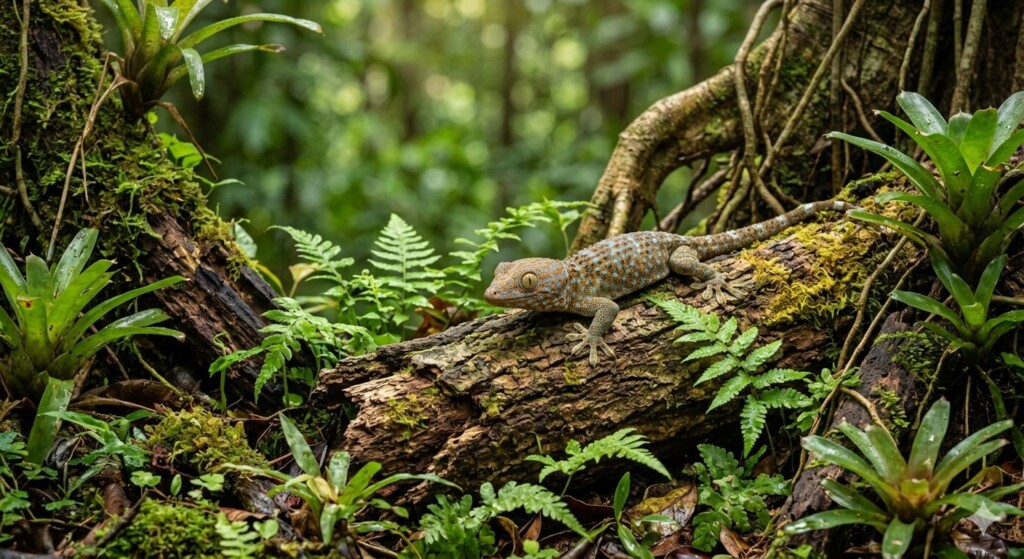
Each gecko toe has ~14,400 setae per mm². Each seta has ~1,000 spatulae. The total contact area of a gecko’s four feet is approximately 227 mm²—yet the adhesive force generated can support 133 kg.
The 100-Million-Year Adhesion Problem
Every night, geckos defy gravity on a scale that should be impossible. A tokay gecko (Gekko gecko) weighing 150 grams can cling to a vertical glass surface with a force of approximately 20 Newtons—about 130 times its own body weight—and then release and re-engage its grip hundreds of times per minute as it runs at full speed. It does this without any glue, without any moisture, without any mechanical interlocking, and without leaving any residue. When it walks away, the surface is as clean as before it arrived.
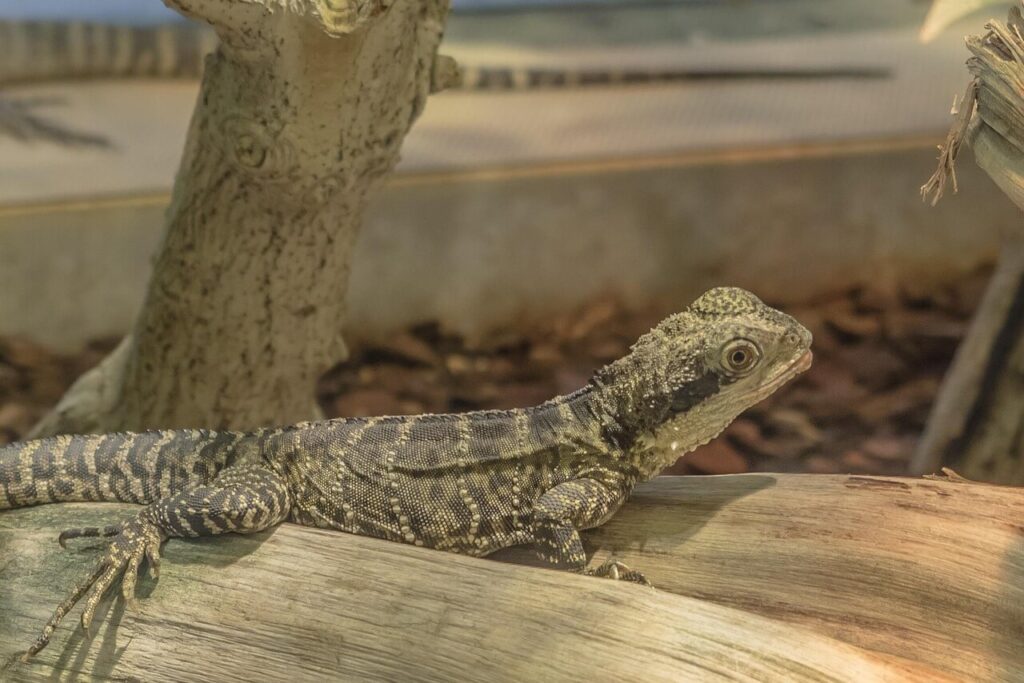
For decades, the mechanism behind gecko adhesion was one of biology’s most tantalising mysteries. The answer, revealed definitively in a landmark 2000 paper by Kellar Autumn and colleagues in Nature, was both surprising and philosophically important: geckos stick using van der Waals forces.
Van der Waals forces are the weak electrostatic attractions that arise between any two molecules in close proximity forces so feeble that they are usually overwhelmed by gravity and surface roughness at macroscopic scales. The gecko’s genius is to deploy these forces at an extraordinary scale. Each toe is covered in millions of microscopic hair-like structures called setae, roughly 100 micrometres long. Each seta branches at its tip into hundreds of even tinier fibres called spatulae, around 200 nanometres wide,smaller than the wavelength of visible light. This hierarchical nano-architecture brings such an enormous area of molecular surface into contact with any surface that the cumulative van der Waals forces become enormous.
Geckskin, Space Adhesives, and Self-Cleaning Surfaces
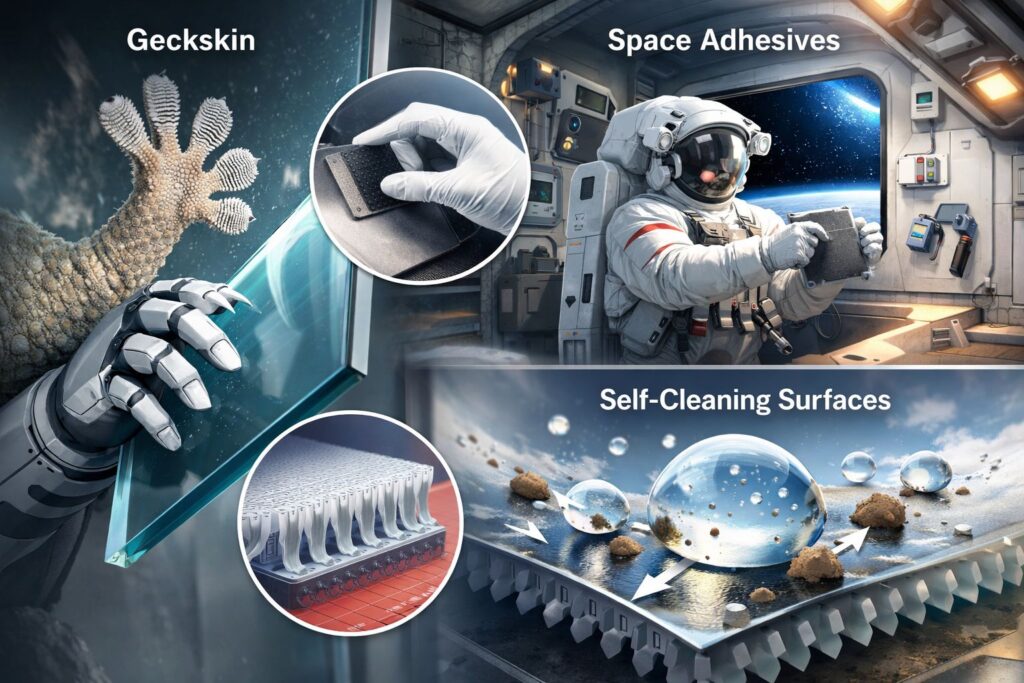
The race to replicate gecko adhesion has produced some of the most exciting materials science of the 21st century. In 2012, a team at the University of Massachusetts Amherst unveiled Geckskin a synthetic adhesive inspired by the gecko’s setae hierarchy. A piece of Geckskin the size of an index card can hold 317 kg on a smooth wall and then be cleanly removed and reused thousands of times.
DARPA—the US Defense Advanced Research Projects Agency immediately saw military applications and funded the Z-Man programme, which produced a climbing aid worn by soldiers that allows a 90 kg person in full gear to scale a smooth glass building exterior without ropes. In a 2014 demonstration, a 218-lb (99 kg) man scaled a 7.6-metre (25-foot) vertical glass wall wearing paddles covered in gecko-inspired material.
For space exploration, gecko-inspired adhesives solve a problem that has plagued astronauts for decades: how do you grip and handle objects in the vacuum of space, where conventional adhesives lose their properties and where every human-made surface has been engineered to be slippery to avoid particle contamination? NASA’s Jet Propulsion Laboratory has developed a gecko-adhesive gripper system that can grab flat surfaces, curved surfaces, fabric, and metal in vacuum conditions—without any moving parts and without ever wearing out.
In medicine, gecko-inspired bio-compatible adhesive patches have been developed for surgical applications, particularly wound closure in wet environments where traditional sutures and staples fail. A team at MIT and Brigham and Women’s Hospital published a paper in 2019 demonstrating a gecko-inspired patch that bonds to wet tissue with a strength three times greater than existing surgical glues, is non-toxic, biodegradable, and removes cleanly without damage.
The commercial market for gecko-inspired adhesives is projected to reach $1.3 billion by 2028, with applications in electronics manufacturing, construction, and consumer products.
Nature’s invisibility cloak: camouflage systems
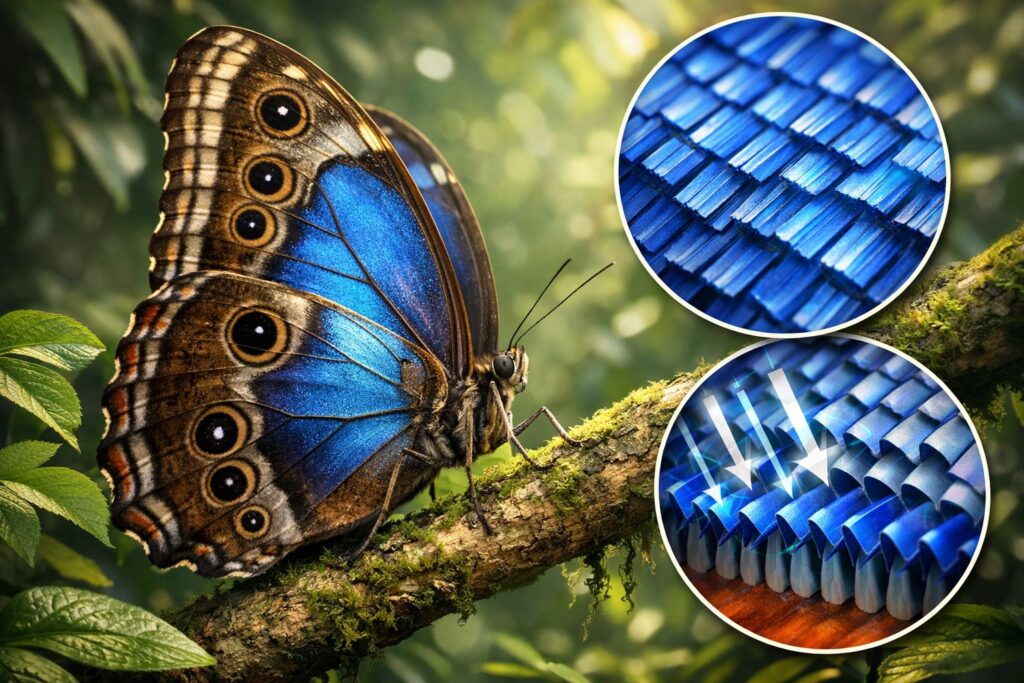
The morpho butterfly’s wing structure generates colour through nano-scale light interference, not chemistry. The same mechanism is now used in US military adaptive camouflage panels and in anti-counterfeiting on banknotes worldwide.
Beyond Paint: Structural Colour and the Cephalopod Revolution
The most sophisticated camouflage systems on Earth do not belong to any military. They belong to the cephalopods—octopuses, cuttlefish, and squid which can change their colour, pattern, and even skin texture in less than 300 milliseconds, outperforming any human-made display technology. The mechanisms they use are now driving a revolution in military concealment, consumer electronics, and solar energy collection that may well be the most commercially significant branch of biomimicry in the coming decade.
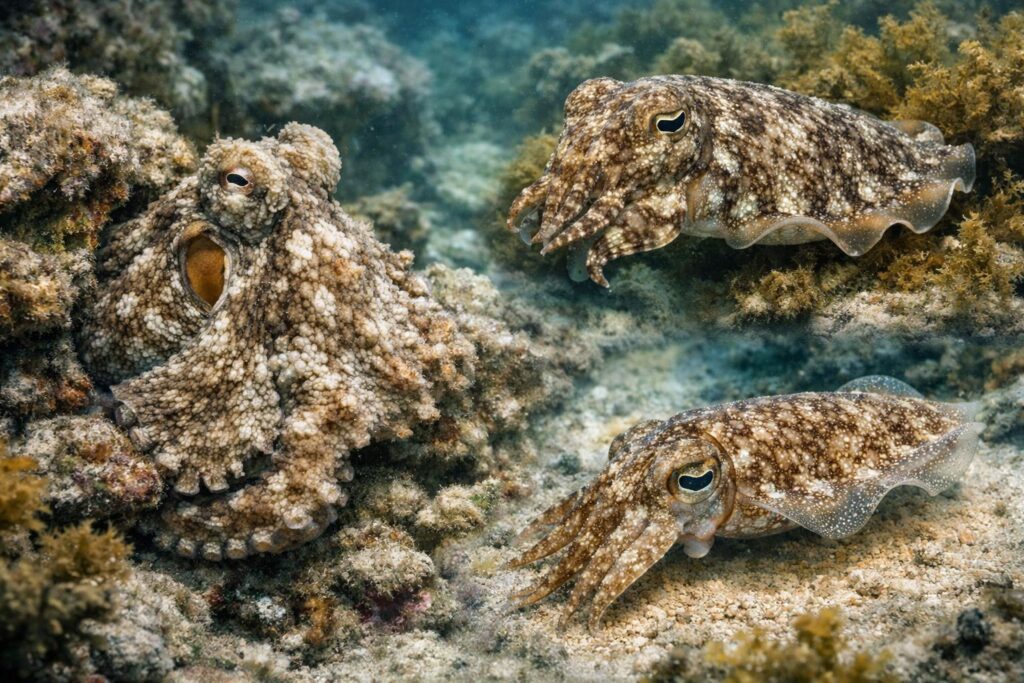
Conventional military camouflage works on a simple principle: match the static background. It is painted, printed, or woven into patterns that approximate the visual texture of specific environments. It fails in three critical ways. First, it is static—it matches one environment but not others. Second, it works in visible light but is largely ineffective against near-infrared sensors, which are standard in modern night-vision equipment. Third, it does nothing to manage radar return or thermal signature.
Nature’s cephalopods solve all three problems simultaneously. The cuttlefish (Sepia officinalis), for example, uses three separate layers in its skin: chromatophores (pigment-containing elastic sacs), iridophores (structural colour reflectors), and leucophores (diffuse white reflectors), controlled by a distributed neural network that processes visual information and generates a body-wide pattern within milliseconds.
The Morpho Butterfly and Electronic Camouflage
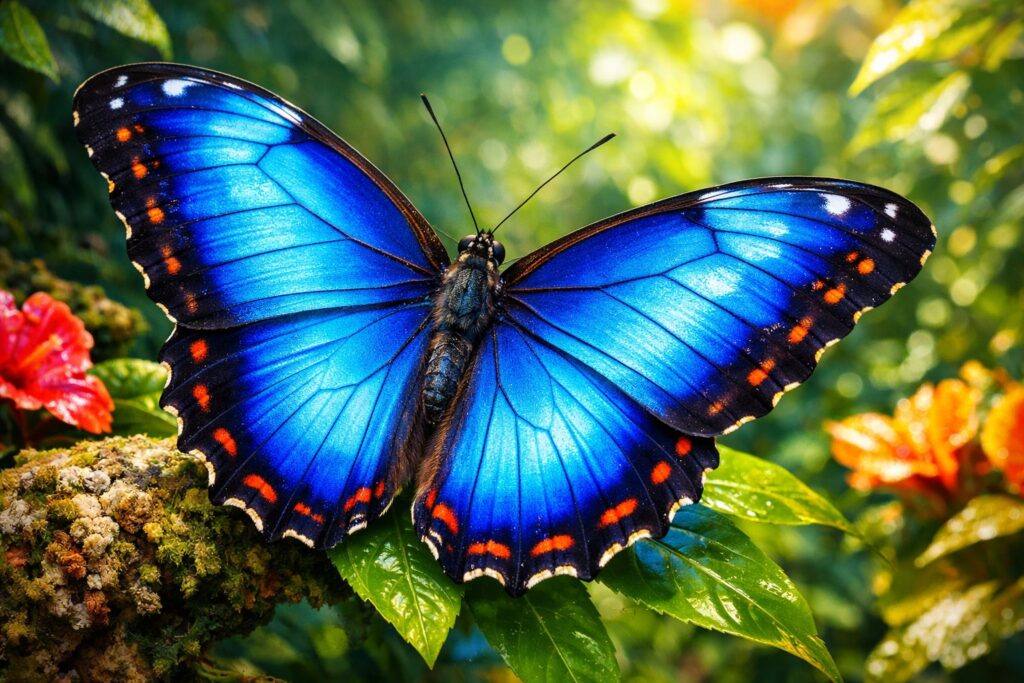
The morpho butterfly, whose brilliant iridescent blue wings contain no blue pigment whatsoever—achieves its colour entirely through micro-scale structural interference. The wing scales contain layers of chitin and air spaced precisely 185 nanometres apart; this spacing causes constructive interference for blue wavelengths (around 430-500 nm) while destructive interference eliminates all other colours. The effect is brilliant, directional, and impossible to replicate with any conventional paint.
DARPA’s Photonic Camouflage programme, running since approximately 2018, is developing panels for military vehicles and personnel that use arrays of electrochromic cells inspired by cephalopod chromatophores, layered with structural colour elements derived from morpho butterfly wing geometry. Early prototypes demonstrated in 2022 can match backgrounds across the visible and near-infrared spectrum simultaneously, with a response time of under one second.
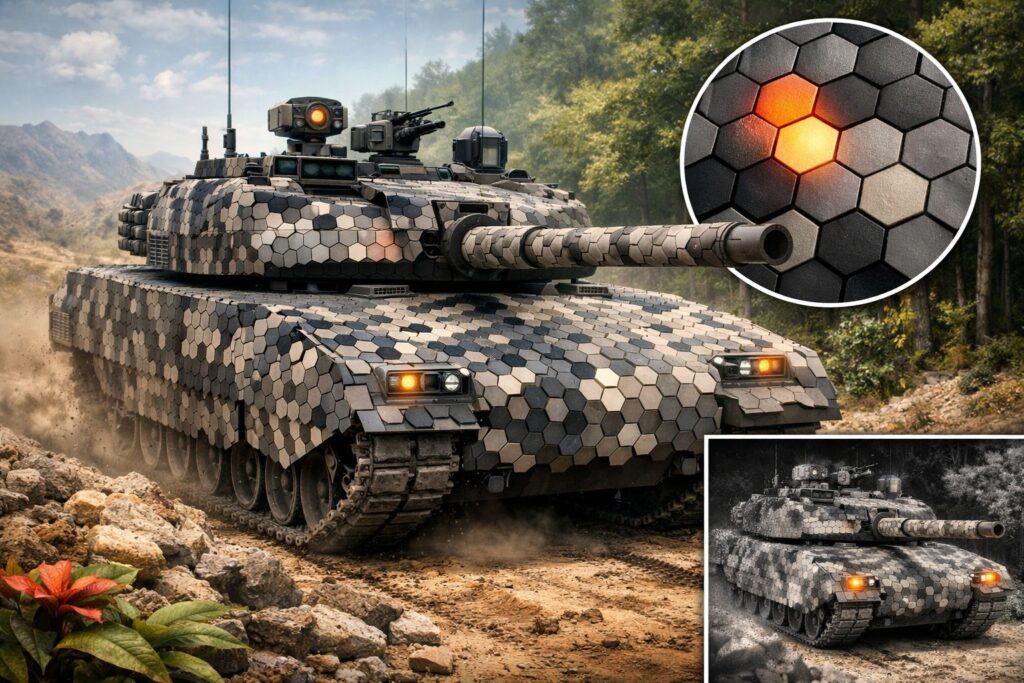
BAE Systems in the UK has developed the Adaptive system, originally inspired by cuttlefish—which uses an array of hexagonal ‘pixels’ mounted on tank hulls, each independently adjustable in temperature. Since thermal-imaging sensors read heat signatures, the system can display any thermal pattern, including mimicking the background environment’s thermal profile or, in an extraordinary demonstration, displaying the tank’s vehicle registration number in thermal imagery—deliberately making the tank more visible for identification. In its standard camouflage mode, it makes a 70-tonne Challenger 2 tank effectively invisible to thermal sensors at ranges over 300 metres.
In the commercial realm, the morpho butterfly’s structural colour principle is being applied to e-paper displays (such as E Ink technology in e-readers), colour-shifting automotive paints that change hue with viewing angle, and anti-counterfeiting elements on passports and banknotes in over 30 countries.
Squid Skin and the Future of Smart Materials
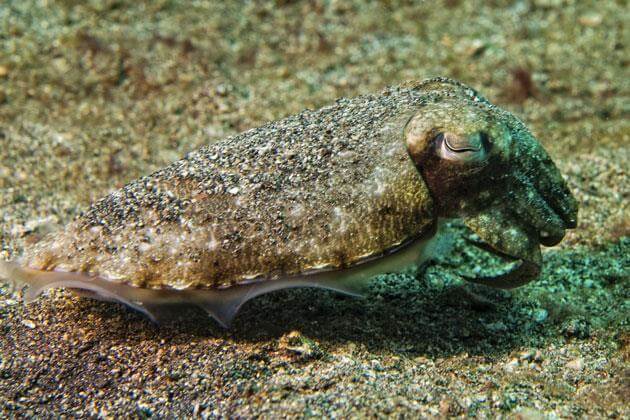
The most radical applications, however, draw not just from cephalopod optics but from the active, adaptive nature of cephalopod skin as a whole. In 2014, a team at the University of California, Irvine, published a paper describing a stretchable display that mimics squid skin chromatophores using pneumatically actuated silicone cells filled with dye. The material can deform, stretch to three times its original size, and then return to its original state with the display intact.
This work has direct implications for ‘smart camouflage suits’ of the kind long imagined in science fiction. A team at MIT’s Computer Science and Artificial Intelligence Laboratory (CSAIL) demonstrated in 2023 a prototype wearable panel, approximately 30cm x 30cm, that integrates cephalopod-inspired adaptive colouring with a built-in camera system and processing chip, automatically matching the wearer’s background in real time. The system is still far too bulky and slow for battlefield deployment, but the trajectory is unmistakable.
Next decade: nature’s code goes mainstream

When Algorithms Learn to Read Biology
Everything described so far has been achieved by human researchers who noticed a biological mechanism, understood it, and translated it into engineering. But a new development threatens to make this already remarkable process look primitive: artificial intelligence is beginning to read nature’s blueprints faster than we can.
In 2020, DeepMind’s AlphaFold programme essentially solved the protein-folding problem—predicting the three-dimensional structure of a protein from its amino-acid sequence with an accuracy that matches experimental methods. This was arguably the biggest breakthrough in structural biology in 50 years. By July 2022, AlphaFold had predicted the structures of over 200 million proteins—essentially every protein known to science—and made them freely available. This is not just a biological achievement. It is an engineering achievement of staggering proportions, because proteins are nature’s ultimate materials: self-assembling, programmable, biodegradable, and performing functions that no human-made molecule can match.
Generative AI models are now being trained not just to understand biological structures but to invent new ones—designing proteins, materials, and architectural forms that have never existed in nature but obey the same deep principles of biological engineering. In 2023, a team at the University of Washington used AI to design proteins that self-assemble into programmable 2D lattices—effectively writing new blueprints in nature’s own language.
The Economic and Environmental Stakes
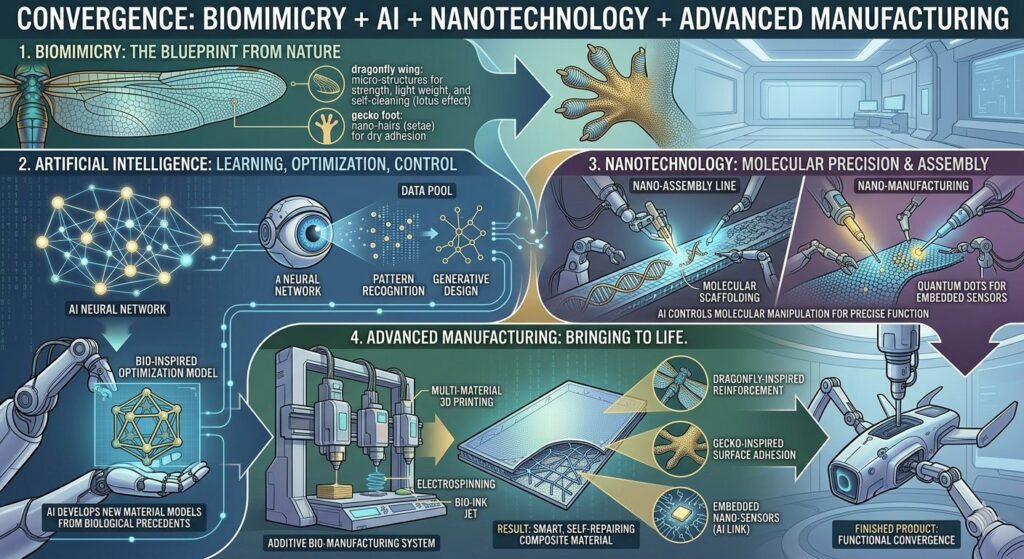
The convergence of biomimicry with AI, nanotechnology, and advanced manufacturing is arriving at a moment when the stakes of engineering decisions have never been higher. Buildings consume 40% of global energy. Transportation generates 24% of global CO2 emissions. Materials production—especially steel, cement, and plastics—accounts for roughly 23% of global greenhouse gas emissions.
Nature builds without these problems. A spider spins silk that is stronger than steel at a fraction of the energy cost, at room temperature, using water as a solvent. Abalone shell achieves the toughness of engineered ceramics using calcium carbonate chalk organised at the nanoscale. Nacre (mother-of-pearl) has a fracture toughness 3,000 times greater than the same chalk in bulk, through hierarchical layering alone.
If we could manufacture structural materials the way biology manufactures them at room temperature, using water, with biodegradable inputs the impact on global carbon emissions would be transformational. Research programmes targeting bio-inspired synthesis are now receiving unprecedented investment: the US Department of Energy alone committed $93 million to biomimetic materials research in 2023.
The projected economic value is correspondingly massive. A 2023 analysis by the Fermanian Business & Economic Institute estimated that biomimicry-influenced design could potentially affect $321 billion worth of economic activity in the United States alone by 2030, across sectors including construction, defence, healthcare, and transportation.
Beyond Mimicry: The Era of Biological Integration
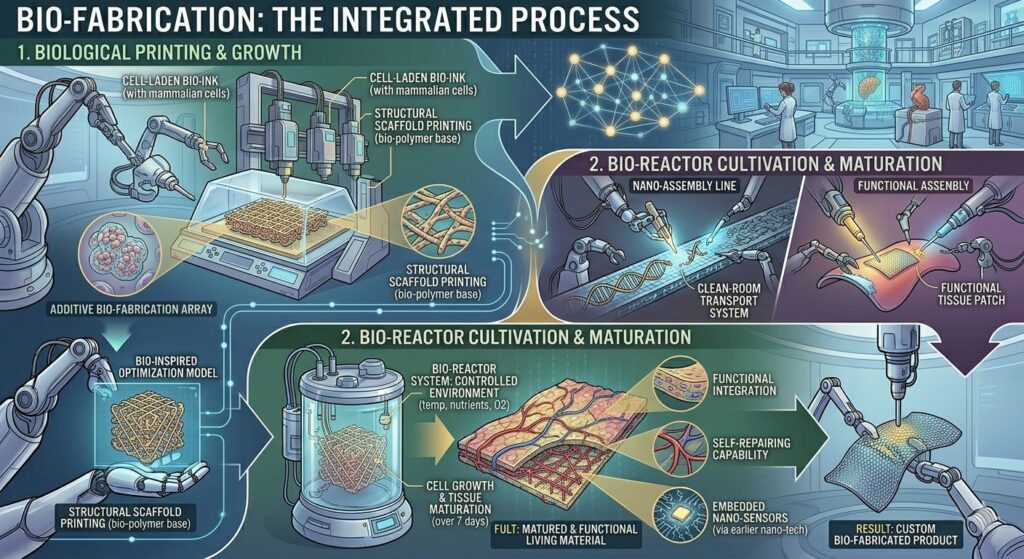
The final and perhaps most profound shift that the next decade will bring is the move from mimicking biology to actually using biology as a manufacturing platform. This is sometimes called bio fabrication, and it is advancing at a pace that makes even optimists uneasy.
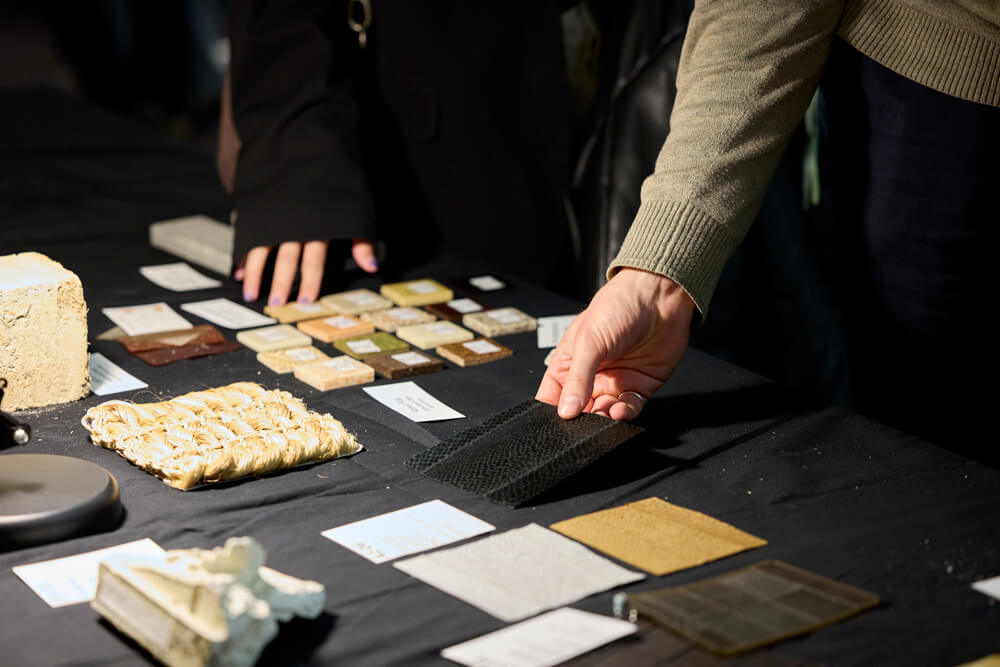
Researchers at MIT and Harvard are growing buildings literally. Architectural mycelium (fungal root networks) can be grown into structural forms in moulds, creating building panels that are stronger than concrete, 100% biodegradable, and fireproof, grown from agricultural waste at essentially no energy cost. The company Ecovative Design is already selling mycelium packaging to Dell, IKEA, and a growing list of manufacturers as a substitute for expanded polystyrene foam.
Living building materials concrete that contains photosynthetic bacteria and can self-heal cracks, were demonstrated by a team at the University of Colorado Boulder in a 2020 paper in Matter. The bacteria grow calcium carbonate in the crack, sealing it within 24 hours.
And genetically engineered organisms’ bacteria, yeast, and algae are being programmed to secrete structural proteins, conduct electricity, sense and respond to environmental conditions, and even compute. Synthetic biology, the field that designs living systems the way an engineer designs a circuit, attracted $4.8 billion in investment in 2022 alone.
Conclusion: code that writes the future

There is a strange humility in biomimicry. It asks us to acknowledge that for all our ingenuity for all our steel and silicon and synthetic chemistry we have been solving engineering problems with a crudeness that would embarrass any evolutionary process. We build walls that do not breathe; vehicles that haemorrhage energy in turbulence; adhesives that leave residue, degrade with time, and never quite work in the wet; surfaces that are either visible or invisible, never both, never adaptable.
The termite, the barracuda, the kingfisher, and the gecko have been solving these same problems for tens of millions of years, and their solutions work. Not approximately, not in controlled laboratory conditions, but in the real world under temperature extremes, in water, in darkness, at high speed reliably, sustainably, and with zero energy wasted.

What is changing now is not nature’s solutions, which have always been there for anyone curious enough to look. What is changing is our ability to read them. Advanced microscopy, AI-powered protein prediction, molecular simulation, and precision nanofabrication have given us, for the first time, the language to actually understand what billions of years of trial and error have written.
The biomimicry market growing at 24.5% annually is not just a financial story. It is a civilisational story. It suggests that we are at the beginning of a transition—away from an industrial paradigm based on brute-force chemistry and energy expenditure, and toward something more elegant, more resilient, and more sustainable: an engineering culture that finally acknowledges that nature got here first, and that the most profound things we can do are to pay attention, to learn, and to apply what we find.
The blueprint has been sitting in plain sight for 3.8 billion years. We are just learning to read it.
“The goal is a world that works for 100% of life” — Janine Benyus, Founder, Biomimicry Institute


Very informative article. Thank you.