

“Sach ke libaas mein khamoshi bhi bolti hai,
Har jawab mein kabhi kabhi sawal bhi hota hai.”
Translation – Silence too speaks when dressed as truth, And in every answer, sometimes there lies a question.
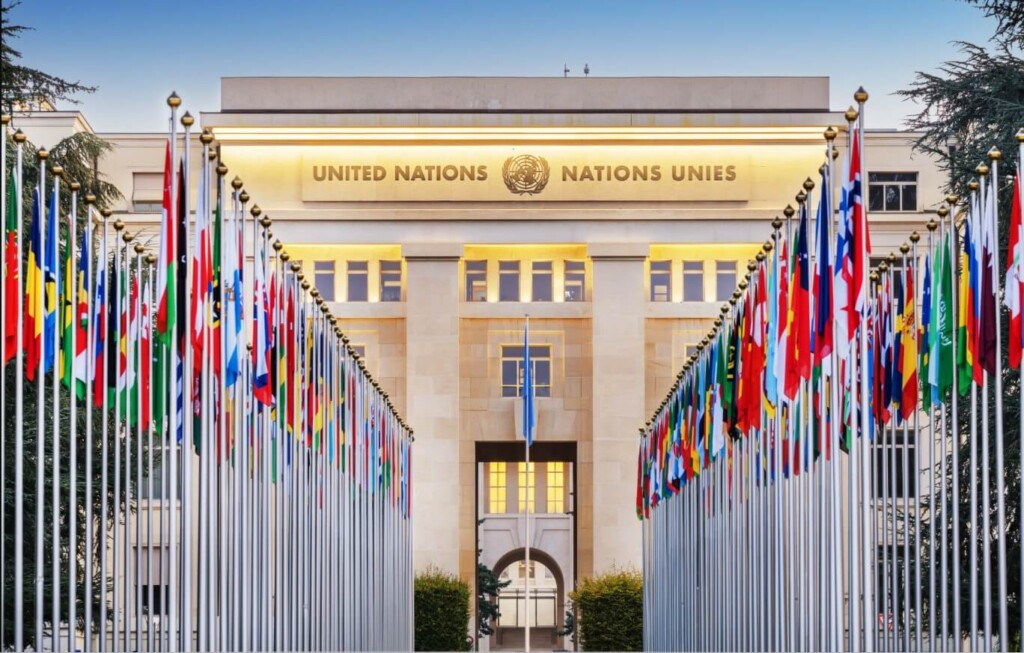
On paper, the United Nations (UN) speaks the language of law. In practice, however it increasingly speaks the language of limitation.
At the latest UN press briefing following the Middle East escalation, a familiar pattern unfolded. Questions from the press – pointed, persistent, and morally unambiguous – met responses that were cautious, procedural, and ultimately evasive. The exchange was not merely informational. It was diagnostic. It revealed how institutions under structural constraint begin to redefine the boundaries of their own responsibility.
When asked why the United Nations had failed, yet again, to prevent escalation after clear warning signs, the response did not dispute the failure. Instead, it reframed it. The Secretary-General had “called for restraint.” The UN had “engaged all parties.” The organization continued to “urge de-escalation.”
This is the language of effort. It is not the language of outcome.
And therein lies the quiet transformation at the heart of the modern United Nations: accountability has been replaced by activity.
From Authority to Appeal

The UN Charter does not envision an institution that merely appeals to power. It envisions one that can constrain it. Yet, in briefing after briefing, the Organization presents itself less as an actor and more as an observer – one that documents, condemns, and urges, but does not compel.
This shift is not accidental. It is structural.
When a journalist pressed on whether the killing of a head of state and strikes on civilian infrastructure constituted clear violations of international law, the answer returned – carefully – was that the UN does not make legal determinations in that forum. It “relies on established mechanisms.” It “calls for investigations.” It “encourages compliance.”
Encourages.
The word is doing extraordinary work.
Encouragement is what one offers a student. Or a colleague. Or a partner. It is not what one deploys in the face of missile strikes, mass civilian casualties, or the collapse of regional stability.
But the United Nations, constrained by veto power and dependent on member states for both authority and resources, has gradually retreated into precisely this vocabulary – a language calibrated not to confront power, but to survive alongside it.
“Haath bandhe the ya irade kamzor the,
Sach kehne wale bhi shayad majboor the.”
Translation – Were hands tied, or was resolve too weak, Even those who spoke truth perhaps could not speak.
The Performance of Neutrality
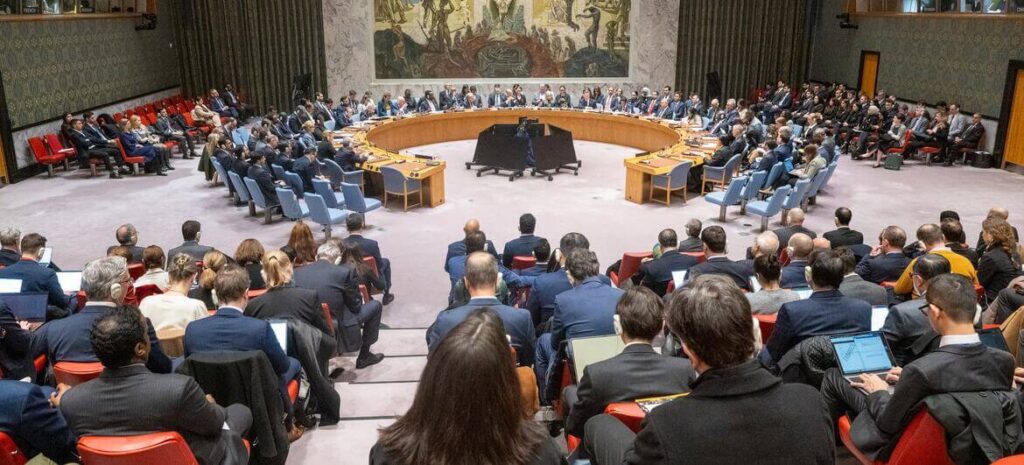
Perhaps the most telling aspect of the briefing was not what was said, but what was avoided.
Direct attribution of responsibility remained elusive. Actions were described without clearly naming actors in proportion to their power. Violations were framed in generalities. The moral symmetry of language persisted even where the asymmetry of force was overwhelming.
This is often defended as neutrality.
But neutrality, in such contexts, becomes indistinguishable from equivalence.
When the same vocabulary is used to describe vastly unequal actions, the effect is not balance – it is distortion. The aggressor and the respondent, the occupier and the occupied, the initiator and the retaliator – are linguistically compressed into a single category: “all parties.”
This is not neutrality as principle.
It is neutrality as posture.
And posture, unlike principle, is adjustable.
The Bureaucratisation of Crisis
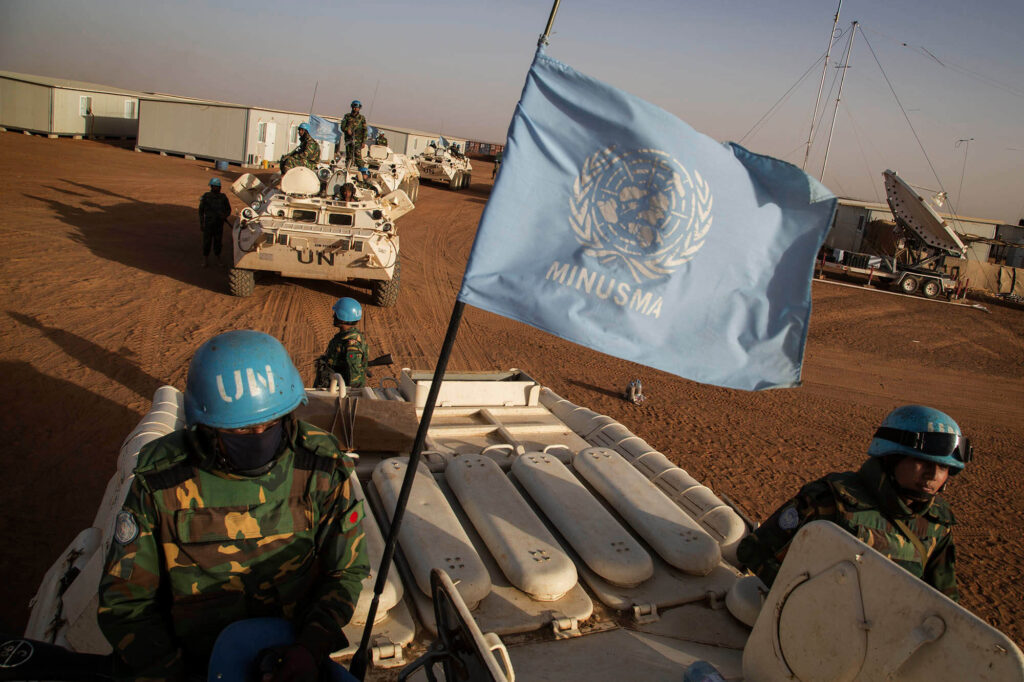
Another pattern emerged in the briefing: the fragmentation of responsibility.
Humanitarian agencies are cited for relief efforts. Legal bodies for interpretation. The Security Council for enforcement. The General Assembly for consensus. Each component is invoked. None is accountable.
The result is a system in which responsibility is distributed so widely that it effectively disappears.
When asked whether the UN had failed to protect civilians, the response pivoted to the scale of humanitarian aid delivered. When asked about enforcement, the answer returned to the limits of the Security Council. When pressed on those limits, the explanation circled back to member states.
At every stage, the answer is accurate. And at every stage, it is incomplete.
Because the truth that remains unstated is this: a system designed to require unanimous power consent will always fail in conflicts involving power itself.
Narrative as Shield
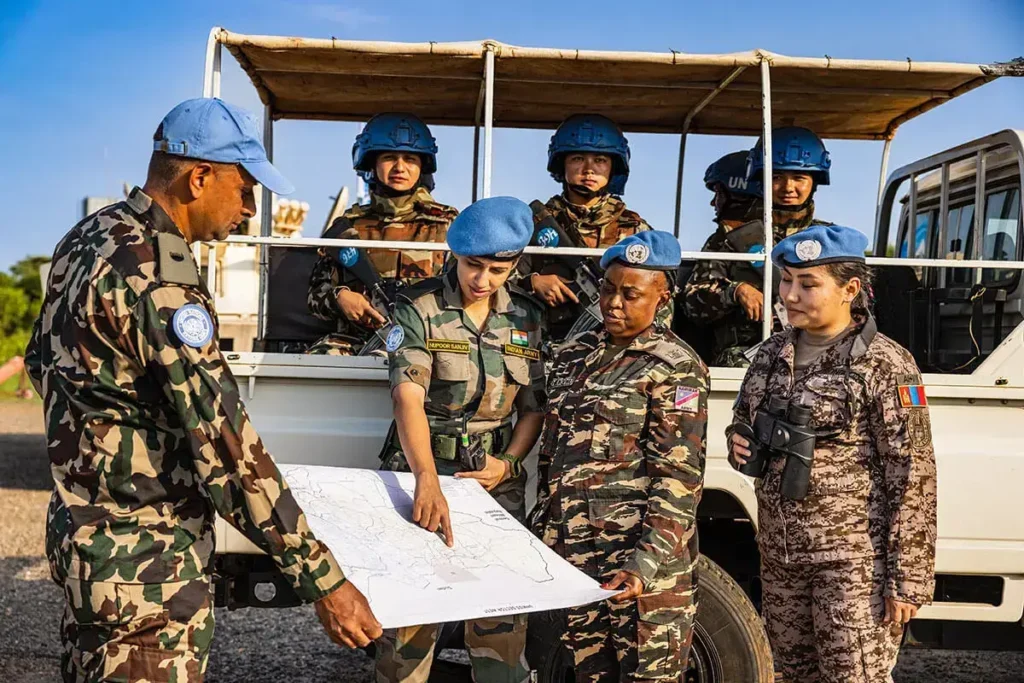
The most consequential function of these briefings is not informational – it is legitimising.
By consistently framing its role as one of advocacy rather than enforcement, the United Nations subtly resets global expectations. Failure is no longer measured against the Charter’s promise of collective security. It is measured against the more modest benchmark of whether the UN “did what it could.”
And what it could do, we are repeatedly told, is limited.
This is how institutions endure failure – not by denying it, but by redefining its terms.
The Danger of Lowered Expectations
There is a deeper risk in this shift.
If the international community internalises the idea that the UN is inherently limited to appeals, condemnations, and humanitarian response, then the demand for structural reform weakens. The veto remains untouched. Enforcement remains optional. Accountability remains selective.
In other words, the abnormal becomes normal.
The press, in moments like the recent briefing, plays a critical role in resisting this normalization. By asking direct questions – Who is responsible? Why was nothing done? What mechanisms failed? – journalists force the institution to confront the gap between its mandate and its performance.
But questions alone cannot close that gap.
Conclusion

The United Nations still commands the world’s attention. Its words are reported, analysed, and debated. But words, however carefully chosen, do not stop wars.
The press briefing revealed an institution that understands the gravity of the moment – but remains confined within a structure that prevents it from acting proportionately to that gravity.
This is not a failure of communication.
It is a failure of capability.
“Alfaaz se aag bujhti toh duniya mehfooz hoti,
Khamosh tamashaiyon se har jang aur tez hoti hai”
Translation – If words could extinguish fire, the world would be safe, But silent spectators only make every war more intense.

