

Cheap Technology Versus High-End Defence:
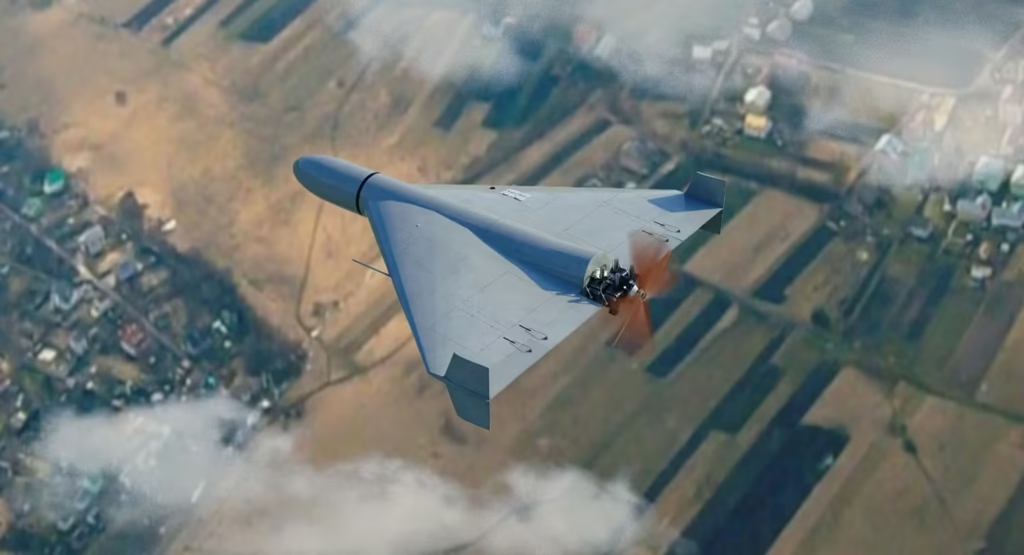
Iran has transformed a sanctions-driven imperative of manufacturing cheap weapons into one of the most strategically disruptive military programmes of the twenty-first century. The ‘Shahed’ family of loitering munitions inexpensive, mass-produced and capable of operating at ranges exceeding 2,000 kilometres has challenged the foundational economics of air defence, empowered Tehran’s regional proxy network, and compelled even the United States to reverse-engineer an Iranian drone for its own arsenal. This article, traces Iran’s drone doctrine and its deployment across the Iran–Israel and Iran – US conflicts of 2024–2026. It further evaluates the structural cost-exchange asymmetry that defines this new era of warfare, and the concrete lessons India must examine.
The ‘Moped’ that Changed the Middle East

There is a specific and deeply uncomfortable moment that recurs in the war rooms of Washington, Tel Aviv, Riyadh and Abu Dhabi every time an air-defence (AD) radar picks up a slow, propeller-driven aircraft on a one-way flight toward a target. Dilemma facing the AD commanders is to intercept the incoming drone with a missile costing hundreds of thousand dollars. Fire and intercept may appear operationally sound, but it is cost prohibitive. Do it hundreds of times each night, and you begin to lose the war of attrition. This is the strategic logic on which Iran has been developing and refining drone doctrine for nearly a decade now.
Ukrainian soldiers gave the Iranian Drone Shahed-136 its most memorable nickname: the “Moped”. It flies at roughly 114 miles per hour, low and slow, with a distinctive buzzing sound that carries across the night sky. It is not glamorous nor technologically sophisticated.
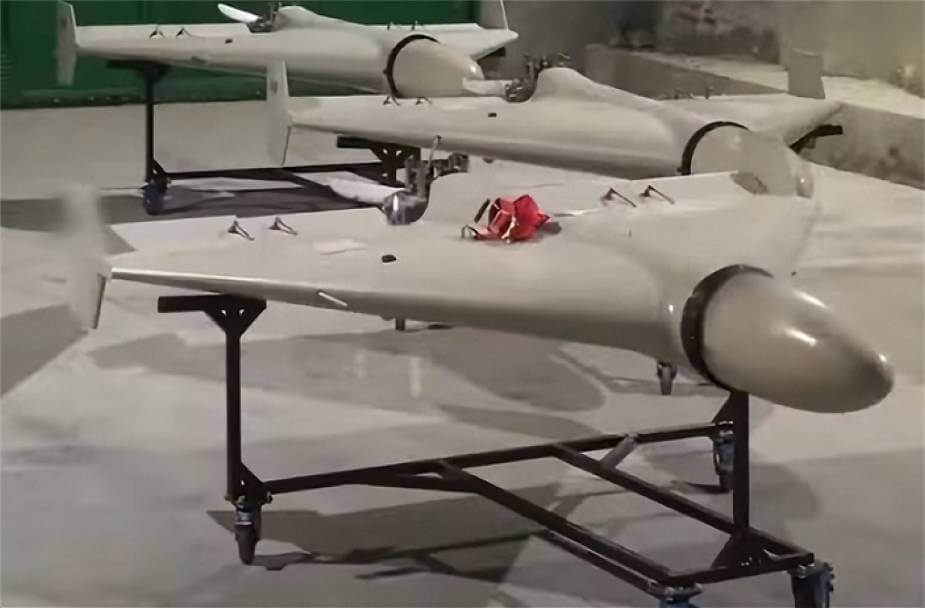
That is precisely the point. Iran did not build a drone to impress. It built them to overwhelm to congest, exhaust and economically bleed opponents AD architectures designed for a fewer, faster, and more expensive threats. The result: a doctrinal revolution that is forcing militaries from Washington to New Delhi to rethink almost everything they thought they knew about air power.
This article tells the ‘drone’ story in five parts. First, it examines the design philosophy and industrial logic behind Iran’s drone programme. Next, analyses the strategic deployment of drones through Iran’s proxy network. Next section dissects the devastating asymmetric economics of the cheap-versus-expensive warfare equation, culminating in the 2024–2026 Iran–Israel–US conflict cycle. We conclude by drawing critical lessons for India and a way forward.
The Iranian Drone Programme: Building a Weapon from Necessity
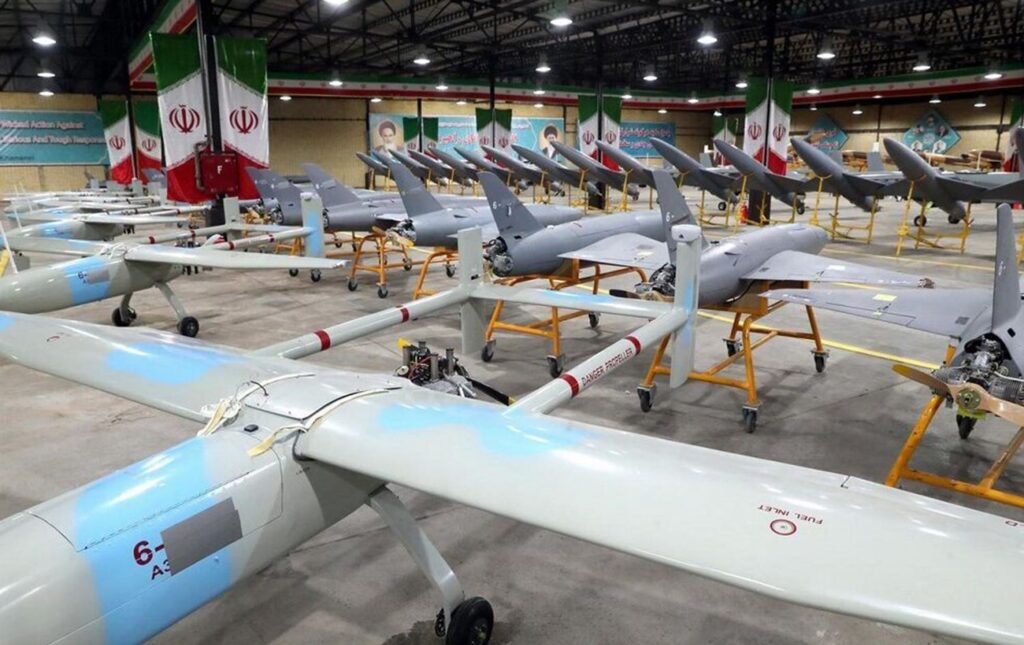
Design Philosophy: Simplicity as Strategy
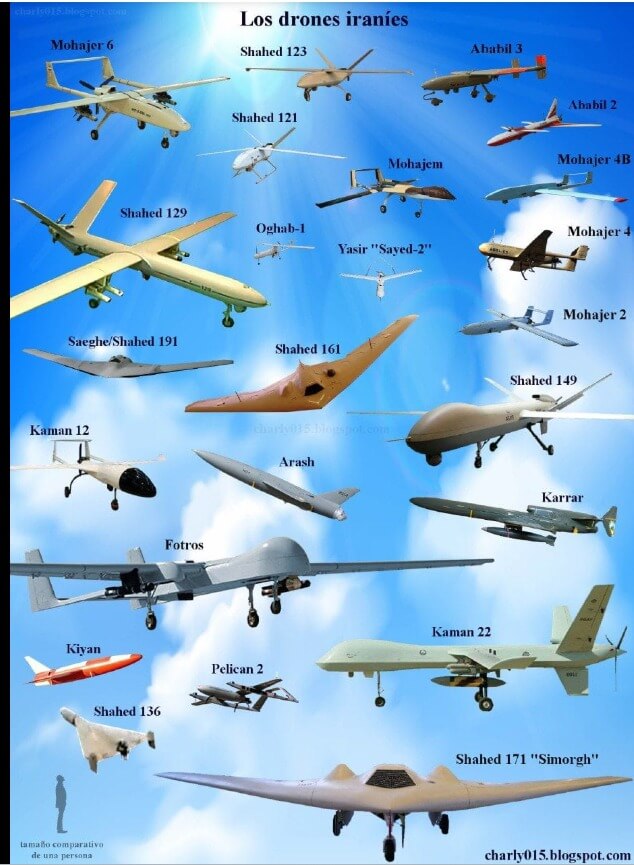
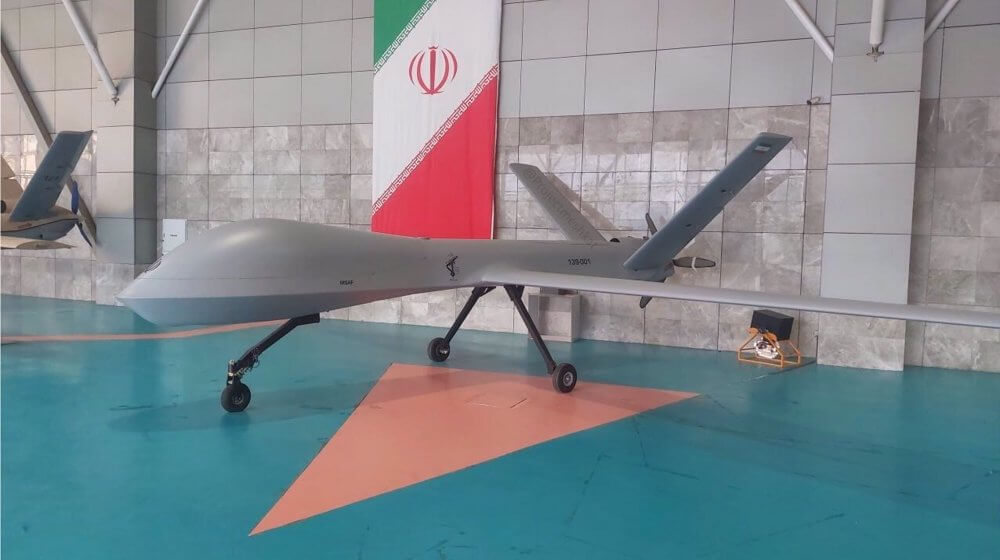
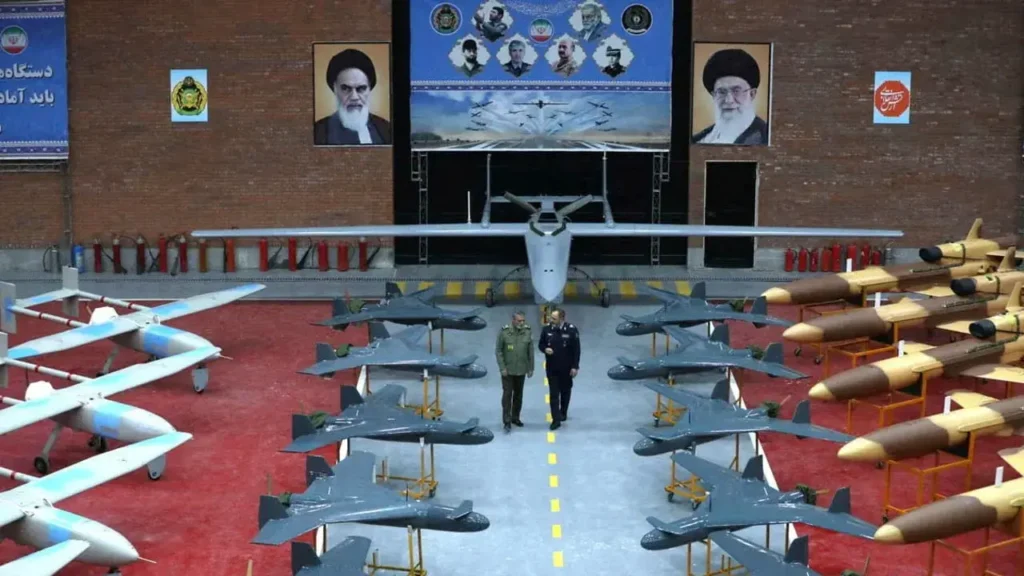
Iran’s approach to drone development is fundamentally different from that of any Western military power. Whereas the United States (US) historically pursued technological perfection pouring hundreds of millions into a single platform, Iran pursued simple design and mass manufacturability. The design goal was never the most capable drone; it was the mass producible one. Iran’s achievement lies in its intelligent integration of commercially available, dual-use components, assembled into simple, reliable and cost-effective platforms tailored specifically for the demands of asymmetric warfare. Result is a tiered drone portfolio anchored by three platforms: the Shahed-136 loitering munition, the Mohajer-6 multi-role combat drone and the Ababil-3 reconnaissance system each reflecting a distinct operational need.
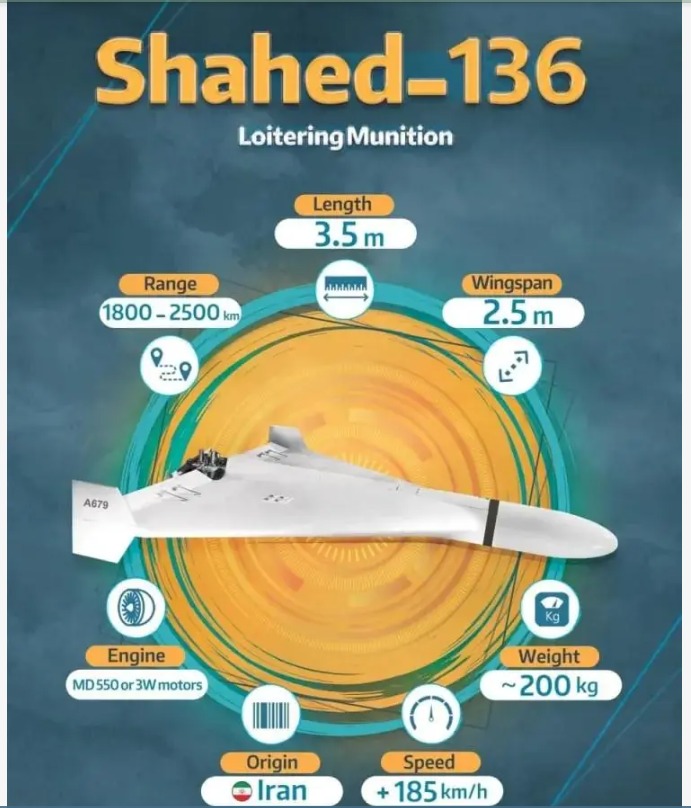
The Shahed-136 is the centrepiece. According to primary technical data from the US Army’s database and Iranian military disclosures, it is approximately 3.5 metres long with a 2.5-metre wingspan. Its range is up to 2,000 kilometres (Km), with speeds reaching 114 miles per hour, and a payload of 66 to 123 pounds. The Shahed-131, is a smaller companion variant, that carries a lighter 15 kg warhead used for shorter-range tactical missions. Yet another variant is turbojet powered Shahed-238 capable of reaching much higher speeds and ranges. This is not one weapon, but a family of weapons optimized for different roles on the cost-effect curve.
The cost picture is the most strategically significant dimension of the programme. Unit production cost estimates for the Shahed-136 have ranged from $20,000 to $50,000 per drone, making it, a “poor man’s cruise missile” offering comparable range and accuracy at a fraction of the cost. Leaked Iranian documents reveal that Russia purchased 6,000 Shahed-136 units in November 2022 for $1.75 billion, making per-unit price approximately $193,000 a substantial markup over the domestic production cost.
The Sanctions Paradox: Weaponising Adversity
It would be a mistake to view Iran’s drone programme as technologically primitive. The country has been under comprehensive international sanctions for decades, deprived of access to advanced Western weapons systems, avionics or components. Rather than accept this as a terminal constraint, Tehran treated it as a design parameter, to build weapons that could be assembled locally from commercially available, dual-use parts that sanctions could not easily track or block.
This approach had far-reaching. Analysis of downed Shahed drones over Ukraine found components manufactured by US firms Intel and Texas Instruments, satellite navigation antennas from Canadian firm Tallysman Wireless, and a Czech turbojet engine — assembled in Iran despite being subject to export controls. The Shahed programme importantly demonstrates that a determined state actor, operating under sanctions, can still access the global supply chain of commercial electronics and turn it into a precision-guided weapon. By 2025, Russia had further upgraded the design with anti-jamming antennas, electronic-warfare-resistant navigation systems and new infrared cameras with Nvidia Jetson-based AI processors capable of autonomously identifying targets.
Iran’s Drone Strategy in West Asia: The Proxy Multiplier
The Architecture of the “Axis of Resistance”
Iran’s strategic accomplishment lies not simply in producing cheap drones. It is equally in distributing them across a network of proxy forces Hezbollah in Lebanon, Hamas in Gaza, the Houthis in Yemen, and Shia militia groups in Iraq and Syria allowing Tehran to conduct offensive actions against its adversaries while maintaining layers of plausible deniability. This “Axis of Resistance” enabled Iran to project power, increase regional influence and deter adversaries while substantially reducing the risks and costs of direct confrontation. Between 2019 and 2025, Iran or its proxies were responsible for a drone and missile attack that destroyed five percent of oil production capacity at the Saudi Aramco Abqaiq facility, sustained harassment campaigns against US forces across Iraq and Syria, disrupted Red Sea shipping, displaced over 100,000 Israelis from the north, and enabled the October 7, 2023 Hamas attack that killed 1,200 Israelis None of these actions required major weapons. All of them were enabled by cheap drones and missiles.
The weapons pipeline is well documented. For Hezbollah, weapons including drone components are transported overland from Iranian ports through Syria a route Israel has interdicted hundreds of times, but which the sheer volume of traffic has made impossible to stop completely. For the Houthis in Yemen, components are smuggled by sea through the vast maritime space of the Arabian Sea. Since October 2023, Iran-aligned Iraqi militias alone conducted over 170 attacks against US military facilities in Iraq and Syria. The January 2024 drone strike on Tower 22 in Jordan, attributed to the Iranian-aligned Kata’ib Hezbollah, killed three American service members the first US combat fatalities from Iran’s proxy network in the current escalation cycle.
The Houthi Campaign: Choking the Red Sea
Of all Iran’s proxy deployments of drone technology, the Houthi campaign in the Red Sea has had the widest global economic impact. Drawing on Iranian-supplied Shahed variants and ballistic missiles, Houthi forces in Yemen mounted a sustained interdiction campaign against international shipping through the Bab el-Mandeb strait one of the world’s most critical maritime chokepoint, through which approximately 12 percent of global trade passes.
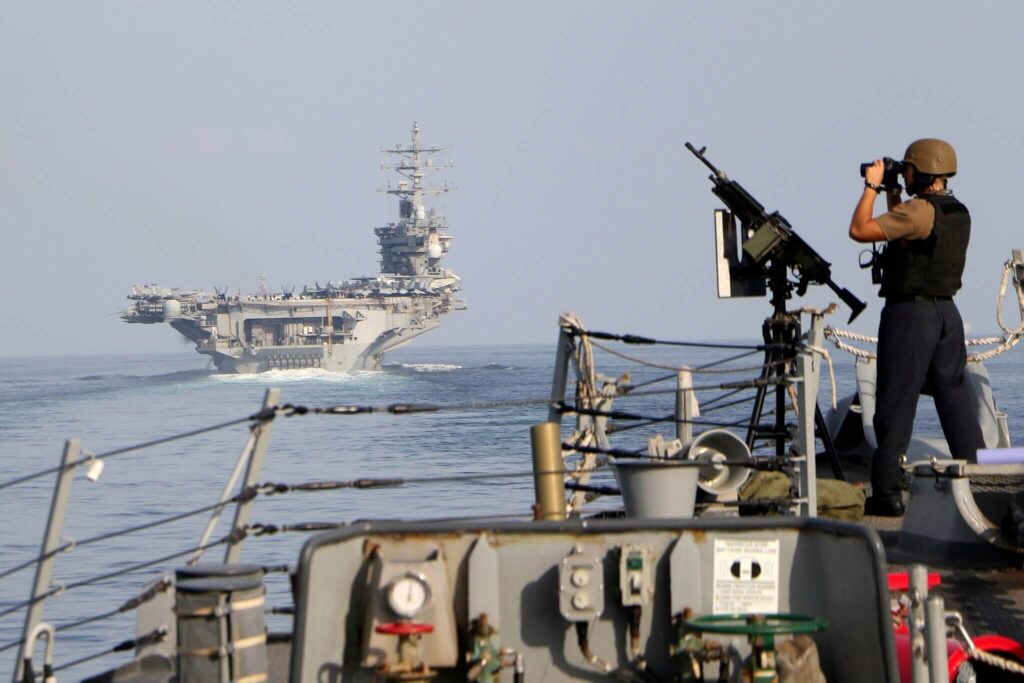
The campaign forced major shipping companies to reroute vessels around the Cape of Good Hope, adding two weeks and substantial cost to Asia–Europe cargo routes and sharply raising global freight insurance premiums. By 2025, the United States had launched Operation ‘Rough Rider’ a sustained military campaign to suppress Houthi launch infrastructure at a cost of almost one billion dollars, a significant portion of which was consumed by Patriot missiles and other high-end defensive systems fired at cheap Houthi drones. Critically, the Houthis retained their capability. Following the ceasefire that ended the June 2025 Iran–Israel Twelve-Day War, they almost immediately announced a resumption of Red Sea attacks.
Limits of the Proxy Model
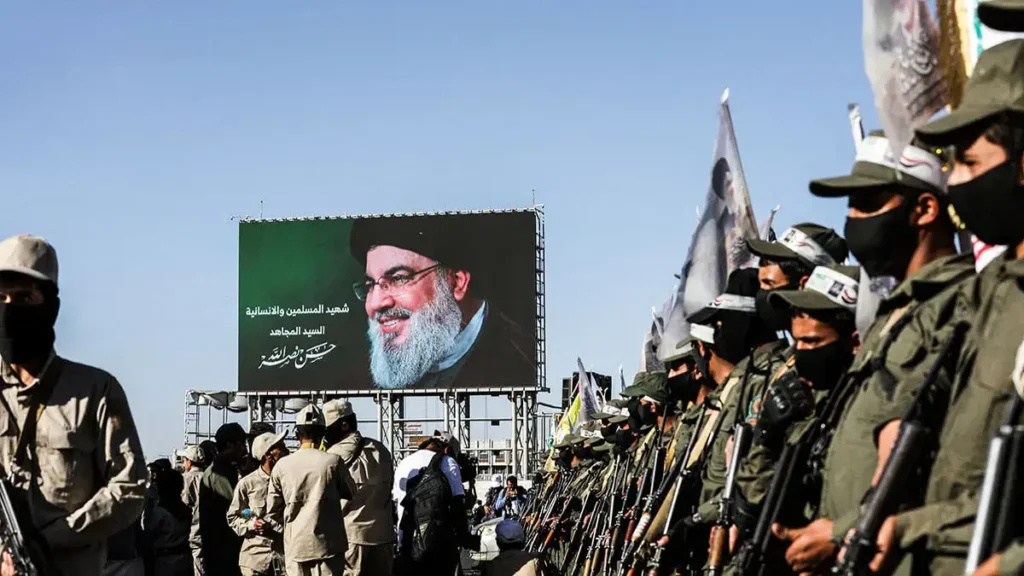
The Axis of Resistance strategy, though highly effective for a decade, ultimately encountered structural limits that Iran’s adversaries deliberately exploited. The decisive blow came through a cascade of setbacks: Israel’s sustained targeting of Hezbollah leadership culminating in the killing of Hassan Nasrallah in September 2024; the collapse of the Assad regime in Syria in December 2024, which severed the primary overland supply route to Hezbollah; and the progressive degradation of Hamas following October 7, 2023.
When the Israeli Air Force commenced Operation ‘Rising Lion’ in June 2025, Iran’s regional proxy and partner militias proved either unable or unwilling to respond meaningfully — a dramatic failure of the deterrent strategy Tehran had spent three decades building. Hezbollah and Hamas too were degraded; the Houthis faced the same missile-intercept challenge as Iran itself over long ranges; Iraqi militias were distracted by upcoming domestic elections. The Axis fell largely silent, whilst Iran’s own drone and missile arsenal took Centre stage in its place.
Cheap Versus Expensive: The New Mathematics of War
The Cost-Exchange Catastrophe
To understand why Iran’s drone strategy qualifies as a genuine military revolution, one must understand its economics. The numbers are not complicated, but they are devastating in their implications. One Shahed-136 drone costs between $20,000 and $50,000 to produce. A Patriot missile interceptor costs approximately $4 million per shot. An SM-3 interceptor costs between $1 – 3 million per round. As a Stimson Centre analyst calculated, for every $1 Iran spent manufacturing a Shahed drone, it costs the UAE approximately $20 to $28 to intercept it. Defenders are not just spending more per engagement — they are liquidating finite, difficult-to-replace inventories against an adversary that can replenish stocks cheaply and rapidly.
The interceptor stockpile problem is not hypothetical. Lockheed Martin produced some 600 Patriot interceptors in 2025, with ambitions to scale to 2,000 per year by 2027. Less than two days into the Iran–Gulf states war of early 2026, US media were already reporting potential shortages of air-defence interceptors among Gulf states. The UAE Ministry of Defence reported that within the first days of the conflict, Iranian forces had launched 174 ballistic missiles, 8 cruise missiles and 689 drones. A total of 941 Iranian drones were detected across the Gulf region; 65 penetrated defences and struck ports, airports, hotels and data centres.
Operation True Promise I and II — 2024: The Opening Salvos
Iran’s direct confrontation with Israel — as opposed to action by proxies — escalated through a clearly defined ladder. On 13–14 April 2024, Iran launched Operation True Promise I, the first-ever direct military strike from Iranian soil against Israel. The salvo comprised approximately 170 Shahed loitering munitions, 30 cruise missiles and 120 ballistic missiles. The strategy was deliberate: exhaust Israeli interceptors with slow, inexpensive drones to clear the path for faster, more destructive ballistic missiles in subsequent waves.
A US–led coalition comprising Israel, the US, United Kingdom, France and Jordan intercepted most incoming weapons, with near-total interception before most could reach Israeli airspace. Six months later, on 1 October 2024, Iran launched Operation True Promise II — firing approximately 200 ballistic missiles including Fattah-1 hypersonic variants — in retaliation for the Israeli assassinations of Hezbollah’s Hassan Nasrallah and Hamas leader Ismail Haniyeh. Israel’s defences again contained most of the damage, the strikes nonetheless demonstrated Tehran’s willingness to escalate progressively.
The Twelve-Day War and Operation Midnight Hammer — June 2025
The strategic confrontation reached its apex in June 2025. The Twelve-Day War began on 13 June when Israeli commandos, reportedly pre-positioned inside Iran, activated drone swarms to simultaneously disable air-defence radar nodes and communication infrastructure, while Israeli jets executed five waves of strikes against approximately 100 targets across Iran. Iran responded with its largest drone and missile barrage. By the end of the confrontation, Iran had fired over 570 ballistic missiles, alongside approximately 1,000 suicide drones in coordinated saturation waves, depleting an estimated third of its total arsenal.
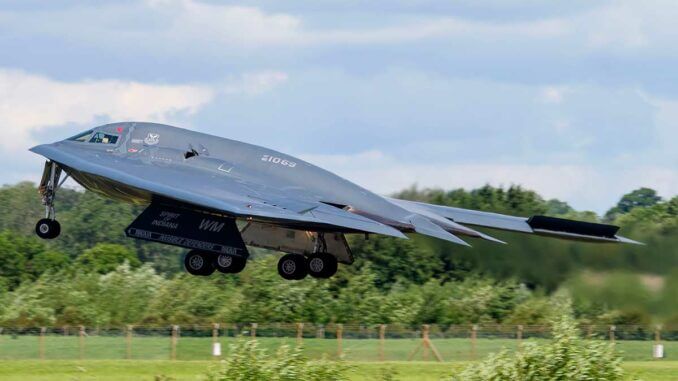
On 21–22 June 2025, the United States executed Operation Midnight Hammer — to strike Iran’s nuclear facilities at Fordow, Natanz and Isfahan, deploying seven B-2 stealth bombers that flew 18-hour missions from Missouri, supported by F-22 and F-35 fighters. In this operation, US deployed over 125 aircraft and approximately 75 precision-guided munitions. There are conflicting reports about the damage to Iranian nuclear facilities and enriched uranium stockpiles.
In the foregoing analysis an issue that stands out is the role of drones as a response to strategic and operational air and precision guided munitions. The irony has been that the US which had long sought to attrit Iran’s drone system through precision strikes, had to develop and deploy its own first low-cost drone system, the Low-Cost Unmanned Combat Attack System (LUCAS), reverse-engineered directly from the Iranian Shahed-136 a tacit acknowledgement if any that Iran had changed the rules of warfare, and that even the world’s most powerful military had to play by them.
Urgency can be noted that the LUCAS programme was sped through the Pentagon’s acquisition pipeline in just eighteen months and deployed in US Central Command by December 2025. President Trump publicly praised the Shahed drone as “cheap, fast, and deadly,” and the Pentagon’s stated ambition was to procure more than 300,000 domestically produced weaponised drones by 2027, aiming to bring unit cost as low as $2,000. The Council on Foreign Relations noted the historic irony: the idea that the United States would copy Iranian military technology “would have seemed fantastical just a few years ago.”
The Drone Attrition Trap: What Intercept Rates Actually Mean
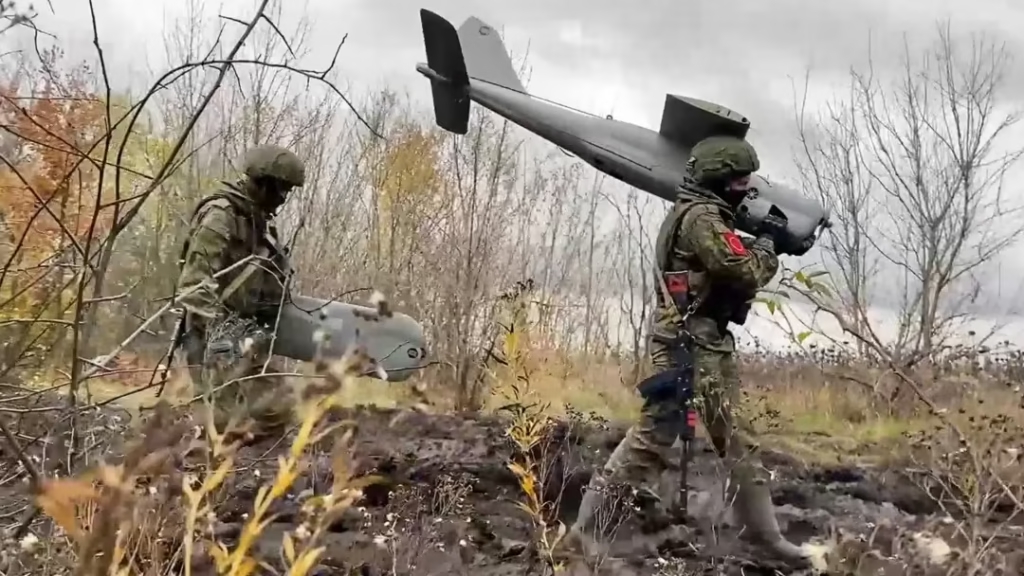
Interception rates of 90–99 percent sound reassuring until one interrogates the underlying mathematics. Ukraine, which has fought Iran-derived Shahed drones longer and more intensively than any other nation, achieves an interception rate of roughly 80 percent of Shahed strikes. That sounds impressive. But at a Russian launch volume of 1,100 drones per week in late 2024, 80 percent interception still means 220 drones reaching their targets. The attrition trap has two jaws: even as high interception rates allow mass damage at scale, nonetheless the cost of the interception makes every ‘successful’ defence an economic defeat.
The CSIS analyst Kateryna Bondar, writing after the Gulf conflict, articulated an possible structural solution: “Drone defence must begin with a cheap, numerous, drone-against-drone layer rather than with a force structure built around million-dollar missiles.” Ukraine produced over 100,000 interceptor drones in 2025, achieving combat success rates exceeding 60 percent, with deliveries approaching 950 anti-Shahed interceptor drones per day by December 2025. This, rather than the Patriot battery, is the model for sustainable drone defence.
West Asian Warning: Lessons for India
The Threat Is Not Hypothetical
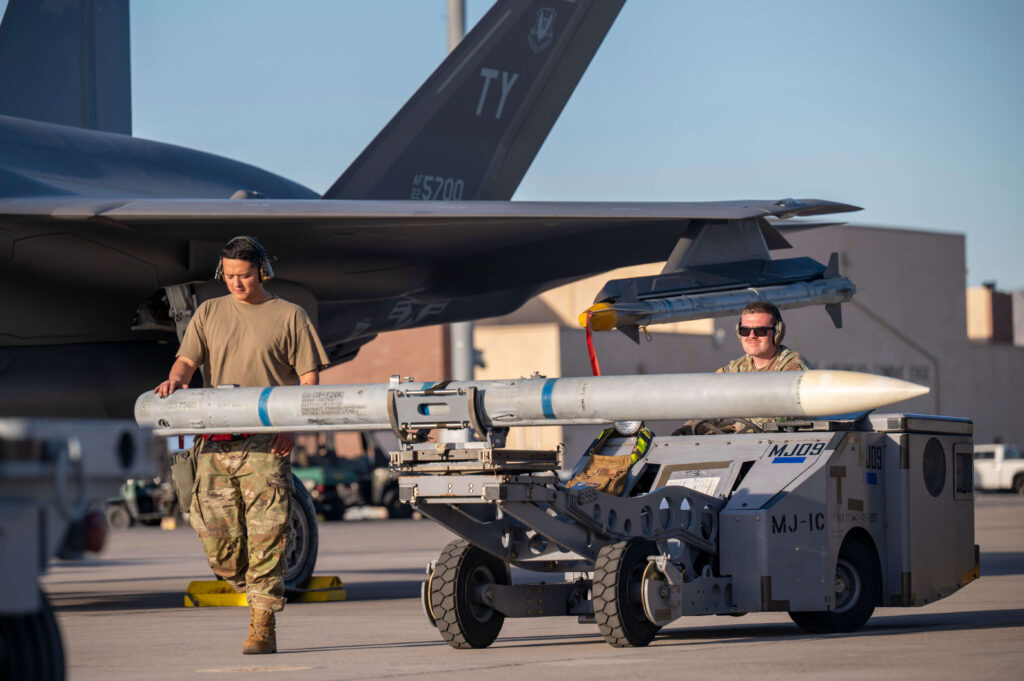
India’s strategic community would be making a serious error of judgment if it viewed Iran’s drone strategy as a Middle Eastern problem. The Shahed-136 has already been deployed around India’s neighbourhood: Russia has fired tens of thousands of Shahed variants against Ukraine; Pakistan has Chinese-origin drones of comparable capability and doctrine; and the Iran proxy model of arming non-state actors with cheap, dual-use UAVs for harassment and coercion is precisely the template being employed against India’s Western border.
The first-ever offensive drone strike on Indian territory took place on the night of 27–28 June 2021, when two improvised drones attacked Jammu Air Force Station, achieving complete surprise. The Indian Air Force was unable to detect or neutralise them. The attack was a direct echo of Iranian proxy drone tactics, inexpensive, commercially assembled, difficult to attribute. Since 2019, drones have been systematically used by Pakistan-associated terrorist networks for transporting narcotics, weapons and explosives across the western border. This is not an emerging threat. It is a present one.
India’s challenge is compounded by the diversity of its drone adversaries. China operates the world’s most advanced civilian and military drone ecosystem. Through the Wing Loong and CH-series it is providing Pakistan with MALE-class drone capability. Given the collusion between the two, India must be prepared for peer-state drone warfare with adversaries who hold significant production and technological leads.
The Cost-Imbalance Lesson: Stop Fighting Cheap with Expensive
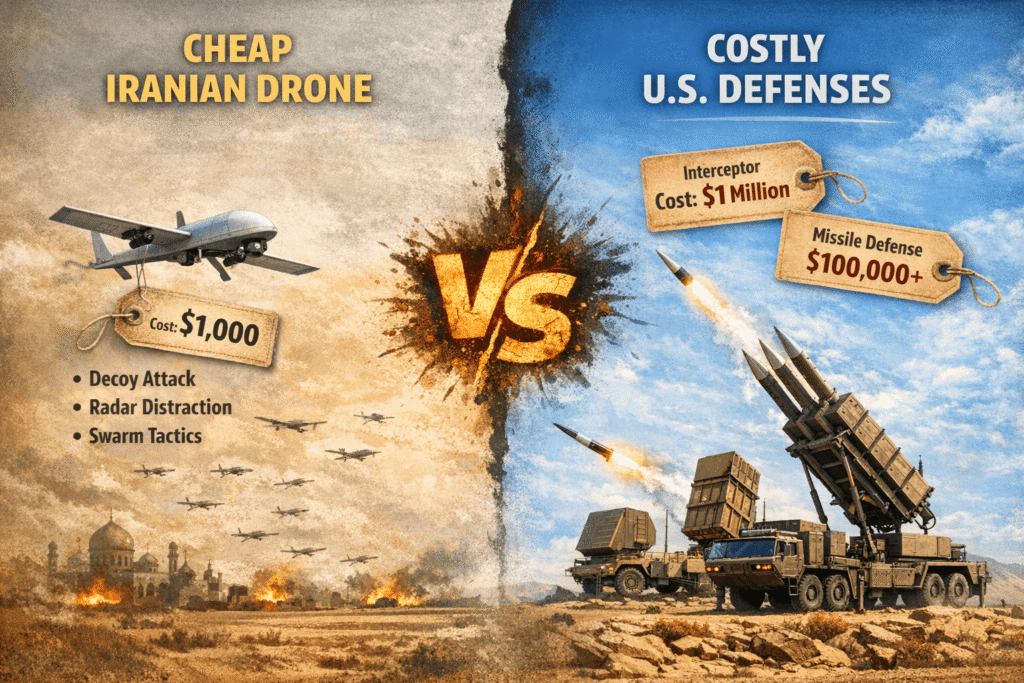
The most critical lesson from the conflict in West Asia is economics as much as military matter. The Indian Army’s Pokhran exercises in early 2026 explicitly drew from Iran’s drone campaigns: troops simulated layered defence protocols against drone swarms, “highlighting the cost-imbalance problem: a single drone might cost mere thousands, yet demand interceptors priced in millions.” Solutions tested included directed-energy weapon prototypes and cost-effective gun-based systems specifically designed to be economically sustainable against low-cost threats.
The ongoing US/Israel/Gulf states confrontation has demonstrated with brutal clarity that no amount of sophisticated defensive technology resolves this problem if the interceptors’ cost orders of magnitude more than the incoming threats. India must invert this equation by investing in defensive systems that are cheap enough to deploy at scale interceptor drones, gun-based counter-UAS systems, directed-energy weapons rather than relying exclusively on high-end surface-to-air missiles that will be exhausted rapidly in any sustained campaign.
The Production-Scale Lesson: Mass Before Sophistication
Iran’s programme relatively succeeded not because it produced the best drones, but because it is producing enough of them to matter strategically. This is the lesson that Ukraine absorbed first, and the US is now absorbing under pressure seen in its decision to reverse-engineer the Shahed-136 into the LUCAS. This is an acknowledgement that mass, affordability and simplicity can outcompete individual platform superiority, even in the age of cutting edge technologies.
India’s drone sector of 550-plus companies and 5,500 certified pilots is encouraging. But current production volumes are nowhere near the scales that sustained peer-adversary conflict would demand. The challenge is not merely a technology gap: delays in procurement and rigid procedures hinder rapid deployment of cutting-edge technologies, equally the present funding model is not conducive to start-ups at the scale of production needed. Building a domestic capacity to produce hundreds of thousands of low-cost drones annually — not merely to assemble foreign designs must become a stated national industrial priority on par with the semiconductor programme.
The Doctrine Lesson: Every Soldier, Every Border
Iran did not give military proxy drones and then write doctrine later. It gave them drones and doctrine together. The Houthis, Hezbollah and Iraqi militias were trained in specific employment concepts: nocturnal launches to degrade visual detection, simultaneous multi-axis attacks to saturate command and control, and deliberate targeting of logistics and energy infrastructure to impose economic costs over time.
India’s institutional response during Operation Sindoor validating AI-assisted targeting; the ‘Ashni’ drone platoon programme across 380 infantry battalions; the Pokhran exercises that formally designated drone warfare as “the emerging aerial battlespace” reflect a military establishment that has read the evidence correctly. But doctrine must be embedded across every level of command, not just demonstrated in exercises. A drone costing $250 to $500 can destroy assets worth crores and kill large numbers of people in crowded environments standard conditions in India. The doctrinal and institutional response must match that scale of threat.
The Supply-Chain Lesson: Sanction-Proofing the Programme
The Shahed drone’s most strategically unsettling characteristic is that it was built under sanctions. Iran assembled it from components it was nominally prohibited from acquiring. India must draw a diametrically opposite lesson: build a drone programme that is so deeply indigenized, with so complete a domestic supply chain, that it cannot be disrupted by political pressure, sanctions threats or export controls from any supplier state.
This means indigenizing not merely airframes but the full technology stack: flight controllers, AI inference chips, inertial navigation units, electro-optical sensors, communication modules and battery cells. The Make in India and PLI scheme frameworks are the correct instruments, but they must deliver genuine technological sovereignty in the drone domain, not final assembly of imported sub-components.
India’s Way Forward: Five Strategic Imperatives
1. Build a Drone-Against-Drone Defence Layer
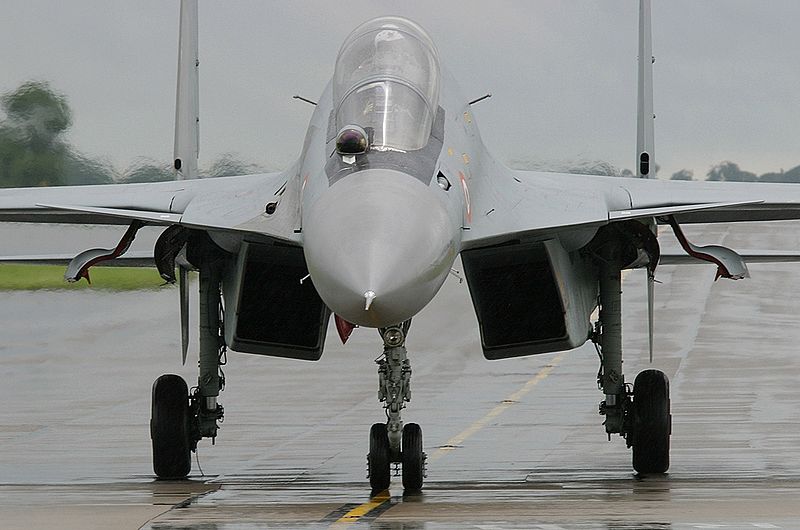
Ukraine’s experience producing 100,000 interceptor drones in 2025 at a combat success rate exceeding 60 percent has established the template for cost-sustainable drone defence. India must invest urgently in a dedicated low-cost interceptor drone programme, produced at high volume domestically, designed specifically to destroy incoming Shahed-class threats before they exhaust expensive surface-to-air missile stocks. This layer should be complemented by directed-energy prototypes and radar-guided gun systems tested at Pokhran, integrated into a unified counter-UAS command architecture.
2. Develop Attritable Offensive Swarm Capability
Iran’s strategic breakthrough was not the drone itself but the concept of precise mass deploying large numbers of coordinated platforms to achieve effects that no single expensive system could replicate. India must develop its own attritable, AI-guided swarm capability. The CATS Warrior programme and DRDO’s stealth drone concepts are the right directional initiatives. But India also needs a cheap, producible one-way attack loitering munition the equivalent of the Nagastra-1 and SkyStriker, but at Shahed-136 production economics and ranges. The critical word is mass: India needs systems it can afford to lose and afford to replace.
3. Harden Strategic Assets Against Drone Swarm Attack
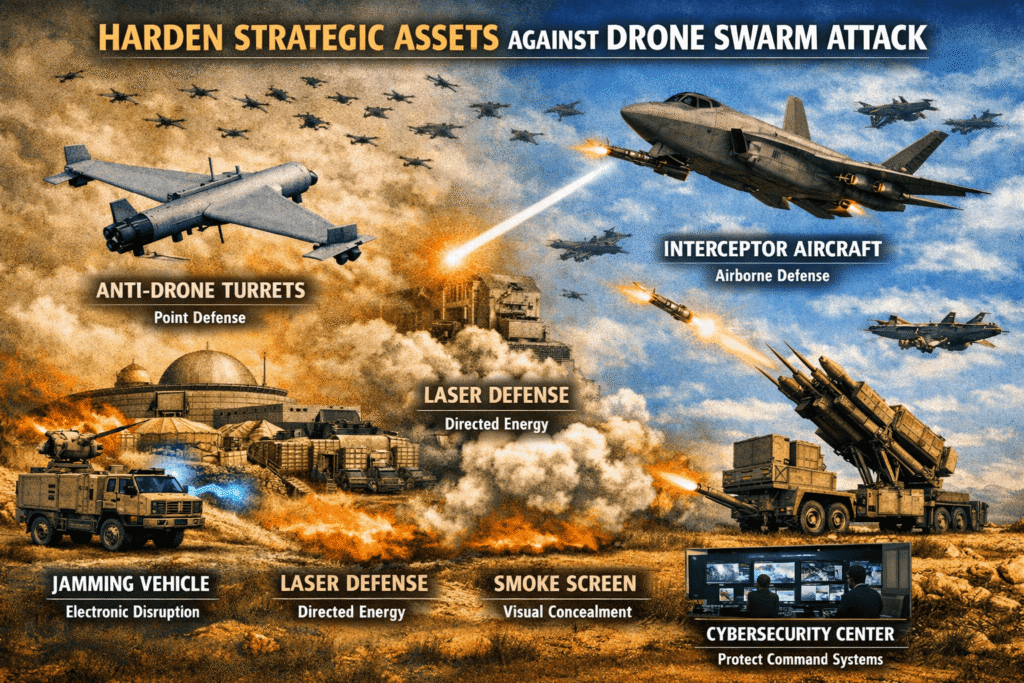
Iran’s proxy strikes on Saudi Aramco’s Abqaiq facility destroyed 5 percent of global oil output in a single attack. India’s strategic assets power plants, oil refineries, port facilities, military airbases, railway networks are similarly concentrated, similarly valuable and similarly vulnerable to a sustained cheap-drone campaign. India needs a national critical infrastructure drone-hardening programme that identifies the twenty most strategically significant targets and builds customized, layered counter-UAS protection for each, combining early detection, electronic jamming, interceptor drones and kinetic systems.
4. Regulate the Grey Zone: Countering Proxy Drone Use
Iran’s most dangerous lesson for India is not military but structural: the use of cheap drones as a grey-zone instrument of coercion, distributed through non-state proxies to maintain deniability. Pakistan’s use of drones to smuggle weapons and explosives into Punjab and Jammu since 2019 is precisely this model in operation. India’s Drone Rules 2021, while a starting point, have significant gaps in addressing drone terrorism. A comprehensive counter-proxy drone framework must integrate border surveillance, intelligence-led interdiction, legal attribution protocols and hardened civil infrastructure into a unified national drone security architecture, rather than treating these as separate silos.
5. Engage Diplomatically to Prevent Drone Proliferation to Adversaries
Iran has become the world’s pre-eminent exporter of cheap drone technology to non-state armed groups. The concern for India is not that Iran itself threatens it directly, but this model of arming proxy actors with low-cost, plausibly deniable aerial strike capability could be replicated by China or Pakistan supplying advanced drone technology to groups operating against India. India must elevate drone non-proliferation as a distinct strand of its bilateral diplomacy, particularly in its engagements with the Gulf states, ASEAN partners and the Quad, pressing for international export-control frameworks specifically covering dual-use drone components and loitering-munition design kits.
Conclusion: The Moped Is Not Going Away
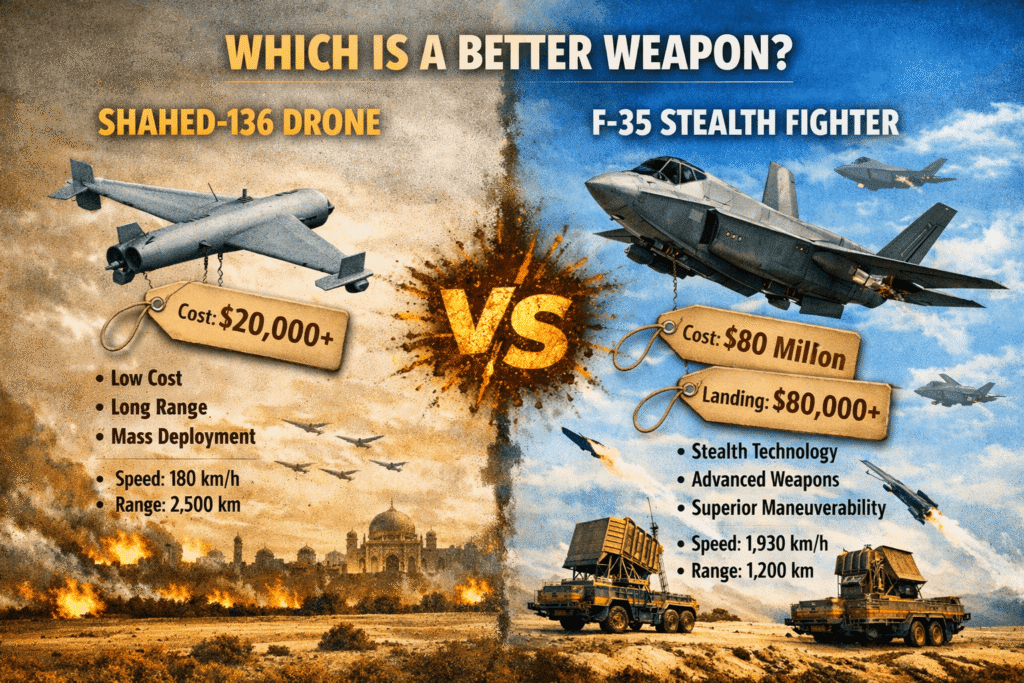
There is a satisfying symmetry in the fact that the US the nation that invented stealth aircraft, laser-guided bombs and network-centric warfare spent three years being forced to adapt to a propeller-driven drone that buzzes like a lawnmower. It is not, of course, that the Shahed-136 is a better weapon than an F-35. It is that the Shahed-136 is a different kind of weapon, designed to win a different kind of contest the contest of economics, of attrition, of strategic endurance over time. A contest, in which cheap wins.
Iran built a drone strategy from the constraints of sanctions and scarcity, and in doing so created one of the most strategically disruptive military programmes of the twenty-first century. It has armed proxies across West Asia who used them to disrupt global shipping, displace a hundred thousand civilians, kill American soldiers, and bring the region to the edge of a regional war. When confronted directly, Iran’s drones exhausted the interceptor stockpiles of the Gulf states and forced the United States to copy the Iranian design for its own arsenal.
For India, this story contains no comfortable distance. The threat modalities Iran demonstrated, grey-zone proxy drone harassment, cheap saturation attacks against strategic infrastructure, weaponising supply-chain access are precisely those that India faces along its western and northern borders today. The Jammu Air Force Station attack of 2021 was a warning. Operation Sindoor in 2025 was a demonstration that India can respond effectively when prepared. The gap between those two data points between surprise vulnerability and demonstrated competence is the gap India must close comprehensively, urgently and at scale.
The moped is not going away. It is only getting smarter.

