

The introduction of the Central Armed Police Forces CAPF (General Administration) Bill, 2026, marks a critical juncture in the evolution of India’s internal security architecture.
Having served for about four decades in the Central Reserve Police Force, I view such legislation not merely as an administrative reform, but as a measure with far-reaching consequences for the morale, career progression, and institutional dignity of nearly 13000 cadre officers and one million CAPF personnel.
At the outset, the stated objective of the Bill—to bring uniformity and coherence in administrative frameworks across the CAPFs—is both understandable and, in principle, desirable. A streamlined system can indeed enhance efficiency and coordination between forces such as the CRPF & CISF- for internal Security and among BSF, ITBP, and SSB as the Border guarding Forces provided separate departments of Internal Security and the Border management are created under a separate ministry of Internal Security & Border Management with experienced officers from the respective forces.
In its absence and in absence of any Tribunal for CAPFs, the grievances of these forces remain unaddressed as men and officers are compelled to knock the door of courts which takes decades to decide the issue and pronounce judgement. And even when judgement is given, the same is not implemented within the given timeframe. The main reason of this apathy towards these forces appears to be the overcommitment of Ministry of Home Affairs and absence of dedicated departments under it.
However, the core concern lies elsewhere.
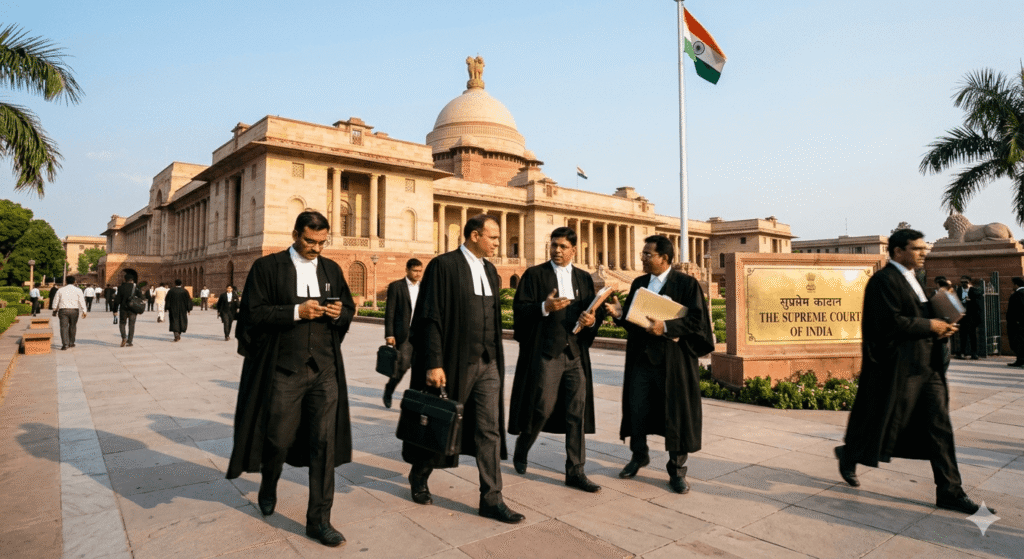
The Hon’ble Supreme Court, in its landmark 2025 judgment, had clearly directed a progressive reduction in IPS deputation in the Senior Administrative grade (IG’s rank) within the CAPFs and called for a time-bound cadre review and amend respective recruitment rules to address long-standing stagnation among cadre officers. It also recognized them as Organized Group A Service since 1986 for all purposes. This judgment was not merely a legal pronouncement—it was an acknowledgment of systemic inequities that have persisted for decades.
Unfortunately, the present Bill appears to move in the opposite direction.
By institutionalizing substantial deputation at senior levels and reserving key leadership positions primarily for officers from outside the cadre, the Bill risks undermining the very spirit of the Supreme Court’s directions. For officers who have dedicated their lives to the force, often serving in the most hostile and inhospitable conditions, the denial of fair promotional avenues is not just a service matter, it is a question of dignity and justice.
The consequences of such stagnation are already visible. Rising instances of stress, premature retirement, and attrition within the forces are indicators of deeper structural issues. Morale in a uniformed force cannot be legislated into existence; it must be nurtured through fairness, recognition, and equal opportunity.

Equally concerning is the overriding provision within the Bill that gives it precedence over existing laws and judicial pronouncements. This raises fundamental questions about the sanctity of judicial decisions and the delicate balance between legislature and judiciary in a constitutional democracy.
This is not to suggest that reform is unnecessary. On the contrary, the CAPFs urgently require reforms—particularly in human resource management, welfare measures, mental health support, and operational autonomy. But such reforms must be inclusive, consultative, and aligned with the principles of natural justice.
In my considered view, a legislation of this magnitude must not be rushed. It should be referred to the Parliamentary Standing Committee on Home affairs for wider deliberation, with active participation from serving and retired CAPF officers who understand the ground realities.
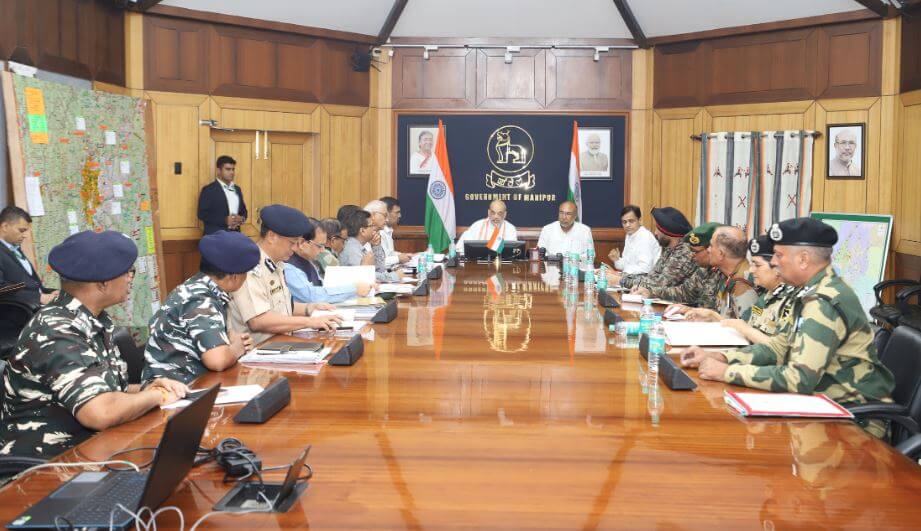
The CAPFs are the backbone of India’s internal security, guarding borders, combating insurgency, and ensuring the conduct of free and fair elections. Their commitment is beyond question. What they seek, and rightfully deserve, is a system that recognizes their service with fairness and provides them with a just and equitable career path.
The CAPF Bill, 2026, must therefore be revisited—not as a matter of political debate, but as a question of national interest, institutional integrity, and justice for those who serve the nation in uniform. In case the government feels government, deputation of outside cadre officers is necessary for better coordination and intelligence, a few ex-cadre posts of DIGs, IGs & even ADGs/ SDGs/ DGs Coordination & intelligence can be created. Equal number of CAPF officers should also be sent to states on deputation against 2.5% ex cadre posts.