

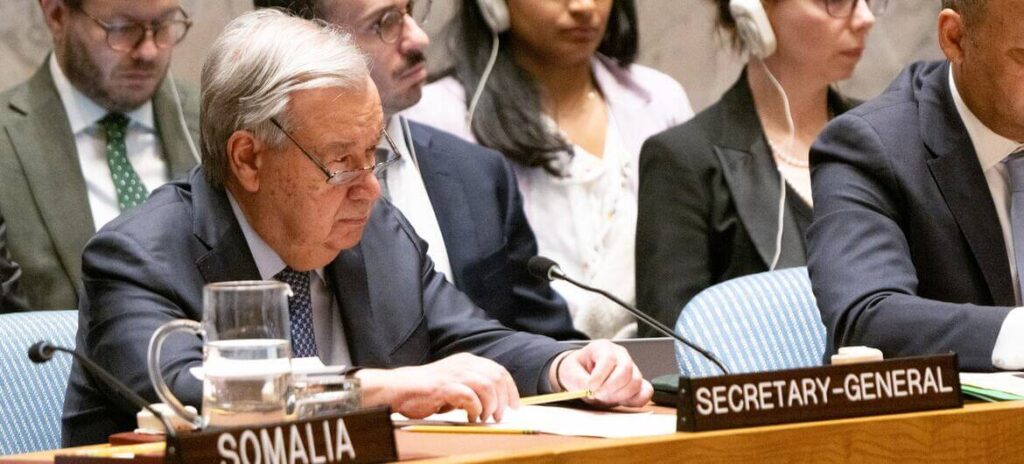
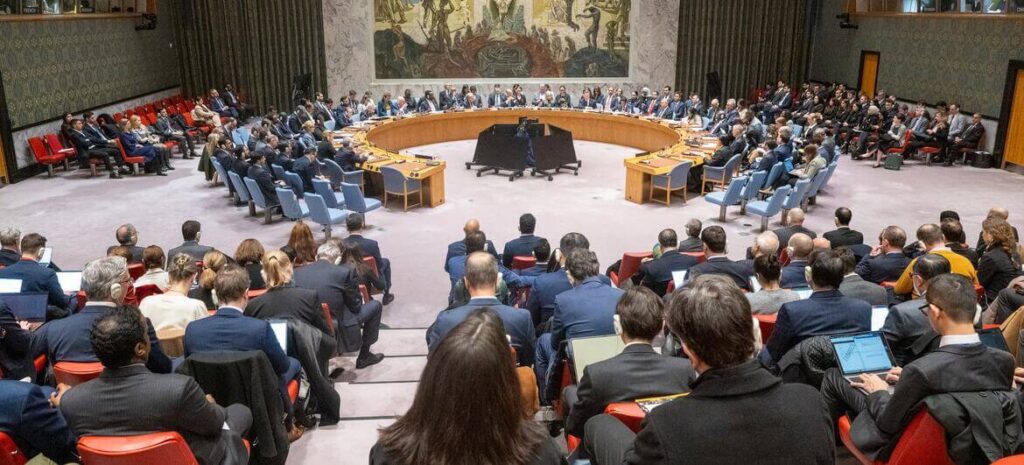
On 28 February 2026, the United Nations Security Council convened in emergency session as joint US-Israeli airstrikes killed Iran’s Supreme Leader Ayatollah Ali Khamenei and Iranian missiles rained down on six Arab states. The Council passed no binding resolution. It ordered no ceasefire. It produced, as it has produced with dispiriting regularity throughout the Gaza crisis, precisely nothing of substance.
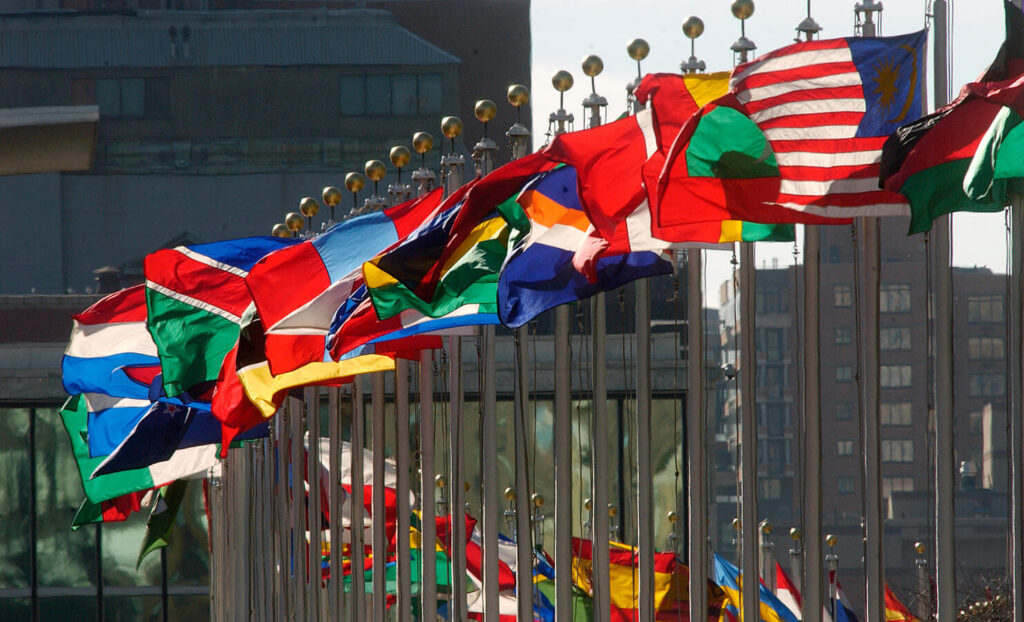
For those who grew up believing the olive-branch globe on that blue flag represented a genuine covenant between nations – a solemn promise to “save succeeding generations from the scourge of war” – this is not merely a geopolitical failure. It is the destruction of a faith.
A World on Fire
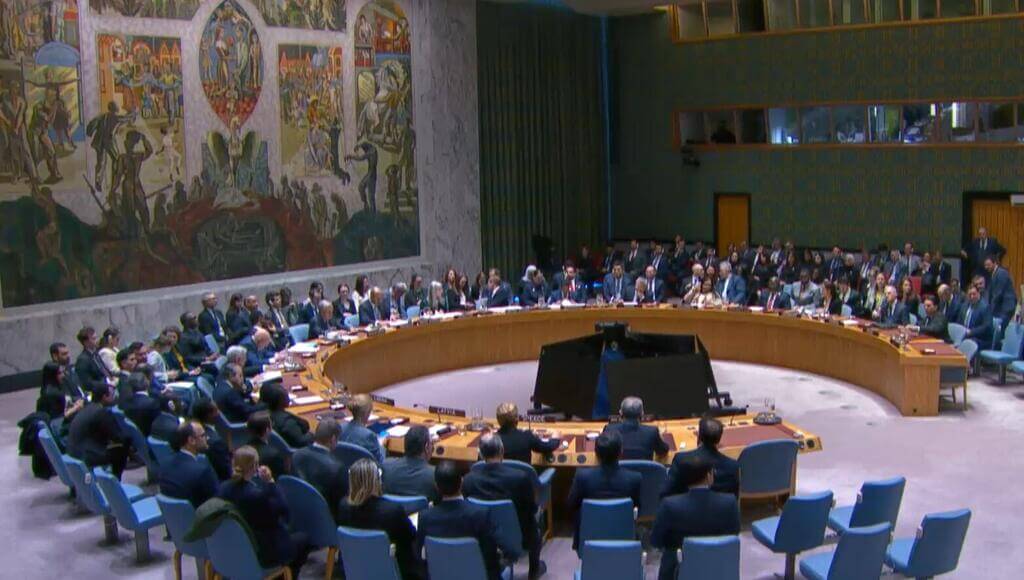
To understand the depth of the UN’s failure, one must first reckon with the scale of the catastrophe.
On 28 February 2026, the United States and Israel launched a massive joint military operation against Iran – designated “Roaring Lion” by Israel and “Operation Epic Fury” by the US. The strikes targeted Iran’s nuclear infrastructure, its ballistic missile programmes, its naval facilities, and its senior political and military leadership. Supreme Leader Khamenei, 86, who had governed the Islamic Republic for over three decades, was killed. Iranian Defence Minister Amir Nasirzadeh and IRGC commander Mohammed Pakpour were also reported dead. In southern Iran, an Israeli airstrike struck a school in Minab, killing more than sixty students.
Iran’s retaliation was immediate. Missile and drone strikes targeted Israel and every neighbouring country hosting American military facilities – Bahrain, Jordan, Kuwait, Qatar, Saudi Arabia, and the UAE. The Persian Gulf became, overnight, a theatre of open war. UN Secretary-General Antonio Guterres condemned the escalation as a violation of the Charter’s prohibition on the use of force and lamented that diplomacy had been “squandered.” Condemnation, however, is not protection. A Secretary-General watching from New York cannot stop a single missile.
This catastrophe did not arrive unannounced. It was preceded by over two years of the grinding, systematic destruction of Gaza – a humanitarian catastrophe that unfolded in full international view, in real time, while the UN proved structurally incapable of stopping one bomb from falling on one child.
Gaza – The Long Prelude
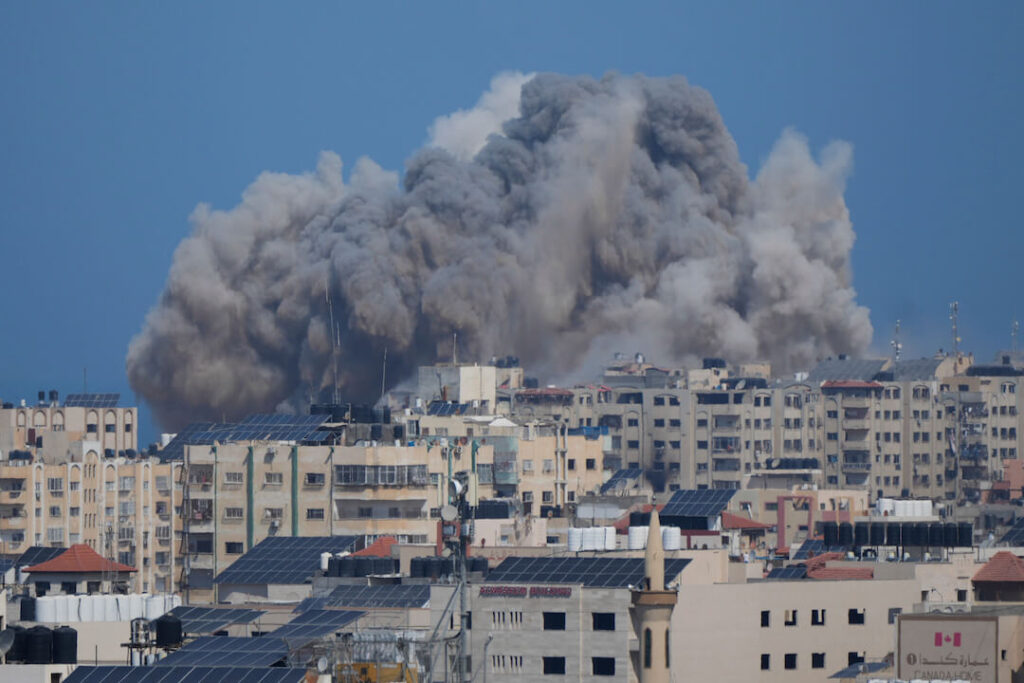
From 7 October 2023, when Hamas launched its attack on Israel – killing approximately 1,200 Israelis and taking 250 hostages – Israel launched a military campaign in Gaza that, by February 2026, had resulted in over 75,000 Palestinian deaths. At least 73,188 have been confirmed as civilians, among them tens of thousands of children. A Lancet Global Health study suggested total deaths, direct and indirect, could exceed 95,000. The Gaza Health Ministry’s confirmed figure of over 72,063 killed represents approximately 3.4 per cent of Gaza’s entire pre-war population. Nearly one in thirty people. Gone.
In September 2025, a UN commission of inquiry issued what may stand as the most damning formal indictment in the institution’s eight-decade history – Israel had committed genocide in the Gaza Strip. Not merely war crimes. Not merely crimes against humanity – the gravest charge in international law, a systematic attempt to destroy a people. UNRWA, the UN refugee agency founded in 1949, reported that over 360 of its own workers had been killed and over 300 UN installations destroyed, almost entirely as a result of Israeli military operations. The institution was not merely failing to protect civilians. Its own personnel were being killed.
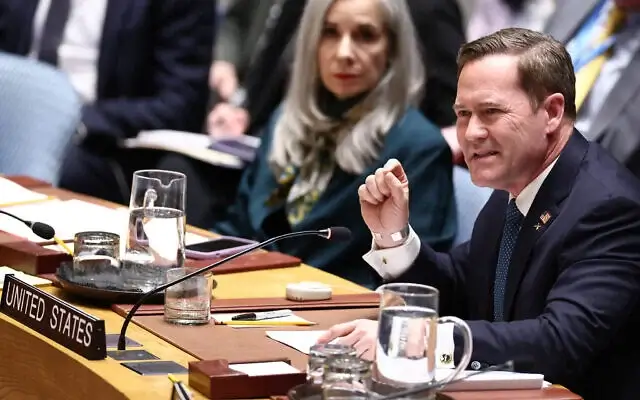
The Security Council did nothing. The United States exercised its veto six times to block ceasefire resolutions. On 18 September 2025, the Council gathered for its 10,000th meeting and promptly failed to adopt a resolution calling for a ceasefire in Gaza. Save the Children called it “an abdication of legal and moral responsibility to children.” The UN General Assembly president warned that the US veto was undermining the body’s credibility. These are not the words of external critics. This is the institution speaking about itself.
The Architecture of Failure
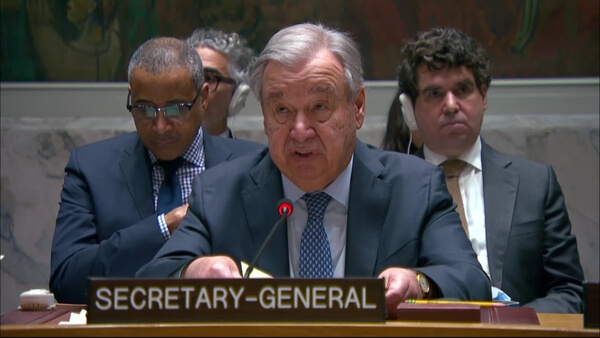
To understand why the UN fails so reliably – and why this failure was, in structural terms, close to inevitable – one must understand the institution’s fundamental design flaw.
The UN Charter, signed in 1945, vested extraordinary and permanent power in five nations – the United States, the United Kingdom, France, the Soviet Union, and China. These five permanent members of the Security Council can each block any substantive resolution, unilaterally, at any moment. One country, one veto, complete paralysis. As scholars have observed – when the P5 agree, the Security Council possesses almost unlimited authority; when they disagree, the Council is generally paralysed. That tension is not a bug in the system. It is the system.
The logic of the veto was born in the exhausted euphoria of nations emerging from the most destructive war in history. The UN’s architects believed that without buy-in from the great powers, any collective security system would be hollow. Seventy-eight years later, that calculation has produced a profoundly dysfunctional result – the great powers are not disinterested policemen. They are parties to conflicts, alliances, and domestic political pressures – with every incentive to use the veto on behalf of their clients and themselves.
Consider what this means in concrete terms. When the United States provides $3.8 billion in annual military aid to Israel, it does not act as a neutral arbiter. It acts as a partisan. And when that partisan possesses an unlimited veto, the Security Council becomes not merely impotent but complicit – a procedural fig leaf behind which impunity shelters.
The veto problem is compounded by a financial one. Under the Trump administration’s second term, the US cut or froze funding to the extent that the overall UN budget was reduced by up to 30 per cent compared to 2023 levels. The World Food Programme, which relied on Washington for roughly half its $9 billion annual budget, watched American funding evaporate. UNICEF, UNHCR, UNRWA – agency after agency began mass layoffs. An institution that can be financially crippled by the political mood of a single member state is not independent. It is a hostage.
Reform Proposals – Necessary but Insufficient
Two major reform efforts have emerged in recent years – the Pact for the Future, adopted at the 2024 UN Summit of the Future, and the UN80 Initiative launched in March 2025. Both acknowledge the crisis. Neither addresses its structural causes.
The Pact for the Future committed to treating Security Council reform as “an essential element of efforts to strengthen global governance” – without specifying what that reform would look like. No mention of veto restriction. No named permanent seats. No binding timeline. The UN80 Initiative, meanwhile, is fundamentally an exercise in administrative efficiency – trimming the Secretariat budget by 20 per cent, consolidating overlapping agencies, and streamlining humanitarian operations. It is necessary triage. It is not a cure.
Neither proposal touches what must be identified as the core dysfunction – the veto’s function as an enabling mechanism for the impunity of permanent members and their clients.
What Must Be Done
The failures described are real, structural, and deep – but they are not irreversible. The following reforms represent structural imperatives, not incremental suggestions.
Reform the Veto. The P5 veto must be radically restricted through a binding General Assembly resolution, limiting its use in cases of genocide and mass atrocity crimes, gross violations of international humanitarian law, and situations where the vetoing state is itself a direct party to the conflict. France and Mexico’s voluntary “Code of Conduct,” endorsed by over 100 member states, is a foundation worth building on – but a voluntary code collapses the moment national interest provides sufficient pressure. The next step must be binding obligation under international law.
Activate the Uniting for Peace Mechanism. When the Security Council is paralysed by veto, the General Assembly must act. General Assembly Resolution 377A – the Uniting for Peace Resolution of 1950 – already provides the legal mechanism for emergency special sessions recommending collective action. Member states, particularly the African Union bloc, the Arab League, and major democracies including India, should commit to automatically requesting an emergency General Assembly session within 72 hours of any Security Council veto on a matter involving credible evidence of mass atrocity. The mechanism exists. The political will to use it does not. That is a political failure, not a legal one.
Expand the Security Council. A Council dominated by five Second World War victors, in a world of 193 member states, is a democratic absurdity. India – the world’s most populous democracy, with one of the longest records of peacekeeping contribution – has a compelling, long-overdue claim to a permanent seat. Brazil, Germany, Japan, Nigeria, and South Africa represent their regions and populations with similar distinction.
Achieve Financial Independence. No single member state should be permitted to provide more than ten per cent of the total UN budget. The financial crisis of 2025, in which US funding cuts affected an estimated thirty to sixty million vulnerable people, must never be allowed to recur.
Enforce International Law. The International Court of Justice ruled in 2024 that Israel’s occupation of Palestinian territories was unlawful. Its orders were largely disregarded. The General Assembly should establish a standing Compliance Monitoring Committee with authority to recommend automatic graduated sanctions against states that refuse to comply with ICJ orders. A court without consequence is a ceremony.
Conclusion
A world order in which powerful states can bomb sovereign countries, veto ceasefire resolutions, defund international agencies, kill heads of state, and strike schoolchildren – without facing any binding accountability – is not a world order at all. The League of Arab States’ representative said it plainly at the emergency Security Council meeting of 28 February 2026 – this was “a failure of the multilateral international system.”
The United Nations remains the only institution with the scale, legitimacy, and convening power to address the world’s greatest challenges. There is no credible alternative. The question is not whether to preserve it. It is whether humanity has the collective courage to transform it into what it was always meant to be.
The olive branches on the UN flag have not withered. But they are waiting – waiting for those who once believed in them to summon the courage to make them real.

