

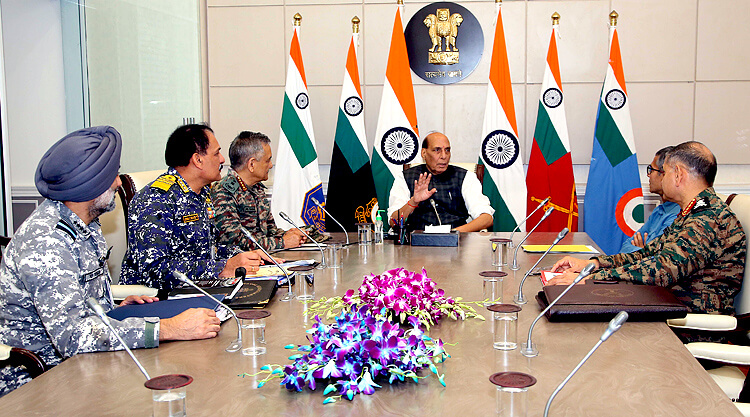
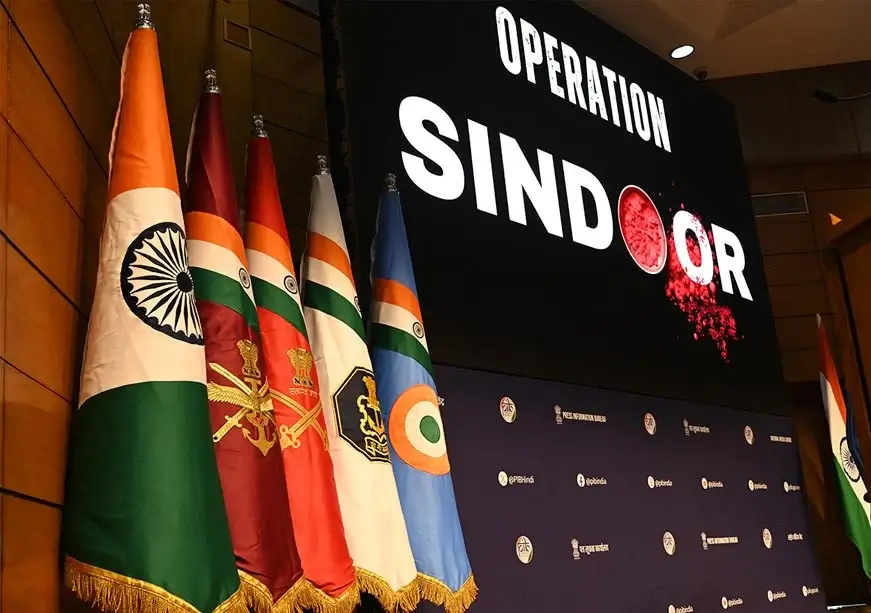
The four-day military exchange of May 2025, comprising India’s Operation Sindoor and Pakistan’s counter-operation, was the most intense conventional engagement between two nuclear-armed states since the end of the Cold War. The ceasefire that halted it settled none of the disputes that produced it. This paper argues that the principal danger in the India–Pakistan relationship has shifted from deliberate war to inadvertent escalation. Three developments drive that shift: a permanent upward reset of the conventional escalation ladder, the compression of decision time by drones and dual-capable standoff weapons, and a Pakistani military stretched across three simultaneous fronts. We examine the most plausible triggers for renewed conflict, the likely shape of that conflict in a non-contact operational environment, the strategic weight of Pakistan’s internal insurgencies in Baluchistan and Khyber Pakhtunkhwa, and the cascading effects of the 2025 Middle East war on South Asia. We then set out three escalation pathways—pretext, desperation, and miscalculation—and weigh their relative probability. The analysis concludes that the next crisis will begin where 2025 ended, will move faster, and will be harder to terminate, with a less dependable international off-ramp. We close with five recommendations for India’s crisis-management doctrine.
What May 2025 changed, and what it left untouched
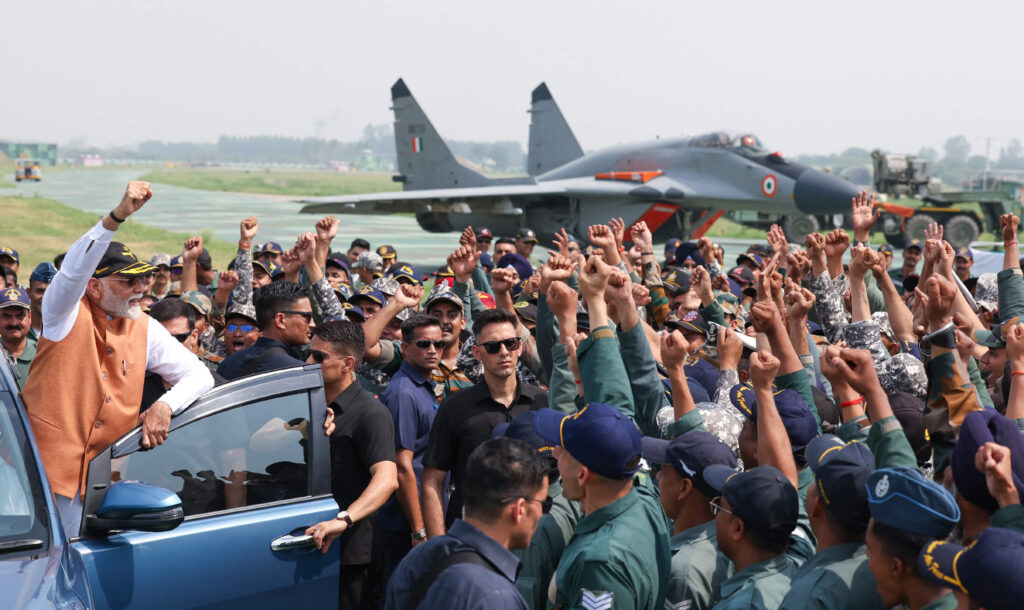
The May 2025 crisis rewrote several working assumptions of the India–Pakistan rivalry. For the first time, both states reached deep into each other’s conventional military infrastructure with standoff missiles and drones, striking airbases, radar installations, and logistics nodes that both had treated as red lines for decades. India’s campaign, Operation Sindoor, followed the 22 April 2025 attack at Pahalgam in which twenty-six civilians were killed; Pakistan answered with strikes of its own before a ceasefire took hold on 10 May. The episode produced the first large-scale use of armed drones in a India–Pakistan setting, and it confirmed the first combat employment of the BrahMos cruise missile against Pakistani targets.
What the ceasefire left in place matters more than what it stopped. The core political contradiction remains untouched. India wants cross-border terrorist infrastructure dismantled; Pakistan wants international mediation on Kashmir. Neither government can concede the other’s demand and survive at home. The Indus Waters Treaty, which held through three wars and the Kargil conflict, remains suspended. That is an escalatory signal of the first order, and one with no obvious route for reversion. Both capitals have also sunk domestic political capital into the crisis narrative, which raises the price of any visible step toward de-escalation.
A Permanently Higher Escalation Ladder
The single most consequential lesson of 2025 is a recalibration of what counts as a tolerable military act. Both militaries now hold direct evidence that deep conventional strikes on military infrastructure do not, by themselves, trigger a nuclear response. That knowledge cuts two ways. It reassures, because it confirms that a threshold exists. It alarms, because the threshold has now been located by trial, and each side will assume it can be pushed a little further next time.
Triggers for the Next Conflict:
Mass-Casualty Terrorism: The Pahalgam Template
The likeliest near-term trigger is another mass-casualty terrorist attack, in Jammu and Kashmir or in the Indian hinterland, attributed to Pakistan-based groups. Pahalgam set the template: a high-casualty strike on civilians generates overwhelming domestic pressure, which converts into military retaliation within weeks. India’s political threshold for that retaliation has dropped, and it is unlikely to rise again. A kinetic response is now the baseline public expectation. New Delhi faces three competing demands at once. It must respond in proportion without losing control of the escalation, satisfy a charged domestic audience, and deny Pakistan the use of its nuclear umbrella as cover for continued proxy activity. The post-Pahalgam approach, built on limited counter-terrorism strikes, clear signalling of escalation dominance, and early diplomatic messaging, will be the opening move. Pakistan appears to have studied that approach and can be expected to be adapting it.
Indus Waters Treaty: A Slow-Burn Existential Trigger
Suspending the treaty is a double-edged instrument. As coercion, it signals that India will use every lever short of war. As a structural flashpoint, it lays a tripwire. If India actually curtails flows during the summer cropping season, Pakistan’s calculus moves from political grievance to existential threat. Islamabad has repeatedly named treaty violation as grounds for war, and unlike most coercive rhetoric this warning carries structural logic. Restricting the water that underpins Pakistani agriculture and hydropower is not a marginal irritant. It sits close to the kind of economic pressure that Pakistani doctrine has historically tied to its nuclear thresholds. Operational use of the treaty therefore belongs in the trigger column, not merely the diplomatic one.
Drones and Standoff Weapons
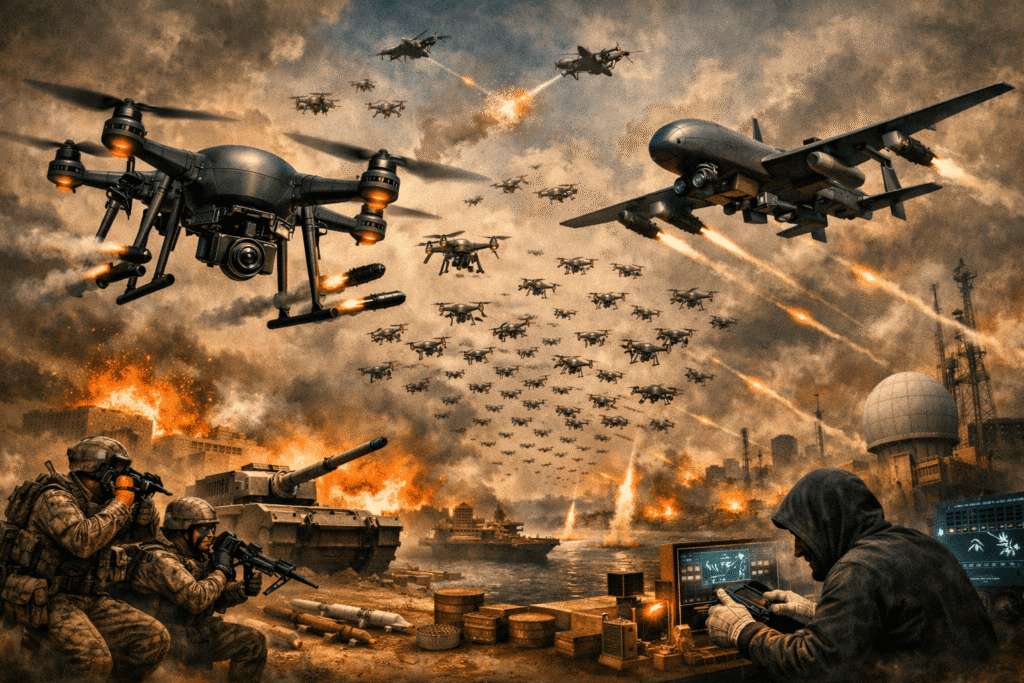
The spread of drones across regular militaries, paramilitaries, and non-state networks creates a standing risk of accidental escalation. A drone drifting across the Line of Control, a misread radar signal, or a garbled intercept order can now produce a real exchange within minutes, faster than political crisis management can convene. This is not hypothetical; it nearly happened more than once during the 2025 ceasefire period. Dual-capable systems sharpen the problem. When Pakistani radar detects an inbound BrahMos, it cannot tell whether the warhead is conventional or nuclear. That ambiguity shrinks Islamabad’s decision window and could invite a premature, worst-case response.
Pakistan’s Internal Instability
A Pakistan under severe internal stress, economically fragile, fighting simultaneous insurgencies, locked in near-war on the Afghan border, and managing a civil–military rift, may treat a managed external crisis as a useful domestic tool. The logic is old. A confrontation with India unites the polity, elevates the army’s institutional standing, and, if calibrated, ends in a ceasefire that Rawalpindi can sell as a victory. May 2025 showed the playbook works. The hazard for India is that this logic requires Pakistan to initiate or tolerate a provocation that draws an Indian response, which is then recast as aggression demanding defence. India cannot always tell a state-sponsored attack from the work of a rogue actor, and Rawalpindi can trade on that uncertainty.
Kashmir’s Internal Dynamics
Conditions in Kashmir have improved, but they are not normal. Alienation following the 2019 revocation of Article 370, a heavy security presence, and constrained civil liberties together leave a reservoir of grievance that outside actors can tap. A fresh outbreak of violence in the Valley, even without direct Pakistani sponsorship, would drop India into the same kinetic-response calculus as Pahalgam, but with weaker evidence of Pakistani involvement. That weakens the international legitimacy of Indian retaliation while generating the same domestic pressure to act.
The Shape of a Future Conflict
The Operational Baseline: Multi-Domain, Non-Contact War
A future conventional conflict will be fought mainly in the standoff, aerial, drone, and electromagnetic domains. Large ground incursions across the Line of Control or the international border remain unlikely under the nuclear overhang. Outcomes will be decided, or stalemated, by precision-strike campaigns, counter-air operations, drone attrition, and information warfare. India’s modernisation, spanning BrahMos, the Rafale, the S-400, indigenous loitering munitions, and an emerging hypersonic capability, gives it a structural edge in standoff strike. Pakistan has offset this with layered, largely Chinese-sourced air defence, medium-altitude long-endurance drones, and a growing cruise-missile inventory. The 2025 fighting showed that both sides can penetrate the other’s defences, which yields mutual vulnerability rather than clean dominance for either.
The “No Space for Limited War” Problem
Indian doctrine has steadily refined the idea of calibrated conventional operations below the nuclear threshold: precision standoff strikes that secure political aims without provoking nuclear use. The 2025 conflict appeared to vindicate that idea. The optimism deserves scrutiny. The speed, ambiguity, and retaliatory pressure of non-contact warfare can carry a crisis past its intended limits faster than leaders can absorb events. Pakistan has drawn the same lesson in its own post-conflict review, and its answer is likely to be a hair-trigger conventional posture that compresses India’s decision time still further. The belief that limited war stays controllable under a nuclear overhang is itself becoming a source of instability, precisely because both sides are now willing to test it.
Nuclear Escalation: Low Probability, High Consequence
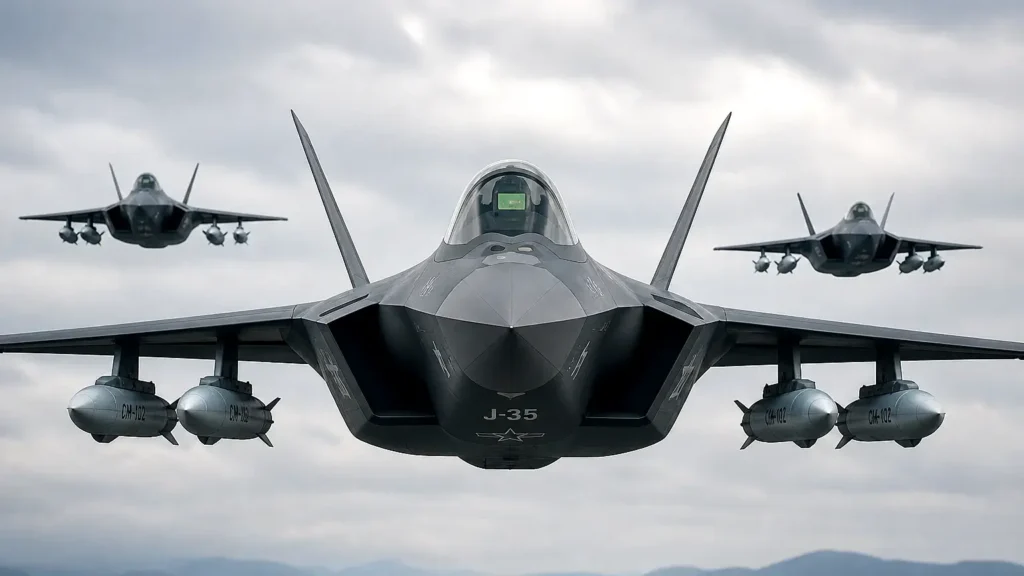
Deliberate nuclear use remains unlikely. Both states retain institutional memory of the consequences and maintain command arrangements designed to prevent unauthorised launch. The risk of inadvertent nuclear escalation, however, has measurably risen since 2025, for three structural reasons:
- Payload ambiguity. Conventional use of BrahMos and other dual-capable systems could leave Pakistan unable to resolve warhead type in real time.
- Command-and-control stress. Pakistan’s command system is under pressure from the internal insurgencies, the civil–military divide, and plausible decapitation scenarios. A stressed system is likelier to act prematurely or without authorisation.
- Normalised escalation. Both sides have shown that striking deep into the other’s military infrastructure draws no nuclear answer. That tempts planners to go further next time, increasingly narrowing the space between conventional and nuclear thresholds.
The Information Domain
The 2025 conflict was also fought, with unusual intensity, over the narrative, with the post-conflict information battle arguably as consequential as the strikes. Pakistan largely succeeded in framing the episode internationally as an aggression-and-retaliation cycle, muddying India’s evidentiary case on Pahalgam. India failed to build an international consensus that the Pakistani state bore responsibility for the attack that started the war. For the next crisis, Indian information operations must run ahead of kinetic action, not behind it. Pre-positioning the evidentiary case, especially for audiences in Washington, Brussels, the Gulf, and the ASEAN capitals, will matter as much as the operational plan. Pakistan has shown it can exploit narrative ambiguity at speed; India needs matching capacity in attribution and messaging.
Pakistan’s Internal Insurgencies as Strategic Variables
The Scale of Internal Attrition
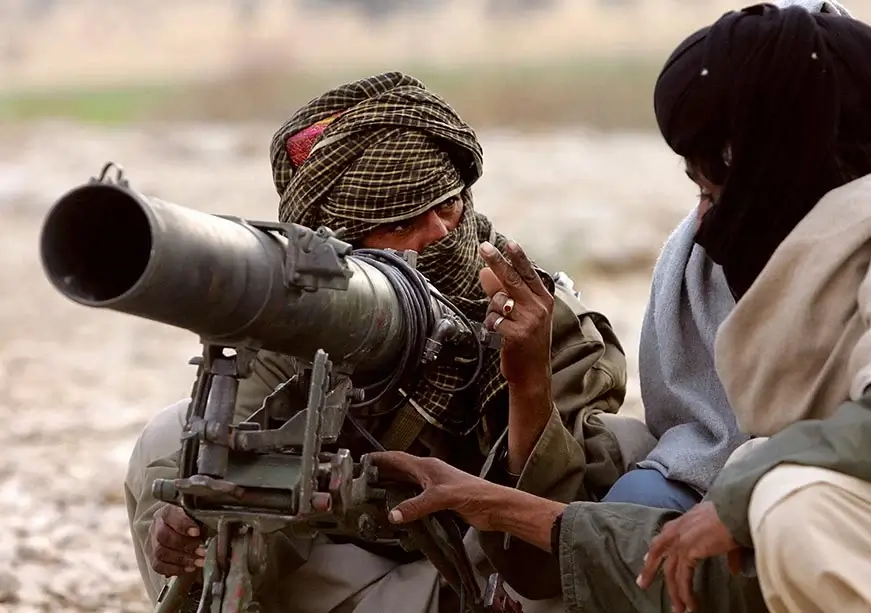
Pakistan is now fighting a genuine multi-front internal war, qualitatively unlike anything since the immediate post-9/11 years. By independent tallies, 2025 was the deadliest year in over a decade, with more than 3,400 people killed in militant violence and counter-operations, close to double the 2024 toll. The Baluchistan Liberation Army sustained a high tempo of attacks, among them the audacious March 2025 hijacking of the Jaffar Express, in which fighters seized a passenger train in the Bolan Pass and held hundreds of passengers hostage. The Tehreek-e-Taliban Pakistan ran a parallel campaign against the security forces, and the violence stayed overwhelmingly concentrated in Khyber Pakhtunkhwa and Baluchistan.
This is not peripheral turbulence. Baluchistan and Khyber Pakhtunkhwa hold the bulk of Pakistan’s mineral wealth, its China–Pakistan Economic Corridor (CPEC) infrastructure, and its western strategic depth. The insurgencies are draining army manpower, intelligence bandwidth, and political capital at exactly the moment Rawalpindi needs coherence to manage India.
The Proxy Narrative and Its Escalatory Logic
Pakistan’s military establishment has increasingly framed the BLA and TTP insurgencies as Indian-sponsored, formally labelling Baluchistan’s militant groups “Fitna al-Hindustan” in government communications. The construct is rhetorically powerful but analytically dangerous. It serves a domestic purpose by attributing internal failure to an external enemy. It also builds a mechanism by which a major insurgent attack on Pakistani military infrastructure can be recast as an act of Indian aggression, handing Rawalpindi a casus belli for action across the Line of Control.
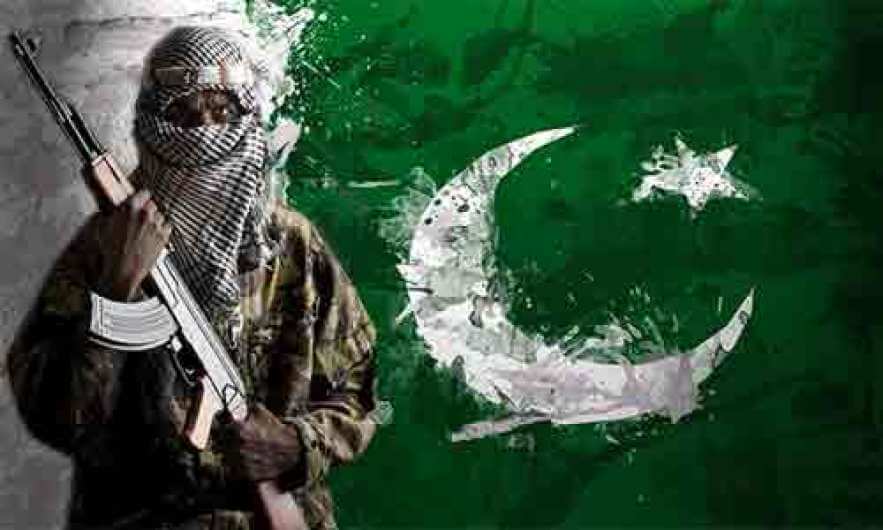
India needs to treat this as a trigger pathway, and not merely as propaganda. The evidentiary threshold for Pakistani action under this framing sits inside the Pakistan military’s own political calculus; it is not subject to objective external validation. A catastrophic TTP or BLA strike on a Pakistani military installation, a nuclear-adjacent facility, or a piece of critical infrastructure could be declared an Indian operation, generating the political conditions for retaliation regardless of any actual Indian involvement.
The Afghanistan Dimension
The collapse of the Afghanistan–Pakistan talks in November 2025, after several mediation rounds in Istanbul, has effectively opened a third strategic front for Rawalpindi. Pakistan is now in active border clashes with the Taliban administration, which it accuses of sheltering the TTP. India’s parallel rapprochement with Kabul from October 2025, signalled by Minister Jaishankar’s outreach and humanitarian transfers, has angered Islamabad, which has begun to frame Indian–Afghan engagement as part of a strategic-encirclement project.
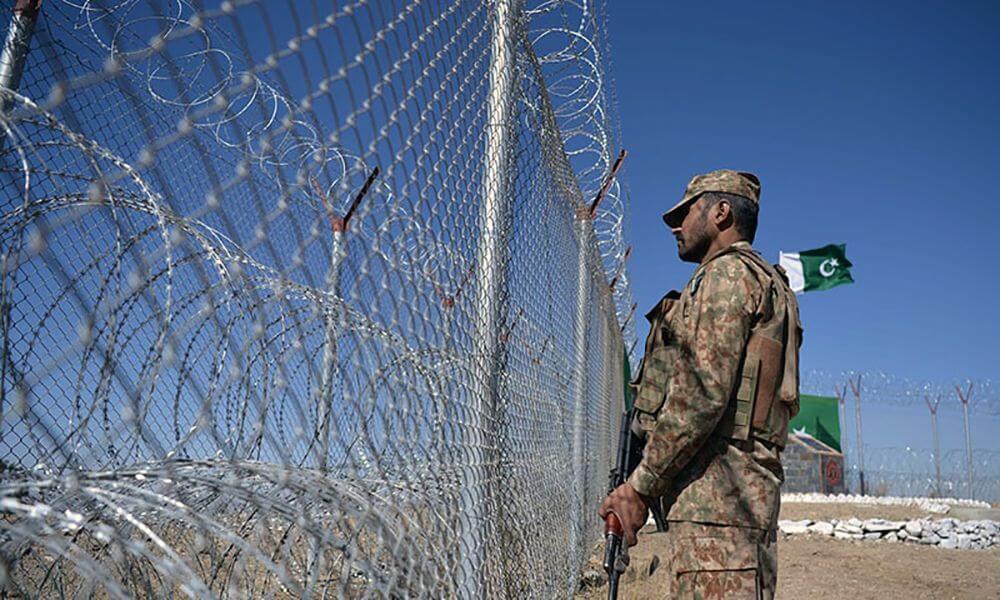
For India, this opens real opportunity. Deeper ties with a Taliban government in active confrontation with Pakistan fracture Rawalpindi’s western security calculus and add pressure to an already overstretched military. It also risks triggering exactly the proxy-accusation spiral described above, accelerating a Pakistani conviction that India is waging comprehensive hybrid warfare and must be answered conventionally.
Military Overstretch and the Window of Opportunity
Pakistan’s simultaneous commitments, including eastern-front vigilance, counter-insurgency in Baluchistan and Khyber Pakhtunkhwa, near-war border operations against Afghanistan, and urban counter-terrorism in Karachi and Punjab, amount to a structural overextension of its military capacity. Indian planners must read this as a genuine, if temporary, window of relative conventional advantage.
The analysis cuts both ways. A Pakistan under severe military stress is also a more unpredictable adversary. A cornered Rawalpindi, its conventional options narrowing and its domestic legitimacy in question, may reach for asymmetric responses, nuclear signalling, or accelerated proxy activity precisely because its conventional room has shrunk. In a nuclear-armed state, overstretch is a source of instability, not a clean opening for Indian dominance.
Middle East Conflict: Cascading Effects on South Asia
Pakistan’s Repositioning and the US Alignment Risk
The Israel–Iran war and the subsequent US strikes on Iranian nuclear sites in June 2025 reshaped the regional environment, and Pakistan has used it to improve its standing in Washington. Its role as an intermediary between Iran and the United States, its studied neutrality during the Iran war, and Prime Minister Sharif’s cultivation of the Trump administration, including a Nobel Peace Prize nomination after the May 2025 ceasefire mediation, have produced a qualitative warming of US–Pakistan relations at India’s expense.
India’s refusal to publicly acknowledge a US mediation role in the May 2025 ceasefire, set against the US–India tariff friction of August 2025, means that in any future crisis Washington’s role as an impartial crisis-terminator can no longer be assumed. The United States is closer to Pakistan than at any point since the early 2000s. That is a structural change in the very crisis-management architecture New Delhi has historically relied upon.
The Baluchistan–Iran Spillover

The destabilisation of Iran, through Israeli and US strikes, domestic unrest, and refugee flows, is opening ungoverned space along the Iran–Pakistan frontier in Sistan-Baluchistan and Baluchistan. Cross-border Baloch ethnic networks have long operated across that boundary with strategic fluidity. A weakened Iranian state with diminished border control expands the operational room for the BLA and affiliated groups, while threatening CPEC infrastructure in the Gwadar corridor.
For India, this presents a nuanced opportunity. The same instability that threatens CPEC, Beijing’s flagship investment in Pakistan, may push China either to increase its direct security presence in Baluchistan, which would be an alarming development, or to scale back its strategic bet on Pakistan as a reliable corridor partner, which would shift Beijing’s calculus in India’s favour. New Delhi needs the analytical capacity to tell these two Chinese responses apart.
Gulf Overextension and Strategic Diversification
Pakistan’s September 2025 Strategic Mutual Defence Agreement with Saudi Arabia, under which each state treats aggression against the other as aggression against both, marks a significant expansion of its Middle East security commitments. Pakistan did not respond militarily to Iranian strikes on Saudi soil, but the agreement creates a potential call on Pakistani military assets that could further dilute the resources available for the India front.
The paradox for Pakistan is that its Middle East repositioning simultaneously strengthens its financial lifeline, through Gulf remittances and Saudi support, and stretches its strategic commitments beyond sustainable limits. This is the classic small-state overextension problem. For India, it reinforces the intelligence priority of tracking Pakistani readiness indicators, which may be more degraded than they publicly appear.
India’s Own Gulf Exposure
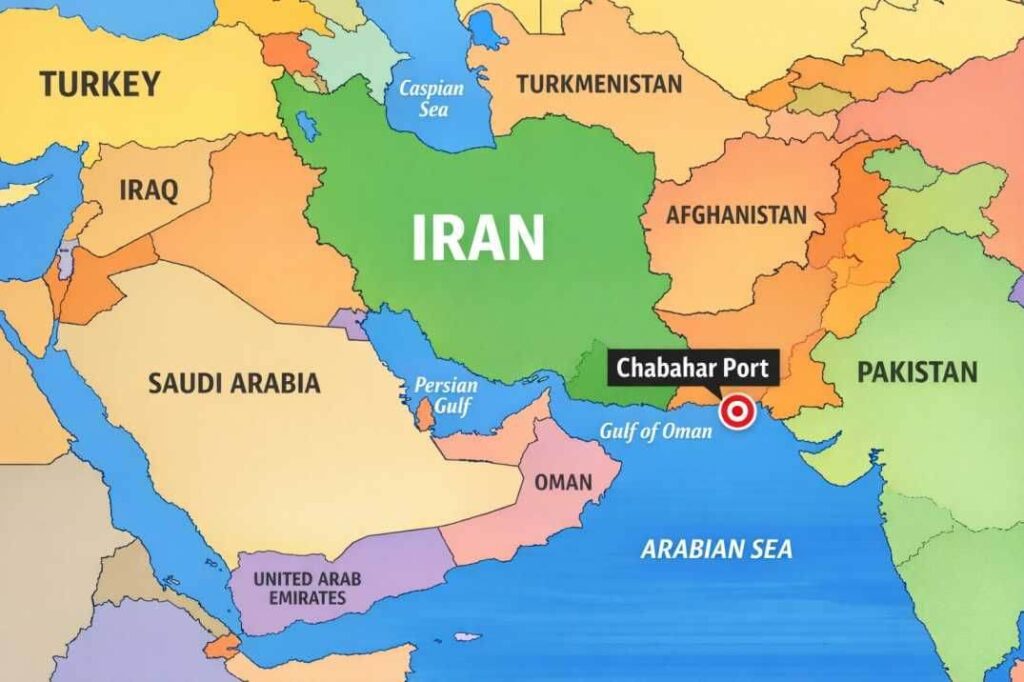
India’s Middle East exposure is itself a constraint on its freedom of action in South Asia. Roughly nine million Indians live and work in the Gulf. India’s energy imports, its Chabahar investment, and its International North–South Transport Corridor connectivity are all under stress from the Iran war. Disruption at the Strait of Hormuz triggers energy-price shocks that an economy still managing structural adjustment and tariff pressure cannot absorb without political cost.
This opens a window that Pakistani planners may identify. A crisis with India launched at the peak of Middle East instability, when New Delhi’s diplomatic bandwidth is absorbed in Gulf crisis management, energy security, and diaspora protection, reduces India’s capacity for sustained conventional operations. Timing is a strategic variable, and India’s adversaries can be expected to study it carefully.
The China Factor: Stabiliser or Exploiter?
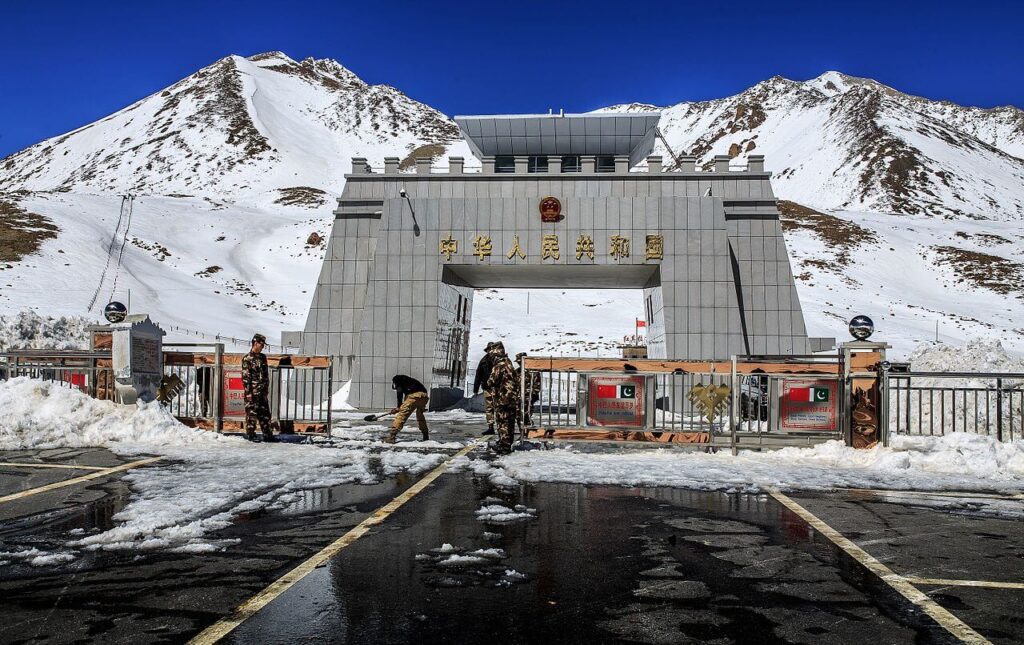
China’s role in any future India–Pakistan conflict is the most consequential and least predictable variable. Beijing has strong incentives to prevent a war that would wreck CPEC infrastructure, destabilise its principal South Asian partner, and risk nuclear use near Chinese interests. Those incentives make China a potential stabiliser. Beijing also has incentives to permit, or quietly encourage, a limited India–Pakistan crisis that pins Indian attention on the western front while it maintains pressure on the Line of Actual Control.
The worst case for India is a synchronised, dual-front campaign: a Pakistan-initiated or Pakistan-tolerated crisis in Kashmir timed with renewed Chinese assertiveness on the LAC. After the 2020 Galwan clash and given the all-weather China–Pakistan partnership, Indian must treat the two-front scenario not as a remote contingency but as a live planning assumption.
Three Escalation Pathways
The Pretext Pathway
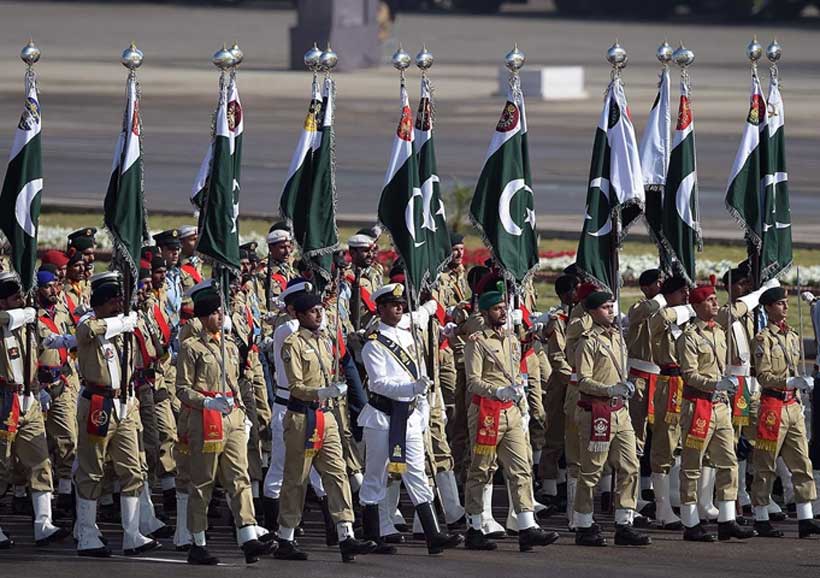
A major BLA or TTP attack on Pakistani military infrastructure, especially one close to nuclear-related facilities or a headquarters, is declared an Indian-sponsored operation. Pakistan in retaliation opens cross-LoC strikes, presenting them as defensive retaliation for Indian-sponsored terrorism. India is forced into an unexpected initiator-and-victim dynamic that complicates both its response options and its international messaging. This pathway is more probable than conventional analysis allows, particularly as Pakistan’s internal security deteriorates through 2026.
The Desperation Pathway

Facing a trifecta of internal insurgency, economic distress from Middle East energy shocks, and declining institutional authority, Pakistan’s military establishment calculates that a controlled external crisis with India is survivable and domestically stabilising. It tolerates or enables a provocation in Kashmir, a terrorist attack, an infiltration, or an LoC violation, banking on the ceasefire-and-international-credit mechanism it ran successfully in May 2025. Its strongest card is its improved standing in Washington; India’s refusal to acknowledge US mediation in 2025 leaves it with less ceasefire-credit leverage than Pakistan now holds. Result an asymmetric incentive structure that Pakistan will attempt to exploit.
The Miscalculation Pathway

India, reading Pakistan’s overstretch across three fronts correctly, calibrates a sharper post-attack response than in May 2025: deeper strikes, harder targets, longer duration. Pakistan’s military, operating under severe internal stress with command-and-control strained by the multi-front burden, responds unpredictably. A dual-use system is misidentified, a nuclear signal is misread, or an autonomous drone intercept triggers a reflexive escalation that neither political leadership intended. The fog of war, already thick in 2025, grows denser in a faster-moving 2026 or 2027 crisis.
Strategic Assessment Matrix
Table I summarises the assessment across the principal strategic factors, with a relative risk rating for each.
Table: Post-2025 India–Pakistan Strategic Risk Assessment
| Strategic Factor | Assessment | Rating |
| Probability of a conflict trigger | Structural grievances unresolved; ceasefire fragile; IWT still suspended | High |
| Escalation speed (relative to 2025) | The next crisis begins where 2025 ended; both sides have raised their thresholds | Critical |
| Ground-war risk | Nuclear deterrence holds at this level; unlikely, though not impossible | Low |
| Drone and missile exchange | Now entrenched as the accepted baseline of action reaction cycle | High |
| Inadvertent nuclear risk | Dual-use ambiguity, C2 stress plus compressed timelines make this structurally feasible | High |
| Deliberate nuclear use | Strong incentives for restraint persist, but the underlying deterrence logic is eroding | Very Low |
| US mediation effectiveness | Declining; India is resistant, and Washington’s tilt toward Islamabad complicates it | Moderate |
| China’s role | A potential stabiliser, but equally capable of exploiting the LoC and LAC at once | Moderate |
| Pakistan’s internal cohesion | A three-front burden (India, Afghanistan, Baluchistan) is degrading it badly | High |
| Middle East spillover | Energy shocks, Pakistani repositioning, and Baluchistan destabilisation | Moderate |
| India’s strategic bandwidth | Constrained by Gulf diaspora exposure, Iran ties, and US tariff friction | Moderate |
Implications for Indian Strategic Planning
Revise the Crisis-Management Doctrine
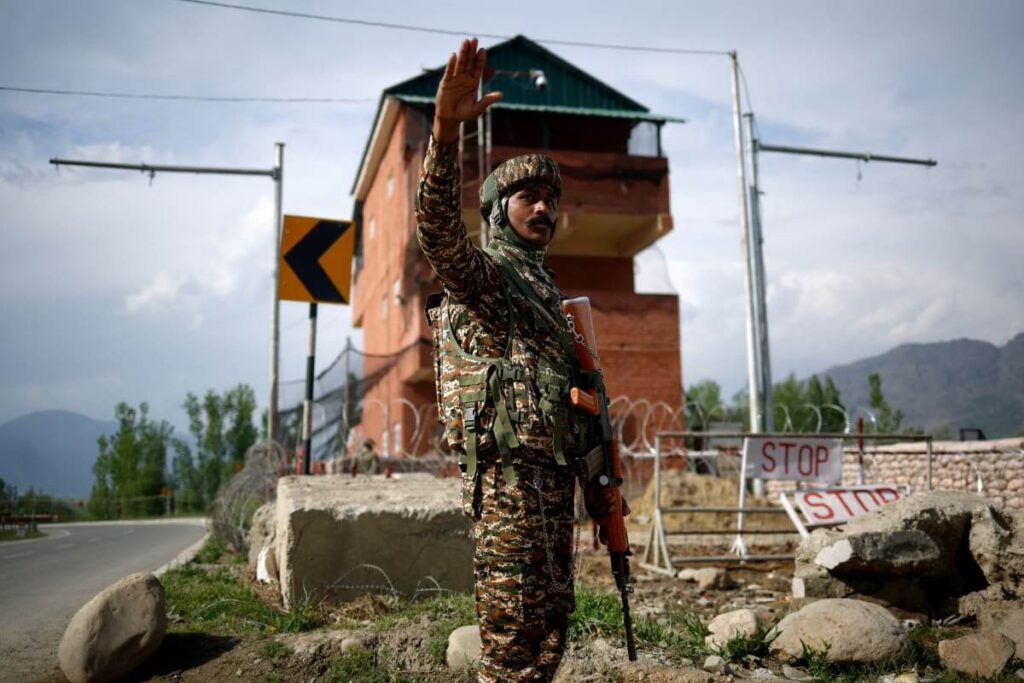
India’s post-2025 crisis-management assumptions need updating for the changed escalation environment. The assumption that the United States can serve as a reliable, impartial ceasefire broker no longer holds. India should invest in its own de-escalation architecture, including back-channels to Pakistan’s military establishment and pre-arranged communication protocols at senior military levels, that do not depend on third-party mediation.
Build Attribution Capacity and Pre-Position It
India’s most significant vulnerability in the post-2025 environment is narrative attribution. The failure to establish international consensus on Pakistani state responsibility for Pahalgam before the military response meant India fought the diplomatic and the kinetic battles at the same time. For future crises, the intelligence community, the Ministry of External Affairs, and the strategic-communications apparatus must be oriented toward pre-positioning the evidentiary case for retaliation before the military phase begins.
Treat the Indus Waters Treaty as a Managed Instrument, Not a Blunt Lever
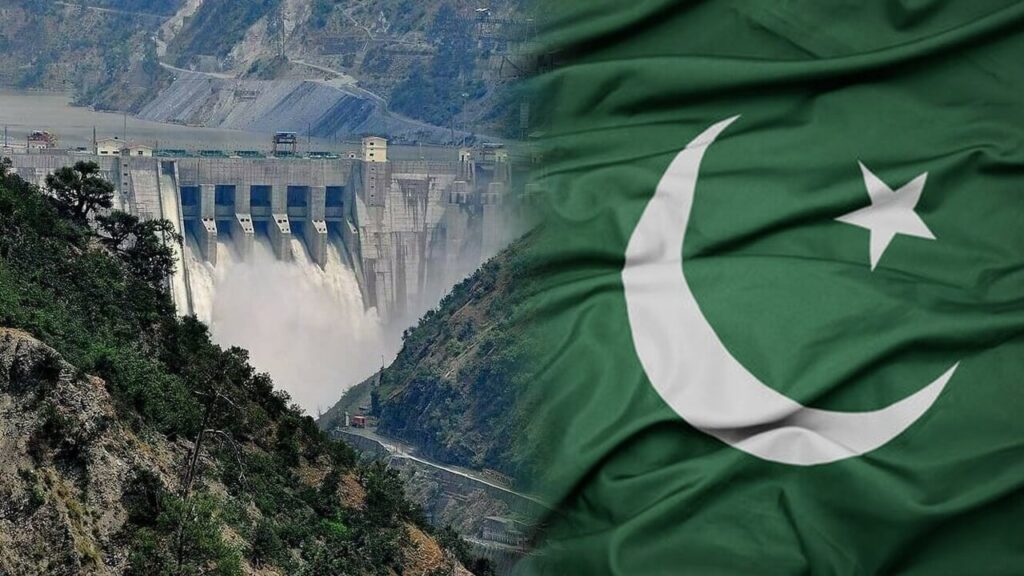
Suspending the treaty is a powerful coercive signal, but indefinite suspension without a defined off-ramp builds an accumulating existential pressure on Pakistan that may produce exactly the desperate escalatory response India seeks to avoid. New Delhi should weigh whether a conditional, phased return to the treaty architecture, tied to verifiable Pakistani counter-terrorism benchmarks, is more useful than open-ended suspension that pushes Islamabad toward its nuclear calculus.
Internalise the Two-Front Imperative
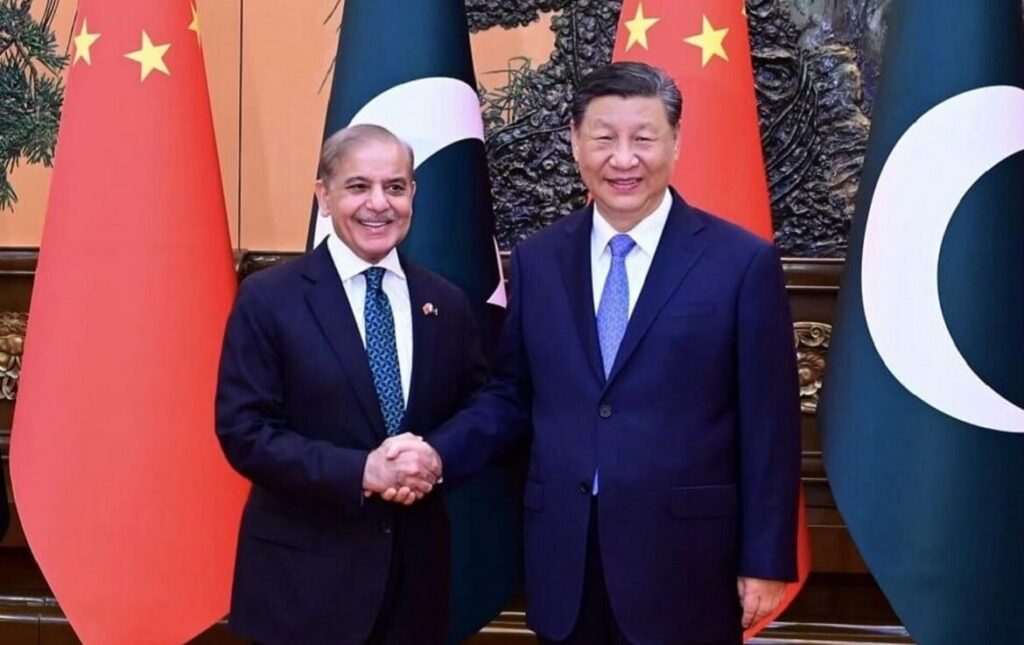
Indian planning must treat the two-front scenario as a primary assumption. A synchronised China–Pakistan pressure campaign, even at sub-conflict levels, is the defining strategic challenge of the coming decade. Military modernisation, basing infrastructure, and alliance management should be structured for simultaneous western and northern pressure, not optimised for sequential response.
Monitor Pakistan’s Internal Indicators
The BLA and TTP insurgencies are leading indicators of Pakistani military readiness, political cohesion, and escalatory intent. Indian intelligence priorities should include tracking the movement of Pakistani Army formations between the internal and eastern fronts, monitoring civil–military tension in Rawalpindi, assessing the resilience of Pakistan’s nuclear command and control under internal-security stress, and identifying the conditions under which the military leadership might initiate or tolerate an external crisis.
Conclusion
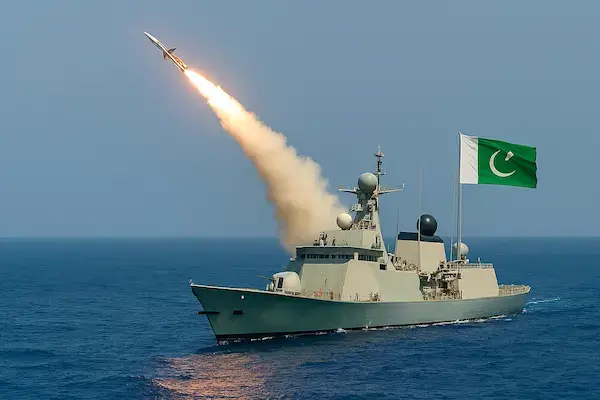
The India–Pakistan strategic dyad has entered a more dangerous phase than at any point since the Kargil War. The May 2025 conflict showed that both sides will climb higher on the escalation ladder than was previously assumed, that the nuclear overhang does not prevent significant conventional exchanges, and that the international crisis-management architecture is more fragile, and less impartial, than India has long relied upon.
The compounding of Pakistan’s internal insurgencies, its Middle East overextension, and the unresolved grievances left by the 2025 ceasefire creates an environment in which the next conflict is more probable, will escalate faster, and will be harder to terminate. For India, the imperative is not simply to prepare for the next military confrontation. It is to build the political, diplomatic, and doctrinal architecture to manage a crisis environment in which the rules of the previous era no longer apply.
The central insight of this analysis is that the threat to Indian security is not a deliberate Pakistani decision to go to war. It is the accumulation of structural conditions, internal Pakistani fragility, normalised escalation, autonomous-weapon ambiguity, and a degraded international crisis-management architecture, that can produce a conflict neither side fully intended. Managing that structural risk is the defining challenge for Indian strategic policy in the coming years.


One of the best analysts I have read.