

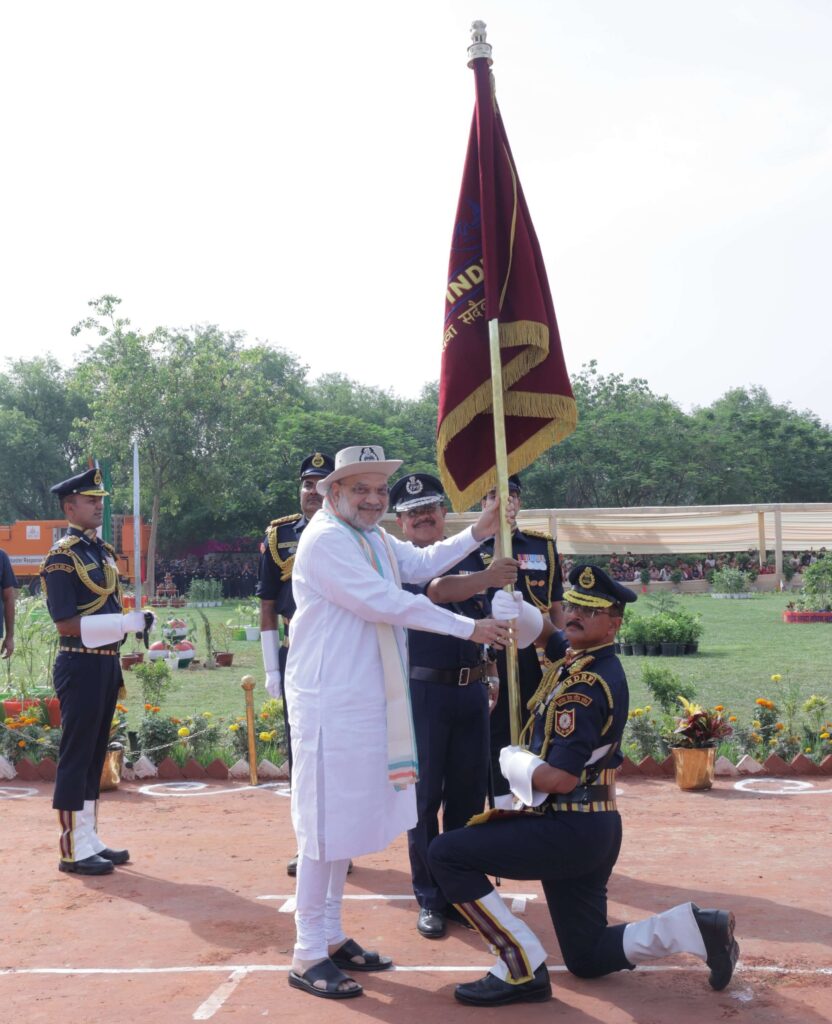
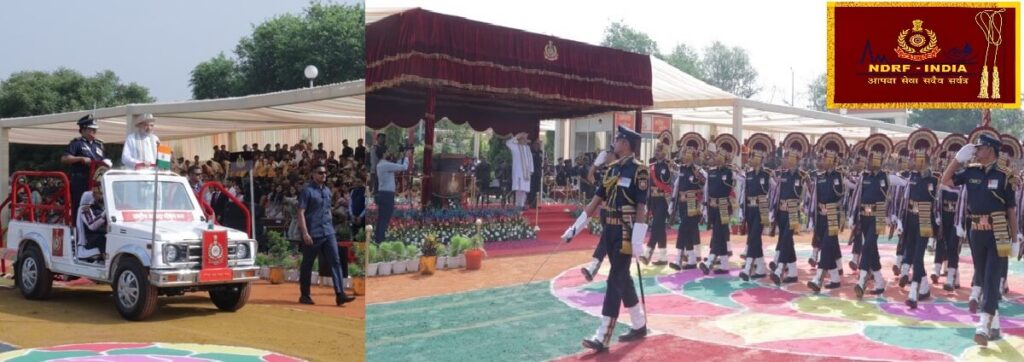
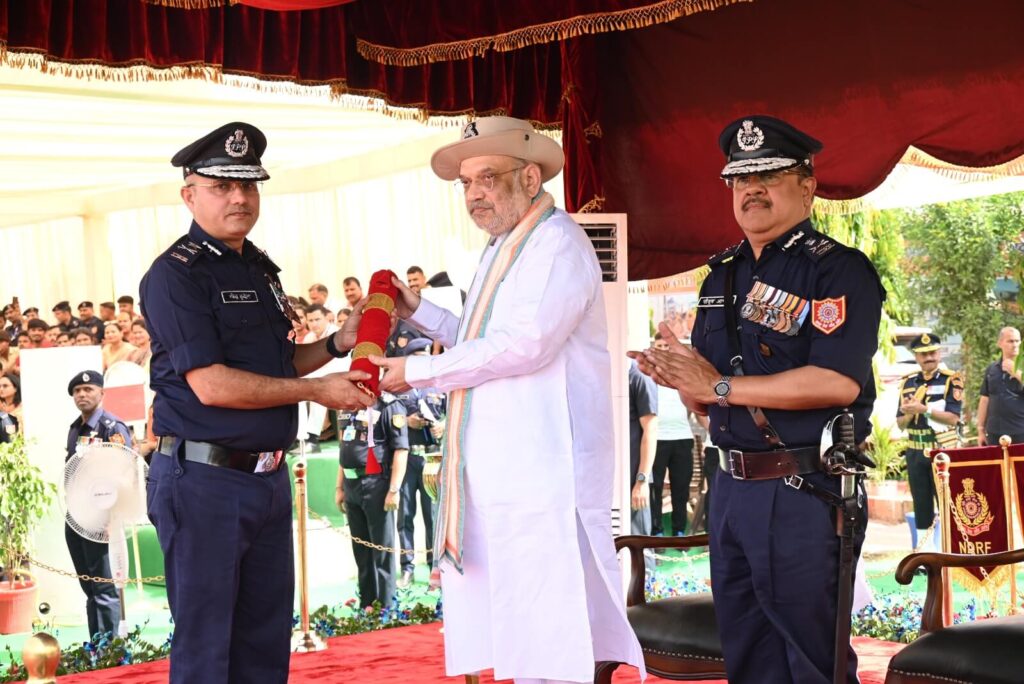
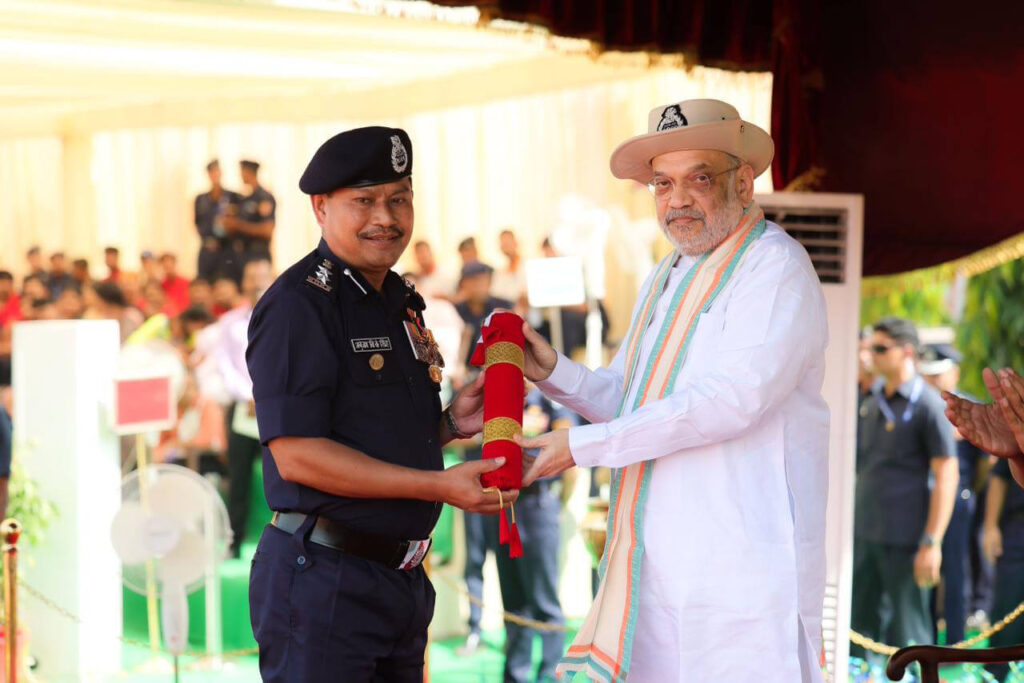
Union Home Minister Amit Shah presented the prestigious President’s Colour to the National Disaster Response Force (NDRF) in recognition of its 20 years of dedicated service. Union Home Secretary Govind Mohan, IAS (1989-batch, Sikkim cadre); Director of the Intelligence Bureau Tapan Kumar Deka, IPS (1988-batch, Himachal Pradesh cadre); Director General of NDRF Piyush Anand, IPS (1991-batch, UP cadre); and several other dignitaries were present and applauded the NDRF on this momentous occasion in its history.
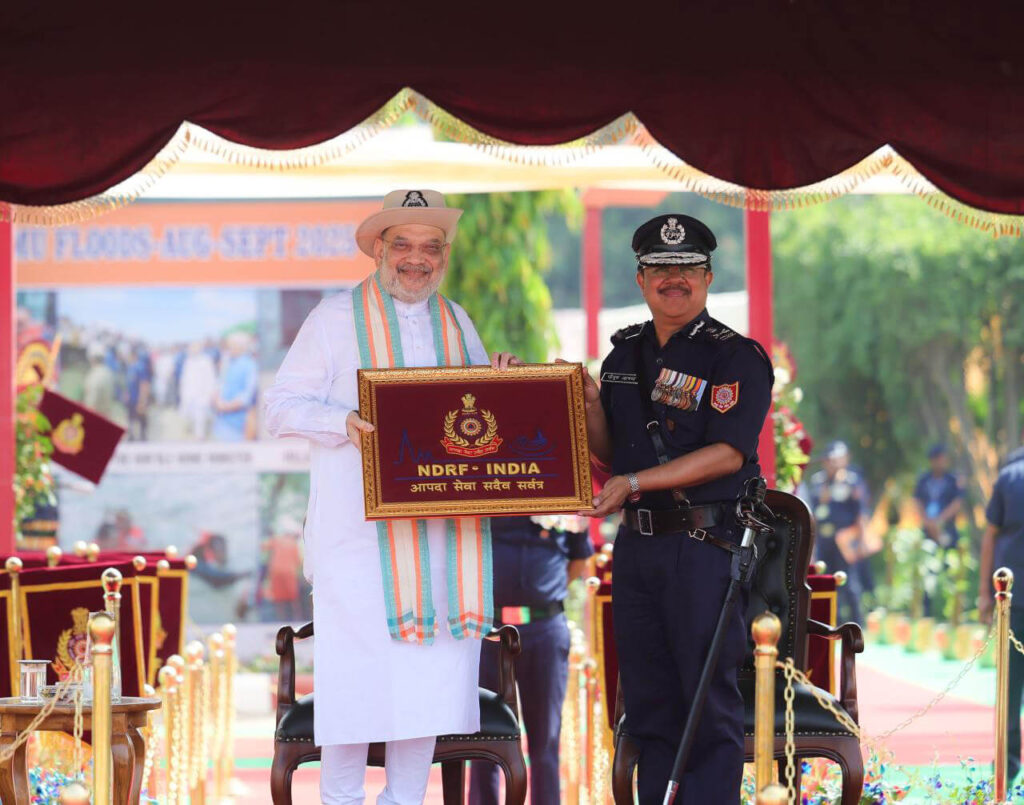
The President’s Colour, also known as the “Nishaan”, is represented by a specially designed insignia and is the highest ceremonial honour bestowed upon any military, paramilitary or state police unit in India. It is presented by the President of India, or by a designated dignitary acting on the President’s behalf, in recognition of exceptional service, bravery and dedication.
Personnel of the awarded force are authorised to wear a special silver or gold insignia of the President’s Colour on the left sleeve of their uniform.
The tradition dates back to the British era, when units paraded the “King’s Colour” on special occasions. The Indian Navy was the first Indian armed force to receive the President’s Colour, which was presented by President Dr Rajendra Prasad on May 27, 1951.
While the award is normally given to Army, Air Force and Naval formations, in recent years around 15 state police forces, law-enforcement agencies and central agencies, including Sikkim Police, Chhattisgarh Police and the NDRF, have received this highly coveted honour.
The conferment of the President’s Colour is an acknowledgment of the commendable services of the NDRF, which has carved a niche for itself and emerged as a powerful force with 16 battalions.
Today, the NDRF has a regular presence at 69 locations and has conducted nearly 12,000 challenging operations during floods, cyclones, landslides, urban disasters and CBRN emergencies, earning the sobriquet “Angels in Orange”.
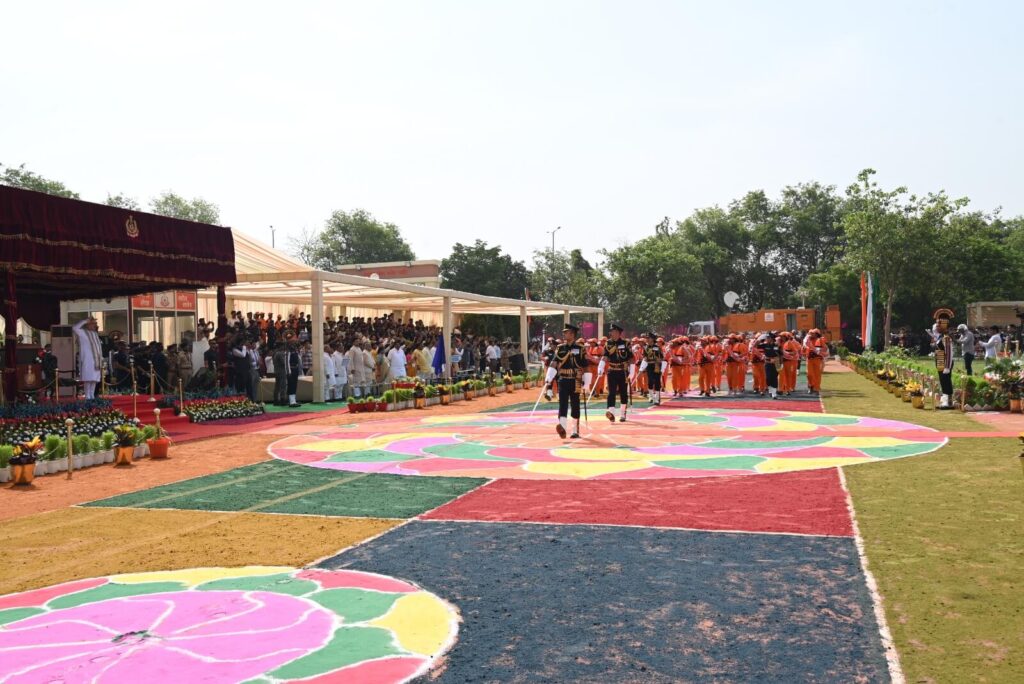
Since its raising on January 19, 2006, at least 17 NDRF rescuers have made the supreme sacrifice and laid down their lives in the line of duty. This is the greatest proof of their devotion to duty, motivation and selfless service.
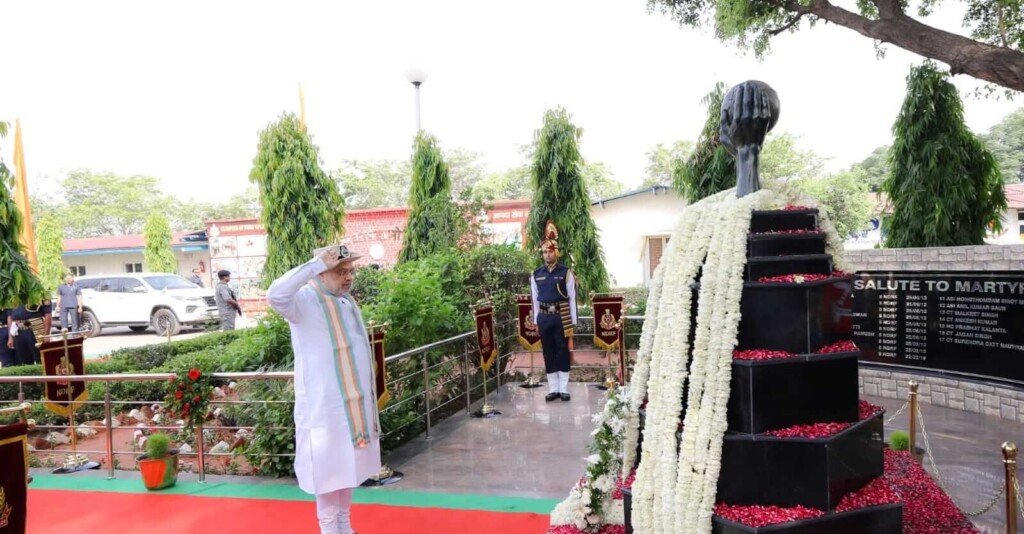
True to its motto, “Aapda Seva Sadaiv Sarvatra”, the NDRF has earned the trust of 140 crore citizens through its successful operations during floods, earthquakes, cyclones and other disasters across the country. NDRF personnel have saved more than 1.5 lakh lives and evacuated over 9 lakh people to safer locations, instilling a sense of security and trust and making India a recognised global leader and first responder in disaster management under the leadership of Prime Minister Narendra Modi.
Equipped with state-of-the-art equipment to handle natural and man-made disasters, the NDRF deserves to be commended for helping place India prominently on the global map by successfully shifting the focus from relief to comprehensive disaster management and mitigation.
The force has also significantly strengthened India’s global humanitarian outreach through various international operations in Japan (2011), Nepal (2015), Turkiye (2023), Myanmar (2025) and Sri Lanka (2025), in keeping with the Prime Minister’s Ten-Point Agenda on Disaster Risk Reduction.

Today, 48 countries have joined the Coalition for Disaster Resilient Infrastructure (CDRI) and are working together with India in this direction. As a result, the principle of “Vasudhaiva Kutumbakam” has been translated into practice and implemented on the ground.
According to Shah, under the leadership of Prime Minister Narendra Modi since 2014, India has worked towards disaster risk reduction and reached a stage where the country can move towards the goal of zero casualties wherever prior information about disasters is available through forecasting and the Meteorological Department. He complimented the NDMA and NDRF for protecting lives and property and making disaster preparedness a national culture.
Addressing the gathering at an impressive ceremony at the 8th Battalion campus in Ghaziabad, Amit Shah said that NDRF personnel have earned the love and trust of people wherever they have been asked to respond to crises or disasters in India and abroad. He further said that the NDRF has set an excellent example by rescuing not only citizens but also animals living alongside them. He said the aim is to ensure zero loss of human life and minimal damage to property during disasters.

“Whenever a disaster strikes or is anticipated anywhere in the country, people feel reassured when NDRF personnel arrive, believing that rescue operations will now succeed,” he said.
Amit Shah said all this is a matter of pride for all citizens, especially for him as the Home Minister of the country.
According to the Union Home Minister, the conferment of the President’s Colour is a recognition of the service, courage, valour and dedication of the NDRF.
On the occasion, the Home Minister also laid the foundation stones for projects worth more than Rs 116 crore, expressing hope that these projects would further strengthen the NDRF’s ability to protect citizens from all kinds of disasters.
According to him, the Ministry of Home Affairs is fully prepared to effectively tackle serious challenges such as heatwaves, and the Modi Government is working towards reducing heatwave-related deaths to zero.
Towards this end, the Ministry of Home Affairs and the NDRF have placed great emphasis on capacity building and community participation. The NDRF has undertaken the monumental task of training more than 8,500 personnel, over 10,000 civil defence workers and more than 2.20 lakh volunteers. More than 10,500 boatmen have also been trained over the last two years.
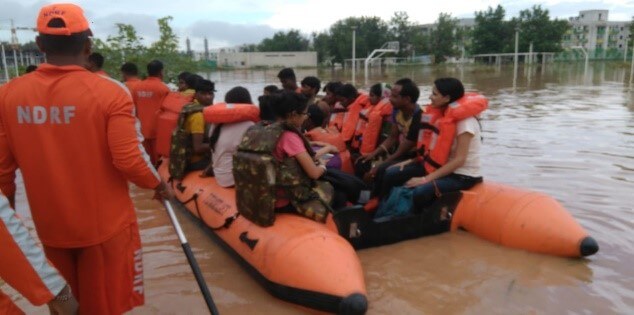
The Union Home Minister said that disaster volunteers would prove highly useful in strengthening community-based disaster response and tackling all kinds of emergencies. He said that earlier, the response to disaster management was primarily relief-oriented, but the Modi Government has transformed it from reactive to preventive and proactive. Prime Minister Narendra Modi has established the concept of minimising loss of life and property due to disasters as a global model. Over the last 12 years, disaster preparedness has evolved from merely a system into a complete ecosystem. From Gram Panchayats to the Government of India, from IMD scientists to ordinary citizens, a new culture of coordinated action towards a common objective has emerged.
According to him, India had witnessed several devastating natural disasters, such as the Odisha Super Cyclone, the Gujarat earthquake and the Indian Ocean tsunami, which shook the lives of people across the country and highlighted the need for a robust disaster management framework. Subsequently, the Disaster Management Act was enacted, and the NDMA and NDRF were established. Through its working methods, training support to SDRFs and joint operations, the NDRF has enhanced its own strength.
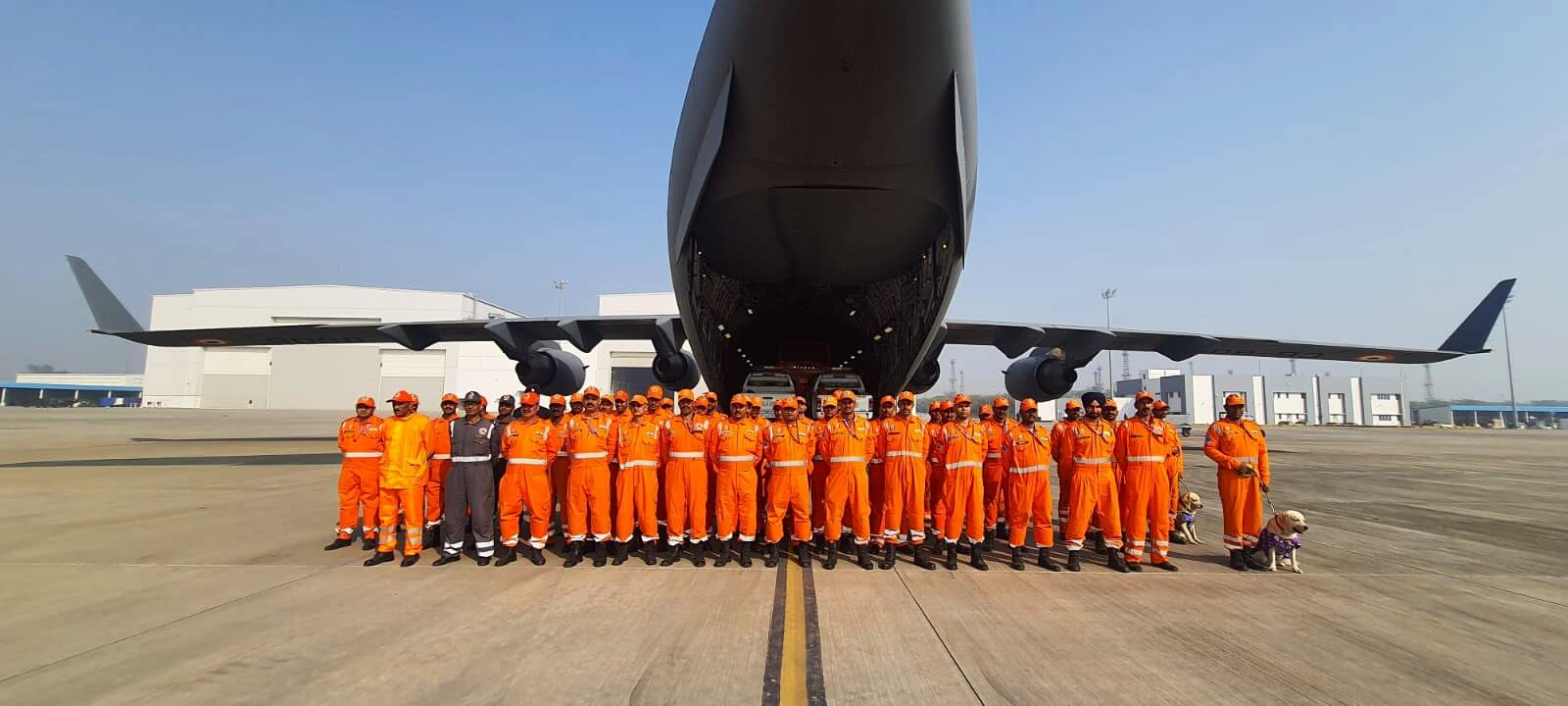
Measures such as proactive deployment and pre-positioning have proved effective in minimising damage. Shah recalled that the 2008 Kosi floods in Bihar were a major test for the NDRF. Subsequently, the NDRF successfully handled many disasters, such as flash floods in Dharali, cloudbursts in Chasoti, floods in Jammu, Punjab and Delhi, Cyclone Montha and Cyclone Ditwah. He said that the NDRF has also worked effectively with society during major events such as the Amarnath Yatra, Mahakumbh, Char Dham Yatra, Mani Mahesh Yatra, Sabarimala pilgrimage and the Jagannath Rath Yatra.
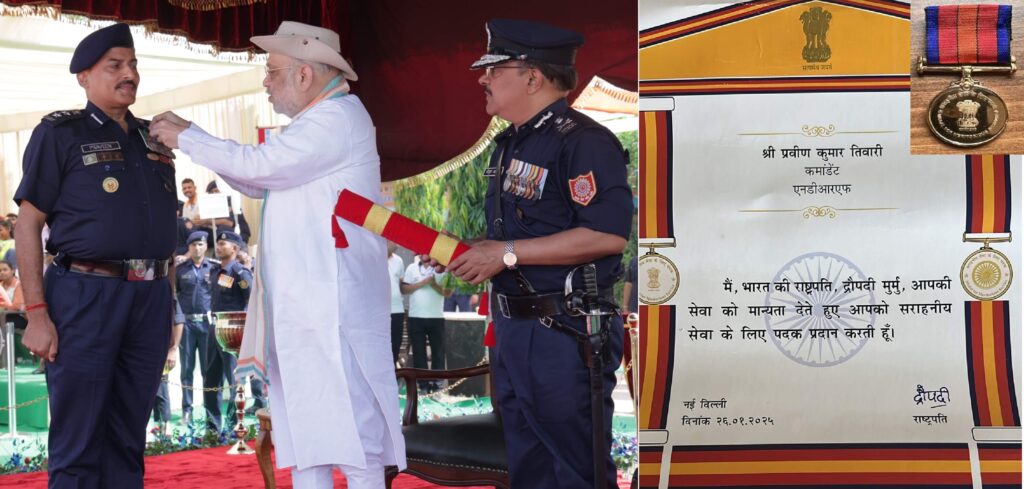
The Union Home Minister said that Prime Minister Modi’s 10-point agenda and 360-degree approach to disaster management have given a new direction to disaster risk management. They have strengthened areas such as risk mapping, early warning systems, community participation and the formulation of guidelines.
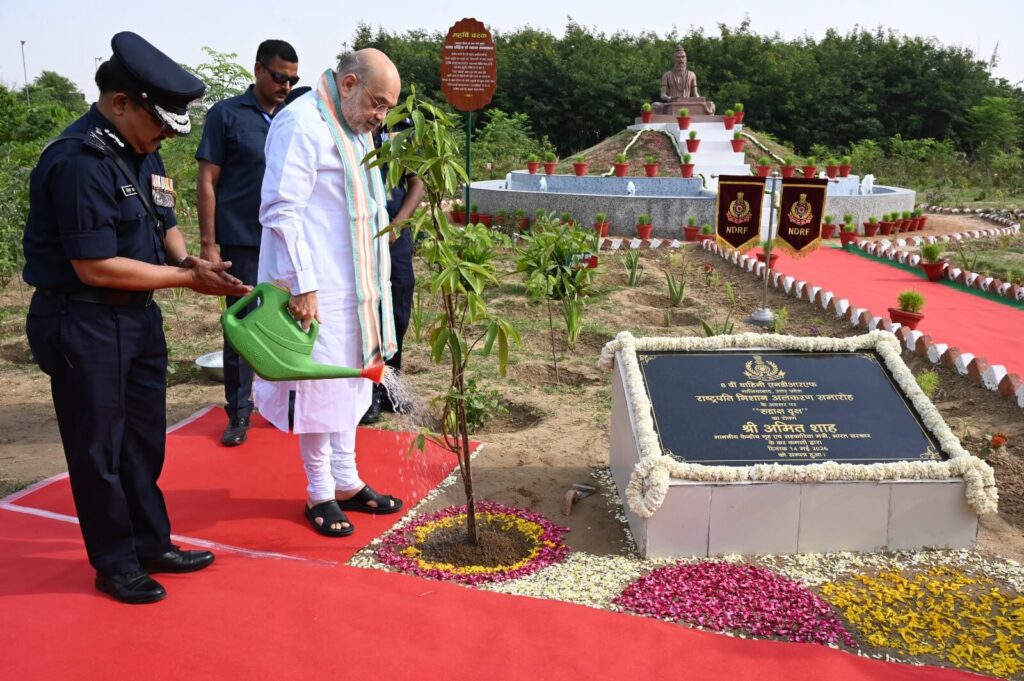
Amit Shah congratulated all personnel of the Central Armed Police Forces (CAPFs) across the country and said that since 2021, CAPF personnel have planted more than 7 crore trees nationwide. He said this reflects the humanitarian outlook and environmental awareness of all CAPFs.