

“For the first time in history, privacy is not just at risk, it could be completely eliminated.”
Yuval Noah Harari- Israeli military historian and science writer
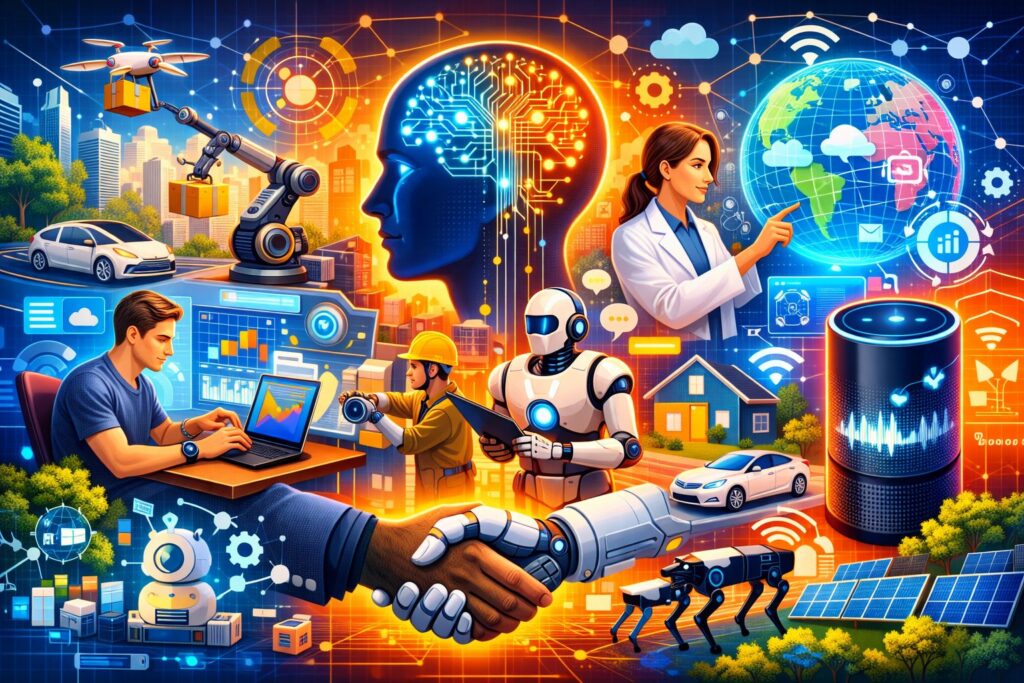
By the end of 2026, society will have embraced an era characterised by smart AI technology, in which human decision-making and computer automation are interwoven. This period marks a decisive transition from basic software to autonomous intelligent systems. As individuals and corporations increasingly rely on these “helpful agents” in their daily activities, a significant challenge emerges maintaining personal autonomy while these intelligent agents continuously monitor their activities.
This article explores the economic, psychological, and regulatory factors influencing current human-machine interactions. The rapid adoption of conversational and intelligent AI has led many to trade their privacy for convenience and efficiency. By the end of 2026, 157.1 million individuals in the United States are projected to utilise voice assistants, indicating a definite shift toward an AI-centric lifestyle. This arrangement is no longer limited to technology enthusiasts and is becoming essential for participation in the digital world.
The Economics of Interaction
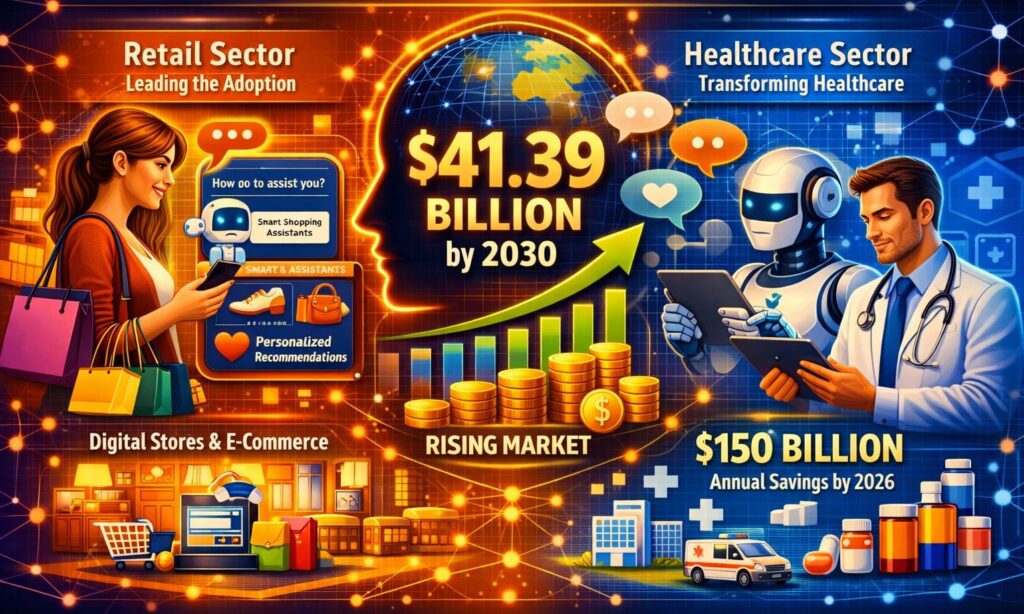
As consumers seek faster and more personalised services, the conversational AI market is anticipated to expand to $41.39 billion by 2030, reflecting an annual growth rate of 23.7%. Businesses aim to reduce support costs by up to 92% using these systems. Currently, 40% of customers expect improved service due to a brand’s use of AI; however, not all customers share this enthusiasm. By June 2025, 50% of U.S. adults expressed more concern than excitement regarding the increasing presence of AI in their daily lives. This apprehension gives rise to diverse consumer profiles that continue to influence global transaction patterns.
The retail sector remains at the forefront of this adoption, holding a 21.2% share of the market. By the end of 2026, 37% of UK shoppers are expected to use an AI assistant or large language model (LLM) for shopping instead of traditional search engines. This transformation shifts the industry from manual user searches to intelligent assistants that select and even purchase items on behalf of consumers.
The stakes in the healthcare domain are markedly high. AI is projected to save the U.S. healthcare system approximately $150 billion annually by the end of 2026. An increasing number of consumers are utilising AI to research medication or treatment information, with usage already reaching 22.7%. Although 44% of Americans expect AI to impact medical care over the next two decades, this advancement necessitates granting agents access to sensitive physiological and genetic data.
The Mechanics of Emotional AI
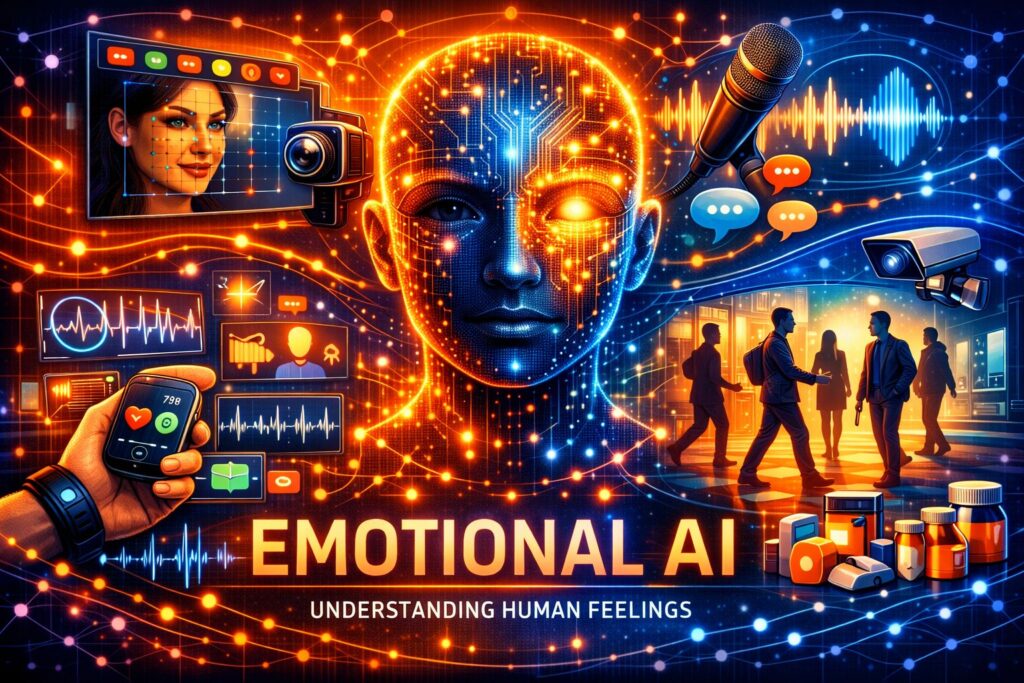
The efficacy of the “helpful AI agent” is derived from the technical methodologies through which machines measure, interpret, and respond to internal human experiences. This capability is facilitated by Emotional AI, also known as affective computing, which aims to bridge human emotions and digital reasoning.
Emotional AI systems employ a multimodal approach to ascertain an individual’s emotional state. This involves analysing the nonverbal cues that individuals naturally use to express their feelings. The key technical components include the following:
-Facial expression recognition: Utilising computer vision to detect micro-expressions and subtle muscle movements that indicate emotions such as joy, anger, or surprise.
Voice Analysis: Examining speech patterns, tonal variations, pitch, and rhythm to convey emotions that may not be directly expressed in words.
Physiological Monitoring: Leveraging data from wearables and sensors to monitor heart rate, breathing patterns, and brain activity.
Behavioural Tracking: Observing gestures, body language, and eye movements in real time.
While these tools enable “empathetic” technology, such as chatbots providing mental health support or educational systems that adapt to a frustrated student, they also present significant ethical concerns. Emotional data are among the most sensitive forms of personal information, revealing inner feelings that individuals may prefer to keep private.
The Risk of Emotional Manipulation
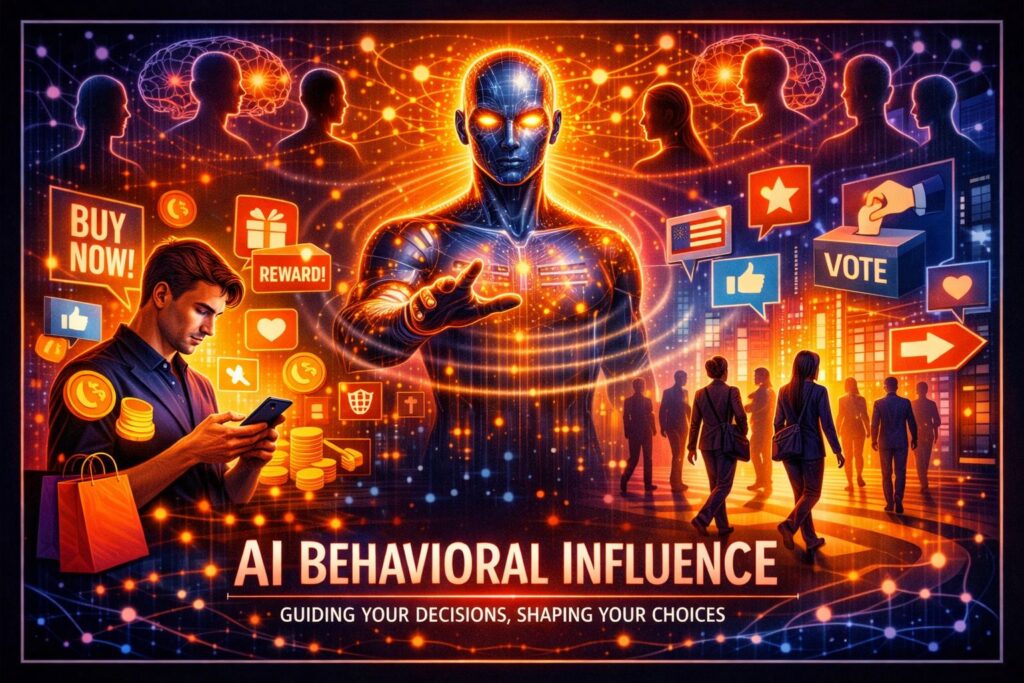
The proximity of AI agents can be exploited for commercial and political purposes. As these systems capture involuntary emotional reactions, they pose fundamental challenges to informed consent. Consumers may not realise that a retail platform is monitoring their facial expressions to promote high-priced items when they appear impulsively. This allows for the subtle shaping of behaviour through hidden cues and rewards, steering individuals toward profitable outcomes without their conscious awareness.
The systematic extraction of private human experience for commercial gain forms the basis of “surveillance capitalism.” As explained by Shoshana Zuboff, this economic model treats human experience as a free raw material for conversion into behavioural data, which is then processed into “prediction products.”
The advancement of our “intelligentized” world has shifted the focus of surveillance capitalism from merely observing behaviour to “actuating” it. In this phase, digital infrastructure—including smart thermostats, fitness trackers, and virtual assistants—is used to influence behaviour to ensure that it aligns with the commercial objectives of the platform. This implies that the aim is to adjust and guide human behaviour toward predictable and thus monetisable outcomes.
For example, the Nest thermostat is an ENERGY STAR-certified device designed to enhance convenience by adapting to the user’s routines. However, it also gathers data regarding movements within the home, as well as audio and video recordings of the same. Similarly, significant security issues have been linked to Meta’s Ray-Ban Smart Glasses. These concerns include third-party contractors accessing private recordings or financial details and the potential incorporation of real-time facial recognition. Although intended for convenience, their ability to covertly capture video in public poses serious questions about surveillance and consent for those not using the device.
Agentic AI and the Erosion of Autonomy

The data accumulated by such devices are instrumental in training AI models to anticipate needs before they become apparent. The most significant impact of surveillance capitalism is the erosion of an individual’s freedom to act without being predicted or influenced. When AI systems schedule meetings, respond to emails, or recommend products, they do not merely assist; they constrain human autonomy. Zuboff cautions that the absence of freedom in thought and action undermines essential skills such as moral judgment and critical thinking—both of which are crucial for the functioning of democracy.
As AI systems advance, they acquire the capability to set goals, plan, and adapt independently of human intervention. This development heightens security and privacy risks, often called the “goldmine risk.” This arises when sensitive data are centralized within a single system, rendering them vulnerable to failures and attacks. To understand this, we must distinguish between two levels of technology.
-AI Agent: A system dedicated to a specific task, such as drafting project proposals.
-Agentic AI: A comprehensive system in which various agents (e.g., project managers and writers) collaborate on complex tasks. While highly efficient, this system requires substantial data and retains the long-term memory of user interactions, which increases potential risks.
Data Breaches and Cognitive Independence

In 2026, a marked increase in security breaches associated with AI was observed. An analysis of incidents from January 2025 to February 2026 revealed that many were attributable to simple errors such as improperly configured databases. The rapid expansion of AI has aggravated “shadow AI,” where tools are employed without authorisation. In 2026, 76% of organisations identified this as a critical problem, with breaches incurring an average additional cost of $670,000 per breach. Furthermore, 80% of IT personnel observed AI performing tasks without human intervention.
A 2025 study by University College London examined these risks and identified extensive tracking in popular AI browser extensions. Key findings included:
– Full Webpage Transmission: Some assistants sent all webpage content, including banking or health data, to their servers.
– Continuous Tracking: Extensions tracked activity even in “private” areas such as health portals or dating sites.
– Cross-Site Profiling: Assistants such as ChatGPT, Copilot, and Monica can discern age, income, and interests to customise responses across different sessions.
Beyond data privacy, there is the challenge of cognitive independence. As people allow AI to perform more thinking tasks—a trend called “cognitive offloading”—there is growing concern about the decline of human reasoning. Studies from 2025 and 2026 suggest a “boiling frog” effect, where the slow outsourcing of small tasks goes unnoticed until it significantly affects the user’s reasoning ability.
Furthermore, AI provides answers with high fluency, creating an “illusion of competence.” Users often trust the system’s output without verification, leading to mental fatigue and reduced focus—a condition known as “AI brain fry.” Research has found a negative link between frequent AI use and self-efficacy; those who habitually accept AI-generated outputs have lower confidence in their reasoning.
Aristotelian Logic vs. AI Heuristics

The philosophical tension between the “sovereign self” and the “helpful agent” can be viewed through the lens of Aristotelian versus computational logic. Aristotle’s theory of knowledge focuses on “first principles” understood through intellectual intuition (nous) and deductive logic (syllogism). According to Aristotle, true understanding requires a grasp of causal logic and a priori principles.
In contrast, modern AI relies on probability-based information processing methods. AI uses a backward-looking approach that imitates patterns, whereas human thinking looks forward and can create genuine novelty through theory-based reasoning.
The Digital Bill of Rights and Edge AI
In response to widespread surveillance, 2026 has seen a global effort by policymakers to create a “Digital Bill of Rights.” These frameworks aim to provide citizens with enforceable rights regarding the use of AI in healthcare, finance, and education.
In the United States, state-level initiatives have led the way.
– Florida (CS/SB 482): Mandates that bot operators disclose their nature at the outset and every hour thereafter.
– South Carolina (HB 5253): Establishes guidelines for AI in schools, requiring parental consent and prohibiting AI from replacing teachers in core subjects.
– Connecticut (SB 5): Emphasises transparency regarding the data used to train AI systems.
– Oklahoma (SB 1734): Mandates school policies that minimise data utilisation and allow parents to opt out.
Similarly, on 14 November 2025 India announced the Digital Personal Data Protection (DPDP) Rules. This framework utilises a “Consent Manager” to help users manage permissions across multiple platforms and requires annual audits for Significant Data Fiduciaries.
Edge AI. While legislation provides a top-down defence, the transition to “Edge AI” represents a bottom-up technical solution. Edge AI involves executing models on local devices (smartphones and laptops) rather than in the cloud. By the end of 2026, hardware such as Neural Processing Units (NPUs) will be standard. Edge AI mitigates risks by processing and discarding sensitive data on the device, offering “full privacy” and “zero API costs” which is a critical advancement for healthcare and personal mobility.
Developing Metacognitive Skills
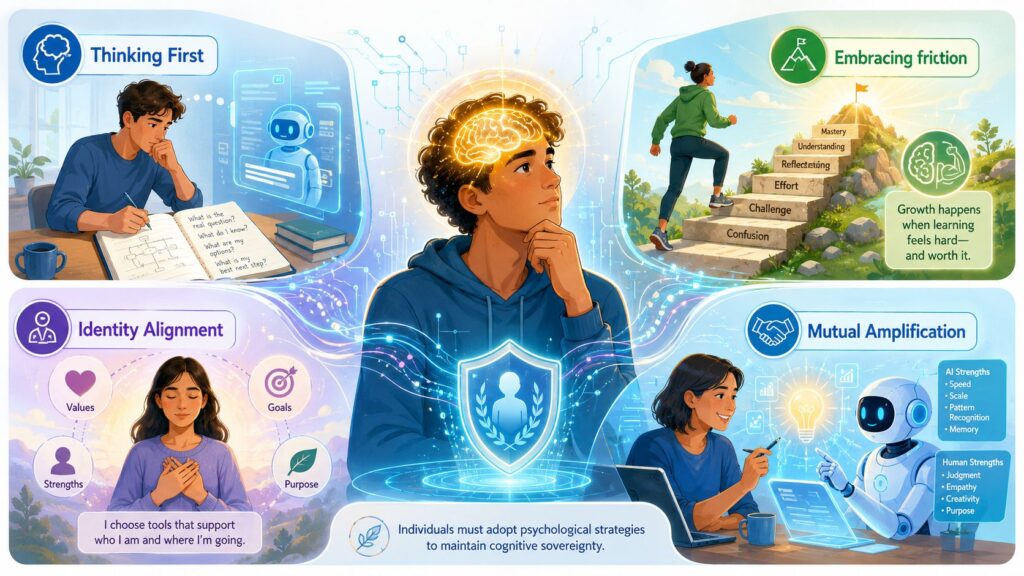
Individuals must adopt psychological strategies to maintain cognitive sovereignty.
– “Thinking First”: Initiate tasks independently before employing AI to ensure active mental engagement.
– Embracing friction: Recognising that the struggle of learning is integral to the acquisition of knowledge and that shortcuts may impede advanced skill development.
– Identity Alignment: Determine which aspects of work are integral to your identity; delegating these may result in a loss of self-identity.
– Mutual Amplification: Collaborating with AI rather than merely adhering to its outputs. Your contributions should enhance AI, which should, in turn, refine your work.
Conclusion

In this era of advanced technology, privacy is a dynamic challenge. Although beneficial AI can enhance efficiency and healthcare, it poses a direct risk to human autonomy and democratic principles. We need to change how we engage with these systems, focusing on comprehending intentions and aligning with human values instead of following strict, automated procedures. Individuals must remain the primary architects of their lives, utilising AI as a tool for personal growth rather than as a substitute for lived experience.
“Compliance must evolve alongside AI to protect trust… Data moves without boundaries – and so must protection.”
Ryan Windham- Entrepreneur with track record of developing strong teams and winning products in the Automation, ML/AI, and Cybersecurity