

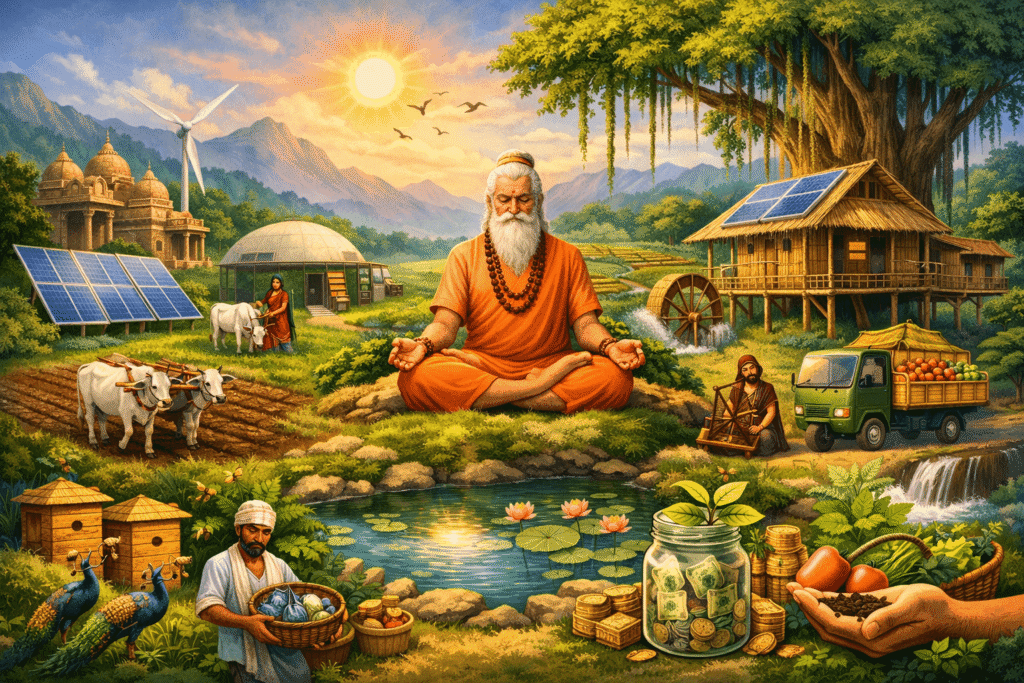
India stands at an unprecedented crossroads. With its agricultural sector contributing approximately 17.8% of GDP, employing over 42.3% of its population, and recording all-time high exports of ₹4,40,000 crore (US$ 51.86 billion) in FY2024-25, the nation’s agrarian strength is undeniable. Yet, the challenge of sustainability environmental, economic, and social looms large. This paper argues that the answers to India’s agricultural future are not only found in modern technology, but also in its own ancient treasury of wisdom: the Vedas, the Arthashastra, Krishi-Parashara, and Upanishads. By synthesizing scriptural ecology with contemporary green economy frameworks, India can chart a path not merely to self-sufficiency but to global agricultural leadership becoming the world’s number one agricultural economy by 2047, the centenary of its independence.
The need for Green Economy
The 21st century has presented humanity with a paradox: the more food it produces, the more it damages the systems that produce it. Globally, agriculture accounts for 26% of greenhouse gas emissions, consumes 70% of freshwater resources, and has led to the degradation of over 33% of the world’s soil (FAO, 2023). For India, this paradox is deeply personal. The 2024-25 kharif foodgrain production crossed a record 1,647.05 Lakh Metric Tonnes, while simultaneously, soil health in many states deteriorates, groundwater tables fall precipitously, and farmer incomes remain chronically stressed.
A green economy, as defined by the United Nations Environment Programme, is one that results in improved human well-being and social equity, while significantly reducing environmental risks and ecological scarcities. Applied to rural India, this translates to an economy where the Annadatta (provider of food) the Indian farmer thrives within a system that heals the land, conserves water, sequesters carbon, and generates dignified incomes.
India’s ancient civilization has bequeathed to it something no other nation possesses: thousands of years of documented, field-tested, ecology-embedded agricultural wisdom. The Rigveda, Atharvaveda, Arthashastra, and texts like Krishi-Parashara are not merely historical curios they are living blueprints for sustainable production. Integrating this knowledge with satellite imaging, Agri-fintech, biofortification, and carbon markets could make India the architect of a new global agricultural paradigm.
India’s Agricultural Economy: Current Landscape and Global Standing
Size, Scale, and Significance
India is the world’s second-largest producer of agricultural products, with an agricultural output of approximately US$ 610 billion, accounting for 13.04% of total global agricultural output. The sector grew at 5.4% year-on-year in FY2024-25, supported by record production across food grains, horticulture, and allied sectors. Horticulture alone touched 367.72 million tonnes in 2024-25, up from 280.70 million tons a decade ago a 31% increase that reflects both technological adoption and farmer enterprise.
Agricultural exports reached an all-time high of ₹4,40,000 crore (US$ 51.86 billion) in FY2024-25, up from ₹3,95,793 crore the previous year. India exported 20.1 million tonnes of rice worth US$ 12.95 billion to more than 172 countries in 2024-25. The share of processed food in agri-food exports has risen from 14.9% in FY18 to 23.4% in FY24, indicating a crucial shift from raw commodity exports to value-added trade.
The Employment and Rural Livelihood Dimension
The agricultural sector provides livelihood to approximately 42.3% of India’s population — roughly 600 million people directly or indirectly. Yet, despite this enormous scale, per-capita farm income remains far below non-agricultural incomes, and rural-urban disparity persists. Around 55% of India’s arable land depends on rainfall, making farming intensely vulnerable to climate variability. The Economic Survey notes that every rupee invested in agricultural research yields a payoff of ₹13.85 a compelling case for systemic investment in knowledge-driven, green agricultural transformation.
Gaps and Challenges
Despite its achievements, Indian agriculture faces structural vulnerabilities. Chemical-intensive farming since the Green Revolution has degraded soils across Punjab, Haryana, and parts of Maharashtra. Groundwater depletion threatens the Indo-Gangetic Plain — the nation’s breadbasket. Post-harvest losses average 15–20%, costing the nation billions annually. Climate change has made monsoon patterns increasingly erratic. And small and marginal farmers — who own less than 2 hectares each and constitute over 86% of total farm households — remain economically fragile.
These are not new problems. Remarkably, ancient India grappled with similar challenges and developed sophisticated, time-tested solutions that modern science is only beginning to validate.
The Foundation: Ancient Indian Wisdom
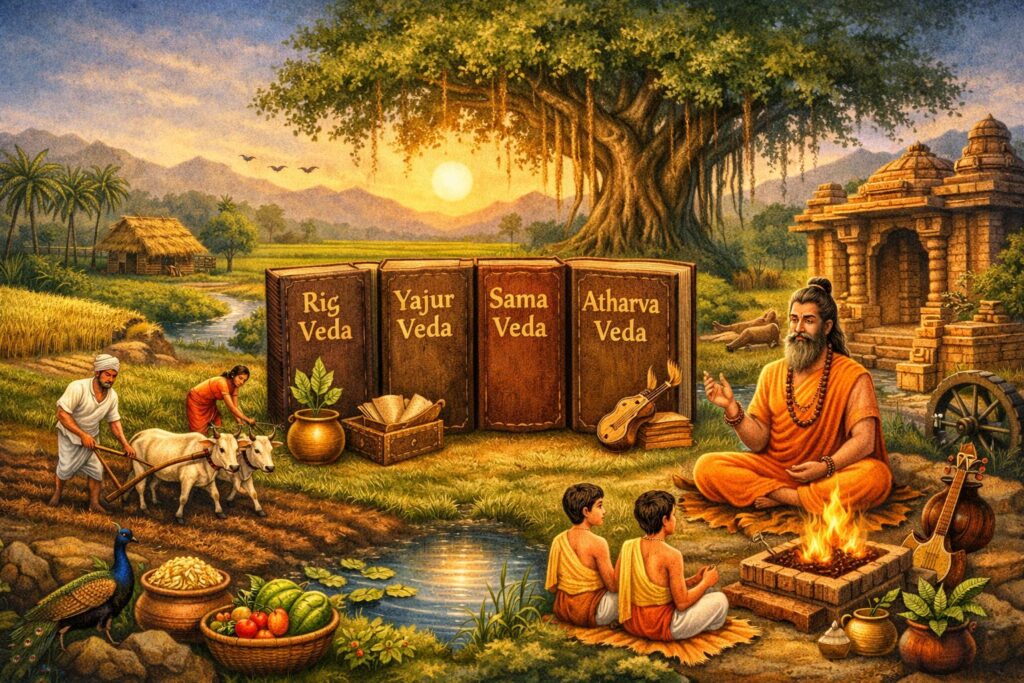
Vedas: Nature as the First Economy
The four Vedas — Rigveda, Samaveda, Yajurveda, and Atharvaveda — composed between 1500–800 BCE, represent humanity’s oldest known literary corpus. Remarkably, they are saturated with ecological intelligence. The Atharvaveda’s Prithvi Sukta (Hymn to Earth), a collection of 63 verses in Book XII, lays out what is arguably the world’s first environmental philosophy:
“Mata Bhumih Putroham Prithivyah — The Earth is my mother; I am the son of the Earth. (Atharvaveda 12.1.12)”
This is not poetic metaphor. It is an ecological contract, a statement of mutual obligation between humans and the Earth that modern sustainability frameworks are now trying to rebuild. The Prithvi Sukta describes the Earth’s forests, mountains, seas, plants, and rivers as interconnected living entities deserving protection — anticipating the modern concept of planetary boundaries by three millennia.
The Rigveda (X.34.13) explicitly elevates agriculture: ‘kṛṣimit kṛṣasva vitte remasva bahumanyamānaḥ’ — ‘O farmer, till the soil and prosper; regard it with great esteem.’ The text contains more than 200 references to farming, irrigation, fertilisers, crop protection, and soil management. The Oshadhi Sukta of the Rigveda addresses plants as mother figures, articulating a proto-ecological worldview that sees plant biodiversity as both sacred and foundational.
The Yajurveda (22.25) prescribes: ‘Annam na nindyat tattvartaṁ annam bahu rakṣhet’ — ‘Do not despise food. Preserve it with care and respect.’ This scriptural injunction against food waste anticipates the urgent modern agenda of reducing post-harvest losses and food system inefficiency — a gap that costs India an estimated ₹92,651 crore annually (ICAR estimates).
The Atharvaveda and Soil Science
The Atharvaveda contains what scholars have described as the world’s earliest treatise on soil science and agronomy. Book III, hymn 17 describes the relationship between seed, soil, and cosmic forces: the process of selecting quality seeds (beeja-samskara), preparing soil with organic matter (bhu-samskara), and timing the planting with astronomical precision — all practices now validated by modern precision agriculture. The text prescribes: ‘O Earth! What on you I dig out, let that quickly grow over’ (Atharvaveda 12.1.35) — an explicit injunction for crop rotation and soil regeneration that modern agronomy has validated as critical to long-term fertility.
Kautilya’s Arthashastra: The World’s First Green Policy Framework
Written around 300 BCE by Chanakya (Kautilya), the Arthashastra is the world’s earliest known treatise on statecraft and political economy. But it is also — profoundly and systematically — a green governance manual. Book II describes detailed classifications of forests (vana) and establishes penalties for illegal deforestation, wildlife poaching, and river pollution — anticipating modern environmental law by more than two millennia.
The Arthashastra provides detailed guidance on rainfall regimes, soil typology, and micro-ecological irrigation. It recommends that kings maintain irrigation infrastructure as a state duty, and describes water harvesting systems, reservoir construction, and canal management — a hydraulic engineering vision that India’s tank irrigation systems (keres) in Karnataka, Tamil Nadu, and Andhra Pradesh embodied for centuries.
Kautilya states: ‘Environmental pollution causes two types of diseases in human beings — those related to the body and those related to the mind’ (Arthashastra 2.145). This insight into the health-environment nexus, made 2,300 years ago, is now confirmed by the WHO, which estimates that environmental pollution costs India 1.36% of GDP annually in health expenditure.
Krishi-Parashara and Vrikshayurveda: Ancient Agricultural Science
The Krishi-Parashara, a Sanskrit text on agriculture attributed to the sage Parashara, provides detailed instructions on crop rotation, soil testing using colour and texture, seed germination, organic pest management, water harvesting, and seasonal farming. Written likely in the 5th–10th centuries CE, it describes the Pancha Mahabhuta framework — the five elements (earth, water, fire, air, space) as foundational to soil health — which maps closely to modern concepts of nutrient cycling, microbial activity, and ecosystem balance.
Equally remarkable is Vrikshayurveda (the Science of Plant Life), authored by Surapala around 1000 CE, which describes the use of fermented organic brews (jivamrita) to enhance soil microbial activity, the use of fish emulsion as foliar fertiliser, and the treatment of plant diseases using herbal extracts — all techniques now commercially validated by the organic farming industry.
Convergence of Ancient and Modern Farming
Natural Farming at Scale: The Zero-Budget Model
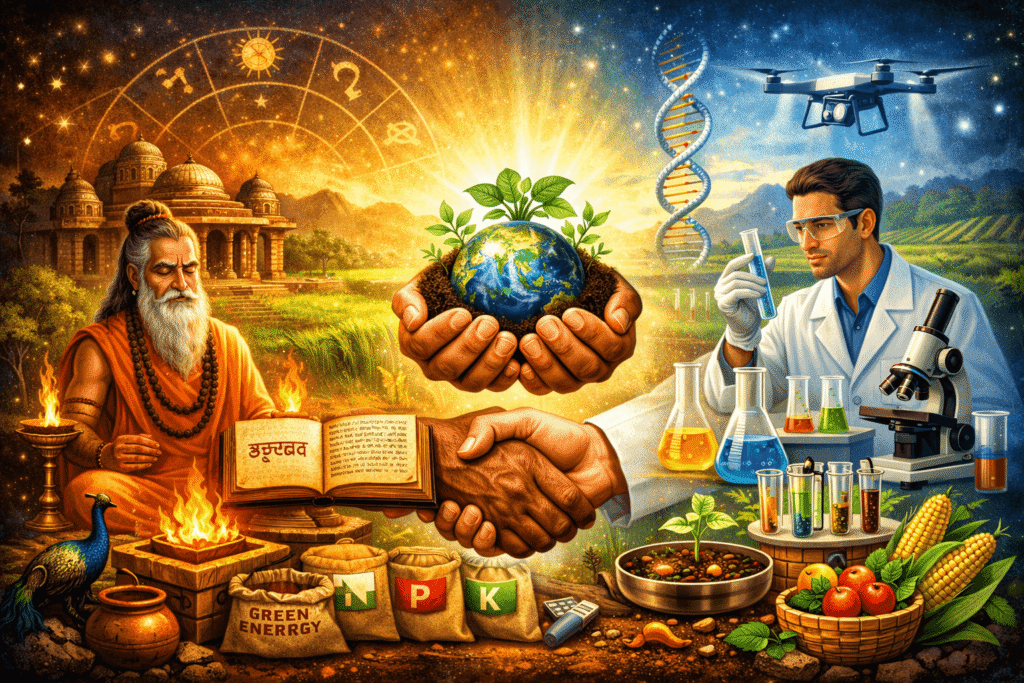
India already has proof-of-concept for scripturally-inspired sustainable agriculture. Natural farming (Zero Budget Natural Farming — ZBNF), popularised by agronomist Subhash Palekar and based on ancient Vedic practices, uses four inputs: Bijamrita (seed treatment), Jivamrita (soil microbial activator using cow dung), Mulching, and Waaphasa (soil aeration management). Andhra Pradesh has mainstreamed this under the Rythu Sadhikara Samstha (RySS), covering over 800,000 farmers across 6.2 lakh hectares, with documented reductions in input costs by 40–60% and improvements in soil health indices. This program, recognized as one of the world’s largest agroecology initiatives, has achieved significant scale and impact.
The National Mission on Natural Farming (NMNF), approved by the Union Cabinet on November 25, 2024, as a standalone Centrally Sponsored Scheme with an overall outlay of ₹2,481 crore (Central share ₹1584 cr, State share ₹897 cr), aims to promote chemical-free, climate-resilient agriculture.
Forest-Based Livelihoods & Non-Timber Forest Products (NTFPs)
Over 275 million people in India — that is more than the population of Brazil depend on forests for some part of their livelihood. And yet this dependency is rarely captured in national economic statistics. Non-Timber Forest Products (NTFPs) are the lifeblood of tribal and forest-fringe communities. Tendu leaves for bidis, bamboo for construction and crafts, honey, sal seeds, mahua flowers together these generate tens of thousands of crores of rupees in economic value annually. The critical problem is that most of this value is extracted by middlemen and traders, leaving the actual collector s.
The green economy solution has multiple components. First, legal empowerment: the Forest Rights Act of 2006 grants Gram Sabha’s the right to govern and benefit from community forests, but implementation remains deeply incomplete.
Second, value addition: processing NTFPs at the village level — making honey into certified organic products, turning bamboo into furniture and packaging, extracting herbal essences — can multiply income three to five times.
Third, eco-tourism: community-managed nature trails, birdwatching tourism, and cultural heritage experiences create non-extractive income that actually incentivizes conservation.
The bottom line: forest-based green enterprise is not only ecologically sound but it is economically transformative when communities control the value chain.
Water Stewardship: Reviving Ancient Hydraulic Civilization
India built one of the world’s most sophisticated water civilisations. The stepwells (baolis), the tank irrigation systems (keres and eries), the johads of Rajasthan, and the phads of Maharashtra are engineering achievements that sustained agriculture for centuries without depleting aquifers. The Arthashastra devotes entire chapters to water management as a sovereign duty. These systems collectively once irrigated millions of hectares.
India’s modern water crisis — with 21 major cities expected to run out of groundwater by 2030 (NITI Aayog, 2018) — demands revival of these distributed water harvesting models. The government’s Per Drop More Crop (PDMC) initiative,a key component of the Pradhan Mantri Krishi Sinchayee Yojana (PMKSY) has covered 95.58 lakh hectares under micro-irrigation by December 2024, with ₹21,968 crore released to states. However, integrating this with restored traditional water bodies — over 5 lakh desilted and revived water bodies under the Amrit Sarovar mission — would multiply impact substantially.
Soil Carbon Sequestration and the Carbon Economy
One of the most powerful and underexplored opportunities for rural India is agricultural carbon markets. Regenerative farming practices composting, cover cropping, reduced tillage, and agroforestry sequester carbon in soils. India has one of the largest amounts of arable land (approximately 156 million hectares) represents one of the largest potential carbon sinks on the planet. If even 50% of Indian farmland transitions to regenerative practices, India could sequester 0.5–1.5 gigatons of CO₂ annually — equivalent to shutting down 200 coal-fired power plants.
Carbon credits from agricultural sequestration could generate supplementary income of ₹3,000–12,000 per acre per year for participating farmers. India’s Carbon Credit Trading Scheme (CCTS), notified under the Energy Conservation Act amendments, provides the regulatory architecture. Piloting agricultural carbon credits through Farmer Producer Organizations (FPOs) — 10,000 of which are registered till 2026 could democratize this new income stream for small and marginal farmers.
Biodiversity, Millets, and the Return of Native Seeds
The Vedic concept of Navadhānya — the nine sacred grains (Wheat, Paddy/Rice, Chickpea, Mung bean, Bengal gram, White bean, Black sesame, Black gram, and Horse gram) encodes a profound message about agricultural biodiversity. Modern monocultures have replaced this diversity with Green Revolution varieties dependent on synthetic inputs. India lost approximately 100,000 India lost approximately 100,000 traditional rice varieties following the Green Revolution in the 1960s–80s, which prioritized high-yield hybrids over indigenous biodiversity. This massive genetic erosion occurred as farming became dominated by a few commercial cultivars, leading to the loss of indigenous rice traits with thousands of millets, pulse, and oilseed varieties, such as drought tolerance and specific nutritional profiles.
India’s International Year of Millets 2023 programme, championed by Prime Minister Modi at the global level, has catalysed a revival of Shree Anna (coarse cereals) — bajra, jowar, ragi, foxtail millet which are drought-resilient, nutritionally superior, and require 30–80% less water than paddy or wheat. Millet exports grew by 139% between 2021 and 2023. Scaling millet as a cash crop for rain-fed farming regions which cover 52% of India’s cultivated area directly addresses both water scarcity and farmer vulnerability.
Agri-Technology with a Human Face
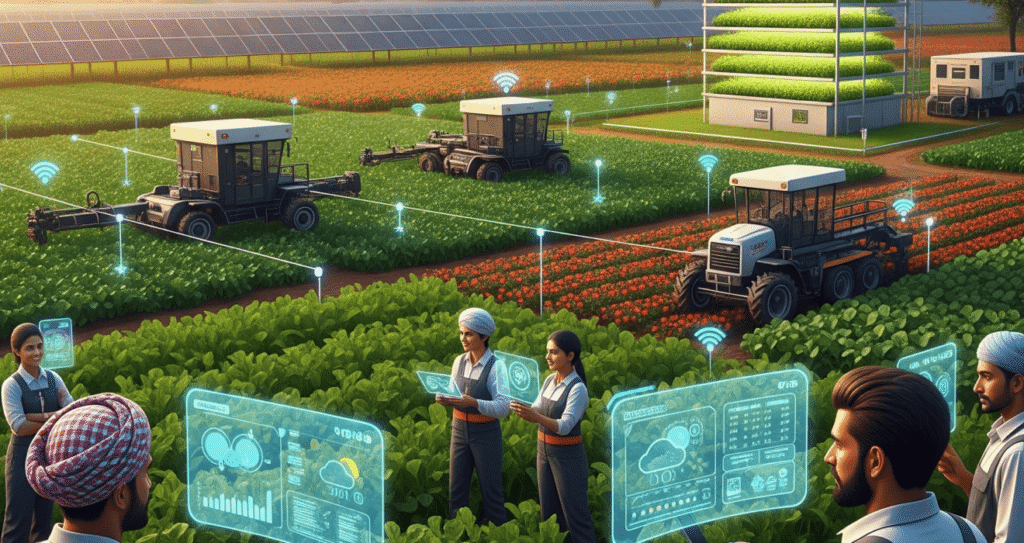
Agri-technology with a human face” refers to deploying AI, robotics, and automation that empowers farmers rather than replacing them, focusing on sustainability, accessibility, and improved livelihoods. Technologies like precision spraying, drone monitoring, and AI advisory tools reduce costs and manual labor, enhancing farming efficiency while keeping the human operator in control. Ancient agriculture was precision agriculture closely observed, locally adapted, seasonally calibrated. Modern Agri-tech offers tools to recreate this precision at scale. India’s Digital Agriculture Mission 2025–2030 proposes a Digital Public Infrastructure for Agriculture (Agri-Stack) farmer registries, crop cadastres(a crop cadastre or agricultural cadastre is a specialized, parcel-based territorial information system used to record, map, and manage agricultural land use, ownership, and cultivation practice and it combines traditional land registration with agricultural data, such as crop types, soil quality, irrigation, and production levels) , and advisory platforms that could serve 140 million farm households. Drone based crop monitoring, AI driven soil health advisory, satellite-based crop insurance, and blockchain enabled Agri-value chains are already being piloted across states.
The e-NAM (National Agriculture Market) platform has registered over 1.80 crore farmers and 2.72 lakh traders, enabling transparent price discovery across 1,656 mandis. Scaling e-NAM to cover all major commodities and integrating it with futures markets would create a seamlessly connected agricultural marketplace reducing the 30–40% price arbitrage that presently enriches middlemen at farmers’ expense.
Institutional Architecture: Policy, Finance, and Community
Farmer Producer Organizations as Green Economy Anchors
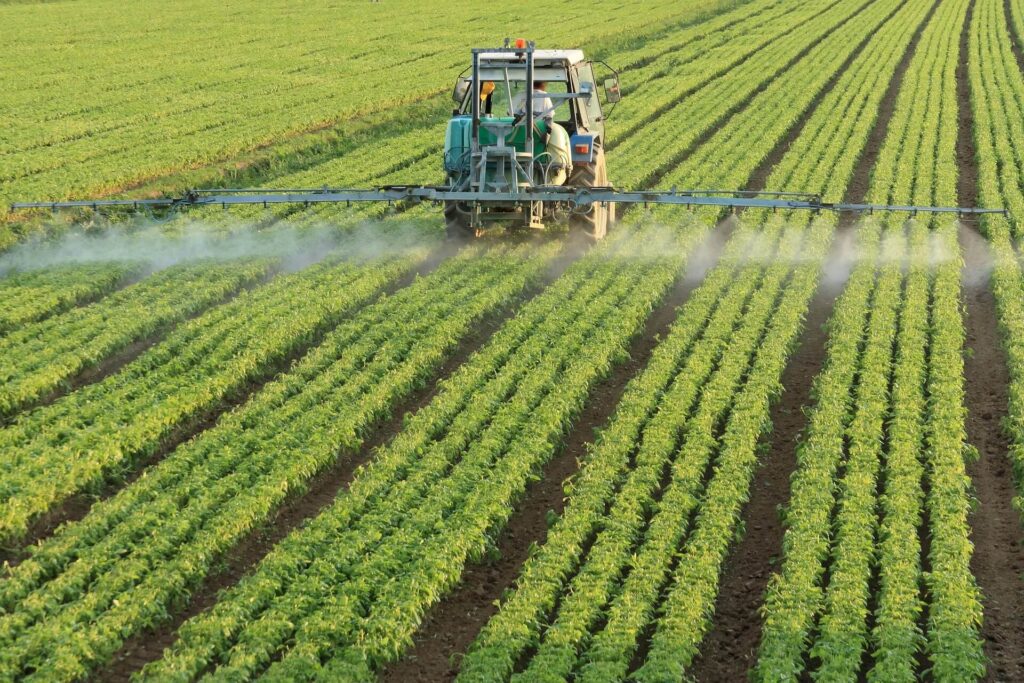
The FPO (Farmer Producer Organization) model — building collective institutions for small farmers mirrors the ancient system of Gram Sabhas and cooperative grain banks described in the Arthashastra. As of early 2024, 8,195 FPOs have been registered under the government’s 10,000 FPO scheme with a budget outlay of ₹6,865 crore through 2027-28. FPOs provide collective bargaining power, access to credit, shared equipment, and market linkages.
Transforming FPOs into green economy anchors certified organic producers, carbon credit aggregators, Agri-tourism operators, and Agri-processing hubs would generate a multiplier effect in rural economies. Each FPO, if linked to Agri-processing infrastructure under the Pradhan Mantri Kisan Sampada Yojana The fund allocation for PMKSY for the financial year 2024-25 was ₹ 630 crore. (1,079 projects completed as of October 2024), can retain 2–4x more value within rural areas compared to raw commodity sales.
Women’s Self-Help Groups: The Invisible Engine
The Ministry of Rural Development has achieved a significant milestone under the Deen Dayal Antyodaya Yojana – National Rural Livelihoods Mission (DAY-NRLM), disbursing over Rs.11 lakh crore in credit to women Self-Help Groups (SHGs) through formal financial institutions.
This landmark accomplishment, made possible by the unwavering support of the banking fraternity, reflects the Government’s firm commitment to inclusive development, women’s empowerment, and strengthening grassroots financial resilience.
DAY-NRLM’s core model aims to eliminate rural poverty by organizing poor women into robust community institutions and supporting their livelihoods. The SHGs have become essential conduits for credit delivery in rural areas facilitating meaningful financial inclusion and nurturing women-led enterprises. This sustained flow of credit underscores the entrepreneurial drive of rural women, enabling them to establish and expand income-generating ventures.
India’s 10 crore women in 90 lakh Self-Help Groups with outstanding loans of 11 lakh crore represent an extraordinary rural financial architecture. Women farmers, who constitute approximately 80% of the food production workforce in many regions, are still largely outside formal agricultural support structures. Mainstreaming SHGs as Agri entrepreneurs — in seed banks, organic certification bodies, Agri-tourism enterprises, and food processing units — would simultaneously advance gender equity and green economy goals.
The Namo Drone Didi scheme is a Government of India initiative empowering rural women from Self-Help Groups (SHGs) to become drone pilots and entrepreneurs. Launched for 2023-24 to 2025-26, it provides 15,000 drones to SHGs to provide agricultural services like pesticide/fertilizer spraying, targeting an income of ₹1 lakh per year for SHGs.
The Solar Mamas project, primarily run by Barefoot College, trains mostly illiterate, middle-aged women from non-electrified rural villages to be solar engineers. Over 6 months, these women learn to install, maintain, and repair solar lighting systems, bringing clean energy to thousands of homes while, significantly, breaking patriarchal barriers to become economic leaders.
Green Finance for Rural India
India requires a dedicated Green Agricultural Finance Architecture. NABARD’s Climate Change Fund (CCF) and its ₹38,000 crore refinancing portfolio for priority sector agriculture provide a foundation. However, the scale of required transformation — natural farming conversion, water infrastructure, renewable energy for Agri-processing demands blended finance instruments: green bonds, concessional loans, payment for ecosystem services, and crop insurance restructured around climate-resilient varieties.
India’s Roadmap to Number One: 2047 Vision
Phase 1 (2025–2030): Foundations of Green Transition
Target: Convert 5 crore hectares to natural/regenerative farming; double Agri exports to US$ 100 billion; achieve 100% soil health card coverage.
- Scale National Mission on Natural Farming to 2 crore farmers by 2027 with dedicated extension cadre and Krishi Vigyan Kendra support.
- Revive and restore 5 lakh traditional water bodies; mandate rainwater harvesting in all new rural infrastructure.
- Launch India’s Agricultural Carbon Credit Registry pilot in 5 states, covering 10 lakh farmers.
- Establish Millet Processing Clusters in 100 rain-fed districts with MSME and FPO linkages.
- Complete Agri Stack Digital Infrastructure, farmer IDs, land records, soil data for all 14 crore farm families.
Phase 2 (2030–2037): Scale, Value Addition, and Market Leadership
Target: Agri GDP of US$ 1 trillion; 50% of exports as processed/value-added; India established as global organic farming hub.
- Build 500 Agri-Food Processing Parks integrated with cold chain networks in Tier-2 and Tier-3 towns.
- Achieve 100% e-NAM coverage across all regulated markets and 1,000+ new direct farmer-consumer marketplaces.
- Launch India’s Green Agri Brand — Certified Natural, Heritage Varieties, and GI-tagged products — for global premium markets.
- Scale agricultural renewable energy: 1 crore solar pumps, 50,000 agri-solar parks on degraded land.
- Institutionalize Scriptural Agricultural Knowledge Centres in 100 agricultural universities and KVKs to research and validate ancient practices.
Phase 3 (2037–2047): Global Leadership and Viksit Bharat
Target: India as the world’s number one agricultural economy by value; zero hunger; highest per-capita farmer income among major agricultural nations.
- Position India as the lead country in global food system governance setting standards for sustainable agriculture, organic certification, and Agri carbon markets.
- Achieve net-zero agricultural emissions through soil sequestration, renewable energy integration, and precision input management.
- Build the Indian Institute of Ancient Agricultural Sciences a global Centre for research on indigenous Agri knowledge and its modern applications.
- Make every Indian village a net producer of clean energy, clean food, and ecological services — the modern Gram Swaraj envisioned by Mahatma Gandhi and rooted in the Vedic concept of self-sustaining communities.
Philosophical Imperative: Dharma, Ecology, and Green Economy
India’s ancient texts articulate a philosophy that modern sustainability science is laboriously reconstructing. The concept of Rita (ṛta) cosmic order and natural law in the Rigveda describes an interdependent web of forces that maintain planetary balance. Human activity, the Vedas teach, must align with Rita, not override it. The Green Revolution temporarily overrode Rita. The Green Economy movement is an attempt to return to it.
Kautilya’s Arthashastra recognizes that the wealth of a kingdom (artha) is ultimately derived from the health of its land and water. The king who destroys forests for short-term gain destroys the foundation of prosperity itself. This is precisely the insight that ecological economics is trying to insert into development planning that natural capital (soil, water, biodiversity, climate stability) is the foundation of all other capital, and must be priced, protected, and regenerated.
The Vedic principle of Yajna selfless offering for collective good, described in the Rigveda and Yajurveda as the navel of the world — offers a moral foundation for the green economy’s requirement of systemic public goods investment. Water harvesting, forest restoration, and carbon sequestration are modern Yajnas — investments whose benefits accrue collectively across generations.
The Upanishads articulate the principle of Vasudhaiva Kutumbakam — the world is one family — which, when applied to food systems, demands that India’s agricultural prosperity be an instrument of global food security, not merely national accumulation. In a world where 783 million people remain chronically hungry (FAO, 2023), India’s aspiration to be the world’s leading agricultural economy carries with it the moral obligation to be the world’s leading agricultural humanitarian.
Conclusion: Civilizational Opportunity
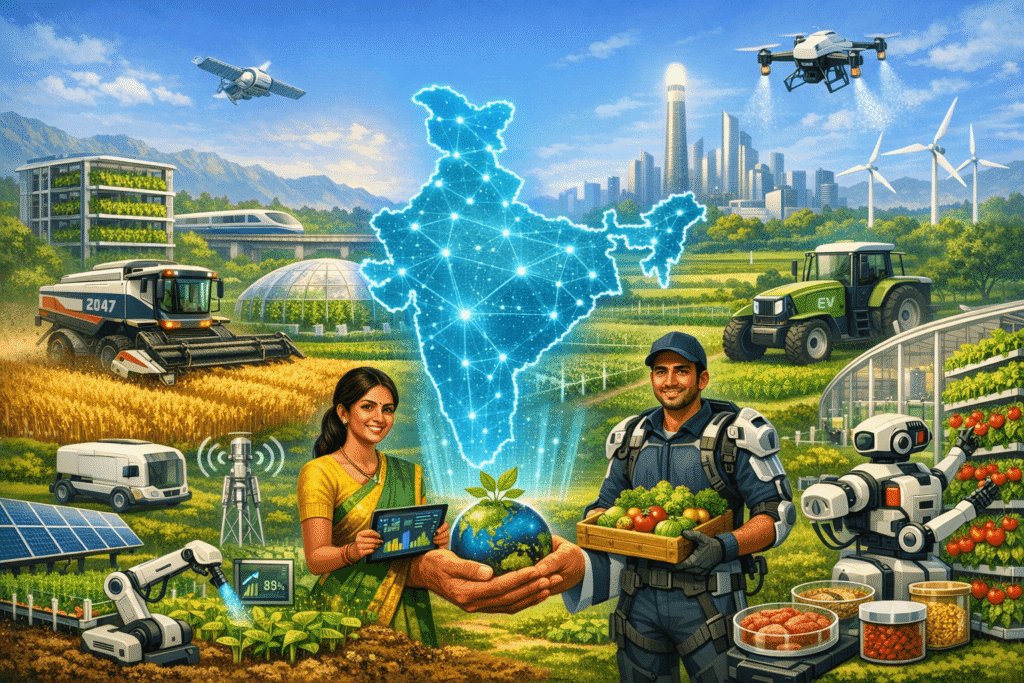
India’s path to becoming the world’s number one agricultural economy does not require abandoning its roots — it requires returning to them. The Vedic sages, the authors of the Arthashastra, and the compilers of Krishi-Parashara were not romantic nature worshippers. They were empirical observers, system thinkers, and pragmatic policy designers who understood that long-term civilizational prosperity is inseparable from ecological integrity.
The numbers validate the aspiration. Agricultural exports touched US$ 51.86 billion in FY2024-25. Foodgrain production crossed a record 3,539.59 Lakh Metric Tonnes. The sector grew at 5.4% year-on-year. With the right policy architecture — scaling natural farming, reviving water systems, building agricultural carbon markets, empowering FPOs and SHGs, investing in agri-processing, and integrating ancient knowledge with modern science — India can triple its agricultural economy by 2047 to surpass even China’s US$ 1.26 trillion agricultural output.
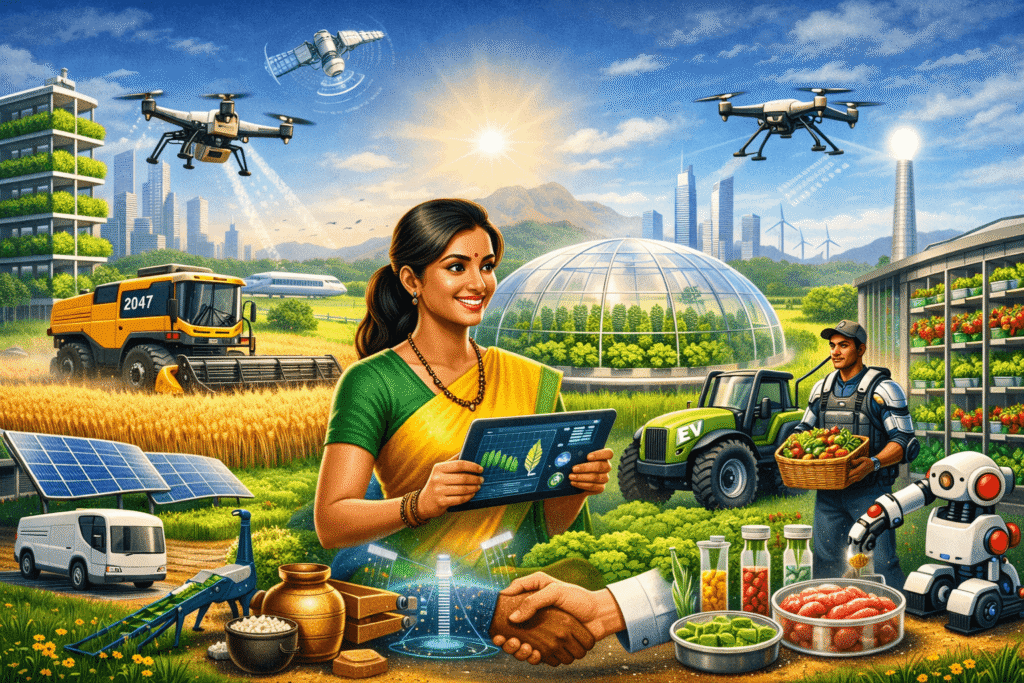
The roadmap exists. The philosophy is ancient. The technology is available. What is now needed is the political will, institutional capacity, and civilizational confidence to unite the wisdom of the Prithvi Sukta with the precision of smart agriculture, the ethic of Mata Bhumih (Mother Earth) with the rigour of carbon accounting, and the community institution of the gram sabha with the market infrastructure of digital value chains.
India’s agricultural future is green — not because it is fashionable, but because it is ancient. And the ancient, properly understood and faithfully applied, is the most modern thing of all. The green economy is not a luxury — it is survival. And rural India must lead it