

The Puzzle of Shakuni
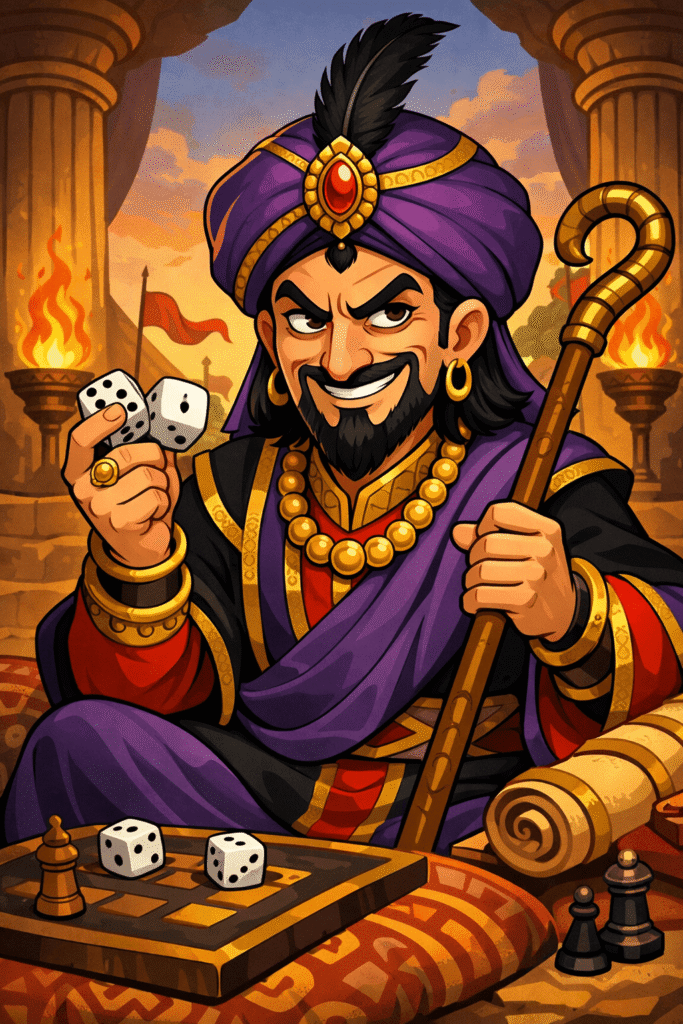
In the Mahabharata, every character embodies a moral dilemma, but few are as enigmatic as Shakuni, the prince of Gandhara and maternal uncle to the Kauravas. He is remembered as the cunning strategist who orchestrated the dice game, manipulated Duryodhana’s ambitions, and set the stage for the Kurukshetra War. Yet, he was also the uncle who stood unwaveringly by his nephews, never abandoning them even when their cause was doomed. This duality raises a provocative question: Was Shakuni a good Mama?
To answer this, we must examine Shakuni’s role not only through the lens of morality but also through the cultural expectations of kinship, loyalty, and political realism. A maternal uncle in Indian tradition is expected to be a protector, a guide, and a moral compass. Shakuni fulfilled some of these roles with brilliance, but he also violated them with devastating consequences.
Shakuni: The Uncle Who Never Abandoned His Nephews
Shakuni’s defining trait was his absolute loyalty to Duryodhana. From the moment he entered Hastinapur, he became the young prince’s confidant and strategist. He recognized Duryodhana’s resentment toward the Pandavas and chose to amplify it rather than temper it. Every major plot against the Pandavas—the Lakshagriha fire trap, the dice game, the humiliation of Draupadi—was engineered by Shakuni.
In this sense, Shakuni was a “good Mama” if goodness is measured by loyalty. He never betrayed his nephews, never sided with their rivals, and never abandoned them even when defeat was certain. His devotion was unwavering, and in the brutal world of dynastic politics, such loyalty is rare.
But loyalty without wisdom can be destructive. Shakuni’s guidance did not protect his nephews; it led them to ruin. His loyalty was absolute, but it was also toxic.
The Revenge Motive: A Protector Turned Saboteur
Shakuni’s loyalty was not born of affection alone. It was rooted in revenge. According to some versions of the epic, the Kuru dynasty had imprisoned Shakuni’s family, starving them to death one by one. Shakuni, the lone survivor, vowed to destroy the dynasty from within. His placement in Hastinapur was not merely familial—it was strategic sabotage.
Seen in this light, Shakuni’s actions take on a darker hue. He was not just a loyal uncle; he was a saboteur disguised as kin. His counsel to Duryodhana was less about protecting his nephew and more about advancing his vendetta against the Kurus. This dual motive complicates his role. Was he protecting his family, or was he using them as instruments of revenge?
Strategic Brilliance: The Mastermind of Manipulation
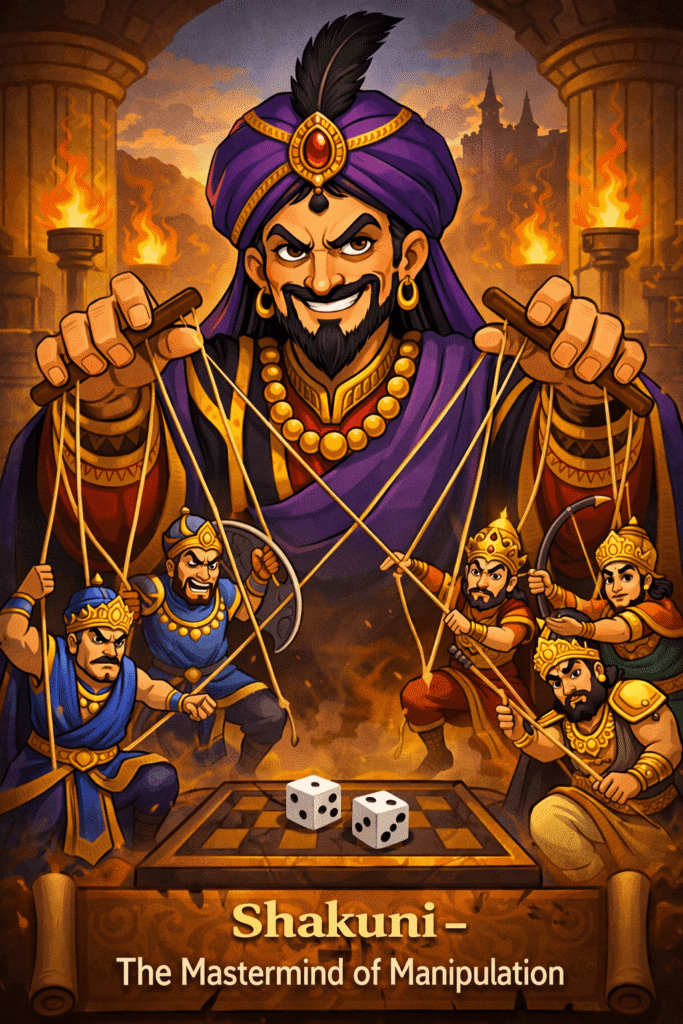
No discussion of Shakuni can ignore his strategic brilliance. He was a master manipulator who understood psychology, perception, and the vulnerabilities of his opponents. The dice game was not merely a gamble—it was a psychological war. Shakuni exploited Yudhishthira’s weakness for gambling, manipulated the rules, and orchestrated a public humiliation that fractured the unity of the Kuru family.
Similarly, his role in Draupadi’s disrobing was calculated to deepen the Pandavas’ sense of injustice and push them toward exile. Shakuni knew that war was inevitable, and he ensured that it would be fought on terms favourable to Duryodhana—at least initially. His brilliance was undeniable, but it was brilliance in service of destruction.
The Moral Failure: A Mama Who Abandoned Dharma
In Hindu tradition, a Mama is expected to be a guardian of dharma. Shakuni violated this ideal repeatedly. He encouraged deceit, endorsed humiliation, and fuelled conflict. He never once advised Duryodhana to seek reconciliation. He never cautioned restraint. He never questioned the morality of his own tactics.
By failing to guide his nephews toward dharma, Shakuni failed the fundamental duty of a maternal uncle. He chose vengeance over wisdom, ambition over morality, and destruction over protection. His brilliance was undeniable, but it was brilliance without conscience.
Folk Narratives: Shades of Sympathy
Interestingly, not all traditions portray Shakuni as a villain. In Gandhara folklore, he is sometimes seen as a tragic figure—a man who avenged his family’s suffering and exposed the hypocrisy of the Kuru court. Some versions suggest he was forced into the dice game by Duryodhana and acted under duress. Others argue that his actions were necessary to expose the rot in Hastinapur, where dharma had already eroded.
These interpretations complicate the binary of good versus evil. They suggest that Shakuni may have been a product of his circumstances—a man who chose loyalty over righteousness, strategy over morality, and vengeance over peace. In this view, he was a good Mama in the sense that he never abandoned his nephews, but a dangerous one whose guidance led to ruin.
The Legacy: A Protector Who Became a Destroyer
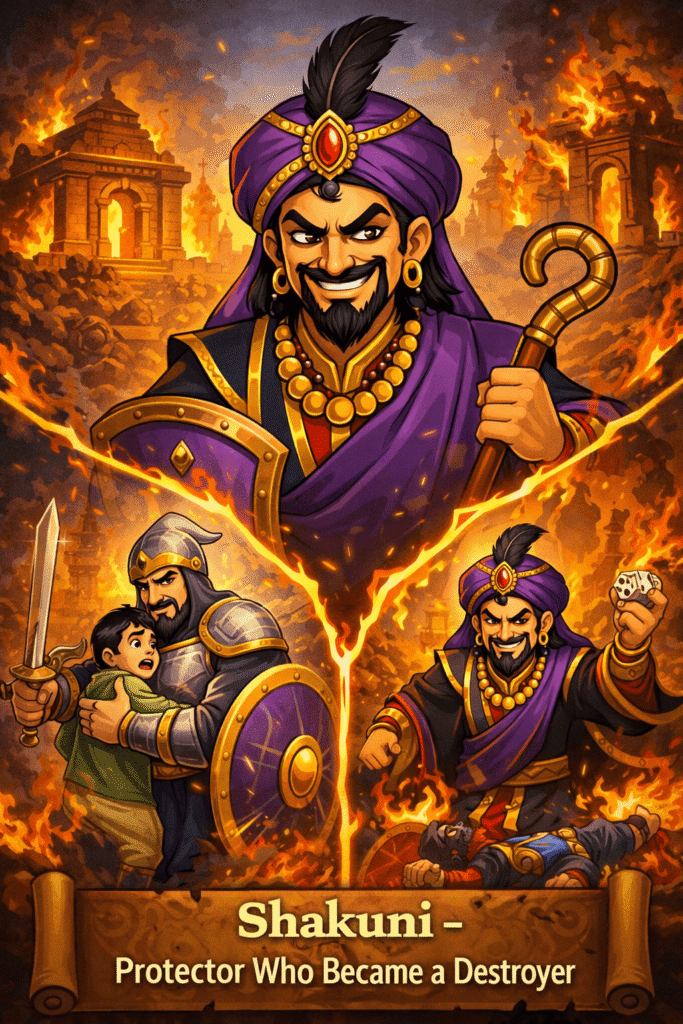
Shakuni’s strategies led to the annihilation of the Kauravas lineage, including his own son, Uluka. The war he engineered consumed the very family he sought to protect. In the end, Shakuni himself was killed by Sahadeva, fulfilling the prophecy that the youngest Pandavas would avenge the dice game. His death was not just a military defeat—it was a symbolic collapse of a man who had traded wisdom for vengeance.
Shakuni’s legacy is thus paradoxical. He was a loyal uncle who never abandoned his nephews, but he was also the architect of their destruction. He was a brilliant strategist, but his brilliance served a morally bankrupt cause. He was a protector who became a destroyer.
Conclusion: The Paradox of Shakuni
So, was Shakuni a good Mama?
If goodness is measured by loyalty, then yes—he was unwavering. If it is measured by results, then no—he led his nephews to annihilation. If it is measured by morality, then absolutely not—he violated every principle of dharma. But if it is measured by complexity, then Shakuni was perhaps the most human of all the Mahabharata’s characters—a man torn between love and revenge, strategy and ethics, family and justice.
In the end, Shakuni’s story is not just about being a good uncle. It is about the cost of loyalty without wisdom, strategy without restraint, and kinship without conscience. He was a brilliant mind corrupted by vengeance, a family elder who chose fire over peace, and a Mama who burned the house down to avenge his own.
That, perhaps, is the most tragic legacy of all.


Extremely well written