

“Jab tabib bhi dua maangne lage, to samajh lo dawa ka waqt guzar gaya.”
Translation – When even the healer turns to prayer, know that the time for medicine has passed.
On 18 March 2026, the World Health Organization (WHO) did something that no international health body should ever have cause to do. It began preparing for nuclear catastrophe.
Hanan Balkhy, the WHO’s Regional Director for the Eastern Mediterranean, confirmed that the organisation is reviewing protocols for responding to a nuclear incident in the Middle East – whether from a strike on Iran’s nuclear facilities or from the use of a weapon itself. “The worst-case scenario,” she said, “is a nuclear incident, and that’s something that worries us the most. As much as we prepare, there’s nothing that can prevent the harm that will come… the consequences are going to last for decades.”
Pause on that sentence. The world’s foremost health authority is not planning for an epidemic. It is not modelling a pandemic. It is preparing for the kind of event that entire international architectures were erected to prevent – a nuclear incident in one of the world’s most volatile regions, born of a war that international institutions watched develop, in real time, and proved entirely incapable of stopping.
This is not a medical story. It is the story of a covenant broken so completely that its consequences now threaten to outlast generations.
The Chain That Led Here
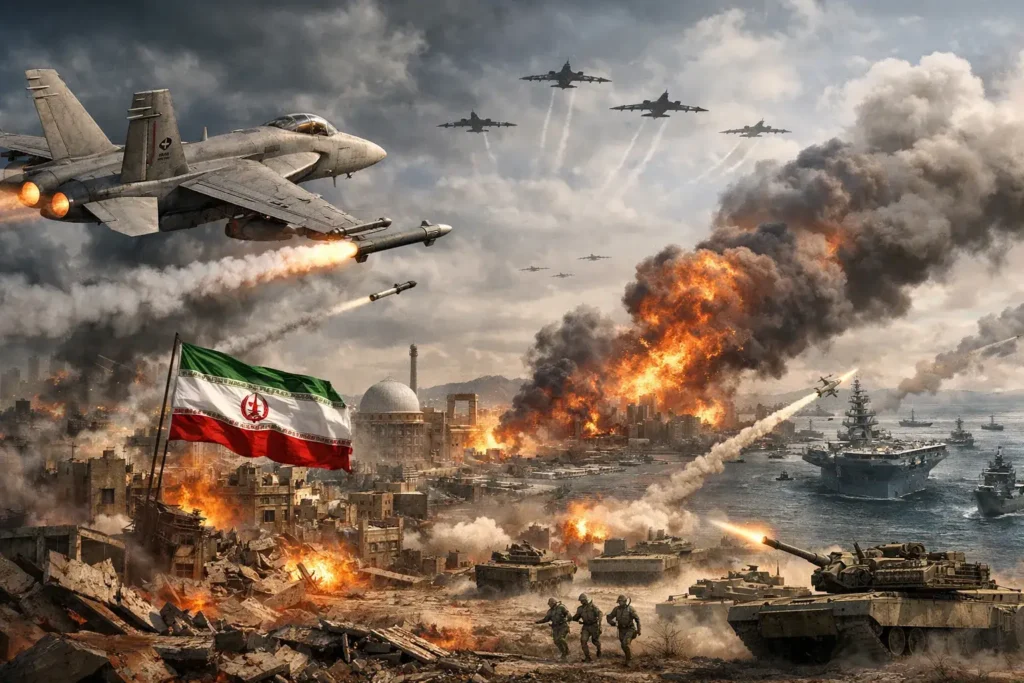
The US-Israeli war against Iran erupted on 28 February 2026. The Security Council met and produced nothing. The Secretary-General condemned and achieved nothing. The language of multilateralism was deployed with precision and accomplished nothing.
But language, however hollow, remains finite in its damage. A nuclear incident is not.
The chain connecting the Gaza catastrophe to this moment is not difficult to trace. From October 2023, as over 75,000 Palestinians were killed and a UN commission found credible evidence of genocide, the Security Council was paralysed by six successive American vetoes. Warnings that escalation could engulf the wider region were documented, delivered, and dismissed. On 28 February 2026, the United States and Israel launched Operation Epic Fury and Roaring Lion – strikes that killed Iran’s Supreme Leader, destroyed nuclear infrastructure, and triggered missile retaliation across six Arab nations.
Three weeks later, the WHO is preparing for Armageddon.
This is what institutional failure, left unreformed, ultimately produces.
The Nuclear Dimension – What the WHO Is Actually Saying
The WHO’s preparedness is not alarmism. It is professional prudence in the face of a situation that has already breached every earlier threshold.
The International Atomic Energy Agency has confirmed damage near the Natanz enrichment site and buildings close to Isfahan’s nuclear installations. Iran informed the IAEA that a projectile struck the premises of the Bushehr nuclear power plant. While the IAEA reports no damage to the plant itself, the proximity of military strikes to active nuclear infrastructure is not a theoretical concern – it is a live one.
The WHO’s nuclear preparedness covers two distinct scenarios: a radiological incident arising from damage to nuclear facilities, and the use of a nuclear weapon. Neither scenario involves Iran possessing nuclear weapons – there is no credible evidence it does. But Israel, which has never formally acknowledged its nuclear arsenal, is the only nuclear power in the Middle East. The United States maintains the world’s largest nuclear stockpile. The region is, in the most literal sense, a nuclear theatre.
When the WHO says the consequences of a nuclear incident “will last for decades,” it is speaking as a medical institution. Radiation contamination of the Persian Gulf, of agricultural land, of water sources, of human DNA across generations – these are not hypotheticals. They are the documented legacy of every nuclear incident in recorded history.
The UN’s Absent Architecture
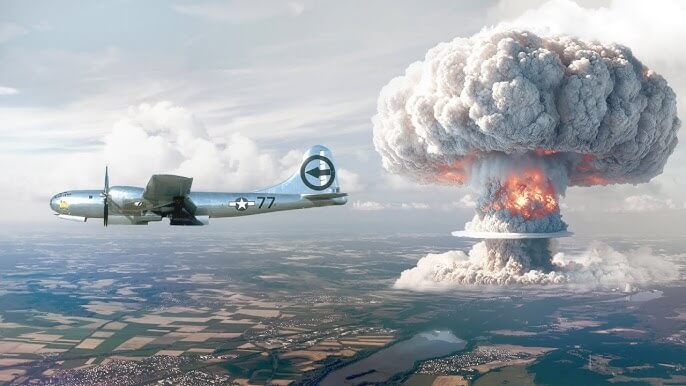
There is a bitter irony embedded in this moment. The United Nations was founded, in explicit terms, on the horror of nuclear warfare. The bombings of Hiroshima and Nagasaki preceded the UN’s founding conference by mere months. The shadow of atomic destruction shaped the Charter’s language, its ambitions, and its urgency. The promise – “to save succeeding generations from the scourge of war” – was inseparable, in 1945, from the understanding that war now carried the possibility of species-level destruction.
Eighty years later, the WHO is preparing for nuclear scenarios. And the Security Council – the body charged with maintaining international peace and security – remains paralysed by the same structural flaw that has paralysed it throughout: the veto.
It is worth stating plainly what has occurred. A permanent member of the Security Council provided, and continues to provide, over three billion dollars annually in military assistance to a state now conducting military operations near active nuclear installations. That same permanent member has exercised its veto to prevent binding UN action at every stage of the crisis’s escalation. The UN Charter’s collective security machinery does not merely fail in this scenario. It is rendered structurally incapable of functioning by design.
This is the broken promise in its starkest form: the institution built to prevent nuclear catastrophe cannot act because the states most capable of producing that catastrophe are the same states empowered to prevent the institution from acting.
The WHO’s Warning as Institutional Verdict
There is a particular significance to the fact that this warning comes from a health institution rather than a political or security body.
Politicians negotiate. Security analysts model scenarios. Diplomats hedge. But public health professionals do not issue nuclear preparedness advisories as diplomatic gestures. When the WHO reviews radiation response protocols, it is because the probability of requiring them has crossed a threshold that demands institutional action. The WHO is not predicting nuclear war. It is preparing for its consequences because the systems that exist to prevent those consequences have demonstrably failed.
This represents an institutional verdict of extraordinary gravity.
It is one thing for journalists to write, as this series has, that the UN has failed. It is another for a UN-affiliated agency – the world’s leading health body – to begin preparing, in operational terms, for the kind of catastrophe the entire post-war international order was constructed to prevent. The WHO’s nuclear preparedness is not a commentary on institutional failure. It is its most concrete manifestation.
“Jo nizam banaya tha hifazat ke liye, wahi nizam aaj khud khatrey mein hai.”
Translation – The very system built to protect us is itself now in peril.
What Preparedness Cannot Substitute For
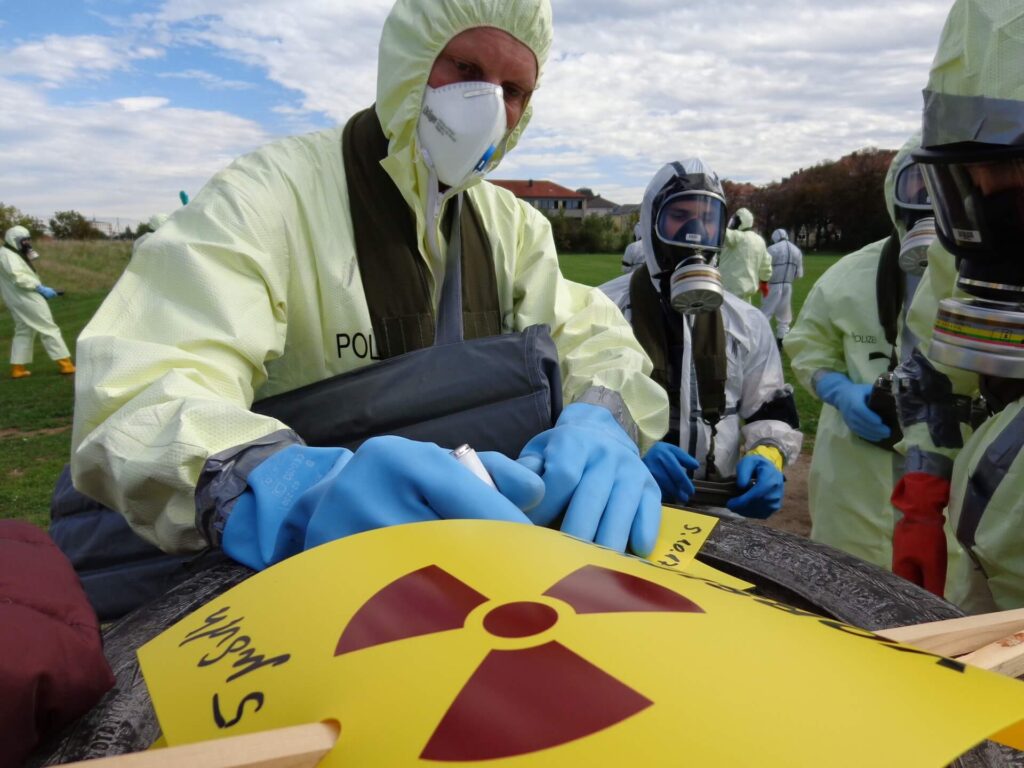
One must be precise about what the WHO’s preparations can and cannot achieve.
They can train medical personnel. They can pre-position iodine tablets and radiation monitoring equipment. They can prepare guidance on evacuation, decontamination, and long-term health surveillance. These are real, necessary, and professional preparations. They reflect an institution doing exactly what it should do in the circumstances it confronts.
But they cannot prevent radiation from spreading across borders. They cannot undo genetic damage. They cannot restore contaminated water supplies. They cannot reverse the decades-long health consequences that follow nuclear incidents even of limited scale. Balkhy’s own words make this plain: “As much as we prepare, there’s nothing that can prevent the harm that will come.”
Preparedness, in this context, is not a solution. It is a last resort. And the existence of the last resort indicts the failure of everything that was meant to precede it.
The Demand for Reform Becomes Existential
The international community must pursue – veto restriction, Security Council expansion, financial independence, enforcement of ICJ orders, and activation of the Uniting for Peace mechanism. These remain not merely desirable but urgent.
The WHO’s nuclear preparedness elevates that urgency from political to existential.
A world in which the WHO prepares for nuclear incidents while the Security Council remains paralysed is a world that has structurally accepted the possibility of nuclear catastrophe as a routine feature of great-power conflict. That acceptance, once normalised, is extraordinarily difficult to reverse. The precedent being set in this crisis – that permanent members can sponsor conflicts near nuclear installations without binding institutional consequence – will outlast this war.
The next conflict will inherit this precedent. And the one after that.
The reform proposals advanced in Part I of this series are therefore not administrative suggestions. They are survival imperatives. A Security Council that cannot act when its own member states are parties to conflict near nuclear sites is not a peace mechanism. It is a procedure for managing the interval between catastrophes.
India’s Responsibility in This Moment
India occupies a distinctive and consequential position in this crisis. As a nuclear state, as the world’s most populous democracy, as a longstanding advocate for UN reform and Security Council expansion, and as a country with deep civilisational and strategic stakes in regional stability, India cannot afford to be a spectator.
India’s ancient tradition of Vasudhaiva Kutumbakam – the world as one family – is not merely philosophical. In a moment when the WHO prepares for nuclear consequences that would cross every border and respect no sovereignty, the interconnectedness of nations is not an ideal. It is a material reality.
India’s voice for Security Council reform, its advocacy for the Uniting for Peace mechanism, its consistent record in UN peacekeeping, and its moral authority as a non-aligned democracy make it uniquely positioned to lead the coalition of nations that must now demand binding structural change. The moment requires not neutrality – but principled, constructive, and urgent engagement.
Conclusion – The Healers Should Not Be Our Last Hope
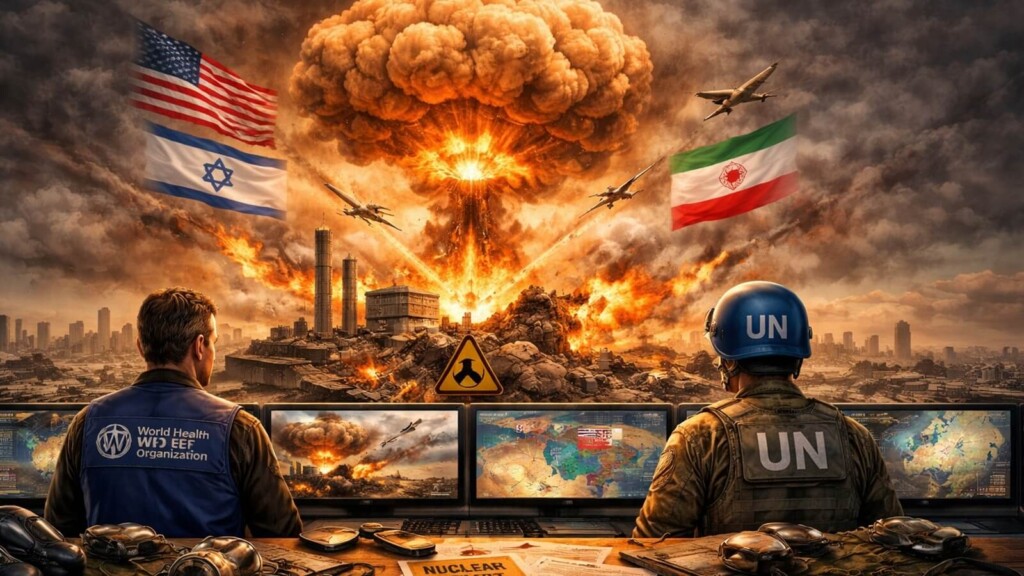
The United Nations was not built to be an emergency room. It was built to be the institution that prevents the emergencies.
When the WHO – a body whose entire mandate is healing – must prepare for nuclear catastrophe, it signals not medical failure but political failure of the most fundamental kind. The doctors are preparing because the diplomats have run out of road.
The olive-branch globe on the blue flag still flies. But in offices in Geneva and Cairo, in Amman and Dubai, health professionals are now stockpiling radiation protocols and reviewing evacuation procedures for scenarios that the Charter’s drafters believed they had consigned to history.
They had not. And we must reckon with why.
The broken promise is no longer merely a metaphor for institutional inadequacy. It is a medical emergency in preparation. The question before the international community is whether it will wait for the WHO’s preparations to become necessary, or find, finally, the political courage to make them redundant.
The healers should not be our last hope. But as of today, 19 March 2026, they very nearly are.
“Dawa mein dum hota agar, to tabib yun na rota. Beemaari wo nahin jo tan ko sataye, beemaari wo hai jisne duniya ko toda.”
Translation – If medicine alone were enough, the healer would not weep so. The sickness is not the one that afflicts the body, it is the one that has broken the world.

