

A MHA note dating back to 2000 — amended in 2007 and 2010 — continues to shield deputation in CAPFs from constitutional scrutiny under Article 320. That’s why, even after two Supreme Court judgments, the battle for full implementation remains incomplete.
There is a question that every CAPF officer has asked, and that the Ministry of Home Affairs has never publicly answered: if the Constitution of India mandates consultation with the Union Public Service Commission before a State Government officer is appointed to a Group ‘A’ post in the Central Government, why are IPS officers being posted to senior command positions in CAPFs year after year without that consultation?
The IPS is an All India Service whose officers are allocated to, and serve under, State cadres. This dual constitutional character — centrally recruited, state-allocated — creates an important legal ambiguity. When IPS officers come on deputation to Central organisations, including CAPFs, they occupy a position that is neither purely that of a Central Government officer nor straightforwardly that of a State Government officer in the manner of a State Police Service officer entirely governed by state rules. Under the Constitution and DoPT’s own consolidated deputation guidelines, where a deputation field of consideration includes State Government officers, prior consultation with UPSC is necessary before appointing such an officer. Whether officers — as All India Service officers whose cadre controlling authority remains the Central Government — squarely fall within that trigger is a contested legal question this article addresses directly.
What is not contested is this: deputation to CAPFs is governed by an internal MHA selection mechanism — the Central Police Establishment Board — whose procedures trace back to a base Office Memorandum bearing No. I.21023/21/97-.III, issued in April 2000. That base framework has since been formally amended on at least two occasions: in 2007, to address permanent secondment arrangements and in 2010 with broader updates to the tenure policy. This architecture was established well before the OGAS status of CAPFs was conclusively adjudicated by the Supreme Court. The structural question its framework raises — whether the internal MHA selection process adequately reflects constitutional and DoPT requirements — remains live across all iterations of that document.
This is not a minor procedural gap. It is a structural inequality baked into India’s internal security administration: one selection standard for CAPF cadre officers, and a different, far less rigorous standard for IPS officers who come in over their heads. Understanding it is essential to understanding why the OGAS battle — even after two Supreme Court judgments — remains incompletely implemented.
What the constitution actually says

Article 320 of the Constitution of India is explicit. The UPSC shall be consulted on all matters relating to methods of recruitment to civil services and for civil posts, on the principles to be followed in making appointments, and on the suitability of candidates for such appointments, promotions, or transfers from one service to another.
An important clarification is necessary here. The UPSC’s role under Article 320 is mandatory in the sense that the act of consultation cannot be dispensed with by the executive. However, the resulting advice of the UPSC is not binding on the government. The Government retains the right to depart from UPSC’s recommendations, provided reasons are recorded. What the Constitution prohibits is bypassing the consultation altogether — not overriding the outcome. The founding fathers nonetheless designed UPSC as an independent constitutional body precisely to inject transparency and merit into civil service appointments, and to create an accountable check on executive discretion.
DoPT’s own consolidated deputation guidelines — OM No. AB-14017/71/89-Estt.(RR), dated 3 October 1989 — read alongside UPSC’s published procedures, set out the trigger: when the field of consideration for a deputation post consists of Central Government as well as State Government officers, prior consultation with the Commission is necessary before appointing a State Government officer. The critical legal question in the CAPF- context is whether officers on state cadre posting are properly characterised as ‘State Government officers’ for this purpose.
The Legal Status of Officers: A Contested Question

IPS officers are not straightforwardly ‘State Government officers’ in the same sense as officers of the State Police Service, whose service conditions are entirely governed by state governments. The is a constitutional All India Service under Article 312. The Central Government — specifically the Ministry of Home Affairs — is the Cadre Controlling Authority for all officers. Pay, promotion, conduct rules, and postings to the Centre are all governed by Central Rules. Rule 6(1) of the Indian Police Service (Cadre) Rules, 1954 vests authority over central deputation explicitly in the Central Government — a point confirmed on the floor of Lok Sabha by the Minister of State for Home Affairs in March 2023.
This dual character — allocated to state cadres for operational purposes, but centrally controlled for service conditions — means that a categorical assertion that officers ‘definitionally’ trigger the DoPT State Government officer requirement is an overstatement. The DoPT OM was framed in the context of State service officers governed entirely by state rules; its application to All India Service officers is a matter that merits formal legal determination.
What can be said is this: during their state cadre posting, IPS officers serve under the administrative control of state governments. To the extent that deputation from that state-posting status to a Central post involves a transition from state to central authority, a plausible argument exists that the DoPT trigger applies. But the government’s contrary position — that officers retain their Central Government character throughout — is legally defensible. This ambiguity should be resolved by a formal legal determination or Supreme Court ruling, not silently assumed away by either side.
What actually happens instead
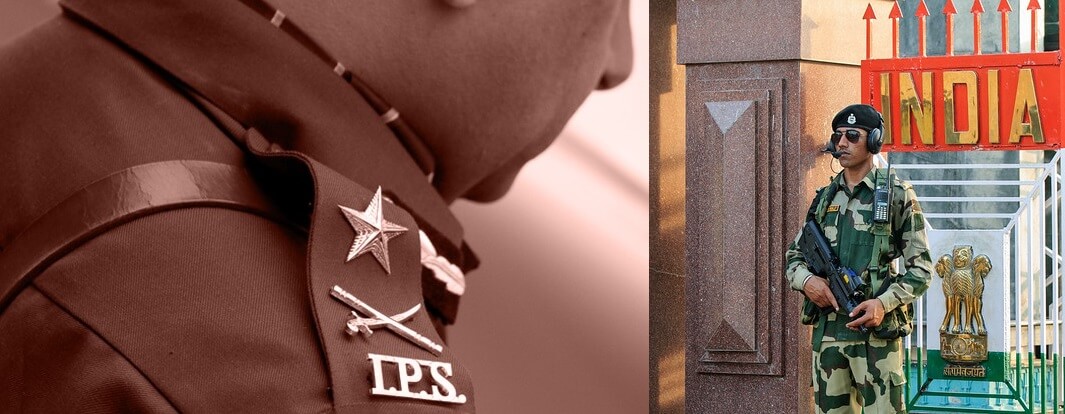
The selection of IPS officers for deputation to CAPFs follows a process that is entirely internal to the MHA. The Central Police Establishment Board (CPEB) — chaired by the Union Home Secretary and comprising senior MHA officials — assesses the suitability of IPS officers. Its recommendations then go to the Appointments Committee of the Cabinet (ACC), chaired by the Prime Minister, for final approval.
The UPSC is not in this chain. There is no independent examination of merit by a constitutional body. There is no transparent, publicly accountable selection process. The entire exercise — from identification to final appointment — is conducted within the MHA itself, the very ministry that controls the IPS cadre and has a structural interest in maintaining IPS command over CAPFs.
The authority for this process traces back to MHA Office Memorandum bearing No. I.21023/21/97-.III, originally issued in April 2000. It would be inaccurate to describe this as a single, static, 25-year-old document. The base framework was formally amended in 2007, to incorporate provisions for permanent secondment of IPS officers and in 2010, with broader updates to the tenure policy. The current operative document, as published on the MHA’s own website, reflects these amendments. However, the core procedural architecture — internal CPEB assessment, no UPSC involvement, no open vacancy process — has remained unchanged across all iterations. The foundational design question therefore persists: is that architecture constitutionally adequate?
The 2022 dilution: removing even the empanelment filter

If the original procedure was already open to question, a February 2022 amendment compounded the concern. Until then, IPS officers coming to the Centre at the DIG level were required to be formally empanelled at that level by the MHA — a process that involved the CPEB assessing their career record and vigilance history before they became eligible for deputation.
The February 2022 amendment removed even that requirement. The amended tenure policy held that IPS officers with a minimum of 14 years of experience would be eligible for DIG-level deputation without the mandatory empanelment. The stated rationale was to expand the pool of available officers, given persistent vacancies at the DIG level in CAPFs.
The effect was to eliminate the one internal filter that provided even a minimal quality check — the CPEB empanelment process. DIG-level CAPF posts could now be filled by IPS officers assessed only by years of service, not by any structured evaluation of suitability for the specific operational demands of the force they would command.
The contrast: how every other deputation is handled
To understand how exceptional the IPS-to-CAPF arrangement is, consider what applies to every other officer going on deputation to a Group ‘A’ Central Government post.
For CAPF cadre officers themselves seeking deputation to other central ministries — a right that is one of the defining features of OGAS membership, and one that the government has consistently denied them — the process would require UPSC consultation, vacancy circulars, a merit-based selection committee, scrutiny of ACRs, vigilance clearances, cadre authority consent, and ACC approval. The process is open, documented, and subject to independent oversight.
For IPS officers going into CAPF command posts: an internal MHA board, an OM framework dating to 2000, and a political executive committee. No UPSC. No independent merit assessment. No open vacancy process. No structured comparison of all eligible candidates.
This asymmetry is not an accident. It is a design feature of a system built to ensure that the command of CAPFs remains institutionally anchored to the IPS , regardless of what a merit-based, UPSC-governed selection would produce.
The recruitment rules problem: legality of the embedded quota

CAPF Recruitment Rules embed the IPS deputation quota directly — currently 20–25 percent at DIG level (SAG), 50 percent at IG level (SAG), and 75 percent at level (HAG — Higher Administrative Grade). These Recruitment Rules were framed in consultation with UPSC, as required by Article 320 read with the UPSC (Exemption from Consultation) Regulations, 1958.
Here is the crucial distinction that is consistently overlooked: UPSC was consulted on the Recruitment Rules — the framework document that says a percentage of posts shall be filled by officers on deputation. UPSC was never consulted on the individual selections under that framework. The rules say ‘how many,’ but the constitutional requirement is that UPSC be involved in deciding ‘whom’ — the suitability of specific candidates.
The 2024 Amendment to Entry 6 of Schedule II: A Critical Development

Any analysis of the UPSC consultation requirement for individual deputation appointments must now grapple with a significant legal development that post-dates the framework’s original construction.
In March 2024, the DoP&T issued Notification No. F. No. 39018/03/2023-Estt.(B) dated 15 March 2024, substituting Entry 6 of Schedule II of the UPSC (Exemption from Consultation) Regulations, 1958. The amended Entry 6 now covers: all Group ‘A’ posts and all Group ‘B’ posts up to Level 13A of the Pay Matrix, filled by the method of deputation/re-employment or deputation (including short-term contract) or absorption. This creates a blanket exemption from UPSC consultation for all Group ‘A’ posts filled by deputation — encompassing every deputation post in the CAPFs. It was preceded by an earlier expansion of Entry July 2023 (GSR 502E), making the 2024 amendment the second successive step in a progressive broadening of the exemption.
This amendment substantially alters the legal landscape in which the argument for mandatory individual UPSC consultation must be made. A claim that such appointments require UPSC concurrence under current law must contend with this blanket exemption. The government can point to Entry 6 (as amended) as a lawful regulatory basis for proceeding without individual UPSC consultation.
This does not mean the constitutional question is settled. A credible counter-argument exists: the Exemption Regulations are subordinate legislation and cannot override Article 320 of the Constitution itself. A blanket exemption for all Group A deputation posts — particularly one expanded in two successive notifications in 2023 and 2024, coinciding precisely with the final stages of the CAPF OGAS litigation — may itself require constitutional scrutiny. The question of whether these notifications were designed to pre-empt or neutralise the effect of the litigation is one that a constitutional court is best placed to answer. That argument, however, needs to be expressly litigated and cannot be assumed.
Why this matters for the OGAS battle

The Supreme Court’s landmark judgment in Sanjay Prakash & Ors. v. Union of India & Ors. (2025 INSC 779), delivered on 23 May 2025 by a bench of Justice Abhay S. Oka and Justice Ujjal Bhuyan, held that the Group ‘A’ Executive cadres of all five CAPFs are Organised Group ‘A’ Services for all purposes — not merely for financial benefits. The Court directed a progressive reduction of deputation to the SAG level within an outer limit of two years, completion of the cadre review due since 2021 within six months, and a comprehensive amendment of Recruitment Rules in each CAPF to align with OGAS status.
| Case Citation — Main Judgment Sanjay Prakash & Ors. v. Union of India & Ors. | 2025 INSC 779 | Civil Appeal No. 13104 of 2024 | Decided: 23 May 2025 | Bench: Justice Abhay S. Oka and Justice Ujjal Bhuyan |
The 2025 judgment was the second, and more consequential, of two judicial interventions. The first — Union of India v. Harananda & Ors. (2019) 14 126, decided 5 February 2019 — recognised OGAS status for CAPFs but only for the limited purpose of Non-Functional Financial Upgradation (NFFU). It did not direct structural changes to Recruitment Rules, deputation quotas, or cadre management. The Delhi High Court subsequently interpreted the 2019 ruling as confined to financial benefits, leaving the broader cadre questions unresolved. It was precisely because the 2019 judgment was incomplete in its scope that fresh litigation became necessary — and the 2025 judgment in Sanjay Prakash addressed those unresolved questions definitively. The phrase ‘two judicial victories’ is accurate, but the distinction in their respective scope is material: 2019 delivered financial equity; 2025 directed structural reform.
| Case Citation — First Judgment Union of India v. Harananda & Ors. | (2019) 14 126 | Decided: 5 February 2019 | Scope: OGAS status for NFFU purposes onlySCC |
The Government’s Review Petition against the 2025 judgment was dismissed on 28 October 2025 by a bench of Justice Surya Kant and Justice Ujjal Bhuyan. The Court found no grounds to reconsider the May 2025 verdict, leaving the directives — on SAG-level reduction, cadre review, and Recruitment Rule amendment — fully operative.
The government has done none of this. It continues to make appointments to senior CAPF positions without notifying any amendment in service rules, without completing any cadre review, and — under the post-2024 Entry endment — without UPSC involvement in the individual selection process. On 10 February contempt proceedings before the Supreme Court, Additional Solicitor General Aishwarya Bhati — appearing for the Government of India — used the term ‘statutory intervention’ to describe the Government’s intended legislative response to the OGAS directives. This on-record statement in open court suggests the Government intends to enact new law to address deputation to CAPFs, rather than implement the existing judgment by amending service rules.
If that statutory intervention results in a gazette notification that retains deputation with a ‘separate strength,’ without simultaneously mandating either UPSC-supervised individual selection or an equivalent independent merit-based mechanism, it will be entrenching an arrangement that contradicts the spirit of the Supreme Court’s verdict — even if the 2024 Entry endment provides a regulatory shield against the Article 320 challenge in its current form.
What reform must look like

The correction is achievable if the legal framework and political will align. First, the 2024 amendment to Entry 6 of Schedule II of the UPSC Exemption Regulations — a blanket exemption issued by DoP&T vide Notification No. F. No. 39018/03/2023-Estt.(B), 15 March 2024 — warrants independent judicial scrutiny. Whether subordinate legislation can create a blanket exemption from the consultation mandate of Article 320, particularly in the post-OGAS context, is a question that merits formal adjudication before any statutory intervention is enacted.
Second, the February 2022 amendment removing the mandatory DIG-level empanelment requirement must be reversed. Seniority in years — the surviving criterion — is not a substitute for assessed suitability for the specific operational environment of a border-guarding or counter-insurgency force.
Third, vacancy circulars for deputation posts in CAPFs must be issued openly, in the same manner as vacancy circulars for any other Group ‘A’ deputation post, so that the selection process is transparent and subject to oversight.
Fourth — as part of any gazette notification or statutory instrument arising from the Supreme Court’s order — the Recruitment Rules for CAPF deputation posts must be amended to require either UPSC consultation for individual selections, subject to the Entry 6 constitutional question being resolved, or an equivalent independent merit-based selection mechanism with published criteria and outcomes. Anything less would perpetuate, under a new legal garb, the same governance anomaly that has endured for 25 years.
Conclusion: the equality the constitution demands
Every CAPF officer who sits before a UPSC selection committee for promotion or deputation — competing on merit, in an open process, before an independent constitutional body — deserves to know that the officers placed above them by deputation from the IPS were held to the same standard. Currently, they are not.
The Constitution of India does not create a two-tier selection system for government appointments. Article 320 applies equally. The dual constitutional status of IPS officers — as an All India Service allocated to state cadres but controlled by the Centre — does not resolve the selection-integrity question in the Government’s favour. It is a complexity that demands a formal, publicly reasoned resolution, not administrative silence.
India’s CAPF officers guard the nation’s most sensitive borders, fight insurgency in its most difficult terrain, and have bled and died in service of a country that has, for 25 years, applied a different and lesser standard to the process by which their commanders are chosen. Whether that standard is constitutionally infirm under the current legal framework, or only democratically indefensible, the outcome for the officers on the ground is the same. That demands correction.


Dear Neeraj,
While I always appreciate the platform you provide for critical discourse on internal security and administrative reforms, I find myself in strong disagreement with the perspectives expressed regarding the status of the Indian Police Service (IPS) and the nature of their deputation to the Central Armed Police Forces (CAPFs).
The core premise of the article suggests a “structural inequality” and questions the constitutional validity of IPS officers serving in Central Government posts without specific UPSC consultation for each individual appointment. However, I believe this overlooks the fundamental legal and constitutional architecture of the All India Services (AIS).
I would like to place the following points for your consideration:
1. Nature of the Service: The Indian Police Service is not a “State service” in the way the article implies. It is an All India Service, specifically constituted by the Parliament under Article 312 of the Constitution. The President of India is the appointing authority for IPS officers. Their character is inherently national, and their recruitment is conducted by the UPSC at a central level.
2. Central vs. State Authority: While IPS officers are allocated to state cadres for administrative convenience and to serve the federal structure of our country, this does not make them “State government employees” in the restrictive sense. They remain officers of the Government of India. The Central Government remains the ultimate authority, exercising both administrative and disciplinary control over the service.
3. The Deputation Framework: The fact that these officers are deputed to states to serve does not diminish their status as Central Government employees. When they return to the Centre – whether in the IB, CBI, or CAPFs – they are returning to their primary parentage. The suggestion that they are “State Government officers being appointed to Central Government Group ‘A’ posts” ignores the unique “dual-loyalty” and bridge-like role that the AIS was designed by Sardar Patel to fulfil.
4. Institutional Continuity: The administrative mechanisms, such as the Central Police Establishment Board (CPEB), are designed to ensure that the leadership of the nation’s internal security forces remains integrated. The existing Recruitment Rules, which the article notes were indeed framed in consultation with the UPSC, already provide the legal mandate for these postings.
While the “Organised Group A Service” (OGAS) status for CAPF cadre officers is a welcome and hard-fought development for their career progression, it should not be framed as an “either-or” battle against the IPS. The internal security of India requires a collaborative leadership model rather than a fragmented one based on narrow interpretations of “State” vs “Central” service.
I value your dedication to journalism, which is why I felt it necessary to reach out directly with this rejoinder. I hope you will consider these points to provide your readers with a more balanced perspective on this complex issue.
My Response to Your Comments
A Personal, Point-by-Point Engagement
________________________________________
Thank you for engaging so seriously with the article. These are substantive objections and they deserve a careful response — not a dismissal. I want to address each of your four points directly, because I believe that while several of your arguments are legally defensible, they consistently conflate what is legally convenient with what is constitutionally required. That distinction is precisely what the article is about.
But before I engage with the legal architecture, I want to say something that no Office Memorandum, no Recruitment Rule, and no constitutional provision can fully capture — and that is the human reality behind this debate.
The men and women of the Central Armed Police Forces are not abstractions in a service jurisprudence argument. They are officers who have spent careers at 18,000 feet in the Glaciers, in the bamboo forests of Bastar, on the banks of the Brahmaputra where the land itself shifts under your feet. They are officers who grew up in the very villages and districts they now guard — sons and daughters of farmers, schoolteachers, and small traders from the hills of Uttarakhand, the plains of Bihar, the coasts of Odisha — who joined a uniformed service because it was the highest aspiration their circumstances could reach for. This “son of soil” character of the CAPF cadre is not a sentimental observation. It is operationally significant.
A CAPF officer posted to a counter-insurgency grid in Chhattisgarh or a border outpost in Arunachal Pradesh carries with him an understanding of terrain, language, community trust, and local human intelligence that cannot be acquired in a short deputation tenure. That ground knowledge is the CAPF’s institutional capital — built over careers, not borrowed for three years.
And then there are the martyrs. Between 2014 and 2024 alone, the CAPFs lost hundreds of officers and personnel in the line of duty — in Naxal ambushes in Sukma and Bijapur, in terrorist attacks in Pulwama and Uri, in avalanches and altitude-related casualties on the northern frontier. The overwhelming majority of those who fell were cadre officers and personnel of the CAPFs — people who had spent their entire service lives within these forces, who knew their men, who knew their ground, and who led from the front because that is the only way CAPFs operate. I say this not to diminish the sacrifice of any IPS officer — there have been IPS officers who have given their lives in service, and their courage is equally honoured — but to make a point that the debate about command and selection is inseparable from the reality of who actually bleeds in these forces and why earned, cadre-rooted leadership matters.
It is with this reality in the background that I now turn to your legal arguments.
________________________________________
On Your First Point: The IPS as an All India Service
You are right that the IPS is not a “State service” in the manner of a State Police Service — and I want to be clear that the article says exactly this. I wrote that IPS officers “are not straightforwardly ‘State Government officers’ in the same sense as officers of the State Police Service, whose service conditions are entirely governed by state governments.”
Where I disagree with you is in the conclusion you draw from this. You suggest that the IPS’s “inherently national” character settles the constitutional question in the Government’s favour. I do not believe it does. My position is more precise: a categorical assertion that IPS officers definitionally trigger the DoPT State Government officer requirement is an overstatement — but so is the reverse assertion that they definitionally do not.
The DoPT’s own consolidated deputation guidelines (OM No. AB-14017/71/89-Estt.(RR)) specify that when the field of consideration includes State Government officers, prior UPSC consultation is necessary. During their state cadre posting, IPS officers serve under the administrative control of state governments. The transition from that state-posting status to a Central CAPF command post is precisely where the legal ambiguity lives — and my argument is that this ambiguity must be formally resolved, not silently assumed away by either side. By asserting the matter is settled because the IPS character is inherently national, you are doing exactly what I am cautioning against.
________________________________________
On Your Second Point: Central vs. State Authority
You are substantially correct that the Central Government retains ultimate authority over IPS officers. Rule 6(1) of the IPS (Cadre) Rules, 1954 vests central deputation authority in the Central Government — this was confirmed on the floor of Lok Sabha in March 2023, and I do not dispute it.
But I think this point, while accurate, answers a question I was not asking. The issue I raise is not who controls IPS officers — it is whether individual selections to CAPF command posts involve UPSC consultation on candidate suitability.
Article 320 mandates consultation on the “suitability of candidates for such appointments, promotions, or transfers from one service to another.” The distinction I draw in the article is critical: UPSC was consulted on the Recruitment Rules — the framework that determines what percentage of posts shall be filled by IPS officers on deputation. UPSC was never consulted on the individual selections under that framework. The rules say how many; the Constitution requires UPSC to be involved in deciding whom.
And “whom” matters enormously in the CAPF context. Commanding a battalion in a Left Wing Extremism affected district, or a sector along the Line of Actual Control, is not a generic administrative posting. It demands officers who understand the specific operational culture of that force — officers who have, in many cases, fought alongside the men they now command, who have grieved with them when colleagues were killed, and who have earned their trust over years of shared hardship. The question of suitability is not a bureaucratic box to be ticked. It is a question of whether the person standing at the head of a column in Sukma or a post in Galwan has the right preparation for that responsibility. UPSC’s role in answering that question is not a procedural luxury. It is a constitutional guarantee.
Even if I grant your premise in its entirety — that IPS officers remain Central Government employees throughout their careers — the question of whether their individual appointments to specific CAPF positions require independent UPSC scrutiny of suitability remains unresolved. Your argument establishes the character of the service. It does not establish the adequacy of the selection mechanism.
________________________________________
On Your Third Point: The Deputation Framework and Sardar Patel’s Design
I have great respect for the founding vision of the All India Services, and I do not dispute Sardar Patel’s intent. But an appeal to founding purpose, however resonant historically, is not a constitutional argument. My concern is not with the legitimacy of IPS officers serving in CAPFs — it is with the process by which specific individuals are chosen for specific command posts.
The February 2022 amendment is where I think the “collaborative model” argument breaks down most clearly. Until then, IPS officers coming to the Centre at the DIG level were required to be formally empanelled — a process that involved the CPEB assessing their career record and vigilance history. The 2022 amendment removed even that requirement. An IPS officer with 14 years of experience can now be posted to a DIG-level CAPF position assessed only by years of service — without any structured evaluation of suitability for the specific operational demands of a border-guarding or counter-insurgency force.
Consider what that means in practice. A CAPF cadre officer who aspires to command at that level has spent those same 14 years entirely within the force — learning its doctrine, its terrain, its men, its institutional memory. He has perhaps led operations in which colleagues were killed. He has attended the funerals of constables from his own unit. He has written letters to martyrs’ families. His understanding of the force is not theoretical — it is carved out of lived operational experience. Against that, a selection mechanism that measures an incoming IPS officer solely by years of service — with no structured comparison of who is better suited for that specific command — is not a collaborative model. It is seniority substituting for merit assessment. It dishonours the ground experience that CAPF cadre officers have accumulated.
I would also ask you to engage with the asymmetry I document. CAPF cadre officers seeking deputation to Central ministries — a right that OGAS status entitles them to — must go through consultation, vacancy circulars, structured merit assessment, ACR scrutiny, and ACC approval. IPS officers going the other direction face an internal MHA board and no independent oversight. If the bridge is genuinely bidirectional, as the original AIS design intended, the selection standards should be comparable in rigour. Currently, they are not.
________________________________________
On Your Fourth Point: The CPEB and the Legal Mandate of Recruitment Rules
You argue that the CPEB and existing Recruitment Rules already provide the legal mandate for these postings. I would ask you to look more carefully at the structure of what I am actually critiquing.
The CPEB is chaired by the Union Home Secretary and comprises senior MHA officials. The MHA is also the Cadre Controlling Authority for IPS officers — the very ministry with a structural interest in maintaining IPS command over CAPFs. There is no independent examination of merit by a constitutional body, no transparent or publicly accountable selection process, and the entire exercise is conducted within the MHA itself. That the process culminates in ACC approval does not introduce independence — the ACC is the political executive, not a merit-assessment body.
On the Recruitment Rules: yes, they were framed in consultation with UPSC, and I say so in the article. But UPSC’s consultation on the framework — how many posts, at what percentage — is constitutionally distinct from consultation on individual candidate suitability. UPSC was told “25% of posts at DIG level will be filled by IPS officers.” UPSC was never asked “is this particular officer suitable for this particular post?” Article 320 speaks to the latter.
I acknowledge, fully, that the March 2024 amendment to Entry 6 of Schedule II of the UPSC Exemption Regulations now provides a regulatory shield against the Article 320 challenge for individual appointments. I do not obscure this. But I also raise the countervailing argument that subordinate legislation cannot override Article 320 of the Constitution itself — and whether a blanket exemption issued by executive notification, expanded in two successive steps in July 2023 and March 2024, coinciding precisely with the final stages of the CAPF OGAS litigation, is constitutionally valid is a question that must be expressly litigated and cannot simply be assumed to be settled.
________________________________________
On Your Closing Argument: Collaboration vs. Fragmentation
I genuinely agree that the internal security of India requires a collaborative leadership model. And I want to be direct: nothing I have written argues that IPS officers should not serve in CAPFs. My argument is that whoever commands a CAPF — whether from the IPS, the CAPF cadre, or any other service — should be selected through a process that is transparent, merit-based, and independently overseen. That is not fragmentation. That is accountability.
Here I want to say something plainly about the “son of soil” dimension of this debate, because I think it is too often set aside as sentiment when it is actually a serious argument about institutional effectiveness. The CAPFs are not conventional police forces. The BSF operates across 6,386 kilometres of international border. The CRPF has been the primary federal response to both Left Wing Extremism and counter-terrorism operations for decades. The ITBP mans some of the highest and most inhospitable posts on earth along the China border. The SSB guards the open and uniquely complex borders with Nepal and Bhutan. The CISF protects critical national infrastructure including nuclear installations and major airports. Each of these forces has its own doctrine, its own operational culture, its own relationship with the terrain and the communities around it.
CAPF cadre officers who rise through these forces carry that institutional knowledge. When a senior CRPF officer leads a formation in Bastar, he is not consulting a manual — he is drawing on fifteen or twenty years of accumulated operational intelligence about that specific landscape and its specific adversary. When a BSF officer commands a sector on the Bangladesh border, he understands the seasonal rhythms of the terrain, the patterns of cross-border movement, and the trust relationships with border communities that make intelligence flow possible. That is irreplaceable expertise. A selection system that bypasses an independent assessment of whether an incoming IPS officer has comparable preparation for those specific operational environments is not just a procedural shortcoming. It is a risk to mission effectiveness — and ultimately, a risk to the lives of the personnel those officers command.
The martyrs of the CAPFs stand as the most solemn argument in this debate. They did not fall because of a service jurisprudence anomaly. They fell because the work is dangerous, the terrain is unforgiving, and the adversary is determined. But they deserve a system that ensures their commanders — at every level — were chosen on merit, on operational suitability, and through a process that no ministry could shape to its own institutional interest. That is what I am arguing for. Nothing less.
The Supreme Court’s judgment in Sanjay Prakash & Ors. v. Union of India & Ors. (2025 INSC 779), delivered on 23 May 2025, directed precisely the structural reform I am calling for — progressive reduction of IPS deputation to the SAG level, cadre review, and Recruitment Rule amendments. The Government’s response, stated on record in open court by the Additional Solicitor General, is to pursue “statutory intervention” rather than implement the judgment. The Review Petition was dismissed on 28 October 2025. The directives stand. Their implementation, as of today, does not.
If the anticipated statutory intervention preserves IPS deputation without mandating an independent, merit-based selection mechanism, it will entrench — under new legislative garb — the very anomaly the Supreme Court directed be corrected. That is not a collaborative model. That is the appearance of reform without its substance.
________________________________________
In Closing
I respect the seriousness with which you have engaged with this article. Your points are not frivolous and I have tried to treat them accordingly. But what I believe they do not demonstrate is that the current selection mechanism is constitutionally adequate, transparently merit-based, or consistent with the equality that Article 320 demands.
The Constitution of India does not create a two-tier selection system for government appointments. The dual constitutional status of IPS officers does not resolve the selection-integrity question — it is a complexity that demands a formal, publicly reasoned resolution.
Every CAPF officer who sits before a UPSC selection committee — competing on merit, in an open process, before an independent constitutional body — deserves to know that the officers placed above them by deputation were held to the same standard. The officer who served thirty years on the front lines, who led operations in which his colleagues were martyred, who carried the bodies of his men and attended their funerals, who wrote to their families — that officer deserves to know that the person commanding him was assessed by the same rigorous, independent standard to which he was held.
Currently, that is not the case. That is what I wrote. And that is what demands correction.
IPSs are trying to get Constitution amended due to their closeness with Politicians. Fight is to be with the help of politicians through general public to get right.