


Even today many of India’s big businesses are managed by joint families that share both dividends and dining tables. Are these joint families a ticking time bomb of ego and entitlement – or the smartest, most underrated governance model in capitalism? Here are 10 case-studies on how big joint-family–run businesses manage their affairs:
1. Reliance Industries – The Ambani Siblings as Business Vertical CEOs

Reliance is a textbook case of how a promoter family can behave like a mini holding company inside a listed giant. Mukesh Ambani remains the big strategic brain, but his three children now “own” distinct verticals: Akash in telecom (Jio), Isha in retail, Anant in new energy and O2C transition. All three sit on group boards and are embedded in operations, while day-to-day execution rests with a deep bench of professional CEOs and CFOs. The family uses AGMs almost like a public “family council”, signalling succession, new projects and capital allocation to investors and employees at once. Internally, that division of labour reduces sibling rivalry—each has a canvas to prove themselves—yet they still benefit from shared political capital, cash flows and brand. It’s joint family logic expressed through modern corporate structure.
2. Aditya Birla Group – Central Family, Highly Professional Peripheries

The Aditya Birla Group shows how a large business family can sit at the centre without micromanaging each company. Kumar Mangalam Birla chairs a group that spans metals, cement, fashion, financial services, telecom and now paints and B2B e-commerce. Family members largely operate at holding-company and board level, while each major vertical has a full professional leadership team accountable for performance. The family adds value by setting risk appetite, choosing big strategic bets (like global aluminium, paints, or telecom consolidation), and acting as long-term capital providers when markets are nervous. Structurally, the group behaves like a disciplined conglomerate—tight on capital discipline, relatively clean on related-party transactions—while still drawing on the “Birla” trust factor built over a century. This blend of professional autonomy with family oversight keeps both investors and relatives aligned.
3. Godrej – Family Council + Clustered Businesses

The Godrej family manages complexity through two levers: a formal family council and a pragmatic regrouping of businesses. A structured council brings together senior family members to discuss issues of ownership, values, philanthropy and succession separately from company boardrooms. On the business side, their 14 verticals have recently been reorganised into three clusters to sharpen focus and accountability, while different family members chair or guide specific companies. Younger leaders like Nisa Godrej have played a role not just in business strategy (especially FMCG) but also in CSR and the functioning of the family council itself. The result is a system where disagreements can be channelled into structured forums instead of erupting in operating companies. Godrej looks, from the outside, like a modern conglomerate—but underneath it runs a sophisticated joint-family governance machine.
4. Murugappa Group – Running on a Written Family Constitution

Murugappa is one of the clearest examples of a family that tried to put joint-family norms into writing. A detailed family constitution spells out who can enter the business, how roles are allocated, and what happens when someone wants to exit or retire. A family council deals with internal disputes and shareholder issues, allowing listed companies like Cholamandalam Finance or Tube Investments to stay relatively insulated from drama. When a high-profile conflict arose around a female heir’s demand for a board seat, the constitution and council became the arena for negotiation instead of the operating companies. The group’s philosophy is “stewardship” — the idea that each generation inherits an asset to grow, not to cash out. That ethos, plus strong professional management, helps the extended clan manage a US$9 billion empire despite periodic friction.
5. TVS Group – Branch-wise Split Without Killing the Brand

The TVS family faced a classic joint-family dilemma: multiple branches, many companies, one brand. Their solution was an intricate restructuring of ownership, where each major branch took clear control of specific companies—TVS Motor, TVS Supply Chain, Sundram Fasteners and others—while untangling cross-holdings built up over decades. In practice, each branch now runs its own cluster of businesses, with its own strategy and capital-raising decisions, but all continue using the TVS name and legacy. This reduced the risk of future succession fights and made it easier for investors to read who is really in charge. It’s a case study in how a century-old joint family can accept that “togetherness” sometimes means coordinated separation—owning different islands under the same flag rather than arguing over a single castle.
Also Read: The Great Indian Joint Family Circus: How billion-dollar business empires are managed from the kitchen and dining table
6. Burman Family – Owners in the Background, Professionals in Front
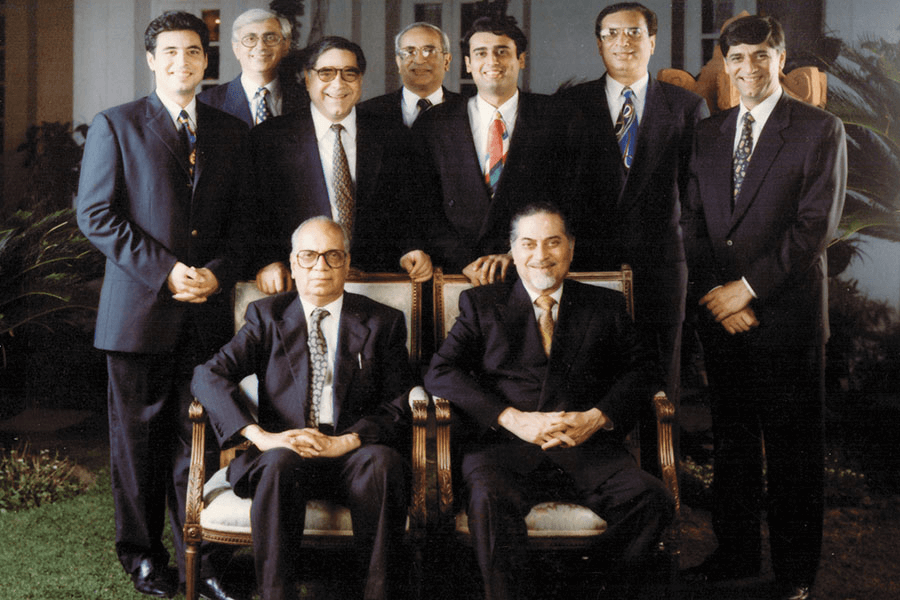
Dabur is often cited as one of the first Indian business families to consciously step back from management while keeping ownership. The Burmans handed over day-to-day running of Dabur to professionals in the late 1990s and fully completed the transition by the early 2000s, even as they retained promoter shareholding and board influence. Family members now run a separate investment platform (including financial services like Religare) while Dabur operates as a highly professionalised FMCG company with a non-executive chairman from the family and a CEO from outside. The joint family thus manages “two rooms”: one for the listed consumer business with strict governance norms, and one for family capital deployed into new ventures. That separation keeps kitchen-table politics away from marketing and R&D decisions, while still letting the Burman surname open doors in new sectors.
7. Bajaj – Friendly Split, Parallel Empires
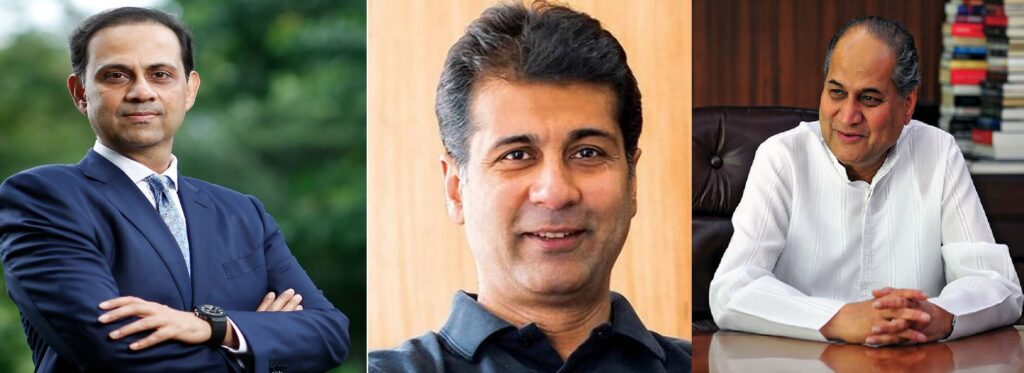
The Bajaj story shows how a joint family can split and still create value on both sides. Descendants of founder Jamnalal Bajaj now control two broad constellations: the Mumbai-centred Bajaj Group (auto, finance, electricals, investments) and the Shishir/Kushagra Bajaj-led group (sugar, power and FMCG), each with its own listed companies and leadership. An informal division of businesses between Rahul Bajaj’s sons Rajiv and Sanjiv—auto on one side, finance and investments on the other—further clarified roles without a public war. The “Bajaj” brand and Gandhi-era legacy remain a shared emotional asset, even as strategies differ. By moving from a single, tightly interlocked empire to multiple clusters, the family essentially converted potential conflict into entrepreneurial energy. The lesson: in big joint families, separate balance sheets can sometimes protect shared surnames.
8. Hinduja Group – “Everything Belongs to Everyone”- Until It Doesn’t
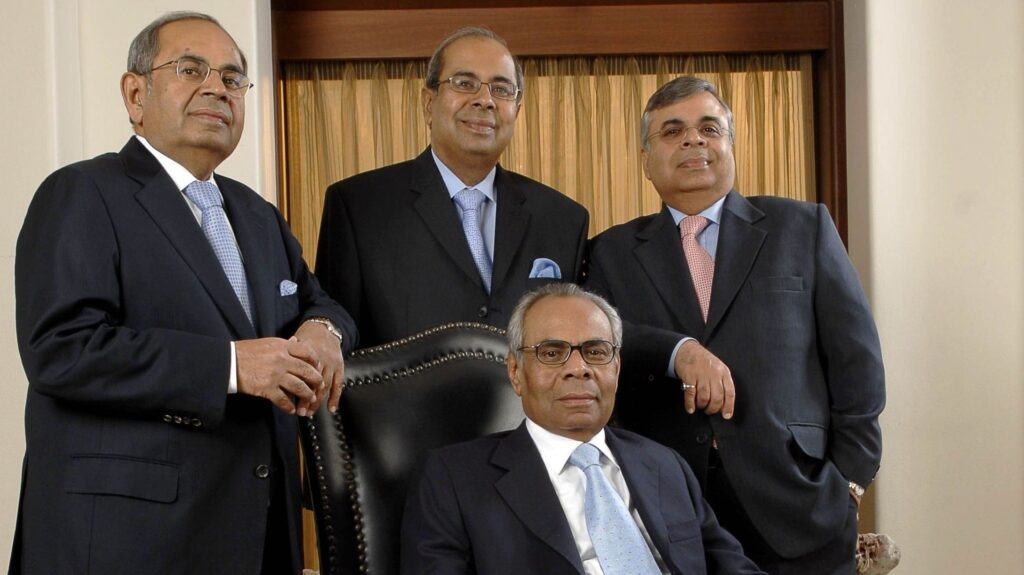
For decades, the Hinduja brothers ran their global empire with a simple internal motto: “everything belongs to everyone.” The four brothers jointly controlled a sprawling group active in trucks, banking, oil, healthcare, real estate and more, with crossholdings and shared family offices rather than neatly divided fiefdoms. This extreme collectivism gave them flexibility—any brother could move capital or relationships where needed—but also relied heavily on personal trust. When age, illness and succession questions arose, that very motto became contested, leading to legal disputes over whether assets were truly common or individually owned. The Hinduja case shows the upside and downside of joint-family management at global scale: unity can multiply wealth faster than any private equity fund, but the lack of clear partitions can turn succession into a courtroom drama if the next generation doesn’t share the same instinctive trust.
9. OP Jindal Group – Pre-planned Split with a Matriarch as Anchor
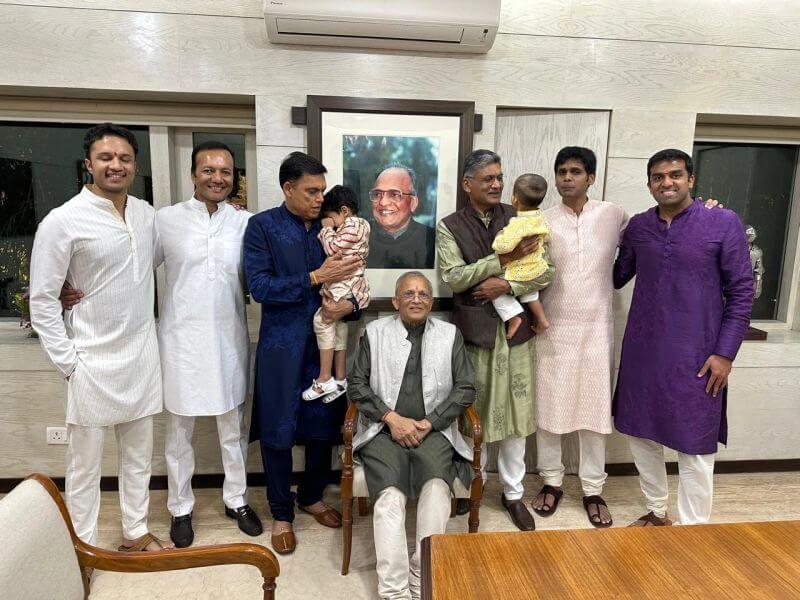
Before his death in 2005, steel baron O.P. Jindal did something many patriarchs avoid—he clearly allocated different businesses to each of his four sons: pipes to Prithvi Raj, carbon steel and JSW to Sajjan, stainless to Ratan, and power/rail ventures to Naveen, backed by cross-holdings so everyone benefited from overall growth. His widow Savitri Jindal became non-executive chairperson and emotional anchor of the group, while each brother built his own listed powerhouse. Later, the family began simplifying crossholdings to make structures more investor-friendly, but the basic design remained: four entrepreneurs, one legacy, one family matriarch. It’s a rare example of succession planning done before crisis, not after. The model accepts that siblings will have different risk appetites and political bets but keeps them tied together financially and emotionally long enough for the next generation to find its own balance.
10. Mahindra – From Family Firm to “Professionals First” Culture
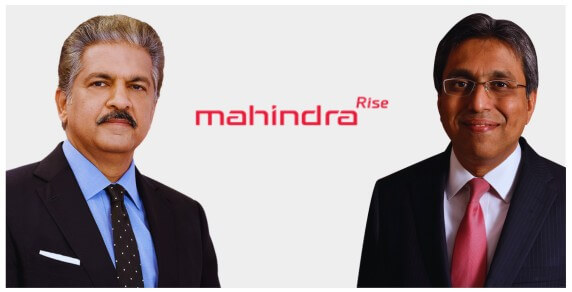
The Mahindra Group still has a strong promoter surname at the top, but its day-to-day functioning looks much closer to a global corporation than a traditional joint family. Anand Mahindra chairs a diversified group in autos, farm equipment, IT, finance, hospitality and aerospace, but most operating companies are led by seasoned professionals hired and promoted on merit. The family’s role is to set culture—performance, innovation, integrity—and to guard the long-term strategic direction rather than allocate posts to relatives. Strong boards, independent directors and transparent evaluation systems make it easier for non-family talent to thrive, while family members explore newer ventures (education, sports, media) through separate platforms. Mahindra shows one possible “end state” for big joint families: instead of trying to squeeze every cousin into the org chart, you turn the group into a talent magnet where the family is custodian, not crowd.
Conclusion
Family-run conglomerates are often dismissed as relics of a feudal past, but their survival tells a different story. The most successful have learned to separate ownership from management, emotion from execution, and legacy from entitlement. They write constitutions, groom daughters as much as sons, bring in professionals and, when needed, even split to save the surname. In a volatile world of short-term capital and fleeting valuations, joint families offer something rare: patient time horizons and a deep sense of stewardship. Their challenge now is not just to stay rich, but to stay relevant—and ethical—across yet another generation.