

How ultra-cheap palm oil has quietly taken over the Indian processed food shelf — and what that means for health and the environment

Walk down any supermarket aisle in India and you’ll find a common thread running through chips, namkeen, instant noodles, biscuits, and even frozen snacks — palm oil. It’s rarely mentioned upfront, often hidden behind vague labels like “vegetable oil” or “blended edible oil.” Yet, this single ingredient has reshaped the economics of India’s food industry and the health profile of its consumers.
Palm oil’s rise is no accident. It’s the world’s most efficient oil crop, yielding far more per hectare than soybean or sunflower. For manufacturers, it’s a dream come true — cheap, stable, and versatile. For consumers, it’s a silent ingredient in every processed food they eat.
Why Manufacturers Love Palm Oil
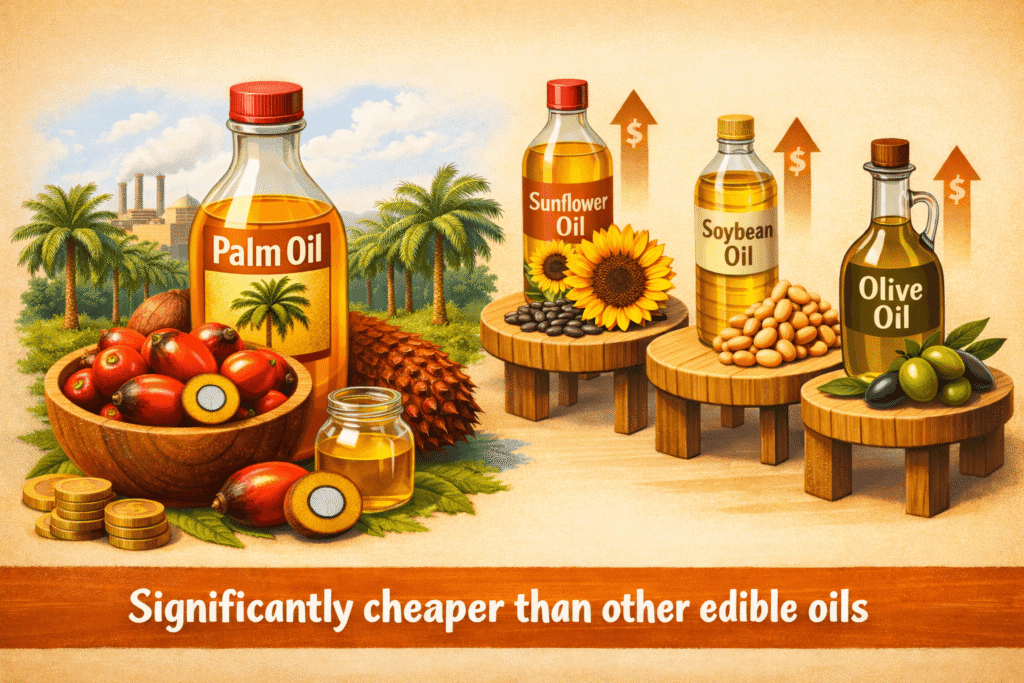
Palm oil’s dominance is rooted in economics. India imports millions of tonnes annually, mostly from Indonesia and Malaysia, where vast plantations churn out oil at rock-bottom prices. For food companies, it offers several irresistible advantages.
First, cost. Palm oil is significantly cheaper than other edible oils, allowing manufacturers to keep prices low while maintaining profit margins. Second, shelf life. Its high oxidative stability means products stay fresh longer, resisting rancidity even in India’s humid climate. Third, texture and taste. Palm oil gives biscuits their crunch, noodles their crispness, and namkeen its golden hue — all without altering flavour.
In short, palm oil helps manufacturers deliver consistency, affordability, and longevity — the holy trinity of mass-market food production.
The Health Debate: Saturated Fat and Oxidised Oil
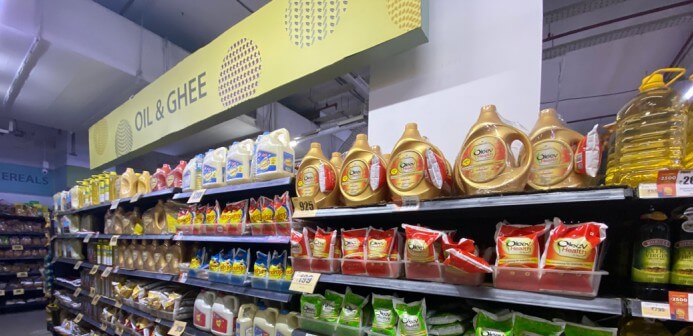
Palm oil’s nutritional profile, however, is far less flattering. It contains roughly 50% saturated fat, primarily palmitic acid — the same compound linked to elevated LDL cholesterol and heart disease. For decades, nutritionists have warned against excessive consumption of saturated fats, urging a shift toward unsaturated oils like sunflower or mustard.
But the debate has evolved. Some researchers argue that palm oil, when consumed in moderation and not repeatedly heated, may not be as harmful as once believed. They point to its natural antioxidants — tocotrienols, a form of vitamin E — which may offer protective benefits. Others note that traditional diets in Southeast Asia have included palm oil for generations without epidemic levels of heart disease.
The real danger lies in oxidised palm oil — oil that’s been reheated multiple times, as in deep-frying. When exposed to high temperatures repeatedly, palm oil forms trans fats and aldehydes, compounds known to trigger inflammation and cardiovascular damage. In India’s small-scale snack factories and street stalls, where oil reuse is common, this risk is magnified.
Case Study: Chips, Namkeen, Instant Noodles, and Biscuits
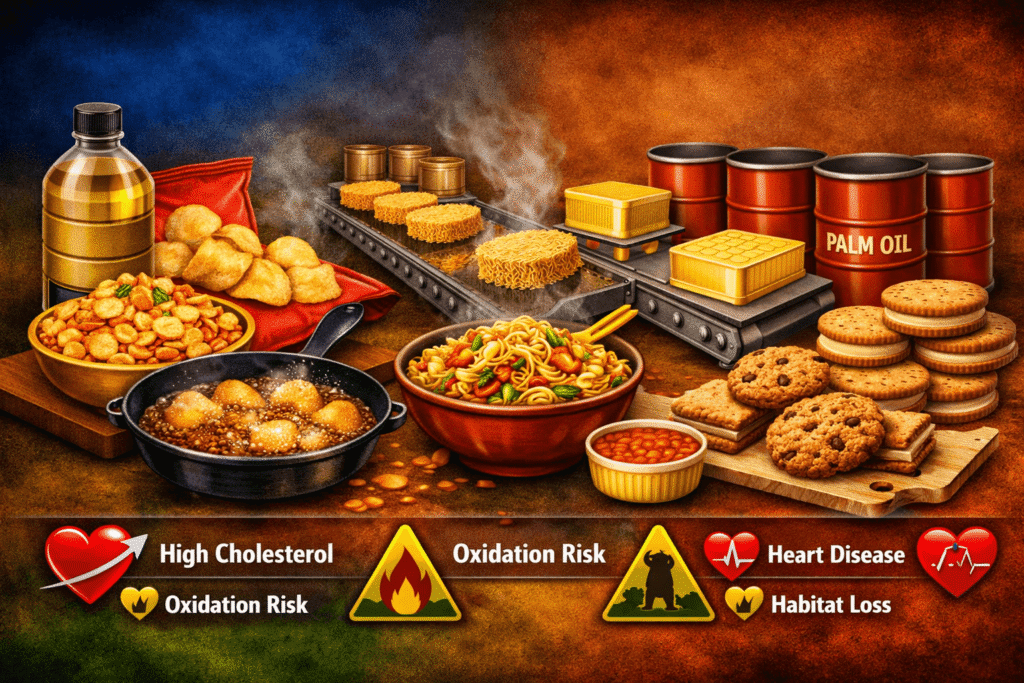
Palm oil’s fingerprints are everywhere. In chips and namkeen, it’s the frying medium of choice, prized for its stability and cost. In instant noodles, it’s used to pre-fry the noodle blocks, giving them their signature texture. In biscuits, it’s the fat that binds dough and fills cream layers, replacing costlier butter or ghee.
Each of these products delivers convenience and taste — but also a hidden dose of saturated fat, which is highly hazardous to the health of the consumer. A single packet of chips or a handful of biscuits can contain several grams of palm oil-derived fat, contributing to India’s growing burden of obesity and heart disease.
The irony is that palm oil’s neutrality makes it invisible. It doesn’t smell, doesn’t taste, and doesn’t announce itself. Consumers rarely realise how much they’re consuming until they start reading labels closely or are victims of Non-communicable diseases.
The Environmental Cost: Forests for Food
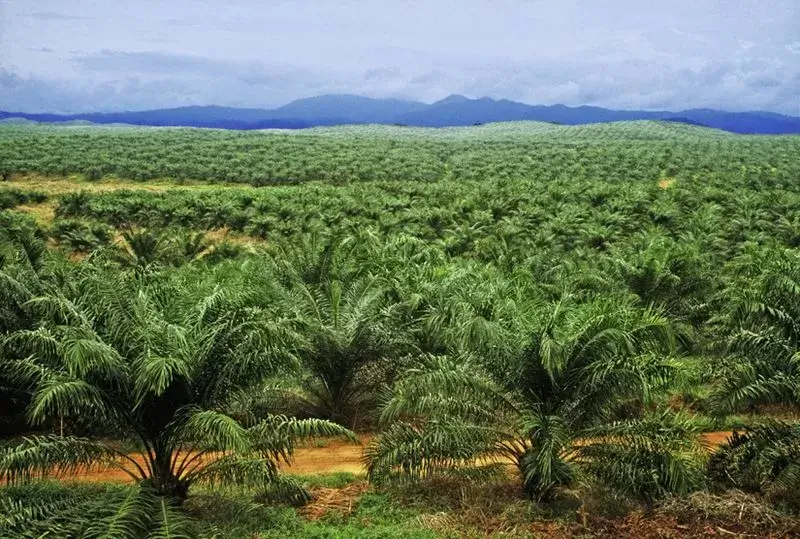
Beyond health, palm oil carries a heavy environmental footprint. Its cultivation has driven deforestation across Indonesia and Malaysia, destroying habitats of endangered species like orangutans and Sumatran tigers. Peatland burning releases vast amounts of carbon dioxide, making palm oil production a major contributor to global greenhouse emissions.
India’s appetite for cheap palm oil indirectly fuels this destruction. While sustainable palm oil certification (RSPO) exists, less than a fifth of India’s imports meet these standards. The rest comes from plantations linked to deforestation, land conflicts, and biodiversity loss. India is not behind such environmental issues. We find huge chunks of land in Southern States getting converted into palm oil cultivation and the States are not regulating such practices adopted by the farmers.
The paradox is stark: palm oil helps feed millions affordably but undermines the ecological systems that sustain life itself and at the cost of health and safety of the citizens.
Moderation and the Middle Ground
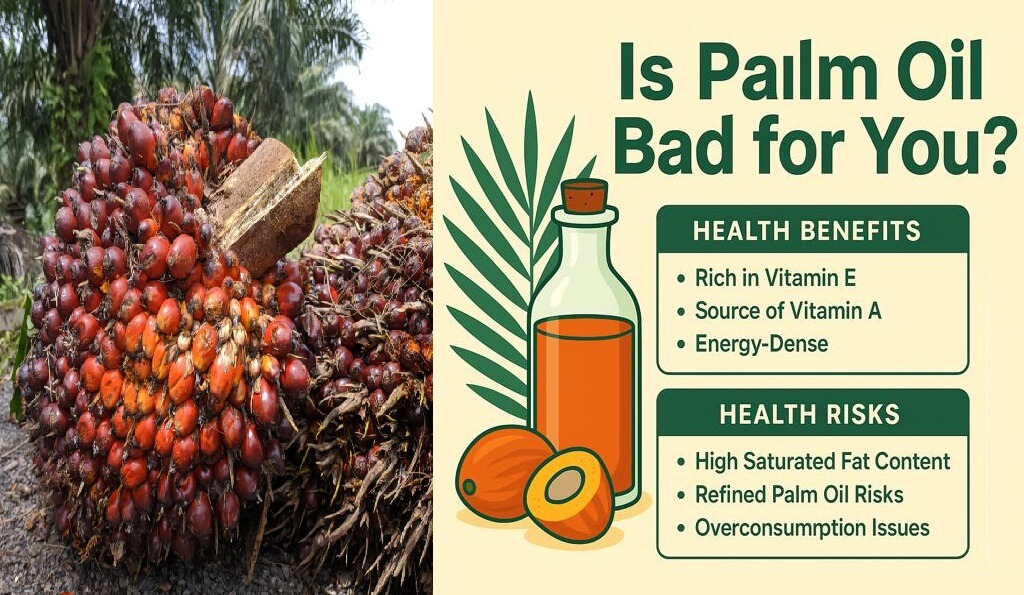
Nutrition science rarely deals in absolutes. Palm oil isn’t poison, nor is it a healthy food. The key lies in moderation and diversity. Using palm oil occasionally, alongside other oils like mustard, sesame, or rice bran, can balance fatty acid intake. The problem arises when palm oil becomes the default — as it has in India’s processed food industry.
Public health experts now urge consumers to limit processed foods rather than demonise a single ingredient. The focus should shift from palm oil itself to the broader pattern of ultra-processed diets, which combine refined carbs, sugars, and fats in addictive proportions.
How to Spot Palm Oil on Labels
Palm oil hides behind multiple aliases. To identify it, look for these clues on packaging:
- Palm oil / Palmolein: Common in fried snacks and instant noodles.
- Hydrogenated vegetable fat: Often palm-based shortening used in biscuits and bakery items.
- Vegetable oil blend: Usually a mix of palm and soybean or sunflower oil.
- Palm kernel oil: Derived from the seed, richer in saturated fat, used in cream fillings and chocolates.
- Edible vegetable oil (unspecified): A generic term that often masks palm oil’s presence.
If the label doesn’t specify the oil type, assume palm oil is part of the blend. Transparency remains a major gap in India’s food laws, leaving consumers to decode vague terminology.
The Consumer’s Role: Awareness and Action
Palm oil’s ubiquity makes avoidance difficult, but awareness is the first step. Reading labels, choosing brands that disclose oil sources, and supporting companies that use RSPO-certified sustainable palm oil can make a difference. Opting for baked snacks over fried ones, and cooking at home with diverse oils, helps reduce dependence on palm-based fats. As consumers we have been demanding Front-of-the-pack labeling and easy method to recognize healthy food by use of the Traffic-Signal Labelling.
Consumers can also push for policy reform — demanding mandatory disclosure of oil types and sustainability certification. India’s food regulators have begun discussing such measures, but enforcement remains weak.
The Industry’s Responsibility
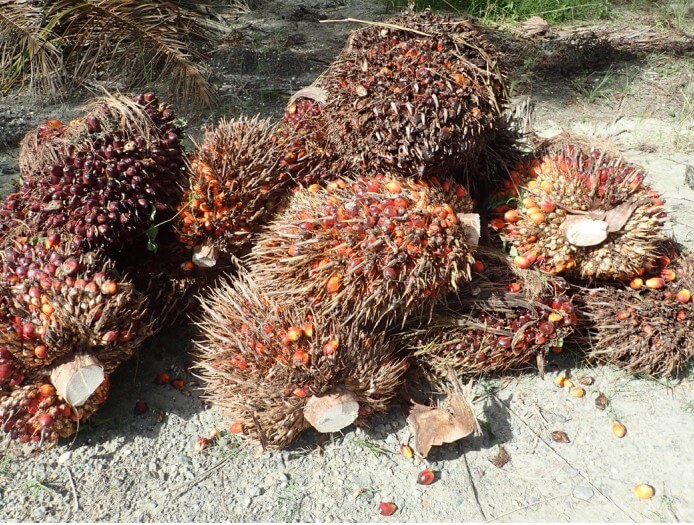
Manufacturers face a moral and strategic choice. Continuing to rely on cheap palm oil may sustain profits, but it risks long-term reputational damage as awareness grows. Some companies are experimenting with blended oils that combine palm with healthier alternatives or investing in sustainable sourcing partnerships.
The transition won’t be easy — palm oil’s cost advantage is hard to beat — but innovation and transparency can help balance affordability with responsibility.
The Bigger Picture: Health, Economy, and Ecology
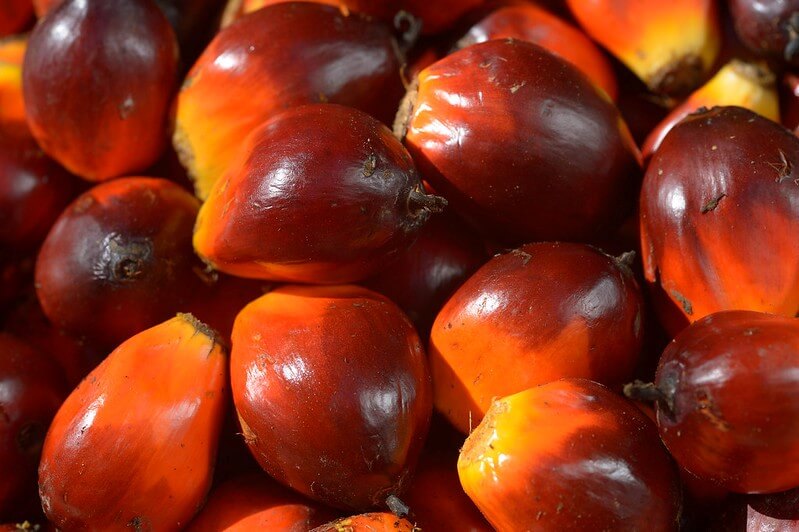
Palm oil’s story in India is a microcosm of global trade-offs between cost and conscience. It keeps food affordable for millions but contributes to rising lifestyle diseases and environmental degradation. The challenge is not to ban it but to use it wisely, regulate it strictly, and educate consumers about its hidden impacts.
As India’s processed food market continues to expand, the choices made today — by policymakers, manufacturers, and consumers — will determine whether palm oil remains a silent enabler or becomes a symbol of reform.
Conclusion: Reading Between the Labels
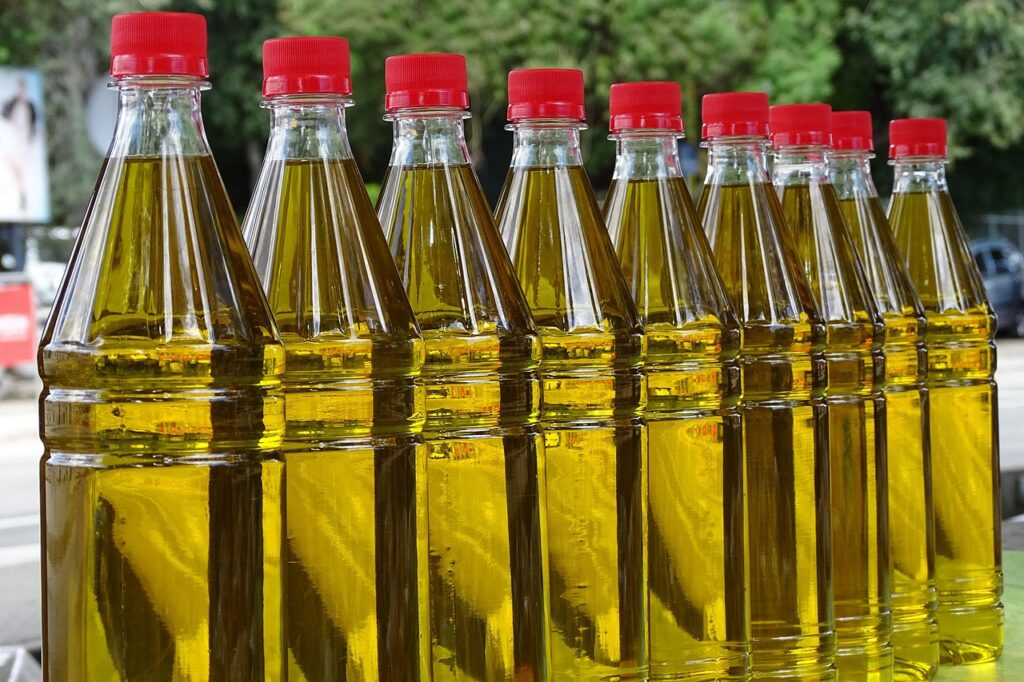
Palm oil has quietly conquered India’s snack shelves, turning into the invisible ingredient of everyday indulgence. It’s the reason your chips stay crisp, your biscuits creamy, and your noodles perfectly fried. But behind that convenience lies a complex web of health risks and ecological costs.
The next time you reach for your favourite snack, flip the packet over. If you spot “palmolein” or “vegetable oil,” remember — you’re not just buying taste and texture. You’re buying into a global system that trades forests for food and health for affordability.
Palm oil may be cheap, but its true price is paid in the arteries of consumers and the lungs of the planet.

