


In any constitutional democracy, the courtroom is meant to be a space governed by discipline, restraint, and reason. It is not a battlefield where reputations are casualties, nor a stage where narratives are manufactured to overwhelm truth. The role of an advocate particularly a government counsel is not merely to secure a favourable outcome but to assist the court in arriving at justice through fair and lawful means. This responsibility becomes even more significant when the State itself is a party, because the State does not represent a private interest; it represents the collective conscience of the Constitution.
However, in recent years, a troubling pattern has begun to surface in litigation involving members of the Armed Forces. At the very threshold stage of writ petitions often before facts are tested or issues are crystallized government counsel have been observed making submissions that go beyond the record. These submissions frequently include insinuations, character judgments, references to unproven allegations, and selective narratives designed to cast the petitioner in a negative light. In many cases, these are not mere legal arguments but subtle attempts to influence judicial perception.
Such conduct raises serious legal and constitutional concerns. It is not merely a matter of professional overreach; it strikes at the heart of fair procedure, equality before law, and the right to reputation, which is now firmly recognized as part of Article 21. With the enactment of the Bharatiya Nyaya Sanhita 2023, along with the continuing framework of the Advocates Act 1961 and the Bar Council of India Rules, the legal position is unequivocal: advocacy cannot become a shield for defamation or a tool for prejudice.
Writ jurisdiction & why is it susceptible to misuse
Writ jurisdiction under Articles 32 and 226 is designed as a protective jurisdiction, not a punitive one. It exists to ensure that fundamental and legal rights are not violated by the State or its instrumentalities. Unlike trial courts, writ courts do not conduct elaborate evidence-based proceedings. They rely primarily on affidavits, official records, and legal submissions.
This very structure, while ensuring speed and accessibility, also creates a vulnerability. Since there is no cross-examination at the initial stage and the court often forms a prima facie view based on pleadings, the narrative presented by counsel assumes disproportionate importance. A single insinuation if left unchallenged can create a lasting impression.
In the context of Armed Forces personnel, this vulnerability becomes more pronounced. Officers operate within a system where discipline, hierarchy, and reputation are paramount. Any allegation even if unproven can have cascading consequences on their career, dignity, and mental well-being. When such allegations are introduced casually in writ proceedings, without the rigour of trial, they effectively bypass due process.
Statutory discipline: Advocates Act & Bar Council Rules
The legal profession in India is not unregulated. The Advocates Act 1961 establishes a comprehensive framework to ensure accountability among advocates. Section 35 of the Act provides that an advocate found guilty of professional misconduct may be reprimanded, suspended, or even removed from the rolls. The expression “professional misconduct” is deliberately broad, encompassing any conduct that falls below the standards expected of an officer of the court.
Section 49(1)(c) of the Act empowers the Bar Council of India to frame rules governing professional conduct. These rules, contained in the Bar Council of India Rules, are not mere guidelines; they are binding norms.
Part VI, Chapter II of these rules lays down the duties of an advocate towards the court. Rule 1 mandates that an advocate shall act in a dignified manner. Rule 2 requires the advocate to maintain respect towards the court. Rule 3 prohibits influencing the decision of the court by improper means. More importantly, Rule 13 explicitly bars advocates from making statements that are scandalous, abusive, or not supported by evidence. Rule 15 further prohibits knowingly making false statements of fact.
When a government counsel introduces allegations that are not borne out of record, or makes personal remarks about an officer unrelated to the legal issue at hand, such conduct squarely falls within the ambit of professional misconduct. It is not protected advocacy; it is a violation of statutory duty.
Defamation and Criminal Liability under Bharatiya Nyaya Sanhita, 2023
The transition from the Indian Penal Code to the Bharatiya Nyaya Sanhita 2023 has retained the core principles of defamation. Section 356 of the BNS defines defamation as any imputation made with the intention of harming, or with knowledge that it is likely to harm, the reputation of a person.
While statements made in judicial proceedings are often claimed to be protected, the law recognizes only a qualified privilege, not an absolute one. This means that protection is available only when the statement is relevant to the matter and made in good faith. If an advocate makes a statement that is irrelevant, malicious, or unsupported by due diligence, the protection ceases.
In the context of Armed Forces litigation, where allegations are sometimes introduced at the stage of reply affidavits or oral submissions without adjudication, the line between advocacy and defamation is frequently crossed. The mere fact that a statement is made in court does not grant it immunity if it is otherwise unlawful.
Judicial pronouncements: clear warning against excessive advocacy
The Supreme Court has, on multiple occasions, cautioned against the misuse of judicial proceedings to make disparaging remarks. In State of Uttar Pradesh v. Mohammad Naim, the Court laid down a threefold test: before making any adverse remark against a person, it must be shown that the remark is relevant to the issue, supported by evidence, and necessary for the decision of the case. This principle, though directed at judicial observations, equally constrains advocates who attempt to invite such remarks.
In M.Y. Shareef v. Judges of the High Court of Nagpur, the Court emphasized that advocates are officers of the court and must maintain dignity and restraint. Advocacy is not a license for intemperate language or reckless allegations.
The decision in R.K. Anand v. Registrar Delhi High Court further underscores that professional misconduct includes behaviour that interferes with the administration of justice. The Court made it clear that advocates who attempt to influence proceedings through improper means can be subjected to disciplinary action.
Perhaps most significantly, in Subramanian Swamy v. Union of India, the Supreme Court recognized that the right to reputation is an integral part of Article 21. This elevates the issue from a matter of professional ethics to one of fundamental rights.
Armed Forces Context: Reputation as a Pillar of Service
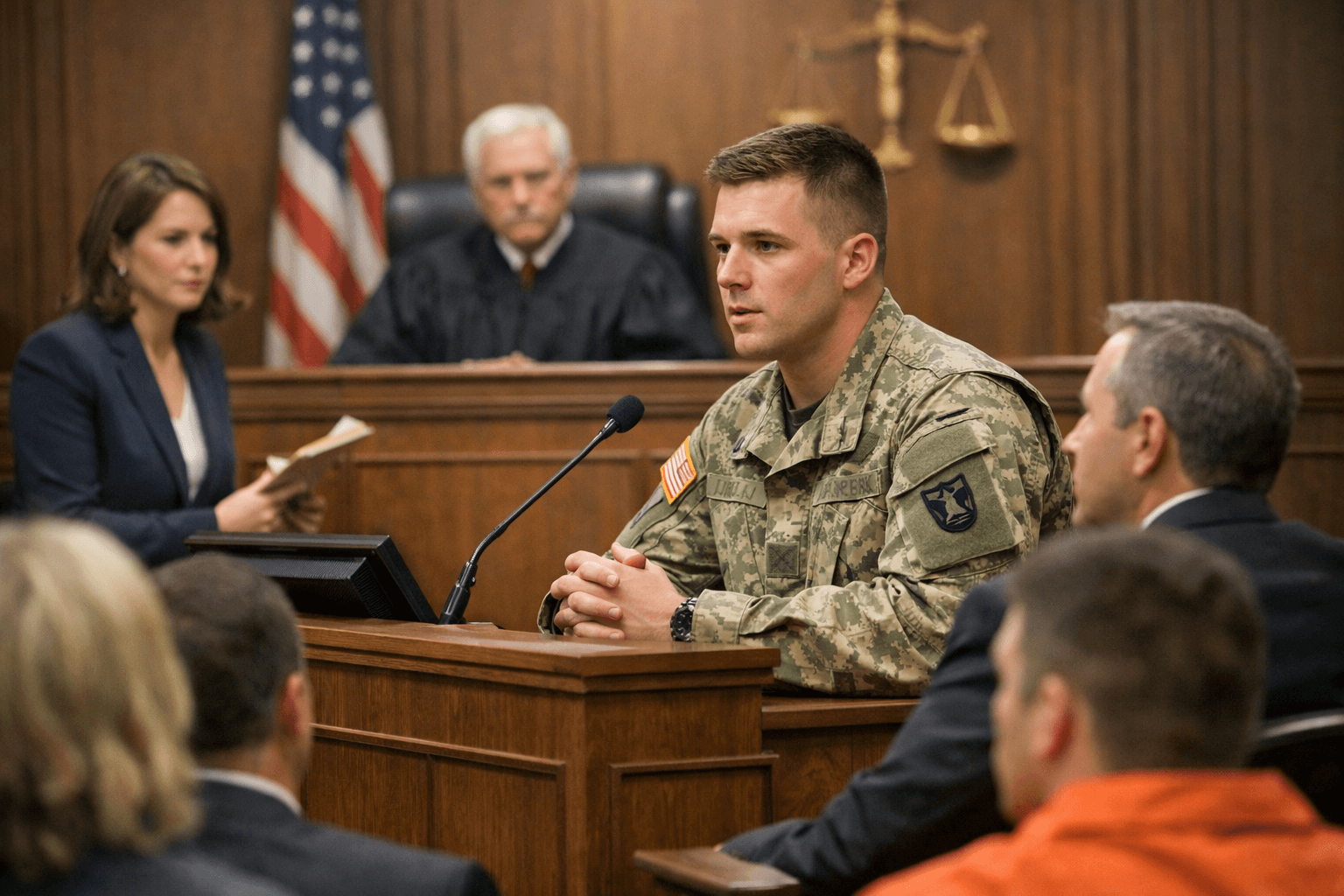
For a civilian litigant, reputation is important. For an Armed Forces officer, it is foundational. An officer’s authority, credibility, and effectiveness are deeply tied to how they are perceived within the institution. Allegations of indiscipline, mental instability, or misconduct even if unproven can have devastating consequences.
In many cases, government counsel have been observed referring to internal communications, preliminary inquiries, or unverified complaints to paint a negative picture of the officer. These references are often made without the safeguards of a court-martial or a formal finding. The effect is that the officer is tried in the court of perception without the protection of procedural law.
This not only harms the individual but also sends a message across the ranks that seeking judicial redress may invite reputational retaliation.
How Narrative Building Influences Judicial Perception
Judges are trained to be impartial, but they are not immune to the psychological impact of repeated assertions. When a narrative is consistently presented especially by the State it can shape the lens through which the case is viewed.
In writ proceedings, where time is limited and evidence is not exhaustively examined, the first impression often carries significant weight. If the petitioner is portrayed as unreliable or problematic, the court may subconsciously approach the case with caution or scepticism. This shifts the burden unfairly onto the petitioner to first restore credibility before arguing the legal issue.
Such a shift is contrary to the principles of natural justice. The court must decide the legality of action, not the personality of the litigant—unless the two are directly connected.
Judicial Responsibility: Active Protection, Not Passive Observation

The judiciary is not a silent spectator in this process. It has both the authority and the duty to ensure that proceedings remain fair. When irrelevant or scandalous material is introduced, the court must intervene either by striking it off the record or by clarifying that it will not be considered.
Courts also possess inherent powers to expunge remarks and to prevent abuse of process. If an advocate repeatedly engages in such conduct, the court can initiate contempt proceedings or refer the matter to the Bar Council.
More importantly, courts must remain conscious of the asymmetry between the State and the individual. When the State uses its legal machinery to introduce prejudicial narratives, the court must act as a balancing force.
Remedies Available to Victims: From Immediate Objection to Long-Term Action
An officer who becomes the target of such conduct is not without remedy, but the response must be timely and strategic. The first step is to object immediately during the proceedings. Silence is often interpreted as acceptance, and the narrative, once recorded, becomes difficult to erase.
A written application can be filed seeking the striking off of scandalous or irrelevant pleadings. If adverse remarks are recorded, an application for expunction must be moved at the earliest. Where the conduct is egregious, a complaint under Section 35 of the Advocates Act can be filed before the Bar Council.
In cases where the allegations amount to defamation, proceedings under Section 356 of the BNS may be initiated. Additionally, if the conduct interferes with the administration of justice, a petition under the Contempt of Courts Act may be considered.
The key is not merely to defend but to assertively reclaim procedural fairness.
Need for Structural Reform
While individual remedies are important, the problem is systemic and requires institutional response. There is a need for clearer guidelines on the scope of pleadings in writ jurisdiction, particularly in service matters involving Armed Forces personnel. Government counsel must be sensitized to their role as officers of justice, not merely representatives of the executive.
Judicial training must also include awareness of narrative bias and its subtle impact. Courts should adopt a stricter approach in filtering pleadings and discouraging irrelevant allegations at the threshold stage.
Restoring the Balance Between Power and Fairness
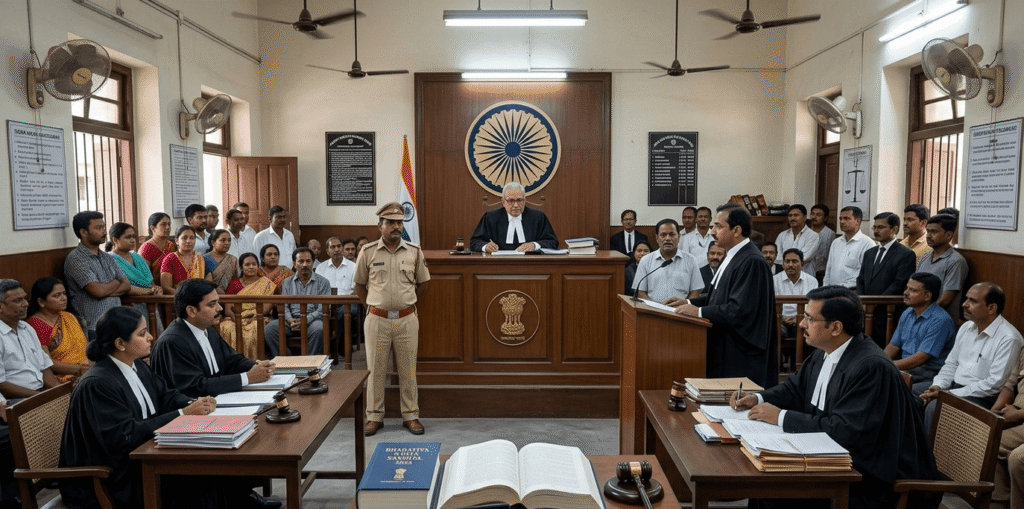
The misuse of advocacy to tarnish reputation is not a minor procedural irregularity; it is a serious affront to justice. When the State, through its counsel, engages in such conduct, it creates an uneven playing field where power overshadows fairness.
The legal framework through the Advocates Act 1961, Bar Council of India Rules, Bharatiya Nyaya Sanhita 2023, and judicial precedents clearly prohibits such excesses. What is required is strict enforcement and judicial vigilance.
For members of the Armed Forces, who dedicate their lives to discipline and service, the courtroom must remain a place of fairness, not fear. Their dignity must not become collateral damage in adversarial litigation.
Justice is not merely about who wins or loses; it is about how the process unfolds. And when that process is compromised by reckless advocacy, it is the duty of both the Bar and the Bench to restore its integrity.
Final Reflection
If there is one principle that must guide all courtroom conduct, it is this:
“Arguments must attack the issue, not the individual; the law, not the person; the act, not the character.”
The moment this line is crossed, advocacy ceases to serve justice and begins to undermine it.


As a priciple / foundation the primary focus must be to address the issue instead of shaping opinion / trial by media. The author has elucidated in simple terms for any layman to understand how much significance “REPUTATION” holds for an indl in uniform. No wonder that an officer is tried in the court of perception without the protection of procedural law.
This not only harms the individual but also sends a message across the ranks that seeking judicial redress may invite reputational retaliation.
Good to read and understand the plight of people in uniform.
This eye-opening article highlights the gap between honest and dishonest practices in law. It strongly reflects my belief that justice can sometimes feel polarized—depending on who is judging, the future of the innocent or guilty can change drastically.
As a fundamental principle, the primary focus must remain on addressing the issue at hand rather than shaping public opinion or resorting to trial by media. The author has explained in clear and simple terms understandable even to a layperson the immense value that “reputation” holds for an individual in uniform. It is therefore deeply concerning that an officer is often judged in the court of perception without the safeguards of due process and procedural law. Such an approach not only causes grave harm to the individual but also sends a discouraging message across the ranks that seeking judicial redress may come at the cost of reputational retaliation.
The author has articulated in straightforward terms how crucial “REPUTATION” is for an individual in uniform, making it clear that even without formal legal proceedings, an officer’s reputation can be tried and tested in the public eye. This has far-reaching consequences, damaging not just the individual but also sending a chilling message to others that seeking justice might lead to reputational backlash 😊.
Elaborate and well scripted article which brings out an important perspective of the individual rights , Good Job Brother!!
Well courts must be fair and must not damage reputation