

Reimagining India’s Naval Strategy in an Era of Great Power Competition
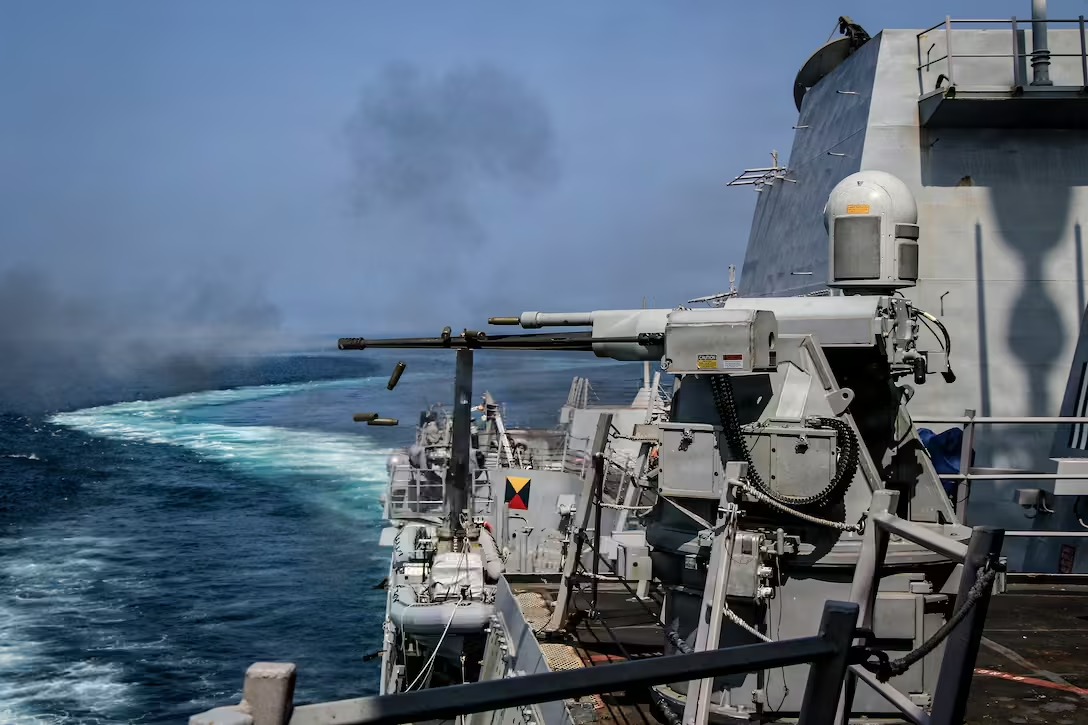
The Indian Ocean, often called the “Mediterranean of the East,” has always been India’s geographical heart and strategic backyard. For centuries, this vast expanse of water has been more than just a maritime space—it has been the lifeline of Indian commerce, culture, and security. Yet today, as we stand in 2026, India faces an uncomfortable reality: the Indian Ocean is no longer exclusively ours in spirit or influence. Recent assertive actions by the United States in these waters have sent shockwaves through New Delhi’s strategic corridors, forcing policymakers to confront a question that had remained somewhat dormant: What does India’s true role and responsibility look like in the Indian Ocean region?
The question isn’t new, but the urgency certainly is. When a great power ventures into waters you consider your own, builds bases you didn’t permit, conducts operations you didn’t approve of, and exercises military muscles with increasing frequency, it forces a reckoning. This isn’t about paranoia or excessive nationalism. It’s about understanding geopolitics in the real world—a world where power abhors a vacuum and where strategic ambiguity often invites strategic intrusion.
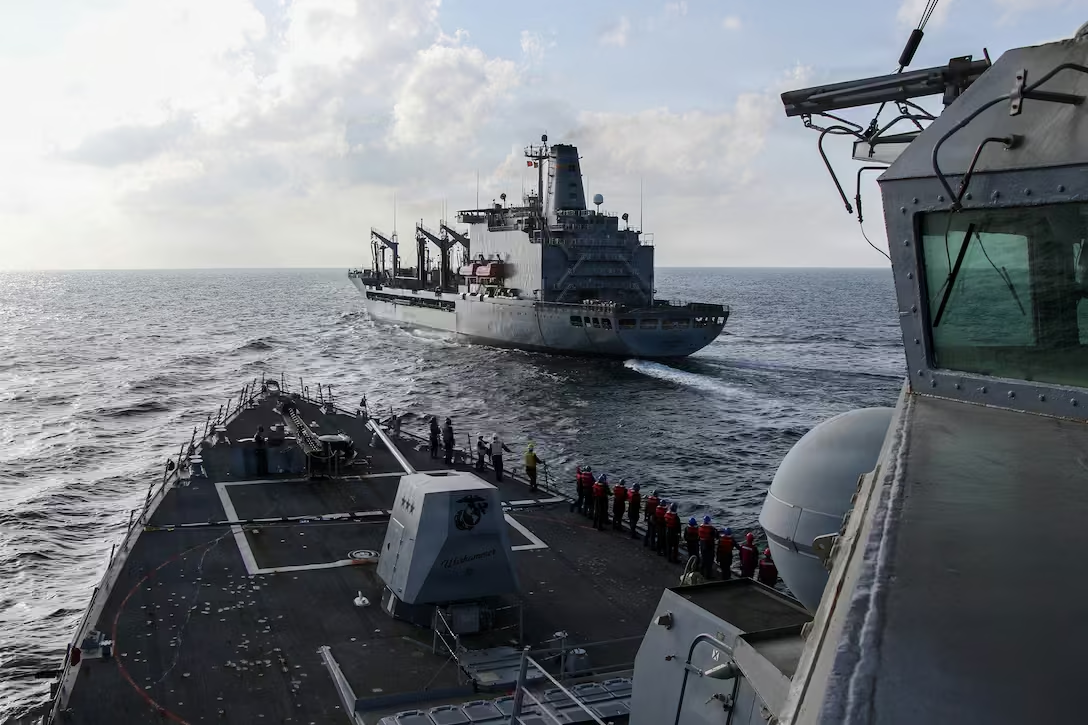
India stands at a crossroads. The nation can continue its measured, cautious approach to maritime security, hoping that restraint and dialogue will naturally preserve its interests. Or it can embrace a more assertive posture—one that is confident without being belligerent, engaged without being subservient, and strong enough to shape outcomes rather than simply react to them. This article explores why the moment demands the latter, and what such a posture might look like in practice.
The Catalyst: Understanding the Recent Incidents
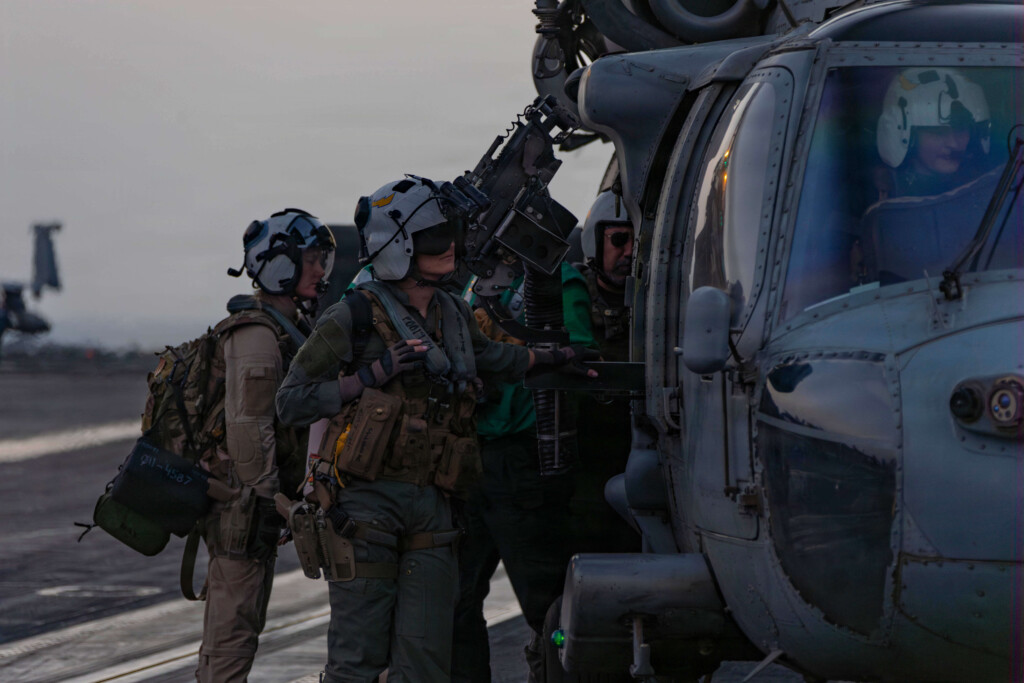
To understand India’s appropriate response, we must first clearly understand what has transpired. Recent US military operations in the Indian Ocean haven’t been isolated incidents—they represent a pattern of deepening engagement that, to many observers, seems designed to establish a more visible American presence in a region India considers vital to its security architecture.
These operations—whether freedom of navigation exercises, naval drills, or the deployment of advanced maritime surveillance systems—carry significant symbolic and strategic weight. They announce to the region and the world that Washington views itself as a permanent stakeholder in Indian Ocean affairs. More subtly, they communicate to India that its preferences, while noted, are not determinative in shaping the strategic environment of its own backyard.
Consider what India sees when it looks at these actions: the world’s largest economy deploying advanced naval technology, conducting military exercises without Indian consultation, and essentially implying that international maritime law permits it to do so. These actions aren’t violations of international law—they exist in that gray zone of technical legality and strategic provocation.
But here’s the human element that often gets lost in strategic analysis: Indian policymakers aren’t just calculating power metrics or military capabilities. They’re feeling a mix of concern, bewilderment, and something deeper—a sense that their nation’s voice, despite its size and potential, isn’t being heard as the primary authority in its own region. That emotional and psychological dimension is just as important as the tactical military facts.
The Broader Context: Competition in the Indo-Pacific
To grasp why recent US actions matter so much, one must understand the larger strategic competition unfolding across the Indo-Pacific. This isn’t a binary story of America versus India. Rather, it’s a complex multipolar game involving China, Japan, Australia, ASEAN nations, and a host of other players, all with their own interests and anxieties.
China’s aggressive maritime claims, particularly its artificial islands in the South China Sea and its increasing naval presence in the Indian Ocean, have fundamentally altered the regional balance. India, while no pushover, has watched this transformation with growing concern. The nation has legitimate security interests—protecting its maritime trade routes, safeguarding its naval chokepoints, ensuring that no hostile power dominates the waters crucial to its commerce and security.
Enter the United States, which views Chinese expansion as antithetical to a “free and open Indo-Pacific”—a concept that appeals to India intellectually but raises practical questions about implementation and cost. When Washington conducts its assertive operations, it frames them as supporting international law and defending freedom of navigation. These aren’t false claims; they contain genuine principle.
Yet from India’s perspective, there’s a complication: if America is the primary guarantor of security in the Indian Ocean, what happens to Indian sovereignty and strategic autonomy? India’s entire foreign policy tradition, forged in the crucible of decolonization, is built on the principle of non-alignment—the belief that the nation should chart its own course rather than align with any great power bloc. Recent US assertiveness, however well-intentioned, seems to test the very foundations of this principle.
Why This Matters to India: Economic, Strategic, and Symbolic Dimensions

The Indian Ocean isn’t abstract geography for India—it’s intimately connected to the nation’s prosperity and security. Roughly 70% of India’s oil imports pass through these waters. Nearly 90% of India’s maritime trade transits through the Indian Ocean. More than 100 million Indians depend directly or indirectly on fisheries in these waters. In other words, the Indian Ocean is the economic lifeblood of a nation of 1.4 billion people.
Beyond economics, there’s a strategic imperative. The Indian Ocean provides India with strategic depth—the ability to project power, protect its interests, and maintain influence beyond its land borders. A nation hemmed in on all maritime fronts, unable to exercise influence in its neighboring waters, is a nation vulnerable to encirclement and pressure.
And then there’s the deeper, almost philosophical dimension: pride. For a nation that has historically viewed itself as a natural regional power, having another power unilaterally assert dominance in “your” ocean is an affront to national dignity. This might sound less tangible than military capability metrics, but it’s enormously important in how nations make strategic choices. India’s leaders and population have genuine expectations that their nation should be the primary security architect of the Indian Ocean. When those expectations are challenged, it creates political pressure and strategic discomfort.
The symbolism of recent US actions thus carries weight beyond the immediate military implications. It’s a statement about whose voice matters, whose interests take precedence, and who gets to call the shots when major decisions affecting the region are made.
India’s Response So Far: The Measured Approach
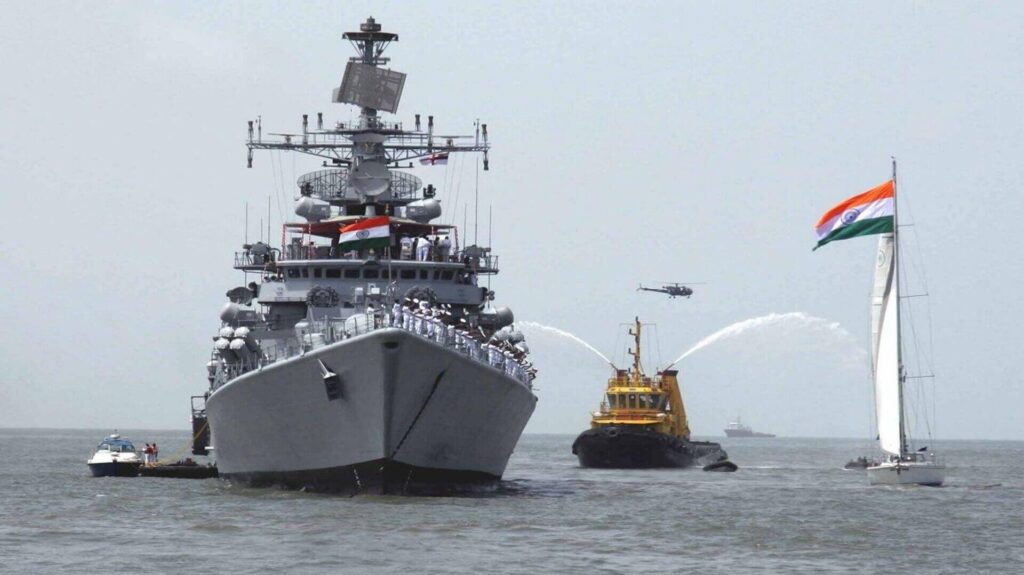
India’s initial response to US assertiveness has been characteristically measured—indeed, almost cautious. The Indian government has maintained its diplomatic channels with Washington, continued security dialogues and military exercises with American counterparts, and avoided harsh public rhetoric. There are pragmatic reasons for this restraint.
First, India and the US share genuine common interests. Both nations worry about Chinese expansion. Both value a rules-based international order (even if they quibble over specifics). Both have large economies and strong people-to-people connections. The US is a critical partner in India’s technological development, defence modernization, and economic growth.
Second, India’s diplomatic tradition prizes subtlety over confrontation. The nation’s leaders have long believed that quiet demarches, private conversations, and behind-the-scenes negotiations are more effective than public disagreements. There’s wisdom in this approach—it preserves relationships and keeps channels open.
Yet this very restraint carries risks. When a great power behaves assertively and meets no resistance, it can interpret silence as acquiescence. The risk is that without clear articulation of India’s redlines and interests, American policy may continue to harden its position in the Indian Ocean, gradually pushing India into a reactive rather than proactive stance. By the time India decides to act more firmly, facts on the ground may have shifted significantly in America’s favour.
India thus faces a strategic dilemma: how to reassert its interests without damaging a relationship it needs, and how to signal resolve without appearing unnecessarily belligerent.
The Path Forward: A More Assertive Yet Responsible Posture for India
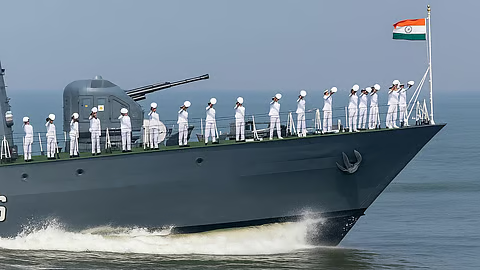
India requires a new strategic posture in the Indian Ocean—one that is more active, more confident, and more willing to shape outcomes rather than accommodate them. This isn’t about confrontation; it’s about clarity. It’s about moving from a passive reception of other powers’ actions to an active determination of India’s own strategic agenda. Here’s what this posture might encompass:
1. Accelerate Strategic Naval Capability Development
India must treat naval modernization not as a long-term aspiration but as an urgent priority. The Indian Navy requires investment in three critical areas. First, it needs more submarines—both conventional and nuclear. Submarines are the ultimate expression of naval power; they can operate covertly, project force over vast distances, and deter hostile actions through their very existence. Currently, India’s submarine fleet is relatively small for a nation with such extensive maritime interests.
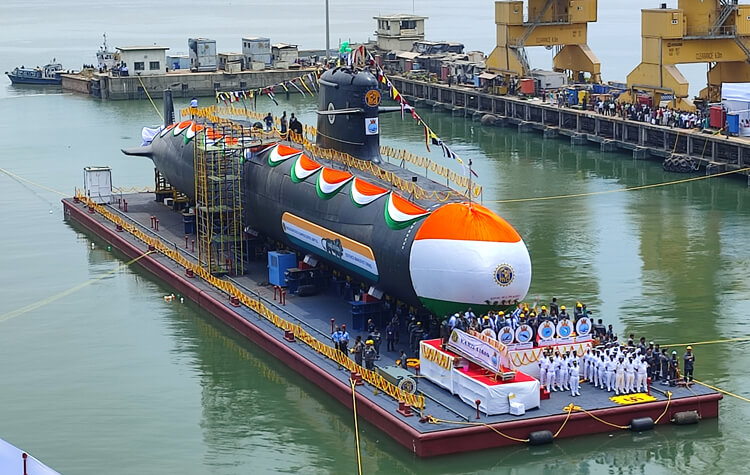
Second, India requires surface combatants equipped with advanced missile systems, air defense capabilities, and sensor fusion technologies that can compete with modern naval vessels. The Visakhapatnam-class destroyers and Project 75 submarines are steps in the right direction, but they need to be expedited and expanded, by SSN programme.
Third, India must develop indigenous aircraft carrier capability beyond just construction. The second and third carriers should be completed on accelerated timelines, together with expertise, doctrine, and confidence to operate them effectively in disputed waters if necessary.
These capabilities aren’t primarily aimed at conflict with America or even China. Rather, they’re designed to ensure that India possesses sufficient maritime strength that no power—whether American, Chinese, or any other—can impose its will on India or control the Indian Ocean without India’s input. It’s about structural deterrence: making intervention sufficiently costly and risky that no one entertains it lightly.
This will require budgetary increases, technological partnerships (particularly with nations like France, Israel, and Japan), and domestic industrial development. It will take time, but the investment is non-negotiable for a nation of India’s size and aspirations.
2. Deepen Strategic Partnerships Without Formal Alignment
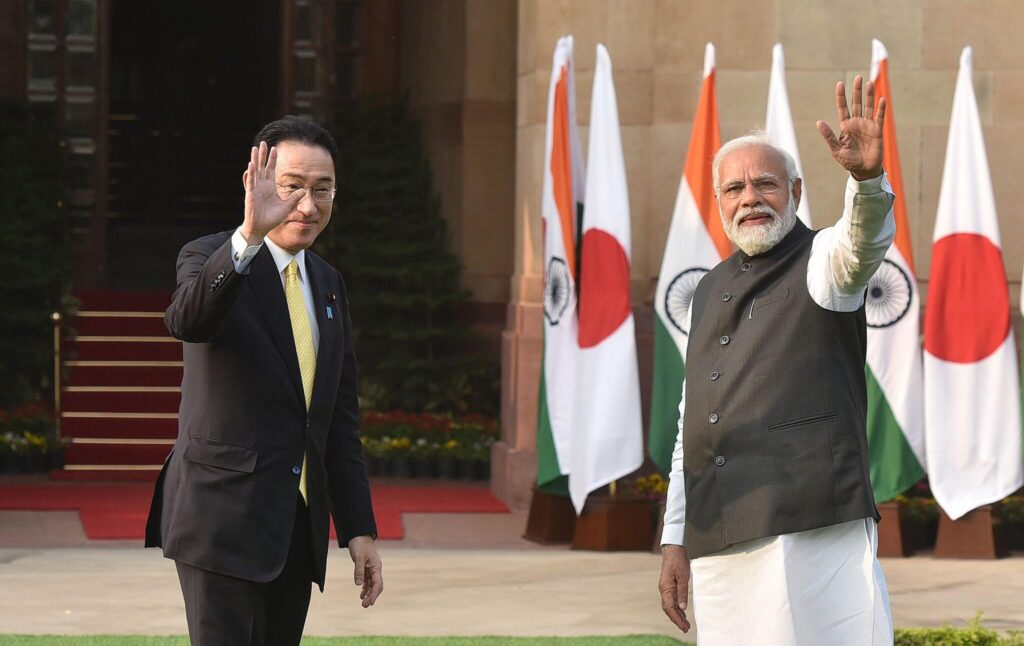
India should strengthen its defense and maritime partnerships with like-minded nations—particularly Japan, Australia, Vietnam, Indonesia, and the Philippines. The Quad framework, which brings together India, Japan, Australia, and the United States, is valuable but should be expanded to include other nations in the Indian Ocean region.
Critically, these partnerships should be structured to enhance India’s agency rather than subordinate it to American strategic objectives. India can work with other democracies to shape a regional order without pledging absolute allegiance to any particular great power vision. The model should be cooperative, not bloc-based.
Joint military exercises, intelligence sharing arrangements, naval patrols, and maritime surveillance initiatives can all be expanded. Japan’s maritime Self-Defence Force, Australia’s growing naval capabilities, and Vietnam’s concerns about Chinese assertiveness all create natural partnerships that India should cultivate more actively.
These partnerships also send a signal: India has alternatives and allies. Isolated nations make compromises they otherwise wouldn’t. A nation with multiple strong partnerships preserves strategic flexibility and increases its ability to shape events.
3. Clearly Define India’s Strategic Redlines
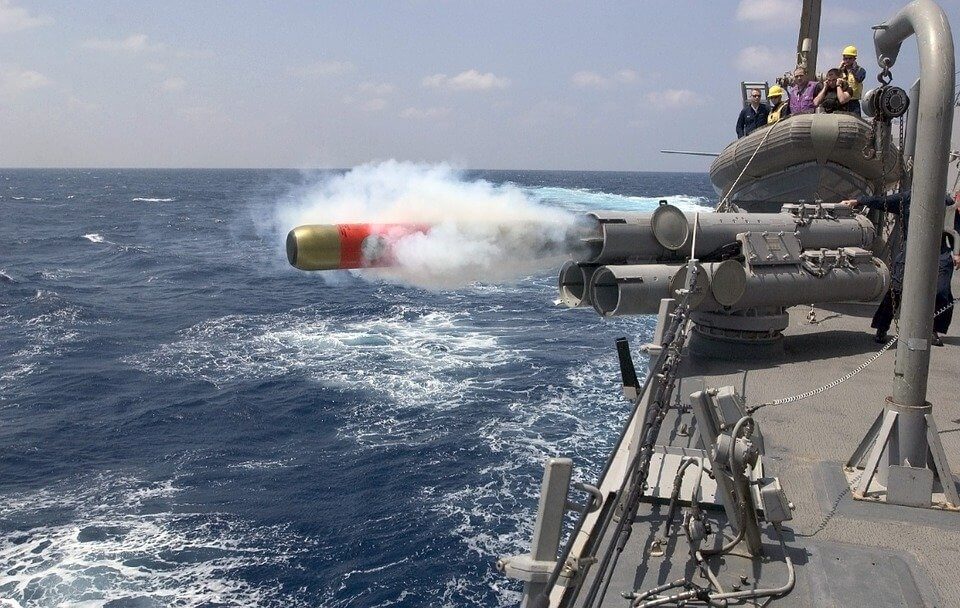
India should articulate—not publicly necessarily, but to its key partners—what it considers acceptable and unacceptable behavior in the Indian Ocean. These redlines might include:
Unilateral military bases on Indian Ocean islands without consultation. Conducting major military exercises without prior consultation with India. Attempting to build alliances that exclude India or position India as secondary to other actors. Using the Indian Ocean as a launch point for operations against India or its allies. Preventing legitimate Indian naval exercises or operations in waters India considers part of its sphere of influence.
By clearly signaling these redlines privately to Washington, India can prevent misunderstandings and miscalculations. The US may not like these boundaries, but clarity is preferable to ambiguity. Strategic relationships need rulesets, and rules require that someone articulate them.
These redlines should not be absolute, but they should be firm. There’s room for negotiation, accommodation, and mutual adjustment, but not on the fundamental principle: the Indian Ocean cannot be a theater where one power acts unilaterally without reference to India’s interests.
4. Assert Leadership in Regional Institutions and Frameworks
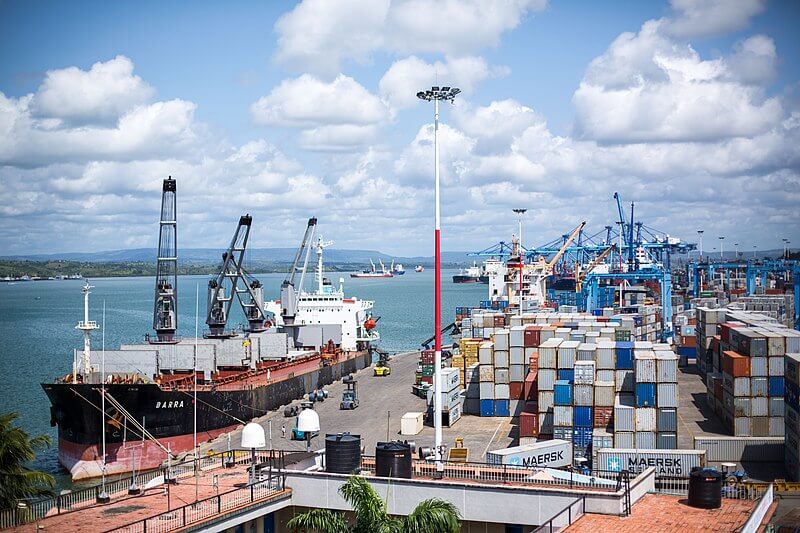
India should use its size, diplomatic sophistication, and moral authority to shape how regional institutions operate. The Indian Ocean Rim Association, maritime cooperation forums, and various ASEAN platforms should be platforms where India, not outside powers, sets the agenda.
India could propose new maritime governance frameworks—codes of conduct, dispute resolution mechanisms, environmental protection standards—that reflect Indian interests and values. By being proactive rather than reactive, India can shape how the region develops rather than simply responding to initiatives from Washington, Beijing, or Tokyo.
This also means being a generous partner—using India’s capabilities to assist smaller island nations with maritime security, providing capacity building in coastal defence, and offering itself as a trusted voice that doesn’t seek dominance but seeks partnership. The best hedge against external powers is a region that trusts India and sees India as its natural leader and ally.
5. Strengthen Domestic Maritime Industries and Capabilities

None of this matters without a strong domestic foundation. India must invest in its shipbuilding industry, making it not just capable of building naval vessels but world-class in design and innovation. Maritime security, coastal defense infrastructure, and surveillance capabilities all require massive domestic investment.
India should establish maritime research centers, think tanks, and advanced defense technology initiatives focused specifically on Indian Ocean challenges. The nation should develop world-class expertise in underwater warfare, amphibious operations, and maritime domain awareness.
These investments in domestic capabilities serves multiple purposes. It reduces dependence on external suppliers for crucial defence systems, creates high-skill jobs and builds a technological base that strengthens the broader economy. And importantly demonstrates to Indians themselves that their government takes maritime security seriously—a message that builds national resolve and cohesion around strategic priorities.
6. Engage in Strategic Communication and Narrative Building
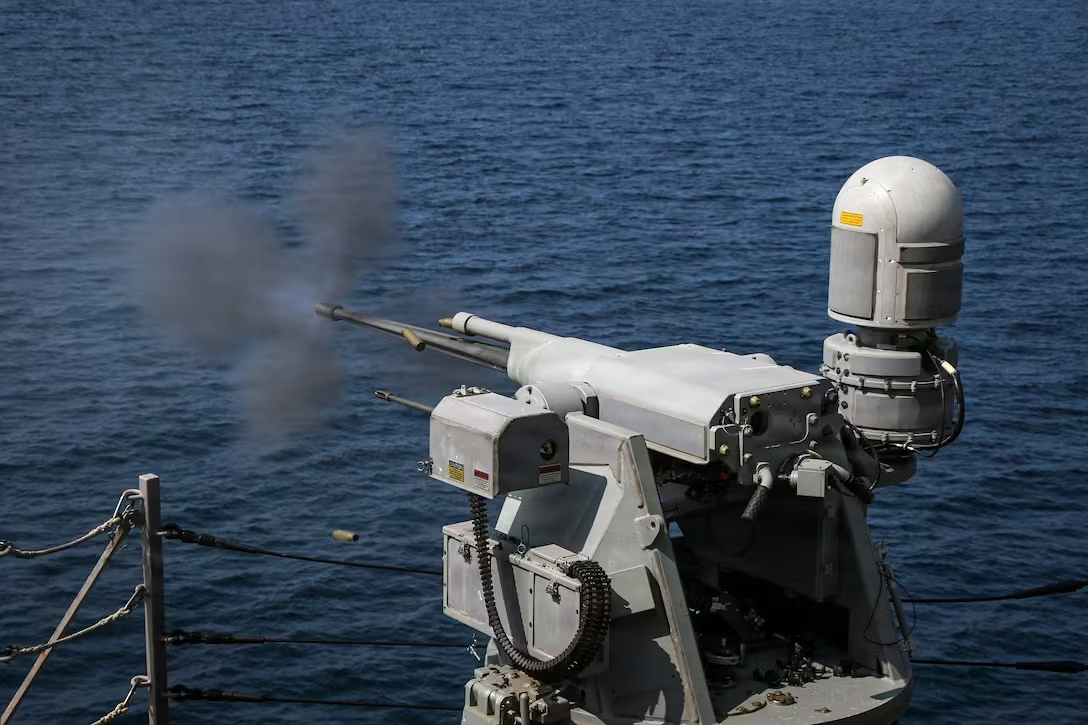
India needs to be more proactive in shaping the international narrative about the Indian Ocean. Currently, the conversation is dominated by American and Chinese framings. The US speaks about “freedom of navigation” and “open and free Indo-Pacific.” China speaks about “peaceful development” and “community of shared destiny.”
India should articulate its own vision—a vision of the Indian Ocean as a zone of maritime cooperation, environmental stewardship, economic development, and mutual respect among nations. India’s narrative should emphasize that strong Indian leadership in the Indian Ocean isn’t about domination or exclusion; it’s about ensuring that development, security, and prosperity are shared equitably among all nations that depend on these waters.
This narrative should be communicated through Indian diplomatic channels, through intellectual engagement with think tanks and universities, and through engagement with the media. India’s voice is often drowned out because Indians don’t make their case forcefully enough internationally. This needs to change.
The narrative should also emphasize India’s unique position: a large democracy, a non-threatening power with no imperial history in the region, a nation with legitimate economic interests but no desire for territorial expansion, and a power that can be trusted to exercise responsibility. This is India’s competitive advantage which should be leveraged more effectively.
Addressing the Concerns: Why This Approach Works
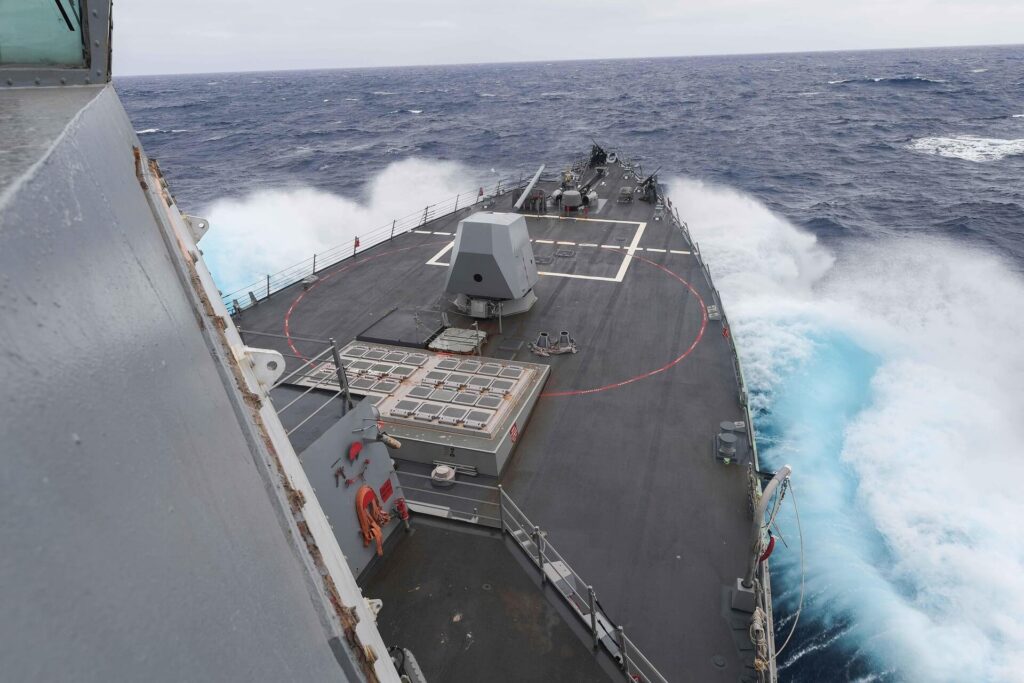
Some will argue that this more assertive posture risks alienating the United States at a moment when strategic cooperation between the two nations is valuable. This is a fair concern, but it misses something crucial: the US respects strength and clarity far more than it respects weakness and ambiguity.
An India that clearly articulates its interests, invests in its capabilities, and refuses to be a junior partner in its own region will command more respect from Washington than an India that hopes that restraint and accommodation will naturally preserve its interests. The US has a long history of respecting powers that stand up for themselves.

Others might worry that a more assertive posture risks provoking China into more aggressive behavior. Again, this is plausible, but the logic is flawed. China will interpret any Indian action through the lens of whether India can credibly challenge Chinese interests. An India that is weak and accommodating invites Chinese aggression; an India that demonstrates strength and capability deters it. The message India should send to China is the same as to America: we respect international law, we don’t seek conflict, but we will defend our interests.
A third concern is economic—that antagonizing the US might hurt India’s access to technology, investment, and markets. But India’s economic leverage with the US is substantial and growing. India is not a client state; it’s a major economy in its own right. The US needs Indian cooperation on China, on global trade, on technology standards, and on regional stability. The relationship can accommodate India’s assertion of interests without fundamental rupture.
Finally, some will argue that India simply doesn’t have the resources to sustain a more assertive posture. The nation’s budget is stretched; there are enormous domestic needs. This is true, but it’s also a choice. Nations prioritize what they consider vital. If India considers itself a great power with legitimate Indian Ocean interests—which it does—then maritime security deserves investment. The question is whether India is willing to make the choices necessary to match its aspirations with capabilities.
Conclusion: A Moment of Choice
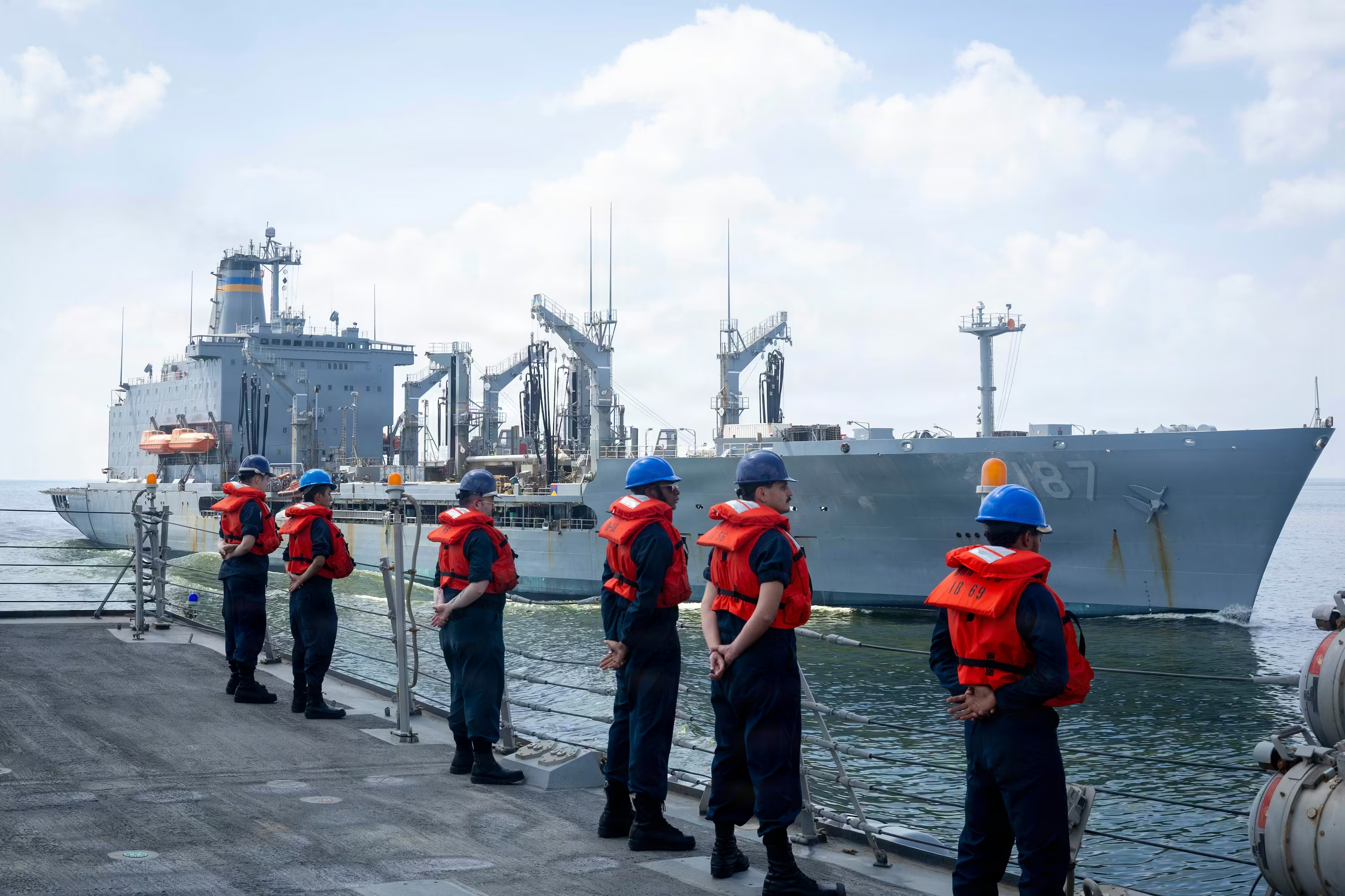
Recent US actions in the Indian Ocean represent a wake-up call for India—not because they pose an immediate military threat, but because they expose a fundamental gap between India’s aspirations and its current capabilities and posture. India imagines itself as the natural leader of the Indian Ocean region. The actions of external powers are reminding India that imagination must be backed by investment, will, and sustained strategic effort.
The path forward isn’t complicated in principle, though it’s challenging in execution. India must invest in maritime capabilities, strengthen regional partnerships, clearly articulate its interests, lead through regional institutions, and demonstrate through words and deeds that it intends to be the primary architect of Indian Ocean security.
This isn’t about confrontation with the United States or China. It’s about India finally acting as the nation it claims to be. It’s about moving from a posture of reception and accommodation to one of assertion and leadership. It’s about understanding that in international relations, as in human affairs, respect is earned through demonstrating strength, clarity, and resolve—not through hoping that others will naturally defer to your position.
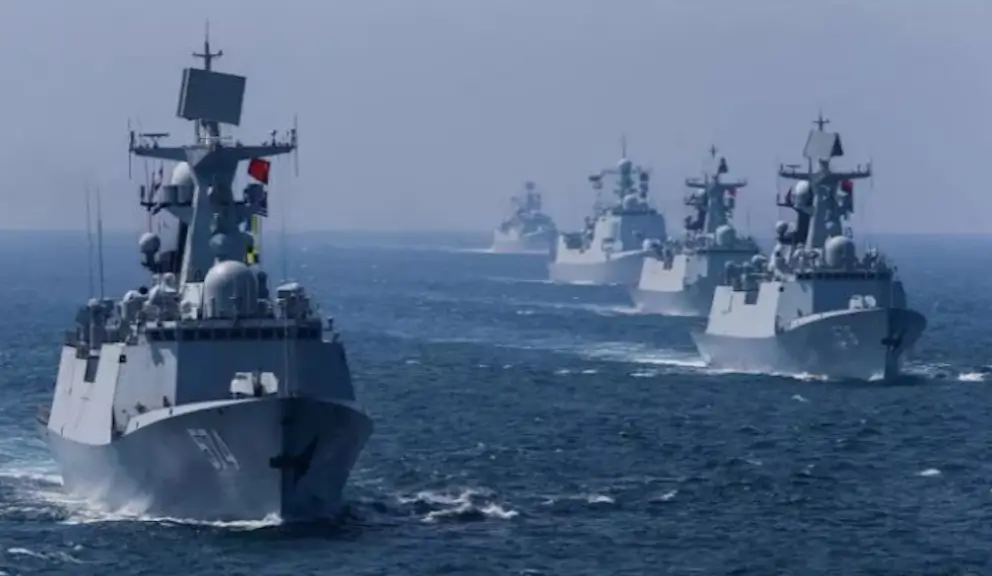
The Indian Ocean is India’s responsibility. For too long, India has treated this as an aspiration rather than a duty. The moment has come for India to embrace the responsibility, make the necessary investments, strengthen the required capabilities, and demonstrate through action that while India welcomes cooperation with all nations, the Indian Ocean is ultimately India’s to protect and India’s to lead.
This is not a counsel of aggression or exclusion. It’s a recognition of reality: nations that don’t assert their interests find them asserted for them by others. The question is whether India will chart its own course in its own waters, or whether it will continue to be a secondary actor in a region that should be fundamentally shaped by Indian strategic vision and Indian power. The choice, ultimately, belongs to India.


Interesting read and much appreciated.
Geography gives India something unique: no other major power sits at the centre of the Indian Ocean, an ocean that even carries its name.
But geography alone does not create leadership.
For a country to play the kind of leadership role many analysts envision for India in the Indian Ocean, several layers of capability must align. No nation achieves regional leadership through a single dimension. It emerges from the combined weight of economic strength, maritime capability, diplomatic reach, technological depth, and sustained strategic clarity.
The challenge for India is therefore not merely ambition, but alignment. Historical legacies, domestic political contestation, social complexities, and uneven development all shape the pace at which national power can be consolidated and projected.
The real test for leadership in the coming decades will be whether India can steadily strengthen its institutions, sustain economic growth, build maritime capability, and maintain internal cohesion while navigating these complexities.
If that alignment emerges over time, geography will not merely be an advantage—it will become a strategic foundation for India to play a stabilizing and constructive role across the Indian Ocean region
Excellent article. A thorough eye opener and incisive observation. I shared with my groups. It should be made compulsory reading for all concerned people. Please share the contact emails of the writers.
A very nice and thaught provoking article. India should assert its dominant position in the Indian Ocean without appearing to be aggressive. I am sharing the article with my groups.
Very nice article. India should assert its dominant position in the Indian Ocean and not allow any other country to take up that role. I have shared the article with my groups and contacts.