


The Constitution of India stands as one of the most ambitious blueprints for justice ever framed. Guarantees such as Equal Protection of Law, Fair Hearing, Reasoned Orders, and Due Process are not mere abstractions they are essential pillars preserving human dignity, liberty, and rule of law. Yet today, these guarantees are under siege not only by inefficiencies but by systemic failures that allow powerful individuals, entrenched interests, and bureaucratic inertia to exploit loopholes, prolong litigation, and deny people their most basic right the right to be heard, fairly and promptly.
Quotations and legal principles

“Justice delayed is justice denied.” — a principle echoed by the Supreme Court across decades of jurisprudence, underscoring that the right to a hearing must be meaningful in time as well as form.

Renowned jurist A.V. Dicey described the rule of law as requiring that judicial decisions be delivered fairly, impartially, and promptly. Delays violate not just procedure but justice itself.

In Kartar Singh v. State of Punjab, the Supreme Court reinforced that principles of natural justice are sacrosanct and cannot be diluted by administrative convenience or expediency.
At the heart of this crisis are massive case backlogs, severe judicial shortages, discriminatory access to justice, and structural administrative apathy. This article explores these challenges, their human consequences, and lessons from other countries, culminating in proposed solutions to restore faith in India’s justice system.
The guarantee of hearing and natural justice in law

Principles of natural justice
Two fundamental maxims define the right to fair procedure:
- Audi alteram partem : Let the other side be heard.
- Nemo judex in causa sua : No one should be a judge in their own cause.
These are not suggestions; they have constitutional force in India. The Supreme Court has repeatedly emphasized that fair hearing is integral to Article 21 the right to life and personal liberty. Any denial or superficial hearing is not just procedural lapse but a violation of foundational rights.
Judicial pendency: A crisis of confidence
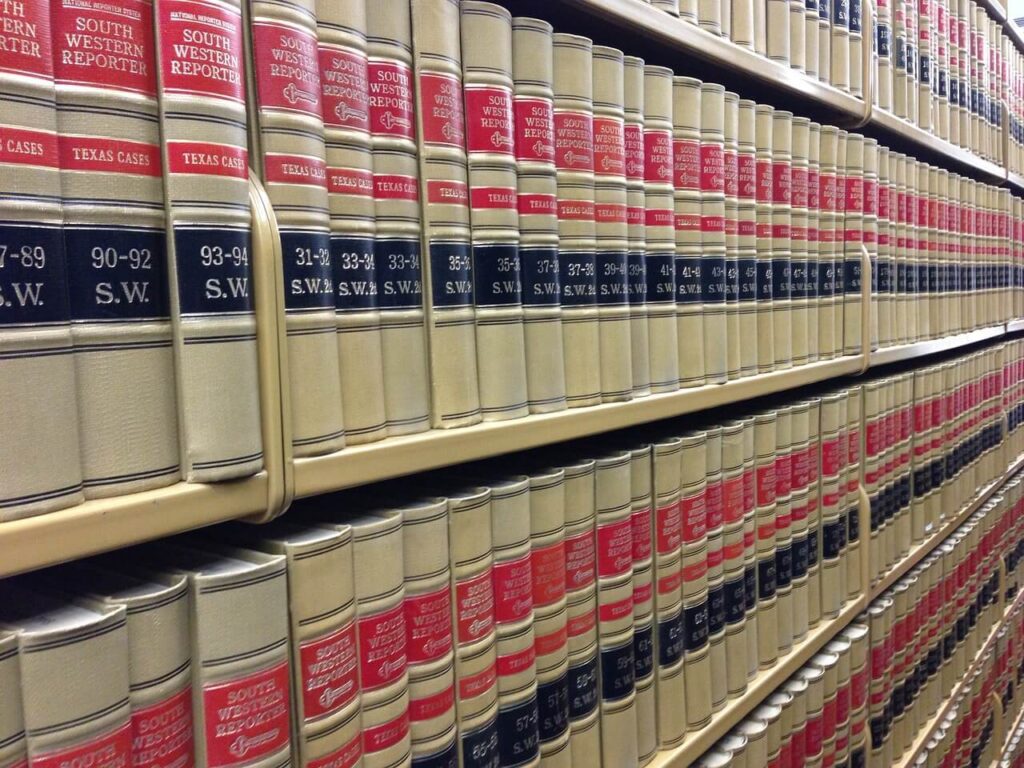
India’s justice system is burdened with an unprecedented backlog, undermining the very essence of fair hearing.
Backlog in numbers
- Over 5 crore cases are pending at various levels of the Indian judiciary district courts, high courts, and the Supreme Court.
- The Supreme Court alone has over 88,000 matters pending despite functioning at full strength.
- High Courts collectively carry over 63 lakh pending cases, and district courts have more than 4.6 crore stuck in arrears.
This backlog doesn’t just reflect inefficiency, it is a denial of justice. Long delays mean that the right to be heard often becomes a right to wait indefinitely, discouraging citizens without resources or influence from pursuing redress.
Judicial vacancies: A core structural failure
The judicial workforce in India is woefully insufficient relative to the population and caseload:
- India has approximately 15–21 judges per million people, far below the Law Commission’s recommendation of 50 judges per million.
- High Court vacancies often exceed 30–40%, while subordinate court vacancies average over 20%.
This chronic shortage means existing judges are overburdened, often hearing hundreds of cases daily, with some benches only able to grant dates after dates rather than substantive hearings.
Justice delayed: The human cost

1. Right denied in practice
Delay is not abstract, it translates into economic hardship, psychological trauma, and erosion of civic faith. An appellant waiting for a hearing for years is equivalent to a hearing never happening in spirit. When litigation drags for decades, justice is not delayed it is denied.
2. Exploitation by the powerful
The judicial backlog creates a fertile ground for exploitation:
- Influential parties often use litigation delay as a strategy to exhaust opponents financially and psychologically.
- Frequent adjournments requested or forced by powerful counsel ensure cases never mature into firm hearings.
- Government departments, as major litigants, sometimes rely on procedural delays as a litigation strategy.
This breeds systemic inequality where resources, not rights, determine outcomes.
Political and administrative failures
While headline projects like infrastructure and cultural initiatives draw public investment, the judiciary repeatedly suffers neglect:
- Governments often delay clearing judicial appointments recommended by the collegium, resulting in prolonged vacancies. Expert discussions note that it can take nine to ten months to process such recommendations without transparent reasons.
- The inability or unwillingness of the executive and judiciary to fill vacancies promptly betrays public trust and constitutes administrative indifference.
Justice delayed for political reasons is justice denied for millions.
Bias and inequality in hearing
The right to a fair hearing is meaningless if access to competent counsel or equitable treatment before the court depends on one’s social or economic standing. Several concerning patterns emerge:
1. Discrimination by patronage
Young lawyers, though competent, often struggle to secure opportunities compared to those with political or familial connections.
2. Unequal court time
Studies have highlighted that many judges must allocate time across excessive caseloads, reducing hearing time per case to a matter of minutes hardly enough for substantive adjudication.
International comparisons: Lessons beyond borders
India is not alone in facing judicial backlog but other nations have attempted reforms.
United Kingdom
The UK has moved to reduce jury trials for less serious offenses to speed up justice delivery, acknowledging that procedural safeguards sometimes create bottlenecks.
United States
The U.S. judiciary, despite better judge-per-capita ratios (over 150 per million), still struggles with delays, but prioritizes alternative dispute resolution (ADR) and case management systems that reduce pressure on courts.
Singapore
Singapore maintains a high judge-to-population ratio and emphasizes technology-enabled case management systems that schedule hearings and manage workflows more efficiently a model that India’s digital NJDG framework could emulate.
Solutions: From mindset to mechanism
1. Judicial appointments and training reform
India must overhaul judicial recruitment:
- Transparent, confidential exams and codified interviews can reduce favoritism and political influence.
- Mandatory diversity and competencies (including courtroom, analytical, and ethical dimensions) should be part of selection standards.
2. Fill vacancies urgently
Court vacancies must be treated as a public emergency. Filling them should be a government priority, not optional.
3. Case management and prioritization
- Introduce a national case scheduling framework.
- Limit gratuitous adjournments.
- Promote ADR models like mediation and arbitration to divert civil disputes away from courts.
4. Technology and digitization
Digital platforms like the National Judicial Data Grid (NJDG) should be strengthened to track, prioritize, and monitor cases in real time.
5. Judges’ working conditions
Extend court working days, reduce long vacations, and adopt structured shift systems to expand hearing capacity while protecting judicial independence and well-being.
6. Government accountability
Government litigants must be held accountable for frivolous appeals and delay tactics. Public interest litigation should be streamlined to prevent misuse.
Judicial appointments: Establishing a codified, anonymous selection system

One of the most urgent reforms India must embrace is a complete overhaul of how judges are selected. The present system, despite judicial independence, remains vulnerable to subjectivity, patronage, selective elevation of “familiar faces,” and opaque decision-making. This compromises both public trust and meritocracy. Judicial appointments must move towards a codified, transparent, examination-based structure that minimizes human bias. A confidential national judicial eligibility examination can be conducted using encrypted codes instead of names, ensuring that no assessor knows whose paper they are evaluating. Scripts should be digitally anonymized and evaluated by multiple assessors to eliminate favoritism. The interview process should also follow a codified, voice-neutral procedure through technology where identity markers are masked, allowing evaluation solely on intellectual depth, legal grasp, ethics, and judicial temperament. In an era of advanced digital capabilities, India can easily implement such systems. Judicial independence must never mean judicial exclusivity; it must translate into fair, merit-based judicial integrity.
Curbing appointment of judges in their own bar jurisdiction
A long-ignored but critical problem is the practice of appointing judges in the same jurisdiction where they previously practiced or carried professional affiliations. This creates visible and invisible pressures, perceived bias, a comfort network, and unfair advantage for a familiar legal fraternity. To restore neutrality, judicial postings must avoid their earlier practice zones, at least in High Courts where dynamics of influence are strongest. Justice must not only be done; it must be seen to be done—and that visibility is compromised when a judge sits among lawyers who were once colleagues, rivals, or acquaintances.
Government counsel selection: Ending political patronage

Another structural weakness lies in how government counsels and standing lawyers are selected. Far too often, these positions are filled not through competence but through political association, personal loyalty, or patronage networks. This results in weak representation, intentional delays, adjournment culture, and misuse of taxpayers’ money while litigations stagnate. Government litigation is public litigation; therefore, selection of government counsel must be through objective criteria, coded merit evaluation, transparent score-based selection panels, and periodical performance audits. Failure to perform must invite removal, not reward.
Delay as legal corruption
Legal delay has now evolved into a silent form of corruption. Endless adjournments, repeated extensions sought by government departments, delayed filings, and casual acceptance of non-appearance undermine judicial authority and erode citizens’ faith. Every unnecessary adjournment not only denies justice but costs public money, clogs judicial machinery, and mentally exhausts litigants. When time is intentionally stretched to favor power, delay ceases to be a procedural gap it becomes institutional wrongdoing.
Right to meaningful hearing, not just a formal call

Today, courts often hear matters for barely thirty seconds to a few minutes before deferring them indefinitely. A “mention” cannot replace a meaningful hearing. Principles of natural justice demand patient listening, reasoned recording, and equal attention irrespective of influence or financial might. Appeals especially must be heard as fresh matters, not as routine file disposals. Without adequate hearing, the right guaranteed under Articles 14 and 21 collapses.
Discrimination in courtrooms: The unspoken reality
An uncomfortable truth must be acknowledged there are instances where treatment in courtrooms varies depending on who is appearing. A senior lawyer with stature may command more patience, time, and attention, whereas a young competent lawyer often struggles to get equal footing. This invisible hierarchy weakens faith in fairness and discourages emerging legal talent. Justice must not be personality-driven; it must be principle-driven.
Government accountability must be judicially enforced
The government, being the biggest litigant, must be held accountable when it delays filings, withholds responses, or seeks adjournments without valid reasons. Courts should impose costs directly on responsible officers and departments, with mandatory internal accountability review. Filling judicial vacancies must be declared a constitutional administrative mandate, not a bureaucratic option. Delays in appointment or failure to create courts must be treated as violation of citizens’ fundamental rights.
A change in mindset is the greatest reform
To conclude, ultimately, laws and systems will only work when the mindset shifts when judiciary reflects patience, empathy, discipline, accountability, neutrality; when governments treat courts not as inconvenient institutions but as constitutional guardians; when lawyers use law as an instrument of justice rather than delay. A nation that denies meaningful hearing denies democracy itself. India adopted its Constitution with faith in justice; today, we must honor that faith with courage, reform, and integrity.
The right to a fair hearing is not a luxury it is at the very core of India’s constitutional promise of justice, equality, and dignity. When courts are understaffed, bogged down with archaic procedures, and accessible only to the powerful, the Constitution’s guarantees are rendered hollow.
To fulfill the aspirations of a democratic society, India must take systemic, structural, and cultural steps prioritizing the judiciary not as an afterthought but as a foundational pillar. The nation must cultivate a legal ecosystem where the citizen comes first, where hearings are substantive, and where justice is timely.
In a country of over 1.4 billion people, with over 5 crore pending cases, the urgency is clear: reform is not optional it is imperative. The right to be heard must become a reality, not a ritual, and the rule of law must be stronger than the forces that seek to exploit its weaknesses.


Very aptly brought out by Col Amit. The problem has become systemic and everyone who can make a difference has turned a blind eye as it does not affect them. Those being affected are too low in the food chain to be heard.
A compelling and timely analysis, sir. The human cost of judicial delay is starkly undeniable. Urgent reform, judicial capacity building, and systemic accountability are the need of the hour.
True. A well written article, gives the holistic view of the entire issue. The same can’t be resolved without systemic changes and requires enormous political and judiciary will to effect the change. Are we upto it?
By facing 3 cases personally under this Judicial system, what I personally believe that Indian Judiciary System has failed to much extent. This should be transformed dressically. First, my bringing the justice system under the regulatory authority for timely and unbiased decisions based on the evidences not on the perceptions are feelings of the Judicial Judgs.
This Judicial system needs to be overhaulled and all the laws which were pertinent to the regime of British rule and have very less impact on current advanced scenario, when technology has travelled so far in the last 100 years needs to transformed to a great extent.
I wish to present my view through example by quoting the recent famous Delhi High Court judgement of UP Ex MLA Senger dismissal of his jail term and allowance of bail to which Supreme Court turned down High Court order by hitting the headlines that ‘अच्छे जज होने के बाद भी हो जाती है गलती’
Why Judge is not been questioned and taken under the law by giving wrong Justice ? Who will take the responsibility for bringing them to justice for giving wrong decisions which may ruin the life of the victim ?
Why there is a difference between a common man who doesn’t know law and between a High Court Judge who is proficient in delivery decisions based on rules and regulations of Law, laid down in our Constitution ?
Any answers ?
The human cost of judicial delay is stark and undeniable. Urgent reforms, strengthened judicial capacity, and robust systemic accountability are the need of the hour. The situation within the judiciary continues to deteriorate, demanding immediate and decisive intervention.
Great to read n refresh the natural justice alongwith practices in our land. As earlier also referred, of late many innocents have been discharged from the apex court highlighting the failing state of affairs in the foundation@ as per OS Int.3 persons acquitted by apex court after 38 year in jail. Who is responsible for ruining their lives due to faulty investigation n ignorance of evidences on apex court acquitted. We wish to make those wrong doers responsible too.
This timely article on judicial delays, I hope will usher in a change to vitalize the mitigation of litigation policy and online grievance settlement mechanisms enforcing timely settlement towards Government responsibility to the citizenry specifically in the service sector that is plagued by inefficiency and undue influence by superiors.
Delay of justice is eroding faith in judiciary. In military matters where timely justice is imperative, this delay has serious consequences. Many personnel lose opportunity for redressal of grievance and superannuate waiting for justice. Sometimes it appears as a tool for the establishment to deny justice.
Totally agree with you sir “Justice delayed means Justice denied”. due to pending list of cases sometime trust also break according to my opinion.
Judicial delay has ceased to be a procedural lapse and has become a denial of constitutional justice. When decisions come after careers end and grievances expire, the right to be heard is reduced to a formality. Persistent backlogs and systemic inertia are eroding public faith and weakening democracy itself. Timely justice must be treated as a constitutional obligation, not an institutional convenience.
Excellent article.. The author has brought out practical problems with solution.
Col Amit..hats off for this article. You have covered various facets along with the solutions Hope stakeholder get access to this nice piece. Codified system for judicial appointment is the requirement these days the way favouritism is being practiced. It will not only restrict the govt but the judges collegium system. It can be work out. Keep writing. Hearing from you is a bliss the way you tackle the social justice for the large benefit of mankind. Keep it up Sir. Excellent article must say.