

They came in the name of order, stayed in the name of security, and left chaos behind.
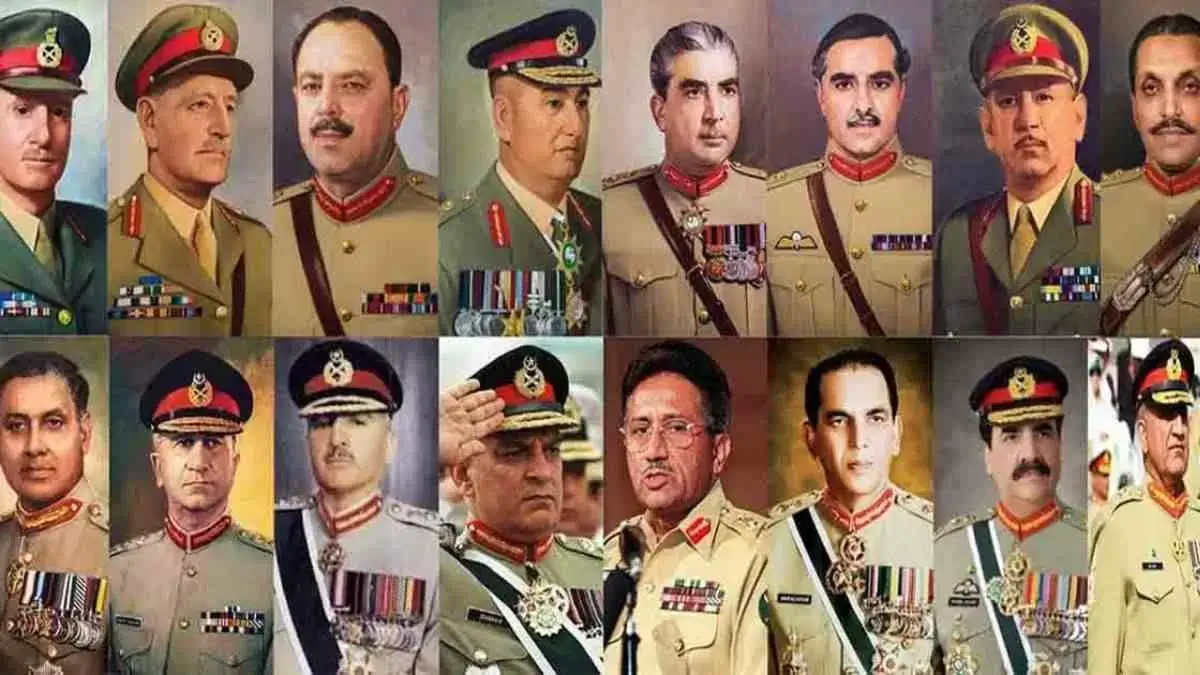
Pakistan – is one country which doesn’t need any external enemies. The Pakistan military and intelligence agencies, including the ISI, are its worst enemies – and have played a substantial role in destroying the country from within. The biggest threat to Pakistan is internal — not external.
Pakistan’s biggest tragedy is that the Pakistan military doesn’t mind its own business and always wants to dictate internal affairs and political developments by either directly running the government or influencing it from behind the scenes. The root cause of the problem is the Pakistan military’s perception that civilians are corrupt, incompetent and incapable of running the government.

This Pakistan military’s interference in the political landscape has led to coups, toppling of civilian governments, subverting the constitutional mandate, exercising control over feeble administrations and supporting political parties or candidates.
This was the reason why none of the 24 prime ministers of Pakistan and 10 out of 14 Presidents so far couldn’t complete their full five-year term, while the four military dictators – Auyb Khan, Yahya Khan, Ziaul Haq and Pervez Musharraf – managed to topple duly elected governments and imposed military rule from 1958–1971, 1977–1988, and 1999–2008.
Even when the military was not directly in control, the Pakistan Army kept meddling in the affairs of the state.
Maj-Gen. Iftikhar Khan’s Death (1949)
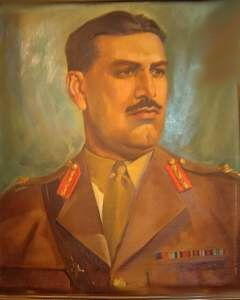
Shortly after independence in 1947 Maj-Gen Muhammad Iftikhar Khan was one of the most senior and respected officers in the Pakistan Army. Liaquat Ali Khan, the first Prime Minister, approved his promotion as the first native officer to replace British General Sir Douglas Gracey, Commander-in-Chief of the Pakistan Army. However, Maj-Gen. Iftikhar Khan died in an air crash, before he could assume office. On December 13, 1949, the Pakistan Airways C-53 aircraft crashed near Jungshahi, Sindh, killing all 26 people on board including Major General Iftikhar Khan, his wife, daughter, and Brigadier Sher Khan, Director of Military Operations. His sudden death led to a leadership crisis that Pakistan was not prepared to handle.
The sudden demise of Maj. Gen. Iftikhar Khan led to speculation of foul play, but there was no evidence. Some people alleged that the crash cleared the path for Ayub Khan’s rapid ascent, which eventually culminated in his presidency. However, these allegations were not supported with evidence.
Investigations at the time attributed the crash to pilot error and navigational issues. The official reports concluded that the aircraft was flying at a low altitude when it struck a hill and there was no evidence of foul play or mechanical failure.
Ayub Khan’s promotion (1951)
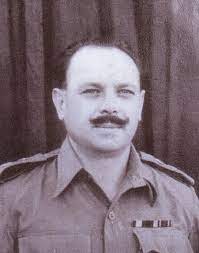
Maj-Gen. Iftikhar Khan’s sudden death in December 1949 created a leadership vacuum in the army. After his death, there were four senior major generals in the Pakistan army including Akbar Khan, Nazir Ahmed, Muhammad Yusuf, and N.A.M. Raza. All of them were experienced and had both seniority and command credentials but despite this, the government — particularly Prime Minister Liaquat Ali Khan and the then Defence Secretary — opted to promote Ayub Khan a relatively junior officer whose name was not even included in the promotion list to the rank of full general in 1951.
Hence, Ayub Khan was promoted to the rank of full general bypassing the more senior or competent officers who subsequently retired or were marginalized. This led to resentment among senior officers, who believed that merit had been sacrificed for political pliability. Some of the apparent reasons behind Ayub Khan’s elevation included:
Ayub was perceived to be more pliable and cooperative by the civilian leadership as compared to other generals who were seen as assertive and had political ambitions.
Ayub Khan had friendly relations with senior British officers, who endorsed his choice to lead the Pakistan army.
Ayub was considered a relatively neutral choice in the Punjabi-dominated military.
Ayub Khan was adept at navigating military bureaucracy and had positioned himself strategically among key figures in the defence establishment.
Ayub Khan’s elevation set the stage for repeated military interventions in Pakistani politics and shaped the country’s civil-military imbalance to this day. Ayub eventually became President of Pakistan but not before his arch rival Maj Gen Akbar Khan initiated Pakistan’s first failed coup attempt — now known as the Rawalpindi Conspiracy of 1951.
Rawalpindi Conspiracy Pakistan military’s first failed coup (1951)
The Rawalpindi Conspiracy planned and executed by Major General Akbar Khan, then Chief of General Staff of the Pakistan Army on March 9, 1951, was a significant moment in Pakistan’s history. It was the first attempted military coup to overthrow Prime Minister Liaquat Ali Khan’s civilian government. Major General Akbar Khan was in particular embittered by Prime Minister Liaquat Ali Khan’s government’s favouritism in army promotions, as well as its decision to accept an UN-mediated ceasefire in the 1947–48 Kashmir War and the missed opportunity to capture the entire region.
Akbar Khan, who was then serving as Chief of General Staff (CGS), planned a coup to overthrow the civilian government. The conspirators intended to replace the civilian government with a military-led administration that would implement radical socio-economic reforms. The plan was to be executed when Prime Minister Liaquat Ali Khan was scheduled to be in Rawalpindi. The result was the Rawalpindi Conspiracy of 1951 — Pakistan’s first military coup attempt.
The conspirators planned to arrest the Prime Minister and establish a new Communist Party regime. However one of the conspirators informed the authorities and the coup failed.
Besides Major General Akbar Khan who was the mastermind, and his wife Naseem Shahnawaz Khan, about 11 military officers and 4 civilians, including Faiz Ahmed Faiz a Renowned poet and editor of The Pakistan Times were arrested and tried by a special tribunal under the Rawalpindi Conspiracy (Special Tribunal) Act. The trial commenced on June 15, 1951, in Hyderabad Jail and lasted 18 months. Major General Akbar Khan and Faiz Ahmed Faiz were convicted and sentenced to long prison terms. Though the Rawalpindi Conspiracy failed, it exposed the undercurrent of discontent within the military and set a precedent for future military interventions in Pakistan’s politics.
Prime Minister Liaquat Ali Khan’s Assassination
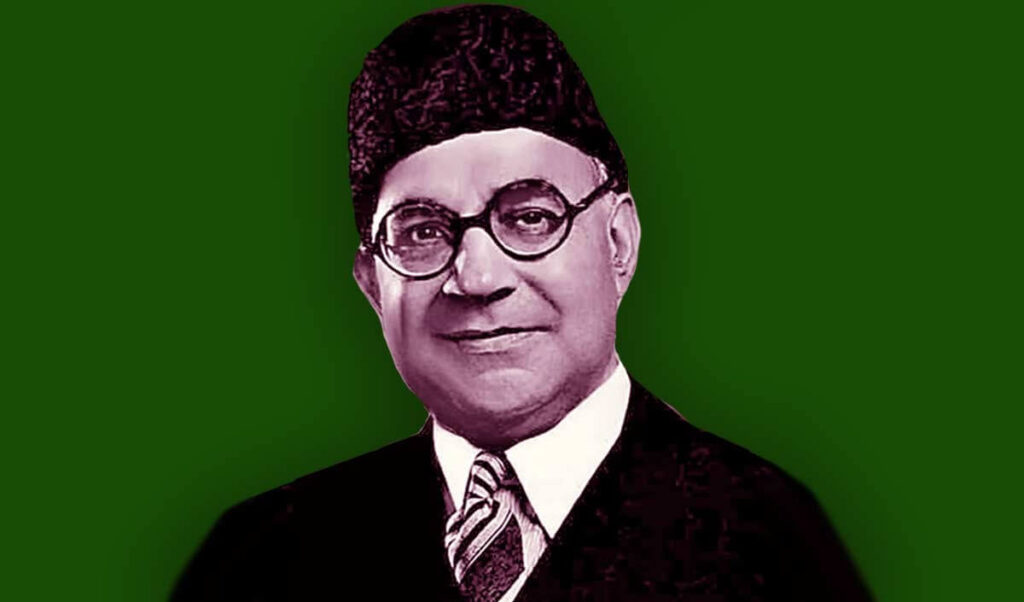
On October 16, 1951, just months after the Rawalpindi Conspiracy was foiled, Prime Minister Liaquat Ali Khan was assassinated while addressing a public meeting in Rawalpindi’s Company Bagh (now Liaquat Bagh). Strangely, his assassin, Said Akbar, an Afghan national, was shot dead by police — without using the chance to interrogate him and find out the other conspirators behind the scene.
The investigation into his death – which remains one of Pakistan’s most mysterious and controversial political killings — was inconclusive. Even the hasty killing of the assassin gave rise to allegations of a possible cover-up. Liaquat Ali Khan’s death marked the beginning of a long, uneasy relationship between civilian leadership and the military establishment. The discontent that began with Iftikhar Khan’s untimely death, Ayub Khan’s unexpected promotion, and Akbar Khan’s rebellion paved the way for military dominance in Pakistani politics for decades to come.
Martial Law of 1958
On 23 March 1956, Pakistan formally proclaimed itself as the Islamic Republic of Pakistan and created the post of president as the new head of state. Major General Iskander Mirza, then serving as Pakistan’s last Governor-General after the resignation of Ghulam Muhammad in 1955, assumed office as the first President of Pakistan.
A British Indian Army officer, Maj-Gen Iskander Mirza who switched over to the civil service and eventually became Pakistan’s first Secretary of Defence, played a pivotal role in the early political and constitutional development of Pakistan. His tenure was marked by instability and constitutional crises.
Between 1956 and 1958, Mirza dismissed five prime ministers in just two years claiming inefficiency and instability—including Chaudhry Muhammad Ali, Huseyn Shaheed Suhrawardy, I. I. Chundrigar, and Feroz Khan Noon.
On October 7, 1958, President Iskandar Mirza abrogated the 1956 constitution, disbanded the National Assembly, and proclaimed the first martial law in the history of Pakistan citing the political chaos and failure of parliamentary democracy.
Iskander Mirza’s imposition of martial law set a precedent for military intervention in Pakistani politics and blurred the lines between military and civil authority. His decision to abrogate the constitution and dismiss elected governments is widely seen as a turning point in Pakistan’s democratic breakdown.
On October 8, 1958 President Iskander Mirza appointed his protégé General Muhammad Ayub Khan as Chief Martial Law Administrator (CMLA).
As per their initial understanding, both Mirza and Ayub Khan were to rule jointly under martial law, however, just 20 days later Ayub Khan staged a bloodless coup.
At midnight on 26-27 October 1958, Ayub ordered a military unit to enter the presidential palace and place his mentor, Gen Iskander Mirza, on an aeroplane bound for England. Despite belonging to a wealthy Nawab family, Mirza spent the rest of his life in exile in London, where he struggled to meet his expenses running a small hotel.
Gen Ayub Khan’s rule as President (1958–1969) and self-appointed Field Marshal (from 1965)
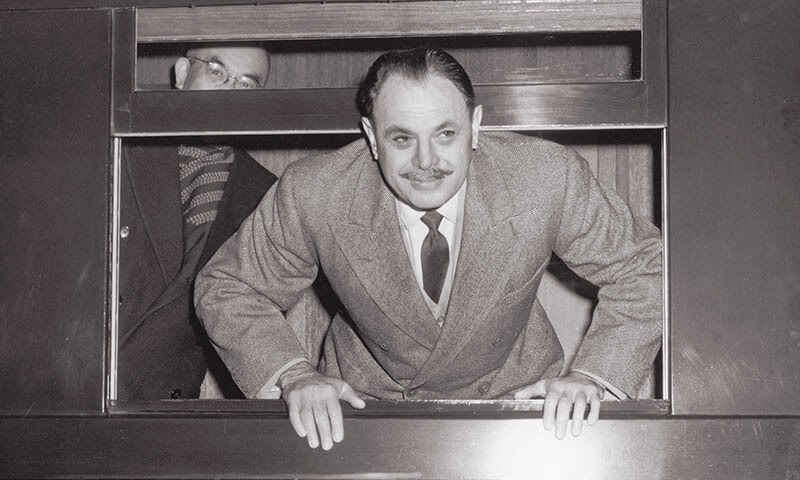
General Muhammad Ayub Khan’s rule as President of Pakistan (1958–1969) was a defining period in the country’s history. Ayub Khan seized power through Pakistan’s first military coup on 27 October 1958, abrogating the Constitution and declaring martial law. Shortly after the coup, Ayub became both President and Chief Martial Law Administrator.
On February 14, 1960, General Ayub Khan was elected president with 96 per cent of the vote and assumed charge as president on February 17, 1960. As President Ayub Khan approved a new constitution on March 1, 1962, that came into effect on June 7, 1962. President Ayub Khan also announced the legalization of political parties and lifted martial law on June 8, 1962. In 1965 he appointed himself Field Marshal though there was no justification for such a promotion as he already held immense political and military power as the President and Commander-in-Chief of the Army.
An uprising against General Ayub Khan during 1968 and 1969 resulted in Ayub Khan relinquishing his office as President and Commander-in-Chief of the Army in favour of General Yahya Khan, who assumed power on 25 March 1969 ending Ayub Khan’s decade-long rule.
Also Read: Enemies within: Generals who destroyed Pakistan 2


[…] Enemies within: Generals who destroyed Pakistan 1 […]