
Key Highlights
- First Indian COAS: General K.M. Cariappa (1949).
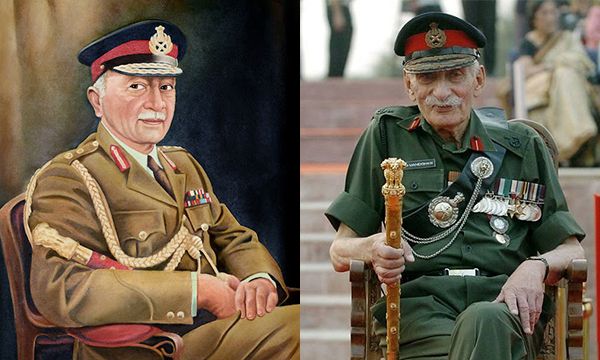
- Most iconic: Field Marshal Sam Manekshaw (1971 war).
- First CDS: General Bipin Rawat (2019).
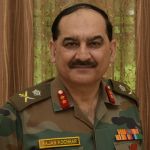
- Current Chief: General Upendra Dwivedi (since June 2024).
Since India’s independence in 1947, the selection of the Chief of Army Staff (COAS) has stood as a critical pillar in the nation’s defence architecture. As the professional head of the world’s third-largest army, the COAS not only commands over 1.4 million personnel but also shapes operational doctrines, readiness, and strategic posture amid persistent regional threats. The process, governed by the Appointments Committee of the Cabinet (ACC) headed by the Prime Minister, balances tradition, merit, seniority, and governmental discretion. Yet, it has evolved amid debates on arm preferences, cadre exclusivity, and the integration of higher defence leadership through the Chief of Defence Staff (CDS). This article examines these dynamics analytically, drawing on historical patterns, performance outcomes, global comparisons, and forward-looking recommendations, while weaving in insights from renowned military commanders.
Post-Independence Framework: From British Legacy to Indian Command
The office traces its roots to the British-era Commander-in-Chief, India. Post-Partition, the transition was gradual. The first few incumbents, such as General Sir Robert Lockhart and General Sir Roy Bucher, were British officers, reflecting the inherited command structure. Field Marshal K.M. Cariappa became the first Indian COAS in 1949, marking a symbolic assertion of sovereignty.
Formally, the title shifted to Chief of Army Staff in 1955. Appointments are made by the ACC based on recommendations from the Ministry of Defence, typically considering Army Commanders (Lieutenant Generals) and the Vice Chief. The tenure is three years or until age 62, whichever is earlier. While seniority has been the norm, supersessions—such as Bipin Rawat in 2016—highlight that the government retains ultimate prerogative, prioritizing perceived merit, operational experience, and alignment with national security imperatives over strict hierarchy.
This system has ensured continuity but also sparked discussions on transparency and potential politicization. As one analysis notes, the departure from pure seniority underscores the government’s constitutional right to select the best-suited leader from eligible commanders.
Preference for Fighting Arms: Infantry, Artillery, and Armour at the Forefront
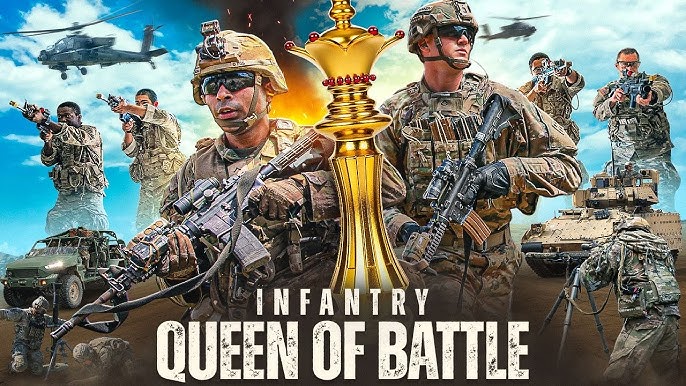
A striking feature of COAS selections has been the overwhelming preference for officers from the “fighting arms”—primarily Infantry, followed by Artillery and Armoured Corps. Infantry officers have dominated, a pattern rooted in the army’s operational realities. Infantry forms the backbone of ground operations, engaging in close-quarters combat, counter-insurgency, and holding territory across diverse terrains from the Himalayas to deserts.
Observations
- Infantry dominance: Most COAS have come from Infantry regiments (Rajput, Kumaon, Gorkha, Sikh LI).
- Artillery & Armoured Corps: Several chiefs hailed from these arms, reflecting balanced representation.
- Engineers: General Manoj Pande (2022–2024) was the first COAS from Engineers.
- Current Chief: General Upendra Dwivedi (J&K Rifles) continues the Infantry tradition.
Chronological List of Chiefs of Army Staff (1947–2026)
| Army Chief | Tenure | Key Notes |
|---|---|---|
| Robert Lockhart | Aug 1947 – Dec 1947 | First post-independence Commander-in-Chief |
| Roy Bucher | Jan 1948 – Jan 1949 | Oversaw early post-colonial Army |
| K.M. Cariappa | Jan 1949 – Jan 1953 | First Indian COAS |
| Rajendra Sinhji | Jan 1953 – May 1955 | First promoted to full General |
| S.M. Shrinagesh | May 1955 – May 1957 | Reforms in organization |
| K.S. Thimayya | May 1957 – May 1961 | WWII veteran, Indo-Pak war hero |
| P.N. Thapar | May 1961 – Nov 1962 | Led during Sino-Indian War |
| J.N. Chaudhuri | Nov 1962 – Jan 1966 | Led in 1965 Indo-Pak war |
| P.P. Kumaramangalam | Jan 1966 – Jan 1969 | Modernization efforts |
| Sam Manekshaw | Jan 1969 – Jan 1973 | 1971 Bangladesh Liberation War hero |
| G.G. Bewoor | Jan 1973 – May 1975 | Post-1971 restructuring |
| T.N. Raina | May 1975 – May 1978 | Emergency era leadership |
| O.P. Malhotra | May 1978 – May 1981 | Cold War modernization |
| K.V. Krishna Rao | Jun 1981 – Jul 1983 | Strategic reforms |
| A.S. Vaidya | Aug 1983 – Jan 1986 | Operation Blue Star |
| K. Sundarji | Feb 1986 – Apr 1988 | Modern doctrine development |
| V.N. Sharma | May 1988 – Jun 1990 | Counter-insurgency focus |
| S.F. Rodrigues | Jul 1990 – Jun 1993 | Post-Cold War restructuring |
| B.C. Joshi | Jul 1993 – Nov 1994 | Died in office |
| S. Roychowdhury | Nov 1994 – Sep 1997 | Strengthened Army modernization |
| V.P. Malik | Oct 1997 – Sep 2000 | Kargil War leadership |
| S. Padmanabhan | Oct 2000 – Dec 2002 | Post-Kargil reforms |
| N.C. Vij | Jan 2003 – Jan 2005 | Strategic modernization |
| J.J. Singh | Jan 2005 – Sep 2007 | First Sikh COAS |
| Deepak Kapoor | Sep 2007 – Mar 2010 | Modernization drive |
| V.K. Singh | Mar 2010 – May 2012 | Age controversy |
| Bikram Singh | May 2012 – Jul 2014 | Strengthened operational readiness |
| Dalbir Singh Suhag | Jul 2014 – Dec 2016 | Modernization focus |
| Bipin Rawat | Dec 2016 – Dec 2019 | Became first CDS |
| M.M. Naravane | Dec 2019 – Apr 2022 | Galwan Valley standoff |
| Manoj Pande | Apr 2022 – Jun 2024 | First engineer COAS |
| Upendra Dwivedi | Jun 2024 – Present | Current COAS |
This preference stems from several factors. Infantry-heavy commands expose officers to the full spectrum of command challenges, including troop morale, logistics in inhospitable conditions, and direct enemy contact—experiences deemed vital for apex leadership. Larger numbers of infantry battalions also create a deeper talent pool. Armoured and Artillery officers bring expertise in mechanized warfare and fire support, crucial for modern integrated battles. In contrast, services like Engineers, Signals, or Ordnance, while indispensable, are often seen as support-oriented, with less exposure to sustained field command at higher echelons.
General Manoj Pande’s appointment as the first COAS from the Corps of Engineers in 2022 broke this glass ceiling, signaling a potential broadening. However, historical data shows fighting arms officers have overwhelmingly filled the role, reflecting a pragmatic emphasis on combat-proven leadership.
General Cadre Imperative: Why Only Command Stream Officers?
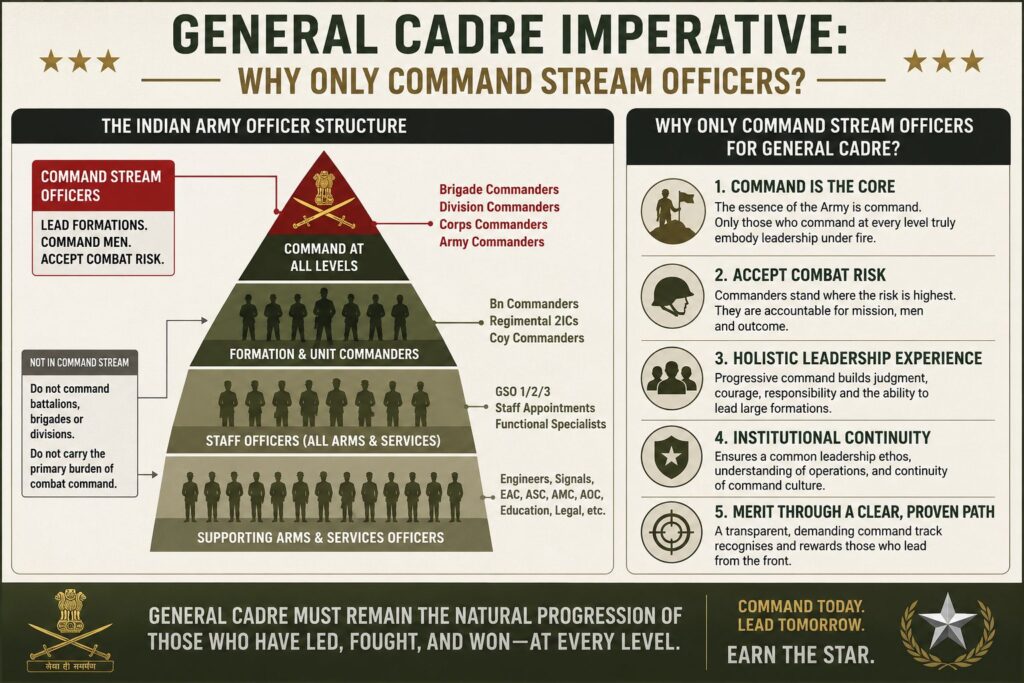
Eligibility for COAS is largely confined to the “general cadre”—officers who have commanded units, formations, and commands in operational roles. This excludes most from non-combat support branches who follow technical or administrative streams. The rationale is straightforward: apex leadership demands holistic mastery of combined arms operations, jointmanship, and strategic foresight, best honed through progressive command appointments.
The “command exit model” and regimental affiliations influence promotions, ensuring only those with proven field leadership reach the shortlist of Army Commanders. Critics argue this perpetuates regimental biases and limits diversity, but proponents maintain it safeguards operational effectiveness. In a force facing hybrid threats, leaders must intuitively grasp ground realities rather than specialized silos.
Performance of Non-Infantry Chiefs: Breaking the Mould
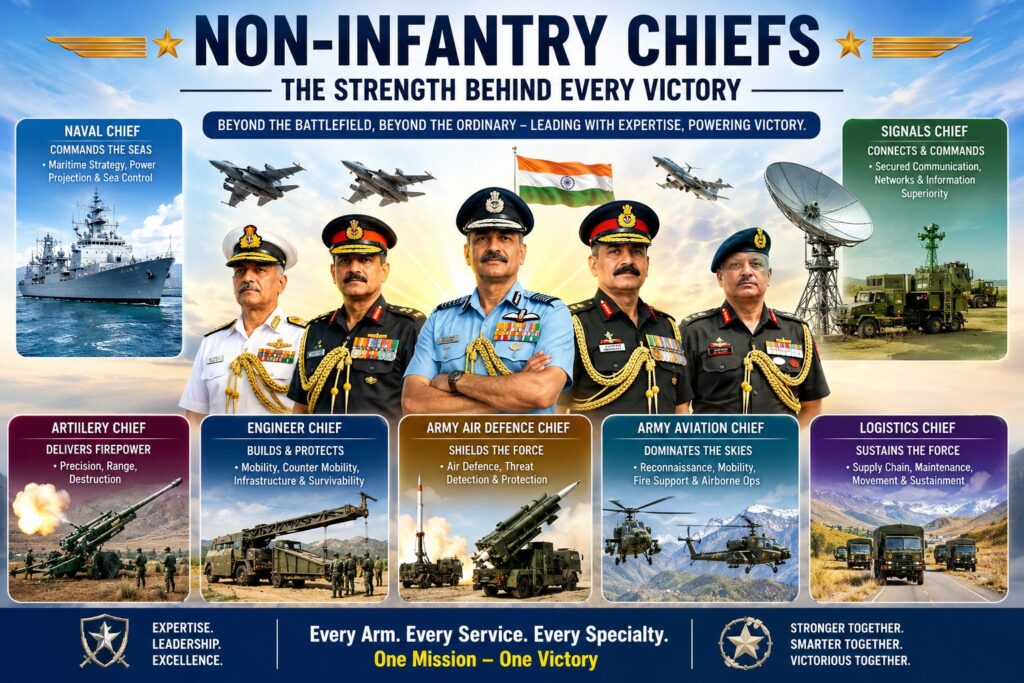
While rare, non-infantry chiefs have performed commendably. General P.P. Kumara Mangalam (Artillery) and others from Armoured backgrounds contributed during critical periods. General Pande’s tenure, for instance, emphasized modernization, integration, and technological adaptation, including initiatives like Rudra all-arms brigades.
Historically, infantry dominance correlates with the army’s focus on manpower-intensive conflicts like 1962, 1965, 1971, and Kargil. Non-infantry leaders often excelled in technical and logistical reforms. However, the small sample size limits broad generalizations. Overall, performance appears driven more by individual calibre, geopolitical context, and governmental support than arm of service alone. No systemic underperformance is evident among the few outliers, suggesting the preference is evolutionary rather than rigidly exclusionary.
The CDS Conundrum: Retired Appointments and the Bar on Serving Chiefs
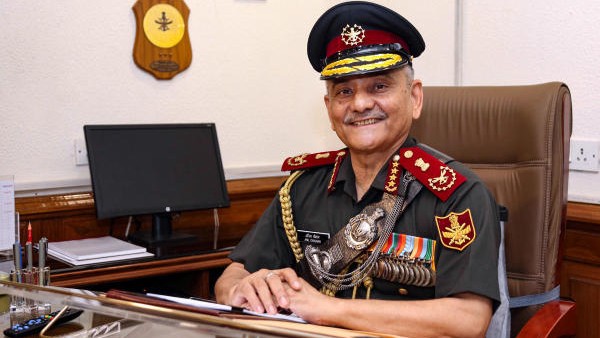
The Chief of Defence Staff position, created post-2019 for tri-service synergy, has seen appointments from retired officers, notably Lt Gen Anil Chauhan and successors. Why not elevate a serving Service Chief? Regulations allow it, but practical and institutional reasons prevail. Serving chiefs are deeply immersed in single-service responsibilities; transitioning to CDS could disrupt continuity or raise inter-service equity concerns. Retired officers offer fresh perspectives, reduced service parochialism, and flexibility, with age caps (up to 65) ensuring relevance.
Appointing a serving chief might blur lines of authority or invite perceptions of favouritism. The precedent of recalling retirees like Chauhan broadens the talent pool while maintaining civilian oversight. This approach aligns with jointness goals but highlights ongoing challenges in full integration.
Global Comparisons: Leadership Selection in Major Armies
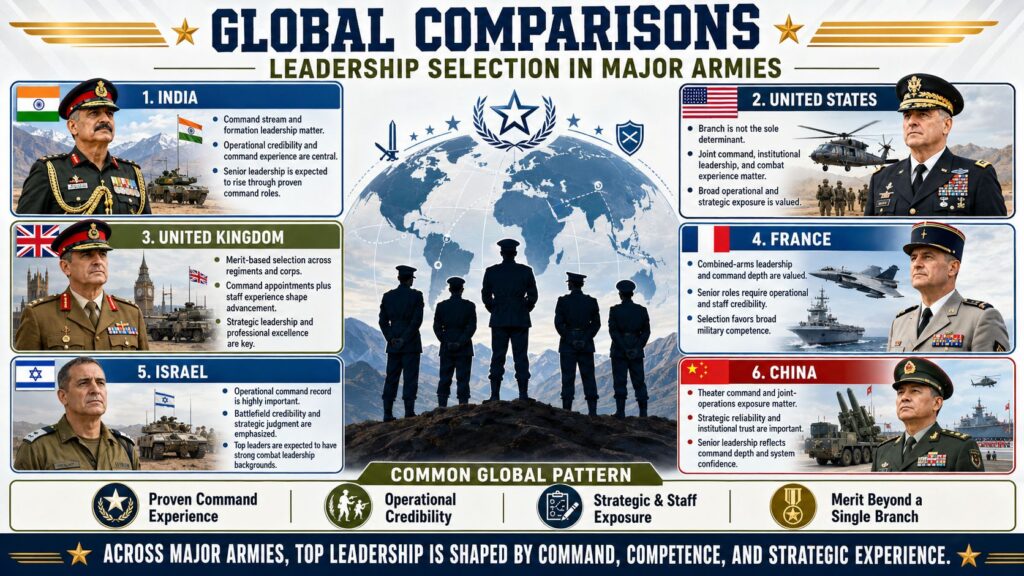
Prominent world armies offer instructive contrasts. In the United States, the Army Chief of Staff is appointed by the President with Senate confirmation, emphasizing merit, joint experience, and strategic vision over strict seniority. Officers from various branches, including those with broad joint billets, compete; the process fosters innovation but can involve political considerations.
The United Kingdom’s Chief of the General Staff emerges from a merit-based system within the Army Board, with strong emphasis on command tours and staff college performance. Fighting arms predominate, but joint and expeditionary experience weigh heavily. China’s People’s Liberation Army selects top leaders through Communist Party structures, prioritizing political loyalty alongside military competence, often from ground forces given the PLA’s scale. Russia’s system blends seniority with patronage, historically favouring combat arms amid operational demands. France emphasizes merit and jointness within its professional cadre.
India’s model shares the fighting arms tilt with peers but stands out for its civilian-dominated ACC process, which guards against militarism while sometimes inviting debate on supersessions. Global trends favor merit, joint exposure, and adaptability—areas where India is evolving but could accelerate.
Insights from Military Commanders
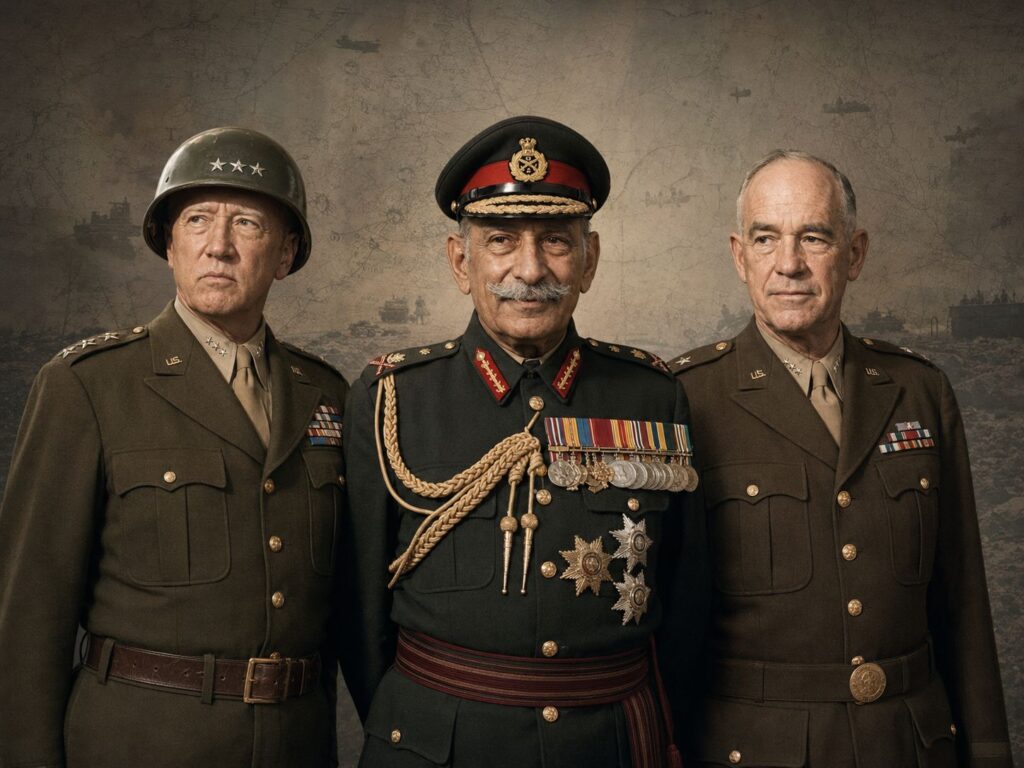
Renowned leaders underscore timeless principles. General George S. Patton emphasized adaptability: “A leader is a man who can adapt principles to circumstances.” Field Marshal Sam Manekshaw, India’s iconic COAS, highlighted character and decisiveness during the 1971 war. U.S. General Omar Bradley noted, “Leadership is intangible, and therefore no weapon ever designed can replace it.”
General Colin Powell stressed learning from experience, while George C. Marshall warned against pure seniority: “If leadership depends purely on seniority, you are defeated before you start.” These quotes reinforce that selection must prioritize competence, initiative, and moral courage over rigid formulas.
Analytical Reflections and Cogent Recommendations
India’s COAS selection has served the nation well, delivering stable leadership through wars and peace. However, infantry dominance, while pragmatic, risks overlooking specialized expertise in cyber, logistics, or technology-driven warfare. The general cadre focus ensures relevance but could benefit from broader joint and inter-agency exposure. CDS appointments from retirees promote neutrality but may signal gaps in serving talent pipelines for joint roles.
Comparisons reveal opportunities: emulate U.S. joint emphasis and UK’s rigorous merit filters. To strengthen the system:
First, institutionalize transparent, multi-parameter assessments incorporating operational records, joint assignments, strategic acumen, and diversity (including arms and services). Second, expand command opportunities for non-fighting arms in hybrid scenarios to build broader leadership depth. Third, formalize CDS succession with clearer pathways, potentially allowing exceptional serving chiefs while preserving balance. Fourth, invest in professional military education emphasizing jointness and emerging domains. Finally, periodic parliamentary oversight or expert reviews could enhance accountability without compromising executive prerogative.
These steps would future-proof leadership, fostering a more agile, integrated force capable of multi-domain operations against evolving threats from China, Pakistan, and beyond. As India aspires to global power status, its apex military selection must evolve from tradition-bound pragmatism to meritocratic excellence—honouring the sacrifices of the past while securing the nation’s future.