


India’s defence modernization story is one of remarkable ambition — and equally remarkable complexity. Beneath the impressive strides in indigenous development, there remains a quiet acknowledgement in policy circles that the country’s dependence on imported defence equipment has been, for far too long, more substantial than its strategic interests would ideally permit. Estimates suggest that even today, somewhere between 35 and 40 percent of India’s defence requirements are met through foreign procurement. At certain points over the last decade, the country has ranked among the world’s largest arms importers.
This is not a reflection of any lack of capability or intent. India is a civilisation with a storied tradition in metallurgy, mathematics, and strategic thought and its scientific and engineering talent is recognised across the world. The dependence on imports has been, in many ways, a legacy of historical choices, constrained timelines, and the genuine difficulty of building a complex defence-industrial ecosystem from scratch. Acknowledging where the gaps remain is simply the honest starting point for any serious conversation about where the country needs to go next.
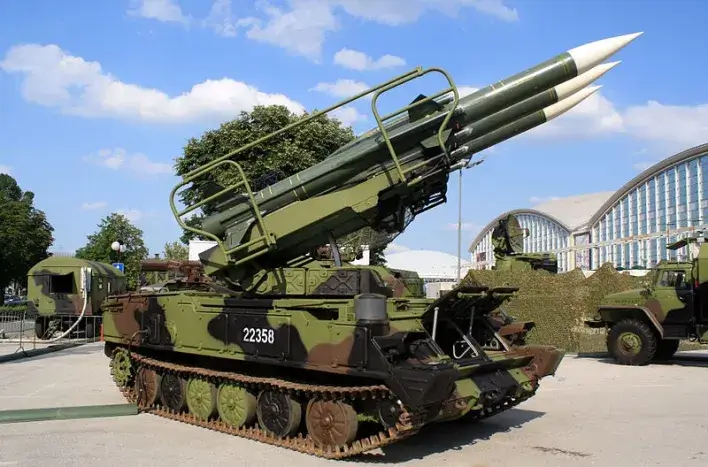
The good news and there are genuinely good news is that the architecture of global competition has changed in a way that gives India an opening it did not have twenty years ago. The battlespace of the twenty-first century is no longer decided primarily by the weight of steel or the number of tanks. It is decided by algorithms, quantum signals, synthetic biology, advanced materials, and the intelligence embedded in machines. These are domains where a country with India’s engineering talent pool, its growing startup ecosystem, and its long history of frugal innovation can compete, if it chooses to do so with the seriousness the moment demands.
This article is a frank conversation with the planners and policymakers who hold the levers. The argument is straightforward: India’s path to genuine strategic autonomy runs directly through deep technology, and the window for decisive action is narrower than most people in South Block are willing to acknowledge.
What Strategic Autonomy Actually Means or Does Not?

The phrase “strategic autonomy” has been used so often in Indian foreign and defence policy discourse that it has nearly lost its meaning. Politicians invoke it. Academics write papers about it. Diplomats deploy it as a polite way of saying India will not be told what to do by Washington or Beijing.
But autonomy in a strategic sense is not a diplomatic posture. It is a material condition. A country has strategic autonomy when it possesses the industrial, technological, and organisational capacity to independently sustain its own security to build, operate, maintain, and upgrade its own systems of defence without depending on external goodwill or supply chains that can be switched off by a phone call from a foreign capital.
By this definition, India’s strategic autonomy today is partial and conditional. The country can field large formations of ground forces. It has a credible nuclear deterrent. Its Navy, despite its equipment gaps, is the dominant force in the Indian Ocean region. Its Air Force flies capable if aging platforms. These are real achievements, and they should not be dismissed.
But peel back the operational layer and the dependencies become visible quickly. India’s most advanced fighter jets, whether Russian-origin or the Rafales from France depend on foreign supply chains for critical components, avionics upgrades, and engine maintenance. The country’s missile programme, one of its brightest success stories, still relies on imported raw materials for propulsion systems. Many of the sensors and communication systems used by the three Services involve foreign sub-systems or intellectual property. In a prolonged conflict or a period of geopolitical estrangement, these dependencies translate into vulnerabilities.
This is the baseline condition from which any honest conversation about deep tech and defence must begin.
Deep Tech Landscape — What We Are Talking About

“Deep tech” is another term that gets used loosely. For the purposes of this discussion, it refers specifically to six technological domains that are reshaping the character of modern warfare:
Artificial Intelligence and Machine Learning — AI is not a product. It is a capability multiplier that transforms every other system it touches. In defence terms, AI means faster processing of intelligence feeds, autonomous target recognition, predictive logistics, wargaming simulations that compress years of experience into weeks, and most consequentially autonomous weapons systems. The country that deploys AI most effectively in its military will not necessarily have more weapons. It will have faster, more accurate decisions at every level of the kill chain.
Quantum Technologies — Quantum communication promises encryption that is theoretically unbreakable. Quantum sensing offers navigation and detection capabilities that are not dependent on GPS signals, which can be jammed or spoofed. Quantum computing, still years from practical military deployment, will eventually break most of the encryption that currently protects military communications worldwide. The country that achieves quantum supremacy in communication and sensing will have an asymmetric intelligence advantage over all others.
Advanced Semiconductors and Microelectronics — Every weapon system, communication platform, and sensor network in a modern military depends on chips. The geopolitical earthquake triggered by the US-China semiconductor war has taught the world one lesson with brutal clarity: whoever controls chip fabrication controls the future. India’s current semiconductor manufacturing capability is almost non-existent in the advanced node categories. This is perhaps the single most dangerous gap in the country’s deep tech defence architecture.

Hypersonic and Directed Energy Systems — Hypersonic missiles flying at speeds above Mach 5 at low altitudes render most current missile defence systems ineffective. Directed energy weapons having high-energy lasers and high-power microwave systems offer the prospect of defeating drone swarms and cruise missiles at a fraction of the cost per kill of conventional interceptors. Both are domains where India has nascent programmes but nothing close to the fully operational capability that China, the United States, and Russia have already demonstrated.
Space and Counter-Space Technologies — The dependence of modern military operations on space-based assets for reconnaissance, navigation, communication, and early warning means that the ability to protect one’s own satellites and degrade those of an adversary has become a core military capability. India has demonstrated an anti-satellite weapon. It has a growing commercial space sector. But the integration of space capabilities into joint operational planning, and the development of a full-spectrum counter-space capability, remains work in progress.
Biotechnology and Advanced Materials — This is the least discussed but potentially the most transformative domain. Next-generation protective materials, soldier performance enhancement, biosensors for chemical and biological threat detection, and in the longer term even engineered biological agents, represent a frontier of military technology that India is barely beginning to engage with seriously.
These six domains share two important characteristics. First, they are all civilian-origin technologies that have dual-use potential, which means the innovation ecosystem that drives them is not the traditional defence industrial complex but rather universities, startups, and technology companies. Second, mastering any one of them requires sustained investment, decades of patience, and a willingness to accept failure as part of the process, none of which are qualities that procurement bureaucracies may not be ready to accept it.
Where India Stands — An Honest Assessment

The last decade has seen more genuine momentum in Indian defence indigenisation than the preceding five decades combined.
The Defence Acquisition Procedure reforms have created categories that prioritise domestic procurement. The iDEX (Innovations for Defence Excellence) framework has funded over five hundred startups and innovators working on defence-relevant problems. The government’s decision to publish Positive Indigenisation Lists which specify items that can only be procured domestically has been a genuine structural intervention. The budget allocation to domestic capital procurement has grown meaningfully.
The Technology Development Fund (TDF) Scheme is an initiative aimed at fostering self-reliance in Defence Technology under the ‘Make in India’ programme by the Ministry of Defence (MoD), Government of India. Administered by the Defence Research & Development Organisation (DRDO), the programme caters to the needs of the Tri-Services, Defence Production, and DRDO. It encourages the involvement of both public and private industries, with a particular focus on MSMEs and startups, to cultivate an environment for advancing cutting-edge technology capabilities within the defence sector.
The scheme provides funding support of up to 90% of the project cost, capped at INR 50 Crores, in the form of Grant-in-Aid. The key objectives include enhancing existing products/processes, elevating technology readiness levels from TRL 3 onwards to meet Tri-Services specifications, developing futuristic technologies and innovative products for defence applications, and substituting imports with indigenous components where local technologies are lacking.
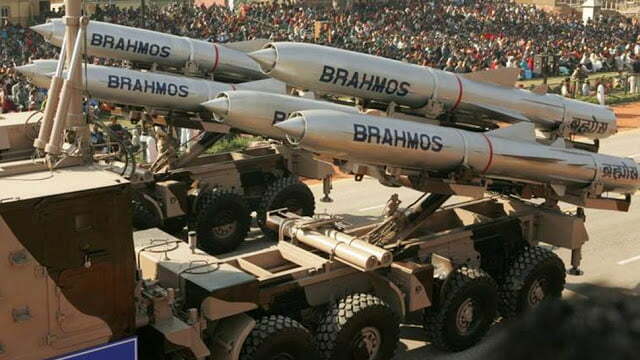
DRDO has delivered real capability in certain areas. BrahMos, the joint venture with Russia remains one of the world’s most capable supersonic cruise missiles. Akash, the surface-to-air missile system, is being exported. ASTRA, the beyond-visual-range air-to-air missile, is operationally deployed. Arjun, the main battle tank, for all its weight and operational issues, demonstrates a capacity to indigenously design complex ground platforms. The Light Combat Aircraft Tejas, after an agonisingly long development cycle, is finally in squadron service and its Mk2 variant is in advanced development.
These are real achievements. But they are also, if one is honest, insufficient.
The gap between what India’s armed forces need and what the domestic industry can currently supply remains large. The pace of indigenisation , even with recent acceleration does not match the pace at which India’s security environment is deteriorating. China has spent the last two decades systematically modernizing its People’s Liberation Army, incorporating deep tech at every level, and constructing a military-civil fusion architecture that ensures civilian technological advances flow rapidly into military capability. The technological gap between the PLA and the Indian armed forces in several critical domains is widening, not narrowing.
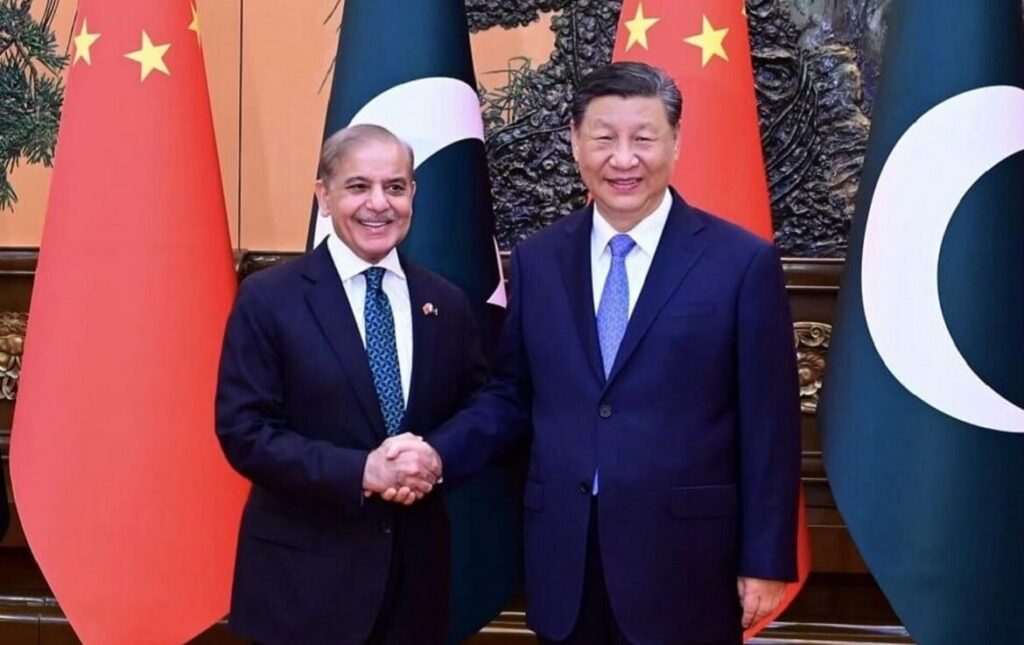
Pakistan, India’s other primary adversary, has been the beneficiary of Chinese technology transfer at a pace that makes direct comparisons disturbing. In drone warfare, in certain missile categories, and potentially in the early stages of AI-assisted targeting, Pakistan’s military has capabilities today that its defence industry could not have produced independently the capabilities supplied by a neighbour with a clear strategic interest in maintaining pressure on India’s western border.
The honest assessment, therefore, is this: India has moved from complacency to awareness, and from awareness to the early stages of action. But it has not yet moved from early-stage action to the kind of sustained, organised, deeply funded national effort that strategic autonomy through deep technology requires.
Why the Old Model Will Not Get Us There
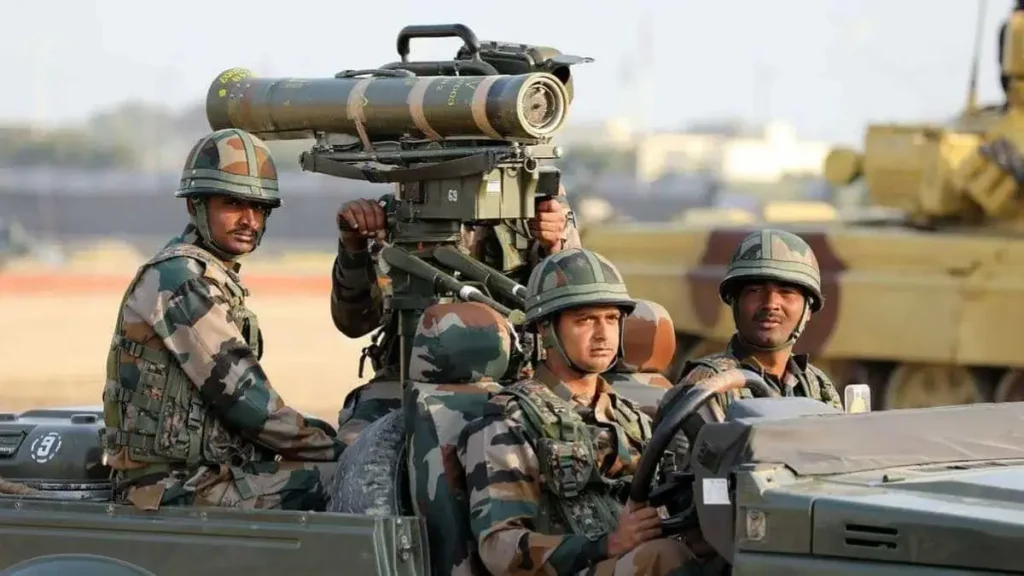
For most of its post-independence history, India’s approach to defence self-reliance has relied on two pillars: DRDO as the research and development engine, and the Defence Public Sector Undertakings (DPSUs) as the manufacturing platform. HAL, BEL, BEML, Ordnance Factory Board (now reorganised into seven corporate entities) — these have been the workhorses of the Indian defence industrial ecosystem.
This model has produced real results. It has also produced delays, cost overruns, and a tendency toward incremental improvement over genuine innovation. The reasons are structural.
DRDO, as a government laboratory system, is optimised for scientific excellence within defined parameters, not for the kind of rapid, iterative, failure-tolerant innovation cycle that produces breakthrough technology. Its procurement processes are designed for an era of slow-moving government contracts, not the sprint-and-pivot culture of deep tech development.
The DPSUs face a different version of the same problem. As public sector entities, they carry the DNA of their formation designed to be manufacturers of last resort, protected from competition, subsidised by government orders. Several of them have made genuine progress in recent years, particularly post-corporatisation, but none of them have the culture, the talent pipelines, or the risk appetite to be a driver of frontier technology development.
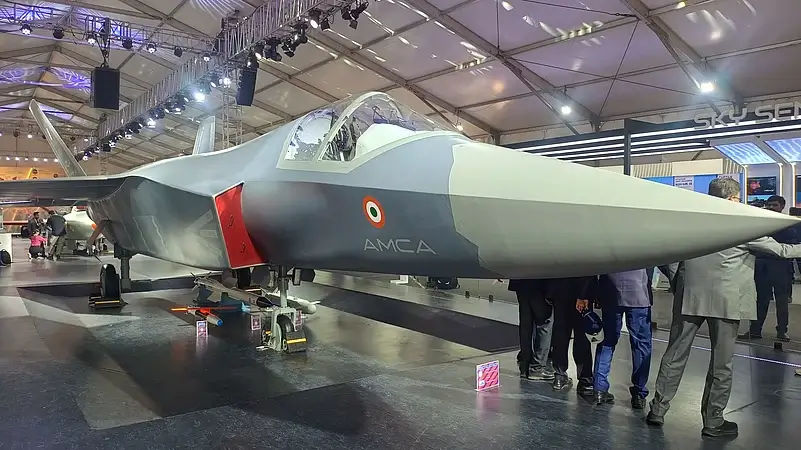
The private sector Tata, Mahindra, L&T, Bharat Forge, Adani Defence, and a growing constellation of smaller players has entered the defence space with energy and investment. This is genuinely encouraging. But private sector defence companies can only go where the orders take them. If the procurement system continues to privilege price over technology, short-term delivery over long-term capability, and risk aversion over innovation, the private sector will produce what it is paid to produce competent but incremental.
What India needs, and does not yet have, is a model analogous to what the United States achieved through DARPA, what Israel built through a tight integration of its military intelligence units with its startup ecosystem, or what China has constructed through its military-civil fusion policy. Each of these models is different. All of them share a common insight: frontier technology for defence cannot be produced by procurement alone. It requires deliberate architecture that accelerates the translation of scientific discovery into deployed capability.
Lessons from Elsewhere — Applied to India

The DARPA Model: The US Defence Advanced Research Projects Agency has, since 1958, operated on the principle that the government should fund high-risk, high-reward research that no private investor would touch because the potential payoff horizon is too distant and the failure probability too high. DARPA gave the world the internet, GPS, stealth technology, and the foundational work on autonomous vehicles. Its budget is relatively small around 4 billion dollars annually, but its impact on American military technology has been immeasurable.
India does not have a DARPA equivalent. DRDO, despite nominally serving a similar function, operates with different incentive structures and a different culture. The Technology Development Fund (TDF) and iDEX are partial analogues, but they lack the scale, the autonomy from procurement pressures, and the tolerance for radical failure that makes DARPA work.

The Israeli Model: Israel’s Unit 8200, the signals intelligence unit of the IDF, has been described as the world’s most effective startup incubator. Unit 8200 is the elite cyber-intelligence and signals intelligence (SIGINT) division of the Israel Defense Forces (IDF). Often likened to the U.S. National Security Agency (NSA), it is the largest single unit in the Israeli military and is responsible for code-breaking, cyber-warfare, and intelligence gathering. Veterans of the unit leave military service with classified cryptography and cybersecurity skills and form the backbone of Israel’s world-leading cybersecurity industry. The intelligence community and the defence sector have created a talent pipeline that flows naturally into commercial and dual-use technology development.
India has the intellectual raw material for a comparable model. Its technical intelligence agencies, IIT graduates doing defence-relevant research, and DRDO scientists who move into academia or industry could form the nucleus of a genuine dual-use innovation ecosystem — but only if the barriers between classified defence research and commercial application are deliberately lowered and the pathways for knowledge transfer are institutionalised.
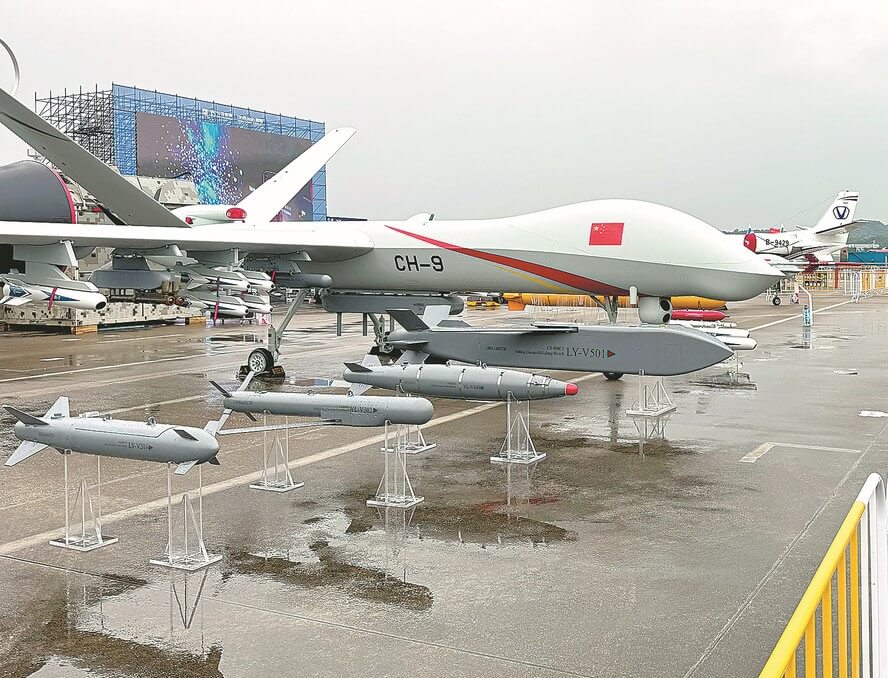
The Chinese Military-Civil Fusion Model: China’s approach is the most radical and, from a strategic competition standpoint, the most important to understand. Beijing has essentially mandated that civilian technology companies like Huawei, DJI, Alibaba, Baidu, and hundreds of others make their research, their data, and their technology available to the military as required. The line between civilian and military innovation does not exist in the Chinese system. This gives the PLA access to the full breadth of China’s extraordinary technology sector.
India cannot and should not replicate this model it is incompatible with a democratic, rule-of-law system and would likely be counterproductive in a country where the private sector thrives precisely because it operates at arm’s length from the state. But the underlying logic is that military technology capability is a function of civilian technology capability, and that the two must be deliberately connected which is valid and transferable.
Concrete Agenda — What Government Planners Must Actually Do

This is where the article stops being analytical and becomes directly prescriptive. The following proposals are not academic suggestions. They are operational recommendations for the planners who have the authority and the responsibility to act.
Establish a Dedicated Advanced Defence Technology Agency (ADTA)
India needs an institutional equivalent of DARPA — but designed for Indian conditions. This agency should be distinct from DRDO in every important respect: it should be mission-funded rather than budget-funded, its leaders should be recruited from the private sector and academia as well as the government, and it should operate with an explicit mandate to fund high-risk research that has no guaranteed short-term payoff.
The ADTA should have a ring-fenced budget — not less than 0.1 percent of GDP annually, or approximately 25,000 to 30,000 crore rupees at current prices. It should be empowered to fund startups, university laboratories, and private companies working on defence-relevant deep tech, and it should have the authority to fast-track acquisition of technologies that emerge from its funded portfolio. The critical design feature is autonomy from the procurement bureaucracy. The moment ADTA becomes another approval layer in the Ministry of Defence pipeline, it will fail.
Build a National Semiconductor Mission with Defence as the Anchor Customer
India’s semiconductor mission, launched in 2021 with a significant financial package, has produced the country’s first chip fabrication plant, the Tata Electronics facility in Dholera. This is a beginning, but only a beginning. The defence establishment must position itself as the anchor customer for domestically fabricated chips, committing to procuring critical components for military systems only from Indian-made sources within a defined timeline.
This is not protectionism for its own sake. It is the recognition that in a world where chip supply chains are weapons of geopolitical coercion, military-grade semiconductors manufactured outside India represent an existential vulnerability. The US learned this lesson with rare earth materials and is now learning it again with advanced chip packaging. India should not need to learn the same lesson after the fact.
The Ministry of Defence should establish a Defence Semiconductor Roadmap that identifies domain by domain, which chips currently imported can be replaced by domestic production within five years, and which require a longer development timeline. This roadmap should be resourced and governed at the apex of the national security establishment, not left to inter-ministerial negotiation.
Restructure DRDO Around a Focused Portfolio Model
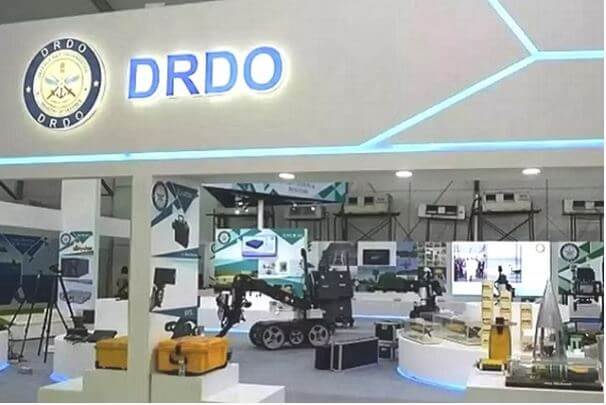
DRDO currently has fifty-two laboratories working on an enormous range of subjects, from aeronautics to food science. This breadth is its weakness. No laboratory system in the world has successfully innovated across all domains simultaneously. The laboratories that produce breakthrough technology are almost always those with a tightly defined mission, outstanding talent, and sufficient protected funding to pursue a problem for a decade without worrying about justifying themselves in the next budget cycle.
DRDO should be restructured into a smaller number of focused centers of excellence, perhaps ten to twelve, each with a clear mandate, a competitive talent model, and a direct line to the operational commands of the armed forces. The remaining laboratories that do not fit this model should either be transferred to a technology diffusion function (helping industry absorb and adapt existing technologies) or merged with civilian research institutions.
This will be politically difficult. DRDO is a large employer and a powerful institutional lobby. But the current model is not producing the depth of capability that India’s security situation requires, and the planners who understand this should have the courage to say so publicly.
Create a Defence Technology Adoption Fast-Track for Private Startups

iDEX has been a genuine success in generating interest and early-stage innovation. Its limitation is the adoption bottleneck: startups that win iDEX challenges too often find that the path from winning to actual procurement runs through the same slow, risk-averse procurement channels that large defence companies navigate. For a startup with 30 employees and 18 months of runway, a procurement cycle that takes 4 to 6 years is not a delayed success. It is failure.
The government should create a separate procurement pathway, call it Defence Technology Fast-Track (DTFT) specifically designed for technology-intensive small and medium enterprises. This pathway should have decision timelines measured in months, not years; financial structures that allow progress payments during development; and direct evaluation by operational military users rather than only by procurement staff. The model exists in embryonic form within iDEX. It needs to be institutionalised, resourced, and protected from absorption into the standard procurement machinery.
Invest Seriously in Quantum and AI Frontiers

India has a National Quantum Mission. It has an AI mission. Both are real commitments and both deserve credit. But the translation of these missions into military capability requires a specific additional layer: defence-focused research programmes within these missions, with dedicated funding streams, security clearances for researchers, and a direct relationship with the Service Chiefs and the National Security Adviser’s office.
The quantum communication programme deserves urgent acceleration. The ability to establish quantum key distribution networks for military command and control networks that cannot be intercepted or decrypted by any adversary is not a distant science fiction prospect. China has already demonstrated satellite-based quantum communication at meaningful range. India has the scientific talent to build this capability, but the current investment levels and institutional arrangements are not commensurate with the urgency.
For AI, the priority should be the development of indigenous large models trained on defence-relevant data, satellite imagery, signals intelligence, logistics patterns, operational histories. India should not depend on commercial AI models built and hosted by American or European companies for applications that touch its military operations. The data sovereignty and security implications are too significant.
Fix the Culture of Risk Aversion in Procurement

This is the hardest recommendation because it asks for a change not in policy but in behaviour. The Indian defence procurement system has been structured, over decades, around the imperative of preventing corruption. This is a legitimate and important goal. But in the process of building safeguards against venality, the system has also created safeguards against decision-making. The result is a procurement apparatus that is extraordinarily difficult to corrupt and almost equally difficult to move.
Every significant procurement decision involves multiple layers of approval, opportunities for challenge and reversal, and individual accountability structures that make officials reluctant to approve anything that could later be questioned. In this environment, the safest decision is always to delay, to ask for more data, to commission another study, to send the file back for clarification. The cost of this delay, measured in operational capability gaps and foregone indigenous production experience, is enormous. But it falls on the armed forces and on the country’s security, not on the official who chose caution.
The solution is not to reduce oversight. It is to rebalance accountability so that the cost of delays and inaction is as visible and as institutionally acknowledged as the cost of a procurement decision that goes wrong. This requires changes to how senior procurement officials are evaluated, how acquisition timelines are reported and reviewed, and how the leadership of the Ministry of Defence and the armed forces communicate the urgency of capability timelines to the civil service.
National Security Calculus — Why Time Is the Critical Variable
A point that defence technology discussions in India sometimes understate deserves to be stated plainly: the window for building genuine deep tech capability in defence is not indefinitely open.
Consider the adversary calculus. China’s military modernisation, on its current trajectory, will reach a level of technological sophistication by 2030 to 2035 that will make certain categories of conventional military confrontation deeply unfavourable for India. The PLA’s investment in AI-enabled command and control, in hypersonic systems, in space-based surveillance, and in autonomous platforms has been consistent, large, and strategic. These are not capabilities that India can match by buying foreign technology. They can only be matched by developing indigenous technology because no foreign government will sell India the systems that would allow it to go toe-to-toe with China in these domains.

The other dimension of the time pressure is technological. Deep tech is not static. The leading countries, the US, China, and to a lesser extent Israel and a few European nations are moving rapidly, and the gap between the frontier and the followers is not constant. In semiconductor manufacturing, the gap between leading-edge fabrication (currently at 2nm and below) and what India can produce today is measured in decades. If India does not accelerate its semiconductor capability now, that gap will only widen as the leading manufacturers continue to advance.
In AI, data and compute are more freely available than fabrication expertise, but foundational model development is increasingly concentrated in a handful of organisations. In quantum, the race is genuinely open, and a country that invests seriously today has a realistic prospect of competitive capability within a decade.
Talent Question — India’s Greatest Undeployed Asset

No deep tech programme succeeds without people. India has an abundance of technical talent graduating over a million engineers annually, home to a diaspora of scientists and technologists that spans the world’s leading research institutions and technology companies and possessing a military officer corps with significant academic preparation and intellectual curiosity.
The challenge is that this talent does not currently flow into defence technology in proportion to India’s security needs. IIT graduates go to investment banks, consulting firms, and technology companies — domestic and foreign. India’s best AI researchers work for Google, Meta, DeepMind, and Microsoft. Its finest chip designers work for Intel, Qualcomm, and TSMC. Its most capable systems engineers build satellites for SpaceX and Airbus.

This is not a moral failure. It is a rational response to the incentive structures that exist. Deep tech work in the Indian defence ecosystem does not currently offer the compensation, the intellectual environment, the career trajectory, or the sense of urgency that draws the best talent toward private technology careers.
The government must change this calculus. Not through compulsion, but through creation: by building genuinely exciting research environments, by offering compensation that is competitive with the private sector for defence-relevant specialisations, by creating fellowship programmes that bring diaspora technologists back for defined periods of defence research, and by making visible the strategic significance of what they would be working on.
Israel’s success in building a world-class defence technology ecosystem has been powered, in part, by the cultural significance attached to military service. India, despite its own deep tradition of martial culture, has not yet constructed a cultural frame in which working on India’s national security technology is seen as the highest application of technical talent. This is a failure of communication and institutional design, not of national character.
The Ecosystem View — Connecting the Dots

Ultimately, strategic autonomy in defence technology cannot be achieved through any single programme or initiative. It is an emergent property of an ecosystem, a dense web of relationships between research institutions, defence laboratories, private companies, startups, the armed forces, funding agencies, and regulatory bodies.
India’s deep tech defence ecosystem is forming. The pieces are appearing. iDEX connects startups to the Services. Defence corridors in Uttar Pradesh and Tamil Nadu are creating geographic concentrations of defence manufacturing. The FDI liberalisation in defence has brought foreign companies in as technology partners. The Defence Space Agency, the Defence Cyber Agency, and the Armed Forces Special Operations Division represent organisational acknowledgement of new domains.
What is missing is the connective tissue — the mechanisms that allow information, talent, and technology to flow between these islands of activity. A startup that solves a real military problem should not have to navigate a five-year procurement labyrinth to bring that solution to the force. A DRDO scientist who develops a breakthrough material should have a clear path to see that material produced at scale by a private manufacturer. A military operational analyst who identifies a capability gap should have a way to commission a research response that is faster than the existing requirements-generation process.
Building this connective tissue requires deliberate institutional design and, frankly, requires people at the apex of the national security establishment to care about whether these connections are working. The Chief of Defence Staff, the National Security Adviser, and the Defence Minister have the authority to mandate these connections. Using that authority should be a priority.
Conclusion: Message to Those Who Decide

Let me end directly.
India is at an inflection point in its defence technology journey. The country has moved beyond the era of pure import dependence, but it has not yet arrived at genuine strategic autonomy. The gap between where it is and where it needs to be is bridgeable but only if the decisions made in the next five years are the right ones.
The deep tech domains described in this article AI, quantum, semiconductors, hypersonics, space, and advanced materials — are not futuristic abstractions. They are the dimensions along which military advantage will be won and lost in the years that India’s current strategic challenges are most acute. A Chinese military that deploys AI-enabled command and control against a manually-coordinated Indian response, or a Pakistani drone swarm that India lacks the directed-energy capability to counter efficiently, or a space-based attack on India’s military communication satellites that the country has no means to attribute or deter, these are not hypothetical scenarios. They are the logical extension of current trajectories.
The investments required to prevent these outcomes are significant but not extraordinary, a percentage point of GDP redirected with strategic purpose, institutional reforms that require courage rather than money, and a cultural shift in how India’s government thinks about the relationship between technology leadership and security.
What the country cannot afford is the comfortable illusion that present progress, real as it is, is sufficient. It is not. The planners should understand: the pace of change in the global military technology landscape will not wait for India’s procurement cycles or its five-year plan horizons. Deep tech moves at the pace of competition, not the pace of consensus.
India has everything it needs to win this race except, perhaps, the collective urgency to run it seriously. That urgency, the recognition that strategic autonomy is not a slogan, but a daily operational imperative is the one thing that no foreign supplier, no government programme, and no policy paper can provide. It must come from the people who bear the responsibility for India’s security.
The talent is here. The ideas are available. The window is open.
The question is only whether those who decide will decide in time.