

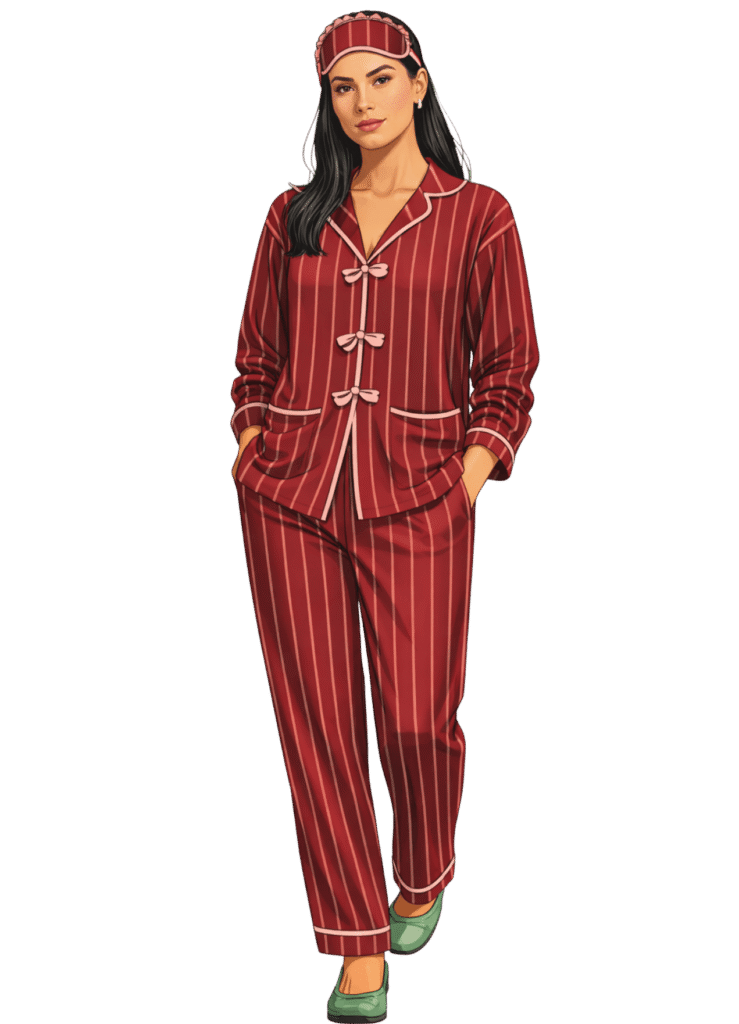
Pajamas are so familiar to us today that we rarely pause to consider their extraordinary journey. They are the garments we slip into at the end of the day, symbols of comfort and rest, yet their story begins far from the modern bedroom. Rooted in South Asia, transformed by colonial encounters, and reimagined by fashion designers and Hollywood icons, pajamas embody a fascinating tale of cultural exchange and evolving notions of modesty, leisure, and lifestyle.
From Pāy-Jāma to Pajamas
The word “pajama” comes from the Hindi and Urdu pāy-jāma, meaning “leg garment.” In India, Persia, and Central Asia, these were loose cotton trousers tied at the waist, worn by men and women alike. They were practical, breathable, and modest, suited to hot climates and daily life. Pajamas were not confined to the bedroom; they were everyday attire, often paired with a kurta or tunic. Scholars, nobles, and commoners alike wore them, and their appeal lay in their simplicity and comfort.
Colonial Encounter: British Adoption
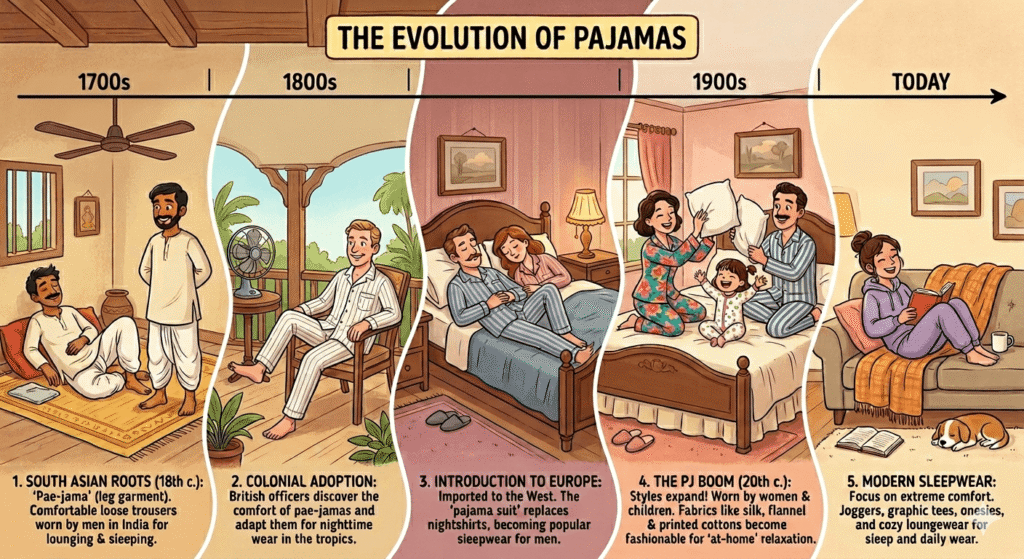
The transformation of pajamas into nightwear began during the British colonial period in India. British officers, struggling with the heat and humidity, found European nightshirts stifling. Observing the comfort of Indian pajamas, they began wearing them informally in the evenings. What started as a practical adaptation soon became fashionable among colonial elites.
By the mid-19th century, British tailors modified the design for European tastes—adding collars, buttons, and flannel fabrics. Pajamas were marketed back home as “sleeping suits” or “lounging attire.” This marked the beginning of pajamas’ journey from Indian bazaars to Victorian bedrooms.
Victorian Values and Modest Sleepwear
In Britain, the Victorian era was defined by strict codes of modesty and propriety. The traditional nightshirt—a long, shapeless garment—was increasingly seen as inadequate. Pajamas offered a more structured, dignified alternative. They covered the body more thoroughly, resembled daywear in their tailoring, and aligned with Victorian ideals of hygiene and decorum.
For women, the shift was slower. Nightgowns remained the norm, often adorned with lace and frills. But by the early 20th century, women too began embracing pajamas, especially in private settings. Pajamas provided a loophole in gender norms: trousers were still controversial for women in public, but pajamas could be worn in the privacy of the bedroom.
The Interwar Years: Pajamas as Fashion
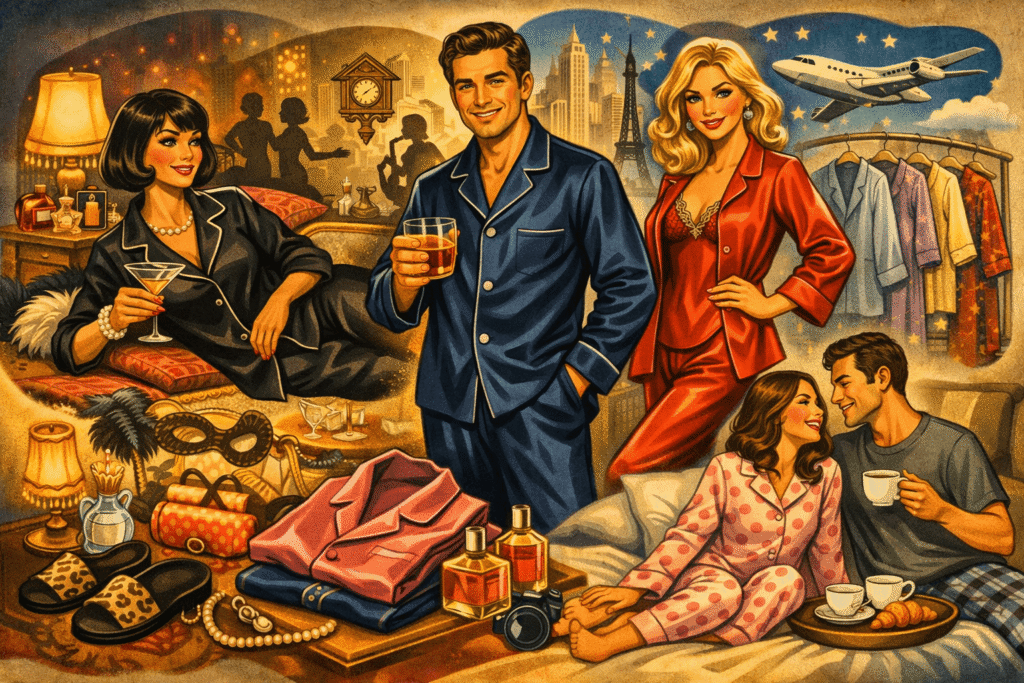
The 1920s and 30s marked a dramatic shift. Fashion icons like Coco Chanel popularized silk pajamas as chic loungewear. Hollywood stars were photographed in glamorous pajama sets, lounging on chaise longues or hosting intimate gatherings. Pajamas became symbols of sophistication, not just sleepwear.
Men’s pajamas also evolved. The classic button-up shirt with matching trousers became standard, often in striped or solid colors. Fabrics ranged from cotton and flannel to silk and satin. Pajamas were marketed as gifts, status symbols, and travel essentials.
Post-War Comfort and Democratization
After World War II, pajamas became democratized. Mass production and suburban living made them accessible to families everywhere. Department stores offered a wide range of styles and prices. Matching family pajama sets became popular during holidays, while flannel comfort dominated suburban households.
Television and advertising reinforced pajamas as part of the nightly ritual. Sitcoms depicted families in pajamas, commercials promoted them as wholesome, and catalogs featured them as essential household items. Pajamas were no longer exotic—they were mainstream.
The Counterculture and Playful Prints
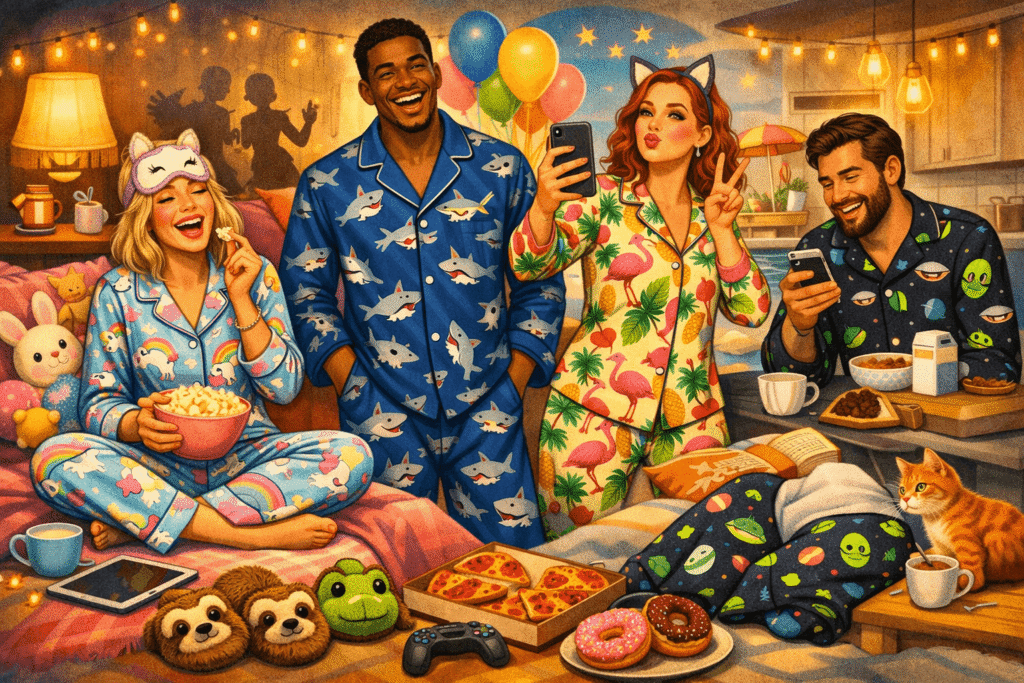
The 1960s and 70s brought bold experimentation. Pajamas became playful, with bright prints, cartoon characters, and unconventional cuts. Sleepwear was no longer confined to the bedroom—students wore pajama-inspired outfits to classes, and pajama parties became cultural phenomena. Pajamas reflected the era’s spirit of rebellion and fun.
The Modern Era: Pajamas as Lifestyle
Today, pajamas are more than nightwear—they are lifestyle clothing. The COVID-19 pandemic blurred the line between home and office, making pajamas the unofficial uniform of lockdown life. Zoom calls in pajama bottoms and business shirts became a global meme.
Luxury brands embraced this shift, designing couture pajamas for runways and catalogs. Materials range from organic cotton and bamboo to high-end silk and cashmere. Styles include classic sets, rompers, nightshirts, and pajama-inspired dresses and suits. Pajamas are marketed as unisex, inclusive, and versatile.
Cultural Variations
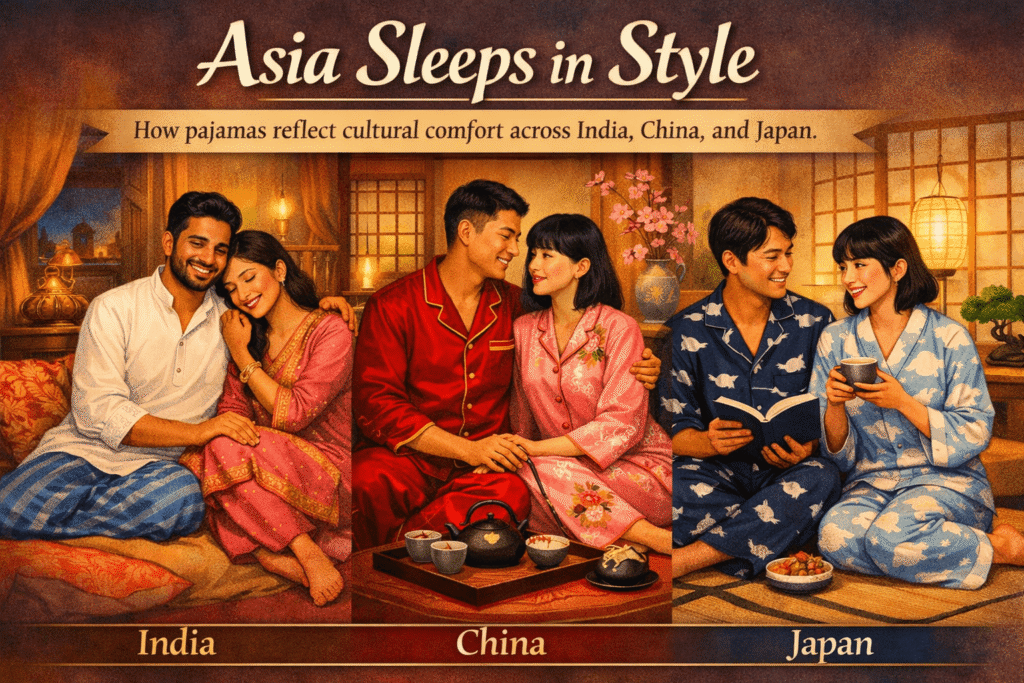
Despite their Western evolution, pajamas retain their cultural roots. In India, the kurta-pajama remains daywear, worn at weddings, festivals, and daily life. In Japan, sleepwear includes yukata and modern pajama sets. In China, silk pajamas are popular for both sleeping and hosting guests. In the Middle East, loose trousers and tunics resemble the original pajama design.
These variations highlight pajamas’ adaptability. They are not confined to one culture or function but reflect a universal desire for comfort and modesty.
Conclusion: Pajamas as Global Icons
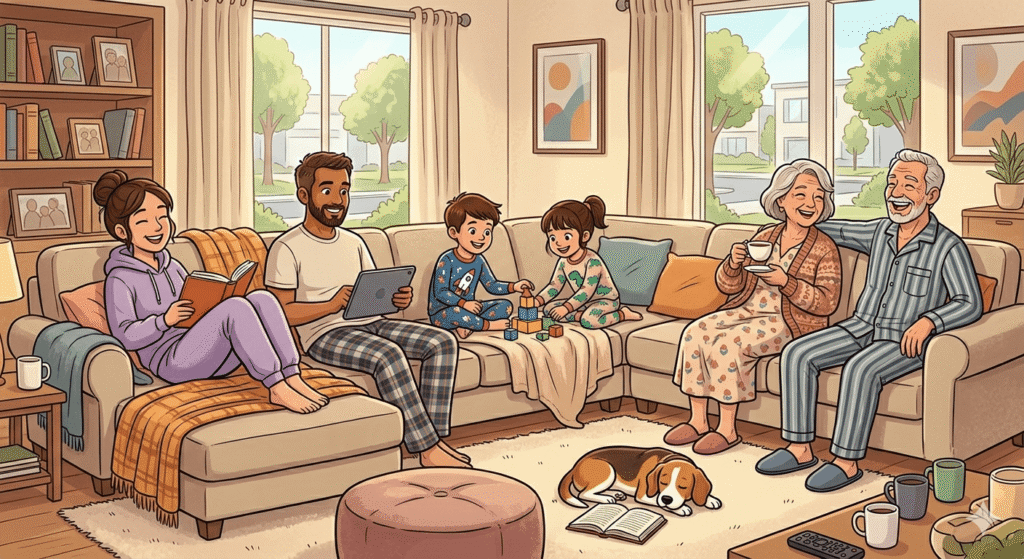
The journey of pajamas—from South Asian leg garments to global nightwear—illustrates how clothing evolves through cultural exchange, social change, and personal need. What began as a practical garment in India was reinterpreted by colonial powers, reshaped by Victorian values, glamorized by fashion icons, and finally embraced worldwide as the ultimate symbol of comfort.
Pajamas are more than fabric; they are history stitched into our nightly routines. They remind us that comfort is not a luxury but a human need. Whether made of silk or cotton, adorned with cartoons or couture, pajamas embody authenticity—the clothes we wear when the world is not watching.
Each night, as we slip into our pajamas, we participate in a centuries-old tradition that spans continents and cultures. From bazaars in India to bedrooms across the globe, pajamas tell a story of adaptation, identity, and the universal pursuit of rest.