

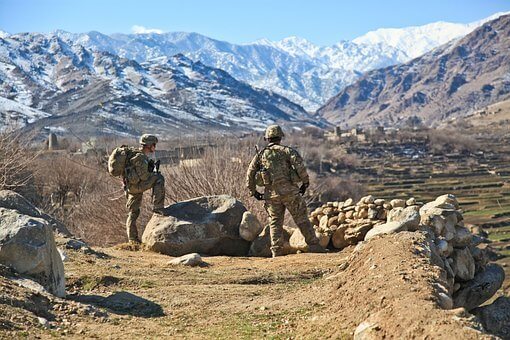
The battle at Rezang La (18 November 1962) in which 120 soldiers of Charlie (C) Company, 13 Kumaon Regiment, led by Major Shaitan Singh, held ground and went down fighting –last man, last round– against around 5,000 Chinese attackers, ranks among the most dramatic examples of heroism and resolve in Indian and world military history.
Strategic importance of Rezang La
Rezang La is a mountain pass located at an altitude of over 5,500 meters (18,000 feet) in the Chushul sector of Ladakh. Its position was critical because it controlled the approach to the Chushul airfield, which was essential for India’s supply lines and defense of Leh. If the Chinese had captured Rezang La, they would have had a direct route into the heart of Ladakh. The pass thus became a linchpin in India’s defensive strategy during the 1962 Sino-Indian War.
The task in hand
The Kumaon Regiment soldiers had been tasked to delay the Chinese advance and protect the Chushul airfield—at any cost. The Kumauni’s fought tooth and nail to defend a chunk of remote territory at Rezang La- a mountain pass at Chushul in Ladakh in temperatures as low as minus 30°C.
The Indian soldiers were deployed in exposed positions on the barren ridges, with minimal artillery support, inadequate shelter, and no mines. They had only basic winter kit, rifles, light machine guns, and mortars –no artillery support, no hope of reinforcements, and no withdrawal route. Rezang La’s terrain offered no natural cover, only exposed rocky outcrops and permafrost. Despite these challenges, the Kumaon Regiment soldiers dug trenches and prepared for the worst.
The first clash and subsequent waves of attack
At dawn on 18 November, Chinese infantry and machine-gunner launched a multi-directional attack in waves supported by heavy mortars and artillery. The gallant Kumaoni troops led by Maj Shaitan Singh spotted their movement but held fire until the first wave of attackers came within effective firing range. The first waves were mowed down, causing the Chinese attackers to panic.
As a result the Chinese commanders called for fresh reinforcements and escalated the shelling to break the resistance heavily outnumbered, outgunned, and isolated Indian troops.
The attack – wave after wave— was so effective and intense that many platoons of the Kumaoni defenders exhausted their ammunition. This is when Naik Hukum Chand ordered his men to hold fire and wait till the enemy came closer to ensure that every bullet surely killed at least one enemy.
Heroic leadership and hand-to-hand combat
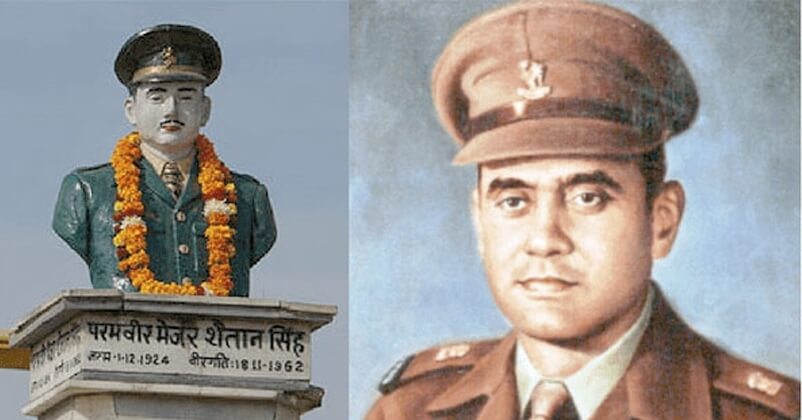
Though seriously wounded by enemy fire Major Shaitan Singh continued to move from trench to trench – motivating his men. As soon as ammunition ran out, the Indian soldiers fixed bayonets and prepared for hand-to-hand combat.
As communication lines snapped –each platoon became completely isolated from their colleagues but continued to fight. When the runners too got killed, messages were conveyed through cheeky shouts.
Major Shaitan Singh refused to be evacuated and succumbed to his wounds in the freezing cold.
According to eyewitness accounts from both sides when the Chinese finally broke through, most Indians were found dead in their trenches but with bodies facing the enemy and weapons clutched in their hands.
The impact
When the battle ended 114 of the 120 soldiers of C Company, 13 Kumaon Regiment were dead or missing; while the Chinese reportedly suffered around 700-1,300 casualties though official Chinese records claim much lower numbers.
According to eyewitness accounts the Chinese troops were so deeply moved by the gallantry deeds and sacrifice of the Indian soldiers that as a mark of respect, they covered the bodies of their slain enemies with blankets —an exceptional gesture in present-day battlefield.
Meanwhile, the Indian stand at Rezang La stalled the Chinese push towards Chushul airfield and deeper into Ladakh. The next day, China declared a ceasefire, ending the war with India.
Aftermath and legacy
The discovery of frozen bodies of the Indian soldiers – in firing position with empty weapons and spent grenades – in the spring of 1963—became a defining image of the battle.
Major Shaitan Singh was awarded Param Vir Chakra for supreme gallantry; while the other soldiers who went down fighting to defend their post are remembered and stand immortalised in the memorials now at Rezang La as well as the regimental heartlands of Haryana and Uttarakhand.
The example of “last man, last round” set by Major Shaitan Singh and 120 soldiers of C Company, 13 Kumaon Regiment in minus 30°C is now part of folklore and remains etched into Indian military doctrine and culture. The battle is taught at military institutions and continues to inspire generations, not just in the Kumaon Regiment, but all those who defend India’s frontiers.
Examples of similar – last man last round – battles in Indian history
Some of the other “last man, last round” battles in Indian military history include:
The Battle of Saragarhi (1897): Despite being vastly outnumbered, twenty-one Sikh soldiers of the 36th Sikh Regiment defended the outpost of Saragarhi against an estimated 10,000 Afghan tribesmen and fought last man and last round, inflicting heavy casualties before their death. The battle is hailed as one of the greatest symbol of courage and sacrifice in the Indian military history.
The Last Stand at Bum La (1962): Thirty Sikh soldiers from the Indian Army faced approximately 600 Chinese troops in the Bum La sector during the Sino-Indian War. The valiant defence, though overwhelmed, delayed the advancing Chinese forces and exemplifies the spirit of fighting against overwhelming odds.
The Siege of Lucknow Residency (1857): During the Indian Rebellion of 1857, British and loyal Indian troops defended the Lucknow Residency against rebel forces for several months. Though not purely Indian troops, the defence is significant in Indian military memory and epitomizes endurance and resolve under siege conditions.
These battles, like Rezang La, are remembered for the determination and self-sacrifice of outnumbered defenders who chose to fight till their last breath and last bullet, shaping India’s martial traditions and inspiring generations of soldiers.
Conclusion
Rezang La is a story of staggering courage—a handful of soldiers holding the line against a vast foe, not for medals but for mission and meaning. Every year, the memorial’s inscription reminds visitors: “How can a man die better than facing fearful odds…” The story answers, with clarity—by fighting together, to the last man and the last round, so that others might live free.