
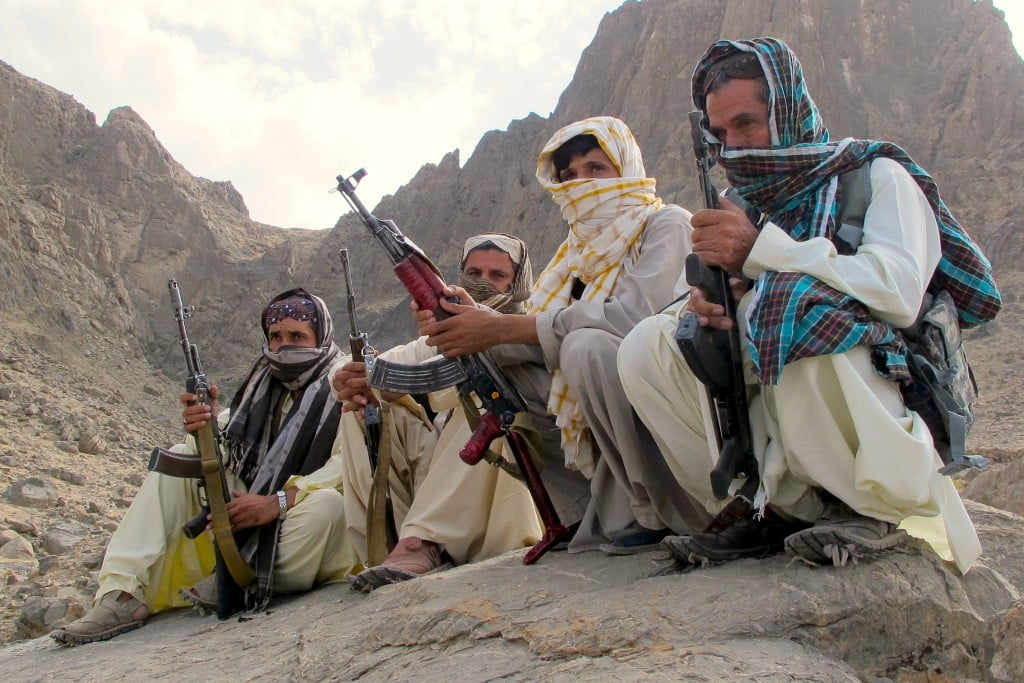
On January 31, 2026, the banned Baloch Liberation Army (BLA) launched a massive, coordinated series of attacks across Pakistan’s Balochistan province, titled “Operation Herof Phase II” (or Operation Herof 2.0). In the Balochi and Brahui languages, “Herof” translates to “Black Storm” or “Dark Storm”. The BLA claimed to have launched simultaneous attacks at 48 locations across 12 to 14 districts, including Quetta, Gwadar, Nushki, Mastung, and Pasni. The attacks involved suicide bombings, armed assaults with guns and grenades, and arson. In these attacks, 17 security personnel and 31 civilians (including women and children) were killed.
The skewed narrative of Indian media
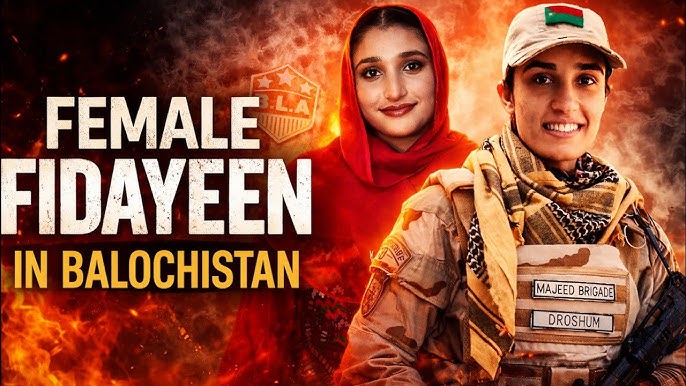
Indian media reporting on the terror attacks focused on the scale and “daring” nature of the attacks and the use of female suicide bombers in them with a clear undertone of awe and admiration—besides glee on how Pakistan’s goose is cooked. The most despicable piece of reporting is the NDTV article titled ‘Pakistan Can’t Face Us”: Baloch Woman ‘Fidayeen’ Shoots Rifle, Smiles, Then Dies’ by its Senior Executive Editor Aditya Raj Kaul—we will discuss other reports later.
Kaul’s piece on the female suicide bomber Hawa Baloch (and Asifa Mengal) reads like a breathless fan letter to a suicide bomber, complete with lingering shots of her smiling with rifle in hand, and quotes that could very well double as recruitment posters. The article opens by reproducing, almost verbatim, a video released by the BLA itself. This is not incidental. This is foundational. The entire structure of the piece is built around the insurgent’s voice, not the journalist’s judgment.
“War is fun,” she beams, while Kaul swoons over her “selfless” fight and “final message.” We are also told: “We have killed all the Pakistani security personnel.” These are not facts. These are claims—issued by a designated terrorist organisation during an active operation. A journalist’s duty, at minimum, is to treat such claims with scepticism. NDTV does the opposite. It treats them as narrative anchors.
The insurgent speaks, and the article listens reverently. This is not neutrality. This is narrative surrender. The undertone isn’t even subtle: here’s a brave, educated Gen Z heroine standing up to the big bad Punjabi army, with Pakistan painted as cowardly, trembling, and doomed. One almost expects a soundtrack of triumphant Balochi folk tunes swelling in the background.
The article lingers on visuals in a way that leaves no doubt about the intentions of the report. We are told about: the lighting (late night / early hours); the clothing (red and blue kurta, baseball cap); the smile; and the casual banter (“How’s the war?” — “War is fun.”). These details serve no informational purpose. They serve only one function: humanisation through aesthetic intimacy. This is a classic propaganda technique. Strip away ideology. Focus on mood. Make the killer relatable. Make the act feel casual, even playful.
The article does not ask why a human being can describe war as “fun.” It does not pause to note the psychological deformation required to find joy in killing and dying. It simply presents the line as charming bravado. Journalism that reports a suicide bomber’s smile without interrogating it is not reporting. It is romantic framing. Kaul has all but treated fidayeen (suicide attackers) like rock stars.
There is a particular smell to bad journalism. It is not the smell of bias—that is everywhere and unavoidable. It is the smell of unearned reverence. Kaul’s article does not merely report a terrorist video. It kneels before it. It does not interrogate the spectacle; it adjusts the lighting. It does not contextualise death; it gives it a soundtrack.
Glamorization of terrorism by NDTV
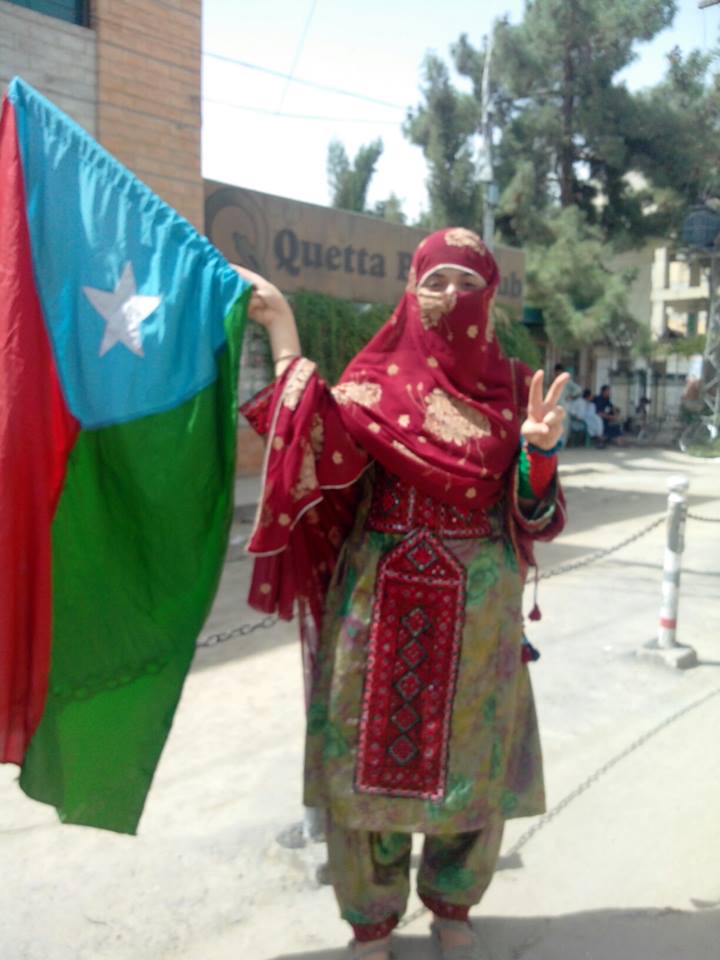
The NDTV piece is clearly enthralled by the attacker’s gender. This fascination is not subtle. Repeated emphasis on: “Baloch woman”; “sisters”; “mothers”; and “female freedom fighters” make the implication obvious: if women are doing this, the cause must be righteous.
Female participation in suicide terrorism has never been evidence of emancipation. It has always been evidence of ideological totalisation—the point at which a movement consumes all categories of identity and repurposes them for death. From Leila Khalid of the PFLP to the LTTE’s Black Tigresses to ISIS’s female enforcers, women have been used precisely because they: shock audiences; confuse moral instincts; and attract disproportionate media attention of a perverse kind. NDTV does not interrogate this. It indulges it. This is not feminist reporting. It is gendered sanitisation of terror.
The NDTV article gushes over Hawa Baloch as a symbol of awakening youth, her father killed in 2021, educated yet choosing martyrdom. Touching, if you ignore that “education” led her to strap on explosives rather than, say, doing something more productive—even if it is teaching primary school kids in her neighbourhood.
After all, 48 people died in the attack, including 31 civilians. Would you not call it a crime? But, NDTV frames her crime as heroic defiance. Pakistan “cannot face us,” she crows. The enemy is “cowardly,” firing from afar. Meanwhile, the article ends with her bloodied corpse—poetic justice, one supposes, but presented with the reverence of a fallen warrior queen.
Sorry, girl, you are dumb and, for your stupidity, you deserved to die the way you died. You are saying Pakistan cannot face us—are you out of your mind, girl? You are talking of a 5.6 lakh strong army replete with 2,627 tanks, some 20,000 AFVs/APCs, 742 self-propelled artillery, 2,629 towed artillery, 652 MLRS, thousands upon thousands of light, medium and heavy machine guns, RPGs, 452 fighter jets, 90 attack aircraft, 57 attack helicopters, and a lot of drones—a military that spends $7.6 billion to $10.2 billion; besides some 4 lakh paramilitary. Talking of firing from afar, dumb girl, do you expect a military to indulge in some rural-style ‘akhada kushti’ instead with your champions? Dumbo, a nation’s army did not decide matters that way even in the medieval age.
Pakistan has myriad problems. Insurgencies are one of them. But to suggest that the BLA’s theatrics spell existential doom is not analysis—it is wishful projection.
Suicide bombing isn’t empowerment; its despair weaponized. Celebrating a young woman smiling as she shoots and then dies glorifies nihilism. “War is fun”? That’s not joy; that’s indoctrination’s endgame. The article quotes her urging the “Baloch nation” to awaken, no compromise, while ignoring that most Baloch want jobs, water, roads—not martyrdom. I can only say, Omigosh!
The NDTV article on Hawa Baloch is not journalism—it’s a glossy obituary for a suicide bomber, complete with hero-worshipping quotes, a smiling rifle pose, and breathless narration of her “selfless” final hours.
The deepest rot in the article is the clear, unmistakeable glimmer nay flying sparks of not merely glorification of terrorism, but a justification of terrorist violence, in an admiring reiteration of the hackneyed trope of ‘terrorist as freedom fighter’.
A quick review of Baloch insurgency
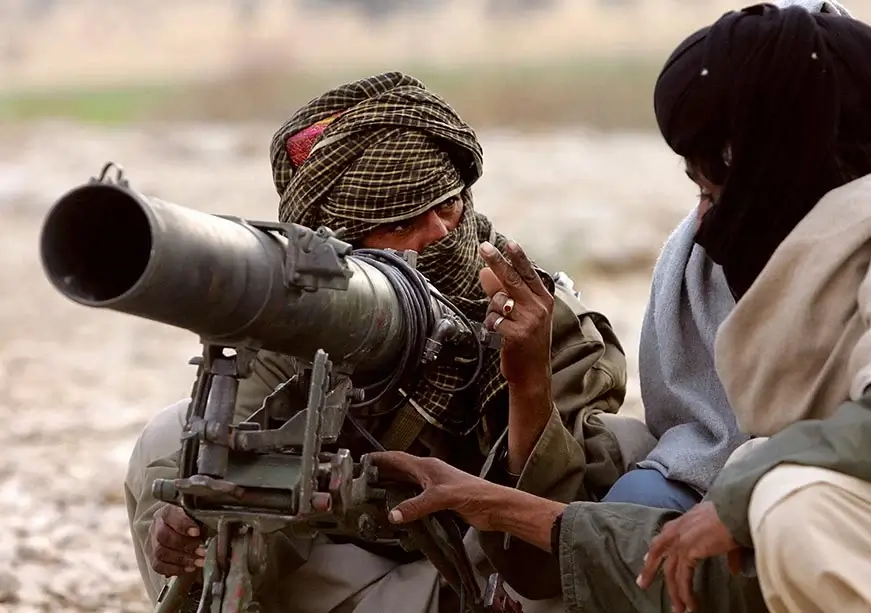
Baloch insurgency isn’t new; it’s a tired re-run with five main seasons of failure. It kicked off right after Pakistan’s birth in 1947-48, when the Khan of Kalat declared independence, only for Pakistani forces to politely (or not) remind everyone that accession had happened. Cue the First Conflict (1948–1950): a brief uprising crushed like an overripe tomato. Then came the sequels:
- Second (1958–60): Prince Karim Khan’s revolt after the One Unit scheme centralized power. Crushed.
- Third (1963–69): More tribal unrest under Sher Muhammad Bijarani Marri. Crushed.
- Fourth (1973–77): The big one, with thousands of Baloch insurgents, foreign support (hello, Iraq, Afghanistan, and a dash of Soviet flirtation), and Bhutto’s army rolling in. Result? Thousands dead, Bugti and Marri in exile or hiding, insurgency smashed. Pakistan lost soldiers, but the insurgents lost the war.
- Fifth (2003–present): The current low-boil farce, starring the Balochistan Liberation Army (BLA), founded around 2000. It started with bombings, kidnappings, and the odd rocket attack. The killing of Nawab Akbar Bugti in 2006 by Pakistani forces poured fuel on the fire, but the BLA never could quite ignite a mass revolution. Instead, it settled for hit-and-run terror attacks, targeting security forces, Chinese CPEC workers (because nothing says “freedom” like killing infrastructure builders), and the occasional journalist or civilian accused of “spying.”
Major attacks? The BLA’s resume is impressive if you’re grading on theatricality, not success:
- 2004–2005: Pipeline bombings and attacks during Musharraf’s visits.
- 2018: Chinese consulate attack in Karachi.
- 2022–2024: Escalation with suicide bombings, including women fidayeen (a “progressive” twist, apparently).
- 2025 train hijackings and coordinated assaults, like the Jaffar Express fiasco where BLA took hundreds hostage, demanded prisoner releases, and ended up with all attackers dead after a Pakistani military operation freed most civilians.
Through it all, the BLA has been designated a terrorist group by Pakistan (2006), the UK, the US, and others. Their “gains”? Temporary headlines, dead terrorists, and a province that remains firmly Pakistani, albeit grumpy.
Why the BLA is doomed to fail like the LTTE and the ISIS
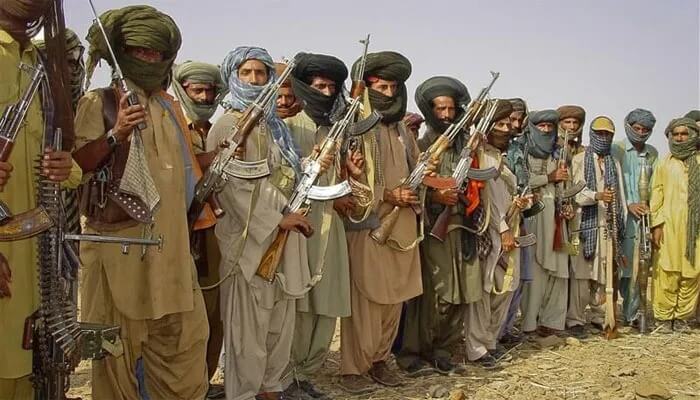
The sheer spectacular nature of some successful terrorist strikes tends to project a distorted picture of the strength of the terrorists and misleads the ignoramuses into thinking that the terrorists are invincible. From a purely military perspective, there is no historical or scientific reason to even suspect that an irregular army or an ‘army of terrorists’ could beat a regular army if the latter had even a modicum of professionalism.
Terrorist organisations can garner shocking headlines; bleed states; force overreaction; and create a feeling of insecurity. But, they cannot break a nation state of the size and strength of Pakistan. Pakistan is not Nepal—do not forget it. However, when terrorists or even insurgent movements forget this and attempt to fight like armies, they die a brutal death—every time.
If a few hundred (or even a couple thousand) lightly armed militants with AK-47s, IEDs, and suicide vests think they can carve out a nation from Pakistan’s sixth-largest army (by active personnel), this isn’t David vs. Goliath; it’s David vs. Goliath’s entire extended family, plus tanks, jets, and drones.
The LTTE (Liberation Tigers of Tamil Eelam) was excellent as a terrorist organization with some of the most spectacular, most efficiently executed terrorist strikes in the world attributed to them. The Sri Lankan security machinery was absolutely at a loss to figure out how to deal with them. Yet, the moment they decided to hold and administer territory in northern Sri Lanka (in other words, tried to become a state), they provided a tangible target for the conventional forces of Sri Lanka and were all killed to the last man. They were utterly destroyed because then they had to fight on the terms of the adversary, that is, the regular armed forces which had an overwhelming superiority in firepower.
Exactly the same thing happened with the ISIS also. There was a large gap between ISIS’s actual power and its pretensions. The ISIS, after a couple of brilliantly executed terrorist strikes, went on to mount conventional military-style offensives and started capturing huge swathes of territory replete with infrastructure like oil refineries, dams and power plants. That was their undoing. No, a terrorist organization cannot become a nation—attempting to do that amounts to writing their own epitaph because then you are obliged to fight on the terms of the enemy. As long as you are a purely terrorist organization, you strike at a place and time of your choice—your total firepower does not matter because you have the element of surprise with you. The moment you seek to liberate geographical areas from the control of the enemy and administer them, you are obliged to fight them on their terms. In such engagement, the advantage invariably goes to the party with greater firepower, that is, the national army.
Terrorists do not understand that to fight as an army, they would need much more than just rifles, machineguns, Toyota trucks and RPGs. There has to be a whole establishment for everything—ranging from food, medicine, provisioning, field repairs and training to armament. The ISIS had no establishment, no infrastructure for what they aspired to do. All they had was their cadres and their guns. Moreover, the ISIS has had nothing significant by way of air defence to counter nearly 50 American air strikes a day—a fatal weakness. They tried desperately some elementary things—such as, strictly enforcing security rules, making their military forces less visible, reducing the movement of its forces in open areas (moving in small groups using motorcycles and SUVs) and assimilating within the civilian population—all that was childish at best and ridiculous at worst. They were utterly destroyed.
At its peak, the LTTE had cadre strength of 18,000 but a regular army of even a small nation like Sri Lanka destroyed them utterly. In terms of resources, the Sri Lankan army was no match for the Pakistani army that is fighting the Balochi terrorists today. The Pakistani army, being the sixth largest army in the world, is infinitely better equipped than the Sri Lankan army. They have not desisted from using their air force against the Taliban and, if push comes to shove, they would not hesitate from using them against the Balochis also.
Kaul does not seem to have the slightest idea of military history and science. Insurgencies (of the type of classical insurgencies of the Communists to which a great deal of literature has been devoted) win when they have:
- Massive popular support (Baloch separatists have sympathy, but not enough to field armies).
- External sanctuaries and supply lines (BLA has some Afghan havens, but nothing like Mujahideen bases).
- The occupier as a foreign power with morale/logistics issues and weak political legitimacy.
Mujahideen against Soviets and Taliban against Americans are not Comparable Examples
Before I wrote this article, I had tweeted on this. I knew that there would be some fool who would indeed invoke the example of the Mujahideen/Taliban that they had defeated the Soviets/Americans. And sure, someone did. That confirms how poor the knowledge of the people in such matters is, and why such articles as this are necessary. The Soviets and the Americans were foreign powers fighting in a foreign land thousands of miles away from their countries and had the obvious problem of logistics, soldiers’ morale and local support etc. When you are fighting in a foreign land and expect to fight for long, logistics becomes a backbreaking problem.
The issue of supplies even for a short war is a logistics nightmare. Between August 1990 and March 1991, the U.S. military deployed over 240 ships and 10,000 aircraft to stock about half a million ton of munitions, 7 million gallons of fuel, 4.79 million pre-packaged ration meals and 2,687 tons of bulk food before they launched Operation Desert Shield that lasted just about a month.
When you are going to be fighting for long, the problems multiply manifold. For just 50,000 troops on the ground, you need a very minimum of 1.5 lakh litres of bottled drinking water alone to be supplied every day for the troops. If a soldier fires even 100 rounds of rifle or machine gun in a day of fighting, you have to supply 50 lakh rounds every day. If you have even 50 howitzers of 155mm and each one of them fires even 100 shells per day, it amounts to hauling 250 tons of shells every day. And note, for fighting in a foreign land, everything is to be airlifted first. Even as the Americans were using Pak airbases, they had to first bring supplies there by air and from there take them in road convoys to Afghanistan. That’s how the cost of the 20-years war in Afghanistan (2001-2021) came to be $2.3 trillion!
In comparison, logistics becomes infinitely easier and cheaper when you are fighting in your own country as you have to haul them by regular rail and road connections only. Soldiers do not lose morale either.
Then there is also the issue of local support. There is no case that every Baloch man, woman and kid is against Pakistan. Out of a population of nearly 1.49 crore, there would easily be millions who would be absolutely loyal to Pakistan.
Pakistan in Balochistan faces none of the disadvantages of USSR or USA in Afghanistan. It has:
- Permanent bases
- Local intelligence networks
- Full escalation dominance
- No need to win hearts in Washington or Moscow
The analogy collapses on contact with reality.
Pakistani army is competent to deal with terrorists

As I had pointed out in one of my earlier articles titled ‘Balochistan train hijack: Pak Army’s brilliant Anti-terrorist operation’, from a professional perspective, the hijacking of the Jaffar Express in Balochistan, Pakistan, on March 11, 2025 was one of the most difficult anti-terrorist operations. Yet, the way the Pak army pulled it off was simply brilliant, making it one of the greatest operations in history.It was a ‘seemingly impossible task’. Some 346-354 hostages were ultimately freed, reflecting near-total success in a high-stakes scenario with the loss of 23 soldiers while killing all 33 terrorists.
Even for the latest terror strike on Jan. 31, that involved coordinated suicide bombings and gun attacks by the BLA—termed “Operation Herof”—which left at least 31 civilians and 17 security personnel dead, the response of the Pak army was brilliant. On the first day itself, they killed 92 terrorists. Within 48 hours, as many as 177 terrorists lay dead.
It betrays singularly pathetic ignorance of terrorism, insurgencies and counterinsurgency operations that NDTV portrays the BLA attacks as harbingers of doom. Pakistan “cannot face us”? Tell that to the graves filling with BLA bodies.
The pathetic fall of Indian Media
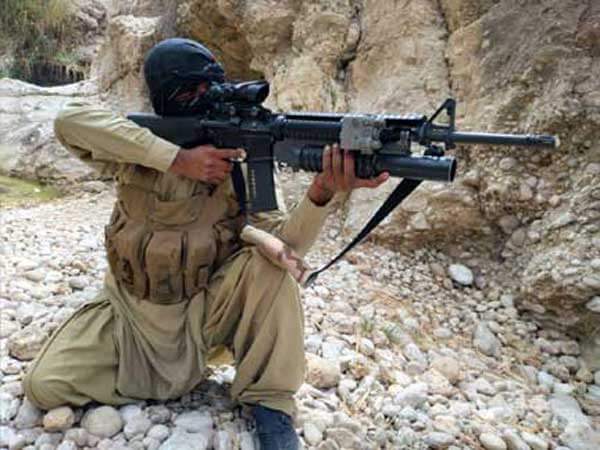
Other outlets were not far behind NDTV. Times of India focused on the massive scale of the offensive, reporting it as “Operation Herof 2.0” and highlighting the participation of “Fateh Squad” fidayeen at 48 locations. They also gave significant space to BLA claims. News18 provided “exclusive” details on how ‘fighters’ “crashed into” high-security areas like the Deputy Commissioner’s house in Quetta. Their coverage emphasized the “deadly” and “coordinated” nature of the attacks across seven major cities. The Hindu also contextualized the violence as a “decades-long insurgency” fuelled by the exploitation of the province’s riches. India TV framed the event as the Pakistan Army being “caught on two fronts” due to simultaneous pressure from the BLA and the TTP (Tehreek-e-Taliban Pakistan). The Print highlighted that the scale of violence was unprecedented in recent months and detailed how militants repelled “timely action” by the Frontier Corps in multiple locations. Dainik Bhaskar also captioned ‘Pakistani sena ke khilaaf morche par baloochon kee mahila aatmghati ladakoo’, calling the terrorists ‘fighters’ and their action presented as one directed against the Pak army, while giving a complete miss to the civilian casualties in the terror attacks.
I need not discuss the ulterior motive of the Indian media in giving a particular slant to their narrative. Discerning readers should be able to figure it out themselves.
Indian journalism must decide what it wants to be. They do not have the intellectual bandwidth to educate readers anyway. In the reporting of this terror attack, Indian journalism has revealed its quiet desire to cosplay Western moral postures without Western accountability, restraint, or intellectual discipline. They should at least be honest and call it content creation, not news.
The smiling suicide bomber is not a heroine. She is evidence of a movement that has run out of arguments and turned to spectacle. When journalists smile back, they are not being brave. They are being lazy. And history is unforgiving to laziness disguised as nuance.
What is offered to the reader is not information, but atmosphere. Not context, but choreography. Not analysis, but effect. The piece reads less like a news report and more like a casting call for revolutionary chic—complete with costume description, emotional beats, and a carefully staged final tableau of martyrdom.
The most dangerous thing about articles like the NDTV piece is not their bias. It is aesthetic contagion. Un-informed, gullible, impressionable readers would not read this as analysis. They would read it as story. And stories shape notions. When suicide bombers are shown smiling, joking, and speaking in poetic language—without interrogation—the article does part of their work. Journalism’s duty is not to romanticize terror. It is to expose its emptiness. NDTV did exactly the opposite. Shame on them!