

In the past few months, the elitist and high profile, but demanding Indian Police Service (IPS) circles have been rocked. Why? In the immediate past, eight IPS officers have quit service, seven of them are below the age of 40.
The IPS officers include:
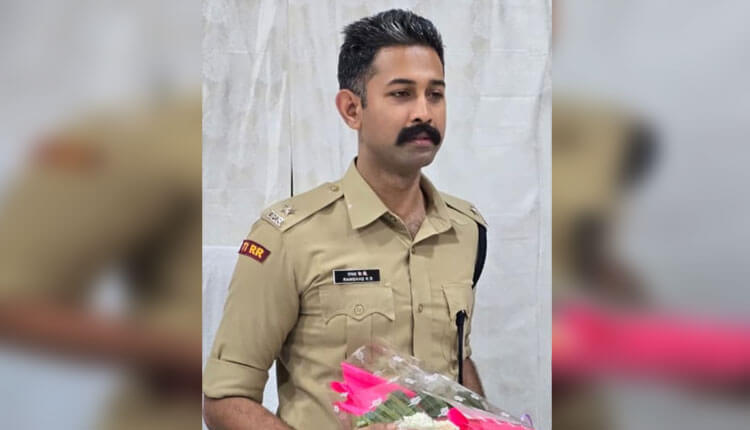
- C.A. Ramdas, 33, Odisha Cadre (2025 Batch)
- Jagmohan Meena, 37, Odisha Cadre
- Siddharth Kaushal, 35
- Rachita Juyal, 35
- Kamya Mishra, 32
- Lokeshwar Singh, 38
- Abhishek Tiwari, 33
- Nurul Hoda, the only in this list who is above 40.
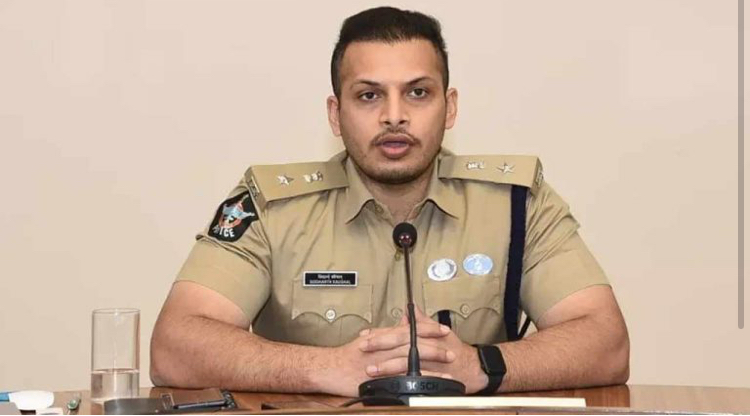
There is no common link, which ties up the resignations. Siddharth Kaushal, the 2012 batch Andhra Pradesh cadre IPS officer, has quit and reportedly joined Reliance Industries. Lokeshwar Singh, a 2014 batch Uttarakhand cadre officer, is understood to have taken up a United Nations-linked assignment.
Abhishek Tiwari, a 2013 batch Madhya Pradesh cadre IPS officer, is now pursuing entrepreneurship after serving in important cybercrime investigations, while the resignations of two others, Kamya Mishra and Nurul Hoda, have attracted public attention.
Some of these resignations defy reason and logic. For instance, C.A. Ramdas, a 2025-batch IPS officer allotted to the Odisha cadre, submitted his resignation during Phase-I training at the National Police Academy in Hyderabad.
Since he was still undergoing training, he had not assumed his first field assignment in the state. His resignation was a shocker because officers generally begin their field careers only after completing academy training. The Odisha government is yet to officially elaborate on the reasons behind his resignation.
Earlier, Jagmohan Meena, an IIT Kanpur alumni, who was serving as Deputy Commissioner of Police (DCP), Bhubaneswar, quit. He had served in several important policing assignments in Odisha. His resignation attracted widespread attention because he was considered one of the promising young IPS officers in the cadre
The resignations have also come at a time when the Indian Police Service is already facing a shortage of officers. Earlier this year, the government informed Parliament that more than 500 IPS posts are vacant, affecting not only state police forces but also agencies like the Central Bureau of Investigation (CBI) the Intelligence Bureau (IB) and other central police organizations.
Put together, these resignations have started an important public debate about changing career aspirations in India’s civil services. The decibel levels are bound to escalate.
“Young IPS officers in India are resigning due to political pressure and interference, frequent, disruptive transfers, and a lack of professional autonomy,’’ says an Instagram post by the civil soldier upsc.
“The latest resignation of C.A. Ramdas, following that of Jagmohan Meena, has once again highlighted the need for a broader discussion on officer retention, evolving career aspirations and the future of leadership within the Indian Police Service. Whether these resignations remain isolated individual decisions or indicate a larger shift in career preferences among young civil servants is likely to remain an important subject of discussion in the coming months,’’ noted a senior police officer.
Others point to key administrative constraints. Officers face heavy pressure from local politicians, restricting their ability to make independent, rule-bound decisions.
Add to it, frequent and arbitrary transfers, which disrupts family life, schooling for children, and long-term policing projects. For the ideal youngsters, bureaucratic bottlenecks and micro-management prevent young leaders from implementing meaningful administrative reforms.
Add to it the traditional bug bear, an unfavourable cadre allocation. Being allocated to undesired state cadres far from home causes personal and professional distress early in the career.
In contrast, a burgeoning economy has made young civil servants choose the private sector, entrepreneurship, or international organizations for better work-life balance and financial growth.
Noted former civil servant, Akhileshwar Sahay in a general essay on civil servants quitting lucrative jobs, which was published in the Secretariat: “On the positive side, the motivations include greener pastures outside — flexibility, and, of course, the lure of a high salary and position. On the negative side, the reasons are a lack of autonomy, frequent transfers, being stuck in far-off cadres, the feeling of being undervalued, career stagnation, and political pressure.’’
It is ironic that these resignations have come at a time when the IPS is poised for a bigger role in Indian administration than ever before. Analyst Rakesh Khar has pointed out in a recent essay that both the union and state governments are linking the PR machinery with state intelligence, to help tide over the crisis, even if the move risks turning into an apparatus to curb dissent.
In February this year, the central government granted approval for the empanelment of IPS officers to be appointed to the rank of Inspector General (IG) or equivalent positions at the Centre. This decision was endorsed by the Appointment Committee of the Cabinet (ACC) following a proposal submitted by the Ministry of Home Affairs (MHA).
The empanelment process is a crucial step in ensuring that experienced and capable officers are elevated to senior positions, enabling them to take on greater responsibilities in maintaining law and order across the country.
The officers selected have demonstrated exemplary service and leadership qualities throughout their careers, earning them this prestigious recognition.
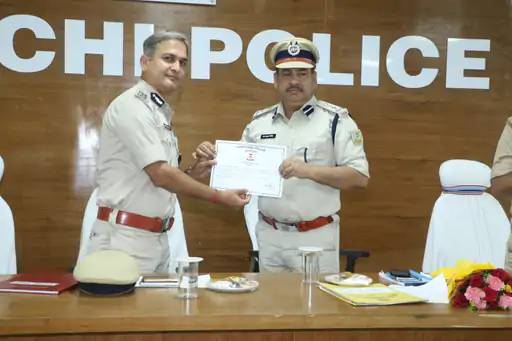
Among the empanelled officers, several belong to the 2006 batch, representing various state cadres. These officers have been listed under the First Review category, indicating their readiness to take on IG-level roles at the Centre. The list includes:
- Manoj Kaushik from the Jharkhand cadre (2001 batch)
- Dumbere Milind Mahadeo from the AGMUT cadre (2006 batch)
- S Premalatha from the Bihar cadre (2006 batch)
- R V Asari from the Gujarat cadre (2006 batch)
- Chandra Kishore Mina from the Maharashtra cadre (2006 batch)
- B Sumathi from the Telangana cadre (2006 batch)
- Akash Kulhary from the Uttar Pradesh cadre (2006 batch) and
- Manoj Kumar from the Uttar Pradesh cadre (2006 batch)
“The empanelment reflects the government’s commitment to promoting merit-based appointments and ensuring that officers with proven track records are entrusted with critical responsibilities. These officers will now be eligible for IG-level positions at various central organizations and departments, where they will contribute to policy implementation, strategy formulation, and operational leadership,’’ an official statement said.