

Airlines That Collapsed in the Last Decade

2012 – Kingfisher Airlines: India’s first “aviation tragedy.” The king of bad times collapsed under ₹9,000 crore liabilities.
2019 – Jet Airways: Once the preferred brand for business travelers, it vanished overnight, leaving over 20,000 employees jobless.
2023 – Go First: Grounded by Pratt & Whitney engine supply chain failures; leaving half its fleet idle, families and students stranded.
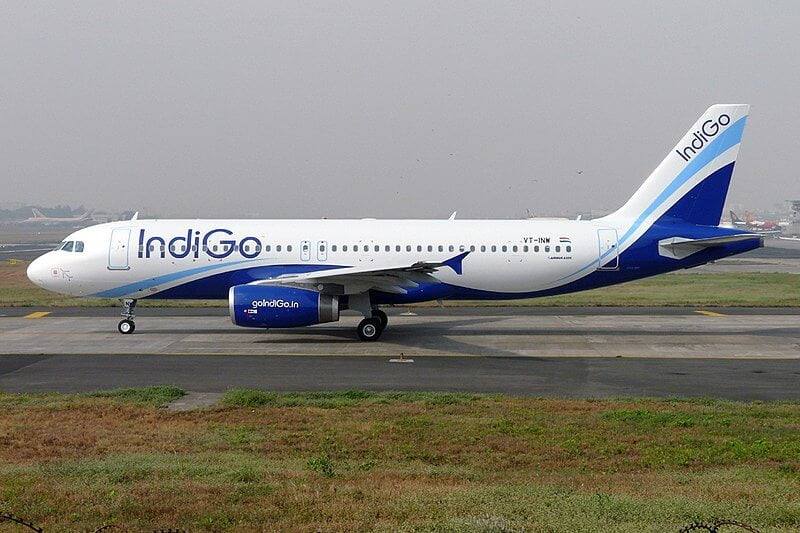
2025 – IndiGo (Crisis, not collapse): India’s largest airline faltered in December 2025, cancelling over 2000 flights in a week, due to crew shortages and technical failures amid peak holiday and wedding season.
India’s Civil Aviation: Promise and Turbulence
India’s civil aviation sector is a bundle of contradictions. On one side lies a sack full of promises: a large, growing middle class (earning ₹5–30 lakh annually) with both the purchasing power and desire to fly, booming tourism, and government schemes like UDAN to connect remote towns. For this rising middle class, flying has become a symbol of aspiration—proof that progress is within reach.
On the other side lies turbulence. Over the past decade, giants like Jet Airways, Kingfisher Airlines, Go First, and most recently IndiGo have collapsed or stumbled, exposing the fragility beneath the promise.
Why Airlines Fail in India

- Structural Deficiencies: Airlines fail not because of lack of demand—passenger numbers are strong and growing—but because the system is stacked against profitability. High costs, fragile infrastructure, and uneven regulation make resilience nearly impossible.
- High Costs: Aviation Turbine Fuel (ATF), which accounts for 35–40% of operating costs, is among the most expensive in the world due to state taxes. This burden leaves airlines vulnerable to oil price spikes and currency swings, eroding margins even for efficient carriers.
- Low Fares: To win over price‑sensitive passengers, airlines slash fares and engage in relentless fare wars. Offering more for less traps carriers in cycles of unsustainable losses, where affordable flying for passengers hides bleeding balance sheets.
- Regulatory Volatility: Sudden policy changes—from fare caps to new pilot duty‑hour rules—destabilize long‑term planning. What begins as a safety or consumer measure often cascades into operational chaos.
- Human Capital Strain: Pilot shortages and lean staffing models leave airlines vulnerable to disruption. When stress mounts—whether from new regulations, seasonal demand, or technical failures—the system collapses under its own weight. IndiGo’s 2025 meltdown showed how quickly crew fatigue can ground an entire fleet.
Kingfisher Airlines: The King of Bad Times

Launched in 2003 by liquor baron Vijay Mallya, Kingfisher Airlines was synonymous with glamour—champagne service, designer uniforms, celebrity endorsements. Boarding a Kingfisher flight felt like stepping into a fairytale.
But behind the red carpets and free‑flowing liquor lay cracks. In 2007, Kingfisher acquired Air Deccan, India’s first low‑cost carrier. The merger made Kingfisher India’s largest domestic airline and eligible for international routes, but it also created an identity crisis. Luxury and budget proved irreconcilable.
Cabin crew who once served champagne now worked no‑frills routes. Engineers struggled with a diverse fleet. Passengers were confused—was Kingfisher a luxury airline or a budget one? By 2012, debts of ₹9,000 crore sank the airline, leaving thousands jobless.
- “We used to be like spoilt children, habitually accustomed to luxury. Suddenly everything changed from bad to worse—we couldn’t even pay rent.” — Amarjeet, Aircraft Engineer
- “We could not reach Jaipur on time for my sister’s wedding. We spent the night on the airport floor.” — Dr. Narayan Murty, Bengaluru
Kingfisher’s collapse was India’s first “aviation tragedy,” proving that charisma cannot substitute for cash flow.
Jet Airways: The Preferred Brand That Vanished Overnight

For decades, Jet Airways was the airline of choice for India’s corporate class. Business travelers swore by its punctuality, families trusted its service, and employees spoke of belonging to the “Jet family.”
But in April 2019, the trust evaporated overnight. Flights disappeared from departure boards, salaries went unpaid, and the airline that once symbolized prestige collapsed under debt.
- “I had flown Jet every week for years. That morning, I stood at the counter with a useless ticket. It felt like losing a friend.” — Ravi Kishan, Business Consultant
- “I had to sell my jewellery to pay rent and school fees. The uniform that once spelled pride became a symbol of anguish and loss.” — Former Airhostess
Jet’s collapse marked the end of an era when flying Jet Airways was considered a badge of convenience and prestige.
Go First: Supply Chain Strangulation

Go First’s suspension of operations in May 2023 highlighted a quieter but equally devastating vulnerability: supply chain crises. The airline blamed Pratt & Whitney engine failures for grounding nearly half its fleet, leaving planes idle on the tarmac while passengers queued with tickets that had become worthless slips of paper.
For families, the collapse meant missed weddings and cancelled honeymoons. For students, it meant exams and visa appointments lost. For employees, it meant months of unpaid salaries and the humiliation of calming angry passengers while fearing for their own jobs.
- “My children cried when our flight was cancelled.” — Sunil Kumar, Businessman, Patna
- “We stood at counters calming passengers, knowing our own jobs were at risk.” — Ground Staff Member
Go First’s failure was not flamboyant like Kingfisher’s or dramatic like Jet Airways’. It was quieter, rooted in technical fragility, but equally devastating.
IndiGo: The December 2025 Meltdown

IndiGo, India’s largest airline, was supposed to be invincible. With its low‑cost, high‑volume model, it dominated domestic skies. Yet in December 2025, it stumbled into a nationwide crisis.
Technical glitches in crew scheduling systems, compounded by stricter pilot rest rules and winter fog, led to thousands of cancellations. Airports became makeshift waiting rooms.
IndiGo’s fiasco struck during the holiday season, amplifying its emotional impact. Weddings were delayed, reunions postponed, and celebrations disrupted.
- “I could not reach on time for my job interview.” — Y.S. Krishna Prasad, Hyderabad
- “Passengers shouted at us, but we were exhausted too. Double shifts, no rest, and fear of reputational damage—it broke us.” — Poonam, IndiGo Cabin Crew
The greatest lesson from IndiGo’s meltdown is that even giants can falter—and when they do, ordinary lives are thrown into chaos.
The Human Cost

The collapse of airlines devastates livelihoods:
- Employees: Thousands lose jobs, often without severance.
- Passengers: Families miss milestones, students miss opportunities.
- Communities: Tourism and local economies suffer.
These failures remind us that aviation is not just about planes—it is about people.
Impact of Aviation Failure in India

In countries with many strong carriers, the fall of one airline is absorbed by others. Flights are rerouted, competitors step in, and passengers find alternatives. But in India, where connectivity is uneven and competition fragile, the collapse of a single airline leaves entire regions isolated.
For a grandmother in Ranchi, the disappearance of a route means a 24‑hour train journey instead of a two‑hour flight. For a student in Guwahati, it means missing an exam in Bengaluru. For NRIs returning home for festivals, it means being stranded overnight in unfamiliar cities.
Airlines in India are lifelines. When Jet Airways vanished, hubs like Pune and Kochi lost vital links. When Kingfisher collapsed, tourism in Goa and Kerala suffered. Go First’s grounding left tier‑2 cities without affordable options. IndiGo’s meltdown turned airports into refugee camps of stranded passengers.
The pain is amplified because India’s aviation map is still patchy. Unlike Europe or the US, where multiple carriers overlap routes, India’s regional connectivity depends heavily on a handful of airlines. When one falters, the silence echoes across communities.
Conclusion

India’s civil aviation sector is a bundle of contradictions—immense promise paired with systemic fragility. Airlines fail not because of lack of demand, but because the system makes profitability elusive.
The lesson is poignant: when airlines collapse, it isn’t only planes that are grounded. It is weddings, reunions, opportunities, and dreams. The skies may be crowded, but survival demands discipline, resilience, and reform—more than just wings.