


The global arms trade has transcended mere commercial transactions and emerged as a critical instrument for nations to exert their influence and engage in strategic competition. The sale of armaments extends beyond financial considerations, serving as a mechanism for shaping foreign policy and impacting regional security dynamics. The inherently political nature of this trade has long been acknowledged, which accounts for its frequent exclusion from international trade agreements, such as the General Agreement on Tariffs and Trade (GATT). This underscores the deeply geopolitical nature of the defence trade.
In the contemporary geopolitical landscape, nations employ trade policies, including arms sales, to advance political objectives, secure resources, and exert pressure on adversaries, a phenomenon termed as the “weaponisation of global trade.” Security constraints often take precedence over short-term economic advantages. The sale of arms facilitates the establishment of robust international alliances and demonstrates support for allies, involving transactions worth billions of dollars annually. For arms-importing nations, the acquisition of military capabilities is immediate, yet it may entail a reduction in long-term sovereignty.

The global arms trade is dominated by a limited number of major exporters, notably the United States, Russia, China, and select Western European nations. The United States leads this market, accounting for approximately 40% of the global arms exports. This structure exhibits resilience against random disruptions but remains susceptible to targeted challenges, such as sanctions. The abrupt cessation of a major supplier can significantly impair the military capabilities of the dependent nations. Smaller countries that cannot achieve complete technological independence must mitigate risks by diversifying their supply sources.
Military dependence is intricately linked to civilian supply chains that are essential for producing advanced weaponry. Export controls on materials or technologies, exemplified by China’s historical restrictions on rare earth elements, can precipitate shortages and compromise a nation’s capacity to sustain its military. The protection of the defence industry and assurance of military support are intertwined with a nation’s resource policies and vulnerability to trade weaponisation.
Strategic Considerations for Arms-Importing Nations

The procurement of arms entails a strategic trade-off, in which the immediate enhancement of military capabilities is counterbalanced by a potential loss of autonomy in the political, technological, and economic domains.
Major arms suppliers exert control over purchasers through stringent agreements and End-Use Monitoring (EUM) protocols. For instance, the United States mandates that buyers utilise American equipment in accordance with licencing agreements and prohibits transferring such equipment to third parties without explicit authorisation. The U.S. evaluates transfers by considering political, military, economic, arms control, and human rights factors. This control affords sellers leverage in other domains such as trade disputes. However, EUM controls are occasionally ambiguous, resulting in inconsistent monitoring and documentation of foreign partners’ compliance. This ambiguity complicates buyers’ understanding of their limitations. The most significant threat to a nation’s independence arises when it attempts to alter its alliances. Turkey’s acquisition of the Russian S-400 missile system exemplifies this issue. Turkey faced U.S. sanctions and was excluded from the F-35 program. U.S. legislation prohibits F-35 transfers unless the S-400 system is deactivated or removed from Turkey. This situation illustrates the challenges faced by countries striving for neutrality; selecting a non-aligned supplier can lead to sanctions, compelling them to align with a particular side to access advanced military technology. Another challenge to independence stems from licenced production and co-production agreements. While these arrangements are intended to bolster the domestic industry, they can diminish control. Germany’s experience with the G3 rifle demonstrates that once production rights are granted, it becomes challenging to regulate re-exports and usage, potentially violating national export regulations. This underscores that permitting technology transfer without robust re-export controls can diminish the seller’s long-term influence, a risk that both parties must manage.

Dependence extends beyond physical hardware to encompass sellers’ digital systems. For European nations acquiring advanced equipment, dependence is pronounced for systems such as air defence and fighter jets, binding them to the seller’s software and services. Control now resides in digital architecture, sensor fusion, and data link integration, areas where Western manufacturers frequently hold a leading position. Imports necessitate the buyer’s commitment to contracts for spare parts, training, and specialised digital systems, thereby granting the original seller substantial control over the equipment’s operational readiness. The maintenance of foreign military equipment incurs significant costs, often surpassing initial acquisition expenses. Operational and maintenance expenditures, including spare parts, fuel, and services, can constitute a substantial portion of future defence budgets. Efforts to economise by engaging alternative suppliers may lead to unforeseen complications. Nations procuring weaponry from emerging suppliers such as China have encountered concealed costs attributable to unreliable suppliers. Reports indicate that China has supplied defective equipment, including underperforming ships and faulty missile sensors, to Pakistan, as well as fighter jets to Nigeria and Myanmar. These challenges are worsened by technological incompatibility, difficulties in obtaining replacement parts, and suppliers’ lack of accountability for maintenance or repair services. This deficiency depletes military budgets and compels countries to seek costly assistance from other nations, thereby diminishing the high availability rates promised by the systems.

The acquisition of arms exerts economic pressure, particularly on developing countries, as these purchases often necessitate payments in foreign currencies, such as the U.S. dollar. For nations burdened with substantial debt, this increases their financial strain. For instance, Pakistan’s foreign debt amounts to $124.5 billion, constituting 42% of its gross domestic product (GDP). Elevated arms imports exacerbate this instability, occasionally resulting in a scenario in which increased military expenditure undermines domestic stability by diverting resources from essential services. Reliance on credit or loans, frequently from suppliers such as China, can engender future costs. When debt becomes excessive, the lender acquires political and strategic leverage over the borrower, potentially leading to the utilization of strategic assets, a phenomenon known as “debt-trap diplomacy.” The lender’s influence intensifies with the borrower’s financial desperation, transforming economic transactions into national security threats. To mitigate dependency, importing governments employ offsets, which are trade agreements that mandate local industry participation. These offsets may be direct (such as co-production and technology transfer) or indirect (such as investment and training). Through its partnership with China, Pakistan has secured robust offset requirements and technology-transfer advantages. However, the success of co-production initiatives, such as the JF-17 fighter jet, is confined to systems not utilised by the primary exporter (the PLA). This reflects China’s strategic decision to allocate certain industrial tasks (such as assembly and maintenance) while retaining superior technology for its own forces, thereby limiting the technological autonomy of the importer. For exporting nations, arms sales serve not only as a commercial endeavour but also to bolster their domestic industry, maintain their geopolitical influence, and achieve technological superiority.
Geopolitical Leverage and Alliance Consolidation

Nations engage in arms sales to advance their security and foreign-policy goals. By training and equipping other nations, they strengthen their alliances, thereby enhancing their geopolitical influence. Major powers, such as the United States, utilise arms sales to facilitate military cooperation and establish strategic bases. China, an emerging actor in the arms trade, integrates weapon sales with the deployment of security teams to safeguard its interests, particularly in Africa and Southeast Asia, as part of its Belt and Road Initiative (BRI). This approach enables China to augment its influence by intertwining military sales with economic and infrastructure projects in the region. The sale of arms can significantly alter regional security dynamics, fostering either cooperation or instability, as evidenced by the Middle East. Such instability may entangle the selling nation in conflicts that do not necessarily serve its interests.
Economic and Technological Feedback Loops

The sale of arms is crucial for the economic vitality of the defence industries, funding research and production. In 2024, U.S. Foreign Military Sales reached $117.9 billion, bolstering the robustness of its defence sector. Beyond financial gains, the sale of advanced weaponry binds purchasers to long-term contracts for parts and maintenance, thereby granting the seller sustained influence and revenue and creating barriers for competitors. The prohibitive costs associated with changing suppliers ensure the original seller’s dominance over extended periods. For nations such as China, arms sales also serve as a testing ground for their technology. For instance, Pakistan’s use of China’s J-10C jets provided China with valuable data. Aspiring to lead in defence technologies such as AI and space, China leverages the sale of advanced systems to test them in real-world scenarios, gaining a competitive edge over countries with more stringent export regulations such as the U.S.. Additionally, China associates arms sales with technology transfers in sectors such as energy and IT, fostering dependent “client states” and thereby reinforcing its influence. The alignment of the recipient country’s industry, military, and logistics with Chinese technology results in a dependency that grants China a long-term strategic influence.
Constraints on Exporter Control

Even major exporters face limitations on their right to sell arms. Liberal democracies frequently face public opposition when engaging in arms sales to countries with poor human rights records, even when these countries hold strategic or economic significance. This necessitates a balance between ethical considerations and geopolitical objectives, thereby constraining governments’ ability to make purely political trade decisions. Exporters are also restricted by international export control agreements. The Wassenaar Arrangement promotes transparency and responsibility in arms transfers to prevent the accumulation of destabilising stockpiles in member countries. The Arms Trade Treaty (ATT) mandates that member states establish systems to review and approve arms export. These international regulations limit state control by enforcing transparency and oversight, particularly to prevent the circumvention of national laws, such as retaining the right to control the export of jointly manufactured arms.
China as a Strategic Arms Exporter
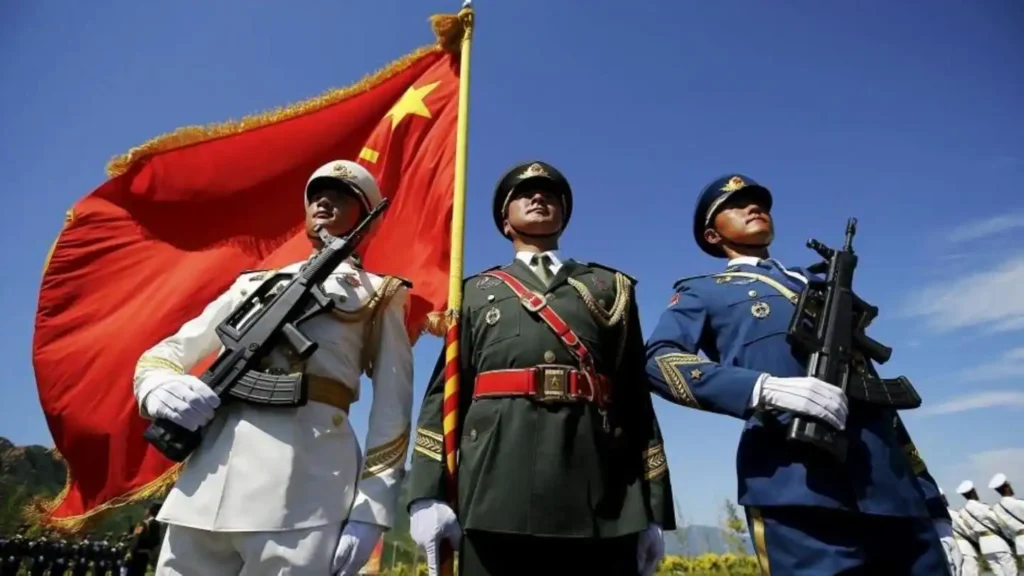
China’s arms export policy is integral to its global security strategy, supporting its geopolitical objectives and military modernisation. Years of military modernisation have enabled China to reduce its reliance on imported arms, allowing it to focus on domestic supply. This self-sufficiency permits Chinese state-owned enterprises to pursue international markets to enhance their sales and advance their strategic objectives. China ranks as the fourth largest arms supplier globally, accounting for 5.8% of global arms exports between 2019 and 2023. China’s strategy diverges from that of Western suppliers. Chinese defence companies compete on price and offer flexible financial terms, often providing better credit and imposing fewer political or human rights conditions than their Western counterparts. This positions China as a strategic alternative to Western and Russian exports in developing regions, such as Latin America and Africa. China’s arms deals are strategic rather than merely commercial, integrating military modernisation, economic policy, and geopolitical positioning to counterbalance the influence of the United States and its allies.
China’s Principal Export Relationship
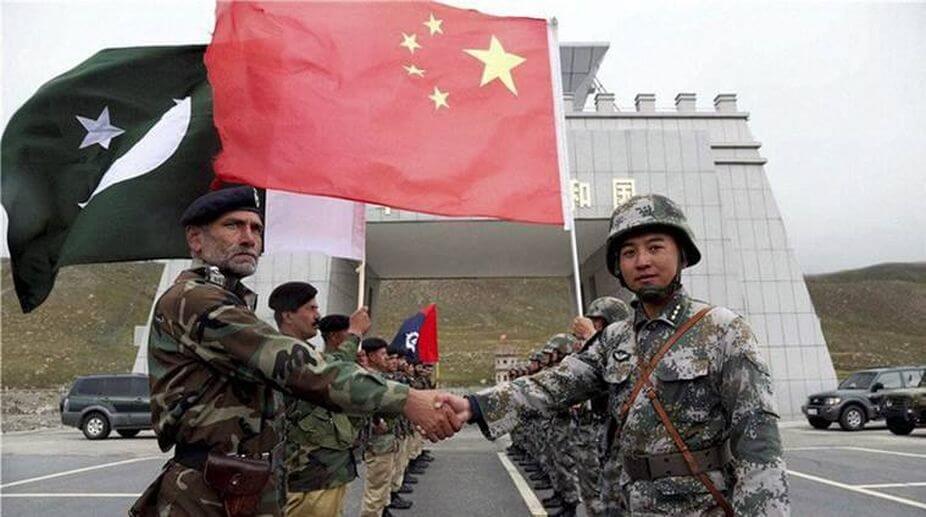
Pakistan is central to China’s arms-export strategy. From 2015 to 2020, Pakistan accounted for approximately 63% of China’s arms exports. This underscores China’s strong alliance with Pakistan and its influence in the geopolitically sensitive region of South Asia. China and Pakistan maintain a robust bilateral relationship that extends beyond mere arms transactions. China supplies Pakistan with advanced military hardware, including J-10C fighter jets, Type 054A frigates, and various missile systems. The operational success of these weapons, such as the J-10C’s reported engagements against Indian aircraft, serves to enhance China’s military product reputation and challenge Western counterparts, such as the French Rafale. This dynamic fosters trust in Pakistan and attracts additional international buyers, thereby bolstering China’s defence industry. Furthermore, China transfers technology in sectors such as nuclear power and solar energy to Pakistan, ensuring that Pakistan’s military and energy infrastructure remain reliant on Chinese technology, thereby securing China’s long-term influence. Pakistan’s strategic imperative to match India’s military capabilities, particularly following border skirmishes, has led to significant dependence on Chinese armaments. While this reliance provides immediate benefits, it poses long-term strategic risks. Pakistan ranks among the top arms importers globally, sourcing 81-82% of its military equipment from China, positioning China as a pivotal actor in Pakistan’s security framework.

If China encounters challenges such as supply disruptions or sanctions, Pakistan’s military readiness could be adversely affected. The Sino-Pakistani military alliance is characterised by shared systems and strategic cooperation, with Chinese technology, including radar and electronic warfare systems, enhancing Pakistan’s military capabilities. This partnership enables Pakistan to counter Western influence in the region, escalating regional tensions and compelling India to prepare for potential threats from China and Pakistan. The effective deployment of Chinese weaponry by Pakistan enhances China’s position in the global defence market. The performance of systems such as the J-10C, JF-17, and PL-15 missiles in conflict scenarios underscores Pakistan’s military prowess and provides China with critical data on the operational efficacy of its armaments in real-world engagements.
Pakistan faces challenges with certain Chinese military equipment, while some fighter jets perform satisfactorily, issues persist in other systems. For instance, the F-22P frigates experience engine malfunctions, and the FM90 (N) missile systems are plagued by defective sensors. These issues underscore the risks associated with reliance on suppliers who may not match the technological advancements of their Western counterparts. China’s inadequate support and lack of accountability compel Pakistan to seek costly solutions or demand enhanced warranties to ensure operational equipment availability.

Although initially inexpensive, Chinese equipment incurs higher long-term costs, impacting Pakistan’s military budget and equipment availability. Despite a monetary crisis characterised by $124.5 billion in foreign debt and widespread poverty, Pakistan continues to procure weapons, increasing its defence spending by 15.4% to maintain its military advantage with Chinese arms. This emphasis on military expenditure diverts resources from other sectors, leading to public dissatisfaction and undermining the country’s financial autonomy. By utilising Chinese radar and electronic systems, Pakistan relinquishes some control over its military operations, enabling China to monitor Pakistan’s military activities in real time and diminishing Pakistan’s capacity for independent action in conflicts.
The global arms trade is characterised by asymmetry: exporting nations gain influence and stability, while importing nations acquire military power at the expense of some independence. Western suppliers impose stringent conditions but offer reliable quality, whereas countries like China presents fewer conditions but poses risks such as supply chain disruptions and dependency. Pakistan’s dependence on China illustrates how excessive reliance on a single supplier can constrain a nation’s strategic autonomy.
Recommendations

Importing Nations (Maximizing Sovereignty)
-Importing nations should revise their approach to offset agreements. Rather than merely assembling products with numerous foreign components, they should prioritise acquiring the rights to manufacture critical components such as advanced sensors and software. This strategy facilitates the development of domestic industries and reduces technological dependence on other countries and regions.
-Policies should aim to mitigate reliance on a single supplier to avert significant risks, exemplified by Pakistan’s 82% dependency on one source. Nations should seek suppliers from diverse regions, including medium-sized countries such as South Korea, to maintain robust competition and expand their options.
-In procurement decisions, countries should consider the long-term costs associated with the utilisation and maintenance of products rather than focusing solely on the initial purchase price. Suppliers with poor records of support and delivery should be avoided, as they can deplete financial resources and impact foreign currency reserves.
Exporting Nations (Sustaining Influence)

-Western exporters should efficiently manage their resources, such as prioritising deliveries to Asia, by establishing clear supply schedules and assisting their allies in enhancing their defence capabilities. This approach mitigates the risks for partners and fortifies alliances.
-Nations exporting cutting-edge warfare systems, such as AI drones, should formulate clear international regulations. Without adequate control, these technologies may malfunction or incite conflicts, potentially entangling exporters in undesirable situations.
-Export control agreements should be reinforced, particularly concerning technology transfers. Exporters require robust agreements to maintain oversight of the destination of their technology. Previous failures in controlling the proliferation of weapons should be addressed by ensuring that countries retain control over the utilisation of exported defence technologies.