


Outer space has slowly but silently become a battlefield and is now an operational domain alongside land, sea, air, and cyberspace. No wonder the power to control or deny space-based capabilities can shape the outcome of geopolitical and military contests on Earth. Future conflicts on the ground are likely to extend into orbit—and, in some scenarios, actions in orbit could cascade back to terrestrial battlefields.
One reason wars in outer space could prove especially destructive is physics: at orbital velocities, even a bolt-sized fragment can cripple a satellite. Over the past decade, nations and private actors have come to see space as a critical node of military and economic power—with its own vulnerabilities, strategic imperatives, and potential for global confrontation. Around the globe, the race to secure this celestial high ground is reshaping doctrine, igniting new rivalries, and redefining what security means in the twenty-first century.
What makes these battles silent and invisible?
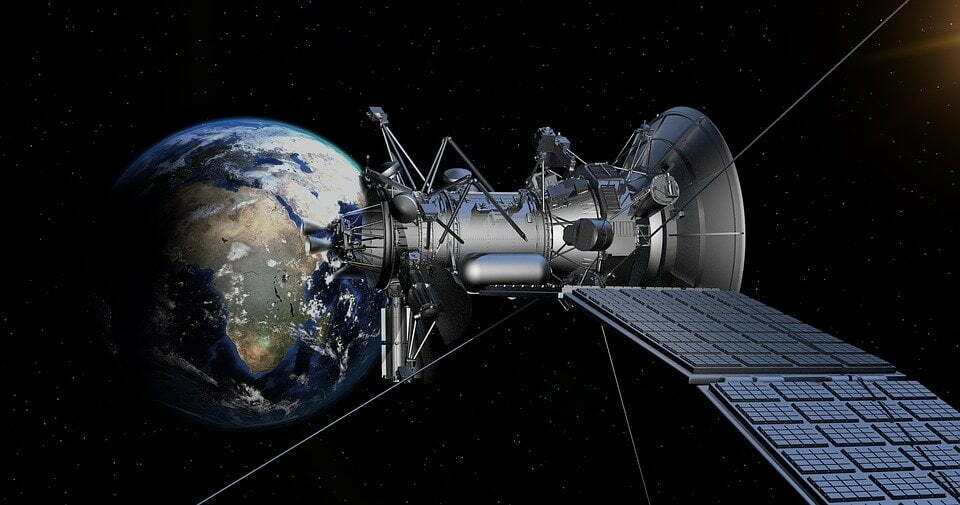
Hackers can infiltrate satellite networks to disrupt communications, steal data, or even seize control—often without immediate detection.
Adversaries can jam or spoof signals, misleading GPS users or cutting off military links—frequently without clear attribution.
Co-orbital craft can shadow other satellites, gather intelligence, or interfere at close range while maintaining plausible deniability.
Close-approach manoeuvres and debris-creating tests can threaten rivals indirectly, raising risks without a declared attack.
How space combat differs from wars on Earth

Space warfare spans three broad modes: ground-to-space (missiles, jammers, or cyberattacks targeting satellites from Earth); space-to-space (co-orbital or “inspector” satellites that disrupt or destroy hostile satellites); and space-to-ground (orbital systems that enable surveillance, navigation, targeting, and—in extreme concepts—direct attack). It is a contest of speed, precision, and stealth. In near-vacuum and microgravity—where drag is negligible and objects move at orbital velocities—engagements can unfold across thousands of kilometres in seconds.
Satellites and spacecraft are highly vulnerable: to kinetic interceptors and co-orbital “kill” vehicles; to directed-energy effects such as laser dazzling; and to non-kinetic techniques including electronic warfare, spoofing, cyber intrusions, and electromagnetic pulses. Because space systems underpin communications, navigation, missile warning, and reconnaissance, disabling them can ripple through both military operations and civilian infrastructure. Ground stations and control networks are equally attractive targets.
Also Read: Outer Space: The future battlefield
The principal actors today include the United States, Russia, China, and India, with more entrants—and even non-state actors—building space-relevant capabilities via commercial platforms. The arsenal ranges from anti-satellite missiles and kinetic projectiles to jamming and high-energy lasers. Looming over all of this is the risk of space debris: each destructive event can generate fragments that endanger every nation’s satellites, raising the stakes for restraint and resilience—and for responsible behaviour in orbit.
Militarisation of space

Militarisation of space means using space systems to support military activity—communications, navigation (GPS/NavIC), missile warning, and reconnaissance. It does not necessarily involve weapons in orbit; it reflects the everyday dependence of modern militaries on satellites.
Weaponisation of space

Weaponisation goes a step further deploying or employing means to damage, disable, or destroy space assets (or to use space systems to affect targets on Earth). This includes ground-launched anti-satellite (ASAT) missiles, co-orbital “inspector” satellites that can ram or jam, directed-energy tools like laser dazzling, and non-kinetic methods such as cyber and electronic warfare.
Why it matters

Space assets are soft targets and force-multipliers. Strikes on a few satellites can ripple across command, control, navigation, and civilian infrastructure. Debris from kinetic attacks can endanger all operators. Legally, the 1967 Outer Space Treaty bans weapons of mass destruction in orbit but does not forbid conventional anti-satellite capabilities, leaving a grey zone. The policy challenge is deterring hostile acts while building resilience (hardening, manoeuvre, disaggregation, rapid reconstitution) and agreeing on norms that curb debris-creating tests and reduce miscalculation.
Gulf War (1991): the “first space war”

Operation Desert Storm was the first major conflict where space systems were woven into every phase of operations—planning, manoeuvre, targeting, communications, missile warning, and weather. Commanders could see farther, move faster at night and in featureless desert, and strike with unusual precision because satellites provided timing, position, imagery, and communications in near-real-time.
Navigation & timing: Early GPS constellations gave reliable position and synchronised timing to ground units, aircraft, naval task forces, and special operations—transforming night manoeuvres and long desert “left-hook” routes.
Communications: Military and commercial SATCOM carried a large share of coalition C2 traffic across dispersed forces, linking aircraft, ships, and forward elements back to theatre and home bases.
Intelligence & targeting: National reconnaissance satellites supplied imagery and signals intelligence for target development and battle-damage assessment; data flowed quickly into air tasking orders.
Missile warning: Early-warning satellites detected Iraqi Scud launches within seconds, cueing Patriot batteries and civil defence.
Weather: Meteorological satellites improved sortie planning, route selection, and weapon effectiveness.
The war proved that space is both a force-multiplier and a dependency. It accelerated investment in resilient SATCOM, full GPS operational capability (mid-1990s), better tasking and processing of space intelligence, and integrated “space support teams” inside joint headquarters. It also exposed gaps—finite bandwidth, interoperability issues, and vulnerability to jamming—seeding today’s emphasis on resilience, rapid reconstitution, and counter space defences. Desert Storm did not put weapons in orbit, but it showed that whoever protects and exploits space services can dominate on the ground—hence its reputation as the first war truly enabled from space.
Leading countries with offensive space capabilities

United States: The most mature military-space posture, with fielded non-kinetic counterspace tools (e.g., jamming) and ongoing work on low-debris engagement concepts; it also operates reusable experimental spaceplanes (e.g., X-37B).
Russia: A spectrum of offensive capabilities, from GPS interference and electronic warfare to kinetic ASAT testing; Russian satellites such as Luch have demonstrated rendezvous and proximity operations (RPO).
China: Rapidly expanding counterspace portfolio, including ISR constellations, RPO testing, electronic warfare, ground-based lasers under development, and reusable spaceplane experimentation.
India: Demonstrated a direct-ascent ASAT and is advancing counterspace and directed-energy research; capabilities remain less mature than those of the three above.
France: Investing in observation, intelligence, and active-defence concepts, including self-protection measures such as laser dazzling to avoid debris.
Germany: Debate over counterspace options has intensified alongside plans to strengthen space security in response to Russian and Chinese activity.
Iran & Israel: Focus on electronic warfare, GPS interference, and limited counterspace measures; capabilities are uneven but evolving.
North Korea: Limited capability; has demonstrated terrestrial GPS jamming. Analysts occasionally speculate about more ambitious concepts, but there is no public evidence of operational space-based weapons.
Australia, Japan, South Korea, and United Kingdom: Primarily developing defensive and space-domain-awareness capabilities while increasing overall investment.
Strategic importance and trends

Space technologies now underpin core military operations—from missile guidance and real-time battlefield surveillance to precision logistics. Major powers are racing to enhance dual-use assets and explicitly military space systems, including ASATs, orbital drones, and cyber tools targeting satellites. Non-state actors and private enterprises add complexity to the threat landscape.
The way forward:

The new battleground in space demands technological innovation, doctrinal evolution, and sustained diplomacy. Deterrence will rest not only on advanced capabilities but on the capacity to absorb shocks, adapt quickly, and out-think adversaries in shadowed orbits. Diplomacy is essential: arms control, debris mitigation, and shared norms can curb escalation. Above all, resilience—robust, flexible, rapidly reconstitutable systems—is the ultimate insurance in an era of high-stakes orbital competition.
As space becomes contested, the choices made now—from investments in AI-enabled defence to cooperative monitoring protocols—will shape global security and prosperity for generations. The question is whether we can keep a contested domain from becoming an irreversible catastrophe.