


The “Triple Trap” is a significant issue encountered by nations that are heavily reliant on foreign suppliers for their defence requirements. This concept, rooted in defence economics and strategic studies, particularly as articulated by V. Siddhartha underscores the complexities associated with fulfilling military needs through imports. The trap encompasses three primary challenges that arise when the military transitions from a manpower-intensive force to an advanced technology-based force. These challenges pertain to deterrence, dissuasion, denial, disruption, and destruction capabilities. The core issue lies in the conflict between a nation’s requirements and the capabilities available from external sources. Siddhartha explains that imported technology presents three principal problems: evolving needs, denial of technology, and excessive cost. The underlying concern is that foreign-developed technology frequently does not align with the specific needs of the country, and suitable technology is often inaccessible to them. This indicates that defence dependency extends beyond mere technological inadequacy to include misalignment between needs and availability.
The global arms market is characterised by significant disparities, with a few dominant countries exerting a considerable influence. For instance, the United States is a major actor, accounting for 43% of global arms exports and supplying arms to 107 countries between 2020 and 2024. This market structure enables suppliers to derive both economic and political benefits. During the Cold War, the arms trade dynamics underwent a transformation, with government agreements being supplanted by industry agreements that emphasised technology and know-how transfer. This evolution rendered arms production international, but it remained under the control of the original companies and countries. The relationship between the supplier and importer is shaped by the exporting country’s objectives and the uneven distribution of arms production.
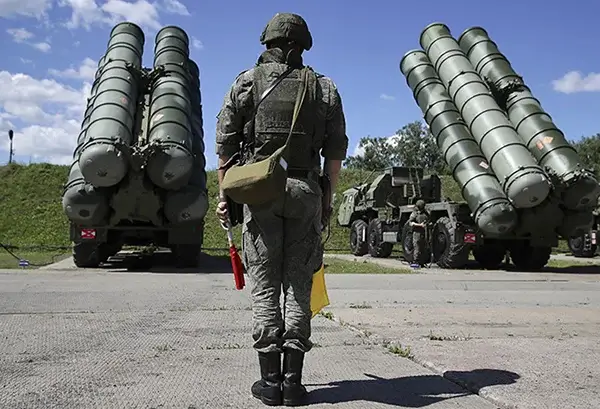
Dependence on a major foreign supplier engenders dependency. Once a nation adopts complex weapon systems that adhere to a specific standard, such as those of the US or NATO, transitioning to alternative suppliers is challenging. This dependency is inflexible and cannot be changed. For example, Turkey’s utilisation of US and NATO systems, along with the associated benefits, complicates any shift away from Western suppliers, even in the face of political tensions.
When a nation procures military equipment from another, it frequently necessitates substantial investment in training, logistics, and maintenance, thereby establishing a prolonged dependency on the supplier. The sale of weapons is crucial for these arms exporters’ economies, as it generates employment and revenue. For instance, the United States has a $142 billion agreement with Saudi Arabia that bolsters its defence industry. This emphasis on economic gain can lead to adverse outcomes, such as aggravating instability in volatile regions, supporting authoritarian regimes, and inciting conflicts. This scenario highlights the inequality between the seller’s economic aspirations and global security imperatives.
Strategic Denial -Trap 1
The initial component of the Triple Trap is Strategic Denial, wherein the seller employs technology control to ensure the buyer’s dependency. Countries such as the United States enforce stringent regulations to govern military technology exports. Regulations such as the International Traffic in Arms Regulations (ITAR) and the National Disclosure Policy (NDP) determine the military information and equipment that can be shared. The U.S. Department of Defence (DOD) makes case-by-case decisions regarding technology sharing, withholding certain information to maintain a strategic advantage. Consequently, the military capabilities of the buyer depend on the current policies and interests of the seller.

The most potent form of strategic denial is the imposition of an arms embargo or sanctions, which can be enacted by entities such as the United Nations or individual countries. For example, the United States imposed an arms embargo on Cuba in 1958, which subsequently evolved into comprehensive economic restrictions. Such measures can rapidly debilitate a nation’s military capabilities, illustrating the inherent risks of reliance on foreign suppliers.
Beyond official bans, global political dynamics can influence exporters to alter their priorities, thereby affecting the importers. For instance, in the event of shortages arising from conflicts, the United States may prioritise its own needs or those of its allies over other countries. This phenomenon has been observed in Europe, where NATO member states have increased their procurement from the United States. Future administrations in the United States may shift their focus to Asia. Such shifts can result in delays or denials of supplies to less prioritised clients, even when contractual agreements exist, thereby exposing them to risks from distant conflicts. Exporters employ this strategy to safeguard proprietary information and prevent importers from achieving excessive autonomy. This approach ensures that exporters maintain control and compel importers to adhere to their policies.
Economic Exploitation and Financial Burden- Trap 2
The second component of the Triple Trap involves extracting excessive financial costs from the importing nation, transforming a necessity into a fiscal challenge. This occurs through inflated prices, corruption, and the provision of substandard products.
The global defence market is dominated by a limited number of entities, enabling them to impose high prices, particularly for specialised military systems. Corruption worsens costs, with the security sector being notably corrupt, second only to the construction and oil and gas sectors. This often involves the use of offshore companies to facilitate bribery. One notable instance is the Al Yamamah Arms Deal, which involved a series of unprecedented arms transactions from the United Kingdom to Saudi Arabia over several decades, amounting to tens of billions of British pounds. This deal represented a significant geopolitical and economic agreement but was persistently marred by serious accusations of corruption and bribery at the highest levels of both governments and the main contractor, BAE Systems, Inc.

Mandatory defence offset agreements frequently pose significant financial challenges for countries procuring military equipment. Foreign vendors typically incorporate additional costs into primary contracts to compensate for these agreements. The financial and operational burdens associated with fulfilling offset obligations may be substantial.
Increased Procurement Costs: When a nation mandates offsets, it often incurs higher expenses for defence equipment than it would in the absence of such requirements.
Economic Inefficiency: Offsets may lead to inefficiencies as suppliers are compelled to purchase goods or invest in sectors that may not be economically viable, thereby disrupting the standard market operations.
Administrative Burden: The management of offset contracts necessitates extensive administrative resources and specialised personnel, thereby escalating governmental expenditures. Auditing entities, such as the Comptroller and Auditor General (CAG) of India, have identified issues in managing offset claims.
Risk of Penalties/Delays: Noncompliance with offset obligations by foreign vendors may result in penalties and can also delay the acquisition of critical equipment, thereby affecting operational capabilities and increasing costs.
Limited Economic Benefits: In countries such as India, the anticipated economic advantages, including technology transfer or foreign investment, are often minimal or difficult to directly attribute to offset policies, rendering the additional costs less justifiable.
In the absence of transparency and accountability, financial resources intended for the development of local industries are frequently misappropriated or squandered. When officials divert funds for personal enrichment, it undermines long-term investment in domestic defence industries, thereby increasing reliance on imports and perpetuating the cycle of dependency.
Thus, while offsets are intended to balance resource outflows and enhance the local industry, they frequently result in increased procurement costs. Consequently, some countries have revised their policies, such as eliminating offset clauses from government-to-government agreements to reduce expenses.

Nations occasionally sell less advanced versions of sophisticated weaponry to other countries to safeguard sensitive technologies and maintain a technological edge. For instance, the Soviet MiG-23MS was equipped with an outdated radar and weapons system to preserve technological secrecy. Similarly, the United States adopted this approach with the F-86K, offering a variant with less advanced systems. These reduced-capability versions often feature inferior electronic and communication components, ensuring that while the purchasing nation incurs substantial costs, its military capability remains limited. This strategy enables the selling nation to retain technological superiority and ensures the buyer’s continued dependence on it for advanced operations.
The Pitfalls of Affordable Obsolescence- Trap 3
The final component of the Triple Trap is Affordable Obsolescence, which occurs when nations acquire military equipment that appears cost-effective but is, in fact, outdated or defective, leading to elevated maintenance expenses.
Exporting nations frequently transfer obsolete equipment to developing countries; although the equipment is affordable, older systems require continuous updates to remain operational. The initially low cost may seem advantageous, but it results in substantial future expenses. Maintenance and repair costs often surpass initial savings, thereby diminishing military readiness.
Numerous low-cost military systems procured from emerging defence suppliers frequently exhibit defects or experience operational failures. This situation deprives nations of essential security systems and depletes their military budgets. Illustrative examples include:

Nigeria: The Nigerian military encountered significant challenges with the Chinese F-7 aircraft, which was acquired in 2009. By 2020, seven of the nine aircraft required a return to China for extensive repairs.
Pakistan: As a prominent purchaser of Chinese military equipment, Pakistan expressed dissatisfaction with the Chinese F-22P frigates owing to their engine malfunctions and suboptimal performance. The infrared sensor of the FM90 (N) missile system was defective and necessitated removal owing to targeting inadequacies.
A critical issue is the lack of support and accountability from the suppliers. Importing nations often lack the expertise or training to address these issues and face difficulties obtaining spare parts. In the above instances, Chinese suppliers demonstrated minimal responsibility for repairs, compelling importers to seek assistance from alternative countries to fulfil their contracts. This reliance on external support worsens the skill gap within the importing nation’s workforce and extends its dependence on foreign technical assistance.
Acquiring older systems necessitates substantial expenditures on upgrades, as exemplified by the US Army’s programs for the Abrams tank. For dependent nations, these represent significant costs to maintain operational systems rather than to acquire new capabilities. This persistent need for upgrades diverts resources that could be allocated to local research or new acquisitions. Consequently, countries remain reliant on the original supplier for upgrades and components, reinforcing the dependency established by the initial low-cost acquisition of the arms.
Convergence of Traps
The Triple Trap is most detrimental when all three issues converge, fostering a dependency that undermines national security.
The South Asian Challenge (Pakistan/China Dependency): Pakistan’s reliance on China for defence equipment exemplifies the intersection of Trap 3 with other traps. Owing to regional constraints, Pakistan is often unable to access Western technology (Trap 1) and resorts to more economical Chinese alternatives (Trap 2).

However, this results in challenges, as evidenced by the F-22P frigates and FM90 (N) missile systems, which exhibit suboptimal performance. This scenario illustrates the interplay of all three traps: geopolitical constraints necessitate reliance on a supplier that economically exploits the country by providing inferior equipment, leading to obsolescence and logistical challenges.
Impact on National Security
The primary security concern associated with the Triple Trap is the necessity for nations to navigate tough decisions between budgetary constraints, long-term defence strategies, and immediate operational readiness. Financial dependency, often facilitated by military aid or loans, compels nations to procure from specific suppliers. This strains military budgets, compelling leaders to prioritise short-term needs, such as purchasing parts and upgrades, over long-term objectives, such as investing in indigenous research and development. This extends dependency. The Triple Trap further exacerbates the strategic disparities between nations and their adversaries. If a weapon system is denied (Trap 1) or fails (Trap 3), the resulting capability gap undermines national security.

Accelerating Domestic Defence Production: Expediting domestic defence production is a viable approach to address the Triple Trap. This entails increasing the manufacture of weapons and equipment within the nation, thereby reducing reliance on imports. Historically reliant on imports, India is now endeavouring to enhance its indigenous defence manufacturing capabilities. The nation has reformed its procurement processes to prioritise local production and to curtail imports. Initiatives such as the Defence Acquisition Procedure (DAP) and Innovations for Defence Excellence (iDEX) are instrumental in this transition, providing financial support to emerging defence enterprises and research endeavours. Consequently, India’s defence exports achieved a record high of USD $2.76 billion in FY 2024-25. However, challenges persist. India faces difficulties in aligning its strategic plans with actual production outcomes, resulting in continued import dependency. Key issues include suboptimal production quality, intense global competition, and financial constraints in the armament industry. These challenges underscore the fact that policy reforms alone are insufficient.
Achieving true autonomy necessitates sustained, high-quality research and development to attain technological leadership rather than merely increasing production volume; this approach would ensure that domestically produced items are technologically advanced.
Diversifying International Procurement: The second strategy involves diversifying the sources of military equipment procurement. This approach mitigates the risk of excessive dependence on any single country. Southeast Asian countries, navigating the geopolitical dynamics between the United States and China, employ this strategy by sourcing from multiple suppliers to avoid overreliance on one supplier, which could constrain their strategic options. For instance, Russia’s arms sales to ASEAN countries declined between 2011 and 2021 because of the risk of sanctions. By diversifying their procurement sources, these countries alleviate geopolitical pressures (Trap 1). However, this strategy can introduce challenges related to equipment compatibility (Trap 3). Variations in standards across different countries (for example, NATO, Russia, and China) can complicate equipment management and maintenance, potentially leading to increased costs and reduced operational readiness if they are not meticulously planned.
Way Ahead
The Triple Trap presents a significant challenge that impacts national security decision-making. It encompasses not only defence economics but also national sovereignty issues. Decisions regarding military readiness and long-term security are influenced by a limited number of dominant exporting countries. This trap engenders dependency on costly and continuous support for complex military systems. To mitigate this dependency, nations must adopt a clear strategy that emphasises transparency, technological independence, and improved procurement policies. Some suggested measures include the following:

Emphasising Strategic Research and Development (R&D) and Acquisition Reforms: Governments must reform procurement processes to minimise bureaucratic obstacles that impede innovation and escalate costs. Increased investment in long-term research is essential to establish a robust technological foundation. The objective is to develop systems that are “effective, affordable, and agile,” thereby addressing future requirements and mitigating issues related to excessive costs and inefficiencies.
Enhancing Transparency in Offset Agreements: To prevent economic exploitation, governments should ensure transparency in offset agreements. This includes disclosing the offset policy, evaluation criteria, contract value, and reports on the benefits and involved companies. Such transparency is crucial for curbing corruption and ensuring that funds contribute to industrial growth, thereby reducing dependency.
Integrate comprehensive security planning: Defence planning should extend beyond mere military acquisitions. The adoption of peaceful security strategies can reduce reliance on costly military forces and foster genuine economic growth, alleviating budgetary constraints that result in outdated systems.
Addressing Incompatibility Risks: Nations seeking diversification must engage in meticulous planning to manage the complexities associated with diverse systems. This necessitates investment in technical expertise, logistics, and maintenance training to prevent operational disruptions.