


Media suggestions that inexpensive drone and loitering munitions are much cheaper and more effective than fancy aircraft and tanks costing billions are juvenile, un-informed, outrageous and pathetically wrong. The hoax of drones is built on sensational videos, marketing hype, and the seductive appeal of bloodless war. A brutal demolition of the hype.
Indians are intellectually incapable of handling complexity. That’s why they latch on to the catchiest objects, such as gadgets in any business. Give any high-tech product to the Indians and they go crazy over it, eventually reducing it to a ridiculously comical level. Recent examples of their ‘juvenile abuse of technology’ include asking Grok AI utterly stupid questions, and getting Ghibli-studio style images made by ChatGPT, both in millions. Drones are another such example. They had been using them for photographing pre-wedding shoots, weddings and for fun demonstrations at huge functions. In the context of the recent military operation, drones caught their fancy, and the dams of ignorance burst open.

Recently, TOI published an article titled ‘Does India need pricey F35s in the drone age?’ It claimed that the main lesson from the Russia-Ukraine war was that inexpensive drone and loitering munitions were much cheaper and more effective than fancy aircraft and tanks costing billions, and that buying F-35s would be a folly. I won’t comment on government policy, but the claim regarding drones is so juvenile, so un-informed, so outrageous and so pathetically wrong that it is incumbent upon me to educate people about military drones, what they are, what they can do, and most importantly, what they cannot do.
In the aftermath of the Ukraine war and the rising use of drones by Iran, the Houthis, and other non-state actors, the fascination with drones has skyrocketed. From dramatic footage of FPV (First-Person View) drones chasing down enemy soldiers to Shahed-136 loitering munitions crashing into infrastructure, drones have captured the imagination of a sensation-hungry public.
The reality, stripped of sensationalism, is that drones are not the future of warfare. They are a supplementary tool, not a replacement for manned platforms or human combatants. The belief that drones can revolutionize or replace traditional combat reflects an adolescent awe—a boyish fascination with a new gadget, rather than a sober military analysis.
Military Drones Today and their Roles in Modern Warfare

Drones aren’t new—RPVs like the Firebee were used in Vietnam for ISR (Intelligence, Surveillance, and Reconnaissance). The current boyish fascination of the dumb public stems from their much greater visibility in social media and on TV, amplifying their perceived importance beyond their actual war-winning potential.
Drones in modern militaries span a wide range of types and capabilities.
Miniature Tactical Drones like the Black Hornet or Switchblade 300 are used for close reconnaissance or kamikaze strikes, carrying warheads no more potent than a 40mm grenade.
Medium-Altitude Long-Endurance (MALE) Drones like the MQ-9 Reaper and Bayraktar TB2 can carry precision-guided munitions and perform surveillance missions, but are limited by their need for permissive airspace because they cannot defend themselves.
High-Altitude Strategic Drones like the RQ-4 Global Hawk are essentially flying sensor platforms good for surveillance but completely defenceless in contested skies.
Loitering Munitions such as the Iranian Shahed-136 or the Russian Lancet do appear formidable but the fact is their explosive payloads (typically between 3 to 50 kg) are minuscule compared to what conventional bombers or artillery can deliver.
Here’s an overview of the main categories and examples, including technical specifications and payloads:
Small/Consumer Drones: Examples: DJI Mavic, Phantom series, or custom-built First-Person View (FPV) drones (as seen in Ukraine).
Size/Weight: Small, typically under 20 kg (e.g., DJI Mavic 3: ~900g).
Range: 5–10 km (FPV drones often limited to <10 km due to control constraints).
Endurance: 20–45 minutes.
Payload: 0.5–2 kg, often grenades, small explosives, or cameras for ISR (Intelligence, Surveillance, Reconnaissance).
Speed: Up to 70–100 km/h.
Role: Tactical reconnaissance, targeted strikes (e.g., FPV drones in Ukraine chasing soldiers), or improvised explosive delivery.
Use Case: Widely used by non-state actors (e.g., Houthis) and in Ukraine for low-cost, precise attacks.
Tactical/Medium-Altitude Drones: Examples: Israel Aerospace Industries (IAI) Searcher, Bayraktar TB2 (Turkey), Wing Loong II (China).
Specifications for Searcher as a typical illustration of the class:
Weight: ~436 kg.
Range: 150–300 km.
Endurance: 15–18 hours.
Payload: 120 kg (EO/IR sensors, synthetic aperture radar).
Speed: ~200 km/h.
Medium-Altitude Long-Endurance (MALE) and High-Altitude Long-Endurance (HALE) Drones: Examples: MQ-9 Reaper (USA), IAI Heron, General Atomics Global Hawk.
Specifications for MQ-9 Reaper as a typical illustration of the class:
Weight: 4,760 kg.
Range: 1,850 km.
Endurance: 27 hours (unarmed), ~14 hours (armed).
Payload: 1,746 kg (e.g., 4 Hellfire missiles, 2 GBU-12 Paveway II bombs).
Speed: ~482 km/h.
Loitering Munitions (Kamikaze Drones): Examples: IAI Harop, Harpy, Switchblade 300/600.
Specifications for IAI Harop as a typical illustration of the class:
Weight: 135 kg.
Range: 1,000 km.
Endurance: 6 hours.
Payload: 23 kg high-explosive warhead.
Speed: ~185 km/h.
Swarm Drones: Examples: Chinese DJI Matrice 300 with AI.
Weight: Typically 1–10 kg per unit.
Range: 5–50 km (coordinated via AI or centralized control).
Endurance: 20–60 minutes.
Payload: 1–5 kg (explosives, sensors, or jammers).
Speed: 50–150 km/h.
Role: Overwhelm defences, saturate radar, coordinated ISR or strikes.
Comparison with F-35

For F-35A, the US Air Force Version:
Range: 2,800 km
Armament: 1 × 25 mm GAU-22/A 4-barrel rotary cannon
Bombs and Missiles: Total payload 8,200 kg (internal max 2,600 kg; external max 6,800 kg) that could include a mix of: air-to-air missiles (AIM-9X Sidewinder, AIM-120 AMRAAM, and AIM-132 ASRAAM); air-to-surface missiles (AGM-88G AARGM-ER, AGM-158 JASSM, and AGM-179 JAGM); and bombs (Joint Direct Attack Munition; Paveway; Precision-guided glide bomb-AGM-154 JSOW, GBU-39 Small Diameter Bomb, GBU-53/B StormBreaker, or B61 mod 12 thermonuclear/hydrogen bomb).
Avionics: AN/APG-85 AESA radar; AN/AAQ-40 Electro-Optical Targeting System; and AN/ASQ-239 Barracuda electronic warfare/electronic countermeasures system.
Speed: Mach 1.6
No drone can carry a 2,000-pound Mk-84 bomb. No drone can bust bunkers, crater runways, or obliterate armoured battalions. At best, drones kill isolated personnel or damage lightly protected assets. Tactical value in small conflicts? Of course! Strategic game-changer in a major conflict? Forget it!
To even hint at comparing fighter jets with drones is stupid; to suggest drones replacing fighter jets is stupidity of the highest order.
The Role of Drones in Modern Warfare

Drones are employed for:
- Intelligence, Surveillance, and Reconnaissance (ISR): Providing real-time data on enemy movements and terrain.
- Precision Strikes: Targeting high-value assets with minimal collateral damage, as seen with Bayraktar TB2 drones in Ukraine.
- Electronic Warfare (EW): Disrupting enemy communications and radar.
- Asymmetric Warfare: Non-state actors like the Houthis use cheap drones for attacks.
- Swarm Tactics: Coordinated drone swarms overwhelm defences, as explored by Sweden’s January 2025 program developed by Saab.
Drones’ Combat Value vs. War Value

Viral FPV drone footage from Ukraine, showing drones chasing soldiers, has mesmerized audiences lacking critical faculties, amplifying the perception of drones as game-changers. However, this overlooks their tactical limitations and the broader context of warfare.
This brings us to a fundamental distinction between combat value and war value. Killing a lone soldier running through a trench might make for dramatic footage, but it does not shift the tide of a campaign. Winning wars requires holding territory, breaking enemy logistics, destroying command structures, and—most critically—achieving political and psychological dominance. None of these can be accomplished by drones.
Limited Payload: Drones cannot match the destructive power of manned platforms. A 2,000-lb MK84 bomb, for example, delivers devastating area effects, while even the MQ-9 Reaper’s Hellfire missiles (45 kg warhead) or GBU-12 (227 kg) are designed for precision, not mass destruction. This limits drones’ ability to neutralize fortified targets or large troop formations.
Range and Endurance Constraints: Small drones (e.g., FPV) have short ranges (<10 km) and endurance (<1 hour), making them unsuitable for deep strikes or prolonged engagements. Even MALE drones like the Reaper (1,850 km range) are outclassed by manned jets like the F-35 (2,800 km combat radius).
Dependence on Communication Links: Drones rely on radio frequency (RF) or satellite links, which are vulnerable to jamming, spoofing, or interception, disrupting control and data feeds.
Limited Situational Awareness: Unlike human pilots, drones lack the intuitive decision-making and real-time adaptability of a human in the cockpit. AI drones (e.g., DJI Matrice 300) can navigate autonomously, but their target discrimination is still rudimentary compared to human judgment.
Cost-Effectiveness vs. High-Value Targets: Using expensive drones like the Reaper ($30 million/unit) against low-value targets (e.g., individual soldiers) is stupid. Conversely, cheap FPV drones ($500–$1,000) are effective for tactical kills but lack strategic impact.
Manned platforms like the F-35 offer multirole capabilities (air-to-air, air-to-ground, electronic warfare) with larger payloads, longer ranges, and human pilots’ situational awareness. Drones, even advanced ones, are specialized and lack this versatility.
The psychological impact of a manned jet’s presence (e.g., sonic booms, visible flyovers) can intimidate adversaries in ways drones cannot replicate. Manned platforms can operate in contested environments with advanced electronic countermeasures (e.g., F-35’s Barracuda suite), while drones are more vulnerable to electronic warfare.
Vulnerabilities and Limitations

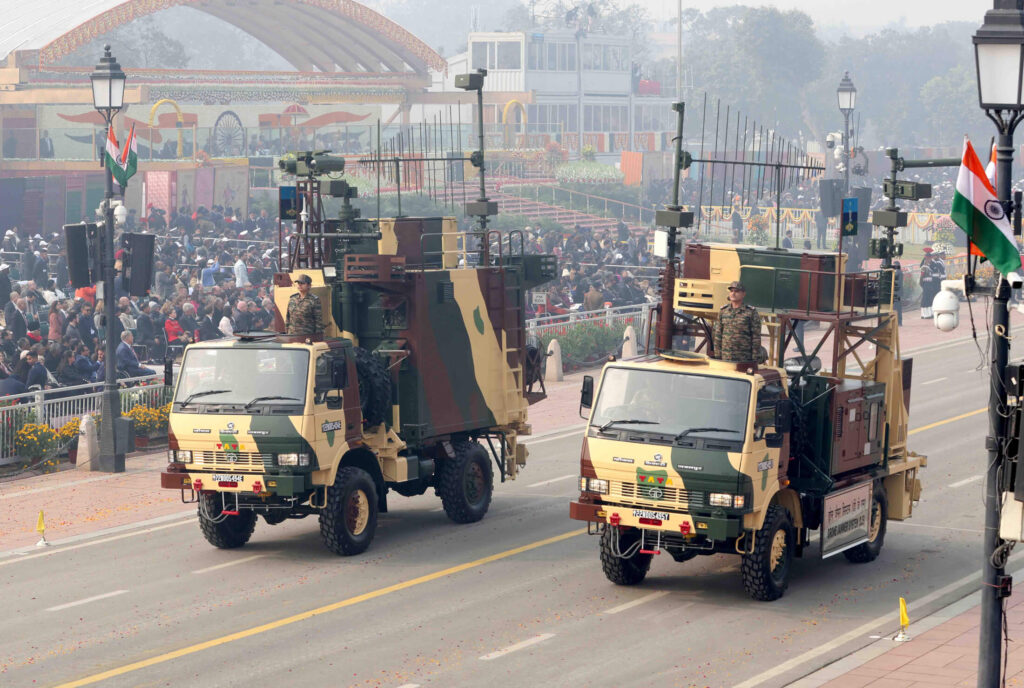
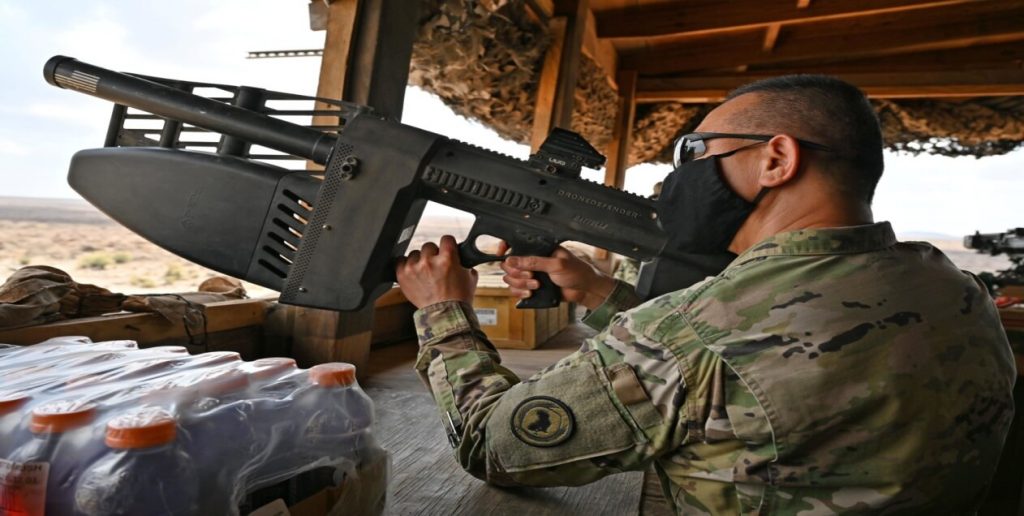
Despite all their touted advantages, drones are highly vulnerable. They are slow, noisy, and often fly low enough to be downed with even shotguns. They are unarmoured and largely defenceless. Their reliance on GPS and data links makes them prime targets for electronic warfare. Signal jammers, spoofers, and even environmental factors can render them blind or uncontrollable.
Worse, in conflicts where adversaries possess competent air defence systems, drones have fared poorly. The much-celebrated Bayraktar TB2s that performed well in Libya and Nagorno-Karabakh were quickly neutralized in Ukraine. Russian SHORAD and electronic warfare systems shredded them. Dummy decoys have fooled Lancet drones into wasting expensive payloads on worthless targets.
The prospect of drone swarms or autonomous AI-controlled strikes remains largely theoretical so far. Even the most advanced drone swarms today are pre-programmed and lack the real-time adaptive intelligence that human soldiers routinely exhibit in battle.
Drones’ resilience depends on their cost and sophistication. Cheap drones rely on numbers, while expensive ones use stealth and EW resistance. However, no drone is immune to modern integrated air defence systems (IADS) with layered sensors and effectors (e.g., Pantsir-S).
The fundamental paradox of drones is that expensive drones (e.g., Reaper) are vulnerable to cheap countermeasures, while cheap drones (e.g., FPV) lack the payload or range for decisive impact.
Drones are tools, not game-changers. They enhance combined arms operations but cannot replace tanks, jets, or infantry in capturing objectives or holding ground. Their vulnerabilities (jamming, low payloads, limited autonomy) make them a complement, not a substitute, for manned platforms.
Fighting is fundamentally a human function
The juvenile hidden in the minds of most people is unable to comprehend that fancy weapons are either simply fancy weapons or an adolescent’s fancy—having a fancy weapon does not mean that you will win in all combats; not having a fancy weapon does not mean that you will lose all combats.
There is a general profound misunderstanding of what warfare entails. War is not a technological exchange—it is a deeply human conflict. Stop watching the Transformers series of sci-fi films. The courage to breach a trench, the fear felt under artillery fire, the instinct to protect a wounded comrade—none of these can be replicated by remote systems. The idea that machines can wage war without humans is not just a fantasy; it is a dangerous illusion.
Drones may serve as valuable tools for reconnaissance, attrition, harassment, and psychological impact. But they are tools—nothing more. War is not a video game; it is a human phenomenon laden with emotion, intuition, fear, and sacrifice. Any attempt to wage it exclusively through remote control undermines its very nature. Believing they can replace the human element in warfare is to forget what war is; you risk building a military culture that is fascinated by gadgets but unprepared for the blood, grime and gore of real combat.
The myth of the drone as game-changer is built on endemic ignorance, sensational videos, marketing hype, and the seductive appeal of bloodless war. Drones may hover above the battlefield, but they will never conquer it. Machines may assist, but they can never replace humans. The verdict is: drones are the sole future of warfare. If you have to win wars for real and not on TV, you have no option but to pick up guns and charge; or fly that jet to shoot the other guy out of the sky amidst flak and missiles exploding all around you.