

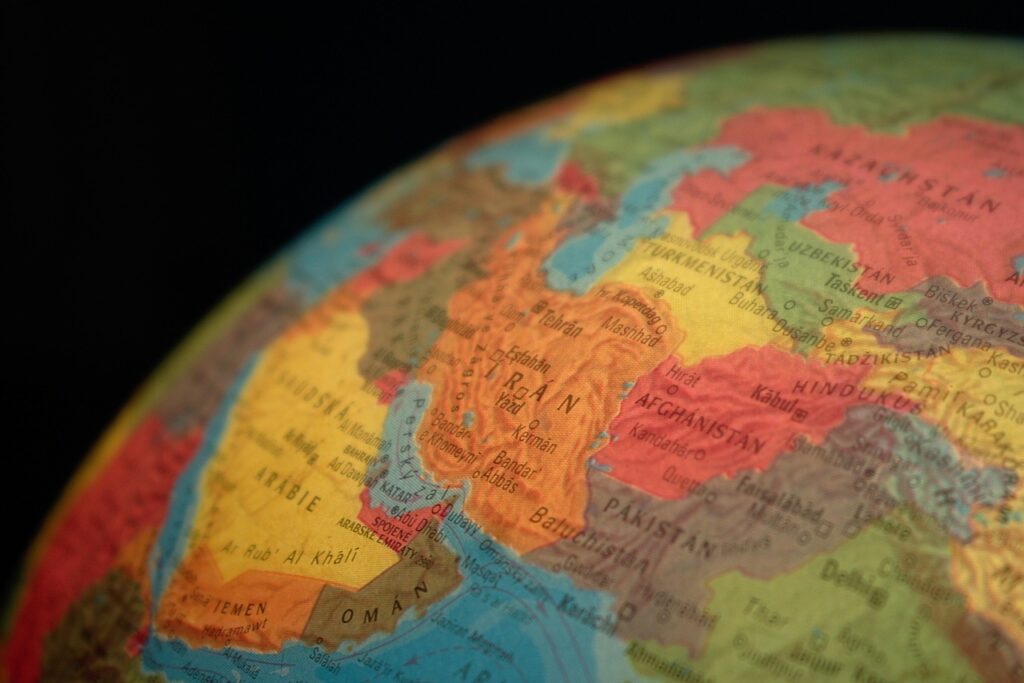
If you have been following media reports, the Middle East cauldron is boiling again. You have these internal protests in Iran in which, according to the Western media, over 544 people have been killed by the Khamenei regime so far. Protests happen everywhere in the world. What is so unique about it? Well, the unique thing is that the SHO of the World Police Station, a man called Donald John Trump is patrolling his beat with loaded guns, and he has made it very clear that he does not like domestic violence. He has warned the neighbourhood that if he heard as much as even a groan from inside a house, he would presume that the poor wife is being beaten up by the husband and, invoking his self-proclaimed right to intervene for the protection of women, he would barge into the house and beat the shit out of the husband.
How CIA-Mossad engineered riots in Iran?
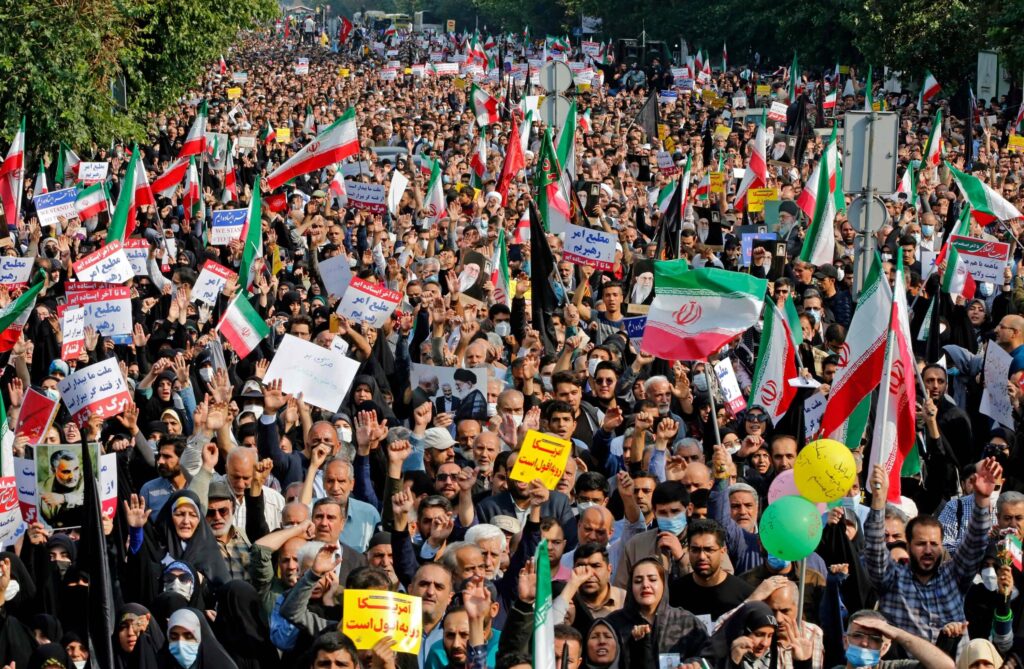
Name the wife ‘democracy’ and her alleged groans as ‘democratic protests against a tyrannical regime’, and you would understand the whole game instantly. Western media has fed you the story that the protests are spontaneous, ostensibly against economic collapse, currency crash, governance failures, repression, extreme orthodoxy etc. Bullshit. The protests are engineered by the CIA-Mossad combine by paid agents and agent provocateurs—in very much the same way they had engineered protests in Bangladesh and Nepal. That has been their old hobby and speciality since the 1950s. Consider this:
- There was no apparent inciting incident to the protests and they escalated over a period of a couple days, suggesting a go order was issued to an existing network rather than anything growing organically from popular sentiment.
- There seem to have been hundreds of anti-government personnel and dozens of members of the security services killed in the fighting. This level of extreme violence, on such short notice and with so little pretext, again suggests a planned insurrection.
- Property damage was significant and ill-natured, with systematic attacks on mosques, emergency services, and transportation infrastructure as well as the usual government facilities. Much of this had little to do with the regime per se and instead seemed to have been aimed at hurting the general public – again not only suggesting a planned insurrection but one that was aimed to create as much havoc as possible.
- A Farsi-language account associated with Mossad publicly encouraged Iranians to protest and claimed agents were “in the streets.”
- Ex-CIA officials and political figures (e.g., Mike Pompeo) posted anti-regime messages in Farsi, implying support for Iranian unrest.
Why USA wants a regime change in Iran?
What makes Trump so much interested in the internal affairs of Iran? Well, as I have been telling you in my previous articles, he is interested because he wants a regime change. It is the same old trick. I am amused that they do not get bored of it. They had done it back in 1953. Operation Ajax, when they orchestrated the overthrow of democratically elected Prime Minister Mohammad Mosaddegh for daring to nationalize oil. Fake riots, bribed mullahs, and a compliant Shah installed, only to be overthrown in the Islamic Revolution of 1979. At that time, the objective was Big Oil’s profit. Now the stakes are higher.
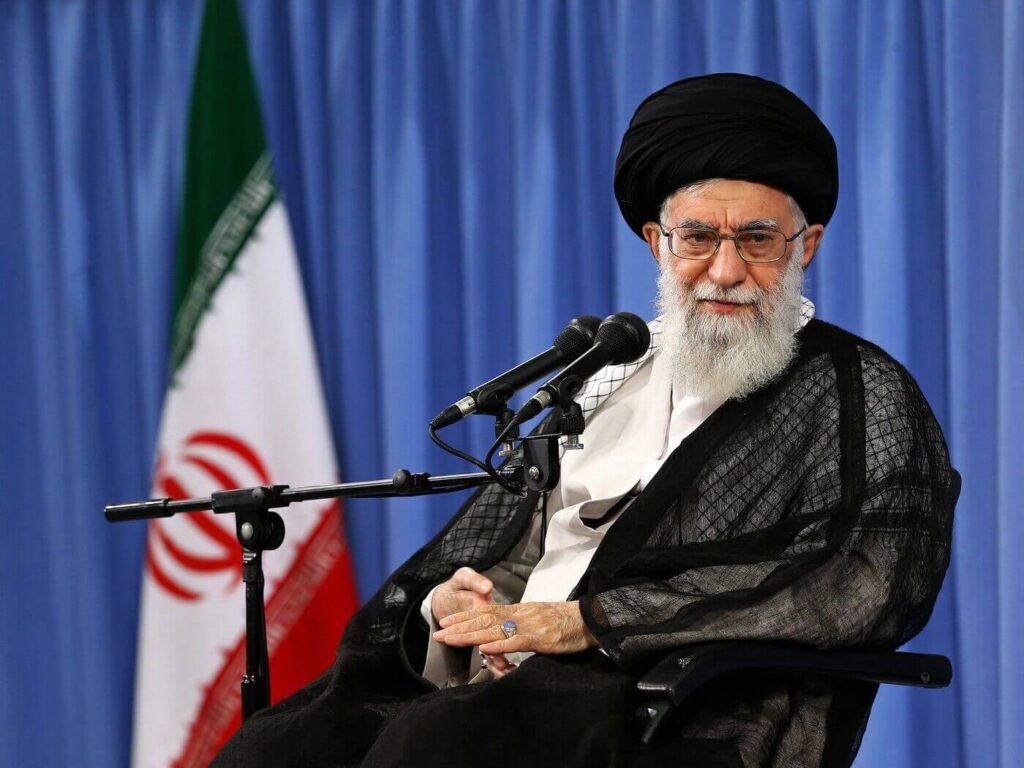
The USA does not like Ayatollah Khamenei one bit. Moreover, Reza Pahlavi, the 65-year old son of the former Shah of Iran, an American stooge, has been living in exile in USA since long. Since years, he has been salivating that he is prepared to come back to Iran and reclaim his lost kingdom. Of late, he has sensed blood and his salivation and fulminations both have become really copious. Trump desperately wants a regime change in Iran and an American sucker in Iran because that would kill several birds with one stone. It would mean solving all the problems for Israel. It would mean inflicting a diplomatic and strategic defeat on Russia, Iran’s only ally in the region. It would mean an end to terror groups like Hamas and Hezbollah, which are propped by Iran. It would mean that the Middle East becomes America’s backyard once again, the way it was for the British Empire once upon a time. And, finally, it would be a crowning glory to satisfy the ego of Trump.
The Grand Scheme unfolds this way. In fact, according to the CIA’s Nicaragua Manual of 1980s, every modern regime-change drama begins with the same liturgy. The protests are “spontaneous.” The violence is “unfortunate but understandable.” The fires, the dead policemen, the torched infrastructure—mere expressions of popular frustration, apparently erupting with the logistical sophistication of a mid-sized military exercise. these saboteurs are hitting the stuff that hurts the general public. Mosques? Really? That’s like burning down your own grandma’s house to spite the landlord. It reeks of a deliberate havoc-maximizing strategy, designed not to win hearts and minds but to sow discord, force a crackdown, and paint the regime as the big bad wolf. Classic false-flag playbook: make the mullahs overreact, then cry “human rights violation!” while the world nods along.
No inciting incident. No singular outrage. No catalytic moment that explains nationwide escalation within days. Who in the world would buy this story? CIA-Mossad is not as subtle as they would like the world to believe. Instead: a synchronized ignition across multiple cities, rapid tactical escalation, lethal engagement with security forces, and attacks not merely on state symbols but on civil infrastructure whose destruction punishes the population itself. Mosques. Ambulances. Transport nodes. Not revolution; destabilization. This is not how organic protest movements behave. This is how pre-positioned networks behave when activated.
When violence escalates faster than grievance can explain, when tactics precede slogans, when chaos outpaces organization, one is not watching a movement discovering itself. One is watching a switch being flipped.
Why the groans of the ‘wife’ in Iran are different
The American Intelligence establishment suffers from a recurring intellectual disorder: the belief that instability is a scalpel rather than a wildfire. Their approach has been simple, if not simplistic:
- Apply internal pressure.
- Force the adversary to divert resources inward.
- Provoke mistakes.
- Either compel capitulation or justify escalation.
It worked—partially—in Eastern Europe under very specific historical conditions. It worked—briefly—in Libya, before turning the country into a slave market. It worked—in a grim parody—in Syria, where “moderates” turned out to be interchangeable with men who behead on camera.
Iran, however, is not Libya. It is not Ukraine. And it is certainly not Iraq circa 2003, when Washington still believed its own talking points. Iran is a civilizational state with institutional memory, not a personality cult balanced on a single tyrant’s whim. Its security apparatus is ideological, layered, and psychologically prepared for internal unrest precisely because it expects it.
B-2 stealth bombers and the theology of Omnipotence
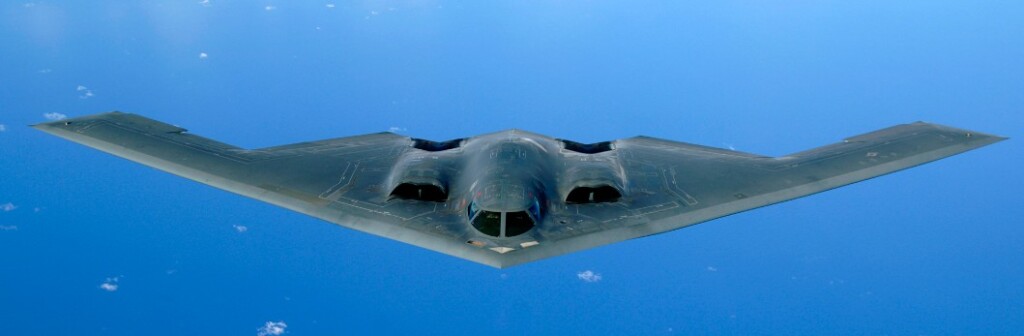
Reports—loudly circulated, quietly unconfirmed—speak of at least 6 B-2 bombers having been despatched to Diego Garcia. Satellite images confirmed their presence on the airbase’s tarmac. At least 10 aerial refuelling tankers (such as KC-135s and KC-10s) were also deployed to Diego Garcia and linked up with the bombers during their long-range missions, indicating sustained operational capability in the region. The message is not subtle. It is meant to be read in Tehran, Tel Aviv, and every Gulf capital whose survival depends on American reassurance.
The B-2 is not just a bomber; it is a theological statement. It exists to project inevitability. To say: we can reach anyone, anywhere, at will. But omnipotence, like deterrence, only functions if believed—and belief erodes with every war that fails to end as advertised.
Yes, at a purely theoretical level, stealth bombers combined with ISR dominance and precision munitions can eliminate fixed targets. Yes, leadership decapitation has become the secular sacrament of American warfare. But here is the uncomfortable truth Washington refuses to confront: Iran is not run like a drug cartel.
Removing Ayatollah Khamenei—even assuming perfect intelligence, perfect timing, and perfect execution—is not likely to collapse the Islamic Republic. It is most likely to activate its succession mechanisms, sanctifies retaliation, and converts political conflict into religious obligation. In Tehran’s ideological grammar, martyrdom is not failure. It is authorization.
If the Supreme leader survives—and if he does not
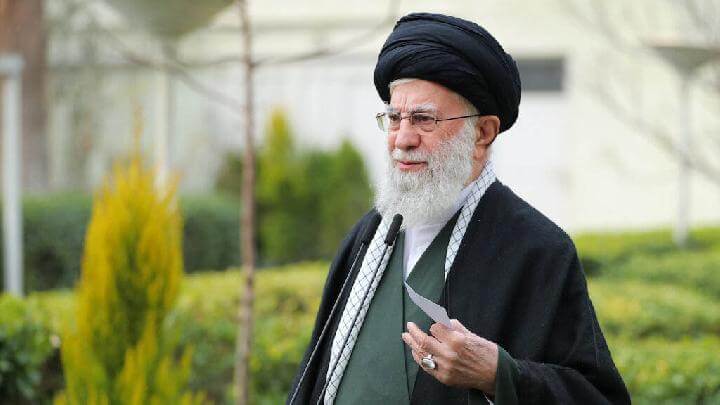
From a purely military point of view, I can grant that the B-2 stealth bombers, as they had very convincingly demonstrated in the earlier strike on Iranian nuclear facilities, can kill Khamenei with their Bunker Busters or other Precision Guided Munitions. However, it is possible only when intelligence from the ground is accurate enough to give his precise location—correct to within a few meters. Trump would not like to cause significant collateral damage.
Such intelligence is not impossible given that traitors do exist everywhere; however, the Iranians are not novices and it can be expected that they would do everything to mislead the spymasters. Please note that the Nazis too had made very practicable plans for the Fuhrer to escape to South America—he himself refused and chose to stay in his Berlin Bunker, deciding to go down with the Thousand Year Reich. We do not know what Khamenei thinks. But, logically, they should keep him well-hidden particularly when they have so much advance notice.
Let us examine all the possible scenarios.
Scenario A: Khamenei Survives: If the Supreme Leader survives a high-profile attempt—or even a rumoured one—the result is not embarrassment. It will result in consolidation.Internal dissent would become treason not rhetorically but legally. Protest movements—real, imagined, or infiltrated—would be swept into a single category: foreign-directed insurrection.
The security state would no longer be on the defensive; it will stand vindicated.Externally, Iran would gain the moral high ground in the Global South. The narrative becomes simple: We were attacked; we endured.Washington, meanwhile, will be forced into escalation or retreat—both disastrous. Escalation risks regional war. Retreat confirms impotence.
Scenario B: Khamenei is Killed: This is the scenario American planners fantasize about in PowerPoint presentations and never discuss honestly in public.The Islamic Republic might not implode. It might very well harden.
Succession could proceed through clerical and institutional channels already rehearsed. The IRGC would gain temporary dominance. Retaliation would become inevitable—not emotional, not rash, but calibrated to restore deterrence.
And crucially: Iran would no longer feel bound by restraint. A line would have been crossed. The game changes categories.
Scenario C: Iran collapses: Khamenei flees to Russia. Reza Pahlavi is installed. The country sinks into chaos if not a Civil War.
Scenario D: Things cool down: The regime ruthlessly crushes the protests and remains in full control. Trump loses locus standi to intervene militarily.
Iran’s preparedness to fight a War
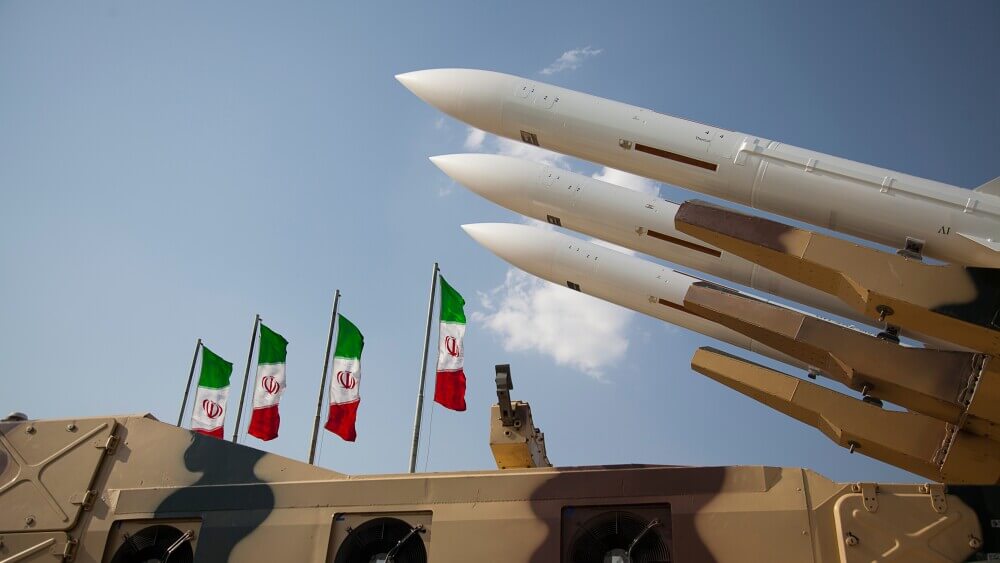
Air Defence: Iran’s air defence capabilities in early 2026 are characterized by a transition from high-quantity, diverse systems to a state of significant degradation following major aerial conflicts in 2024 and 2025. Israeli strikes during the 12-day war in June 2025 and October 2024 reportedly neutralized all four of Iran’s Russian-supplied S-300 PMU2 batteries. These were previously Iran’s most advanced long-range defences. The military has shifted to a mobile wartime alternative using Matla-ul-Fajr VHF radars to maintain some situational awareness.
Presently, they have:
Long-Range Systems:
Bavar-373: An indigenous system Iran claims is comparable to the S-400. It uses Sayyad-4B missiles with a reported range of 300+ km.
Khordad-15: Capable of engaging six targets simultaneously at ranges up to 120 km.
Medium-to-Short Range Systems:
3rd Khordad: Notable for shooting down a U.S. Global Hawk in 2019; it remains a core mobile platform.
Arman (Tactical Sayyad): A newer rapid-deployment system with a 180 km detection range.
Azarakhsh: A low-altitude system developed in early 2024 for point defense against drones and cruise missiles.
Point Defence: Includes the Zoubin (developed in 2024 to counter low-flying drones) and the Majid missile system.
NOTAM: A NOTAM (Notice to Airmen/Aviation) is an aviation bulletin informing pilots, airlines, and aviation authorities about temporary changes to airspace status—closures, hazards, military activity, etc. This is where ordinary readers get confused: NOTAMs are not orders to shoot at aircraft, but they can reveal underlying military intentions. Iran has opened military air corridors from its interior toward the west. These are not civilian restrictions alone—they suggest force repositioning or launch preparations for missiles or unmanned systems. When NOTAMs indicate: restricted airspace, air-defence activation, missile test corridors, or military flight priority, they are not bluffing.
NOTAMs are structured markers of heightened alert and force disposition. Shared western corridors opened means possible missile/ISR vector preparation toward Iraq, Gulf, Israel. Expanded defensive NOTAMs including eastern borders means Iran hedging against flanking routes or indirect strike paths. Closure of national FIRs (Flight Information Region) or partial airspace means elevated air defence readiness, launch posture.
Starlink: Next, social media is abuzz with the question whether Starlink is “the most powerful weapon” of the US and Israel? No—and yes, in a much narrower sense.
No, because: Starlink is not a command-and-control system by itself. It does not magically allow Mossad or CIA to run revolutions like a PlayStation game. It does not replace HUMINT, local networks, logistics, money, or ideology.
Yes, because: It bypasses state-controlled telecom infrastructure. It restores connectivity where regimes rely on blackouts as a control tool. It is resilient, distributed, and hard to fully suppress without serious technical effort.
Starlink is best understood as infrastructure denial denial. Not a weapon— but a way to negate a regime’s favourite weapon: the internet kill-switch. The lesson Iran, Russia, and China took from Ukraine was not: “Starlink wins wars” but: “If you do not plan for Starlink denial, you are strategically naked.”
Has Russia likely transferred counter-Starlink capabilities to Iran as the social media screams? Plausible. Very plausible. Russia has years of experience trying to interfere with Starlink in Ukraine. Russia and Iran do share counter-space and counter-network knowledge.
How things could escalate?
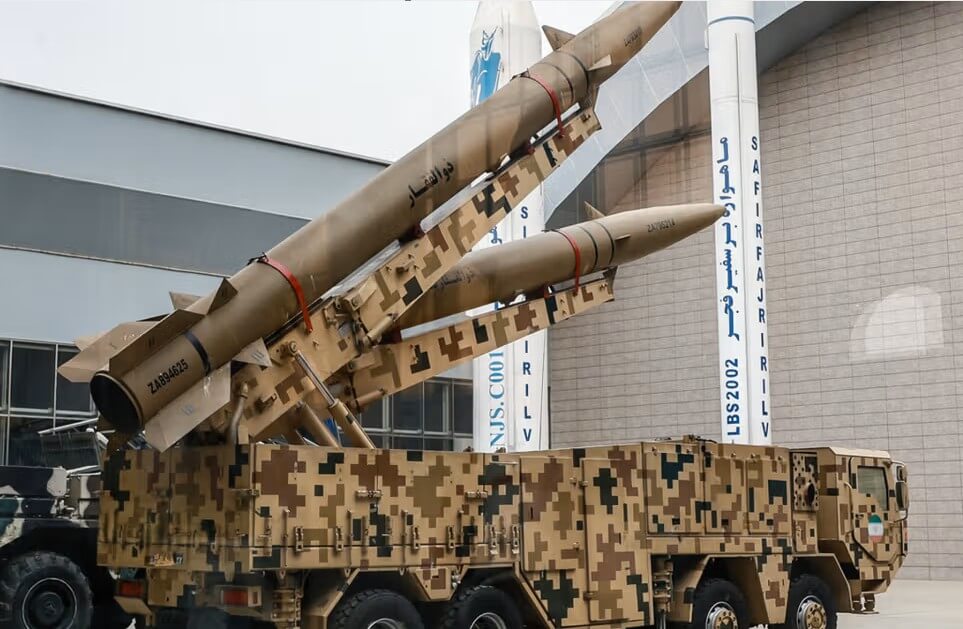
The first assumption to discard is that retaliation would be singular or symmetrical. Iran does not fight wars the way America films them. Iran’s strategy has shifted away from “deterrence by denial” (stopping attacks) to “deterrence by punishment” using its vast ballistic missile arsenal.
Post-2025 war, they’ve shifted toward “anticipatory defence,” as per the Defence Council’s January 2026 statement. This means treating “objective signs of threat”—like US bomber deployments or Israeli F-35 incursions—as triggers for pre-emptive action, rather than waiting for the first strike. It’s a nod to crisis instability: in a “use-it-or-lose-it” world, Tehran doesn’t want to absorb a decapitating blow before responding.
Iran’s Missile Arsenal: For starters, Iran possesses the Middle East’s largest and most diverse missile arsenal, featuring short, medium, and long-range ballistic missiles, emphasizing mobility (solid-fuel), precision, and deterrence with thousands of missiles like the Zolfaghar, Sejjil, and Emad, aiming to cover regional targets (like Israel) and beyond, with a strategic self-imposed range limit of 2,000 km. Many systems, like the solid-fuel Fateh series, are road-mobile (TELs) for quick deployment and concealment. As of 2026, Iran maintains the largest and most diverse missile arsenal in the Middle East, estimated at over 3,000 ballistic missiles. Following the high-intensity Iran-Israel War of 2025, the arsenal has undergone rapid modernization with a focus on precision, survivability, and bypassing advanced air defences.
Iran stores and launches its arsenal from vast underground bases and hardened silos, some located up to 500 meters deep. Despite damage to key facilities like the Shahid Hemmat Industrial Group (SHIG) during 2025 airstrikes, Iran has a demonstrated capacity to produce approximately 50 missiles per month and is actively rebuilding its stockpiles.
If Iranian missiles do fly toward Tel Aviv, they will not do so alone. They will arrive amid cyber disruptions, maritime harassment, proxy activation, and legal warfare in international forums. The objective would not be annihilation but saturation—psychological, political, and strategic.
Israel’s much-celebrated missile defences are formidable—but not infinite. They are designed to intercept some threats some of the time, not to erase vulnerability entirely. Every interception is expensive. Every leak is politically devastating.
American bases across the region—Qatar, Bahrain, Iraq, Syria—are visible, fixed, and politically sensitive. Even limited attacks would force Washington into impossible choices: escalate against Iran directly or absorb humiliation. Neither option preserves credibility.
Firing missiles is easy. However, in the end, it would all depend on how much damage the Iranian regime is prepared to sustain.
Oil, insurance, and the fragility of “stability”
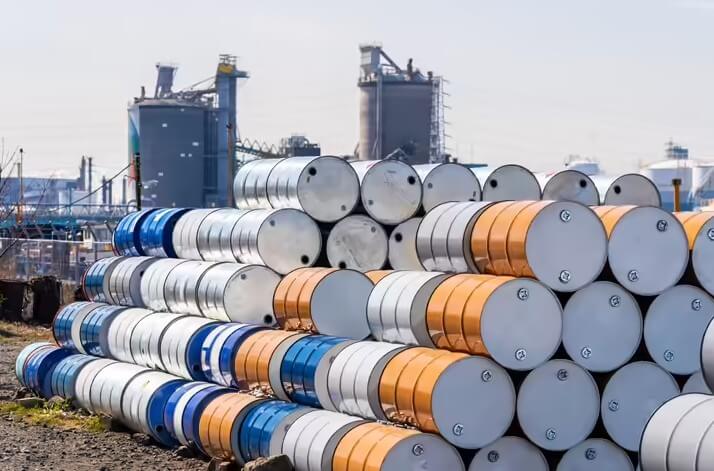
Military analysts often forget that wars are financed by markets long before they are fought by soldiers. Even limited conflict in the Gulf sends insurance premiums soaring. Shipping hesitates. Energy markets panic—not because supply disappears but because predictability does.
Iran does not need to close the Strait of Hormuz to weaponize it. It merely needs to remind the world that closure is possible. The irony is exquisite: America, which claims to be defending global stability, repeatedly chooses actions that destabilize the very systems it depends upon.
Real question Trump refuses to ask, much less answer
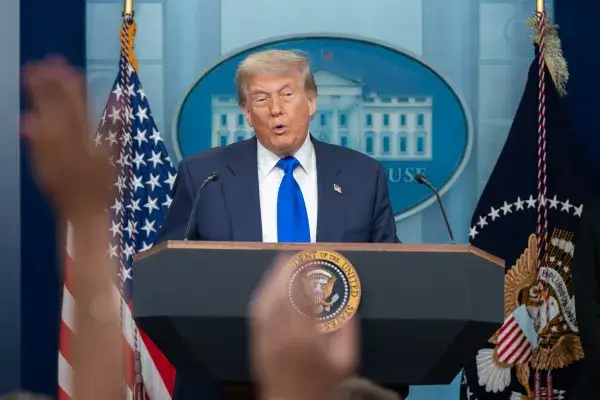
“We’re locked and loaded,” Trump bellowed from Air Force One, claiming Iranian leaders called him to negotiate (Iran denies it, of course—classic he-said, she-said diplomacy). Trump’s mulling “very strong options”: military strikes on Tehran sites, cyber ops to juice the protests, or maybe just deploying a carrier strike group to loom menacingly in the Gulf. And get this—he’s even floating chats with Elon Musk about restoring Iran’s internet via Starlink.
The real question is not whether Iran can be destabilized. It can—of course. The question is whether the United States can control what follows. History suggests otherwise. They could not ensure peace and stability even in an abjectly defeated Iraq—the insurgency that resulted took a heavy toll. The bombed every inch of Afghanistan and yet had to exit in utter ignominy after 20 years.
Iran is not a problem to be solved. It is a reality to be reckoned with. Treating it as a puzzle box for intelligence agencies may satisfy institutional vanity—but it risks igniting a regional war whose first casualty will be the illusion of American omnipotence. And illusions, once shattered, do not regenerate.
Those who believe they are writing the script often discover—too late—that they are merely actors in a much older tragedy, one the closing scene of which does not bother about their original intentions. Empires rarely fail because they lose wars outright. They fail because they initiate conflicts whose consequences they no longer understand.