
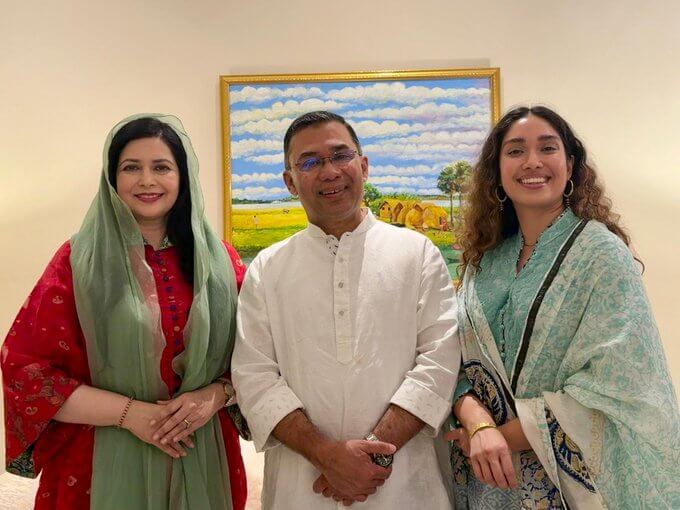
Bangladesh’s fugitive ‘Dark Prince’ Tarique Rahman is back after spending 17 years in the UK. Legally, Tarique was a fugitive, having fled from the country even as he was imprisoned by the army and was facing prosecution in several other cases. He was given the soubriquet of ‘Dark Prince’ by the then US Charge d’Affaires to Bangladesh, Judith A. Chammas, in a diplomatic cable to describe his alleged corrupt activities and immense, unconstitutional power during his mother Khaleda Zia’s tenure as prime minister from 2001 to 2006. He was the de facto power centre, operating from an office known as “Hawa Bhaban”, a parallel power structure to the official Prime Minister’s Office.
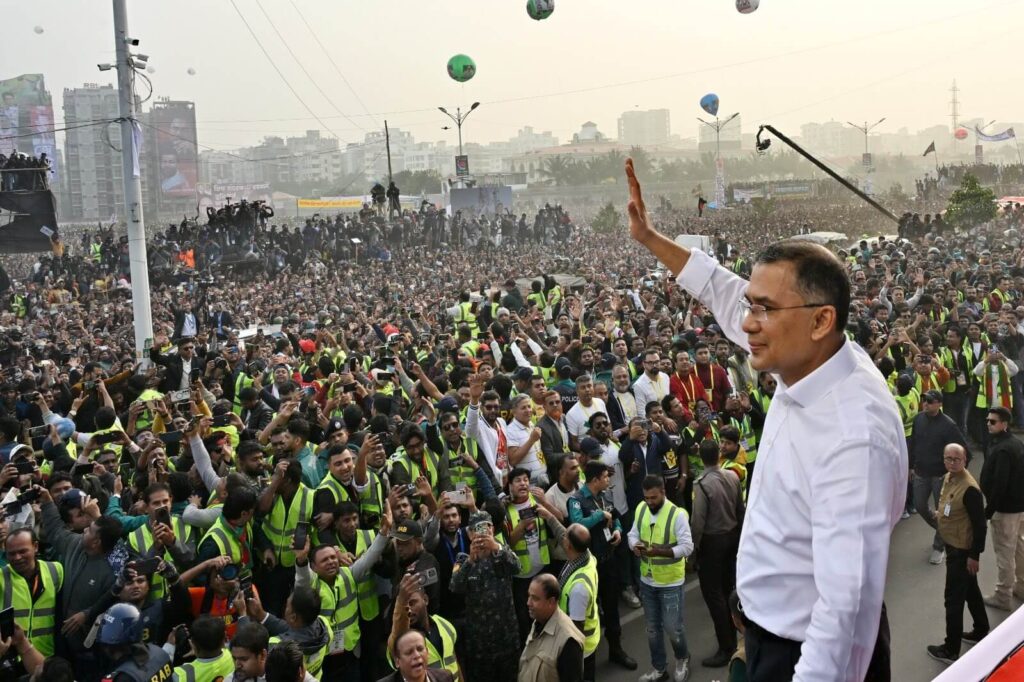
He returned on December 25 and in a style so very typical of politicians of the Indian sub-continent, expert in making fool of the people by top-notch gimmickry, removed his shoes and walked barefoot on Bangladeshi soil as party supporters gathered in large numbers to welcome him home. He also reminded people that he was back after exactly 6,314 days. His mother is on life support in Dhaka’s Evercare Hospital.
The Curse of Dynastic Politics
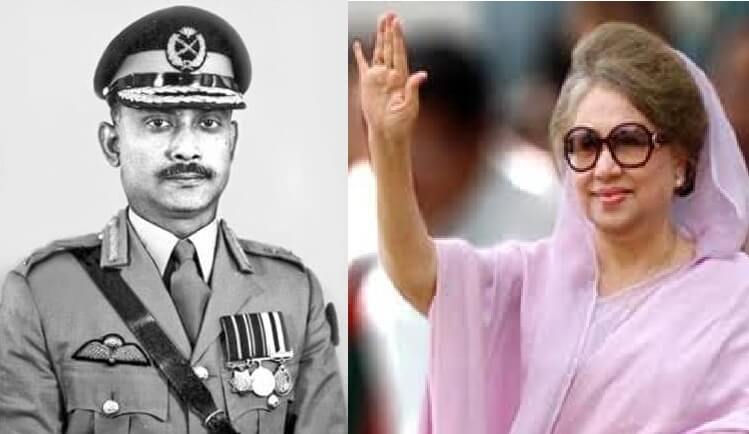
Tarique is the son of Lt. Gen. Zia-ur-Rahman, the founder of BNP, and Begum Khaleda Zia. He was not directly involved in the physical killings during the August 15, 1975 coup, but evidence and subsequent actions left no doubt that he was aware of the plot and was a major beneficiary of the assassination of Sheikh Mujibur Rahman. US embassy cables described Tarique as “phenomenally corrupt” and a “symbol of kleptocratic government and violent politics”.
On August 21, 2004, an Awami League rally where Hasina, the then opposition leader, was speaking was targeted. As many as 13 grenades were thrown. Hasina survived the attack but 18 people were killed and nearly 500 injured. Rahman had been living in London in exile since his conviction in said case. the court called the attack a “well-orchestrated plan, executed through abuse of state power”. Rahman has been sentenced in absentia in various cases to jail terms ranging from 3 years to lifetime—life in the grenade attack case; 10-year jail in Zia Orphanage Trust graft case, and seven years in jail in money laundering case, etc. His physician wife was also convicted. He had been allowed to leave Bangladesh on September 11, 2008 after spending 18 months in jail during the military-backed caretaker government that ruled Bangladesh between 2007 and 2009. It was widely reported that his release, departure and safety abroad were ‘arranged’ and conditional on him agreeing to stay out of politics.
It may be recalled that Hasina was also allowed to flee under a similar arrangement—the army and the air force provided her the helicopter and the C-130 Hercules transport aircraft to enable her to fly out to India. That was a dead giveaway of a ‘mutually agreed upon arrangement’ because had the army not intervened according to the pre-written script and taken her out safely, she would certainly have been lynched by the mob. This is a characteristic feature of Third World countries where corrupt politicians take care of each other by mutual understanding. In Pakistan too, it was Gen. Zia-ul-Haq who hanged Bhutto. Nawaz Sharif, on the other hand, allowed Gen. Musharraf facing treason charges to leave the country,
On 7 January 2015, a court had issued an interim order banning the publication and broadcasting of Rahman’s speeches in the media. It was blatantly violated in July 2023 when his speech was played over loudspeaker and the courts chose to keep mum, clearly suggesting the way things were shaping up.
Declared a ‘fugitive’ in Bangladesh, Rahman faced over a dozen cases, including for corruption. In May 2023, Bangladesh’s Dhaka Tribune ran a three-part series “on patronisation of bribery and financial irregularities during the 2001-06 period (BNP tenure) based on documentary evidence”, where it also referred to Rahman as the “Dark Prince” and delved into allegations of corruption as well as media intimidation.
However, as it could be expected of a corrupt Third World country, he was acquitted of all major cases in 2024 by the Bangladeshi courts, clearing the way for his return to the country’s political landscape. Bangladesh Supreme Court’s appellate division affirmed the high court ruling clearing Tarique and others in the case less than a month after the Hasina government fell
Widely believed to be an ISI-CIA agent
It is a matter of common sense; without some ‘protection’ by forces hostile to the Awami League government, there was no way he could live with complete impunity in England for close to two decades. Was the Bangladesh government so impotent that they could not get him home to face the law or get him harmed there if they wished so?
Deccan Herald and Economic Times have reported that, a few months before the August 2024 protests, Tarique Rahman had held meetings with the ISI in a Gulf country where a plan was hatched to organise a campaign for ousting the Sheikh Hasina government. In the run up to the fall of the Hasina government, Rahman became active on social media platform X, and encouraged the movement to oust the elected government through street power and violence. Rahman also played an important role in the anti-India campaign, ‘India Out’ just after Hasina returned to power in the January elections. The movement not only aimed at boycotting Indian goods, but also attempted to gain ground against Hasina and appease hardliners like Jamaat-E-Islami and Hefazat-e-Islam.
That he has always been in contact with the US/CIA is also evident from the fact that in August 2024, Jon Danilowicz, former deputy chief of the US Mission to Bangladesh between 2012 and 2014, rooted for the return of Rahman. In a classic Freudian slip, in a post on X, he wrote, “Bangladesh should allow Tarique Rahman to return home, deal with his legal issues, see his mother, and engage in political activity if he so chooses. His future role (if any) should be determined by his party and the voters when elections are held. No more, no less.”
The Likely Electoral Battleground
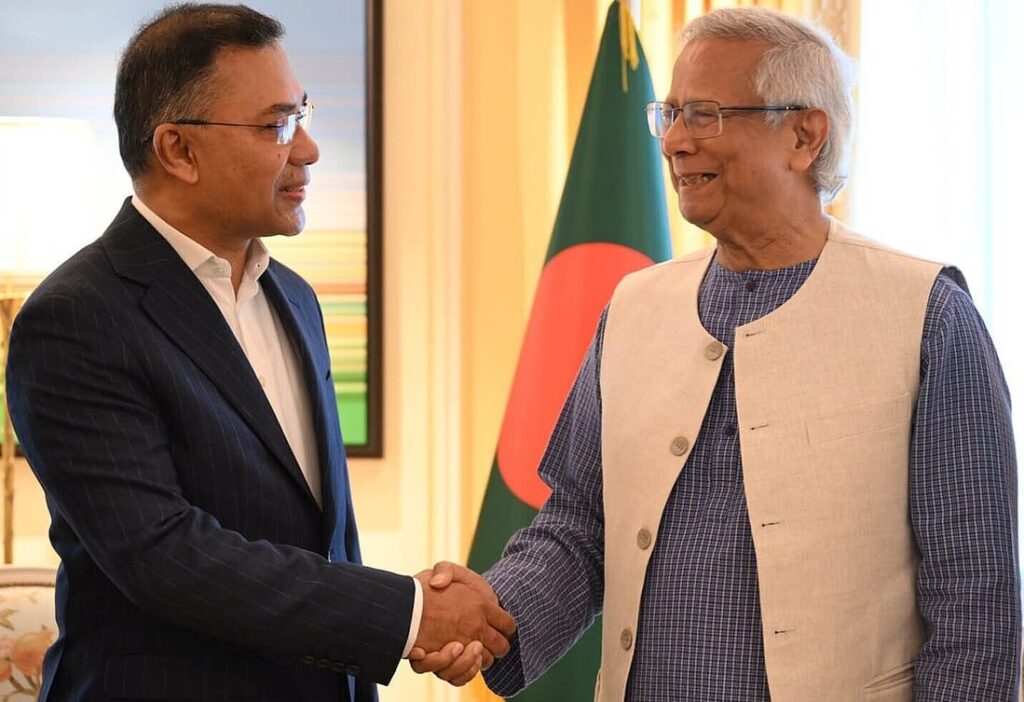
Jamaat has shared power with the BNP in the past and, in the current communally surcharged situation, they can logically be expected to be much more assertive. In early December, it was reported by Al Jazeera that the decades-long alliance with the Jamaat-e-Islami, is now breaking. On the other hand, or all you know, many in the BNP itself could be sympathizing with the Jamaat. Jamaat has reportedly formed alliance with 8 Islamic parties so that Islamist vote doesn’t get divided.
A December poll by a United States-based nonprofit, the International Republican Institute (IRI), showed the BNP leading with 30 percent support, followed by the Jamaat-e-Islami with 26 percent. Bangladesh also follows a first-past-the-post system in its elections, so in a multiparty contest, candidates do not need a majority to win.
The National Citizen Party (NCP), formed by a faction of student leaders after the uprising, has been struggling to convert street power into electoral strength due to weak organisation and limited funds. The party trails far behind the BNP, with just 6 percent support, according to the IRI poll. Reportedly, Jamaat is trying to forge an alliance with them.
With Hasina’s Awami League barred from participation in the election, Rahman’s BNP looks poised in a favourable electoral landscape for the post-Yunus period in Bangladesh.
Given the close call, I would agree that BNP victory, though very likely, would not weaken the electoral or the street power of the Jamaat. Given his links with the ISI, Rahman, even if he wins the election and forms the government, might not be able to change the relative power equation with the Jamaat.
Anti-Hindu, Anti-India Scenario

NDTV reports that Hindus in Bangladesh’s troubled capital Dhaka in an exclusive conversation with NDTV’s Ankit Tyagi, who is at ground zero, narrated the horrors they faced and concerns they have as attacks on them by radical Islamists, a majority of them encouraged by the Jamaat-e-Islami, rise. “The Islamists are lying to the outside world that they are going after Awami League supporters and it’s purely political. But that’s a smokescreen to run their campaign against minorities in this country…They said they are attacking us because we are Hindus, not because we support the Bangladesh Awami League.”
Incidentally, Tarique’s anti-Hindu stance is well-known. In 2023, on Facebook live, Tarique Rehman spewed venom against Hindus, saying, “Scriptures of the Hindu religion do not offer any moral teaching — all the religious scriptures are porn scripts.”
He was also slated to visit the grave of the slain Inquilab Mancha leader Sharif Osman Hadi, a virulent anti-India voice in Bangladesh who was gunned down by masked gunmen about a week ago. That gives an indication of his position with respect to India. His statement, “I have a plan for the people of my country. I have a plan for my country” can be dismissed as pure rhetoric.
As for his anti-India past, India Today reports that Hawa Bhaban was at the centre of one of South Asia’s most audacious arms-smuggling operations. In early 2004, with the active help of intelligence agencies and government officials, it facilitated the import of a shipload of weapons through Chittagong for India’s separatist group, ULFA. US and Bangladeshi officials alleged that terror groups enjoyed political protection. PMO Principal Secretary Siddiqui told US diplomats that Tarique had links with Jama’atul Mujahideen Bangladesh (JMB) and Jagrata Muslim Janata Bangladesh (JMJB), and that phone calls from Hawa Bhaban led to the release of terrorists. Mufti Abdul Hannan, the chief of the Harkat-ul-Jihad-al Islami Bangladesh (HuJI-B) terrorist group testified in court that he attended a meeting at Hawa Bhaban where Tarique instructed ministers to provide complete support for terror operations, including the 2004 grenade attack on Sheikh Hasina.
How ISI is mobilizing a Radicalized Armed Force in Bangladesh
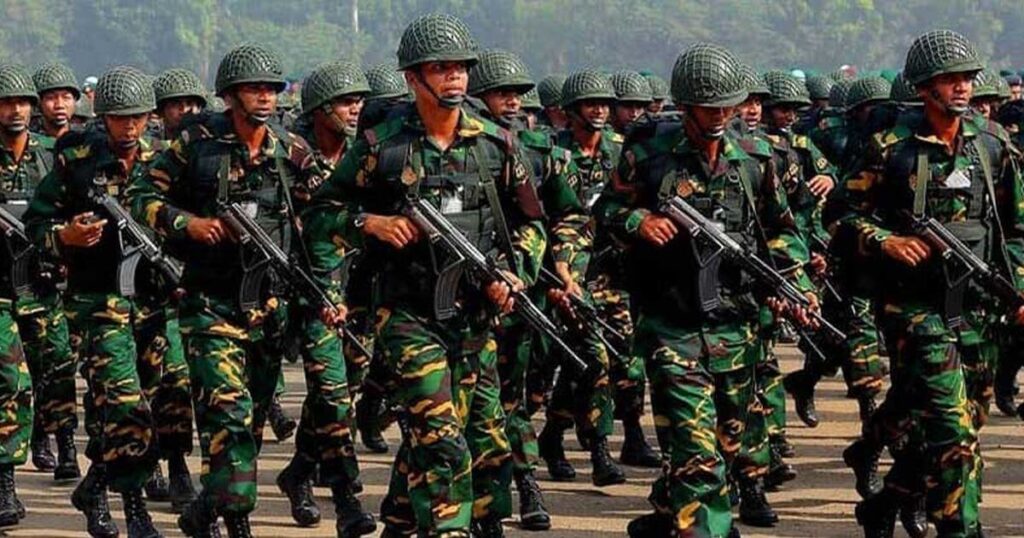
IANS has reported on December 26 that a radical National Armed Reserve (NAR) is set to come up in Bangladesh. The unit would comprise over 8,000 radicalised youth of Bangladesh, and the aim would be to control the country by imposing the Sharia law. This plan was set in motion by the ISI and in run-up to its formation; several meetings have already taken place. The plan by Pakistan is to have both a radical army and a police wing. The process of identifying persons in Bangladesh who have a complete Pakistan tilt and are highly radicalised has already begun. ISI has reportedly picked Jamaat heir Brig. Abdullahil Aman Azmi (Retd) to oversee the radical armed force in Bangladesh. He is a highly radicalised man and the son of the late Jamaat-e-Islami emir, Golam Azam. He is one of the key figures top Pakistani officials have been meeting with.
ISI’s plan is to first avoid the election by some sinister move before February 2026. However, if at all they are obliged to hold it so as to provide the CIA the cover of an elected government for its operations, it will do everything to ensure that the government remains a puppet and the real power is wielded by the army and the NAR, just as it is in Pakistan.
Finally, who cares who wins in Bangladesh?
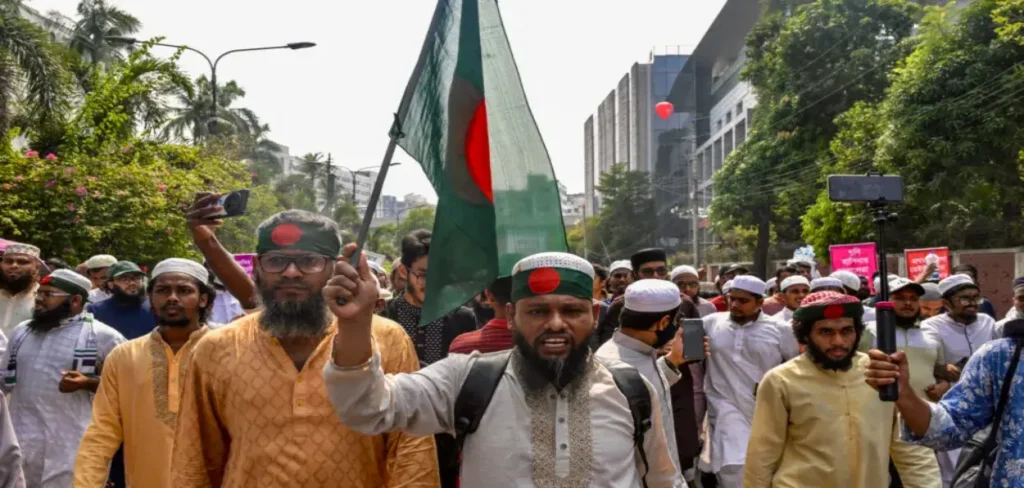
Because, take it from me, whoever wins, will be anti-India only. Who could imagine that a timid-looking Nobel Laureate Yunus would turn out to be a CIA-ISI agent! As I have been emphasizing in my previous articles, the 2024 coup had all the trappings of a CIA-ISI engineered coup.
He is not fool enough to admit his CIA-ISI connections openly but, at the same time, he was inadvertent enough to admit that the 2024 protests were not spontaneous expression of the frustration of the students. In September 2024, at the Clinton Global Initiative on the side-lines of the United Nations General Assembly, Yunus had introduced key figures from the ‘Monsoon Revolution’ which led to the overthrow of the Awami League government, that had been in power for 16 years. Gesturing towards Mahfuz Alam, Yunus said he was the “brain behind the whole revolution”, and that the “revolution” was “meticulously designed”. That was a dead giveaway. Spontaneous protest are not meticulously designed or planned. He also described the movement as a well-organized and disciplined uprising, with no identifiable leader to be singled out or arrested, which had made it more powerful. That was another dead giveaway. Spontaneous protests or uprisings, by their very nature, tend to haphazard and chaotic. If they are well-organized, it necessarily means that higher level and professional minds were behind them—masterminding, training, funding, directing and ultimately orchestrating the whole business. This old fool thought that old analysts of covert intelligence operations would not be able to spot that faux pas!
In the first place, it is too early to say whether elections would be held as promised. Many things, such as large-scale violence or assassinations might take place by then—enough to provide a credible pretext for him to postpone it. It all depends how his ‘handlers’ in CIA-ISI assess the situation and the possibility of installing a ‘suitable’ PM, who does their bidding. Second, even if they are held, they would be, with the Awami League’s activities banned and its registration cancelled by the Election Commission effectively barring the party from elections, farcical anyway.
Indian Diplomats can never get over the ‘UPSC Syndrome’
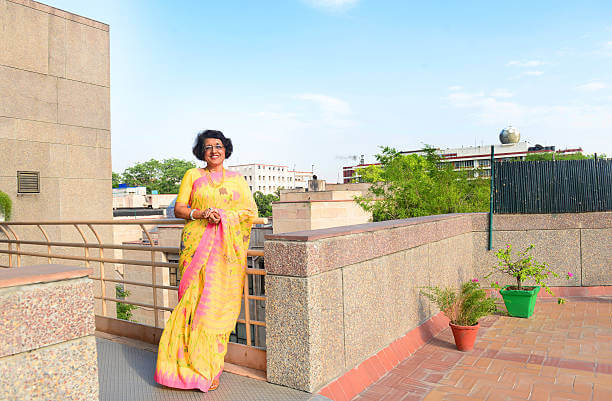
In an Indian Express article (print edition titled ‘A poll win for Tarique Rahman is not a forgone conclusion’ former diplomat Veena Sikri writes “India needs to do two things. First is to send out the message that we have goodwill for the people of Bangladesh. New Delhi has already been doing that by continuing aid and trade where possible and keeping communication channels open. Very recently, we agreed to export one more tranche of 50,000 metric tonnes of rice. And we have to keep talking to all principal actors in the country. Second is to insist on a free, fair and inclusive election, in which all parties, including Awami League, can participate, because only then can the people of Bangladesh truly exercise their choice.”
That was a classic illustration of the fact that most civil servants can never get over the ‘UPSC Syndrome’—they can never be clear or categorical; they try to please everybody, and suffer from incurable wishful thinking—you can almost hear boarding school hostel kids praying under the watchful eyes of a stern matron, “O Lord, let there be an end to conflicts, healing for hearts, and let love, compassion, and justice prevail in the world.” It reeks so badly of the civil services coaching industry. If the country has reached this stage of rampant, nation-wide intellectual bankruptcy, much of the credit goes to such civil servants.

Who is such a fool as to delude himself into believing that just by continuing aid and trade, Bangladesh would be so overcome by sheer gratitude that it would be friendly with India, protect the minority Hindus at all costs, rise above the ties of religion and dump Pakistan as well as its domestic Islamists, and generally be a good boy of the class. By God, who thinks that nations are bound by a divine covenant to be moral? Is there a single example in history when morality prevailed over the considerations of realpolitik?
Talking to all the principal actors is one thing; the ability to influence them decisively as per your needs is quite another. Right now, it is Pakistan which is demonstrating to have that ability.
Then to ‘insist on a free, fair and inclusive election, in which all parties, including Awami League, can participate’ is the icing on the cake of monumental stupidity. You ‘insist’ and they will oblige—looks like Sikri takes Bangladesh to be an obedient primary school kid; the teacher asks the student to stand up and the student obeys. Awami League has been barred under a sinister design—the design will not crack merely because someone insists on it. Wishful thinking has never accomplished anything anywhere in the world.
The Prognosis
As far as Bangladesh is concerned, the undeniable fact is that we have summarily lost the strategic game. Lights out, game over—it’s irretrievably lost. The strategic blunder which Mrs. Indira Gandhi committed in her megalomania is now bearing ripe, succulent fruits, which the Pakistanis are too happy to plunder at will!
We lost every single point of the game. Bangladesh turned out to be neither friendly to India, nor hostile to Pakistan, nor kind to Hindus, nor able to restrain anti-India Islamic fundamentalist forces, nor averse to allowing the ISI-CIA to indulge in full play on its soil.
Granted, at this moment Bangladesh poses no significant military threat to India but the strategic situation could change dramatically if the Pakistanis (or the Chinese) were to be allowed to use their airfields during a war. Keep that in mind.