


For decades, the global commentariat treated American self-interest as a moral defect, if not a crime outright. The new US National Security Strategy treats it as a duty, first and foremost—and that honesty has triggered panic, not debate. Recently, Indian Express carried an article titled “MAGA agenda is now America’s global strategy”. In the following, I will take apart the pathetic whining in that article. C. Raja Mohan speaks of the US National Security Strategy (NSS) of 2025 like a Delhi traffic cop pulling over a car that jumped the traffic signal. And, the crime in this case—America daring to put itself first! The culprit—Donald J. Trump, the bogeyman who refuses to play Atlas (of Greek mythology), hoisting the world on his shoulders while the rest of us freeload!
The main points in the Express article relevant to this critique are as follows:
- The US National Security Strategy 2025 (NSS-2025) represents a sharp ideological break from post–Cold War American globalism.
- The strategy reflects the institutionalisation of the “America First/ MAGA” worldview in official US doctrine.
- The new US posture is characterised by: Restraint in global commitments; Rejection of liberal universalism; Emphasis on sovereignty and nationalism; and Economic nationalism as a security doctrine.
- The NSS abandons the traditional US role as global system-builder and instead treats power in transactional terms.
- The article suggests that the US might encourage right-wing populist movements in Europe to restore sovereignty and weaken liberal supra-nationalism.
SUMMARY OF THE MAIN POINTS OF THE US NATIONAL SECURITY STRATEGY (NSS) 2025

The 2025 NSS, released by the Trump administration on December 4, 2025, outlines an “America First” foreign policy vision. It emphasizes pragmatic realism, non-interventionism, economic nationalism, and burden-sharing with allies, while rejecting post-Cold War global dominance and prioritizing US prosperity and security. It outlines a coherent strategy to ensure America remains the “world’s strongest, richest, most powerful, and most successful country,” focusing on connecting ends (what the USA wants) with means (available resources). It marks a shift from multilateralism to transactional realism, integrating executive actions like EOs on borders/hiring for enforcement.
What Should the US Want?

Vital National Interests: Prioritizes full border control and immigration system overhaul to end the “era of mass migration”; asserts US pre-eminence in the Western Hemisphere via a “Trump Corollary” to the Monroe Doctrine, emphasizing sovereignty and territorial integrity.
Global Posture: Rejects “permanent American domination” as undesirable and impossible; favours regional balances of power over unilateral interventions, while maintaining nuclear deterrence and preventing hostile powers from dominating key regions.
Economic and Domestic Focus: Seeks the “world’s most powerful, lethal, and technologically advanced military,” the “most dynamic, most innovative, and most advanced economy,” and enhanced soft power for US gain, including reindustrialization and securing critical minerals/resources.
Means to Achieve Objectives
Institutional Reforms: Reinforces “culture of competence” by rooting out “DEI and other discriminatory practices” that “degrade institutions”; promotes merit-based hiring, workforce optimization, and efficiency in federal agencies.
Military and Diplomatic Tools: Leverages “unconventional diplomacy, America’s military might, and economic leverage” to extinguish conflicts surgically; integrates military missions for border security.
Legal and Accountability Measures: Expands “internal subversion” as a threat, enabling actions against perceived domestic threats; directs sanctions, security clearance reviews, and contract terminations for misconduct impacting national security.
The Strategy: Principles

America First Doctrine: Described as “pragmatic without being ‘pragmatist,’ realistic without being ‘realist,’ principled without being ‘idealistic,’ muscular without being ‘hawkish,’ and restrained without being ‘dovish’”; motivated by what “works for America,” not ideology.
Focused National Interest and Peace through Strength: Limits engagements to direct US benefits; emphasizes deterrence, prosperity, and avoiding unnecessary conflicts while asserting influence through incentives and penalties.
Burden-Sharing and Non-Interventionism: Ends US role as “Atlas” propping up the world; demands allies increase defence spending (e.g., NATO’s 5% GDP pledge by 2035) and share strategic loads; predisposed to non-intervention unless vital interests are at stake.
The Strategy: Priorities
Secure Homeland and End Mass Migration: Deploys military for border operations; combats drug trafficking and transnational threats, particularly from Venezuela as a “nexus” for gangs, Iran/Russia influence, and migration.
Protect Core Rights and Liberties: Affirms government’s role in securing “God-given natural rights” of citizens; opposes censorship, migration policies eroding identities, and transnational bodies undermining sovereignty.
Economic Dominance: Pursues energy, industrial, and technological superiority; uses tariffs and trade rebalancing to counter unfair relationships; expands commercial opportunities abroad without imposing democratic reforms.
Regional Stability and Deterrence: Prevents conflicts from escalating globally; focuses on “surgically extinguishing embers” of division, especially between nuclear powers.
The Strategy: Regional Approaches

Western Hemisphere (Top Priority): Reinforces Monroe Doctrine for “pre-eminence”; shifts military assets here from declining theatres (e.g., Middle East); enlists partners to control migration/drugs, rewards aligned governments, and targets Venezuela/Maduro regime for regime change speculation.
Europe and NATO: Criticizes EU/transnational bodies for “civilizational erasure” via migration, censorship, low birth-rates, and lost identities; urges “Promoting European Greatness” through sovereignty reclamation and 5% GDP defence spending; manages Russia-Ukraine via “new modus vivendi” and burden-shifting.
Indo-Pacific and China: Frames as economic “ultimate stakes”; seeks “mutually advantageous” trade rebalance while deterring Taiwan Strait aggression, supporting freedom of navigation/South China Sea, and Quad alliances; demands burden-sharing from First Island Chain states (e.g., port access, higher spending).
Middle East: De-prioritizes as no longer dominant; ensures Israel’s security, protects energy/shipping lanes; views as future investment hub (e.g., AI) rather than conflict zone; uses “unconventional diplomacy” for stability.
Africa and Global South: Refutes “liberal ideology”; cultivates pragmatic partners for commercial/security ties; focuses on countering malign influences without promoting reforms.
AMERICA FIRST MEANS AMERICA ONLY OWES ITSELF—AND THAT IS NOT A SIN
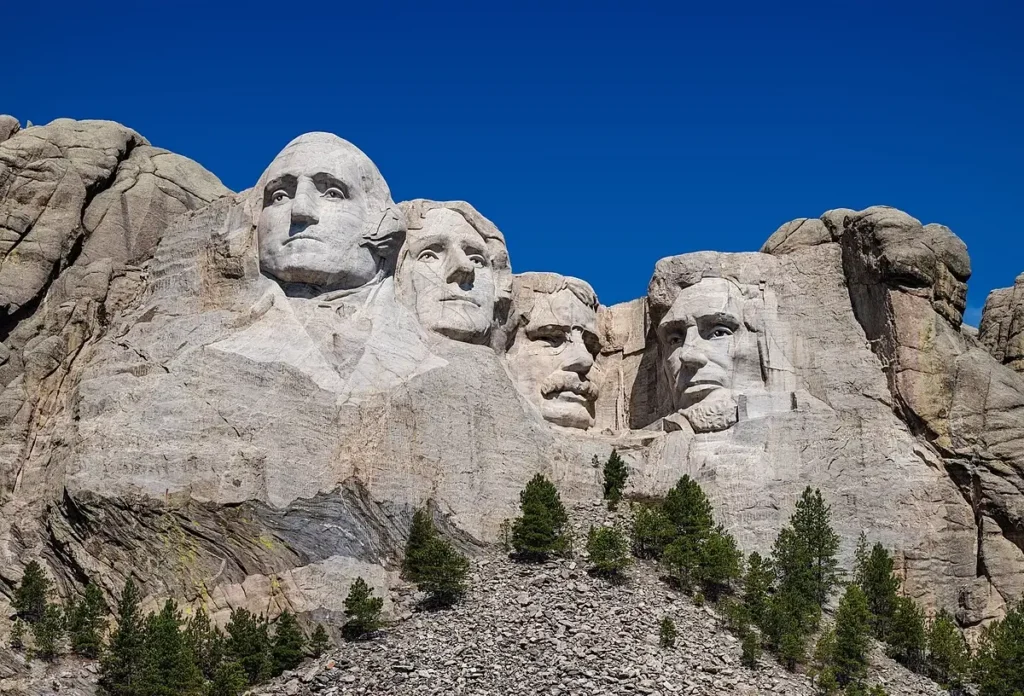
Ever since the Second World War, people of the world seem to be under a delusion that the USA, simply because it was ‘the’ superpower, must act as the ‘guardian of the world’ and must be morally responsible for the well-being of the world. It was taken for granted that the USA must behave like a guilt-ridden empire in permanent repentance; that it must apologise before acting; that it must consult the emotional temperature of every foreign capital before protecting its own factories, borders, workers, and soldiers; that its national interest must be processed through the moral approval committees of Third World countries, and the editorial rooms of cosmopolitan think tanks before being considered legitimate.
By God, USA was never elected the world’s babysitter. It had never signed a global contract promising to rescue every failing state, subsidise every parasitic economy, or sacrifice its own working class so that foreign “partners” or H-1B visa holders could free-ride under the banner of a so-called liberal order.
Coming to the main points of the Express article summarised above, the simplest and most straightforward response is: so what? What’s your problem? You expect the USA to take dictation from a Third World country or the rest of the world for deciding upon its global strategy?
When the US National Security Strategy finally states the obvious—that America exists for Americans—the horror among professional globalists is almost theatrical. “How dare they centre themselves?” they whisper, clutching their Atlantic pearls. How can a nation so valuable to the liberal order have the audacity to behave like, well, a nation? The outrage is not about policy. It is about heresy, because MAGA is heresy to the high priests of post–Cold War liberal theology.
Mohan projects the NSS as some sort of moral felony—a “moment of adjustment” that’s really just code for America committing the sin of self-preservation. He accuses the strategy of blending “political, economic, and national security elements” into a “four-dimensional nationalism” that’s somehow biased against the poor of the world. As if the USA, the engine of post-World War II prosperity that bled trillions to rebuild Europe and Asia, owes the world a veto over its tariffs, its borders, or its bombers. Mohan laments about America’s “rejection of liberal universalism,” as if that’s a bug, not a feature.
Putting America first is not a crime. It’s a constitutional right. And as MAGA means making America great again—economically bulletproof, militarily unassailable, and free from the shackles of globalist guilt—Trump and his NSS are not just right; they’re the last sane bulwark against a parasitic world that’s spent decades picking America’s pockets.
WHAT THE CRITICS GOT WRONG?

Mohan treats MAGA like a moral misdemeanour, tut-tutting about how Trump’s “willingness to welcome Russian influence in Europe” is some geopolitical faux pas. Grow a spine, dear. America isn’t “committing a moral crime” by insisting on its sovereignty; it’s exercising the very right every nation claims when it suits them. When America says, “Enough with the trade deficits that hollowed out Ohio steel towns,” on what grounds can you accuse them?
Mohan speaks in “accusatory tones” because he can’t fathom a superpower without a saviour complex. Trump is as straightforward as one could be: Maximize our prosperity and power. Economic well-being? MAGA’s tariffs and “Department of Government Efficiency” have already culled federal fat, redirecting billions to infrastructure that employs Americans, not Bangladeshis. Military power? The NSS’s border military missions—repelling invasions via Roosevelt Reservation lands—signal they’re done with half-measures. No more “modulating policies to pamper” the Third World’s narratives.
MAGA isn’t about isolation; it’s about integration on their terms. Mohan is still marinated in the Davos delusion: that America bears some divine “moral responsibility for the well-being of the world.” Poppycock.
While Mohan frets over “dynamic power shifts” and America’s “natural view of reconciliation toward Beijing,” the strategy coolly positions the Indo-Pacific as a “dyadic” arena—us vs. them—where partners get to play, but only if they pull weight.
Mohan’s article whimpers about America’s “rejection of liberal universalism that discourages burden-sharing,” as if expecting the USA to modulate policies for others’ comfort is anything but entitlement. By God, the world doesn’t “expect” America to behave a certain way; it demands it, and then calls it selfish when they say no.
Launch a tariff war? Damn right. It’s within their rights under WTO rules they helped write—and if it forces supply chains home from Shenzhen to Scranton, praise the Lord.
Mohan accuses the NSS of being “notably harsh on Europe’s liberal politics,” urging sovereignty reclamation. Good! Europe’s spent decades lecturing America on climate while freeloading on NATO. The strategy’s call to “overturn the continent’s current political order” isn’t malice; it’s tough love. Restore traditional values? In a world of woke export and migrant waves, that’s not regression—it’s revival.
The USA seeks alliances, but not alliances of fools. The NSS backs the Quad as a “non-treaty” bulwark, acknowledging their “greater freedom of action” while demanding “greater responsibility for spending and sharing strategic burdens.” Mohan sees this as America shirking; I see it as genius. The strategy’s “inherent tension” between economic needs (Beijing’s factories) and strategic ones (deterring expansionism) isn’t a flaw—it’s realism.
Trump welcomes a “new modus vivendi” with Russia in Europe to end the Ukraine quagmire? Brilliant. It frees resources for the real fight: containing Xi’s wolf warriors in the South China Sea. Mohan portrays Asia as “no longer framed as an inclusion but a strategic bulwark.” Exactly! Inclusion for what? The NSS is clear: Engage steadily, or get left behind.
And here’s where Mohan’s accusatory tone curdles into comedy. He writes as if America’s “isolationist strategy vis-à-vis Eurasia” is a betrayal of some sacred pact. Isolationist? The NSS directs DOD, DHS, and Interior to coordinate on border ops, extends National Guard activations under Title 32, and integrates nuclear security authorizations. That’s not retreat; that’s fortification.
While Mohan pines for the “global order” America “sustains,” the strategy flips the script: We’re done being the Atlas holding up the world. Unwilling to “be the Atlas,” yes—because Atlas got crushed, and we’re not suckers.
Critics like Mohan peddle the canard that MAGA invites chaos. Nonsense. Trump’s first term: No new wars, Abraham Accords, ISIS crushed. The NSS extends that—border sealed, alliances transactional, economy roaring. “If the USA launches a tariff war, so be it”. Amen. It’s not aggression; it’s arithmetic. China’s $500 billion surplus with USA; that’s theft, not trade. Retaliate, and watch USA manufacturing boom—jobs for American kids, not theirs. Mohan warns of “tension” in USA-China ties; I say bring it. The strategy’s “strategic need to deter China’s expansionism” means arming AUKUS subs, not appeasing with TikTok deals.
AMERICA BORN AGAIN BY THE NSS

The new strategic doctrine does not commit a crime. It merely commits a confession: the United States is no longer interested in subsidising the fantasies of the world while its own industrial towns turn into museums of rust and despair. It discards the childish fantasy that power is immoral and weakness is noble. It returns to the oldest principle of statecraft: A state that cannot defend itself is not ethical—it is suicidal.
Economic Nationalism Is National Security
For decades, America was told that offshoring its manufacturing was “efficient.” That dependence on Chinese supply chains was “inevitable.” That industrial decay was “the price of global integration.” The new doctrine calls this what it was: strategic malpractice. A country that cannot produce steel, semiconductors, pharmaceuticals, ships, or weapons is not a country—it is a dependency masquerading as a power.
Tariffs are not tantrum. They are a border wall for the economy. Globalists are shocked because tariffs appear in strategic doctrine. Imagine that—a country using trade policy to defend its industrial base. Scandalous, na? A nation not wishing to hollow itself out to please foreign exporters! One can almost hear the whimpers from export-dependent capitals.
And note the sheer irony of the inversion: when other countries protect their markets, it is called “development.” When America does it, it is called “populism.”
The Ridiculous Burden of Being Loved
Europe wishes America to stay forever, spend forever, and die forever, while being insulted in European newspapers for being insufficiently enlightened. The Third World wishes strategic autonomy and American market access, and technology, and defence cooperation, and immigration visas, and tariffs removed—but would also like America not to be too assertive, too transactional, or too nationalist. In short: America should be strong, but not self-interested; wealthy, but not selfish; armed, but not sovereign. Bullshit is a mild word for such shameless hypocrisy.
The Comedy of Moral Blackmail
The biggest joke of all is the argument that America risks “alienating partners” by pursuing its interests. Partners doing what? Underpaying for defence? Running trade surpluses permanently? Buying American weapons but denouncing American policies? Exploiting visa systems while complaining about American nationalism? This is not partnership. This is dependency with attitude.
MAGA is Strategic Realism, Not Isolationism
The caricature of MAGA as retreat is lazy analysis. What MAGA actually represents is state realism without apology:
- You want US markets? Respect reciprocity.
- You want US protection? Pay for it.
- You want US technology? Align strategically.
- You want US troops? Stop lecturing.
This is not brutality; this is the USA grown into a mature national adulthood.
The NSS restores the original language of geopolitics:
- Power matters.
- Geography matters.
- Production matters.
- Borders matter.
- And above all—nations matter.
Grow up Duffers

America does not need permission to survive. It does not need applause to defend itself. It does not need moral certification to rebuild its industry. The United States is not a charity. It is not a welfare state for the world. It is not a global emotional support animal. It is a sovereign power—and it has decided to act like one. And that, apparently, is now considered controversial.
The most immature idea in modern politics is that America must shrink so others feel comfortable. Ladies and gentlemen, please note: power does not exist to make others feel safe; prosperity does not exist to be redistributed by moral blackmail; strength does not exist to be apologised for.
The NSS reminds: America does not seek to “remake” the world; it remakes itself, and the world adapts or perishes. Trump is right: MAGA must infuse global strategy, blending economic vitality with iron-fisted defence. No apologies for prosperity. No guilt for power. America, roar on. The world will follow—or get out of the way.