

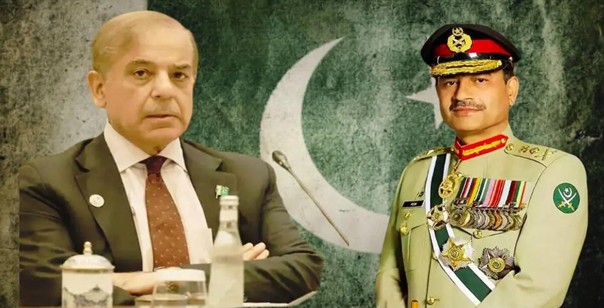
Recently, Pakistan adopted the 27th Constitutional Amendment. Among its central provisions is a sweeping restructuring of the apex military leadership: the long-standing post of Chairman Joint Chiefs of Staff Committee (CJCSC) is abolished, to be replaced by a unified post of Chief of Defence Forces (CDF).
Under the amended framework, the current Chief of Army Staff (COAS), Asim Munir, is designated to concurrently hold the CDF role. Thus, for the first time, the same individual becomes the head of all three services — army, navy, and air force — with unified command.
The amendment also resets the tenure of the CDF/COAS to a five-year term, starting from the date of formal appointment/notification. Additionally, a new post — Commander of National Strategic Command (CNSC) — has been created to manage strategic assets (including nuclear command, in principle) under the CDF’s recommendation.
But this institutional transformation has run into a snag: as of now, the formal notification appointing Munir as CDF is still awaited — creating ambiguity and raising questions about who actually controls what.
What is happening: Missing notification
As of late November 2025, when the CJCSC post was formally abolished (Nov 27), the expectation was that the new CDF post would be simultaneously notified, elevating COAS Munir to CDF. However, despite that, as of November 30, 2025 — and after the nominal end date (Nov 29) of Munir’s old three-year COAS tenure — no official appointment notification has been issued. The government, through the Khawaja Asif (Defence Minister), says the process is underway and the notification will be issued “in due course,” once the Prime Minister returns to the country.
Meanwhile, legal analysts note that the amended laws include a “deeming clause”: the five-year tenure extension and structural changes are considered part of the Pakistan Army Act. Under that provision, some argue the absence of a fresh notification is acceptable — meaning that functionally, Munir continues as COAS (and de facto CDF), with no vacuum. Others — including security sources — disagree: because the CDF role is a new assignment, separate from the old COAS post, it requires a public, formal notification; otherwise, the new structure remains in limbo.
What remains unclear
Which date marks the new tenure start? Some argue it should be November 2022 (when Munir first became COAS). Others say it begins when the CDF notification is issued (i.e., whenever that happens). Extent of authority over Navy and Air Force (and strategic command): Until the CDF is formally notified — and a CNSC appointed — it is unclear whether the CDF/COAS will really have operational control over all services and strategic assets, or whether there will be interim arrangements or divided authority.
Institutional legitimacy and morale: The delay and public uncertainty risk undermining confidence within the higher echelons — among commanders, chiefs of the air force and navy, and mid-level officers — about the chain of command and future of their roles under the new structure.
Who is in control — de facto and de jure
Given the ambiguity, here’s how control looks in practice right now:
De jure (on paper / legally): The amended Army Act and constitutional changes grant the sitting COAS — Munir — the authority to become CDF and lead all services, once formally appointed. Because the notification hasn’t been issued yet, his old tenure as COAS was due to expire (Nov 29), but the “deeming clause” arguably extends his tenure until the CDF notification — meaning, legally, there is no lapse.
De facto (in practice): According to multiple reports, the Pakistan Army continues to be under the command of Munir; no one else has stepped in, and command structures are functioning under his leadership. Meanwhile, the top-level tri-services coordination role (CJCSC) has been abolished, and no new CNSC appointment has been made — leaving an institutional vacuum in joint and strategic command until CDF notification and CNSC appointment.
Therefore: control remains with Munir (as COAS; practically running the army), but the full formalization of his broader role (across all services and strategic domains) is pending. The situation is effectively a legal–administrative grey zone: no overt breakdown, but uncertainty.
Implications: What this flux may mean — in the short and mid term
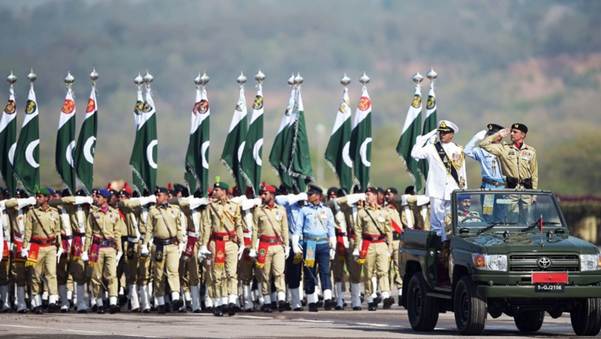
Internal stability and Civil–Military Relations. The delay suggests friction — likely within the civilian government hierarchy — over when and how to formalize the new structure. The fact that the notification hinges reportedly on the return of the Shehbaz Sharif (Prime Minister) hints at political calculations, not just procedural oversight.
In the interim, this ambiguity may lower institutional confidence among navy and air force leadership: they may not know whether they will be sidelined under the new CDF, or if their service autonomy will be respected. That could affect morale, inter-service cooperation, and willingness to accept the sweeping restructuring.
Strategic and Operational Coherence. The intent behind the overhaul — unified command, multi-domain integration, jointness — is to streamline decision-making for modern security threats (including nuclear, maritime, cyberspace, etc.). But until the CDF is formally appointed and the CNSC is staffed, jointness is partly symbolic: key posts and clarity over chain-of-command are missing. This transitional vacuum may hamper coordinated operations, strategic planning, and readiness — especially for navy/air force and strategic domains. On the flip side: once the structure becomes fully operational, the CDF + CNSC architecture could give Pakistan a more integrated command — which could also mean faster decision-making, more centralized control over nuclear and strategic assets, and a more unified posture vis-à-vis external threat.
Political signalling and credibility (domestic and international). Domestically, the delay may be seen as a sign of disorganization, indecision or power tussle inside the corridors of power — which undermines both governmental and military credibility.Internationally — including for regional rivals like India, and global powers monitoring Pakistan — this institutional ambiguity could raise questions: who actually speaks for the Pakistani military? Who commands strategic assets and nuclear weapons at any given time? This uncertainty could fuel instability or miscalculation.
What this means for India and regional strategic balance
A fully operational CDF/CNSC structure in Pakistan would mean more centralized and integrated Pakistani military decision-making — faster response times, better coordination across services, and more cohesive control over strategic assets, including nuclear command and conventional tri-service operations. That could mean a more formidable adversary in crises.
The transition period — especially if prolonged — may create unpredictability: it may not be clear who commands what. In a conflict or crisis — conventional, hybrid or nuclear — such ambiguity might increase chances of miscalculation or miscommunication.
On the other hand, if internal uncertainty leads to institutional drift or fractured command, Pakistan’s deterrent posture (or operational readiness) could weaken — potentially giving India a strategic window, or at least reducing clarity on Pakistan’s response thresholds.
Finally — domestic instability or tensions within Pakistan’s military/civilian apparatus due to this flux might impact Pakistan’s broader foreign policy or internal stability, potentially increasing risks of internal disturbances or unpredictable proxy-wars, which India must watch closely.
Broader significance: Institutional deepening vs. Centralization of power
On one hand, the move to a unified CDF embodies institutional reform: modernization, multi-domain integration (land, air, sea, strategic), jointness — all hallmarks of contemporary military doctrine globally. If properly implemented, it could lead to more efficient, coherent defence management in Pakistan.
On the other hand, consolidating all military authority in a single individual (dual-hatted as COAS + CDF), with new posts insulated from judicial review (e.g. CNSC), risks excessive centralization of power, reduced transparency, weaker checks-and-balances, and higher potential for abuse of strategic authority. Critics already warn this might sideline the navy/air force and concentrate power in army-centric hands. The delay and uncertainty reflect that this is not a purely technical reform: it is deeply political, involving civil-military bargaining, institutional resistance, and perhaps concerns over how much autonomy civilian leadership retains over the military.
Thus, whether the new structure becomes a path toward modernization or a vehicle for centralized, opaque power will depend largely on how this transition is managed — which currently remains in flux.
Conclusion: Why the world must watch
At the moment, the situation in Pakistan’s military hierarchy is characterized by legal-administrative ambiguity, transitional uncertainty, and institutional flux. The nominal architecture for a unified military command has been established; but the absence of formal notification of the CDF and critical appointments means that the architecture is not yet operational in full. Until that process is completed, real power remains in a limbo — de-facto still in hands of the current COAS, but without full legal clarity.
For analysts in India and beyond, this phase is critical. It is both a moment of opportunity — and of risk. If the transition completes swiftly and cleanly, Pakistan may emerge with a more integrated, capable, strategic-level command — emboldening its regional posture. But if uncertainty lingers, institutional confidence may erode — raising the spectre of miscalculation, internal debate, or unpredictable behaviour.